
[Reporter's Thought] Music made by AI—is being good enough? Can a singer be something other than a human?
At the opening ceremony red carpet of the 31st Busan International Film Festival, unique entrance songs created using AI were played for the stars, sparking both amusement and debate over the appropriateness of the technology at an international film festival.
As an actor appears on the red carpet, a song containing their name begins to play. It is music that repeatedly calls out their name or includes stories from the movies and works they have appeared in. At the unexpected songs, the actors burst into laughter and even dance along to the music.
As actors appear on the red carpet, songs containing their names begin to play. These are tracks that repeat their names or include stories from the films and works they have appeared in within the lyrics. Faced with these unexpected songs, the actors burst into laughter or even dance along to the music.
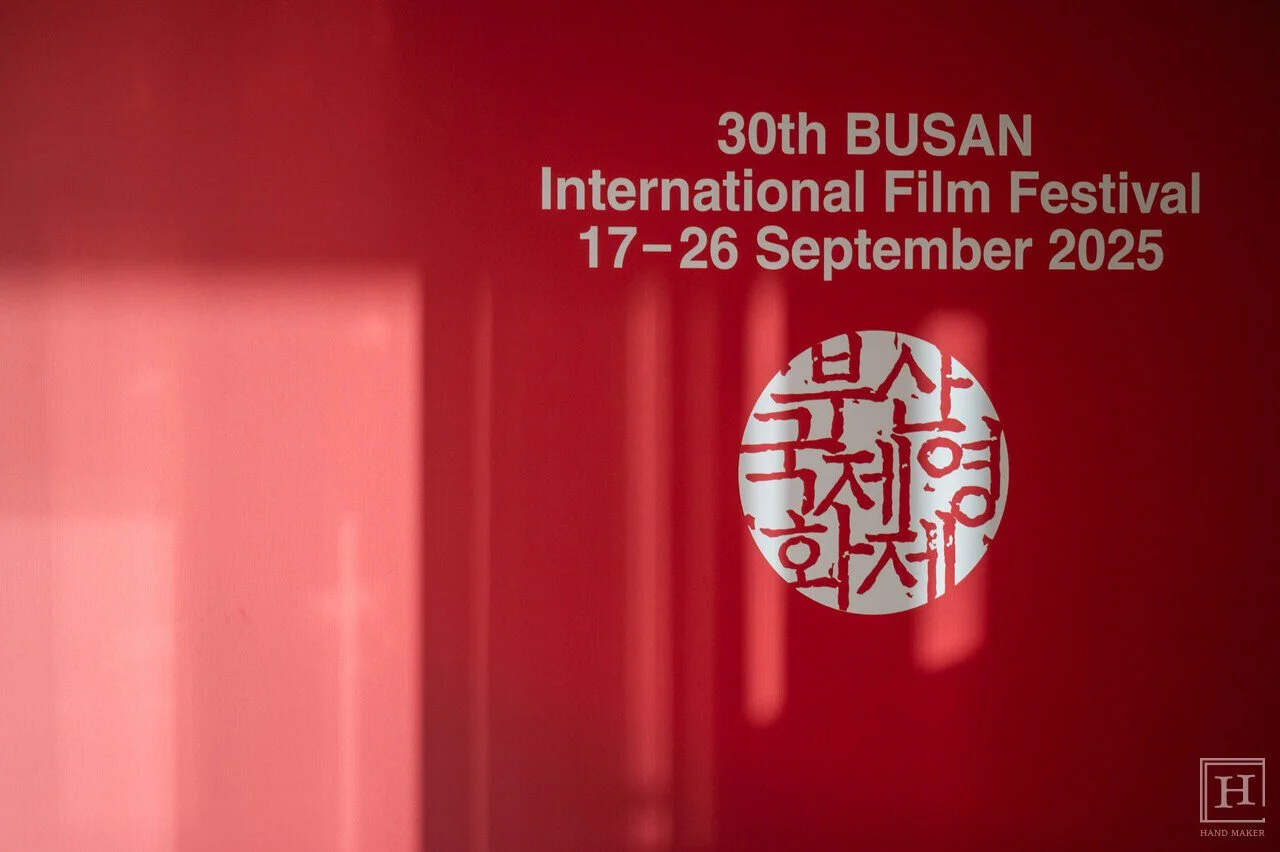
This was the scene unfolding at the red carpet of the opening ceremony of the 31st Busan International Film Festival held on the 6th. Just as much as the glamorous outfits and the appearance of stars caught the eye, the unique entrance songs produced using artificial intelligence (AI) also drew significant attention. As related videos spread online, reactions were divided between those who found it fun and fresh, and those who evaluated it as being unsuited to the atmosphere of an international film festival.
On the other hand, this scene also demonstrated that music made by AI is no longer limited to mere special technology demonstrations. As the threshold for music production lowers and opportunities to encounter AI music increase, various questions arise. Is it enough if the music made by AI is simply good?
Special welcome songs appearing on the red carpet, between laughter and awkwardness
The AI entrance songs for this Busan International Film Festival originated from an idea by director Min Kyu-dong, who was in charge of the opening ceremony production. In a media interview, Min stated that he personally wrote the lyrics and designed each song differently to match the genre and atmosphere of the works brought by the attendees. He then completed the music using AI tools.
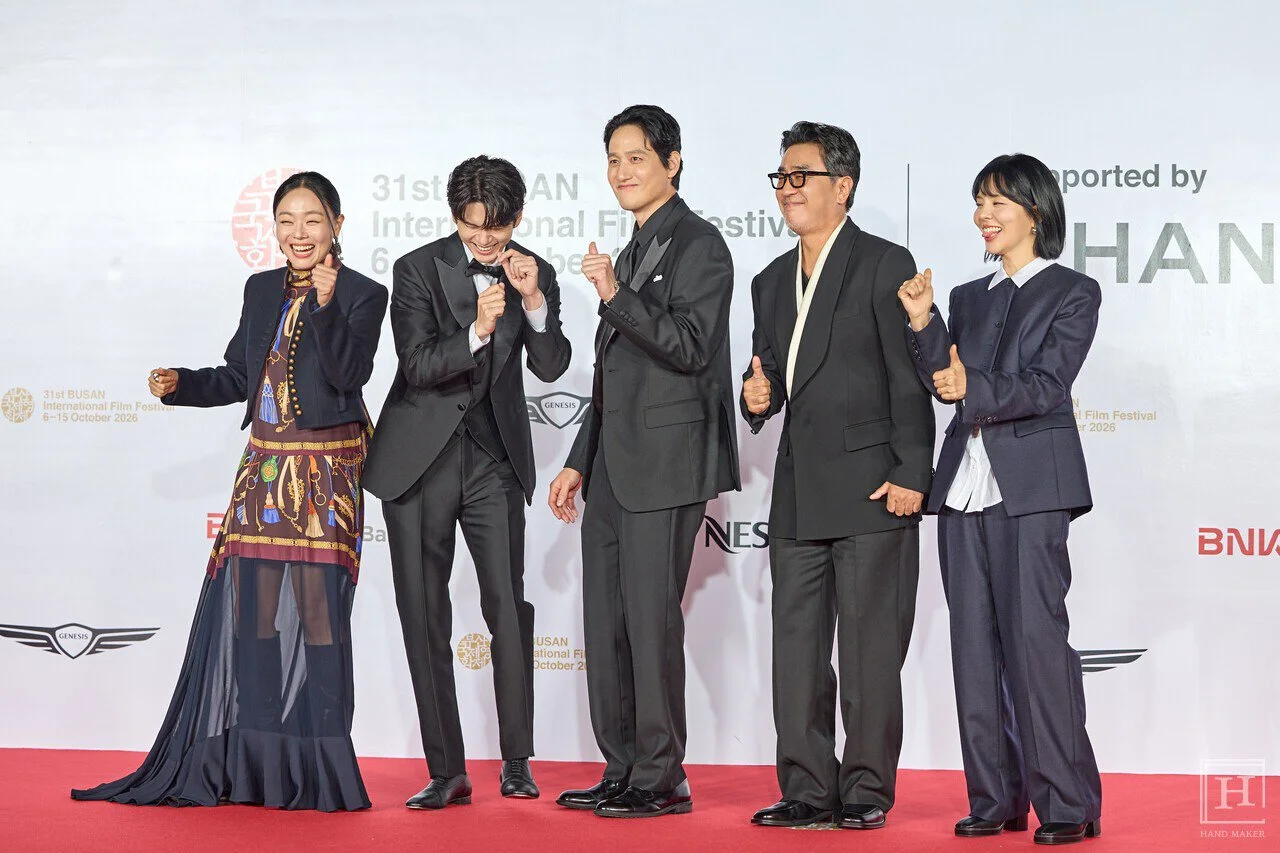
The songs contained movie titles, appearing actors, production companies, and work introductions. Instead of using general background music, this method gifts music containing each person's own story to the filmmakers. Min explained that due to the nature of the film festival, which lacks separate performances, he thought of it as a sort of "pre-performance" since he had to fill about two hours before the opening ceremony with music. While house music continued, he placed songs welcoming the attendees at intervals.
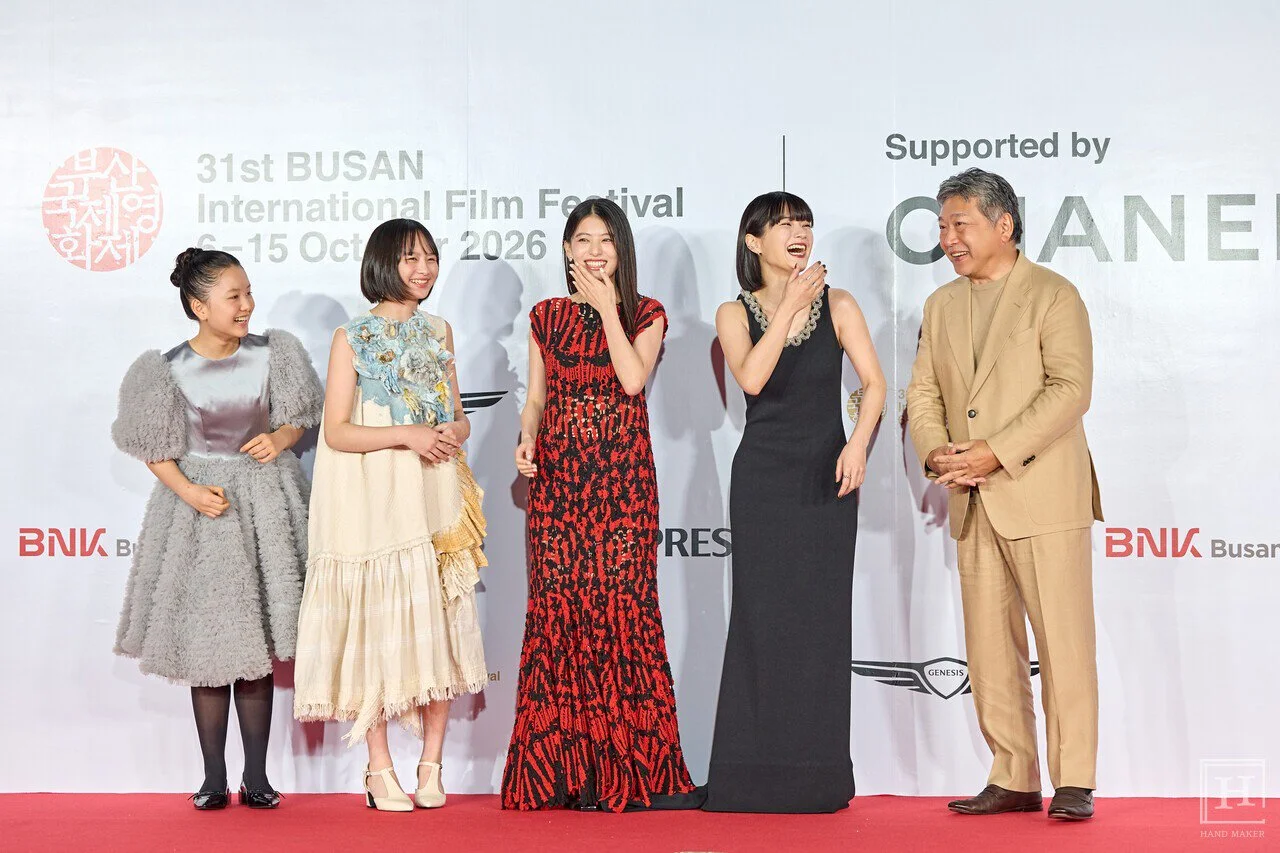
These attempts created unexpected scenes on the red carpet. Actress Shim Eun-kyung showed a surprised expression when her name suddenly played, while Ryu Seung-ryong, Park Hae-joon, Ong Seong-wu, and Lee Sang-hee from the film 《Cattle Run》 swayed their bodies to the music. Director Hirokazu Kore-eda also smiled at the song containing his name. The same method of welcome songs was used for overseas filmmakers such as actress Michelle Yeoh and Fan Bingbing.
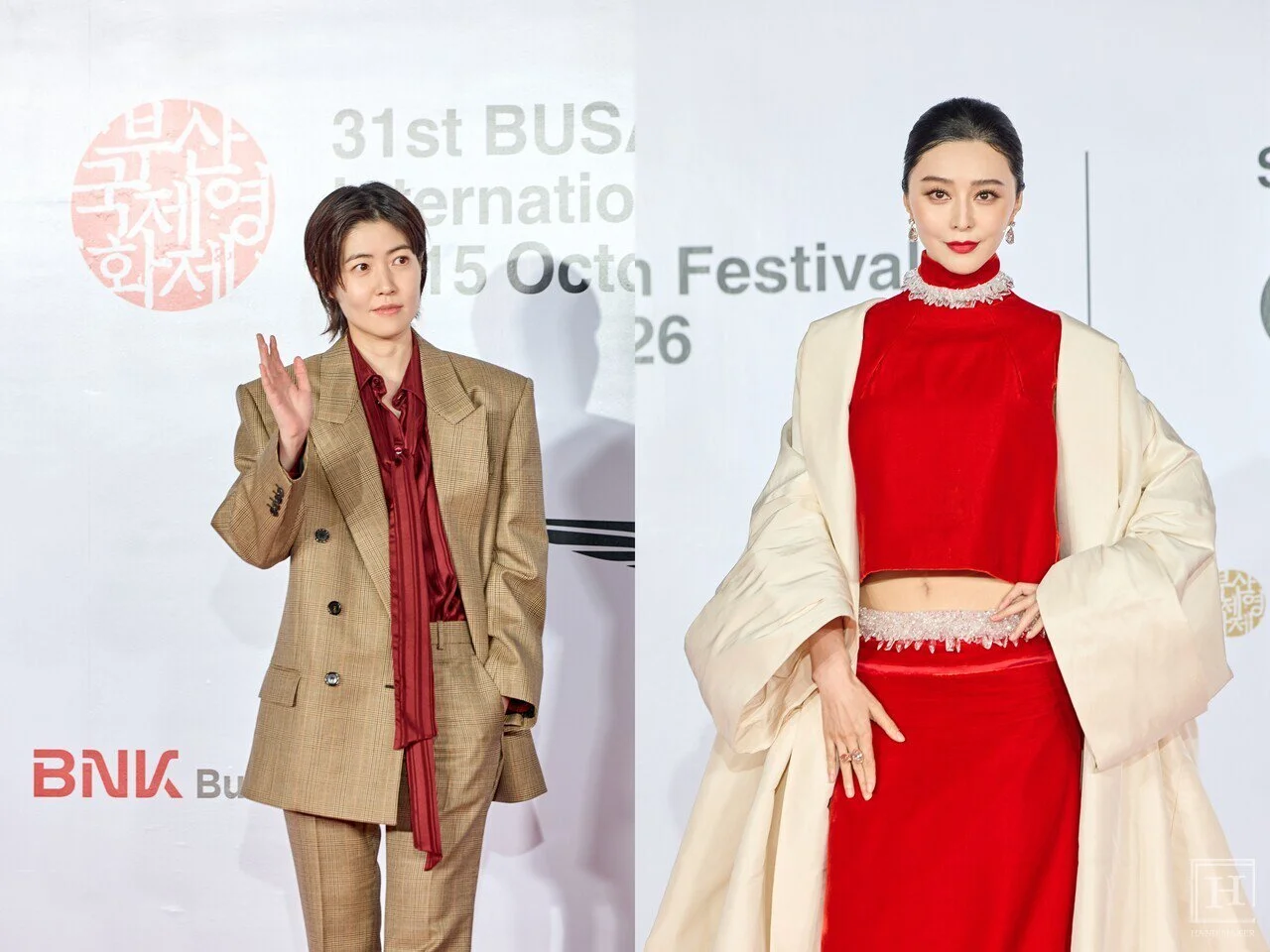
Not all reactions were positive. Online, while some viewed it as fun to see the natural reactions of the actors, others pointed out that the lyrics repeating names or the musical style were somewhat childish and awkward. In particular, opinions were divided on whether the production suited the formal atmosphere of an international film festival. Issues were also raised that it seemed as if music was provided to only some attendees.
In the comments, there were positive reactions such as "sincerity was put into Director Kore-eda's song," but negative reactions also followed, such as "A film festival is a place to celebrate art made by humans. Don't you think it's somewhat rude for an international film festival to play unnecessary music by running it through AI?"
In response, Min explained in a media interview that he did not discriminate against specific individuals or works, and that because the entrance order and intervals on-site changed, not all the prepared music could be played.
The interesting point is that regardless of whether people liked it or not, the AI music became a topic of conversation at the film festival. Moments that might have passed by if existing music had been used as background became new spectacles upon meeting the technology called AI. It essentially showed the possibility that music tailored to specific individuals or situations can be produced relatively easily using AI.
Songs made by AI, now an era of listening with distinction
AI music is expanding into a creative realm accessible to anyone. A representative service is the American AI music generation platform 'Suno'. If a user inputs a desired genre, mood, lyrics, etc., the AI creates music based on them. Even without professional composition skills or recording equipment, one can listen to the songs they have envisioned.
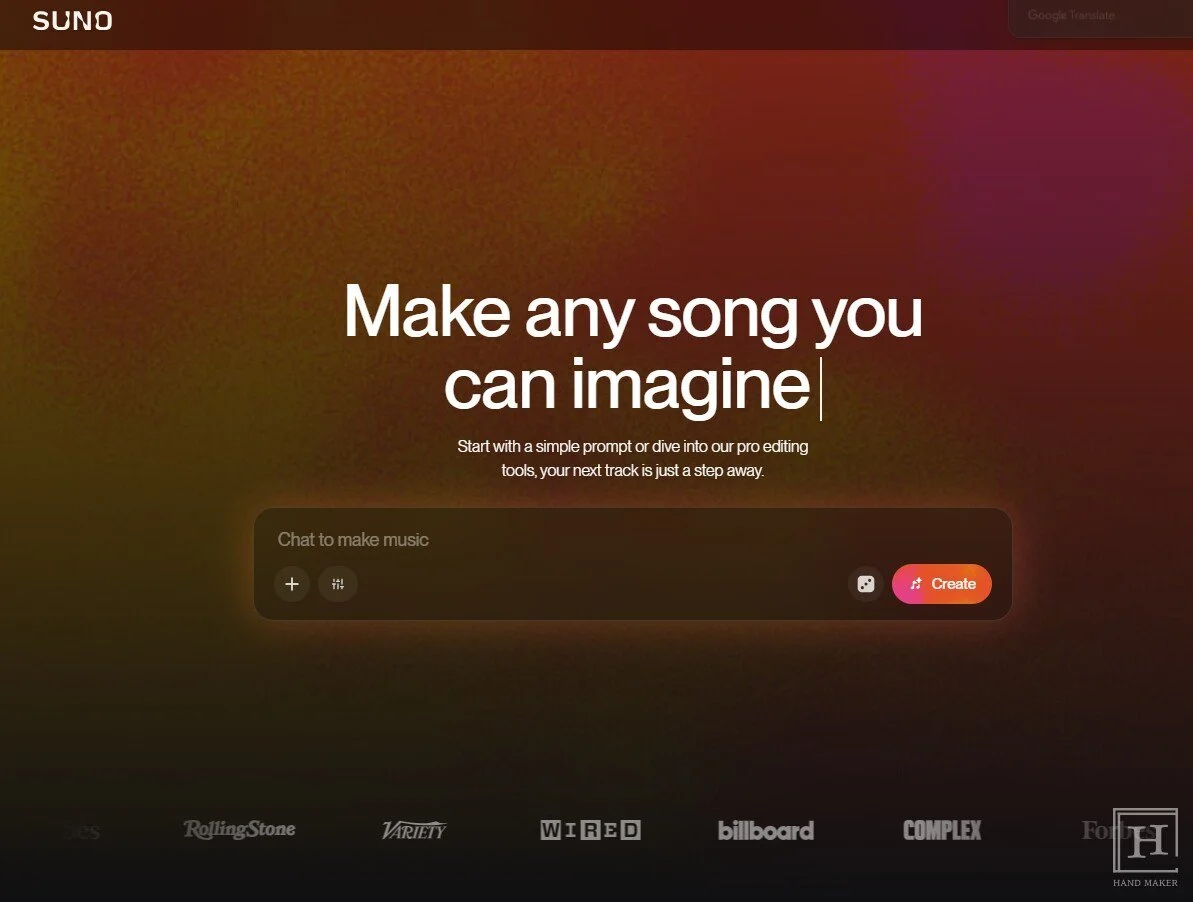
Suno does not stop at producing music. It also provides features where users can publish the music they have made and appreciate each other's work. It is possible to have an experience similar to general music platforms, such as searching for and listening to music by genre or popular songs, or composing playlists. AI music is simultaneously a creative work and a subject of appreciation for someone.
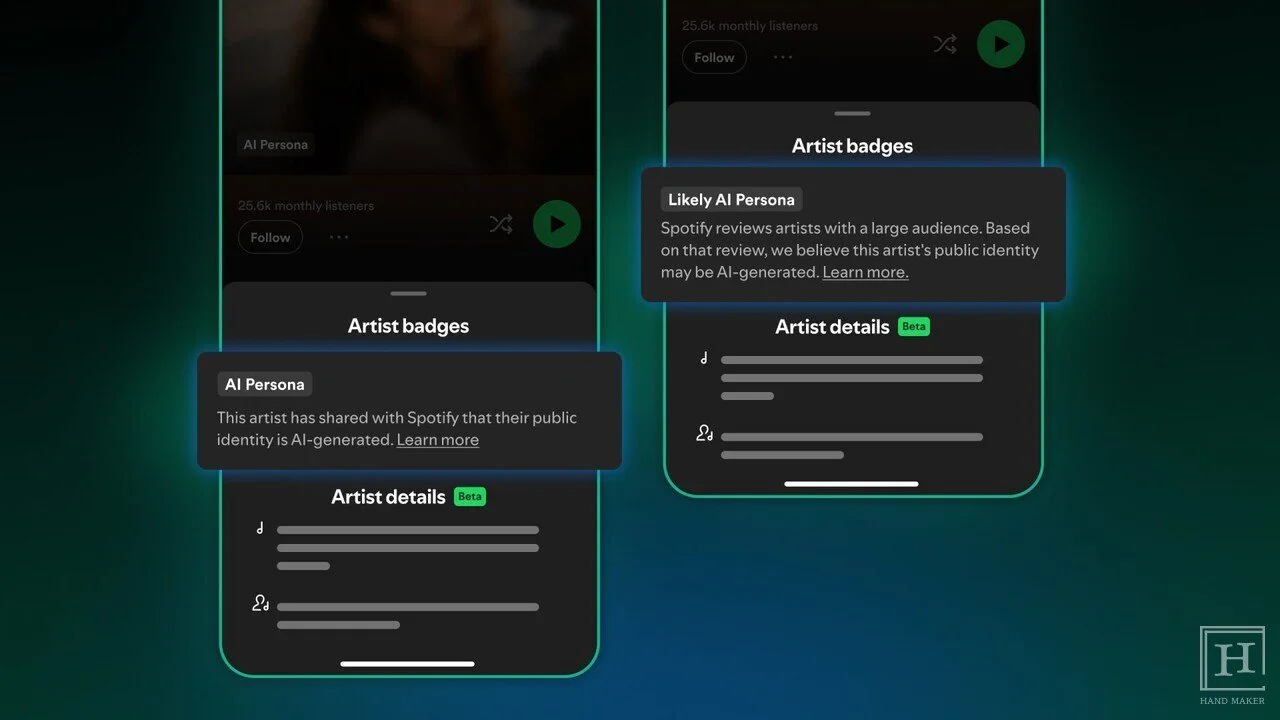
Existing music platforms are also responding to these changes. The global music streaming service Spotify announced a 'AI Persona' labeling policy in August to distinguish virtual artists generated by AI, and began applying it to some artist profiles in mid-September.
This label does not distinguish whether the song itself was made by AI, but rather informs whether the person introduced as a singer is a virtual person generated by AI rather than a real human. Spotify also separately operates an 'AI Credits' feature that explains how AI was used in the music production process.
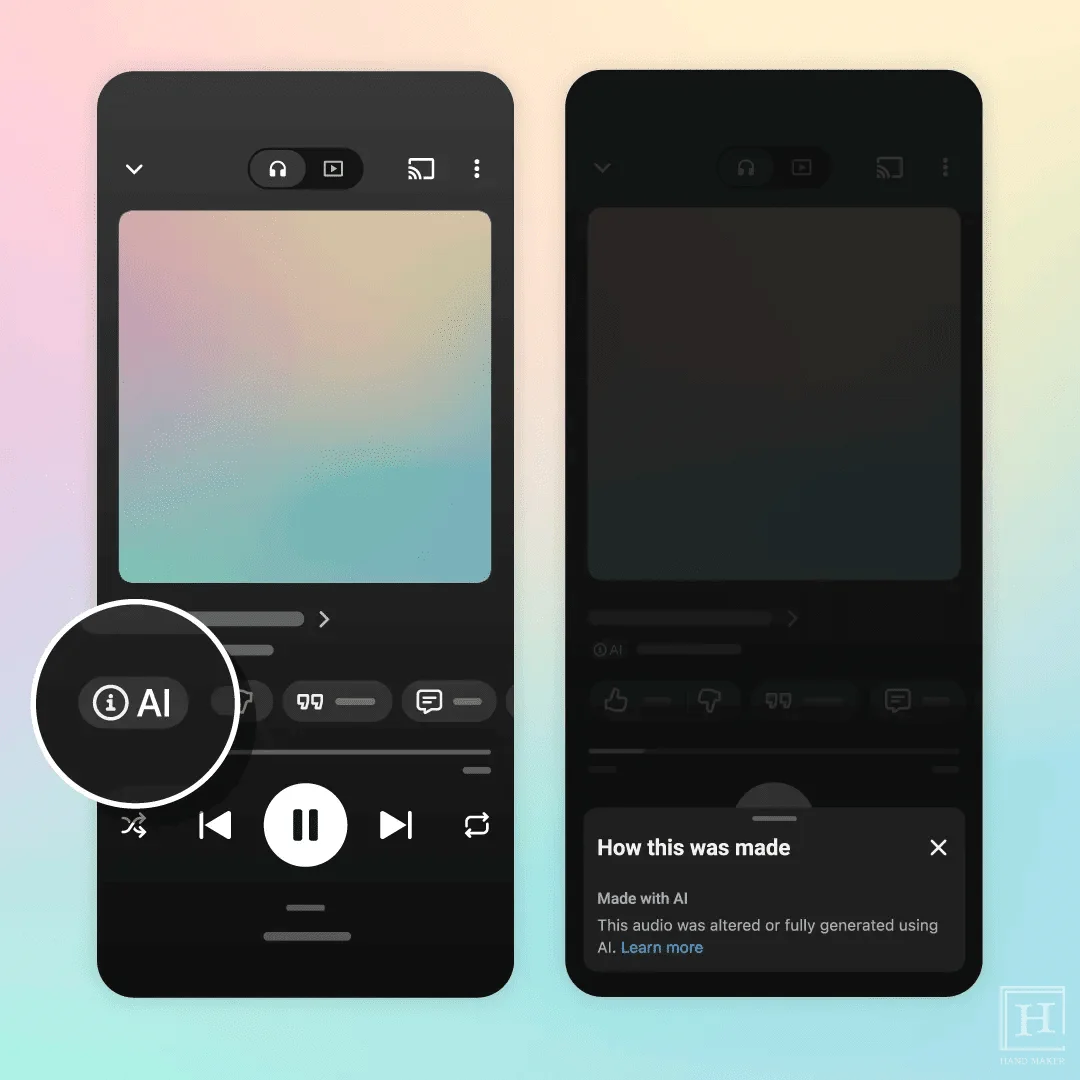
YouTube Music also announced on the 14th that it has begun providing labels to sound sources in which generative AI was used corely in music production. It is a method that allows users to check whether AI was utilized on the music listening screen, and it is planned to expand to general YouTube in the future.
These movements have a commonality. Rather than unconditionally excluding AI music, they aim to allow consumers to know its identity and make a choice. If one thought they were listening to a song sung by a human, but it was actually the voice of a non-existent singer, the appreciation after learning this could change.
Of course, one might think that if the song itself is good, it does not matter who sang it. Conversely, there are people who accept the singer's experiences, emotions, and even the process of making music as part of the song. As ways of appreciating music differ, informing whether AI was used can be an important criterion to help the listener's choice.
Who is the owner of music made by AI?
As the use of AI music expands, issues surrounding copyright are also appearing. Representative examples include whether existing music was used without permission during the AI learning process, and whether the completed song is excessively similar to someone else's work.
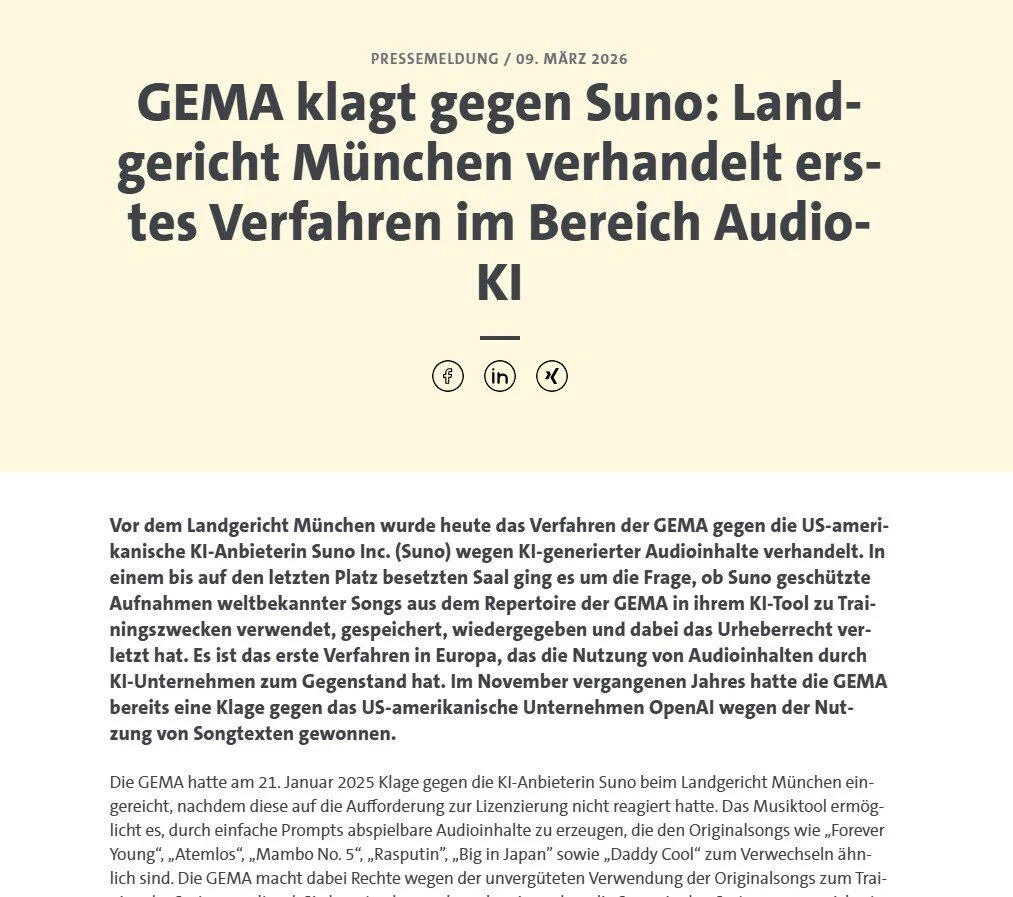
In fact, this past July, the Munich Regional Court in Germany rendered a decision recognizing copyright infringement in a lawsuit filed by the German music copyright management organization 'GEMA' against the AI music generation company Suno.
GEMA raised the issue that Suno utilized music protected by copyright for AI learning without permission and even generated results similar to existing songs. The court judged that there was an infringement of rights in the case. However, apart from the appeal procedures after the ruling, this should not be accepted as meaning that the production of all AI music is illegal.
So-called 'AI cover songs,' which reproduce the voices of other singers using AI, are also a subject of controversy. If a song that was not actually sung by a real singer is made to sound like that singer's voice and released, not only the copyright of the original song but also the rights regarding the singer's voice can become an issue. In particular, if the voice is used commercially without the person's consent or introduced as if they actually sang the song, the damage is likely to be even greater.
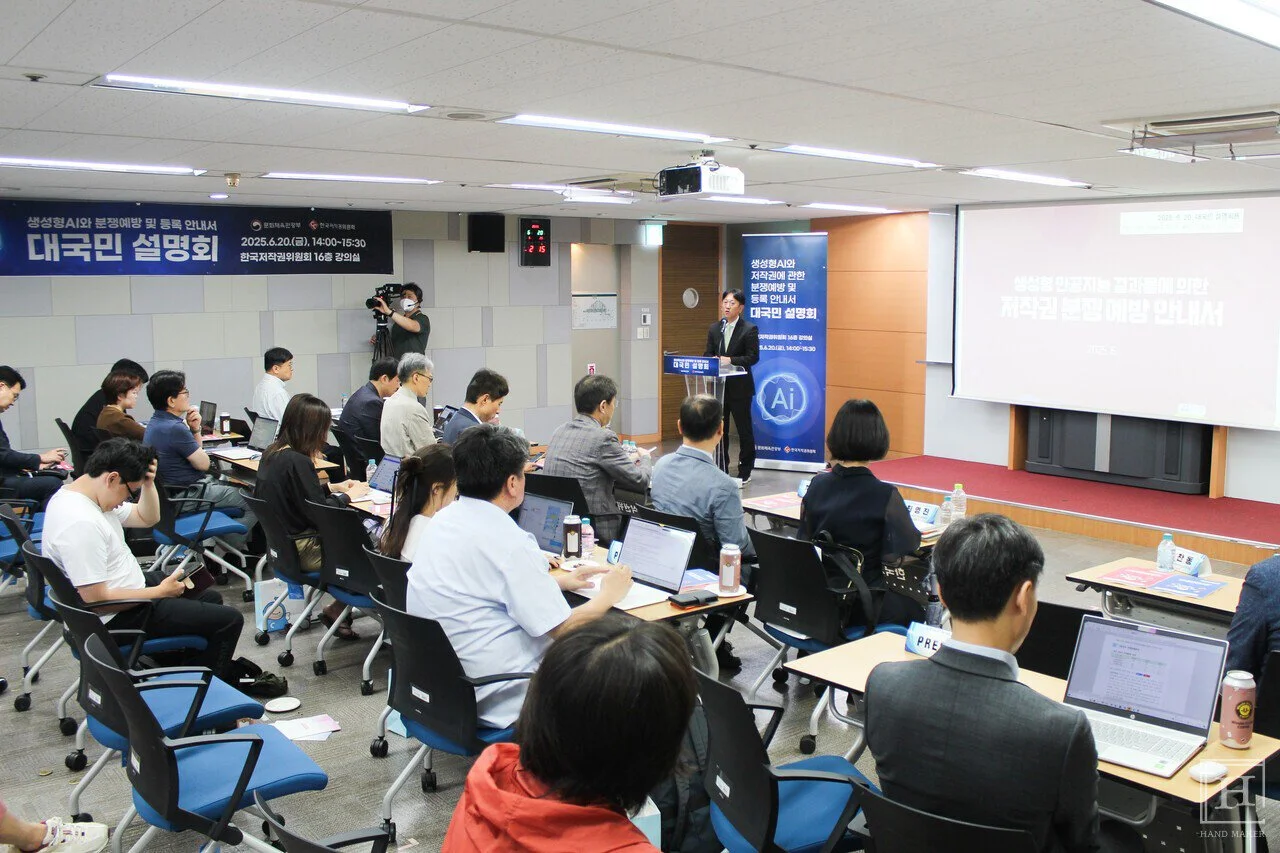
If so, who holds the copyright to music made using AI? Relevant standards are being established even within South Korea.
According to the 《Guide to Copyright Registration of Works Created Using Generative AI》 published by the Korean Copyright Commission last year, AI outputs themselves, which lack human creative contribution, are not eligible for copyright registration. However, if a person directly creates or adds creativity by modifying, selecting, or arranging AI outputs, registration is possible only for the portions where human creative contribution is recognized.
This means that copyright is not entirely denied simply because AI was used, nor are all rights recognized simply because commands were entered into an AI. One must examine where human creativity ends and where the AI's output begins.
The entrance music for the 31st Busan International Film Festival also makes one think about these issues. It differs from cases where AI performs all tasks independently, as director Min Kyu-dong personally wrote the lyrics and designed the musical direction. At the same time, the way creative contribution is viewed may change depending on what role AI played in the composition and production of the music.
In the future, AI music is highly likely to be used in even more diverse areas, not just as entrance music for special events, but also in individuals' daily lives, advertisements, and video content. Accordingly, there is a need for standards that can accept new creative methods while protecting the rights of existing creators.
The discussion surrounding AI music does not end with how convincingly the technology creates songs. One must also consider the entity that made the music, the process, and the choices of the people listening to it.
It may not necessarily require a human singer to hear a good song and be moved. However, knowing where that song came from and what process it went through to be made is a separate matter. In an era where AI makes music, perhaps what we should contemplate is not just whether the entity that made the song is human or not, but how we will create, promote, and accept that music.
Reporter at HANDMAKER (핸드메이커), a Korean magazine devoted to crafts and handmade culture. Covers exhibitions, design and the people who make things by hand.
Comments 0
Comments are currently disabled.