
[On-site Sketch] Capturing Light, Shadow, and Even Solitude in a Slice of Cake: 《Hyundai Card Culture Project 31 Wayne Thiebaud》 Exhibition
Hyundai Card is opening its autumn season with a retrospective of 20th-century representative artist Wayne Thiebaud at DDP in Seoul.
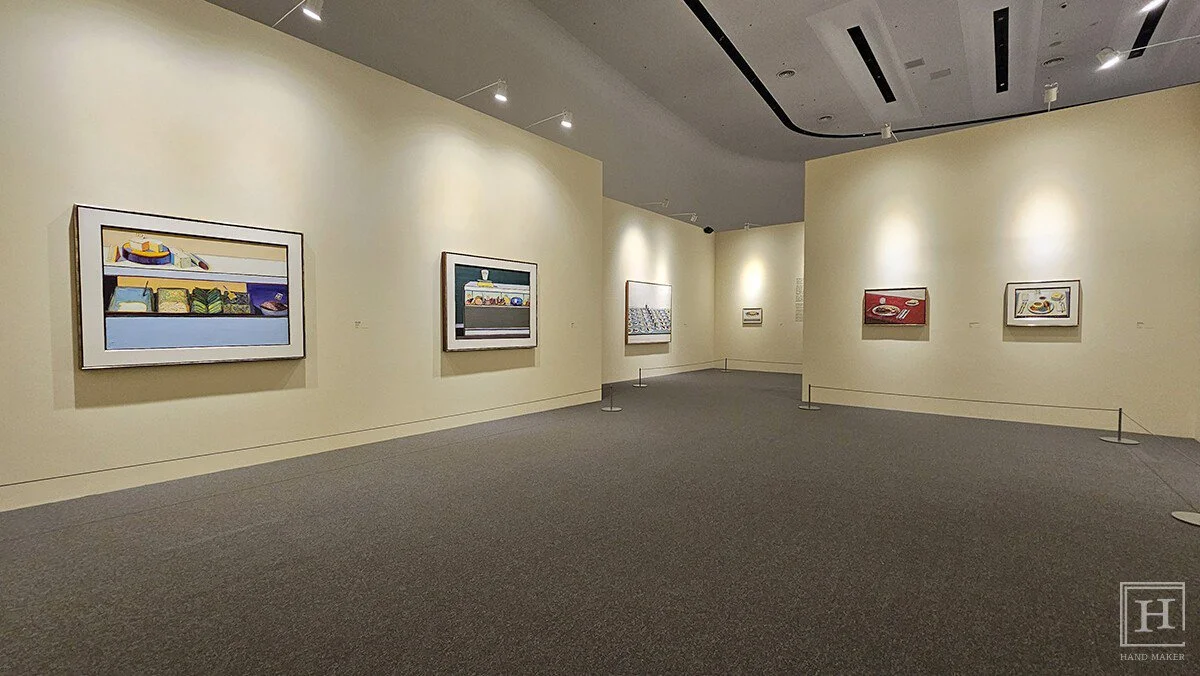
In September, Hyundai Card opens the door to autumn in earnest with an exhibition of the representative 20th-century artist Wayne Thiebaud. The 《Hyundai Card Culture Project 31 Wayne Thiebaud》 exhibition, held at DDP in Seoul until February 21, 2027, is the first retrospective of Wayne Thiebaud to be introduced in Korea.
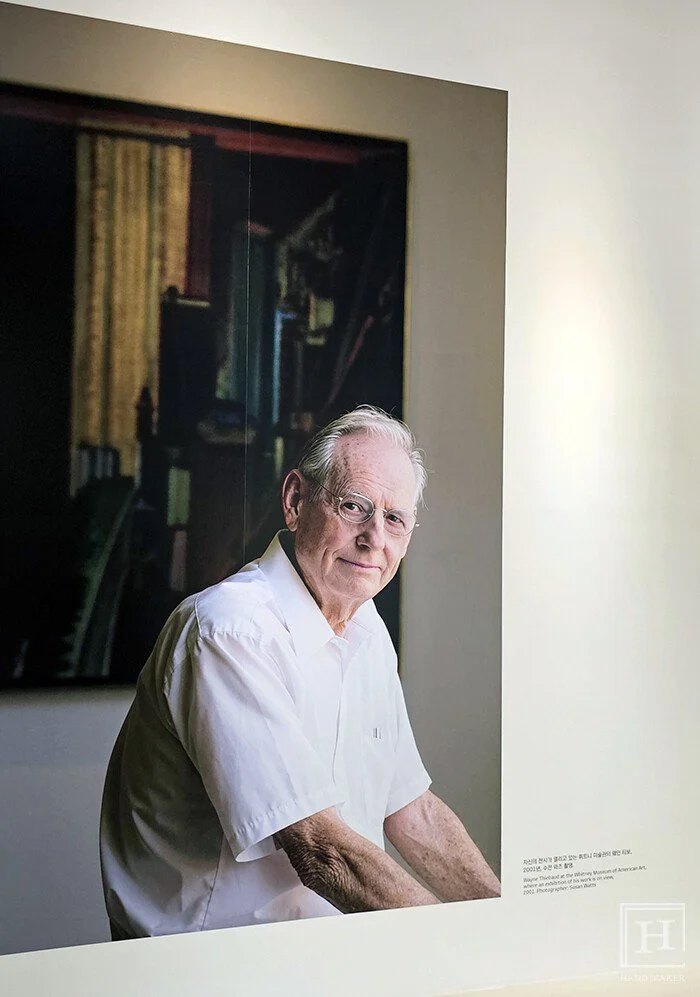
Wayne Thiebaud (1920-2021) is considered one of the most original and influential masters representing modern American art. As Pop Art began to gain attention in the early 1960s, Thiebaud was often mentioned in connection with Pop Art, but he walked his own unique path, rooted in the deep traditions of painting.
Unlike contemporary artists who took a mechanically objective stance, he emphasized the physical and manual process of painting. He sublimated slices of life—a slice of cake, grocery store shelves, dizzyingly steep city streets, and isolated figures—through a deep exploration of light, color, and form.
The characteristic of this exhibition is its framework of new interpretation. Borrowing the concept of 'order' mentioned in Michel Foucault's philosophical book 『The Order of Things』, it unfolds Wayne Thiebaud's world of art as an exploration of the visual structures used to organize and perceive the world. The artist's interest in order continues in his later works containing figures and cityscapes, expanding into themes of loneliness, memory, and human distance.
Early Works
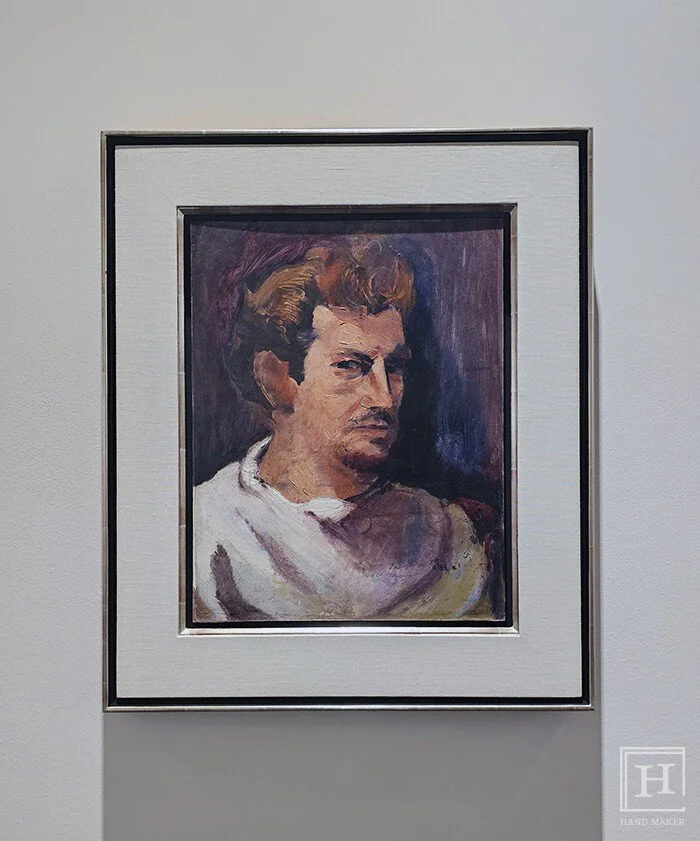
Before Wayne Thiebaud gained fame across the United States in the early 1960s, he honed his skills in various fields such as commercial design, comics, stage design, and art education over a period of about 10 years. His paintings from the 1940s and 1950s clearly show the strong influence of Abstract Expressionism and the gesture-centered quality of teachers such as Willem de Kooning. In works such as 〈Self-Portrait〉 (1947) and 〈Cigar Display〉 (1955), Thiebaud experimented with dense textures, earthy colors, and flatly depicted forms.
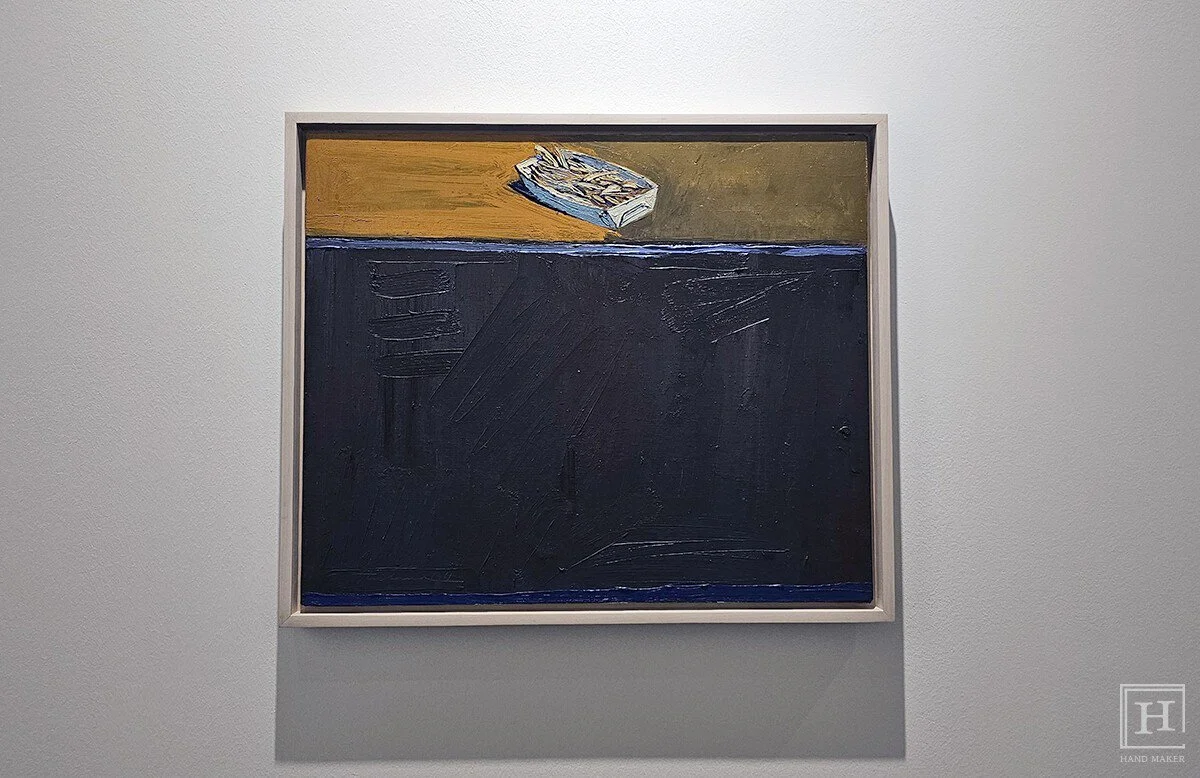
In these early works, his continuous interest in commercial display and structural arrangement is gradually revealed. Works such as 〈Street Food〉 (1959) and 〈French Fries〉 (1961) show an important turning point where the impasto technique, which emphasizes texture by applying paint thickly, meets the unadorned geometric forms found in everyday American diners. During this period, Thiebaud discovered that by placing simple and common objects one by one against a clean background, the paint itself gains a material presence and structural weight.
Masterpieces
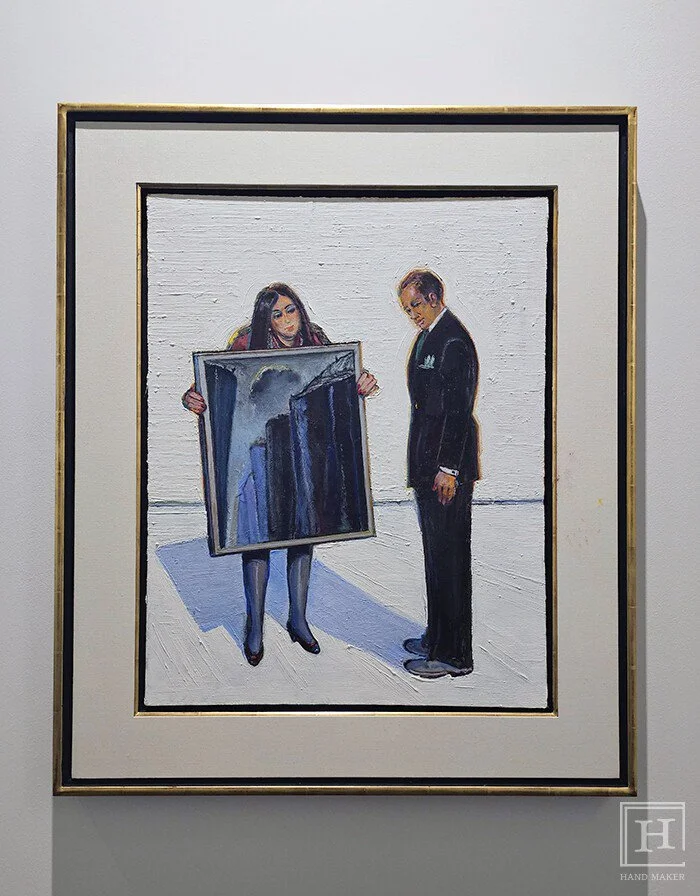
Throughout his life, Wayne Thiebaud held the belief that 'art comes from art'. He engaged in constant dialogue with masters of art history, ranging from Diego Velázquez and Jean Siméon Chardin to Paul Cézanne and Giorgio Morandi. And he regarded the collections of major art museums as the ultimate 'source of artistic standards.'
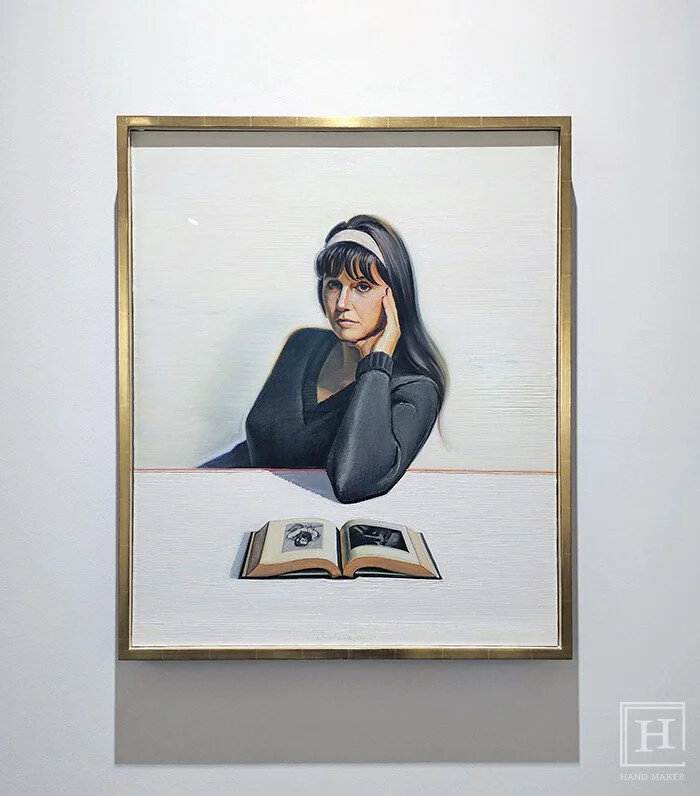
Thiebaud's pleasant yet deep reflections on art, the act of appreciating and evaluating art, and cultural memory are revealed. In 〈Betty Jean Thiebaud and Books〉 (1965-1969), the painter's wife sits before an open book, which contains drawing images of other masters. He naturally melts elements of classical portraiture into a strict geometric composition.
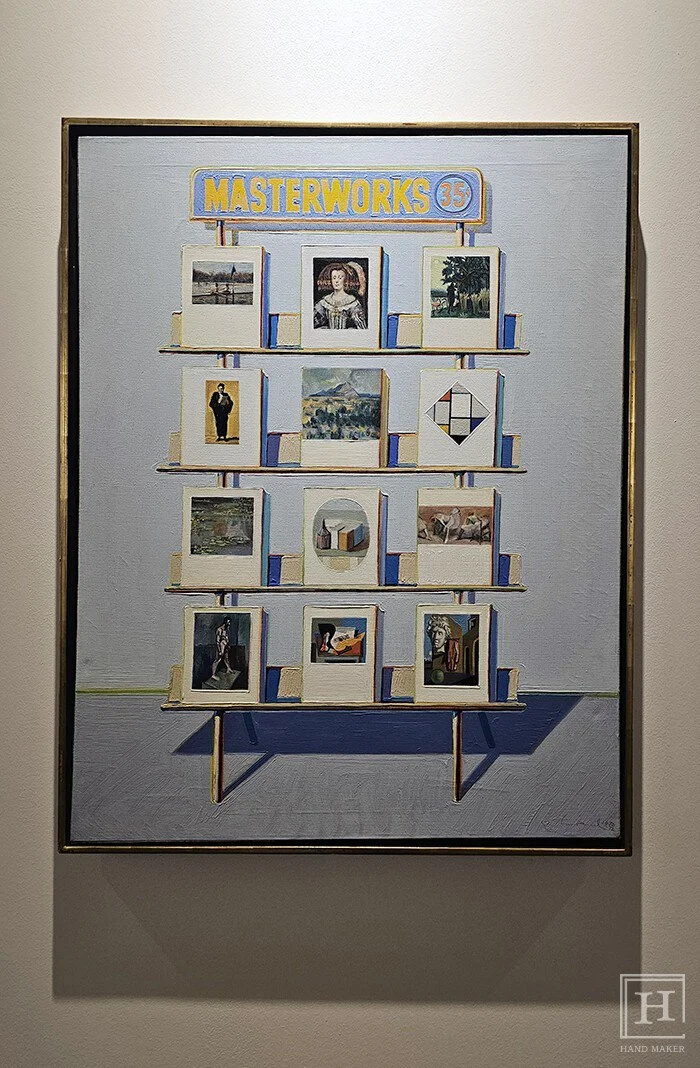
Looking at 〈35-Cent Masterpieces〉 (1970/1972), a steel display stand holding inexpensive art postcards transforms historical masterpieces into consumer goods that anyone can purchase. Whether it is a work held in the hands of an art historian or a work gazed upon by a deeply contemplative collector, Thiebaud reminds us that painting is a living tradition that has continued for centuries and continues even today by capturing the very act of appreciating art within his works.
A Feast for the Eyes
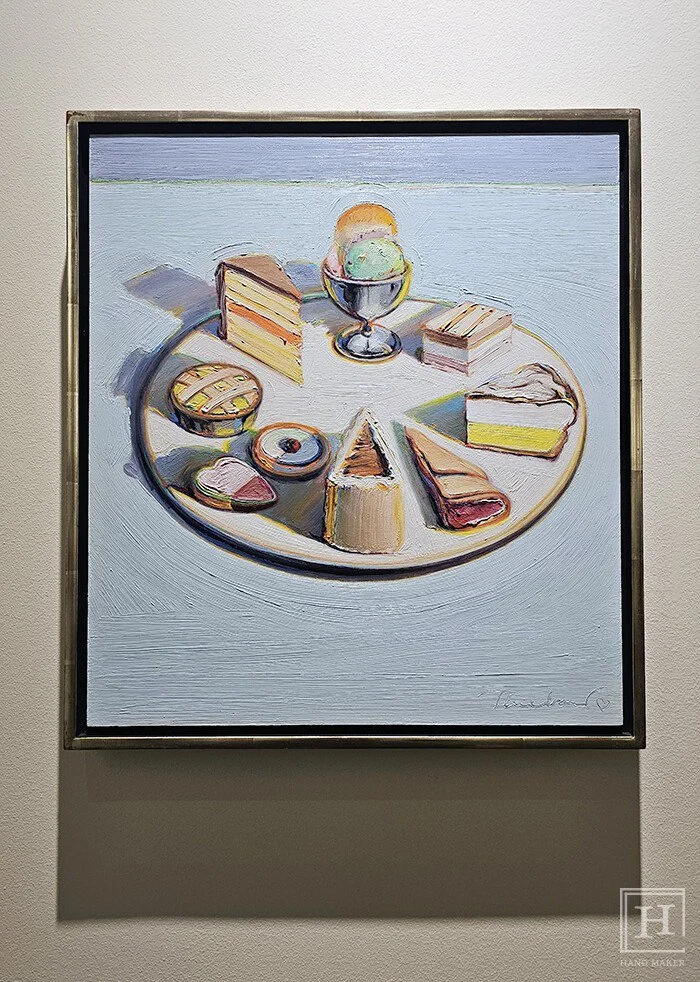
The food and dessert displays of American diners painted by Wayne Thiebaud are like a feast for hungry eyes. Works filled with triangular pies, multi-layered frosted cakes, candies, ice cream, and thinly sliced processed meats stimulate our senses the moment we see them, evoking appetite and anticipation.
Thiebaud painted in a method he called 'actualism,' a way of painting where the paint itself possesses a physical presence like the object it intends to depict. By applying oil paint smoothly and thickly like butter, he reproduced the texture of the subjects, making the paint itself look like the cream, mayonnaise, or whipped cream spread on a cake.
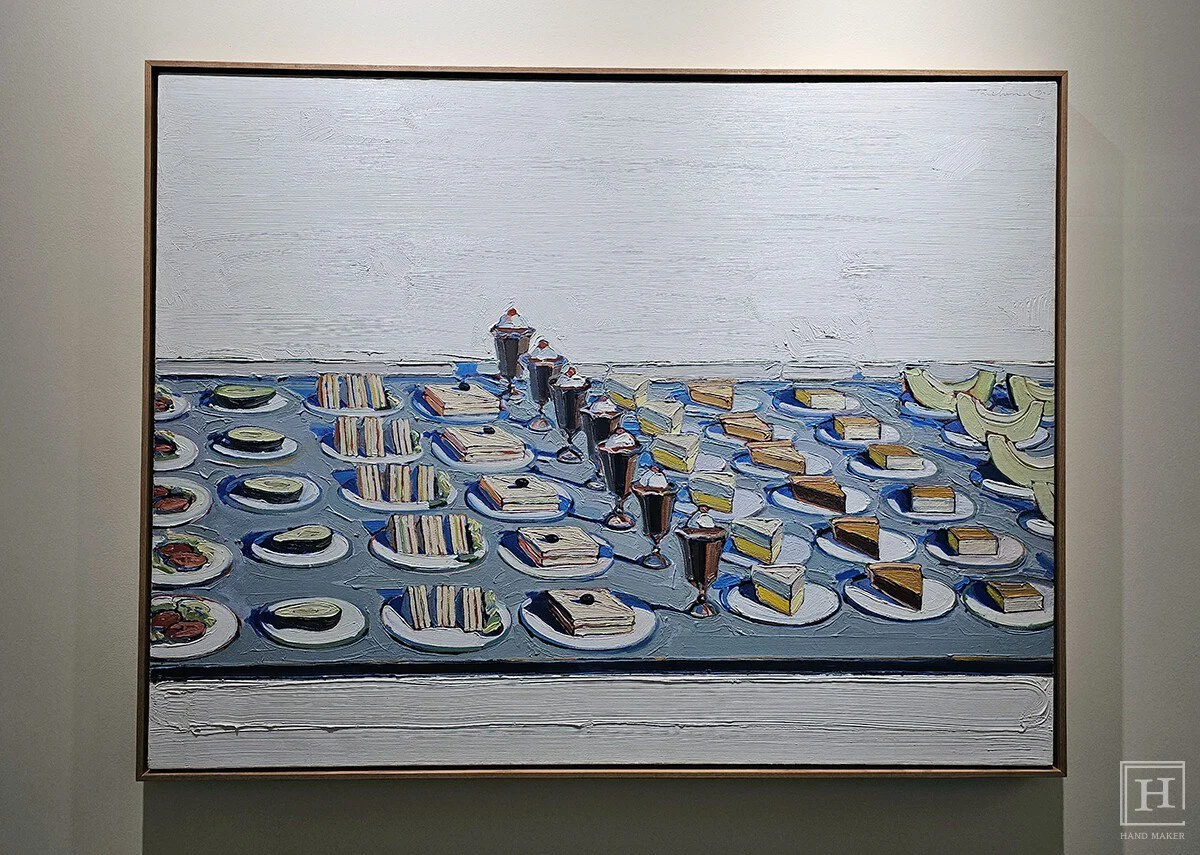
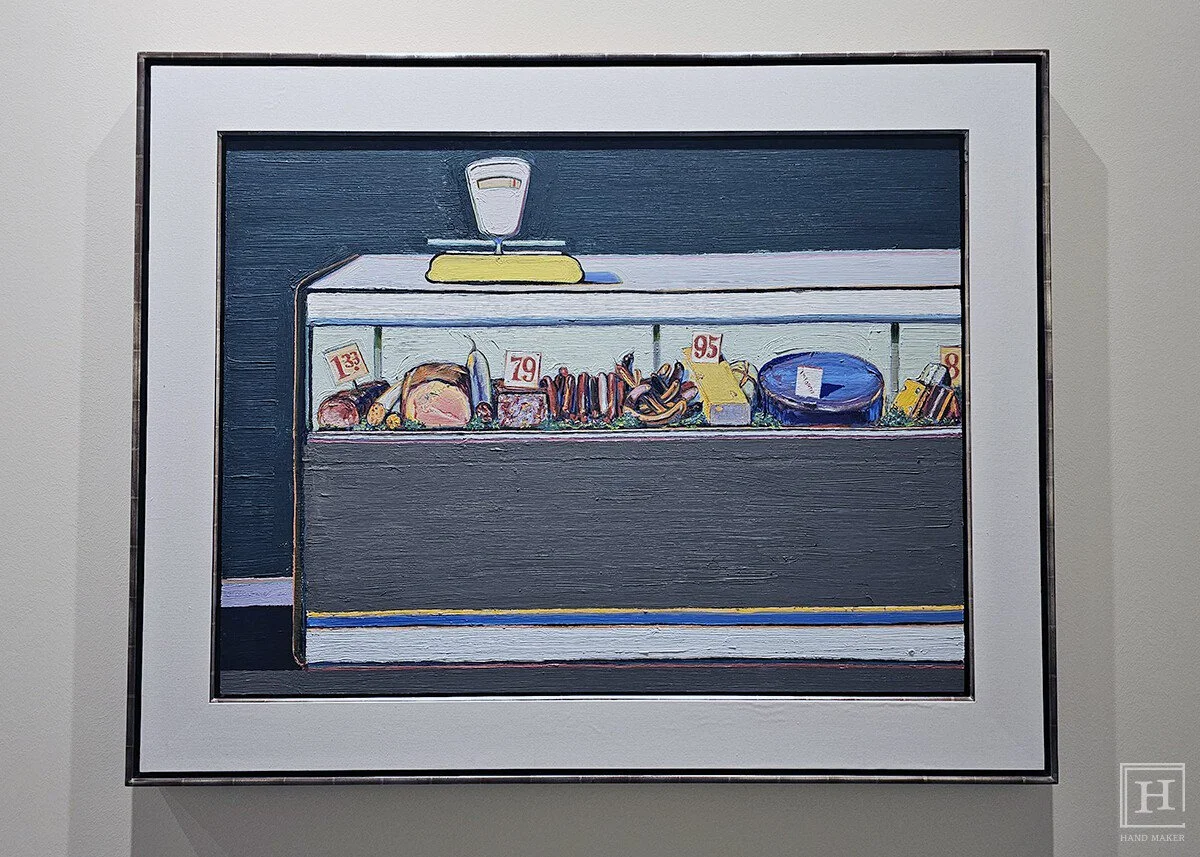
In large-scale works such as 〈Salad, Sandwich and Dessert〉 (1962), food is spread out on a wide, tilted table, and in works like 〈Grocery Display Case〉 (2017/2020), meat and cheese are placed inside a glass display case under mechanical scales and price tags.
Thiebaud said, “What captivates me is the aspect of exclusion. Within it, there is much longing.” These works, which show the abundance of post-war American society, are enveloped in a quiet stillness on one hand. The neatly prepared foods for a person eating alone are cleanly separated from one another, as if sealed within a time that has stopped forever.
Order and Disorder
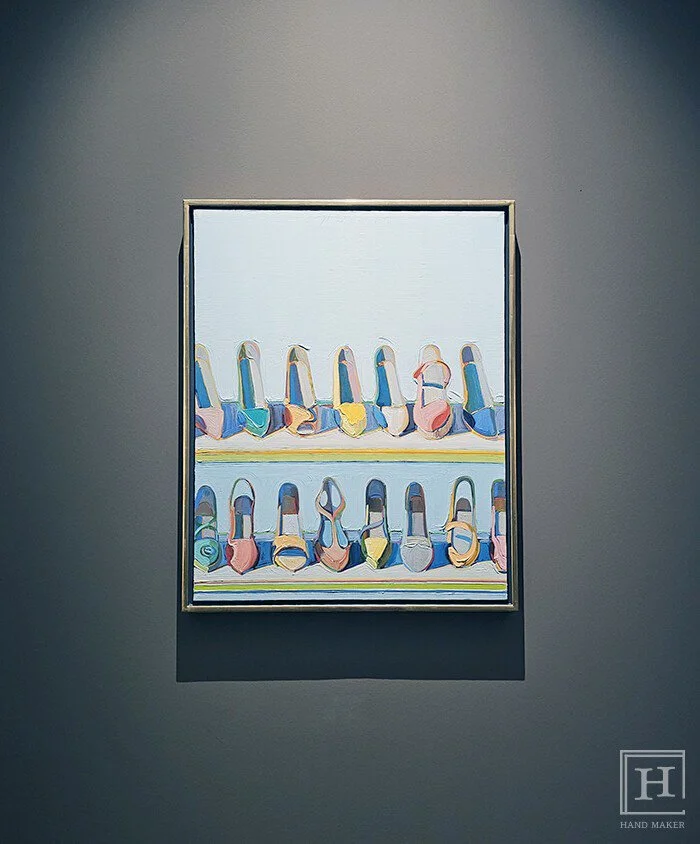
One of the core questions running through Wayne Thiebaud's world of work is the relationship between order and disorder. In his representative still lifes depicting desserts and pastries, soda bottles, and office supplies, he captures objects in neat rows, grid structures, or circular forms. This repetitive arrangement is reminiscent of the mass production and standardized display methods of modern consumer culture.
However, the order he expresses is never mechanical. If you look closely at works that arrange cakes, toys, or pastels in a consistent manner, nothing is perfectly identical; he adds subtle variations. He might place a single plate slightly out of line, change the shape of a decoration, or reverse the direction of a shadow.
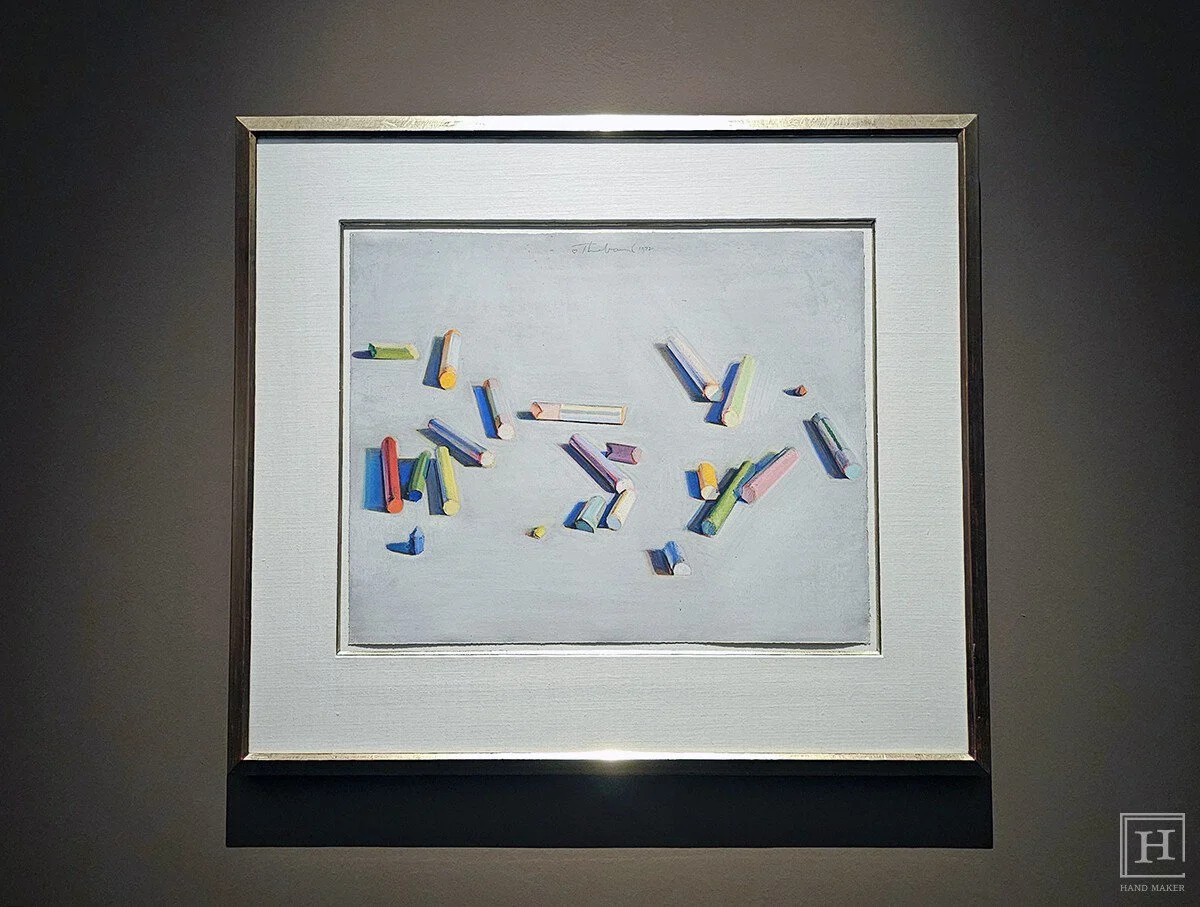
In works such as 〈Scattered Pastels〉 (1972), he boldly breaks down even geometric grids, scattering colorful chalks extending in various directions throughout the canvas. In this way, Thiebaud shows that the moment he deviates from a set order by adding intentional changes, visual harmony exerts its most powerful force.
Wayne Thiebaud in Video Works
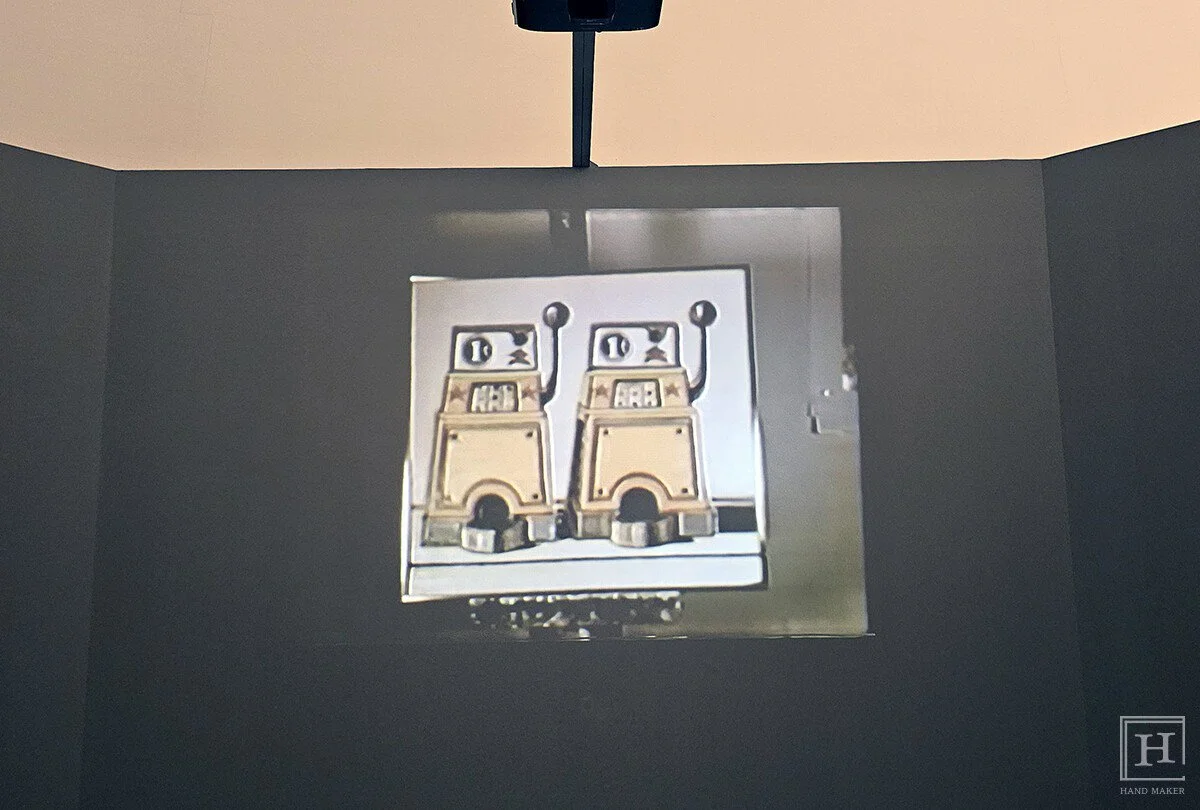
Long before his works were exhibited in museums, Wayne Thiebaud participated in film and animation work. At the age of sixteen, he worked as an apprentice at Walt Disney Studios, drawing in-between frames for characters such as Goofy and Pinocchio. During World War II, he was assigned to the First Air Force Motion Picture Unit in Culver City, USA, where he participated in the production of military training films and documentaries. Later, from 1954 to 1959, he operated Patrician Films in his home basement. This independent production company created short educational animations for school students to explain art movements such as Impressionism and Cubism.
These experiences are clearly revealed in the 1971 documentary 'Wayne Thiebaud', produced by his wife Betty Jean Thiebaud as the director. This film allows one to closely observe Thiebaud's creative process. The camera captures Thiebaud painting in his studio for a long time, moving between his careful brushstrokes and the everyday landscapes that provided visual material for his works. Sparkling bakery displays, restaurant shelves, roadside signs, and shops and commercial spaces shining under the California sunlight appear as the everyday scenes he observed.
Figures, Solitude
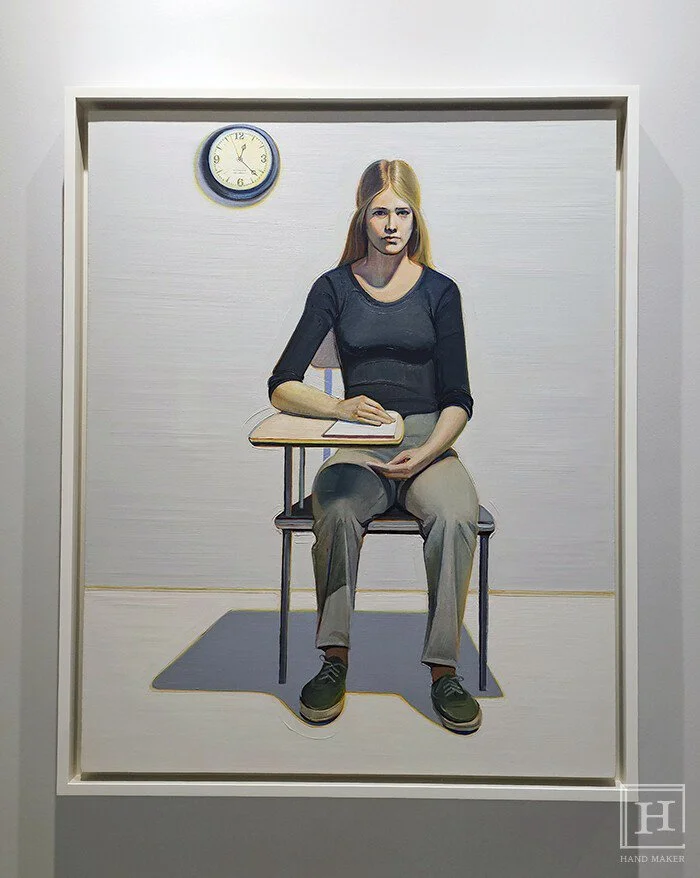
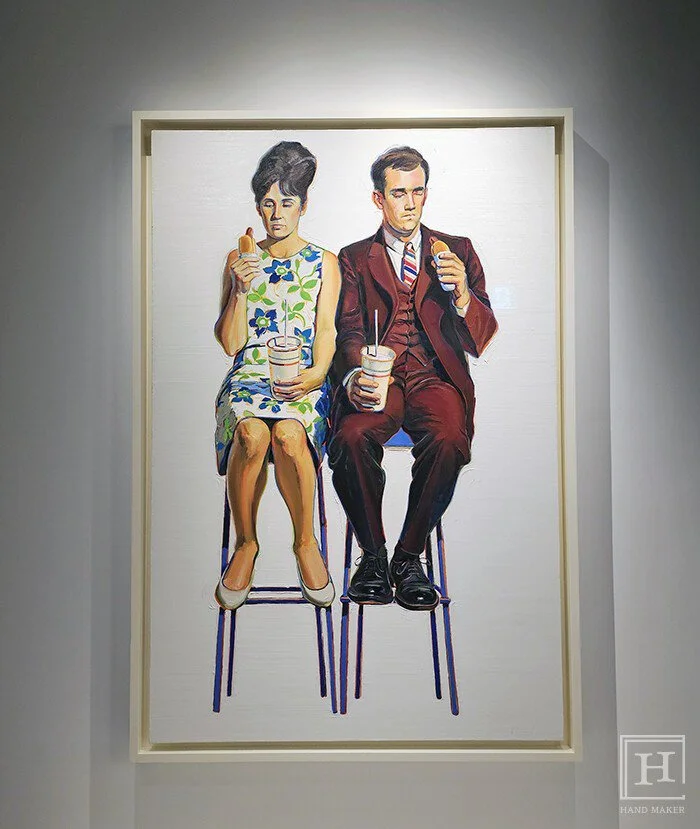
As Wayne Thiebaud began painting human figures in the mid-1960s, he applied the same strict formal methods he used when painting still lifes to his portraits. In his works, where he places or seats figures in front of intense, bright white backgrounds reminiscent of a photographer's studio or a television set, it is difficult to find a background for a story, personal anecdotes, or directly revealed emotions and psychological expressions.
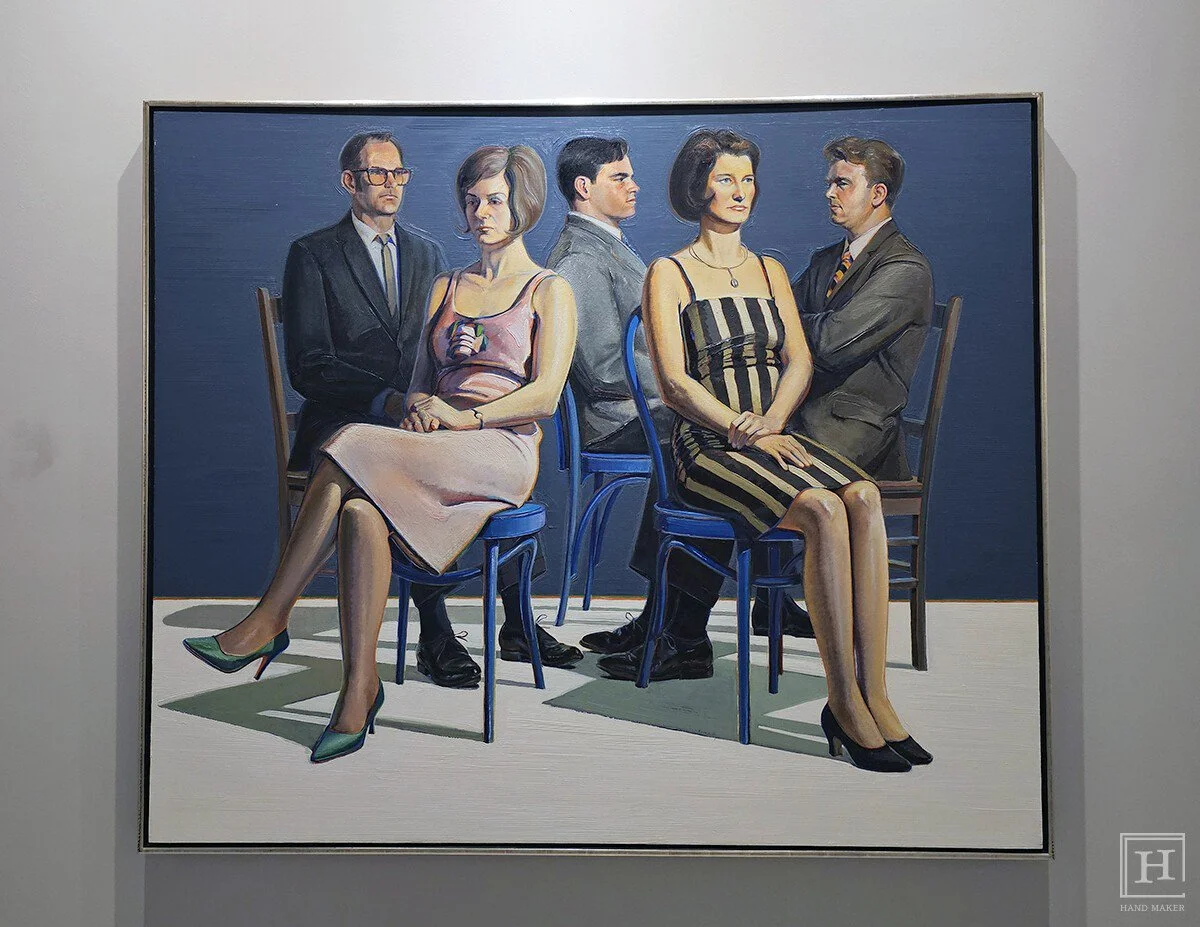
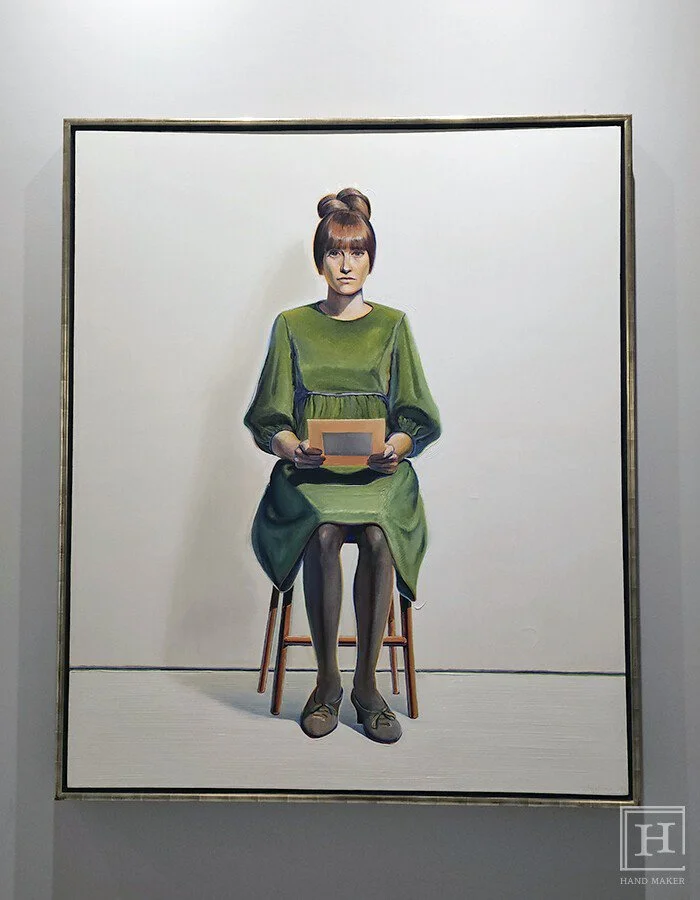
In works such as 〈Five Figures Sitting〉 (1965), 〈Green Dress〉 (1966), and 〈Student〉 (1968), the state of 'lonely togetherness' mentioned by Thiebaud is well revealed. The figures sit side by side or look straight ahead in bright light, but they do not communicate with each other. Their gazes are directed outward or remain within themselves, as if they are lost in their own worlds. Thiebaud's figures, which evoke the quiet and contemplative atmosphere of Edward Hopper, impressively show the deep solitude inherent in modern human life.
The Power of Symmetry
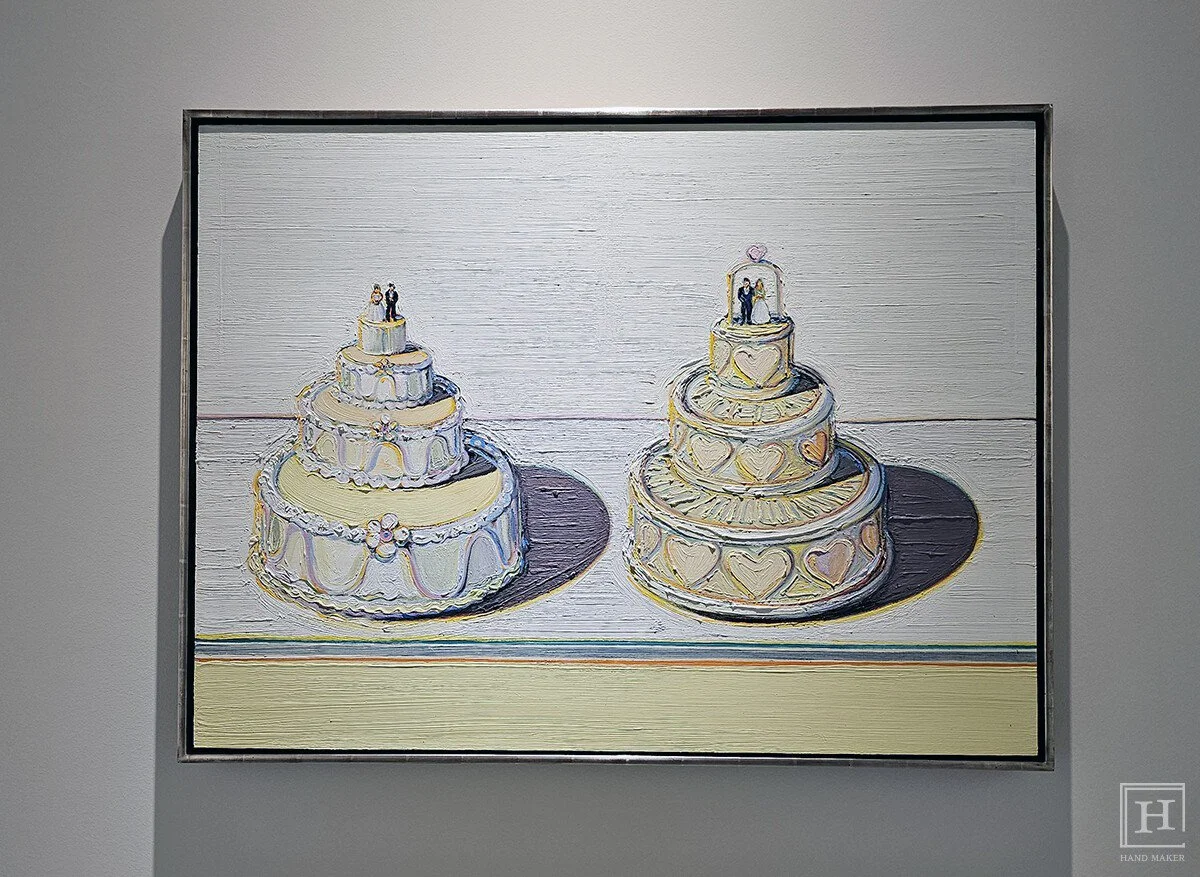
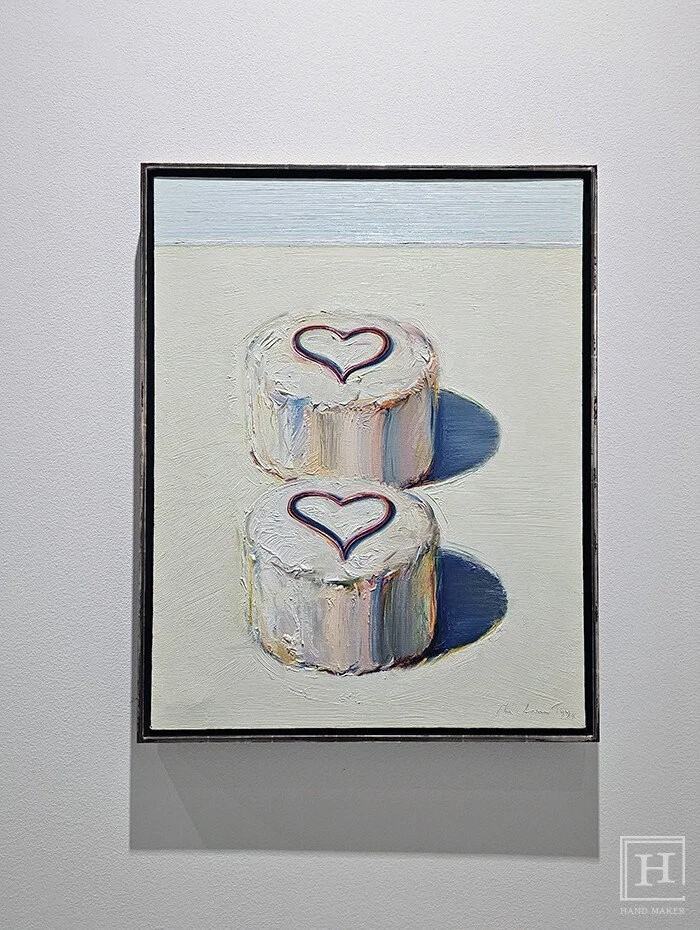
To Wayne Thiebaud, symmetry was not a rule to be strictly followed, but a way to examine balance and tension. Based on the classical concept that parts and the whole must harmonize, he developed the proportion and arrangement of objects into an interesting visual experience rather than a simple form.
Throughout his life, he frequently used a method of pairing and arranging objects and figures together. In 〈Two Wedding Cakes〉 (2015) and 〈Two Heart Cakes〉 (1994), two almost identical cakes are placed side by side at the edge of a table, each topped with delicate decorations. Thiebaud added vitality to these symmetrical compositions by expressing color, brushstrokes, and viewing angles slightly differently. Therefore, the expressions in the works do not feel simple or rigid.
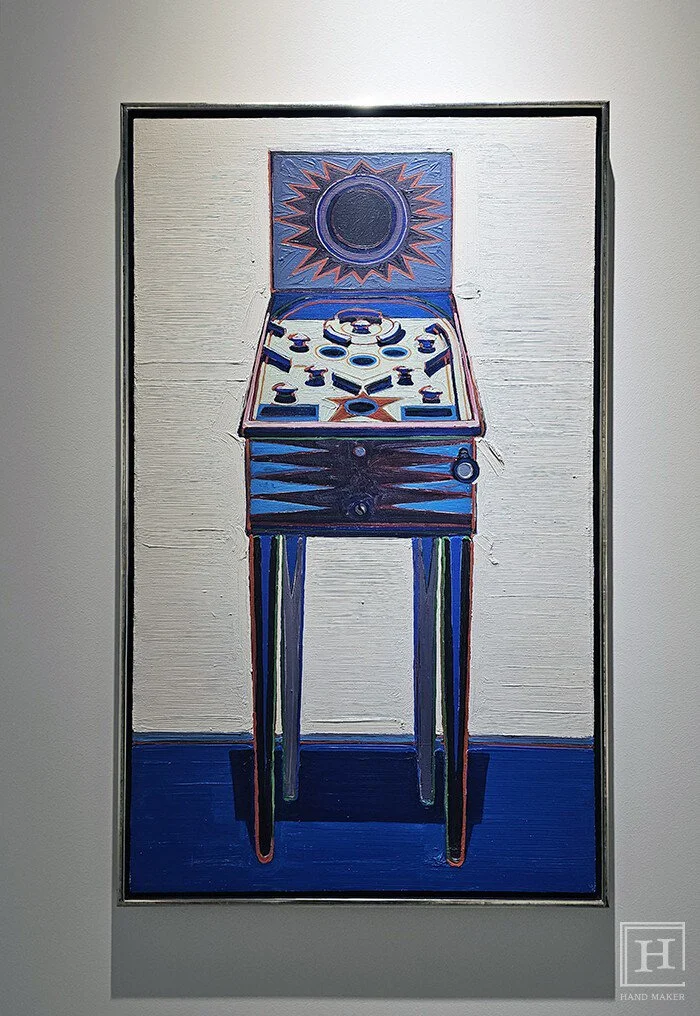
This method also appears in works depicting everyday objects such as shoes and cigarettes. It is repeatedly used in works capturing mechanical amusements like pinball machines, vending machines, and slot machines, which were drawn based on memories of the beach boardwalk in Long Beach, California, USA.
In 〈5-Cent Pinball Game〉 (1962-1963), the pinball machine is expressed simply as seen from the front. The upright body and slender legs evoke the image of a human figure. Thiebaud intentionally arranges the various geometric shapes that make up the machine in a balanced way, showing beautiful and stable forms even in a familiar amusement machine like a pinball machine.
Familiar yet Unfamiliar
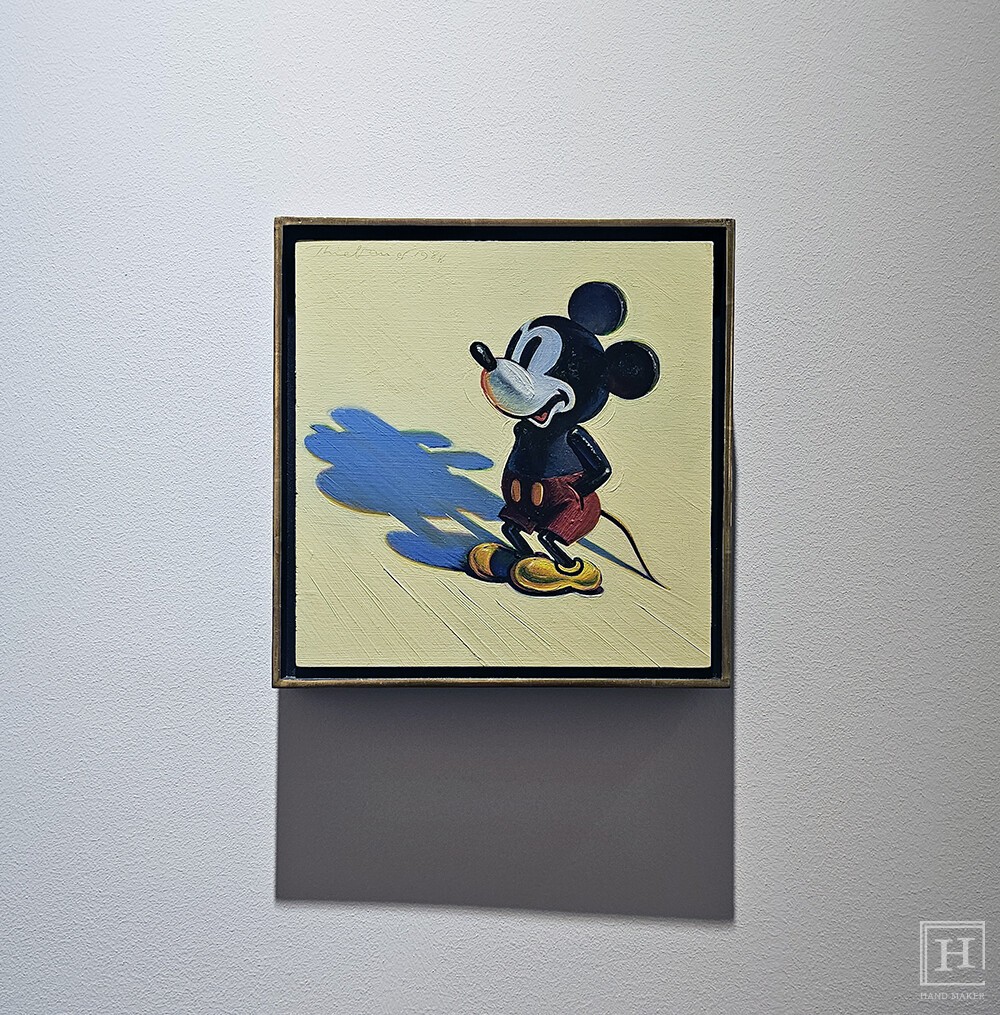
Behind the bright colors and familiar subjects that fill Wayne Thiebaud's works, there is an interesting yet somewhat uncomfortable aspect. It is the realm of the "uncanny," which is both familiar and strange. As the psychoanalyst Sigmund Freud explained, the uncanny is not something entirely foreign, but a state where something that was originally very familiar and well-known feels strange.
Thiebaud utilizes this psychological boundary by placing objects that have been removed from their everyday contexts alone in front of intense and simple backgrounds. Objects detached from their usual environments make the boundary between living and non-living things ambiguous and unstable.
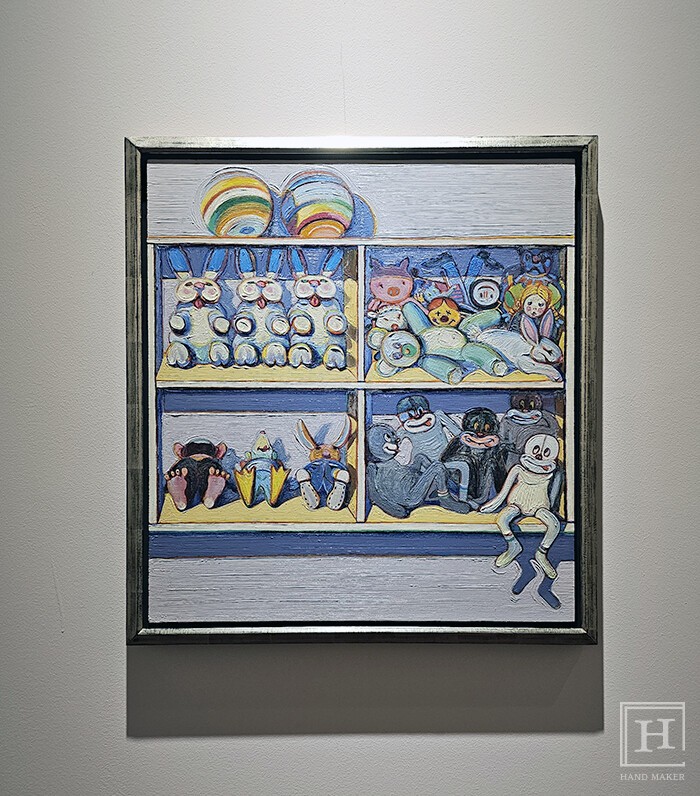
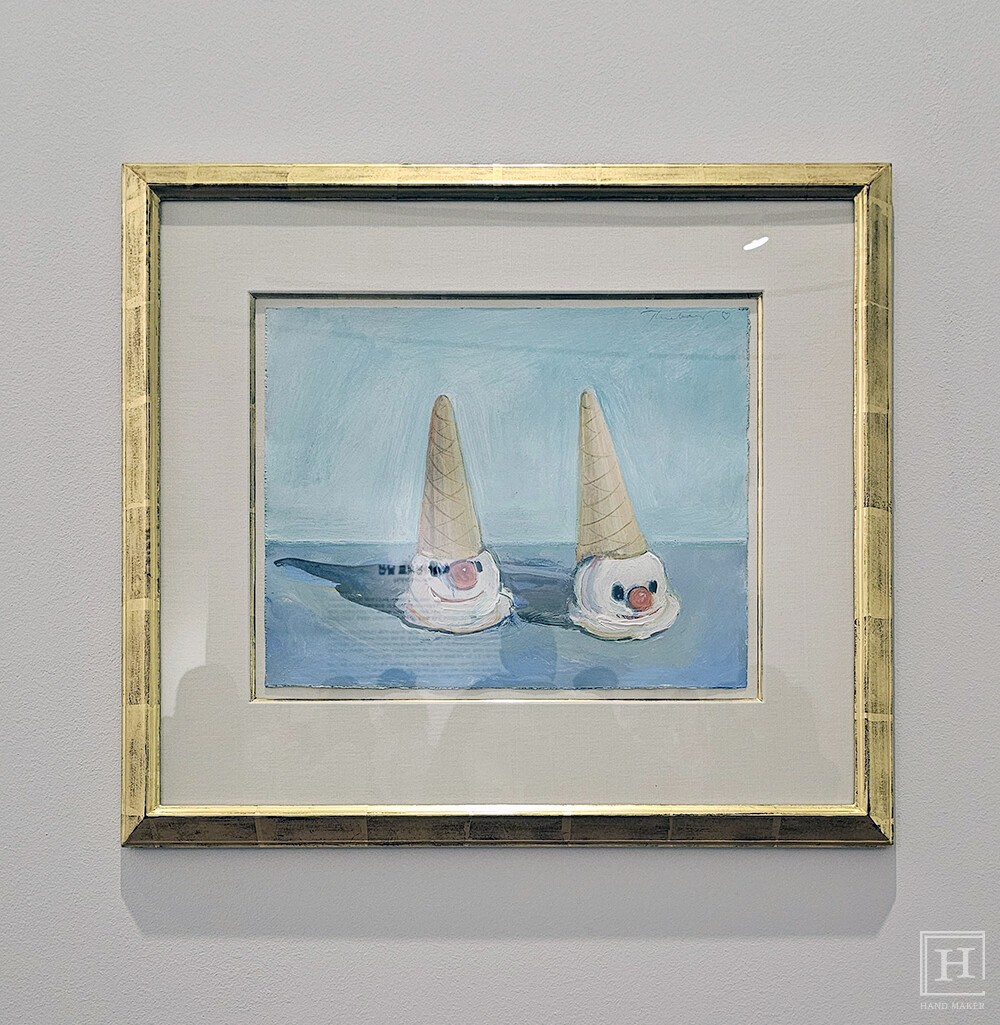
In 〈Stuffed Toy〉 (2004), stuffed animal dolls are placed neatly on organized shelves. While some dolls are laid out like taxidermy of hunted animals, others gaze outward with surprisingly vivid expressions. This tension also appears in 〈Cheerful Ice Cream Cone〉 (2000), where the scoops of ice cream have smiling clown faces, making them look as if they are alive and moving.
In this way, Thiebaud evokes a kind of strange anxiety by expressing playful and familiar objects as if they were figures silently watching us. He makes it difficult to easily judge whether what we are seeing is living or non-moving, real or artificial, causing our perception to remain in a state of hesitation for a while.
Landscapes, Cityscapes, and Massive Forms
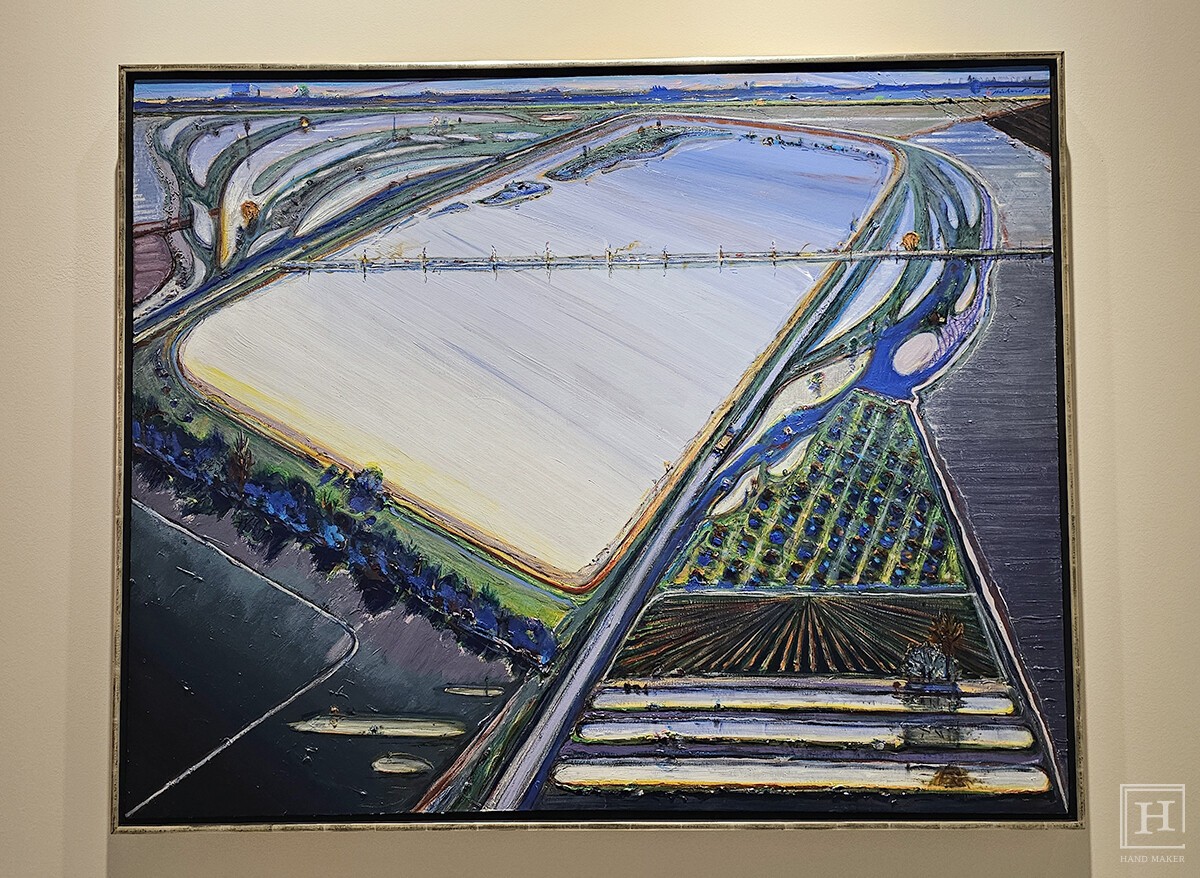
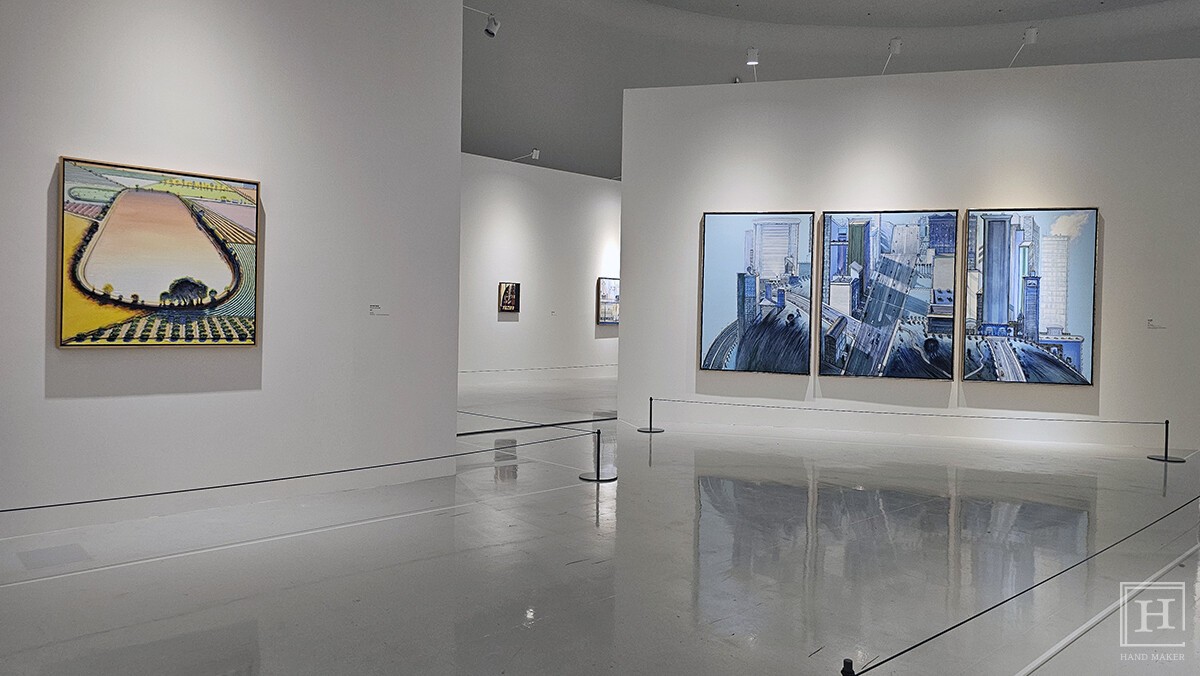
Since the 1970s, Wayne Thiebaud has developed a new way of painting landscapes, pushing the method of representing landscapes to a level close to abstraction. Moving away from traditional horizontal compositions, he created new ways of looking at the world by combining aerial perspectives, viewpoints that seem to look through a telephoto lens, and extreme perspective.
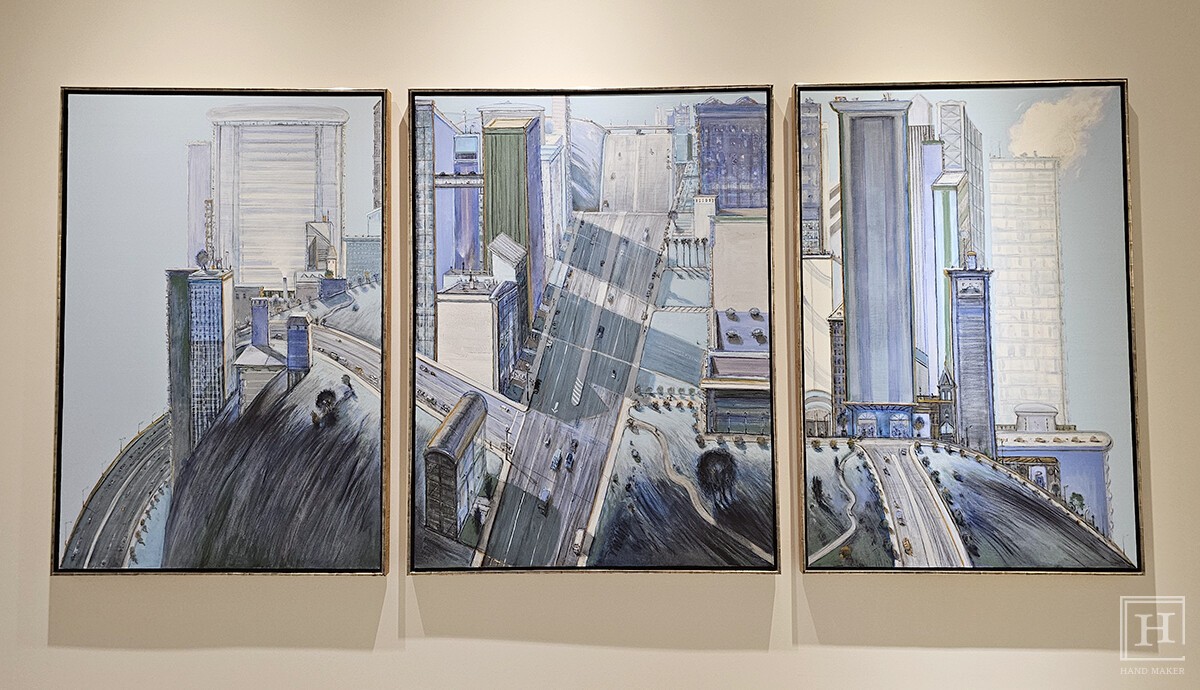
In the triptych 〈Cityscape〉, composed of three canvases placed side by side, Thiebaud's unique characteristics in capturing the landscape of San Francisco are well revealed. In this work, the city's steeply descending hills and intersections transform into a thrilling, roller-coaster-like landscape created by roads, buildings, and vivid blue shadows.
In works that look broadly upon the Sacramento–San Joaquin River Delta and farmland, fragmented fields, dams, and canals harmonize with flat planes of color to create a scene of brilliant hues. These landscapes stand in strong contrast to the works where Thiebaud painted massive mountains. High cliffs and large rocky mountains make human existence appear small, expressing the grandeur and awe found in the nature of the American West.
Beach Landscapes
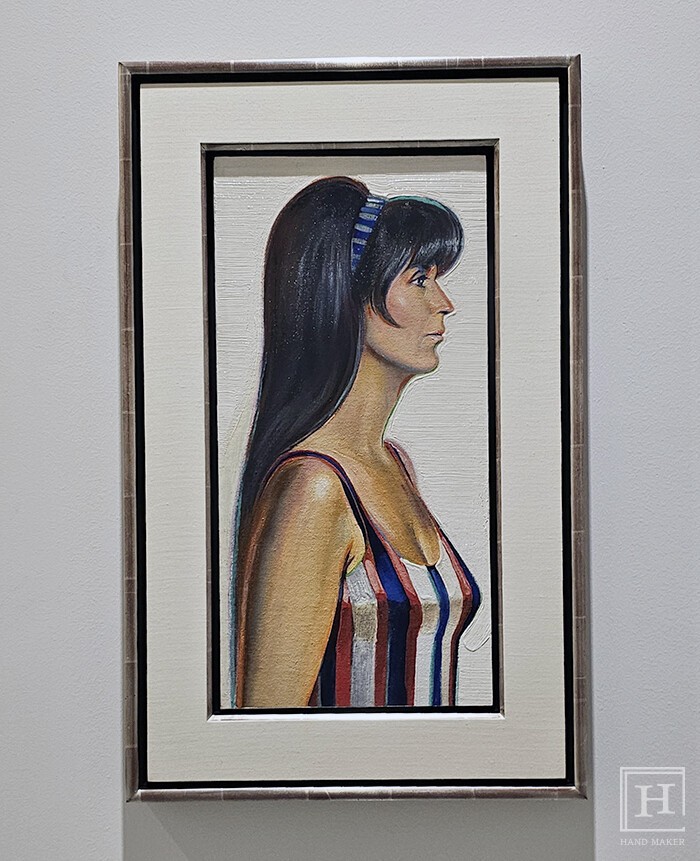
The seaside was a place of lifelong personal significance to Wayne Thiebaud, who worked as a lifeguard in Long Beach, California, during his youth. Over several decades, he consistently painted works featuring the seaside. In these works, the coastline is depicted as a rich visual boundary where the spaces where people enjoy leisure meet the vast and fluid Pacific Ocean.
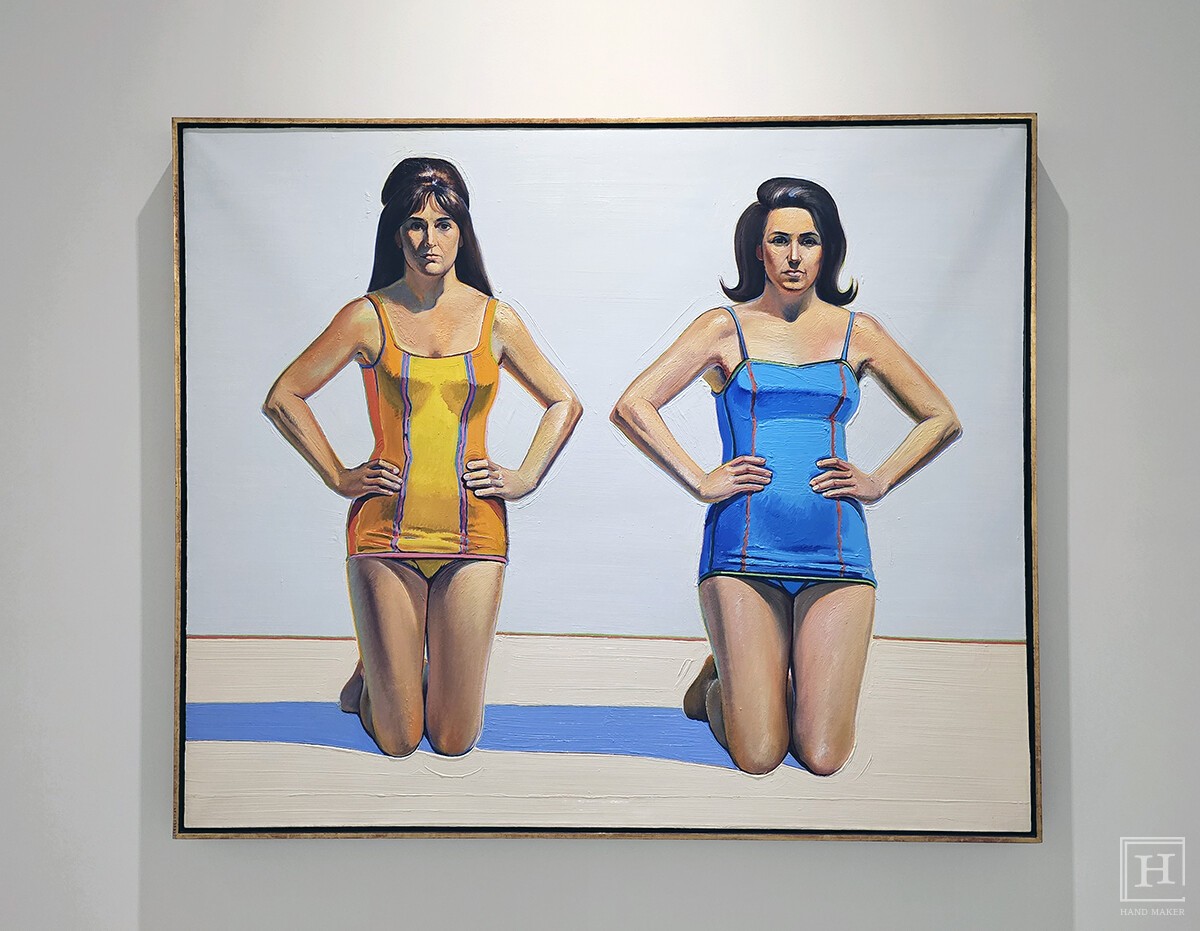
Thiebaud viewed the beach from various distances. In figure paintings such as 〈Figure in a Bikini〉 (1966) and 〈Two Kneeling Figures〉 (1966), he observed people sunbathing on the beach from up close, expressing their bodies like sculptural still lifes under intense light.
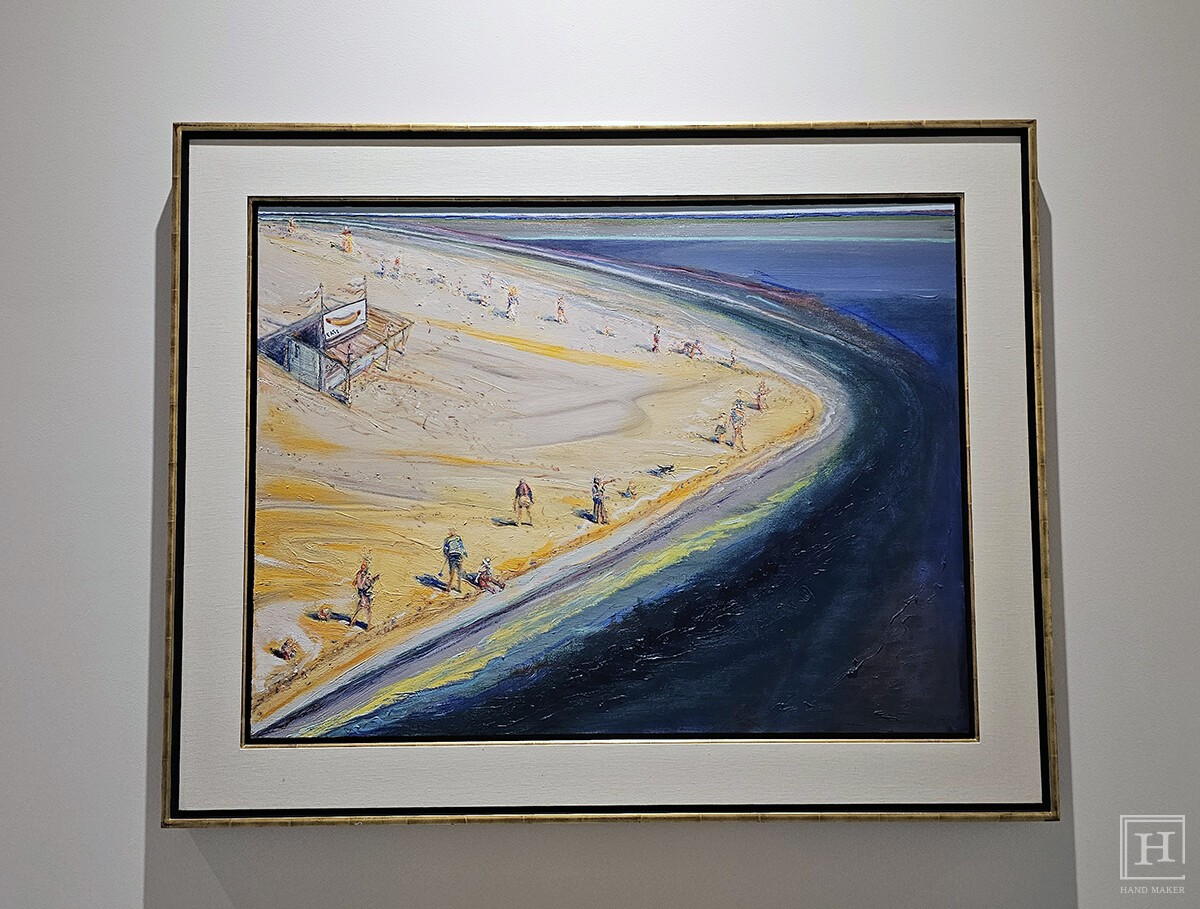
In later works such as 〈Triangular Beach〉 (2003/2005/2019) and 〈Seaside Resort〉 (2007), he shows landscapes viewed from a high vantage point. He scattered small figures, parasols, and striped towels across the wide, golden sandy beach and the turquoise sea, making them appear like rhythmic handwriting.
The Hundred-Year-Old Clown
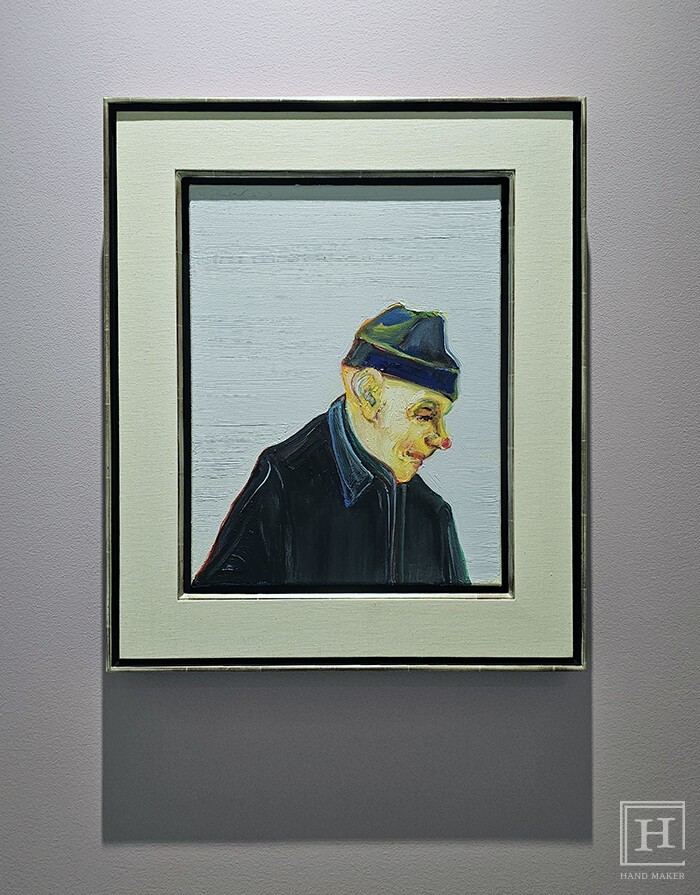
The clown series painted by Wayne Thiebaud in his later years originated from memories of his childhood watching circuses in Long Beach, California, in the 1930s. To Thiebaud, the clown was a figure with both charming and tragic aspects. The image of a clown constantly honing difficult skills to please people shows how humor and vulnerability coexist in human life.
Among the works he painted as a series, 〈The Hundred-Year-Old Clown〉 (2020) holds particularly significant meaning. Painted one year before Thiebaud passed away, this work is considered his final self-portrait. Through the image of an elderly clown in white makeup and costume, it is a work that quietly and deeply reflects on his own life and art.
Delights Series
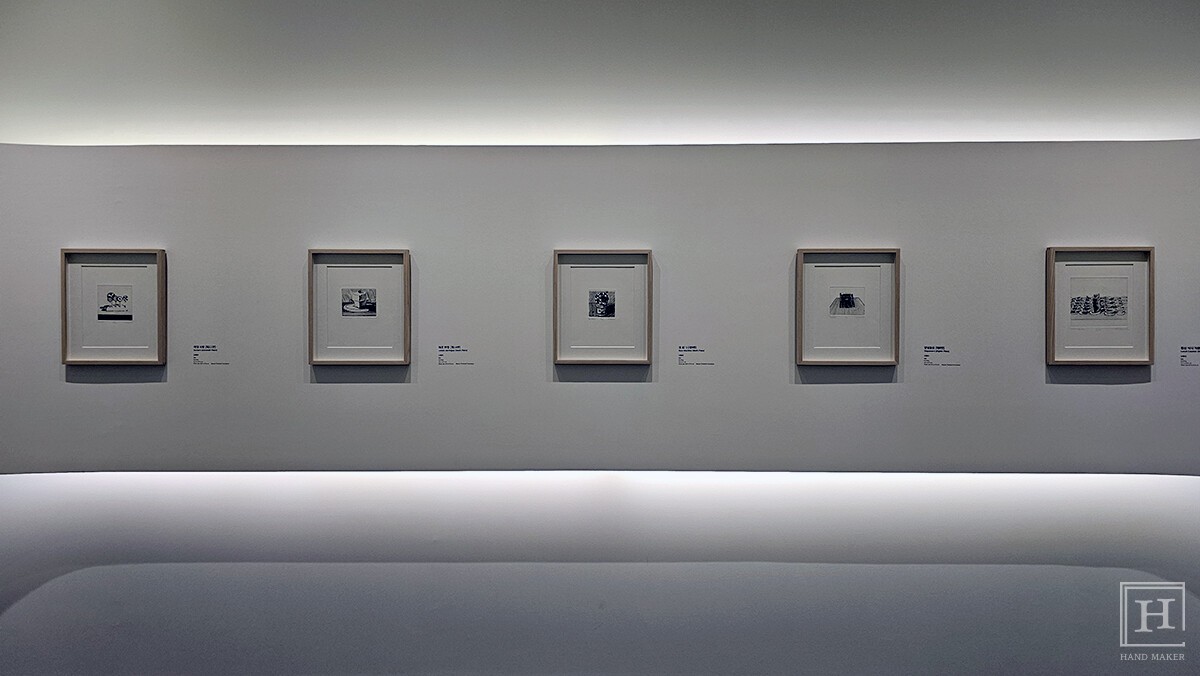
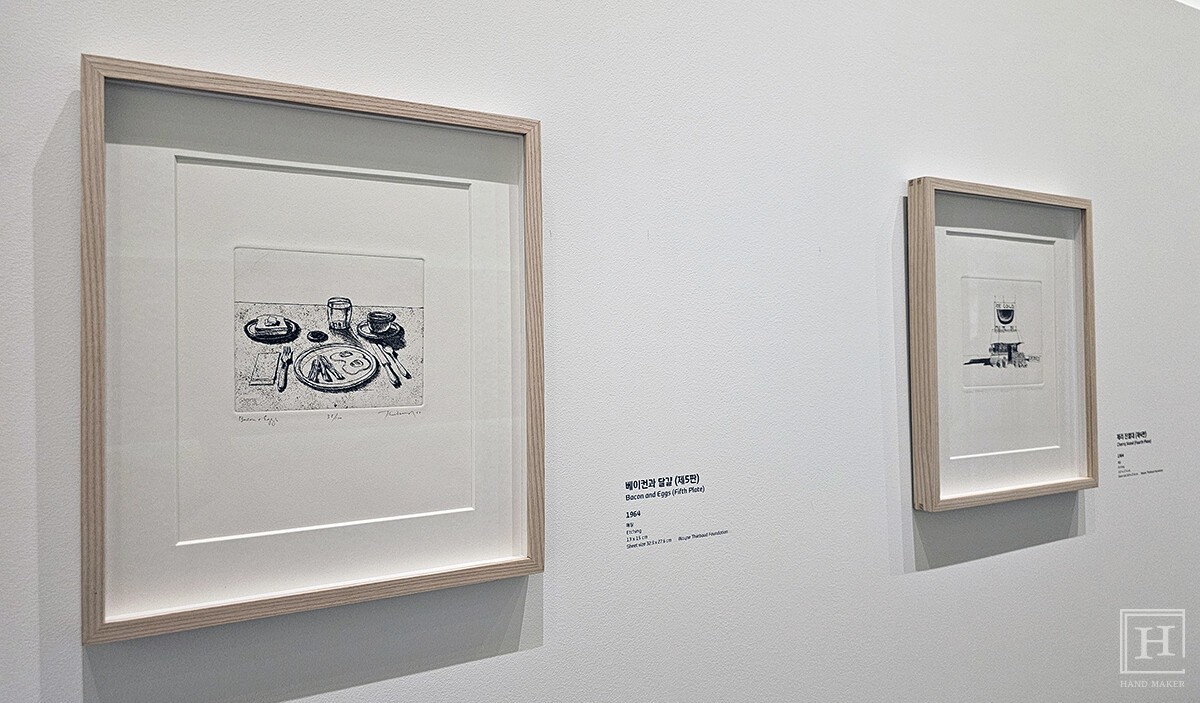
In 1964, Wayne Thiebaud collaborated with printmaker Kathan Brown at Crown Point Press in Berkeley, USA, to produce 〈Delights〉. This work is an important print series consisting of 17 etchings and drypoints. Working directly on copper plates, Thiebaud transferred images of food and consumer goods that he enjoyed painting into delicate and tactile printmaking methods.
This series contains various subjects showing everyday life in America. Slices of lemon meringue pie, double-stacked ice cream cones, lollipops, club sandwiches, gumball machines, and grocery store displays appear. These monochromatic prints further highlight Thiebaud's outstanding drawing skills. Through delicately layered lines, the soft and rich texture of drypoint, and chiaroscuro that brings out the atmosphere, he delicately expressed light, three-dimensionality, and texture. This served as an opportunity for him to explore printmaking in new ways for the following decades.
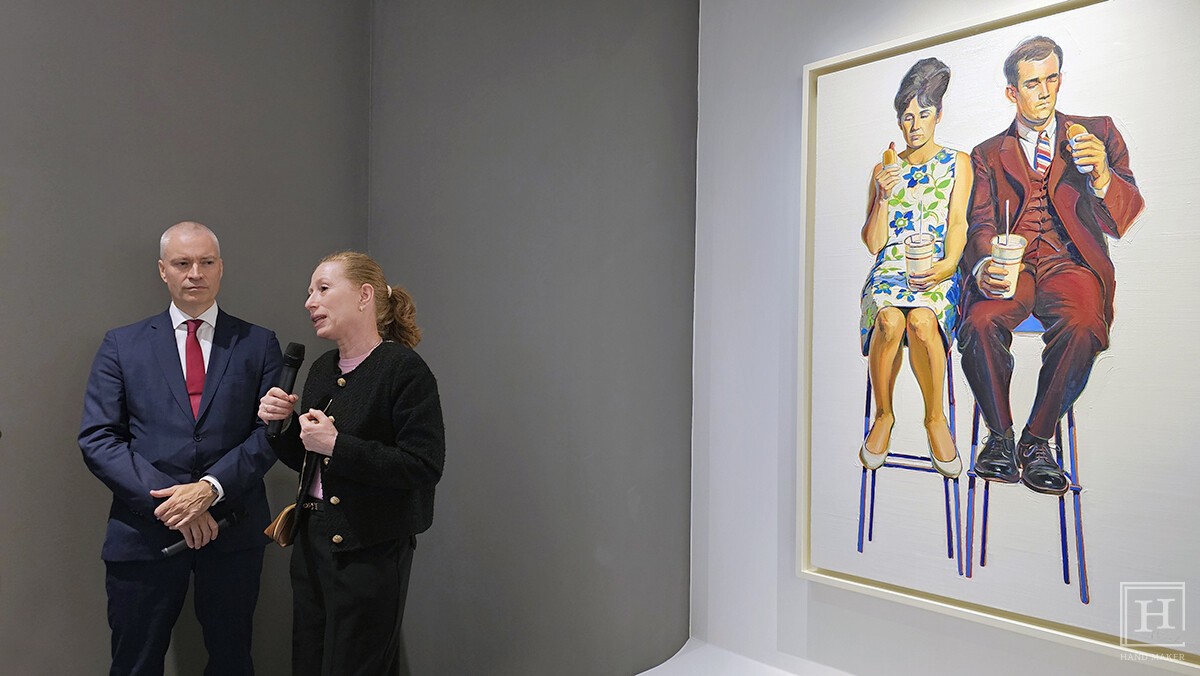
This exhibition was co-curated by Dieter Buchhart and Anna Karina Hofbauer, world-renowned curators in the fields of Modernism and Pop Art.
Hyundai Card stated, “This exhibition will serve as an opportunity to newly discover the world of artist Wayne Thiebaud, who moves across the boundaries of abstraction and figuration, interpreting the familiar daily lives and appearances of modern people through a timeless visual language.”
Reporter at HANDMAKER (핸드메이커), a Korean magazine devoted to crafts and handmade culture. Covers exhibitions, traditional crafts and the makers behind them.
Related Articles
![[On-site Sketch] Cutting, Weaving, and Moving Photos: Beyond Recording to Show New Possibilities…](/storage/handmk-global/2026/09/c323a317-58ea-4ccc-92f0-9a8d00d5c66d-599ce664-thumb.webp)
[On-site Sketch] Cutting, Weaving, and Moving Photos: Beyond Recording to Show New Possibilities... Group Exhibition "TRANSITION" by Japanese and Chinese Photographers
![[Field Sketch] Unexpected Encounters and Records of 26 Teams Touching Summer: 《To Our Summer》 Exhibition](/storage/handmk-global/2026/09/fb9e35d7-c34d-4318-897d-fdb3c3857356-14760ffc-thumb.webp)
[Field Sketch] Unexpected Encounters and Records of 26 Teams Touching Summer: 《To Our Summer》 Exhibition
![[On-site Sketch] An Artistic World Made of Hangeul Offers Only Answerless Freedom, 《Hangeul…](/storage/handmk-global/2026/09/53d245f8-5a92-41b3-960f-671be6ce94f6-53ed35ad-thumb.webp)
Comments 0
Comments are currently disabled.