
PODO Museum presents "How Are the Things That Sway?" at Seonhyewon
PODO Museum is presenting "How Are the Things That Sway?", the second art project in its Seonhyewon series, featuring works by three female artists who use everyday materials.
PODO Museum is holding its second art project, "How Are the Things That Sway?", at the Seonhyewon hanok in Samcheong-dong, Seoul, through October 31. The exhibition features works by Mona Hatoum, Choi Seong-im, and Kim Yun-su, who use overlooked or discarded materials to explore themes of connection and time.
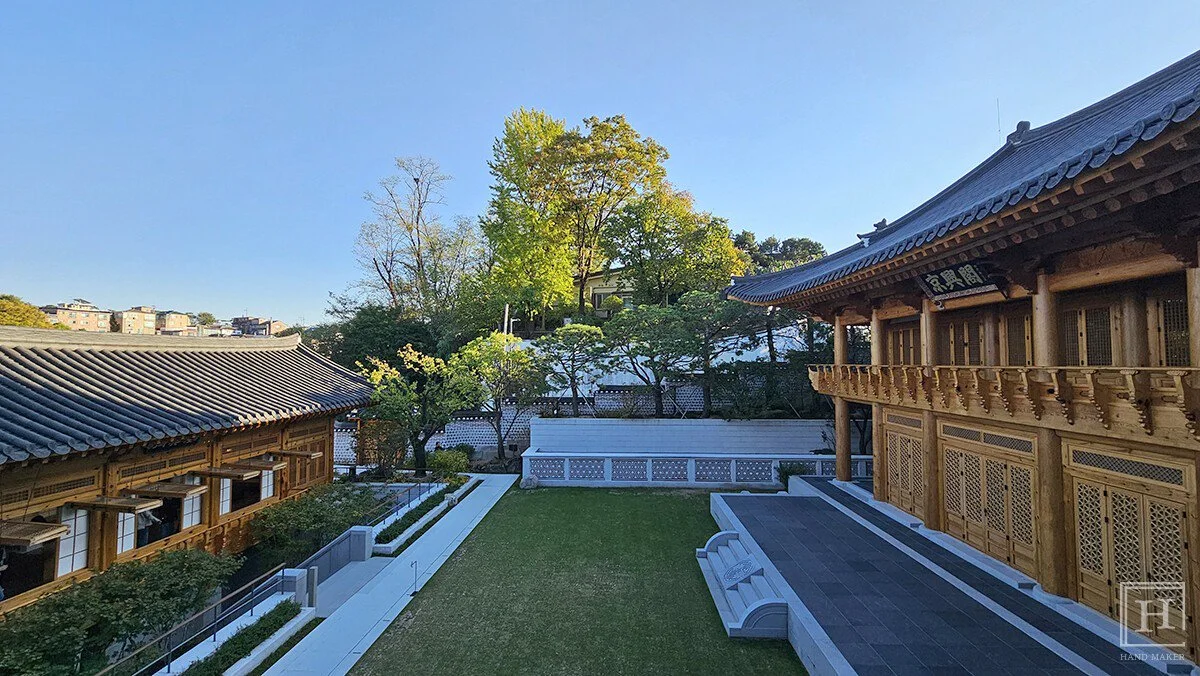
Following Kimsooja's "Breathing—Seonhyewon," PODO Museum is holding its second art project, "How Are the Things That Sway?", through October 31.
Located in Samcheong-dong, Seoul, Seonhyewon is a hanok that preserves the accumulated life of an era. It was purchased by the late Choi Jong-geon, the founder of SK Group, and served as his residence during his lifetime; currently, the location is not open for regular visits but is released on a limited basis through reservations only during art project periods.
PODO Museum continues the Seonhyewon art project by expanding this space into a meeting point for the public and art. This current project, "How Are the Things That Sway?", showcases the works of three female artists: Mona Hatoum, Choi Seong-im, and Kim Yun-su. These three artists have presented their work to the public using materials easily overlooked or discarded in our surroundings as their starting points.
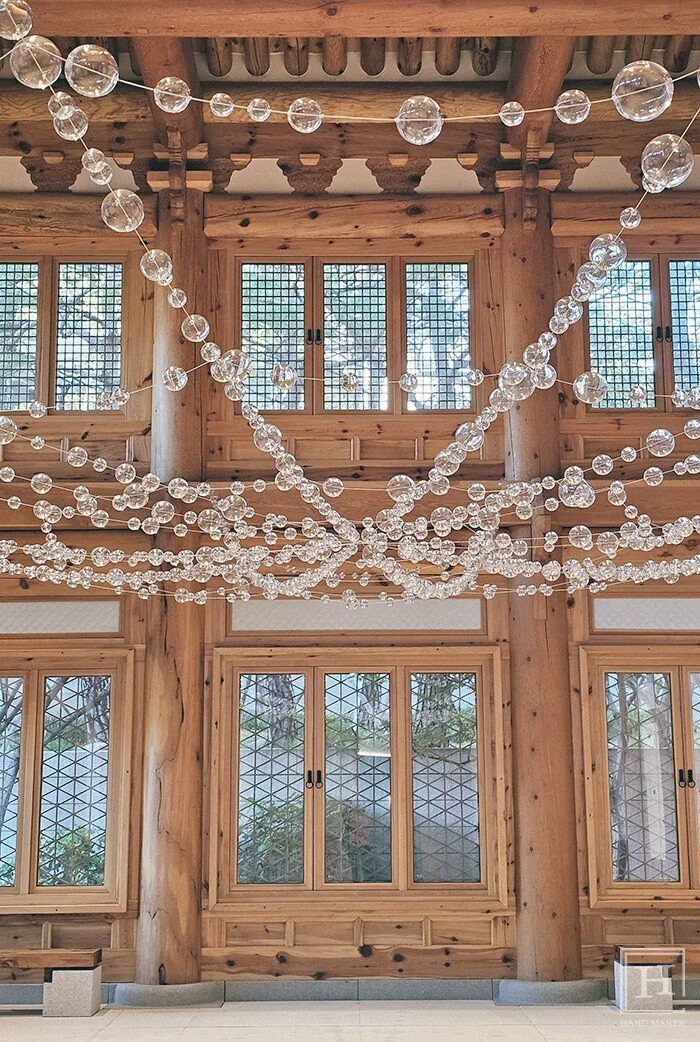
For decades, Mona Hatoum has varied the imagery of spiderwebs through various materials and scales, addressing themes of capture and connection, close family ties, and issues of neglect and relationships. In her work, the spiderweb repeatedly appears as a structure where opposing states, such as protection and threat or connection and restraint, exist simultaneously.
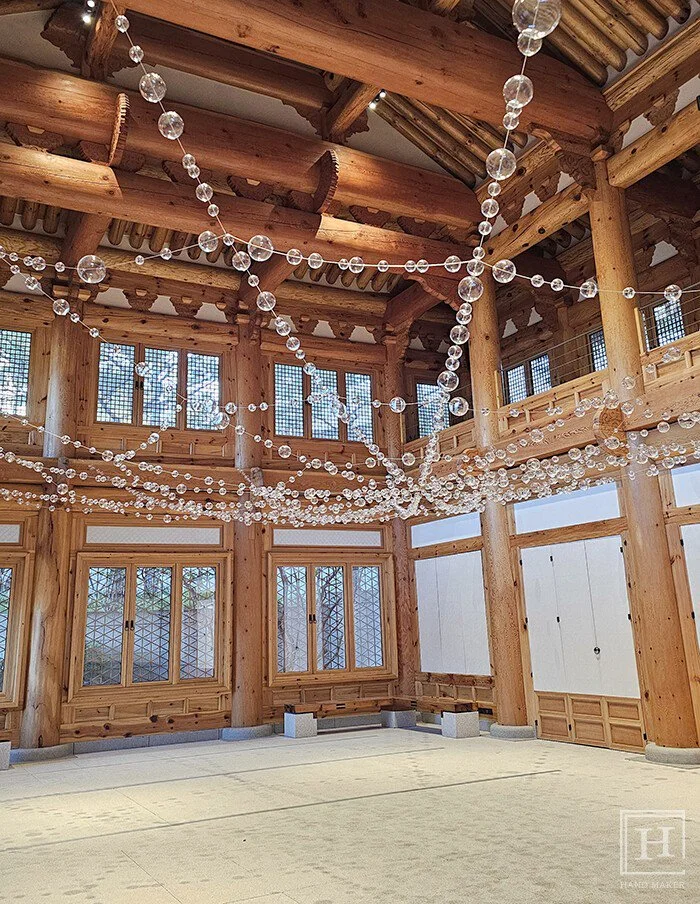
〈Web〉 is a large-scale installation that spreads out like a massive spiderweb by threading delicate, transparent glass beads onto stainless steel wire. Hanging from the ceiling of Gyeongheunggak and spanning the entire space, this precarious structure both beautifully draws the eye and creates an ominous tension, transforming the entire space into a single metaphorical scene.
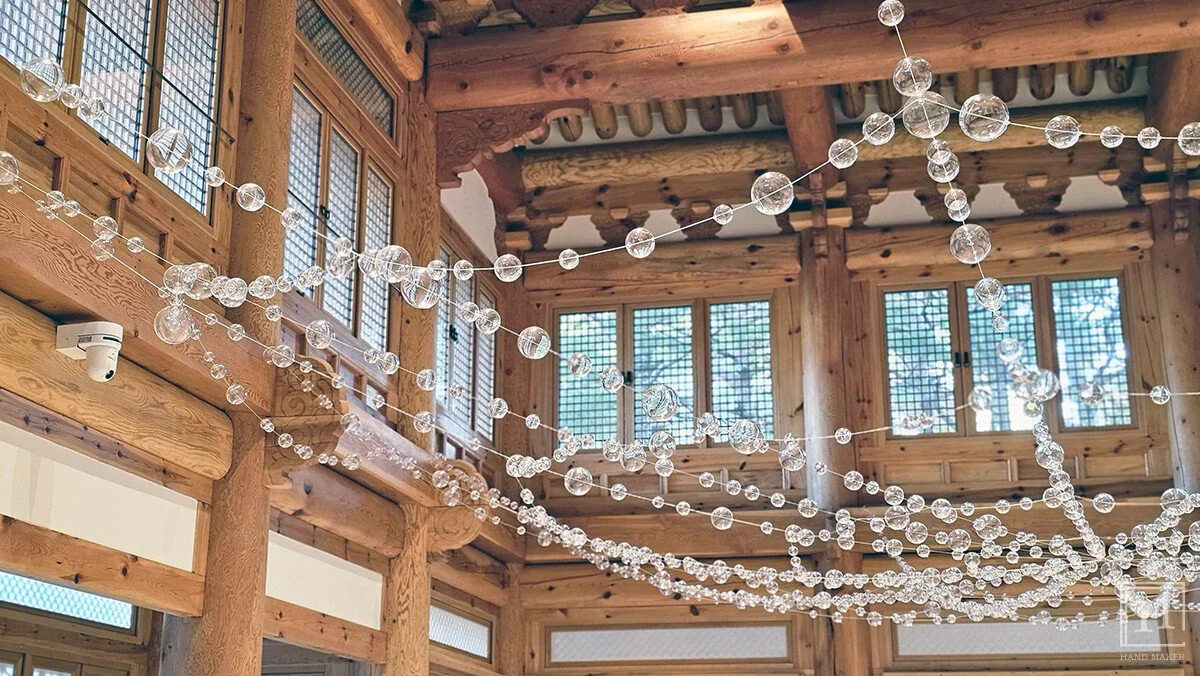
While 〈Web〉, hanging like a giant net, may appear to be a structure of capture that holds and imprisons someone, it is simultaneously a house for hiding and staying, a place of safety and refuge. The fact that spiders spin webs to catch prey also evokes the conflicting meanings of protection and threat within the work.
For Hatoum, the spiderweb is also a structure of connection that links different existences. While symbolizing that everything is intertwined, the glass beads shine like dew caught in a spiderweb, both enchanting and unsettling the audience. 〈Web〉 delicately yet sharply reveals the physical and psychological structures of entanglement and capture encountered in our lives.
Choi Seong-im has consistently explored how daily life and creation overlap and continue within a single person's time. Through the repetitive act of gathering and connecting materials found close to daily life—such as bread ties, beads, lights, and fabric—she reveals invisible labor and time in a single form. For the artist, the home, garden, and blankets are not merely backgrounds for living, but the sites of life where housework, care, and creation occur together.
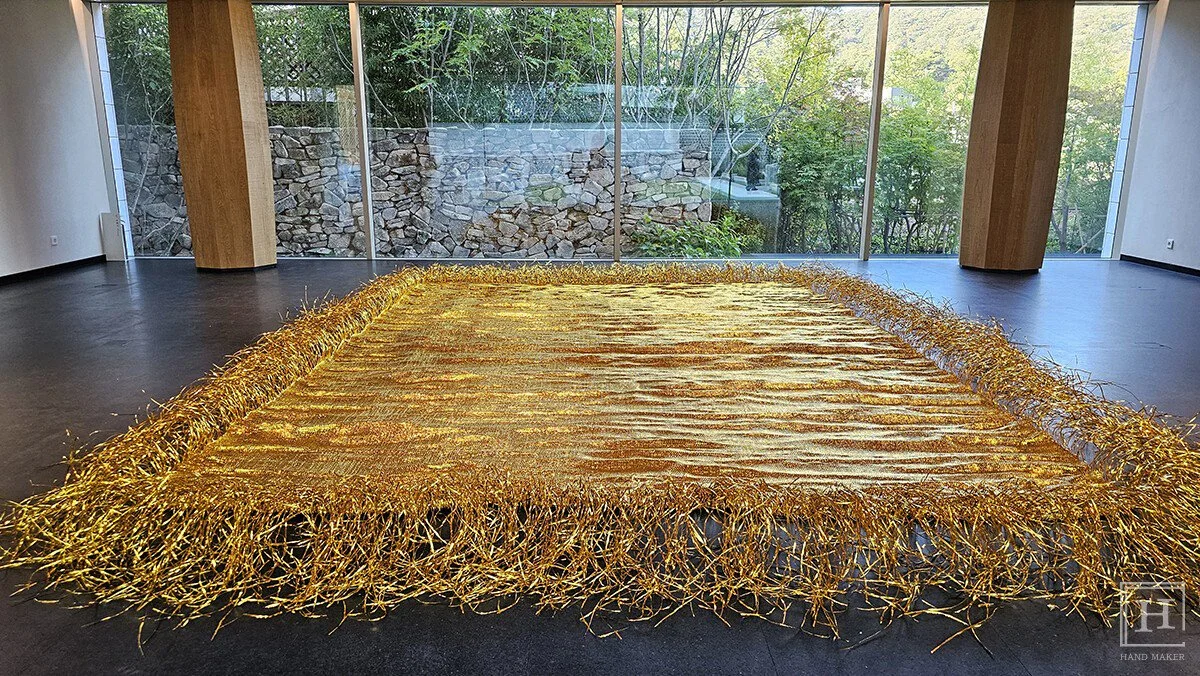
〈Golden Blanket〉 is a work inspired by the bread tie materials used and discarded on dining tables every day. Although they are small and light materials, through the process of being endlessly connected and woven, they gain a wide surface and heavy volume, finally spreading across the space like a blanket. The artist's time, once finely divided and scattered, becomes a material placed before the eyes through repetitive handiwork.
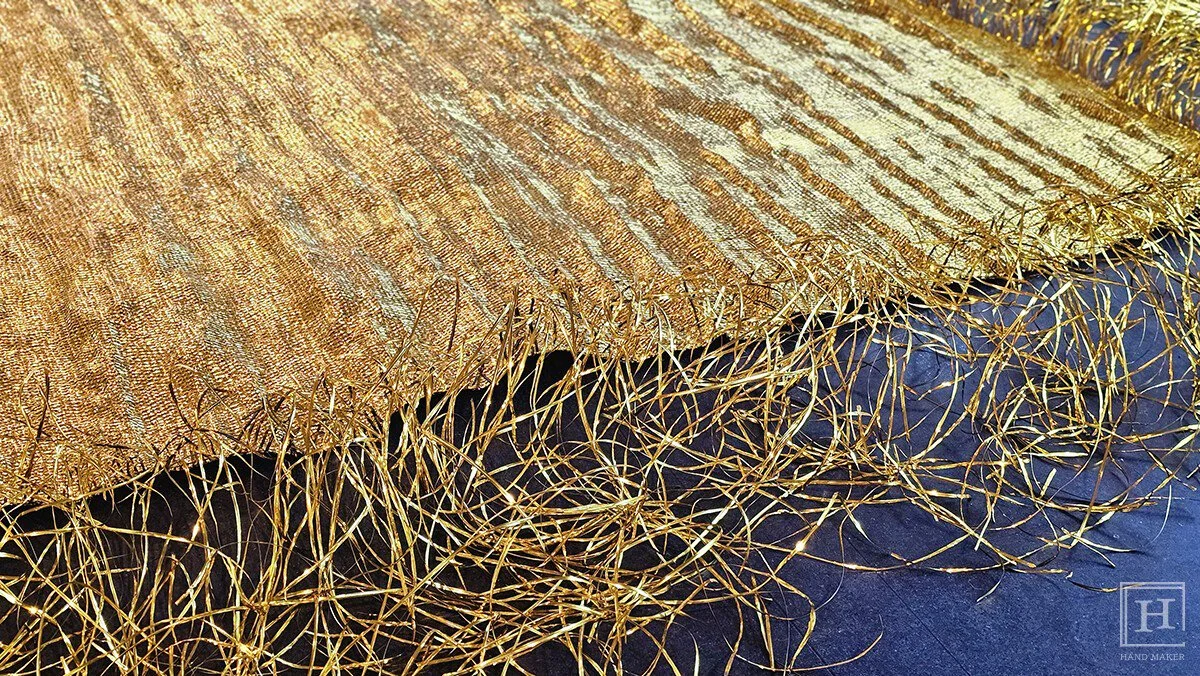
The golden hue of the work is imbued with housework, childcare, care, labor, and the time of creation that was paused and then resumed. She does not view a life of preparing meals and caring for someone, only to pick up bread ties again to continue working, as a narrative of sacrifice or patience. Rather, it shows the tenacity of an artist who, while life and art remain inseparable, pieced together small fragments of spare time to ultimately create a place for creation. In this way, the trivial remnants of daily life acquire a presence that cannot be easily overlooked by embracing long periods of time.
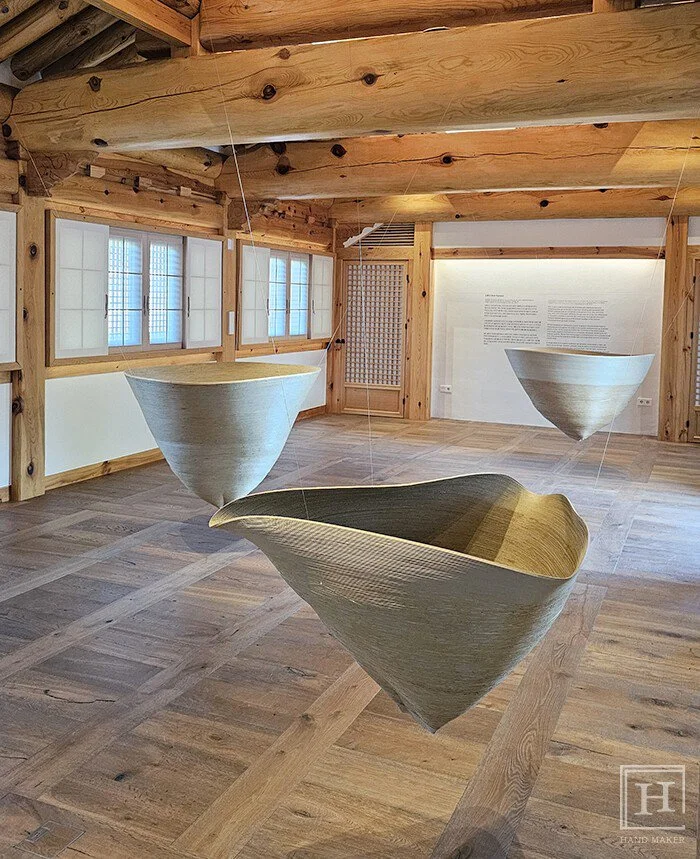
The corrugated cardboard works by Kim Yun-su, which can be seen at Harindang on the 2nd floor, look at the traces that intangible time and movement leave on bodies and objects. By repeatedly cutting and joining light and flexible materials such as corrugated cardboard and vinyl, the artist accepts even the changes that cannot be fully determined by intention alone as part of the work. At the moment when repetitive hand movements meet the inherent properties of the materials, forms that were not initially expected naturally reveal themselves.
〈Wind (Sculpture on Transparent Thought)〉 and 〈Love That Longs for Indifference〉 are works made by joining thinly cut paper corrugated cardboard over a long period. The corrugated cardboard, which followed the movement of the hands, at some point bends and curls on its own, creating unexpected curves. Rather than forcibly correcting this, the artist waits for the moment when the material reveals its own nature and stops their hands when the form settles naturally.
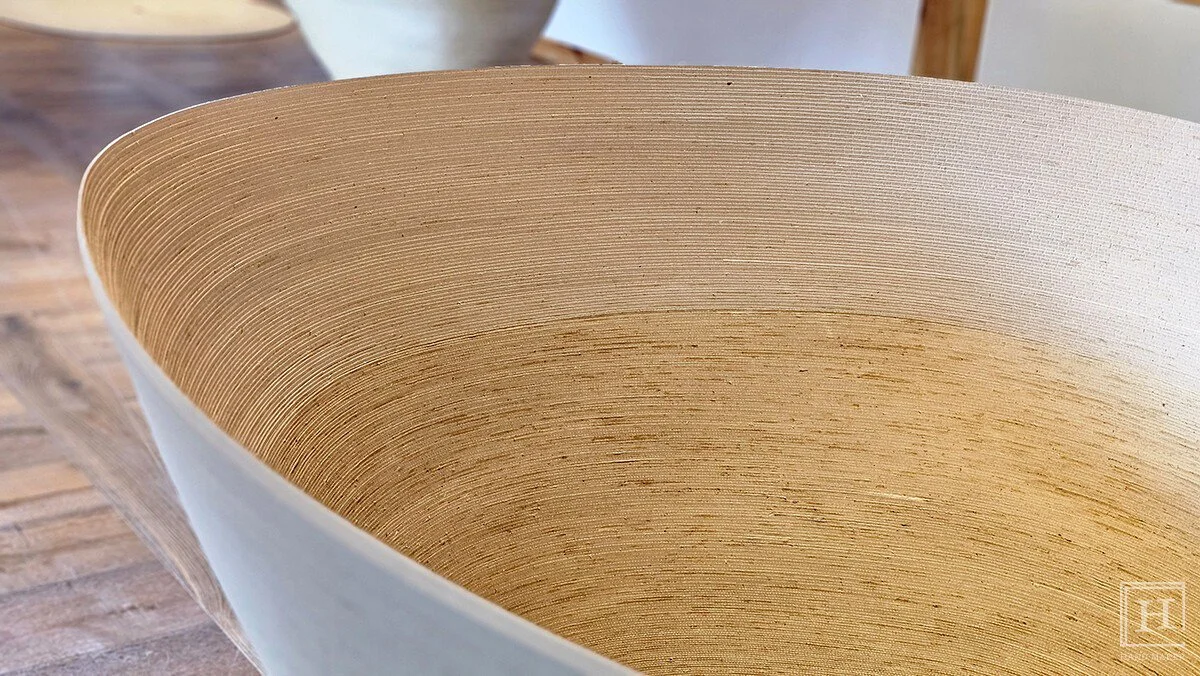
A single thin sheet of corrugated cardboard is easily pressed and bent, but the repeatedly joined layers eventually gain distinct volume and presence, with light and air lingering in the gaps between them. Like the wind, which is invisible but moves the surroundings and leaves traces, the works also show the moment when an ungraspable flow temporarily takes on form. This is a form created as the artist's hands, the movement of the materials, intention, and chance accumulate together.
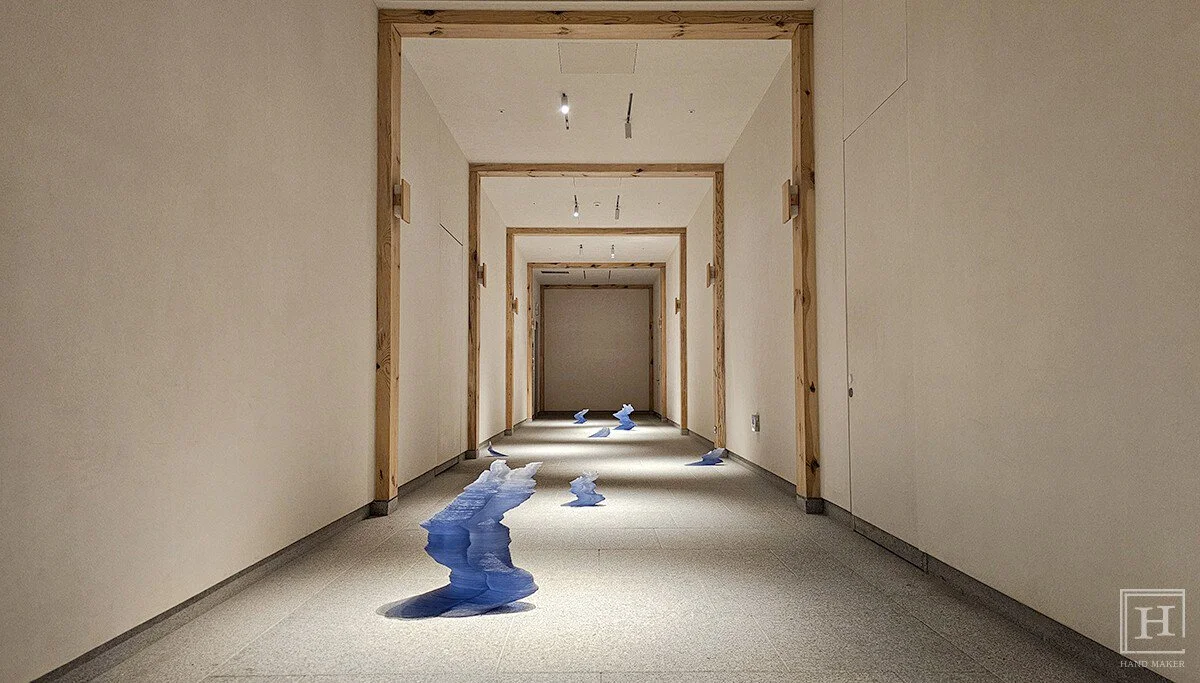
Kim Yun-su's work continues in the basement. 〈Surface of the Wind〉 begins from the place where a body has passed. Kim Yun-su draws the outlines of the soles of various people, including themselves, on thin blue PVC vinyl used as a windbreak for strollers, cuts them out, and then builds up multiple layers by tracing those forms again.
As the same action is repeated, small differences and errors accumulate, and the foot outlines that were clear at first gradually spread, blur, and transform into other shapes. The vinyl, which is almost transparent when it is a single sheet, gains deep blue color and volume when numerous layers are overlapped. The form, starting from one person's small footprint, expands through repetition and time into a landscape that evokes glaciers, islands, or unfamiliar terrains.
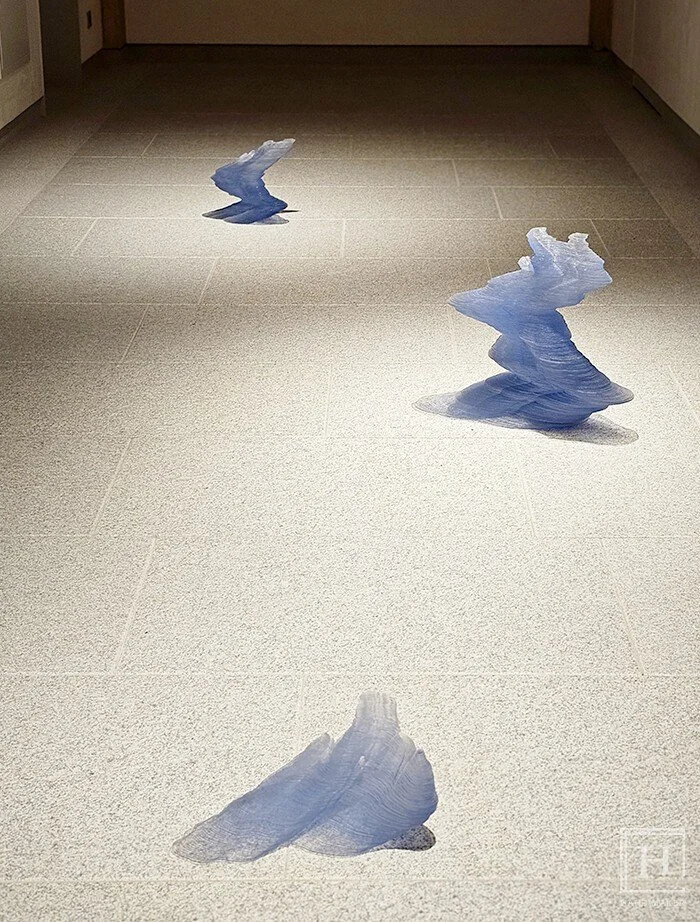
To Kim Yun-su, a footprint does not remain merely as a trace recording the shape of a body. The traces people leave as they live also, rather than being preserved in their original state, gradually change and overlap within different times and relationships. 〈Surface of the Wind〉 builds up the time a being has passed through in thin layers. The vinyl, which can be easily torn, embraces numerous traces and eventually permeates the space as a landscape with depth and density.
Fragile materials such as cobwebs, bread ties, vinyl, and corrugated cardboard gain entirely different density and presence through repeated touches while staying in the hands of the artists. As the time of the three artists permeates and overlaps within Seonhyewon, a space where long daily lives and memories are layered, the traces of different lives briefly overlap and flow in one place.
An official from the exhibition stated, "We hope this exhibition serves as a place to look at the time silently permeating into things easily overlooked, to consider the lives that have endured that time, and to quietly ask after each other's well-being."
Reporter at HANDMAKER (핸드메이커), a Korean magazine devoted to crafts and handmade culture. Covers exhibitions, traditional crafts and the makers behind them.
Comments 0
Comments are currently disabled.