
[Field Sketch] Gyeonggi Ceramics Biennale 2026 ① A creative journey made by clay and the Earth, the "Earth Makes" exhibition
The Gyeonggi Ceramics Biennale 2026, themed "Earth Makes," is being held across Gyeonggi Province, including Icheon, Gwangju, and Yeoju, until November 1.
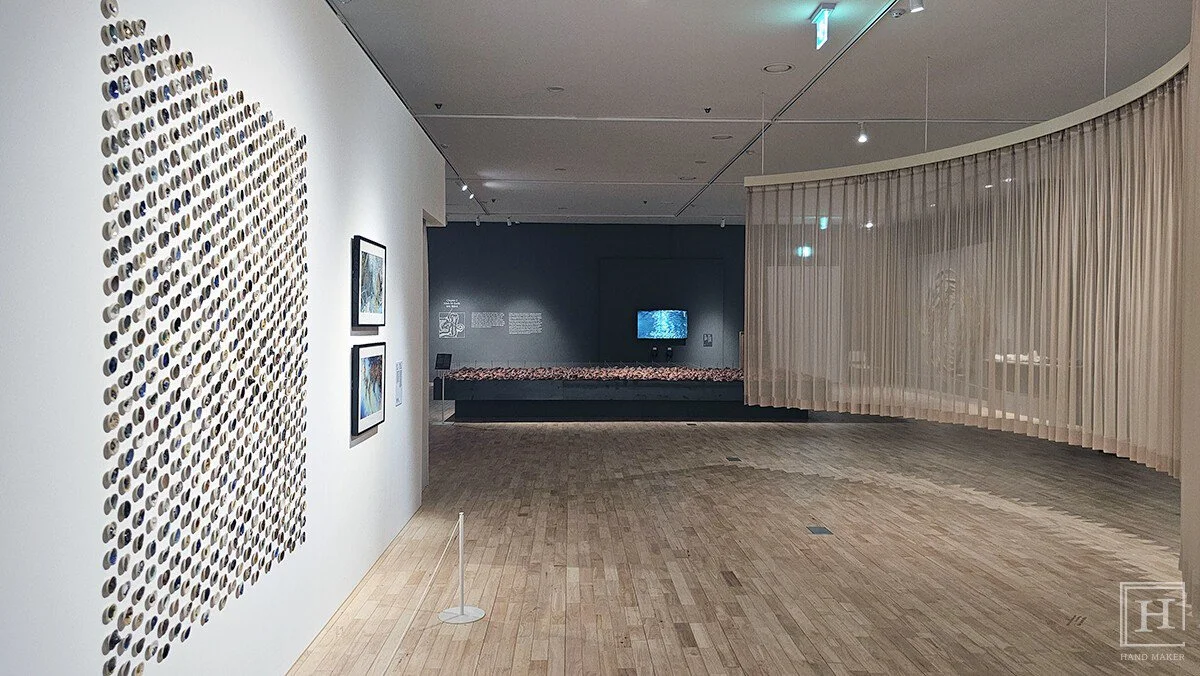
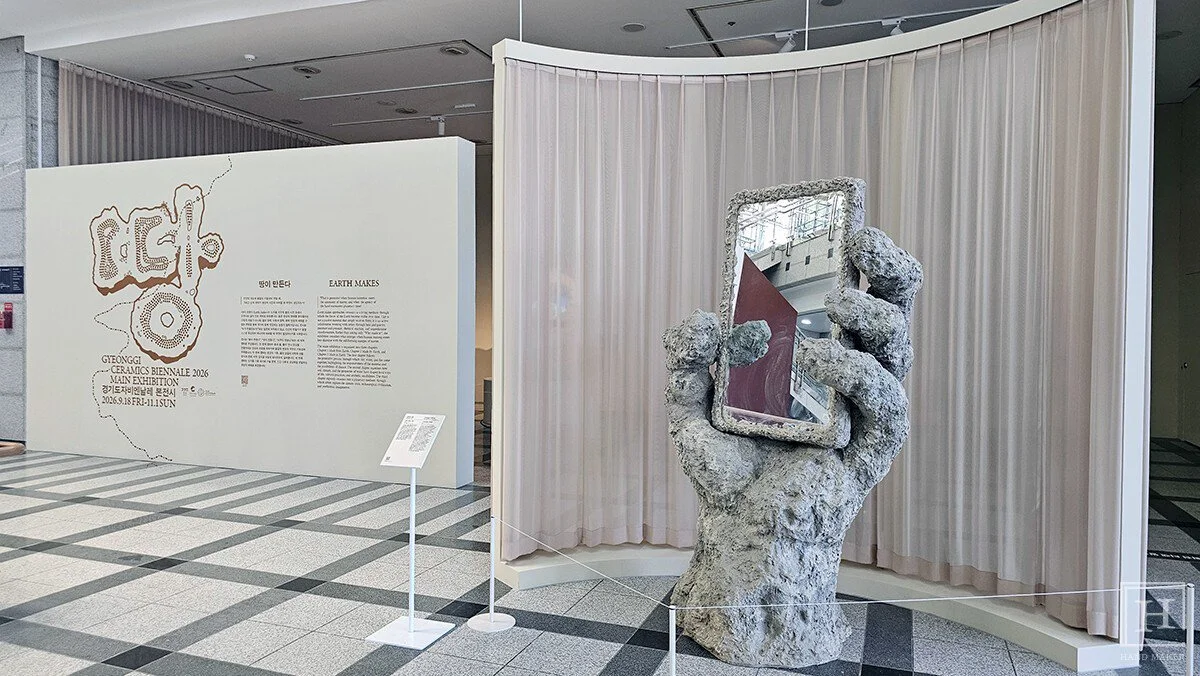
The Gyeonggi Ceramics Biennale 2026, which opened on the 18th, will take place throughout Gyeonggi Province, including Icheon, Gwangju, and Yeoju, until November 1. The theme is "Earth Makes," and a total of seven different exhibitions, including the main exhibition, international competitions, and master exhibitions, are being held.
The main exhibition "Earth Makes," held at the Gyeonggi Museum of Ceramic Art in Icheon until November 1, views ceramics as a living medium through which the forces of the Earth are revealed over time. Clay is not merely a passive material that accepts form, but an active collaborator that works with the artist through heat and gravity, moisture and pressure, chemical reactions, and unpredictable transformations.
The exhibition does not stop at the question "Who made it?" but contemplates what occurs when human making engages in a dialogue with the energy through which matter forms itself. The exhibition is composed of three chapters: "Clay Makes," "Earth Makes," and "The Earth Makes."
'Clay Makes' follows the process of clay, water, and fire meeting to transform into a single form and existence. Clay is not a material passively molded by the artist's hands, but a living substance that reacts on its own by drying, cracking, and bending. Participating artists carefully accept the weight and humidity of the clay, the heat of the kiln, and changes in the atmosphere, listening to the movements revealed by the material rather than attempting to fully control the form.
In this process, the resulting cracks, twists, color changes, and accidental traces become important elements that complete the work rather than being failures or defects. This chapter shows that ceramics are not created by human will alone, but are the result of generation shaped together by the conditions of clay, water, fire, time, and the Earth.
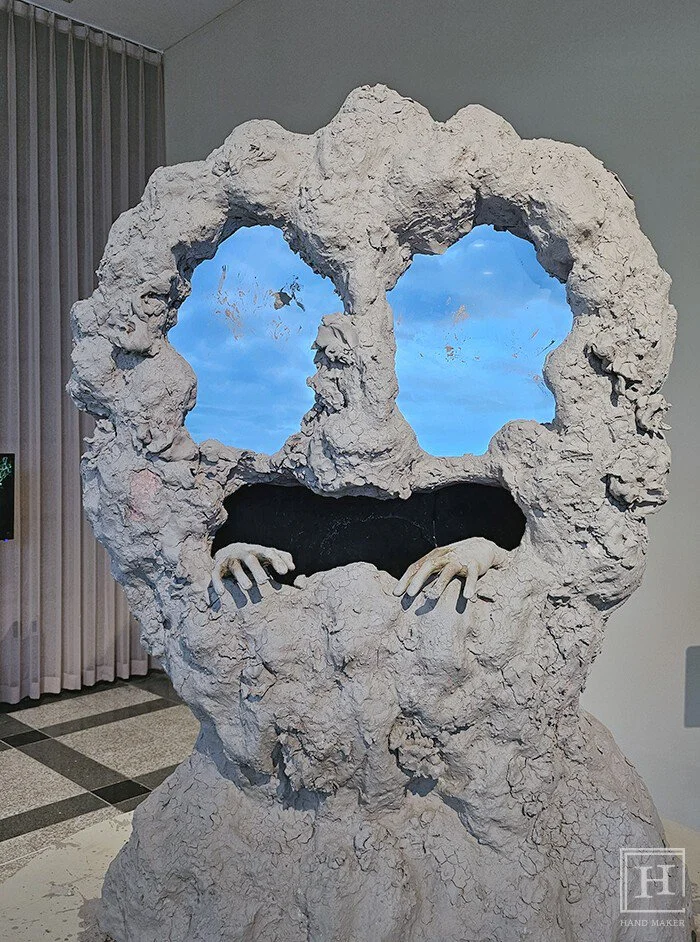
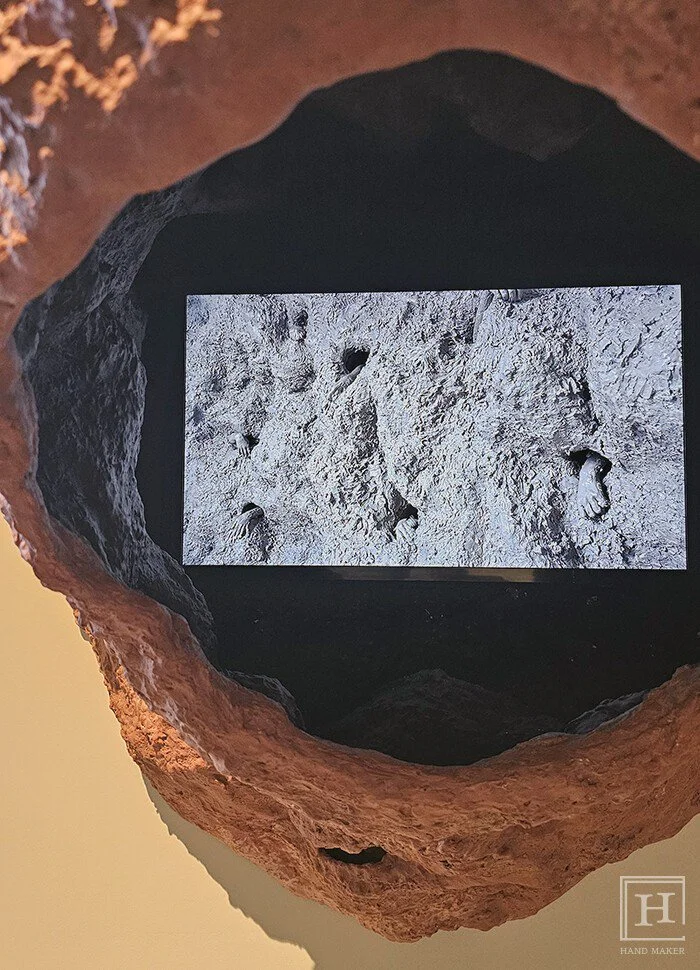
〈Inner Earth〉 is a cave-shaped sculpture crafted from clay and plaster, with a screen embedded inside. In front of this entrance, which is somewhat low for adults and somewhat high for children, tall viewers must bend down, and young children must stand on a footstool to finally look at the inner screen.
The artist believes that the younger a child is, the more instinctively connected they are to the earth, and as they age, they gradually drift away from that sense. This cave, which requires individuals to lower or raise their bodies in different postures, makes them readjust their own bodies to rediscover forgotten senses.
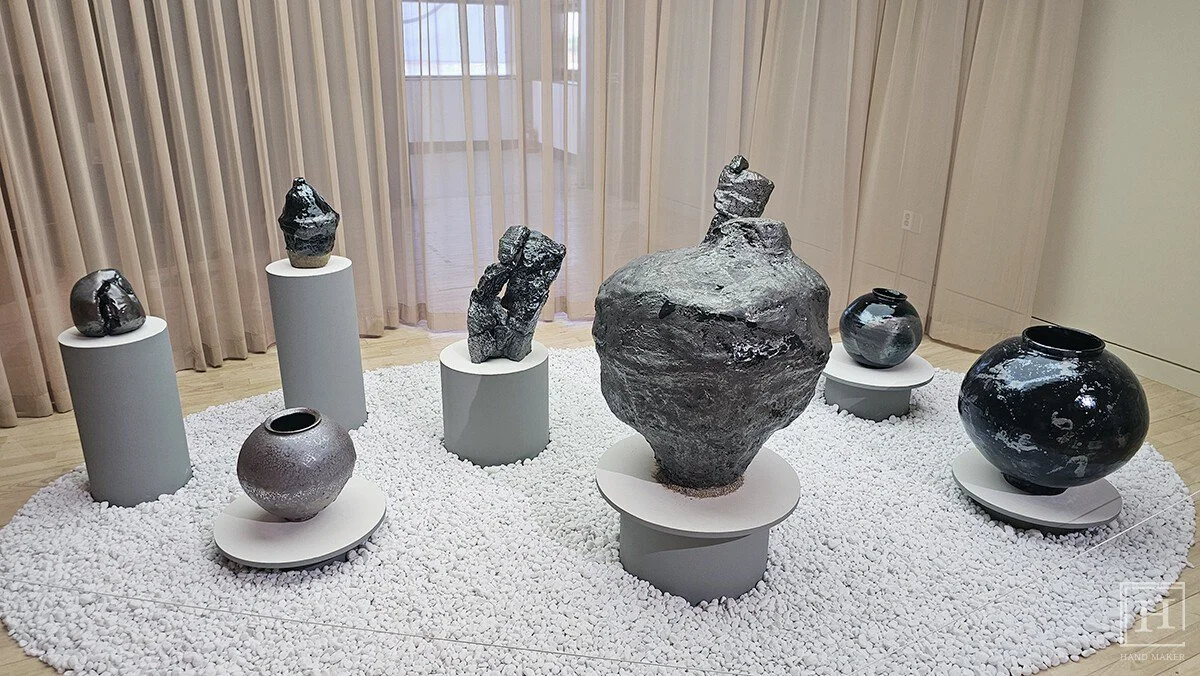
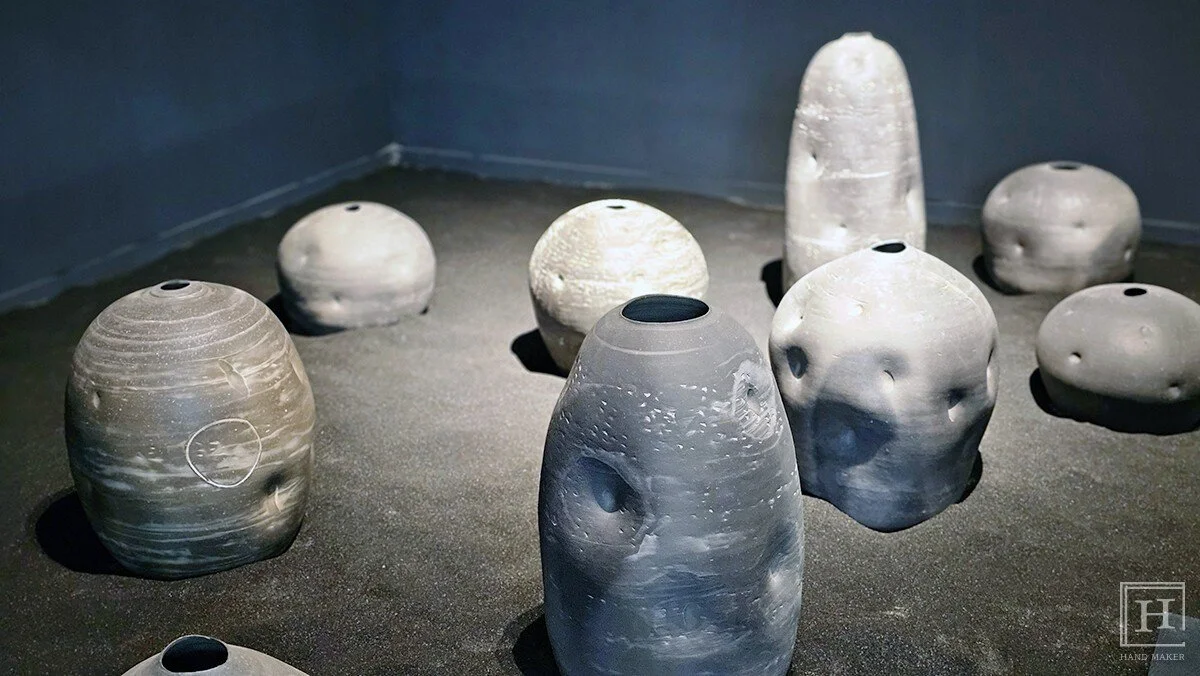
Kim Si-young has explored traditional Korean black glaze for about 40 years, developing it into her own formative language. Referred to as the "Alchemist of Flame," the artist regards fire as a creative companion and explores the kiln effects and structural colors that are diversely revealed according to the light and the unpredictable colors and forms created when clay and fire meet.
In the 〈Planet〉 series, she uses clay from different regions and varies the kiln temperature, internal conditions, and firing time to induce changes in form, color, and surface. The resulting works gather like planets, each possessing different light and expressions, forming a single microcosm created by clay and fire.
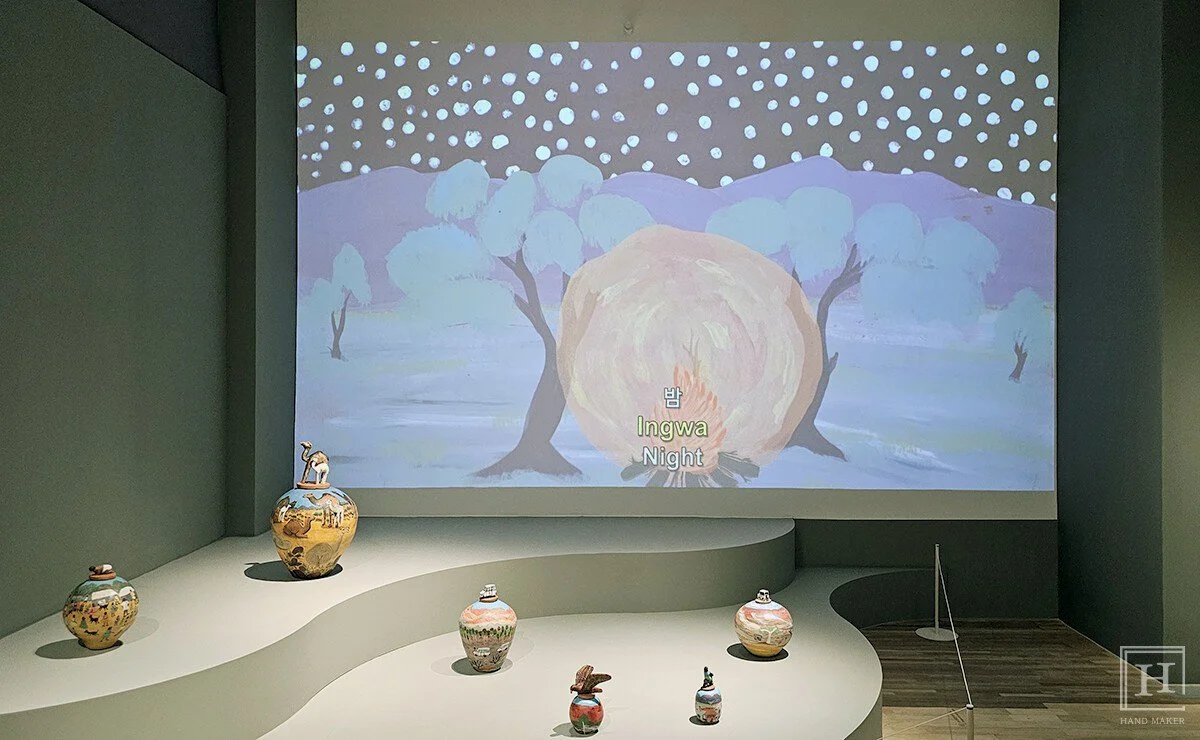
'Chapter 2: Earth Makes' explores how regionality and placeness have formed specific ceramic cultures. Environmental conditions, such as clay particles, the properties of water, and differences in climate, have influenced the forms and colors of vessels used in each region, the ways of storing, eating, and sharing, and furthermore, the cultural practices of communities.
Participating artists use local clay, living culture, the wisdom of storage, and everyday tools to translate the accumulated time and memories of specific places into artworks. The ceramics in this section capture the cultural landscapes shaped by the long-standing relationship between the earth and humans, expanding beyond individual creations into sensory records of the Earth formed by the entanglement of place, community, nature, and life.
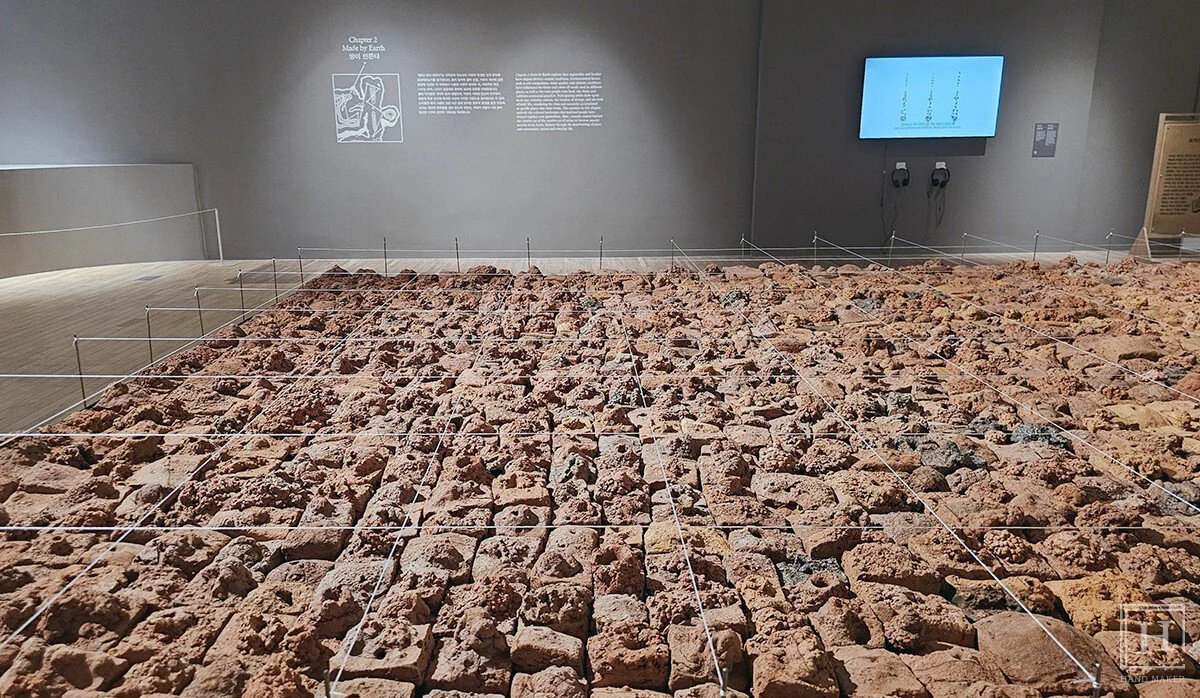
〈Archaeological Landscape/ Mandala of Fire〉 is an installation work using the Yellow Sea tidal flats, which the artist has observed for a long time, as its subject. The artist views the tidal flats not merely as a part of nature, but as a boundary that reveals the flow of time where the activities of tides and marine life are constantly engraved and erased.
The process of firing clay collected from the tidal flats simultaneously causes disappearance and a transition to a new state, creating an archaeological site where traces that have already vanished and traces that have not yet emerged are layered together. The reconstructed landscape thus poses questions to the violence that human civilization has long wielded toward nature and quietly suggests a reconciliation between civilization and nature.
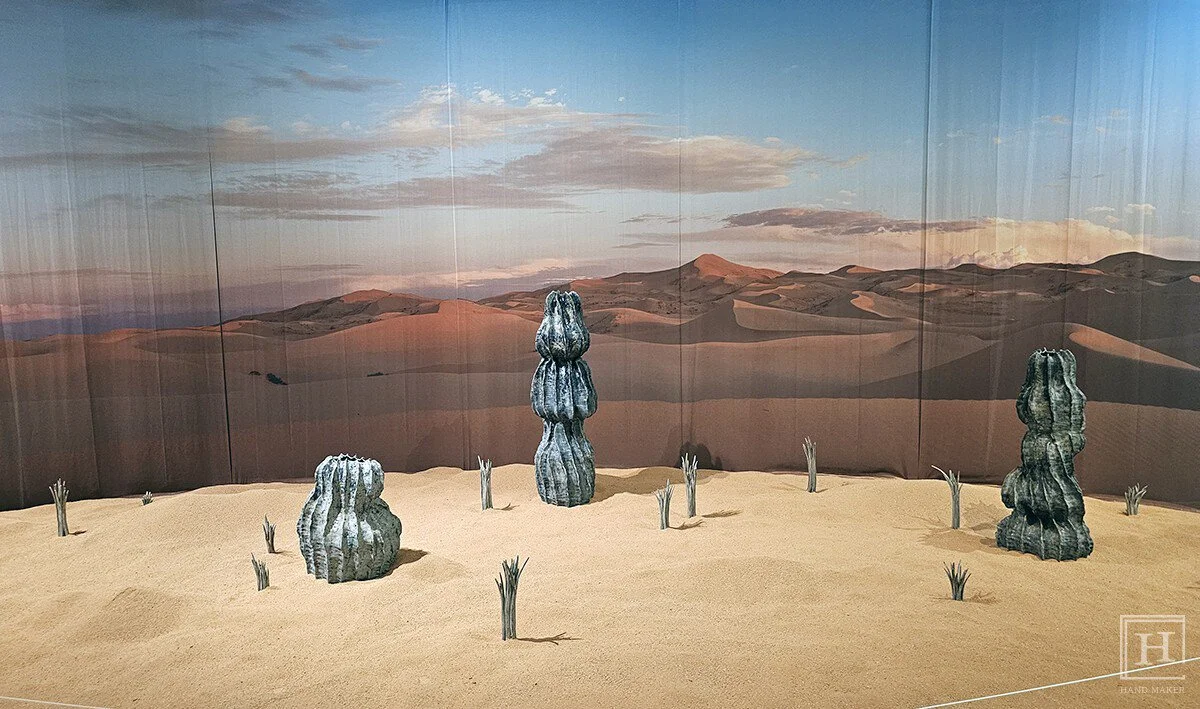
〈About Life and Myth〉 is an installation work that overlays the memories of the Chihuahuan Desert where the artist spent her childhood, her own migration experience, and the story of Malinalxochitl from Aztec mythology (a goddess in Aztec mythology whose name is derived from the Nahuatl words 'malinali' meaning 'dry grass' and 'xochitl' meaning 'flower'). The artist views the desert as a space of Nepantla (a term in Nahuatl meaning 'between' or 'middle,' referring to an intermediate state or space where different boundaries meet to create tension, change, and new creation).
The story of the abandoned Malinalxochitl during the journey of migration leads to the healing and transformation of women, migrants, and marginalized beings. The artist materially connects her childhood desert with her current work by crushing clay from cactus sculptures she previously installed in the Chihuahuan Desert on both sides of the Rio Grande and mixing it into the glaze. In this way, the three cacti, imbued with memory and transformation, connect the earth, humans, and the sky.
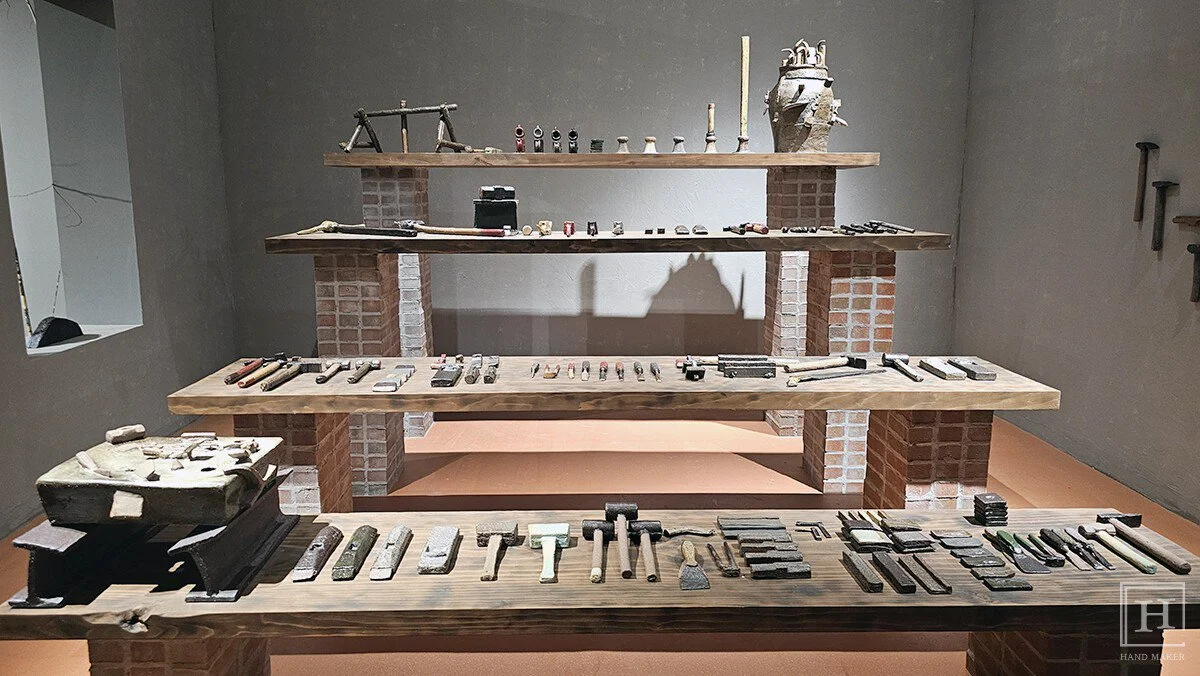
Birender Kumar Yadav has been exploring the tensions between power structures and the working class based on the experiences he had growing up as the son of a coal mine blacksmith. 〈Where Labor Remained〉 is a site-specific installation that neatly arranges ceramic-cast tools on tiered wooden boards.
These tools are objects that sustained livelihoods and contain respect for the bodies liberated after labor. Completed through collaboration with students from Korea Ceramic High School, this work places Indian coal mining tools alongside Korean Hanok construction tools, layering the memories of labor that traverse different times and cultures.
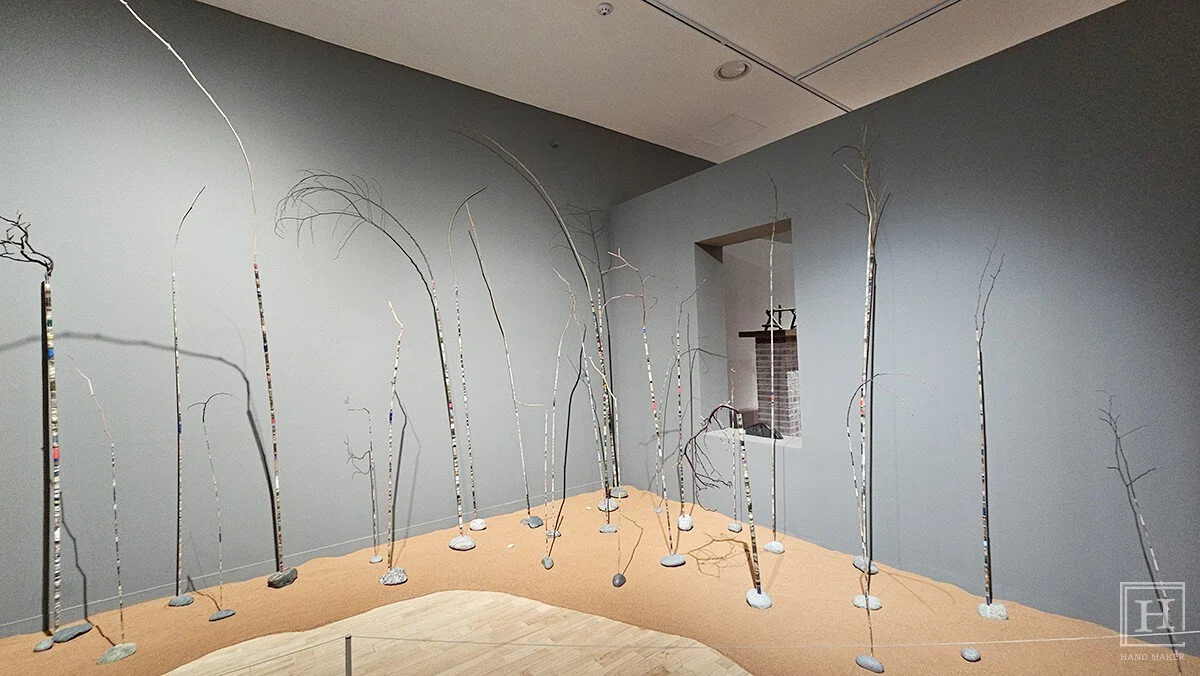
〈Curiosity〉 stems from an experience about 20 years ago when the artist was digging the ground in a rural mountain and discovered layers of household waste deep underground. This scene, where waste retaining traces of humans was revealed like artifacts, simultaneously evokes discomfort and a strange curiosity, prompting one to look into the hidden layers of time.
The artist filled a transparent tube with layers of plastic, soil, leaves, and grains, created a support with stones, and stood a tree branch at the top. The work, where natural and artificial objects are mixed, naturally retraces the way the earth absorbs even human traces to form new geological strata.
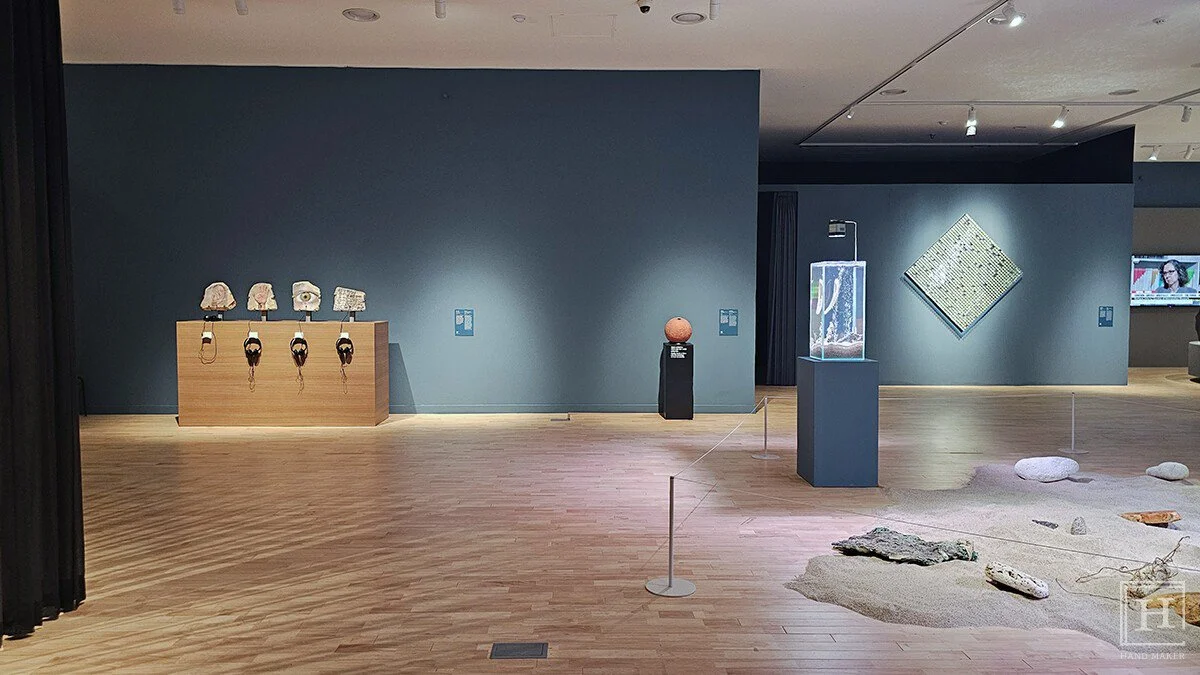
‘Earth Makes’ views ceramics not as an old craft form, but as a contemporary medium that allows the Earth's matter to record time itself and imagine the future. While soil, water, and fire become vessels and sculptures through human hands, climate, geology, labor, technology, and the history of movement are also engraved within them.
Today, ceramics no longer remain merely a legacy of the past as they meet artificial intelligence, digital images, and virtual environments. Rather, they become a language that asks about the most distant future through the oldest materials. This chapter shows how ceramics can become a sensory device that connects humans and nature, regions and the world, and the material and the immaterial, asking how we can create together, endure together, and live together within a sense of global solidarity in the era following the climate crisis.
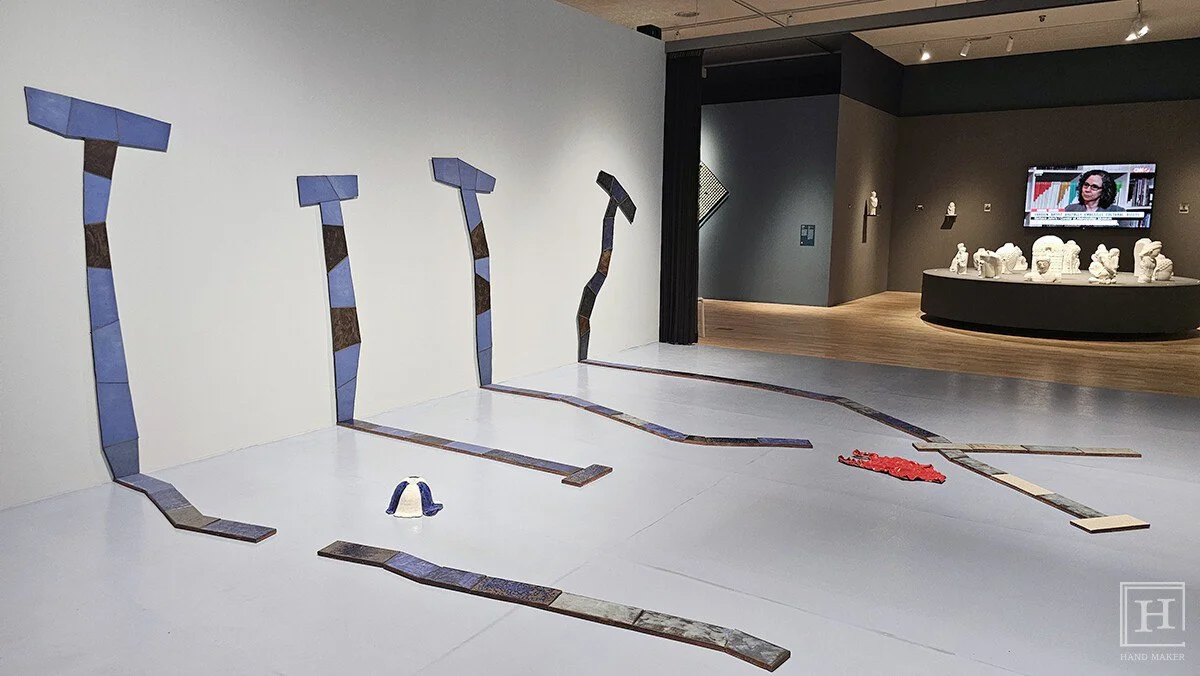
〈Swimming Pool for Everyone〉 is an installation work that reconstructs a public swimming pool into an unfamiliar and poetic space through the absence of water. In the drained swimming pool, twisted lane lines, hardened swimsuits and slippers, and melted beach balls are placed as ceramic sculptures. These familiar objects evoke both playfulness and strangeness through their colorful hues and bizarrely transformed shapes.
Although the water is invisible, it is sensorially revived through the smell, sound, reflective surfaces, and memories of the swimming pool. Between the absence and the traces of water, the work evokes childhood and bodily memories, prompting reflection on how water shapes our emotions, bodies, and relationship with the environment.
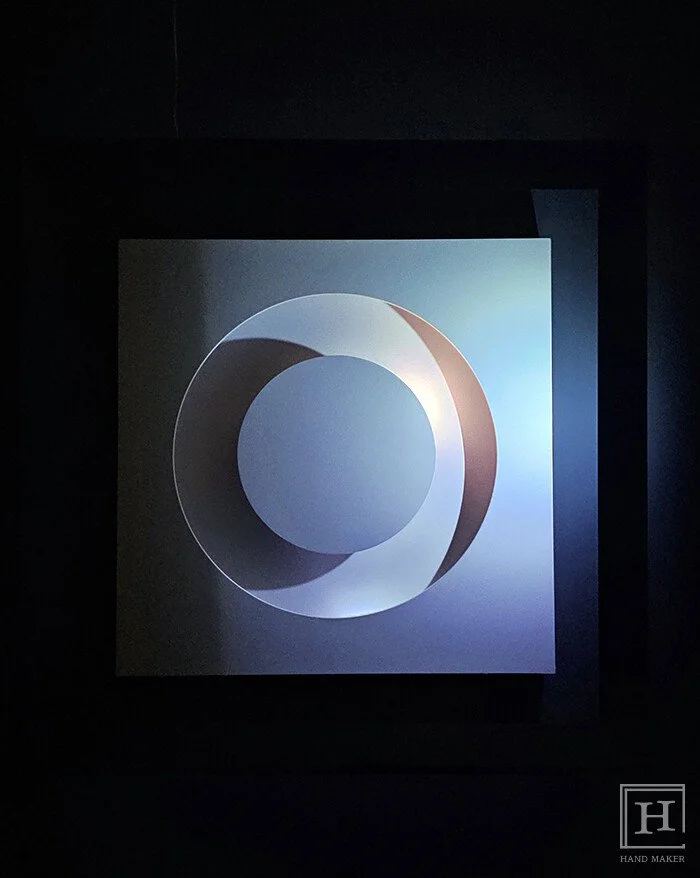
〈Canvas of Light〉 is a work that interprets light, the minimum unit of digitality, into a formative language. Particles of light that rotate for 60 seconds along a frame frame evoke the rotation and revolution of the sun and moon, forming a single "light clock" where time can be perceived through its position and color.
During sunset, the hour hand is stained red, and as the night deepens, it turns a deep purple, allowing one to sense the passage of time solely through the contrast of light and shadow. This serves as a metaphor for how humanity has lived for ages by gauging time only through the position and color of light, while the empty space expands into a formative canvas.
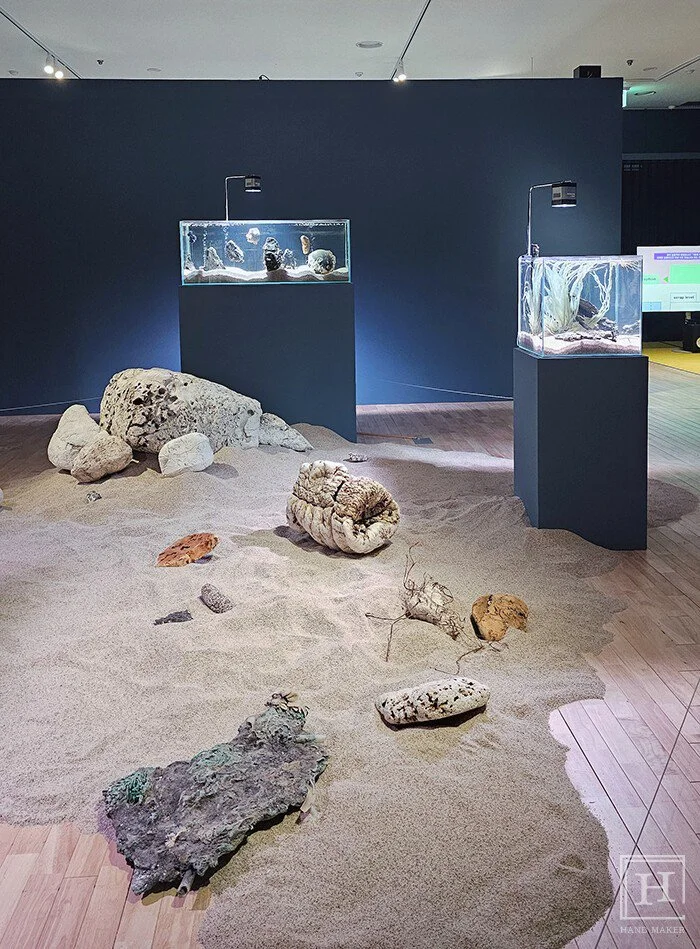
〈New Ecosystem〉 is an installation work that arranges "New Rock" on water tanks and sand dunes. "New Rock" is a name the artist gave to plastic that has been eroded and melted by wind, waves, and sunlight to take the shape of stone, which has been collected from seas and rivers across the country since 2017.
The New Rocks placed on the water tanks and sand dunes appear at first glance to be a natural ecosystem, but they are actually a landscape composed of human-made materials through the passage of natural time. The artist views not only humans as agents that change the world, but also nature as an agent that absorbs and reorganizes the materials left behind by humans. What we discard does not disappear but becomes part of a new ecosystem and quietly reappears.
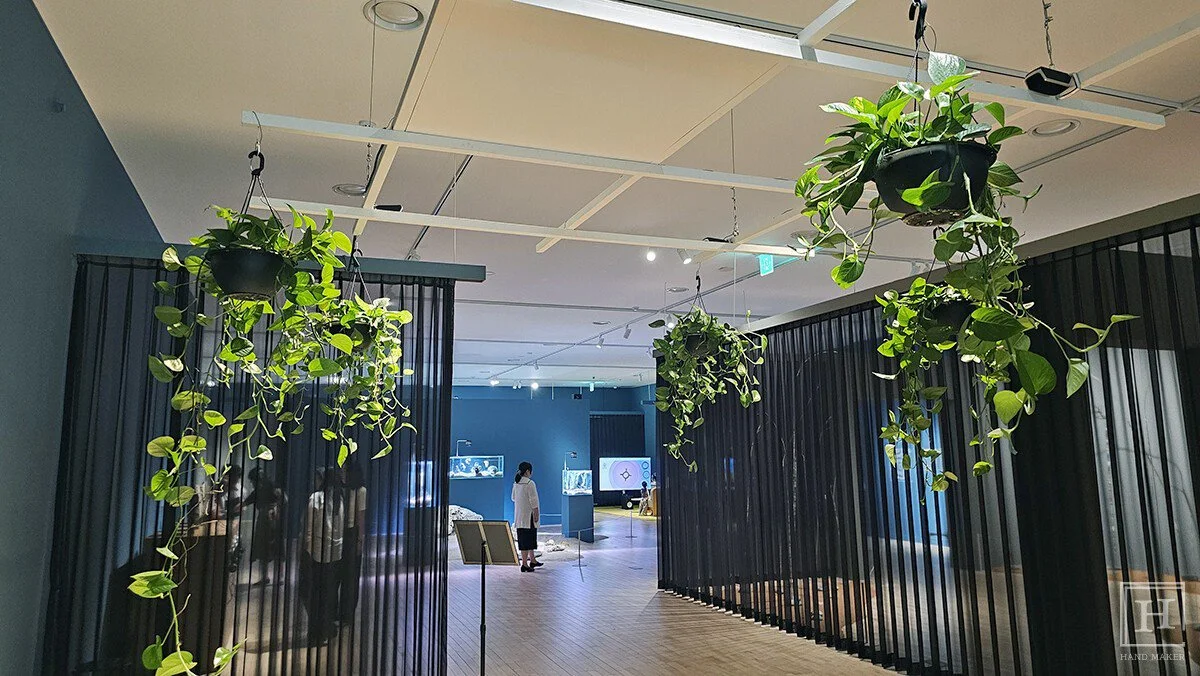
〈Song of Plants〉 is an experiential installation consisting of living plants. Houseplants are often placed somewhere between decorations and living beings, and Scenocosme focuses on that ambiguous position. Through digital technology, this work transforms plants into natural sensors that respond to the static energy within the human body.
When visitors touch the leaves, the plants respond with different sounds, and when multiple plants are present, they form a small orchestra. The invisible energy of the body becomes a song, showing that plants are not mere objects but living beings.
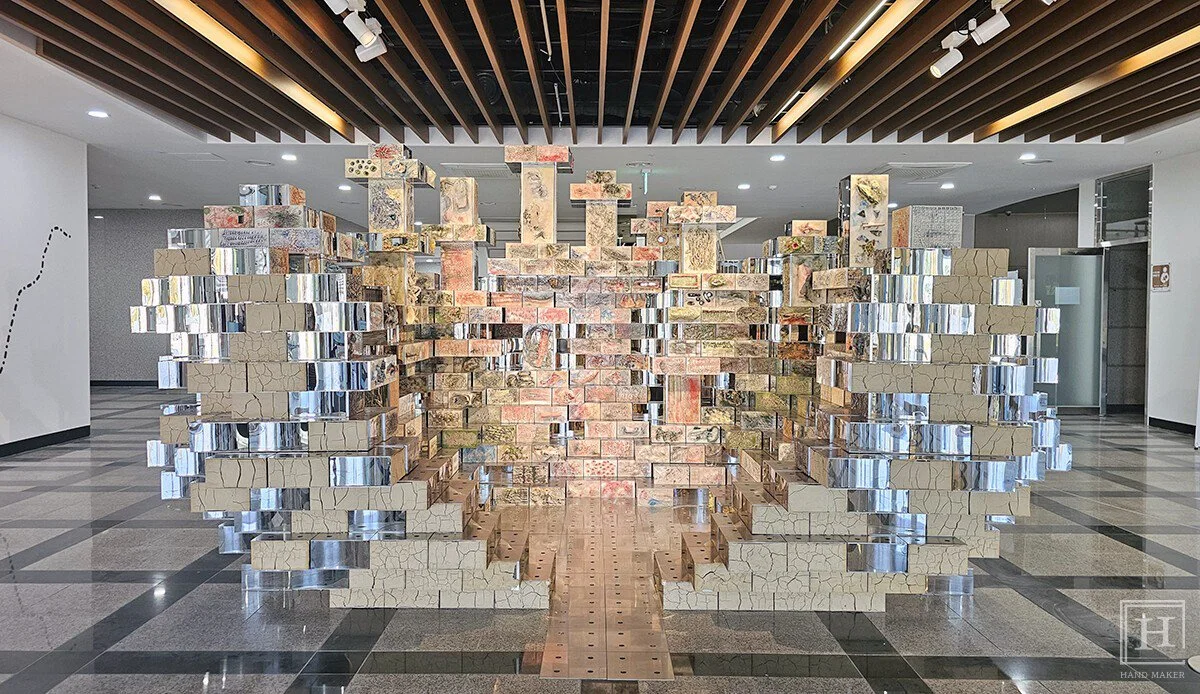
Park Seung-mo's new work, 〈Records Engraved in Emptiness〉, is a large-scale installation with the form of a temple. This structure, formed by hundreds of clay boxes stacked in layers, is not a completed building but is closer to a collection of relationships that are constantly being created and collapsing. Through the practice of sand mandalas in Tibet, the artist realized that creation and destruction are a single cycle. Just as clay is originally a material that breaks easily but becomes hard when it meets fire, this work contains the process of how experiences of wounding and destruction are transformed into another kind of firmness.
Meanwhile, at the Gyeonggi Museum of Ceramic Art, in addition to the main exhibition, the 《International Competition》, which has been held since 2001, is being held concurrently. This year, 58 works selected through judging will be exhibited during the Biennale period.
Reporter at HANDMAKER (핸드메이커), a Korean magazine devoted to crafts and handmade culture. Covers exhibitions, traditional crafts and the makers behind them.
Related Articles
![[On-site Sketch] Capturing Light, Shadow, and Even Solitude in a Slice of Cake: 《Hyundai Card…](/storage/handmk-global/2026/09/81dbe9bd-42df-43f7-a1c8-fd5c7c803a58-a4094b1d-thumb.webp)
[On-site Sketch] Capturing Light, Shadow, and Even Solitude in a Slice of Cake: 《Hyundai Card Culture Project 31 Wayne Thiebaud》 Exhibition
![[On-site Sketch] Cutting, Weaving, and Moving Photos: Beyond Recording to Show New Possibilities…](/storage/handmk-global/2026/09/c323a317-58ea-4ccc-92f0-9a8d00d5c66d-599ce664-thumb.webp)
[On-site Sketch] Cutting, Weaving, and Moving Photos: Beyond Recording to Show New Possibilities... Group Exhibition "TRANSITION" by Japanese and Chinese Photographers
![[Field Sketch] Unexpected Encounters and Records of 26 Teams Touching Summer: 《To Our Summer》 Exhibition](/storage/handmk-global/2026/09/fb9e35d7-c34d-4318-897d-fdb3c3857356-14760ffc-thumb.webp)
Comments 0
Comments are currently disabled.