[Field Sketch] Unexpected Encounters and Records of 26 Teams Touching Summer: 《To Our Summer》 Exhibition
The Gyeonggi Museum of Modern Art is hosting the exhibition 《To Our Summer》…
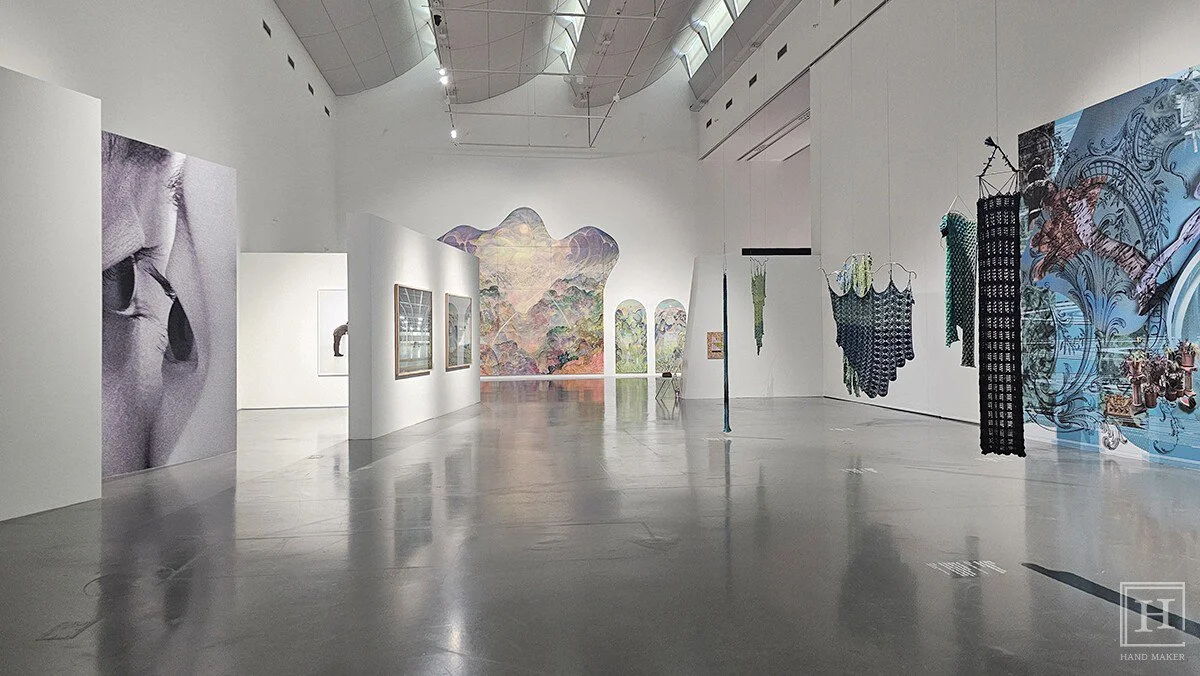
At a time when the sweltering summer feels like a distant memory, how about concluding the final summer of 2026 with the works of various artists? The Gyeonggi Museum of Modern Art is holding the exhibition 《To Our Summer》, featuring 26 teams of young artists whose potential has been recognized in the contemporary art scene, running until the 27th.
The museum has long expanded the boundaries of contemporary art by interacting with adjacent genres such as crafts, design, and architecture. Today's young artists continue these exchanges even more freely. Just as works starting from painting expand their horizons into three-dimensional forms, genres for them are not boundaries but areas they lightly traverse. To the extent that their unique practices themselves become a genre, these young artists prove the diversity of contemporary art, which is difficult to define with institutional language, through their works. What this exhibition focuses on is that very flexibility—the possibility of spreading into anything.
The method chosen for this exhibition is to withdraw the gaze that looks through the lens of genre and instead engage in a conversation within the broad category of 'art.' Accordingly, 26 teams participated, exploring all-encompassing areas such as painting, sculpture, installation, media, furniture, architecture, ceramics, design, textiles, and performance, opening paths for expanded interpretation with other media.
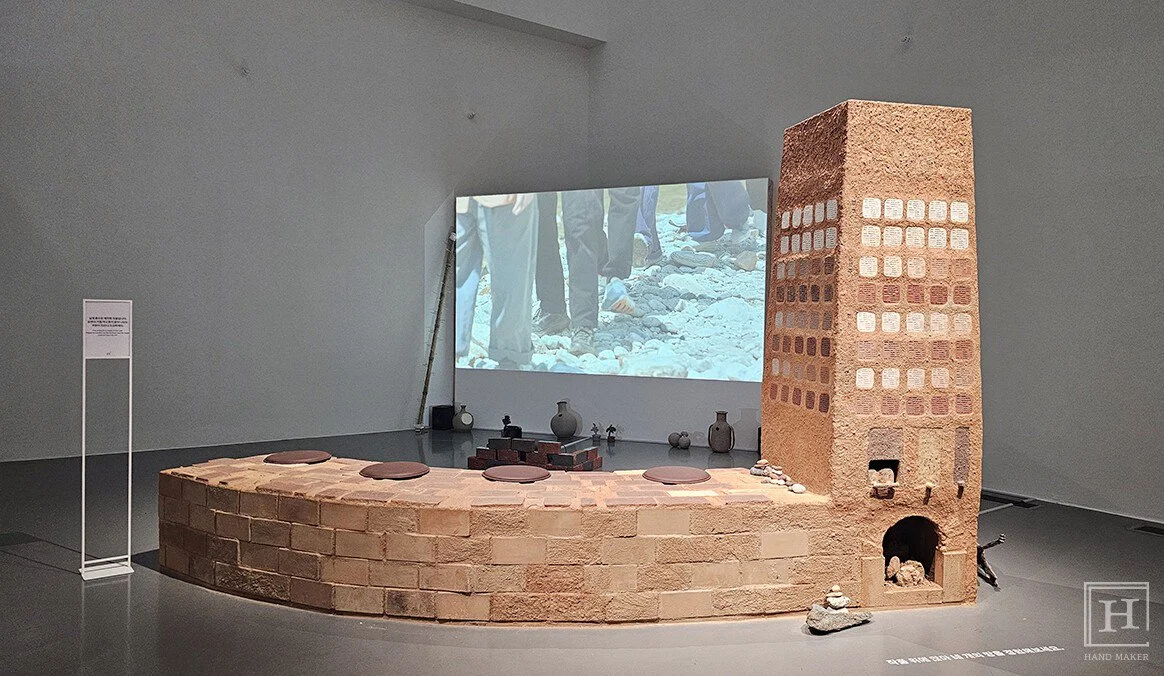
ROS is a collective of creators that began with the exploration of the relationship between media and matter, and has operated by flexibly changing the composition of participating artists for each project. This collective is centered around ceramic artist Kim Si-wol and Sim Da-eun, performance artists Lee Hyeong-ju and Lim Sol-mon, and Kang Ryu, who works with two media simultaneously; depending on the project, artists from various fields collaborate organically to create works and the processes through which they are made.
The Gyeonggi Museum of Modern Art production support work 〈Four Lands and Soil, Movement, Sound〉 (2026) is the result of a journey tracking four coordinates: Yanggu in Gangwon, Paldang-ri in Namyangju, Gyeonggi, Imsil in Jeonbuk, and the vicinity of the Gyeonggi Museum of Modern Art in Ansan. The soil and stones collected directly by the artists, along with the stories of the people they met there, are transformed into new data through images, sounds, and bodily movements. On the pillars of the installation, built with collected soil and firebricks, instruments made of wild soil and poems from the four regions are combined, and a video recording the four journeys from the artists' perspectives is added, forming a single structure.
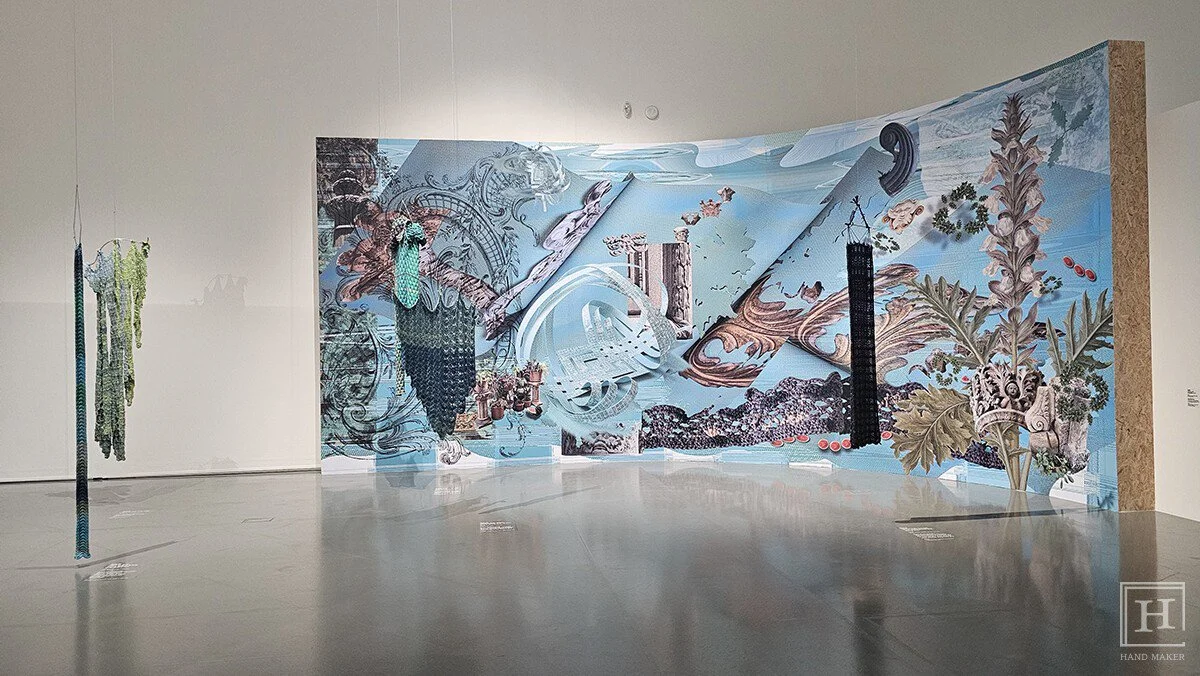
Kim Bo-gyeong develops work that contemplates the realm of time that we cannot perceive by examining urban history based on archive research. She primarily collects history, phenomena, and sensations revealed through the medium of architectural structures and structures them into various visual languages such as prints, textiles, and installations.
The core of this exhibition, 〈Acanthus Colony: Unfolding the Waves ver. 3〉 (2026), began from the Acanthus patterns the artist repeatedly encountered while living as a stranger in Berlin, Germany. This pattern is a symbol of Western classicism and is also commonly found in Asian colonial architecture. The artist traces the expansiveness of architectural iconography and plant species that moved along imperial routes beyond fixed physical limits, presenting the hybridity of beings that were transplanted away from their original ecosystems in the form of a collage-style 'colony.'
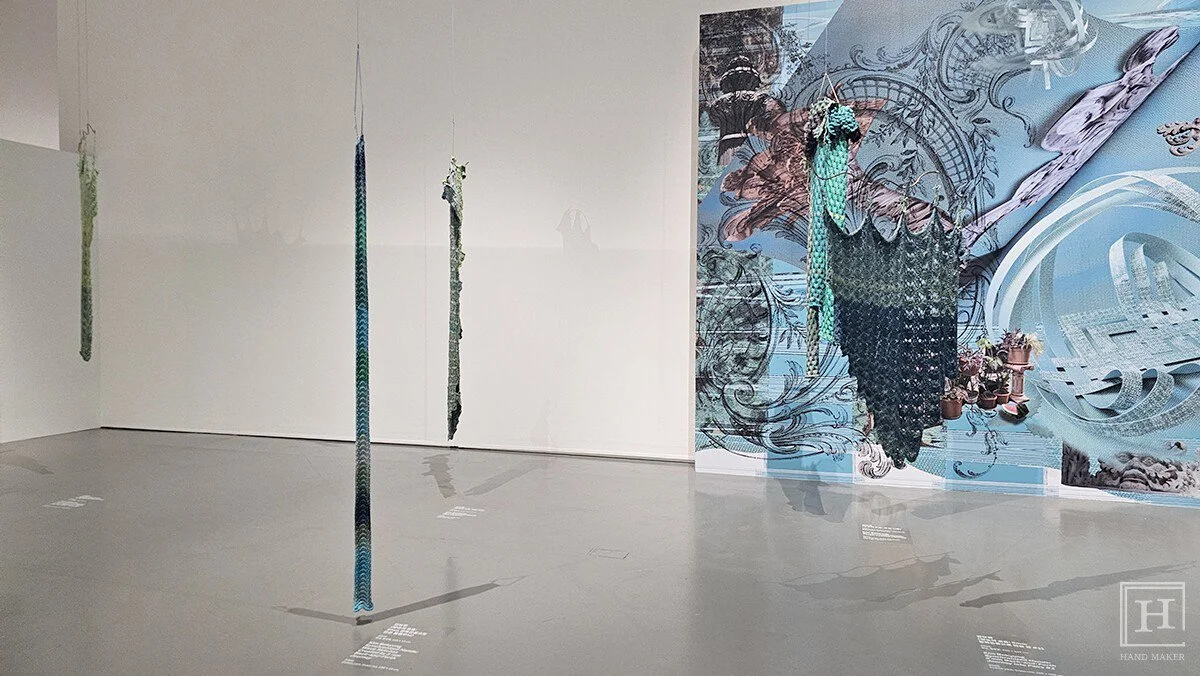
The series 〈Breathing of Both Hands〉 (2022-2025), located at the center of the exhibition hall, is the result of completing work through the alternating repetition of image editing and knitting. Through the reciprocating movement of the body weaving thread, it visually connects past archives with present sensations, capturing the movement of history that transforms and evolves within the space. The artist's such performative way of working can be seen as a medium for materializing invisible emotions and memories.
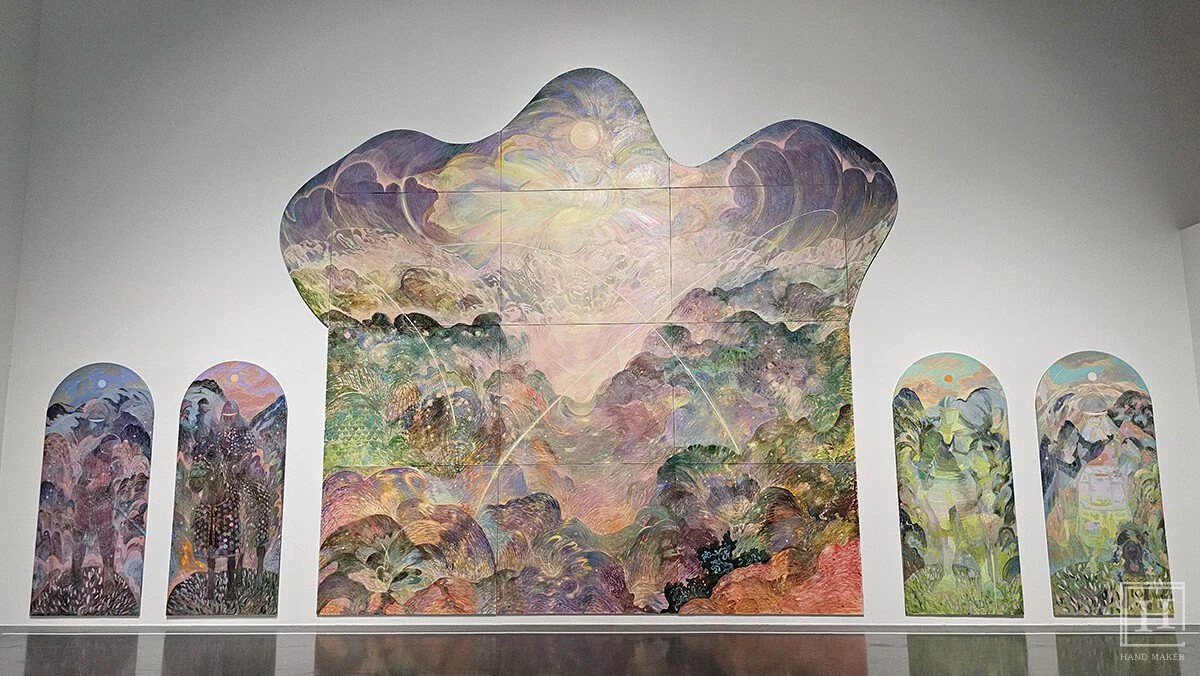
Lee Hae-ban uses the buffer zone known as the DMZ as a backdrop to resolve physical and conceptual problems and questions regarding "boundaries" through visual language. Starting from the landscapes observed in the DMZ of her hometown, Cheorwon, the artist has explored the physical boundaries of borders and their underlying conceptual attributes through various methods, including painting, installation, and three-dimensional works.
〈Blooming Cluster〉 (2026) and 〈Guardians of the Border〉 (2026), presented with the production support of the Gyeonggi Museum of Modern Art, can be viewed as a single series. These works look into how restrictive markings, such as military symbols and camouflage patterns scattered across the border landscapes, form structures of visibility and concealment, protection and threat within the scenery. The artist juxtaposes the macro geopolitical landscape of the DMZ with the micro gaze resting on the surfaces of military objects scattered there, layering them in multiple levels of painting to transform historical indicators into a new terrain.
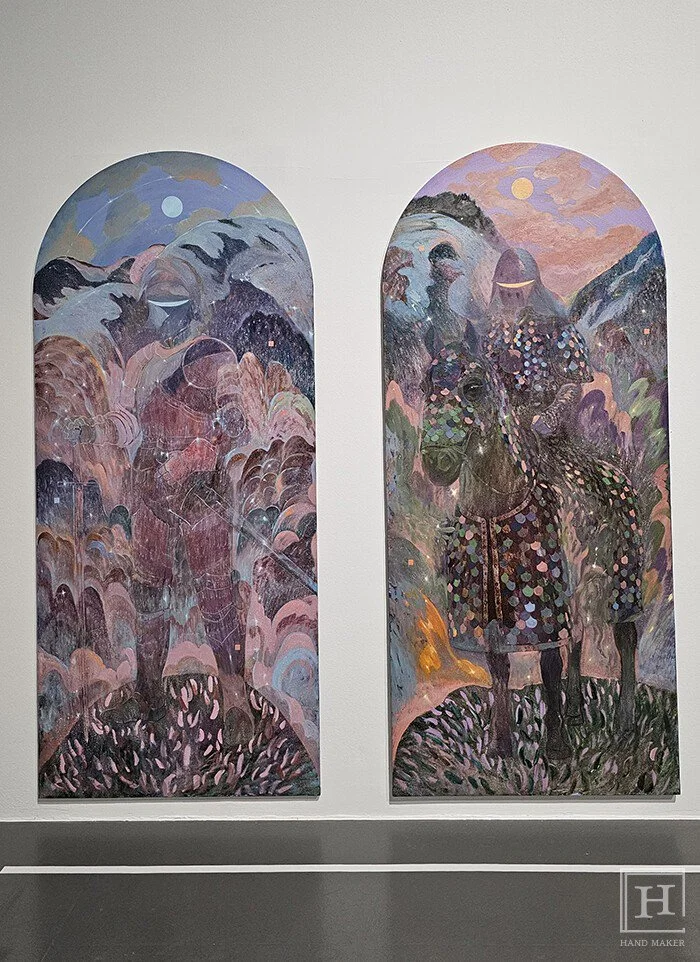
On a screen where clouds, waves, mist, and afterimages of light overlap, decorative patterns and natural landscapes are simultaneously dismantled and reconstructed. The screens, which fill the walls, hold a dreamy yet somewhat fluttering energy, allowing one to feel the subtle tension existing beyond the structures of power and survival. This does not stop at merely reproducing a specific landscape; it flexibly blends even the space of the "museum," where orders of preservation and classification exist, posing new questions about boundaries through surreal landscapes that are both familiar and strange.
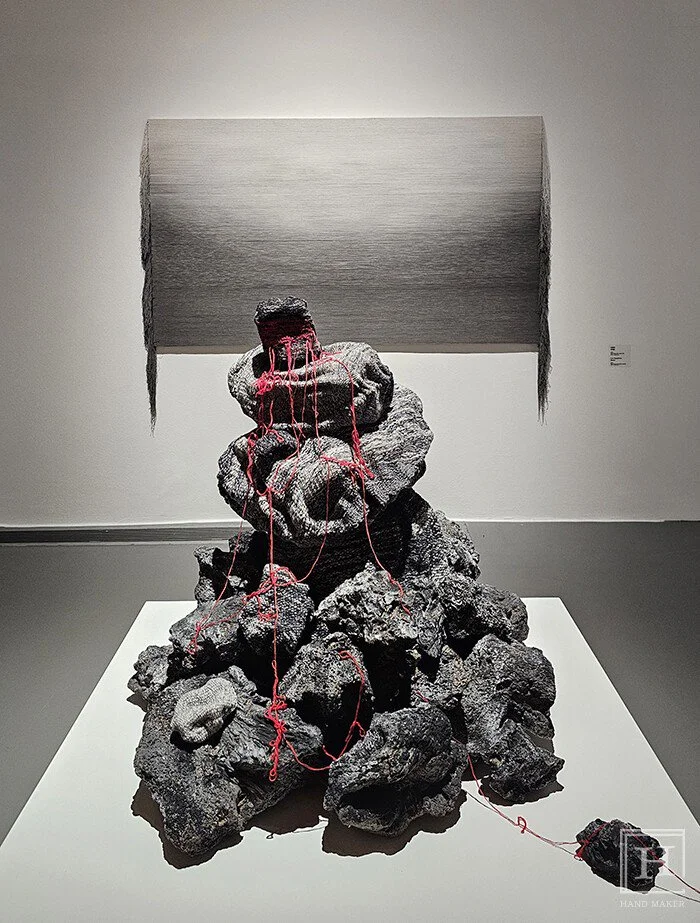
Lee Hyeon-hwa explores the narratives of life and existence based on textiles. Using techniques such as tapestry, embroidery, and drawing, she moves between the boundaries of tradition and modernity, focusing on performative work that weaves invisible thoughts into material forms by involving ritualistic actions and bodily sensations in the repetitive weaving process.
〈Stone of Prayer〉 (2024) starts from the existential thought that humans are finite beings moving toward death, and is a formative tapestry work that sublimes the pain, such as anxiety or fear inevitably encountered in the journey of life, into a ritualistic act. By inserting metal wire into the vertical threads (warp), she established a three-dimensional structure and attempted to transform the form while maintaining an organic flow of the horizontal threads (weft). Just as humanity has erected stone pagodas and stacked stones to entrust their wishes, the artist carves text with red thread onto atypical icons reminiscent of stones to pray for peace in life.
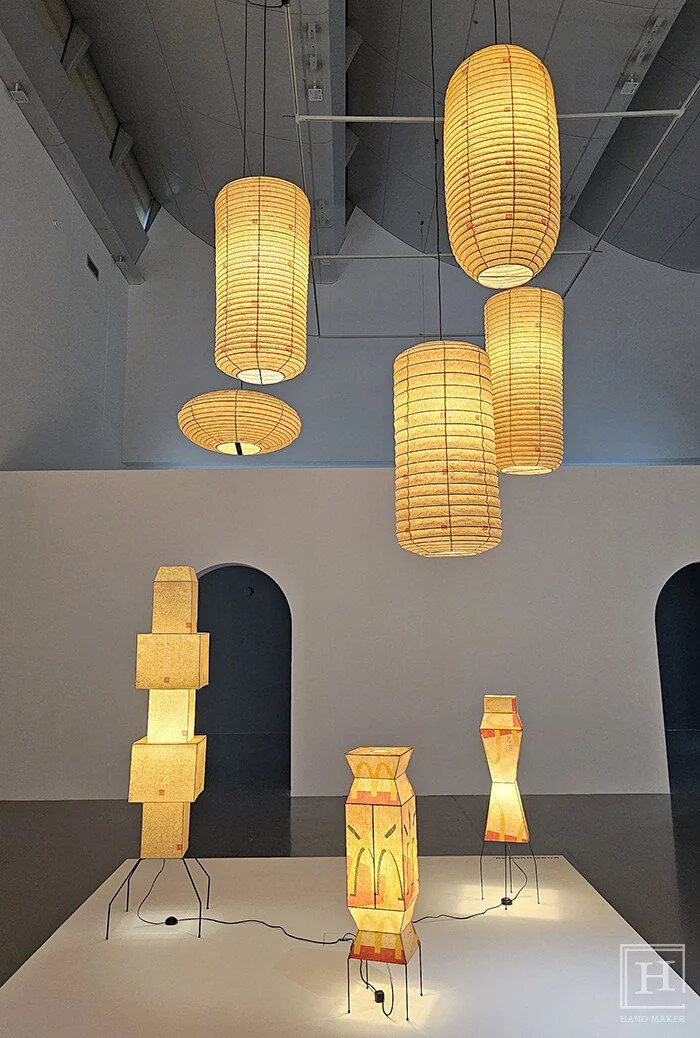
Lee Kyu-han is an artist who collects and recombines pop culture icons and ordinary consumer goods to suggest new uses for objects and fresh visual experiences. The artist has been developing work that collects objects engraved with brand logos or cartoon characters easily encountered in our surroundings and translates the landscapes of life experienced through repeated observation into complex design elements.
The 〈McDonald's Paper Bag Lighting〉 (2025) series is a work that re-imagines mass-produced fast-food brand McDonald's paper packaging bags by combining them with traditional Korean paper, Hanji, to be reborn as lighting objects. The remnants of consumption in a fast and immediate modern society and the handicraft process that goes through the hands of artisans for a long time meet in the artist's work process, forming a strange tension.
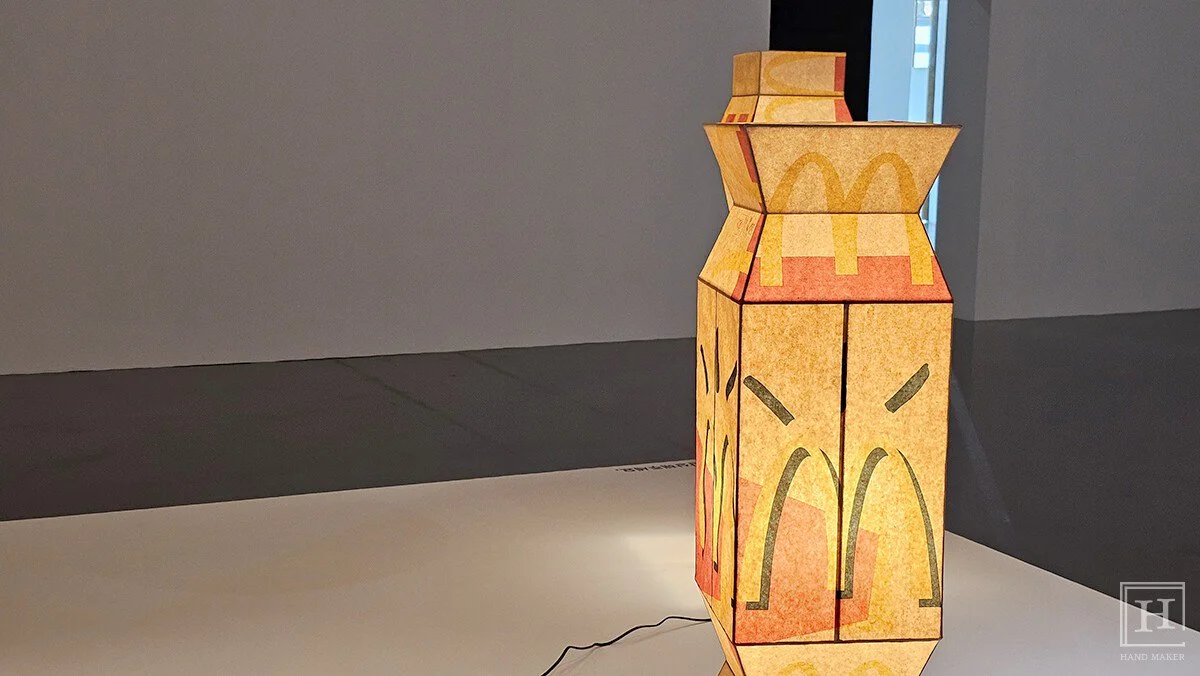
By dismantling the unique colors and logos of brands on each surface divided according to the curves of the lighting and reconstructing them into geometric patterns, the artist erases the existing symbolism associated with the capitalist system. Meanwhile, the works of different shapes placed on square pedestals rise from the floor toward the ceiling, drawing fluid curves. The flow, which seems to rise in clusters while being lit, draws the viewers into the middle of the artwork.
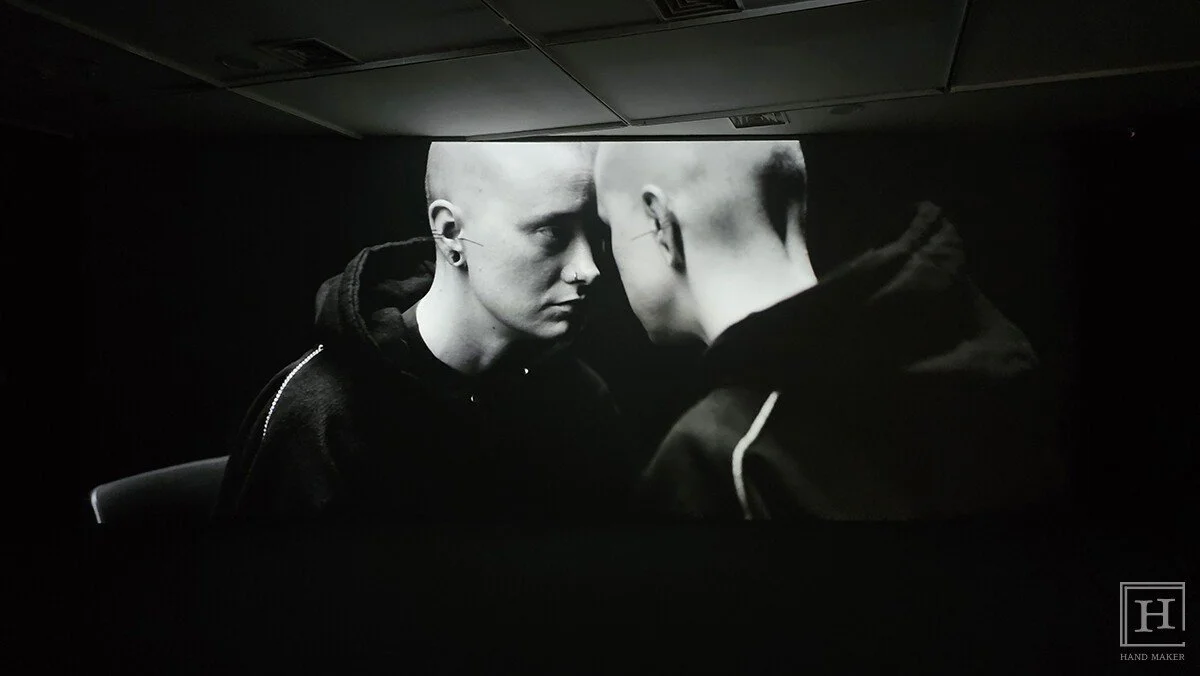
Based on a multidisciplinary foundation built through majoring in composition, arrangement, philosophy, and fine arts, Kang Dong-hun presents works that traverse various genres, including sound-centered performance, installation, and video. 〈Vesica Piscis〉 (2024), which combines performance and video, explores the relationship between two beings that reflect and react to each other within a musical structure. The title 'Vesica Piscis' symbolizes the shape created when two circles of the same radius pass through each other's centers, representing the structure of this work which simultaneously implies overlap and separation.
A somber cello sound is deeply laid around a low and wide black-and-white screen. To this melody, twin actors sitting face-to-face begin to move as if drawn to each other. The artist used “Binary Composition for Two Cellos,” composed for the cello—an instrument considered most similar to humans—as the auditory backbone of the work.
The actors in the work seem to move symmetrically, as if looking at themselves in a mirror, but they soon reveal their individualities according to the flow of the music, which shifts from slow to fast and from stillness to intense dissonance. In this way, the artist visualizes the ever-changing energy that arises when two beings meet and overlap through the work.
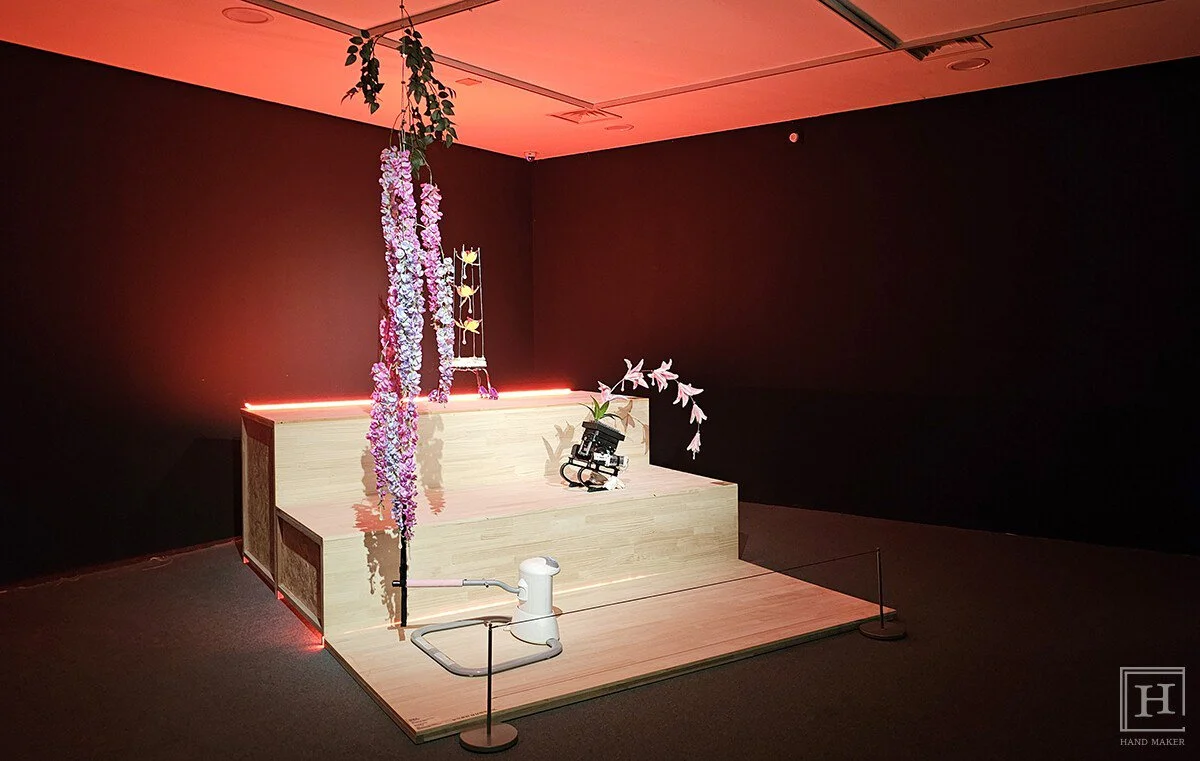
Korean-American artist Rachel Yoon is an artist who crafts sculptures of strange beings that oscillate between machines and organisms by combining artificial plants or objects with used electronic appliances. The artist captures the relationship between artificial functions and the vitality of nature through a multi-layered perspective, continuing sculptural experiments where humor and discomfort coexist. The works 〈Shine〉 (2025), 〈Penitent〉 (2025), and 〈Training〉 (2025) exhibited in this exhibition are works that humorously reinterpret machines that used to assist the human body and emotions—such as massagers, exercise equipment, and electric childcare products—within the modern society's structure of care and consumption.
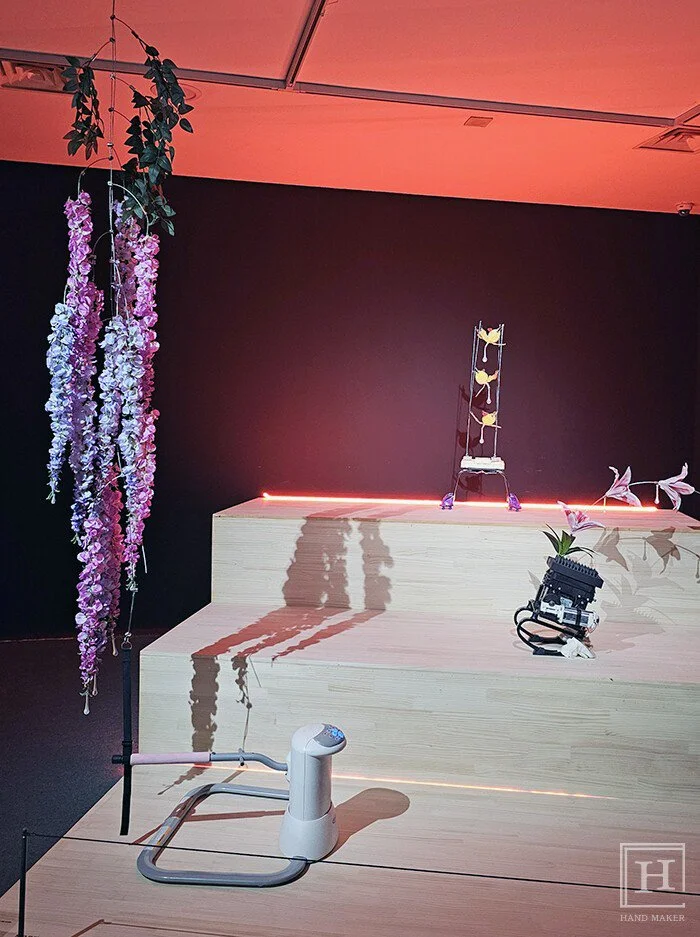
In a space colored with low-settled light and color lighting, the wooden shelves and the works placed around them feel like beings endowed with life rather than simple used items. 〈Shine〉 and 〈Penitent〉 give the impression of standing up as if trying to walk somewhere, with doll roller skates and infant shoes placed on the bottom pillars. The combined artificial plants, instead of being rigidly fixed, bend flexibly, drawing a flow of soft lines. In 〈Training〉, the hanging artificial wisteria continues that flow, and the baby rocker holding it looks like a fixture trying not to let it go.
These objects, having lost their original function and efficiency, repeat loose movements and, interlocking with heterogeneous elements, mimic human actions and emotions in a distorted way. Through the works, the artist reveals how modern people have replaced their desires for self-management and care with the form of matter and machines, while simultaneously telling that machines ultimately cannot fully replace fundamental human desires.
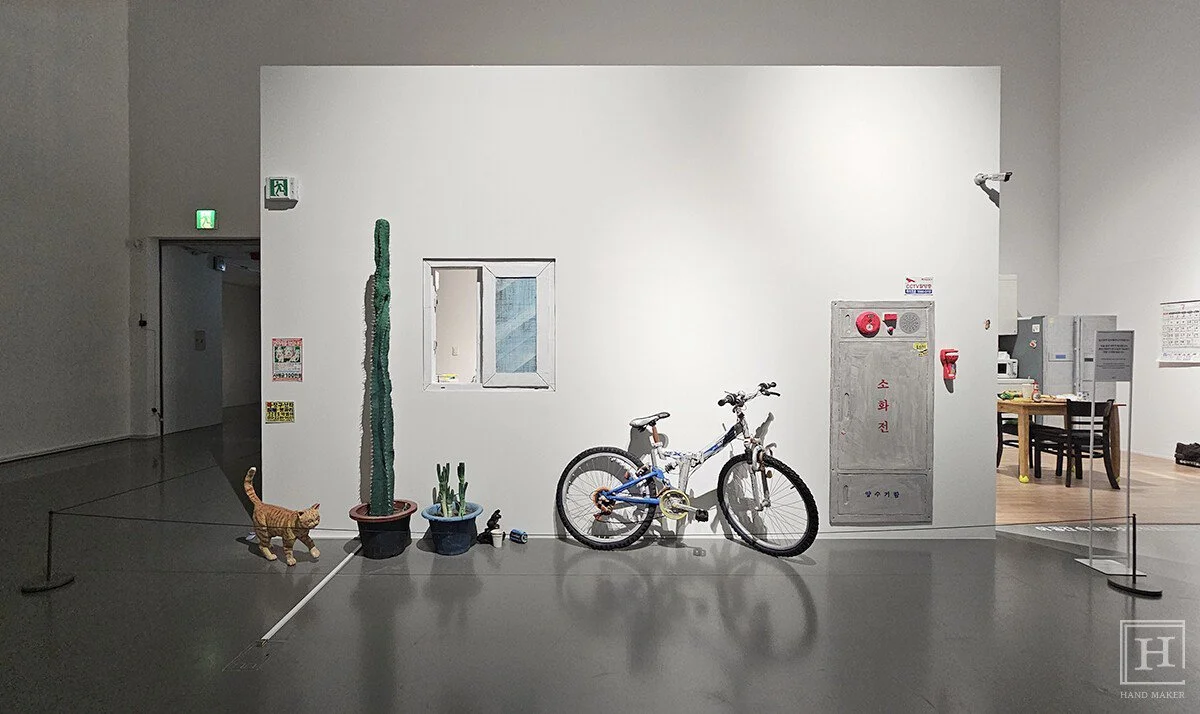
Nam Da-hyeon continues to work by cleverly crossing the boundary between creation and reproduction, satirizing today's capitalist consumer culture and contemporary art. The installation work 〈July 12, 2008, Cheonggu Phase 3, Building 106, Unit 507〉 (2017-2026) is a space that the artist reproduced by relying on memories of the interior of the apartment where they lived during childhood.
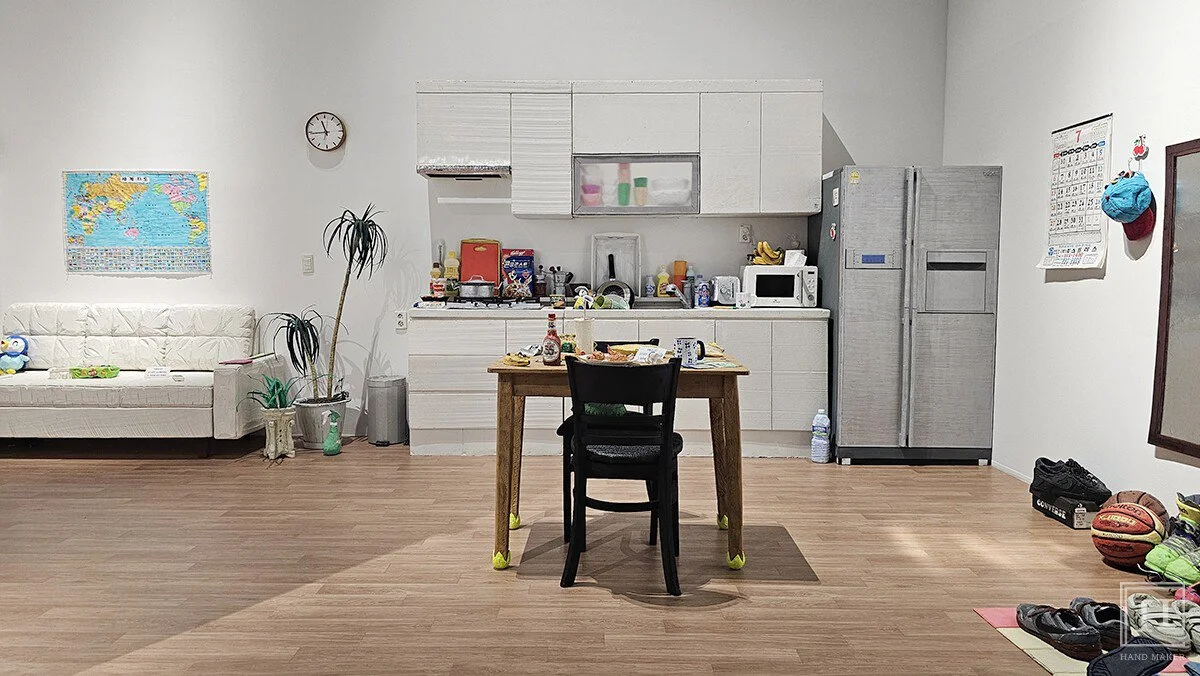
Upon entering the work, it is filled with signifiers extremely familiar to those who have passed through the contemporary era. Items such as a computer displaying a Cyworld mini-hompy on the screen or a tennis ball wedged into a table leg look like real objects at first glance. However, upon approaching closely, one realizes that all of this is a model made by the artist carving Styrofoam. While the objects indicated are highly specific and authentic, the reproduced surfaces reveal the artist's intentional crudeness and looseness. This also aligns with the fact that the background of the work, Cheonggu Phase 3, Building 106, Unit 507, is a room number that does not actually exist.
Rather than precisely erasing the gap between memory and fact, the artist adds fiction by intentionally creating blurred boundaries. In this way, viewers do not perceive the work as fact itself, but receive it by adding their own memories, emotions, and experiences. This method of summoning by the artist is a practice of escaping the obsession with perfectly restoring the past and intentionally exposing the gaps of distorted and lost memories.
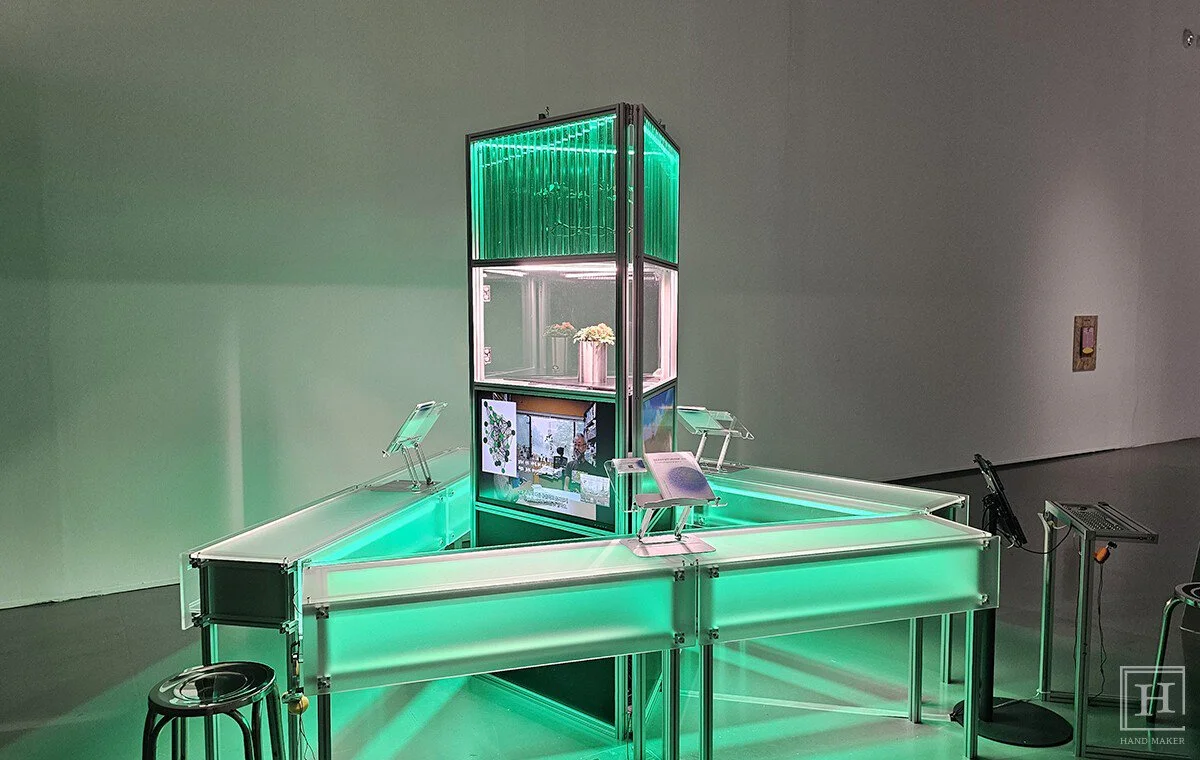
Team Pearl, composed of Jeong Hye-ju, Seong Su-jin, Wi Seong-hwan, Kim Hyeon-tae, and Kim Yun-ji, is a collective that weaves the different senses and experiences of its five members into a single formative language, much like a pearl completed by stacking multiple layers. Based on the fusion of art and technology, they have built an original virtual worldview called ‘Sepafuturism’ and have presented visuospatial interactive works utilizing contemporary advanced technologies such as Web Augmented Reality (WebAR), Extended Reality (XR), and Artificial Intelligence (AI).
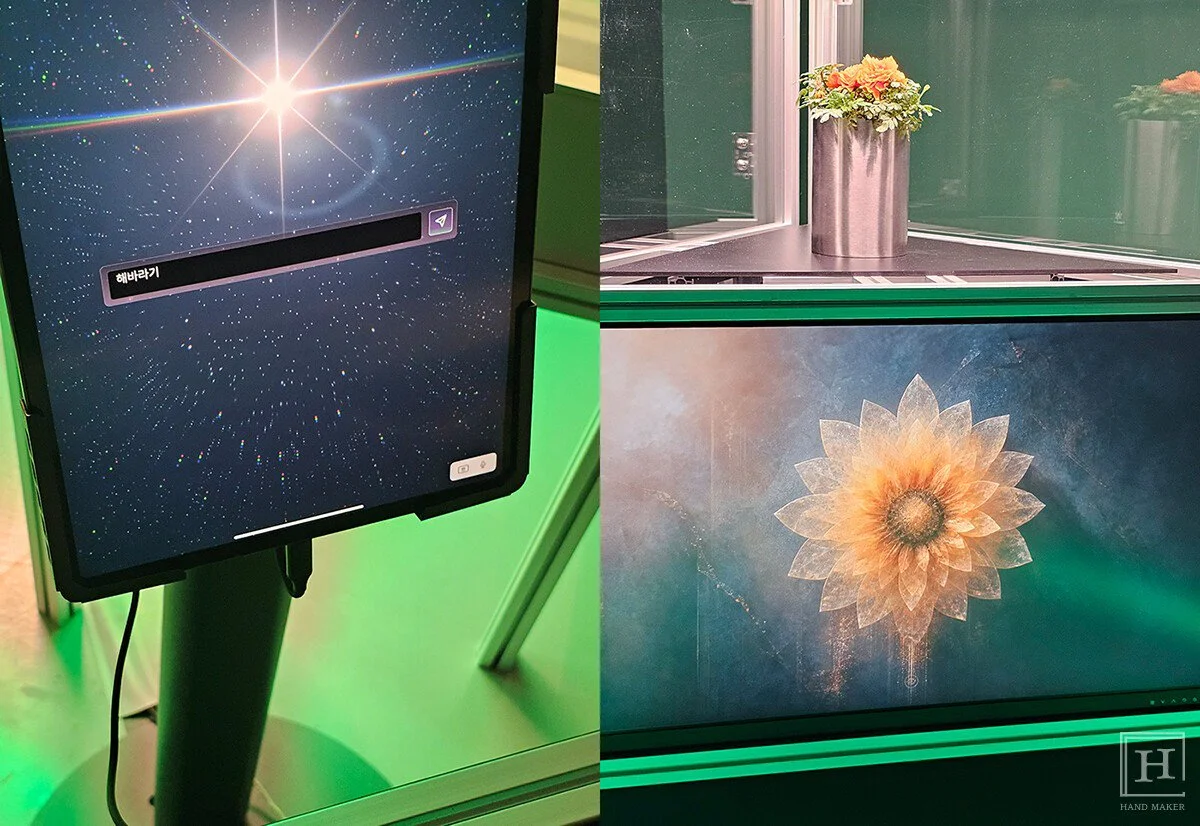
〈Separium: Afterimage of Marigold〉 (2026), a new work produced with the support of the Gyeonggi Museum of Modern Art, is a convergence work that starts from the question, "Can humans perceive the world exactly as it is?" The virtual realm within the work, ‘Separium’, represents a world reconstructed under human classification systems, and the marigold, an improved plant species, symbolizes the co-evolutionary relationship between humans and plants. When visitors enter the contents of their dreams into a tablet, the artificial intelligence analyzes it and draws the resulting dream interpretation on the screen. This demonstrates the process by which an object is restructured within the frame set by humans.
Team Pearl notes that the limitations of a world that only exists within the scope of human perception are connected to summer, the main theme of this exhibition. This is because, although everything seems to be clearly revealed under the intense sun, in fact, only the facets we wish to see are highlighted, and the essence of the whole is not revealed. The gaze that attempts to cut the dynamic potential of youth, which possesses unpredictable possibilities, also lies in the same context. 〈Separium: Afterimage of Marigold〉 induces us to look anew at the world we believe we know, within the afterimages created by the summer light.
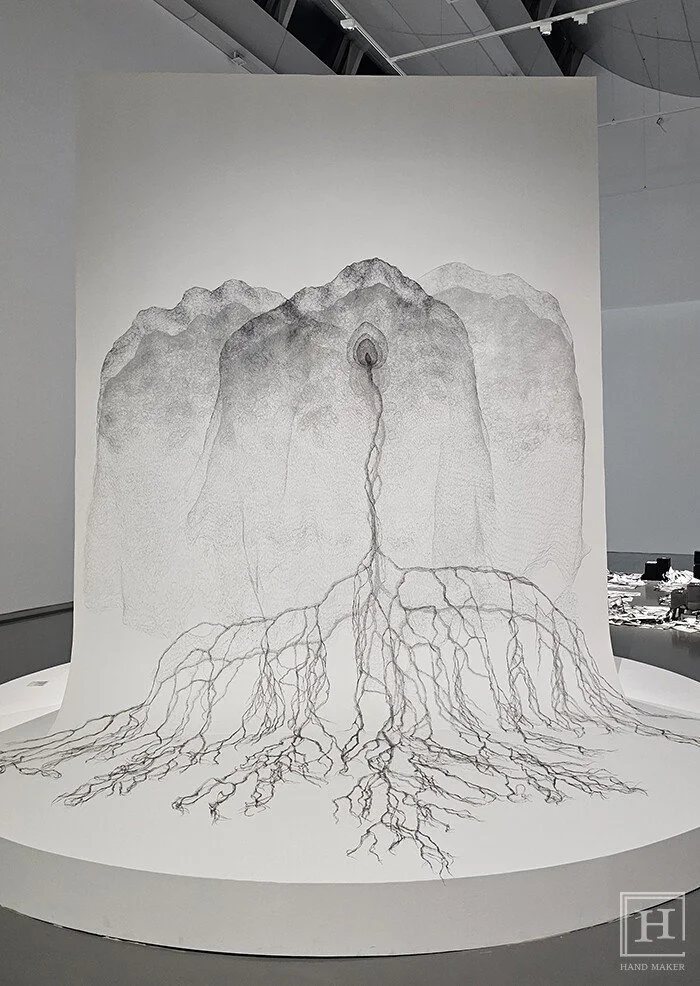
Jeong So-yun has been exploring visual means to heal individual anxiety and sadness through textiles. While her previous works were processes of contraction and tension to control and manage internal disturbances induced from the outside, her recent work has moved toward a stage of relaxation, accepting the flow of emotions as they are. The artist directly processes and dyes standardized transparent thread, then weaves textile drawings with a sewing machine as if drawing lines with a pencil. The arduous process of completing the work itself appears to be a performative practice.
The 〈Direction of Relaxation〉 (2026) series presented in this exhibition projects the artist's changed, flexible psychological trajectory. The non-linear 'root' icons filling the space settled modestly, as if conforming to the air currents, without stubbornly grasping the floor or obsessing over settling there. It is said that roots generally flow by flexibly changing direction when they encounter obstacles on their path.
This characteristic of roots resembles the artist's direction of work in 'relaxation', which lightens the weight of anxiety and sadness without removing their source. The lines of the textile swim and condense freely, as if it is fine to flow anywhere or be with anyone. Furthermore, the artist's gaze, which chooses the generosity of soft fabric against the sharp hierarchy of the world, implies the recovery of subjectivity that has grown resolutely within a fragile interior.
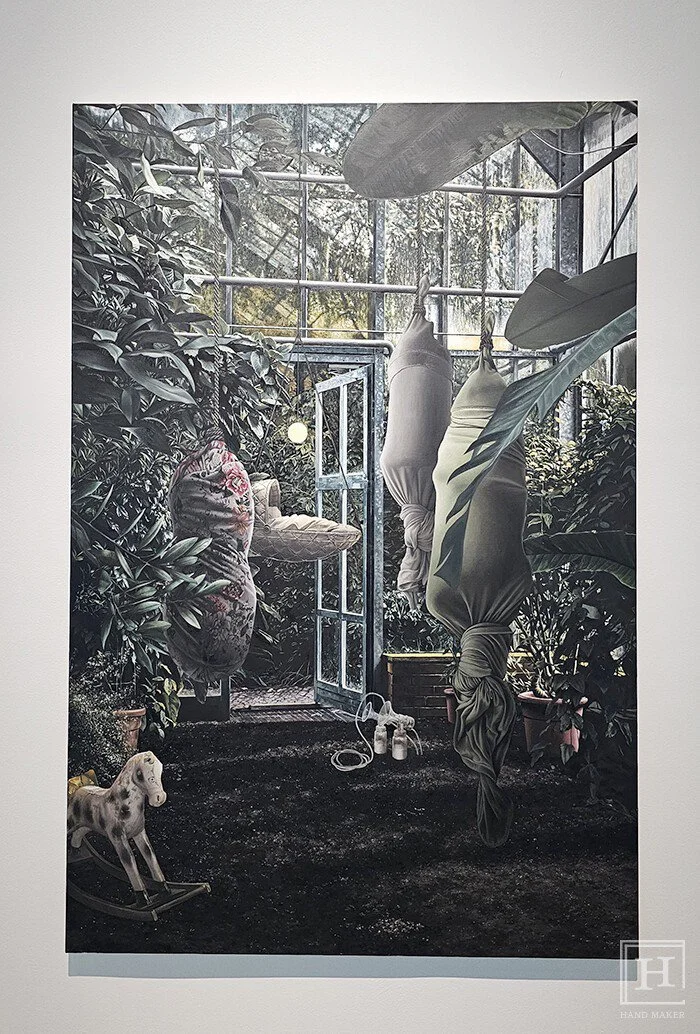
Han Seon-u visualizes the contemporary body and senses mediated by digital technology, as well as the structures of anxiety and desire that arise within them. The artist has explored the consumption methods of reconstructed body images in a technological society and gendered labor structures by combining Photoshop collage with analog painting.
〈Hanging Lullaby〉 (2025) is a work inspired by the fact that the responsibility for housework and care is unilaterally placed on women. An unidentified object hangs inside a greenhouse that presupposes the artificial growth of life. Behind it, the empty cradle, the floral baby carrier, the soiled breast pump, and the rocking horse suggest that the hanging cocoon shape is a baby.
An indescribable sense of anxiety hovers over this uncanny landscape where the baby carrier, which should be held dearly, hangs in the air and the breast pump is abandoned on the floor. This subverts the social myth that has defined motherhood only as flawless joy and forces a direct confrontation with the oppression and hierarchy intertwined with housework behind the institution, as well as women's subjectivity.
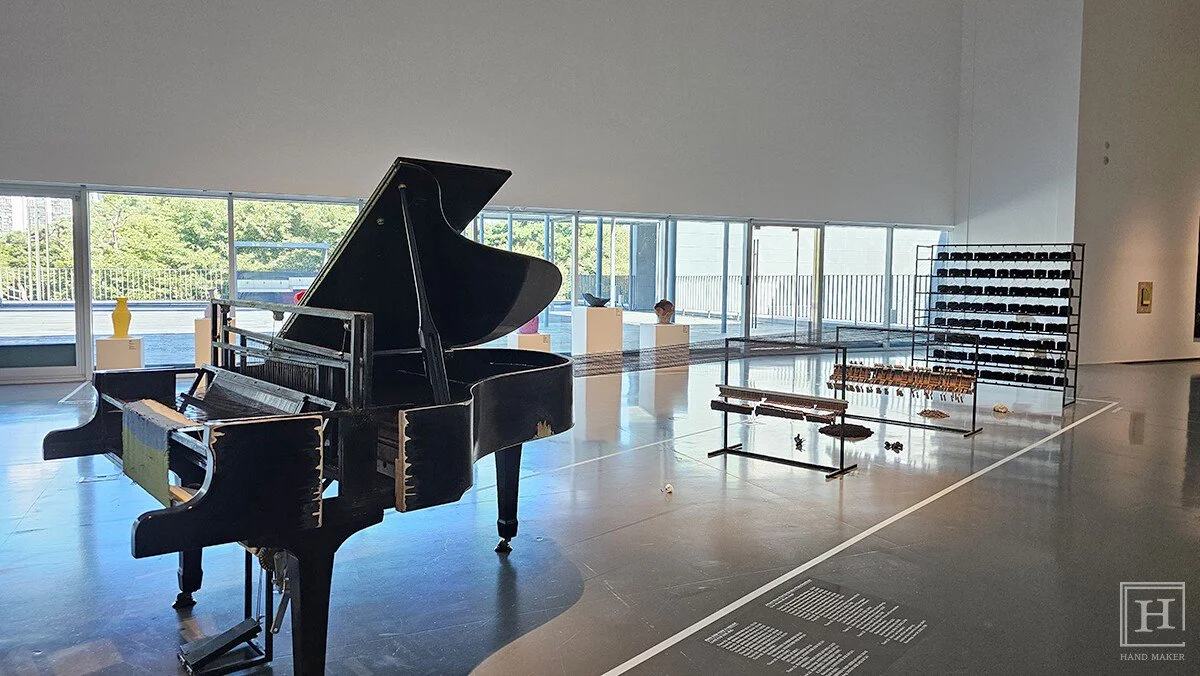
Kwon Eun-bi continues her practical work of discovering micro-disaster narratives that have been socially marginalized and creating "collective memory." 〈A Poem Woven from the Debris of Ruins〉 (2025) is a work that transforms an abandoned piano into a weaving machine and adds a soundtrack made of oral performance.
The artist opens the story with the history of the weaving industry, which brought a revolutionary leap to human civilization. This chillingly connects to the history of countless female workers' sacrifices hidden behind the industry, and the history of female victims in social disasters that still repeat in modern Korean society.
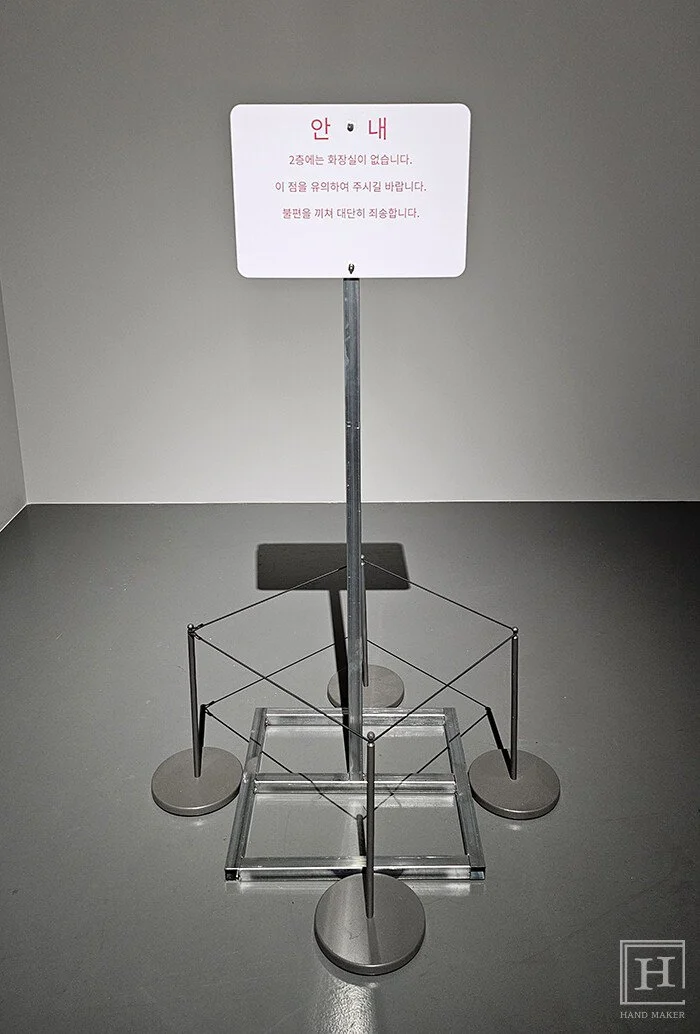
Jeon Jae-u has playfully overturned the concept of modern architecture by exploring the possibility that architecture could go beyond physical structures to be replaced by virtual media or information systems. He works under the name HYPERSPANDREL, crossing the boundaries between architect and architectural firm, and explores the unexpected gaps and peripheries of architecture.
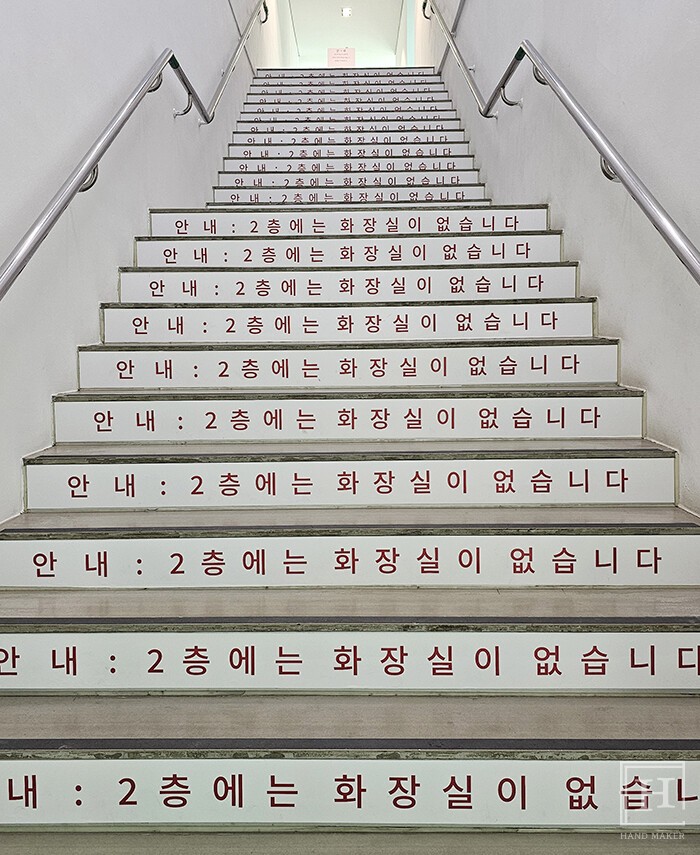
It is now a widely known fact that this photo, which once drew people's interest and attention as a funny photo posted on online communities, is not a simple informative phrase but a real work of art. Jeon Jae-u's new series 〈There Is No Restroom on the Second Floor〉 (2026) focuses on the actual spatial condition that there is no restroom on the second floor of the Gyeonggi Museum of Modern Art. The notices and signs that control space and guide movement are, to the artist, minimal architectural acts that define the boundaries of space itself.
The artist intentionally installs notices, electronic displays, and directional signs throughout the interior and exterior of the museum to cause an over-proliferation of information regarding absence. Made with temporary materials commonly used throughout cities, such as PVC foam sheets or electronic displays, the works function like actual notices and intervene in the visitors' movement. In this way, visitors are constantly informed of the absence of the restroom and are incorporated into this strange information environment.
In this process, the work brings to the forefront the institutional rules of space that invisibly constitute our actions. Like the artist's philosophy of focusing on temporary experiences and the gaps in space rather than permanent structures, this trivial and humorous landscape of notices makes us look at the familiar information environment of the museum in a new way.
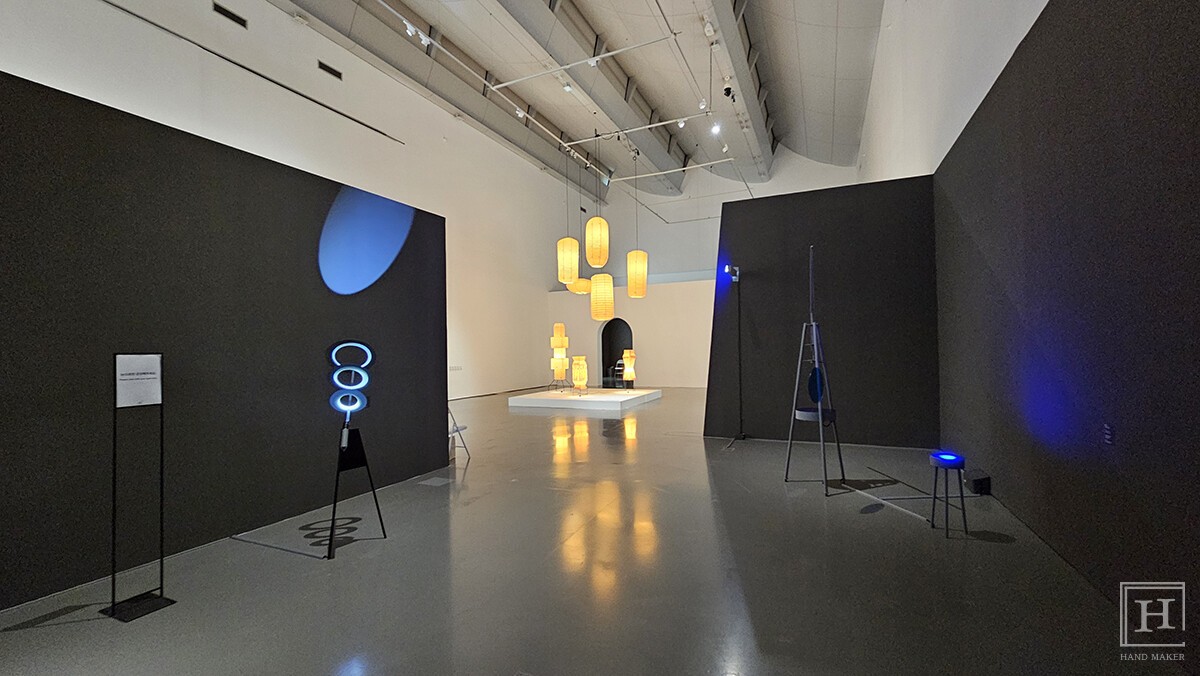
This exhibition removes the set paths to weave a new solidarity that embraces differences and coexists. The 'summer' of the exhibition means more than just the circulating season. Summer is the today of youth, the trajectory of constantly flowing time, and also the middle of an ecstatic life.
An official from the exhibition stated, "Just as 'we' all experience our own summers, summer is a moment that dwells in everyone's life. We hope that in the middle of this moment, you will discover our summer, and your summer."
Reporter at HANDMAKER (핸드메이커), a Korean magazine devoted to crafts and handmade culture. Covers exhibitions, traditional crafts and the makers behind them.
![[On-site Sketch] An Artistic World Made of Hangeul Offers Only Answerless Freedom, 《Hangeul…](/storage/handmk-global/2026/09/53d245f8-5a92-41b3-960f-671be6ce94f6-53ed35ad-thumb.webp)
![[Press Conference] A World of Ceramics Crafted by Earth and Soil from Human Hands: 《2026 Gyeonggi Ceramics Biennale》 to Open](/storage/handmk-global/2026/09/cf17830c-fc0a-41cf-af99-10f296cc2feb-91e5e8a4-thumb.webp)
Comments 0
Comments are currently disabled.