
[On-site Sketch] Joseon's White, Embracing Diverse Existences: "Joseon Spatial Aesthetics: The Order of White" Exhibition
The "Joseon Spatial Aesthetics: The Order of White" exhibition, part of the 2026 Autumn Royal Culture Festival's Changdeokgung craft exhibition, was held at Huijeongdang in Changdeokgung Palace for five days from the 7th to the 11th. The exhibition explores the aesthetic consciousness of Joseon spaces against the backdrop of Huijeongdang, a space where traditional architecture and modern elements coexist.
The "Joseon Spatial Aesthetics: The Order of White" exhibition, a craft exhibition for the 2026 Autumn Royal Culture Festival at Changdeokgung Palace hosted by the Royal Palaces and Tombs Center of the Korea Heritage Administration and managed by the Korea Heritage Agency, was held at Huijeongdang in Changdeokgung Palace for five days from the 7th to the 11th.
This exhibition is an exhibition that examines the aesthetic consciousness of Joseon spaces against the backdrop of Huijeongdang in Changdeokgung Palace, which served as the king's living and working space and where traditional architecture and modern elements coexist. A total of about 32 intangible heritage successors and contemporary artists participated, with approximately 50 works exhibited.
“‘White’ is an achromatic color, but the ‘white’ I think of is void, and it means finding order within that. There is an invisible order even within architecture. When people say 'void,' they usually think of white paper, but that is not what is called a void. However, if you place a dot, the remaining space becomes a void. If you place one more dot, a relationship is created between those dots. I wanted to express such things.” -Director Baek Jong-hwan
Director Baek Jong-hwan, who oversaw the exhibition, interpreted 'white' not as a simple color, but as an order of emptiness, restraint, and harmony through the rhythm of the wooden structures remaining in Huijeongdang, the axes of the space, proportion and balance, and the emptied voids. Through works that encompass tradition and modernity, he leads viewers to rediscover the essence and aesthetic value of Joseon space that has continued through changes in eras.
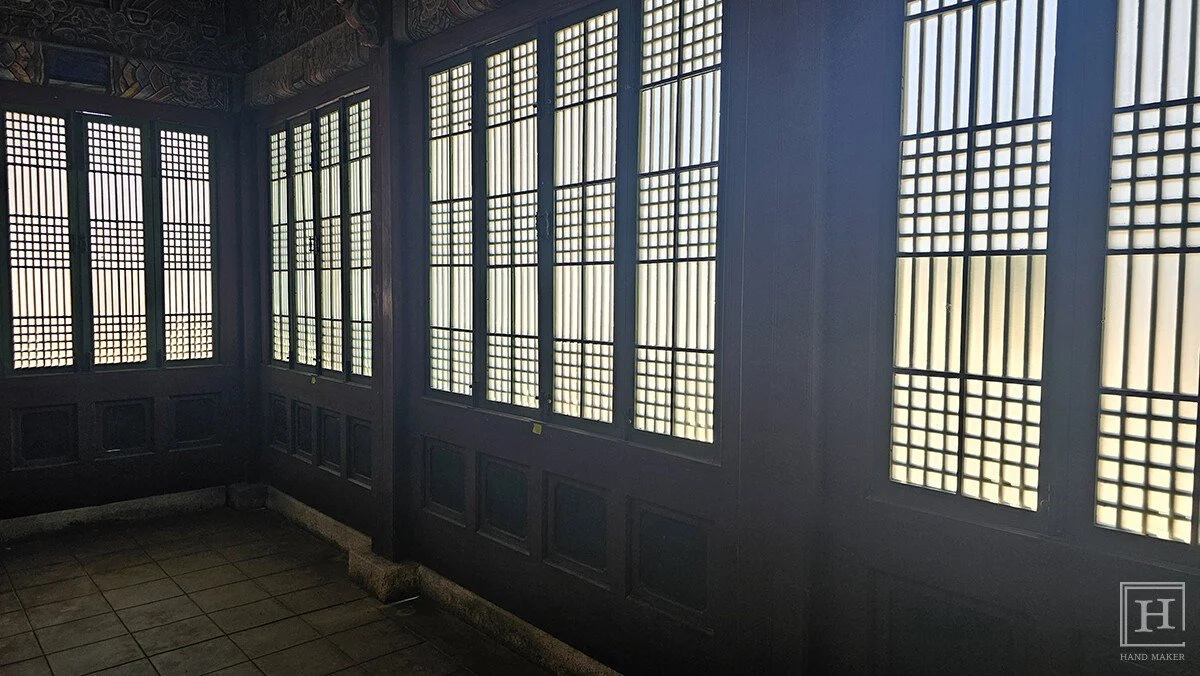
Huijeongdang is a name that carries the meaning of 'brightening politics to make the people happy.' As the inner palace of Changdeokgung, it was prepared as a space where the king spent his daily life and as a pyeonjeon (office) where he conducted official business. The appearance of Huijeongdang has changed through several fires and reconstructions.
The current Huijeongdang was rebuilt in 1920 after being destroyed by the Great Fire of Changdeokgung in 1917. It is characterized by the addition of modern elements to the style of traditional palace architecture. Huijeongdang is a space where time flows, with the traditions of Joseon, the Korean Empire, and modern changes overlapping in one space.
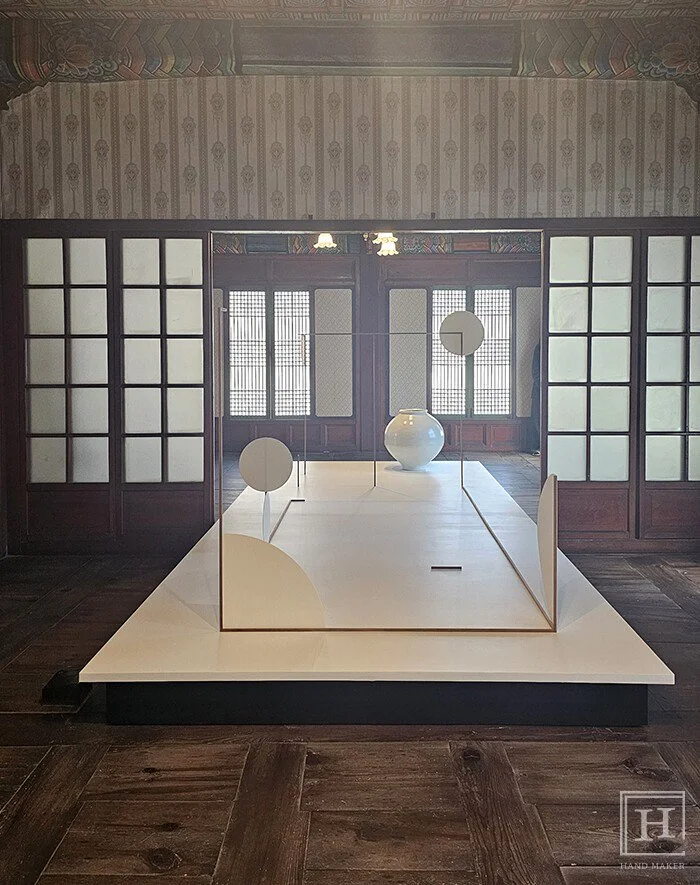
Artist Oh Jong uses simple materials such as wood, metal rods, thread, pencil lines, and light to create site-specific works that respond to space, and uses gravity, tension, light, and shadow to make people view familiar spaces with a new perspective. Oh Jong's new work 〈Line Fragment (Double-sided, Moon)〉 appears differently depending on the viewer's position.
The wooden rods that looked like lines from a distance become objects with thickness and surfaces when viewed up close, and the wide corrugated cardboard surfaces may appear like thin lines depending on the direction of view. These lines and surfaces overlap and diverge from the architectural elements of Huijeongdang and moon jars, dividing the space into multiple layers. As what is seen and what is hidden changes every time the viewer moves, the work allows for a new experience of Huijeongdang depending on the position of the body and the gaze.
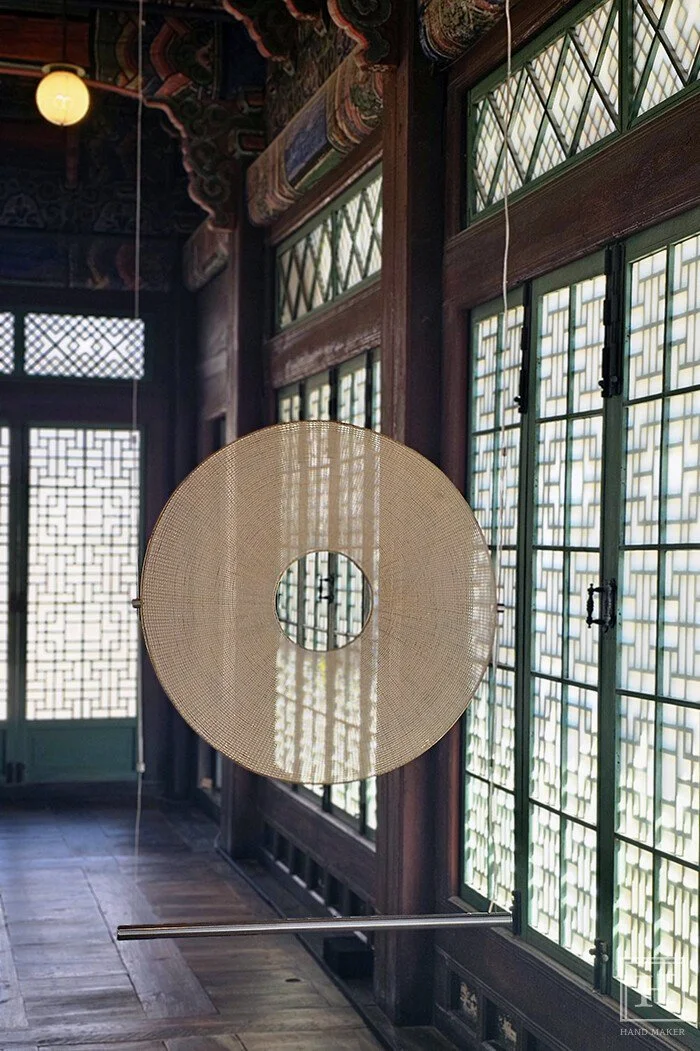
National Intangible Heritage Gat-iljang holder Jeong Chun-mo is an artisan who has carried on the entire process of making traditional hats. Selected as the 'Artisan of the Year' by Yeol in 2020, he created the 〈Yangtae Vertical Pendant Light〉 together with the design studio Studio Word as part of the project. By adding silver light to the Yangtae, which preserves the natural color and delicate weave of bamboo, he newly presents the beauty of traditional hats as everyday light.
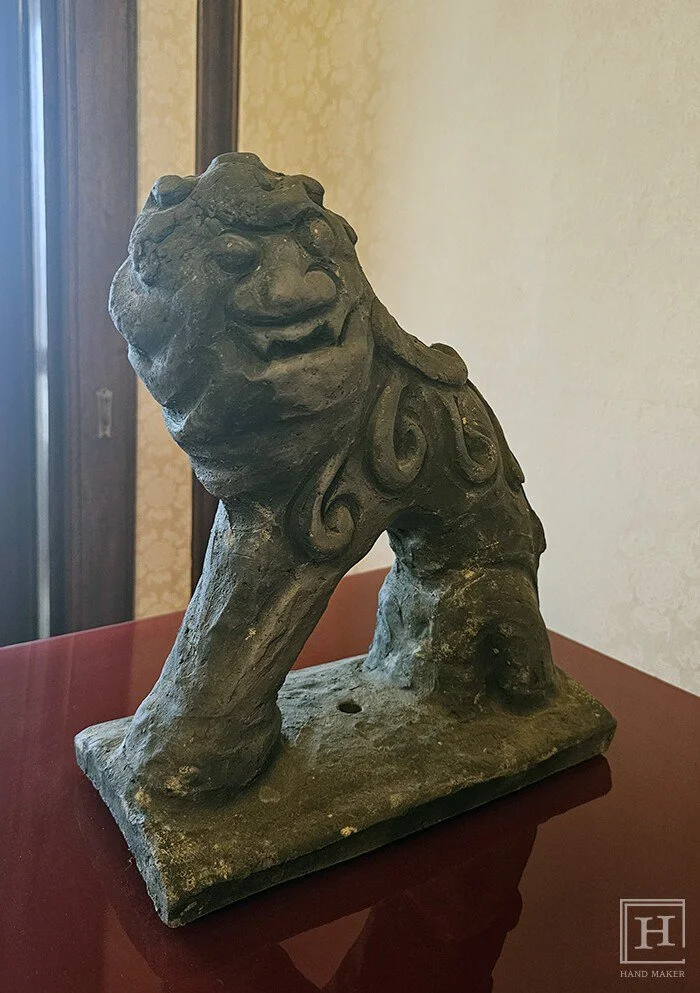
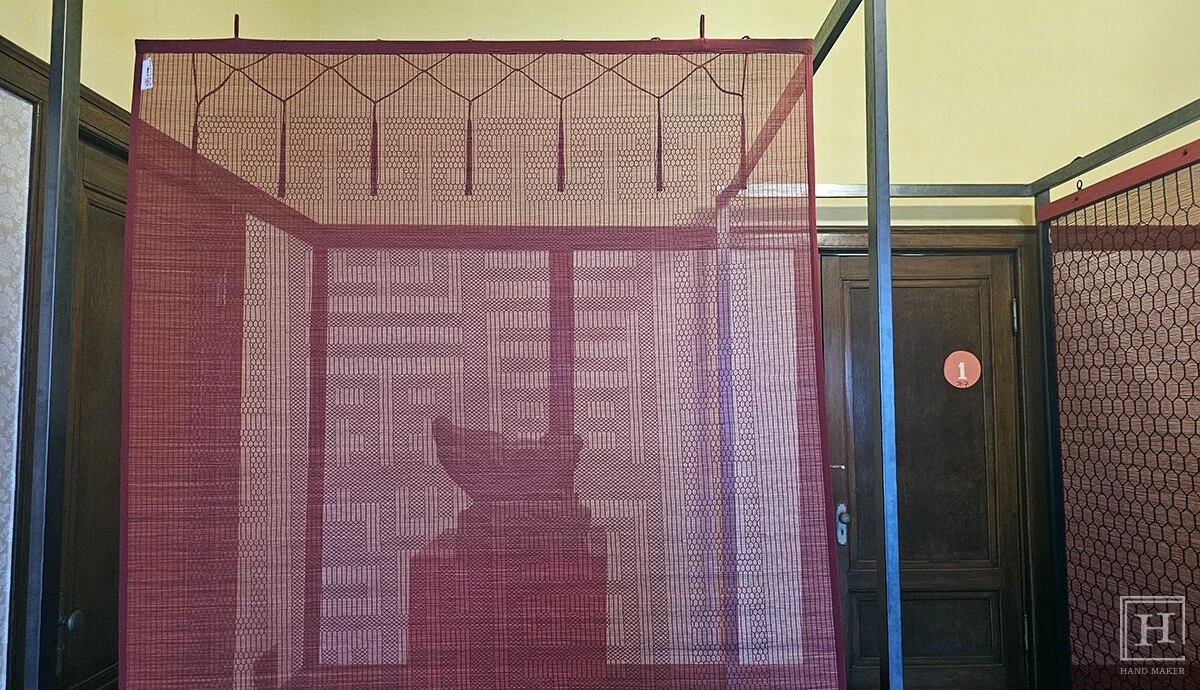
Kim Chang-dae, a holder of National Intangible Heritage Jewejang, is an artisan continuing the technique of making traditional architectural roof tiles. In this exhibition, he presents 〈Dragon Head of Myeongjeongmun Gate at Changgyeonggung Palace〉, 〈Japsang Daedangsabbu of Paldalmun Gate〉, and 〈Japsang Sahwasang of Sungnyemun Gate〉. The dragon heads and Japsang are placed on roofs to symbolize the authority and hierarchy of royal architecture. These elements, which used to decorate the exterior of buildings, have been moved to the exhibition hall and placed beyond the feet of Jo Dae-yong, holder of Yeomjang. The dragon heads and Japsang revealed between the feet add tension to the movement toward the reception room.
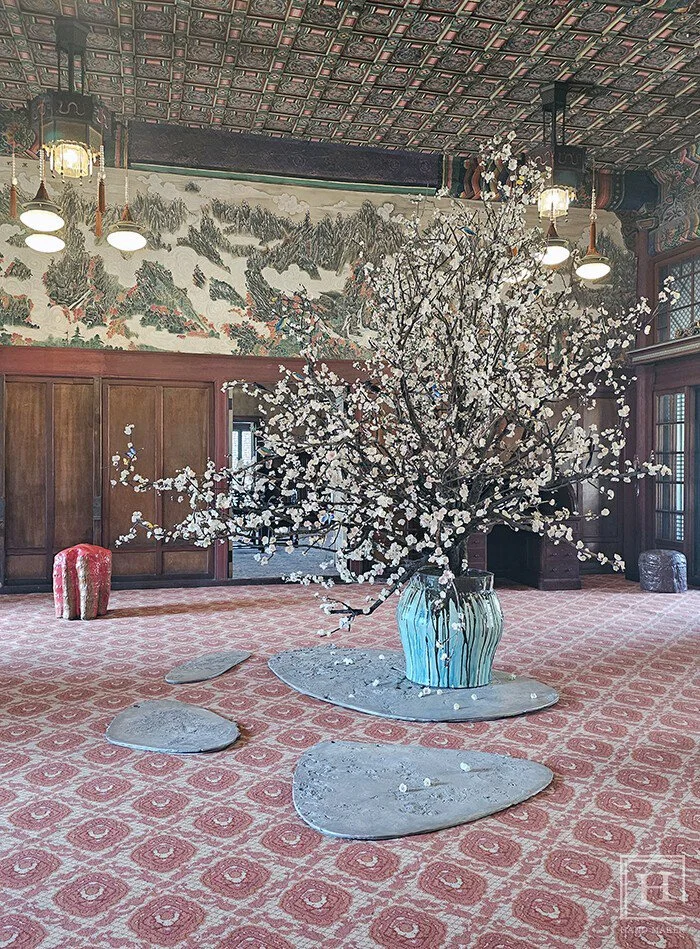
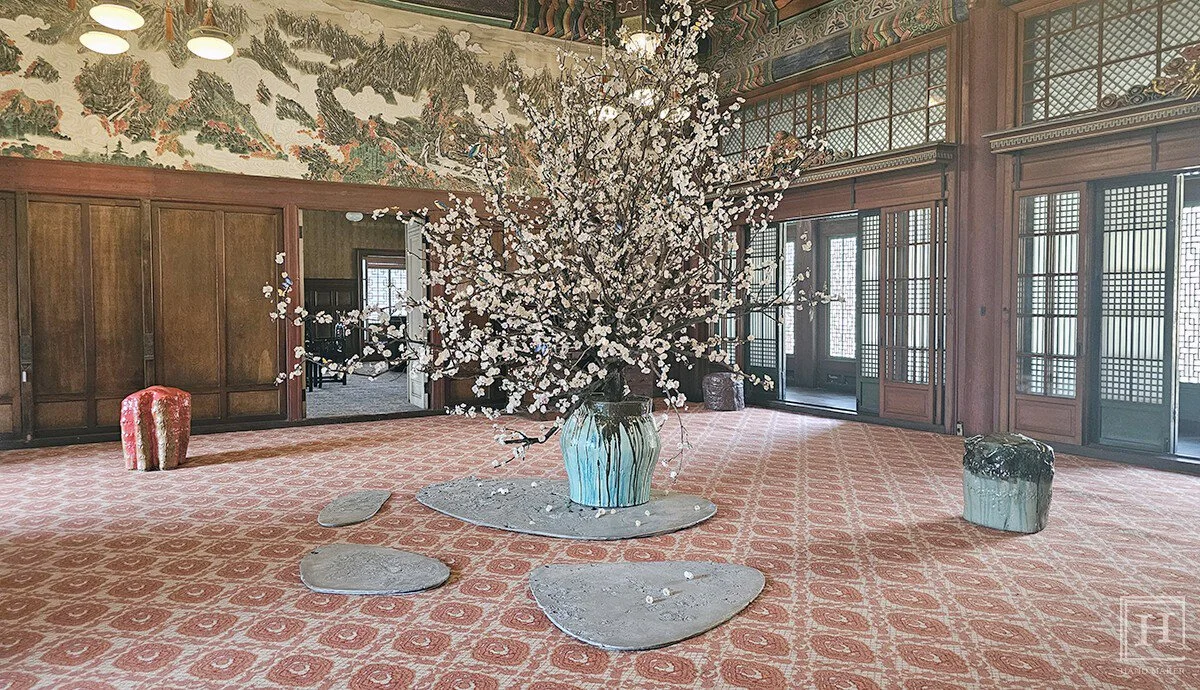
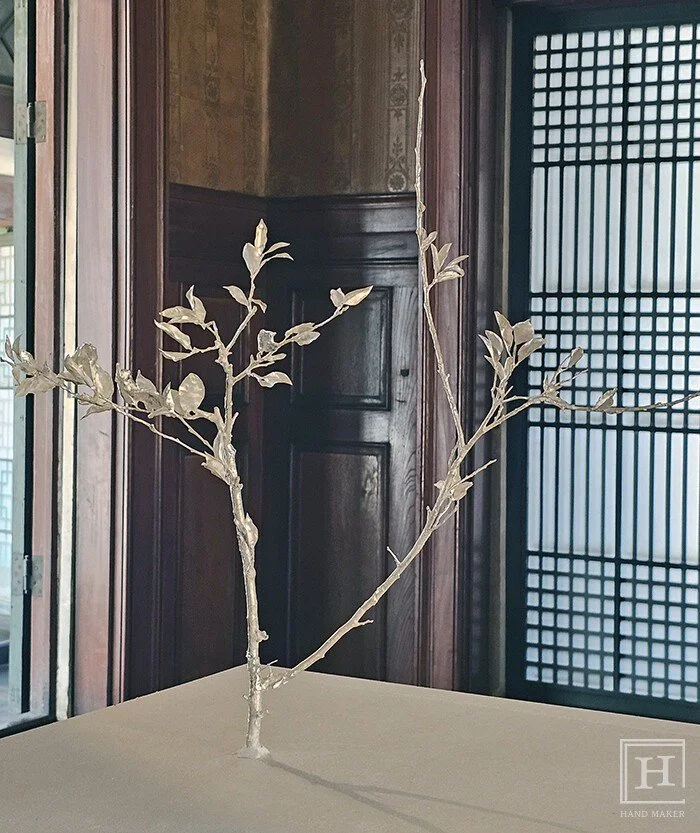
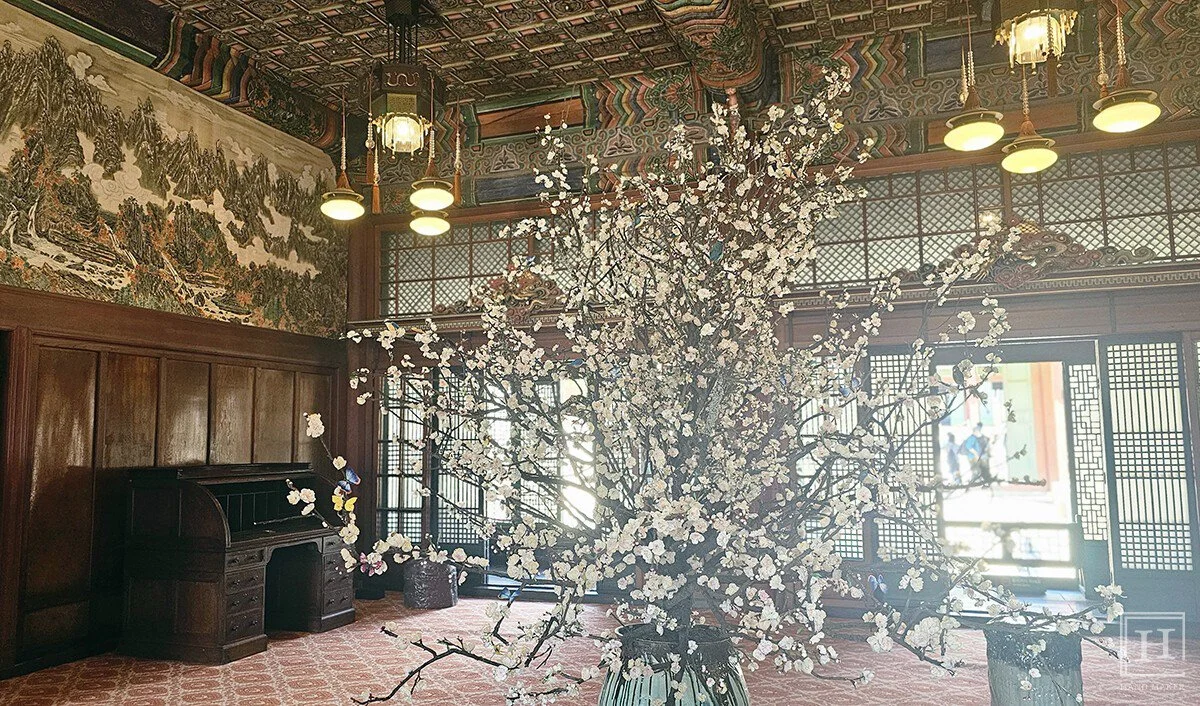
Choi Seong-woo, a holder of National Intangible Heritage Gungjungchaehwa, works to preserve the tradition of Gungjungchaehwa while expressing it through contemporary formative language. He continues activities to promote and educate Gungjungchaehwa by operating the Korean Royal Court Flower Museum. 〈White Allios〉 is based on the story from the ancient text "Chunchu Unduchu" that "the essence of the Ok-hyeong star scattered and became peaches," expressing the appearance of white peach blossoms, Byeokdohwa, which originated from the Ok-hyeong star of the Big Dipper, descending from the sky to bloom in Huijeongdang.
By attaching 2,000 Byeokdohwa made of silk raw flowers to dead wood branches and adding a natural monument Fairy Pitta, an endangered species Great Blue Morpho butterfly, a yellow butterfly, and bees, a landscape where flowers bloom is created. As the Byeokdohwa used in royal palace banquets bloom again in Huijeongdang, it shows the old story of stars in the sky becoming flowers.
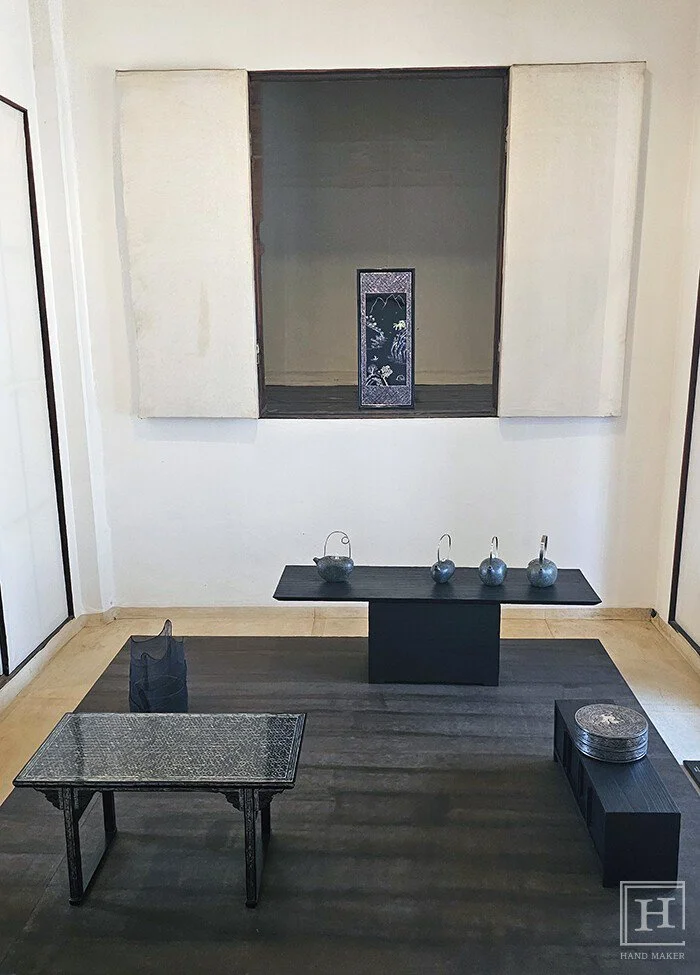
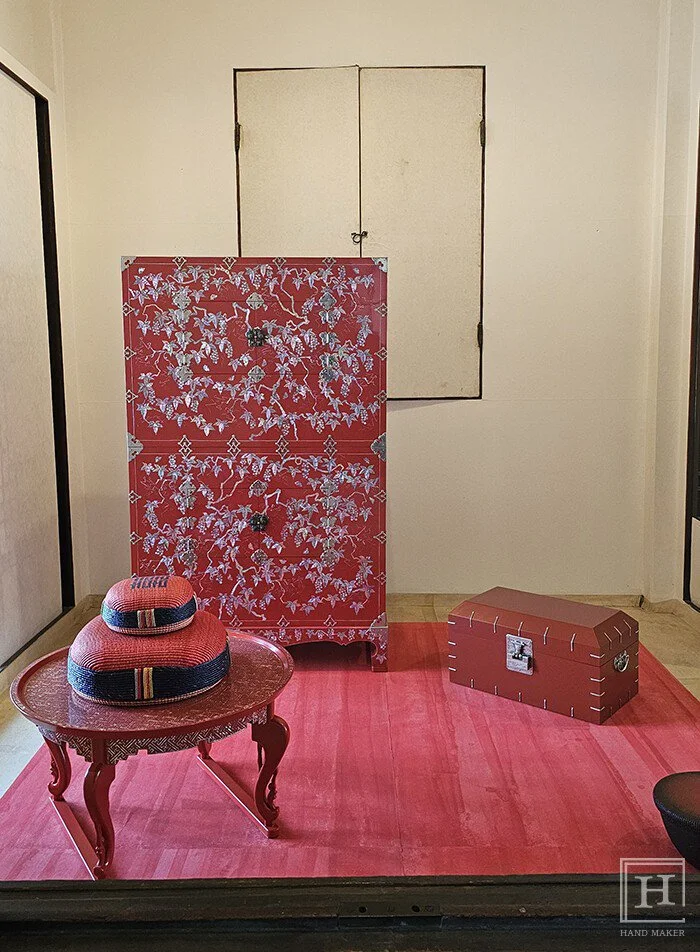
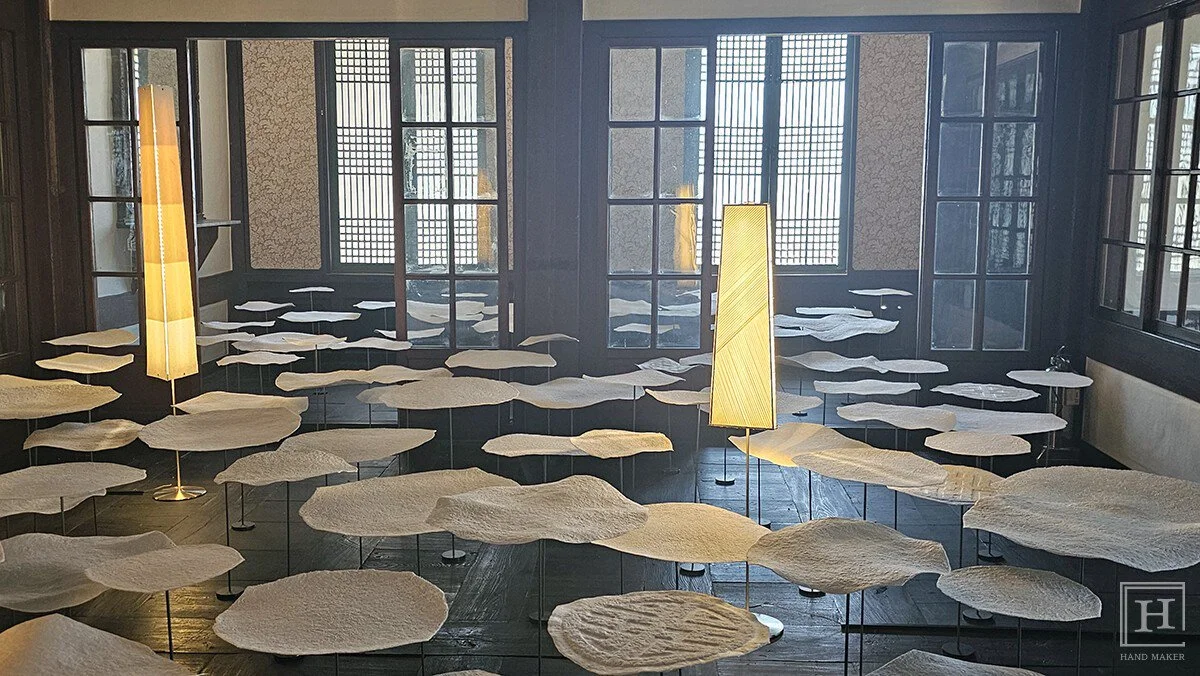
Artist Kim Hyun-joo explores the materiality of materials and the coincidence and order arising from the production process, centered on Hanji. Through the unique texture of light and Hanji, she creates a formative landscape where nature and humans, materials and senses meet. Kim Hyun-joo's new work 〈Descending Landscape〉 is a piece where the persimmon stem pattern that was located on the ceiling of Huijeongdang descends from the ceiling to unfold as a new landscape.
The patterns floating at different sizes and heights gather like lotus leaves on the water's surface to form a single cluster, and the patterns go beyond decorative forms to become a landscape that expands to the entire space. The patterns of the past that stayed on the ceiling descend into the current space to continue in a new form, making one look again at the heart and meaning contained within.
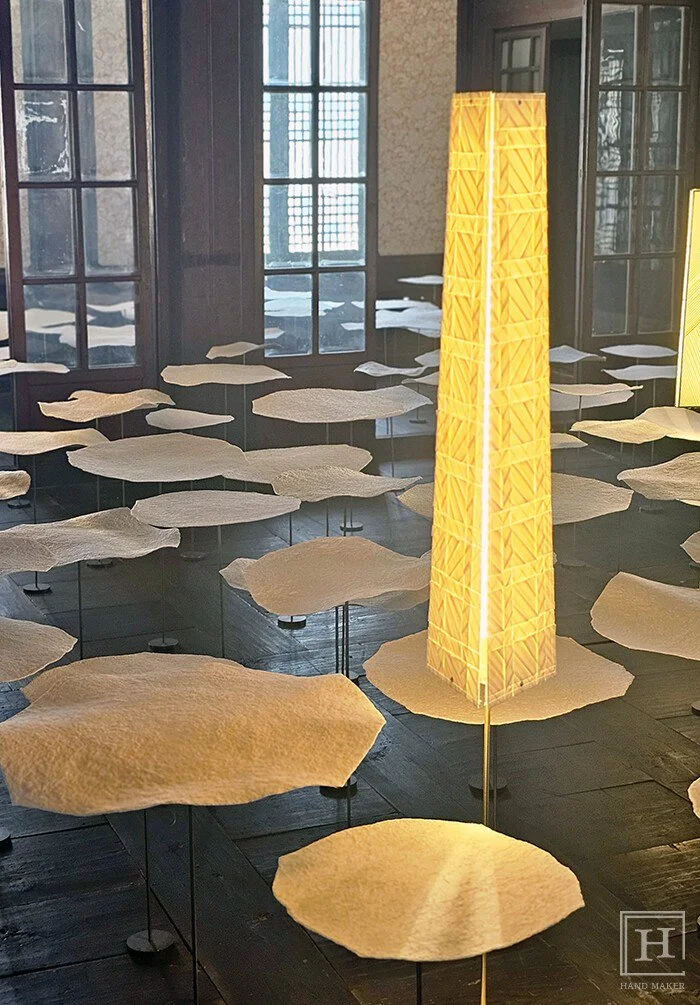
Kwon Joong-mo is a lighting artist and designer who uses Hanji. He reinterprets traditional materials modernly by creating various shades through the texture and wrinkles of Hanji and the transmission of light. Kwon Joong-mo's new work 〈The Highlight of Light〉 is inspired by the windows and doors of Hanok, showing how light and shadow divide the space while also connecting each other.
The light coming through the windows and doors passes between the Hanji to create multiple layers of bright and dark shades, and the appearance of the space changes according to that variation. Just as the windows and doors of Hanok distinguish the inside from the outside while simultaneously connecting each other's scenery, the work makes one view the space of Huijeongdang as one continuous landscape through light and shadow. The landscape of light experienced in traditional spaces unfolds in a new form through modern formation.
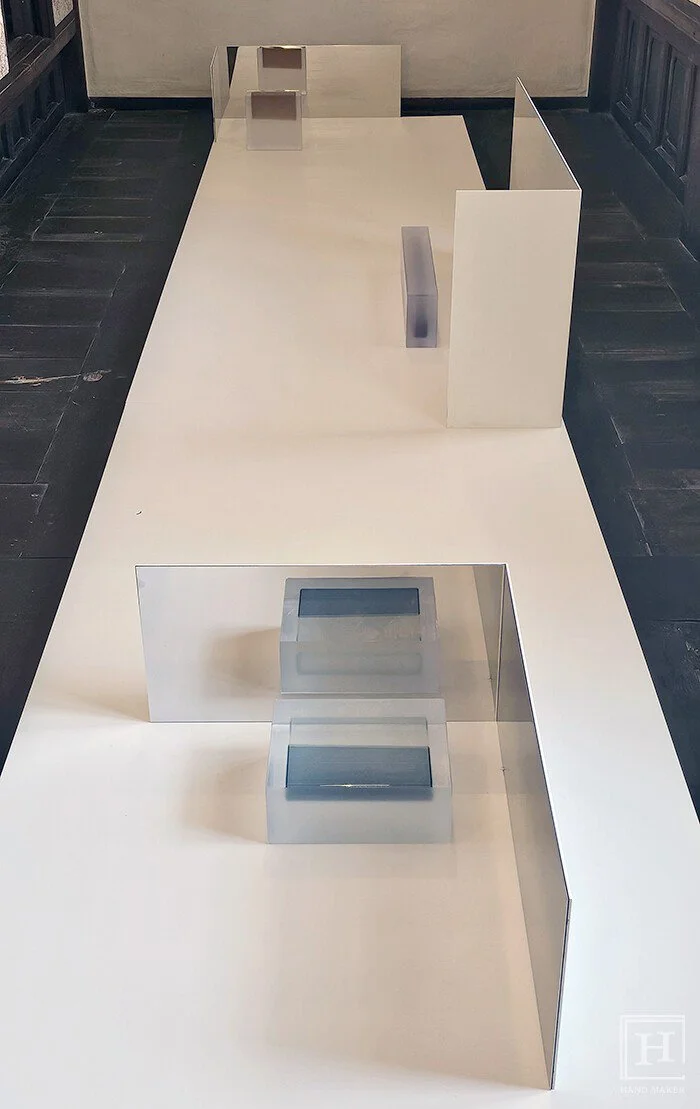
Yoon Ra-hee is a designer and artist who established her own studio after studying various craft fields including metal, textile, ceramics, and woodworking. Exploring the physical properties of materials, she presents objects and functional works, collaborating with small-scale Korean workshops and engineers to realize various materials and forms.
Yoon Ra-hee's new work 〈Block〉 uses colors that metaphorically represent the accumulation of time to create depth and expansion within the space of Huijeongdang. The void created as colors spread adds depth to the space, and the 'gokjik' lines—which appear both curved and straight, yet simultaneously straight and curved—open up the space by slightly deviating. Rather than focusing on completed shapes, she draws attention to the void created between forms, demonstrating the power generated by empty space.
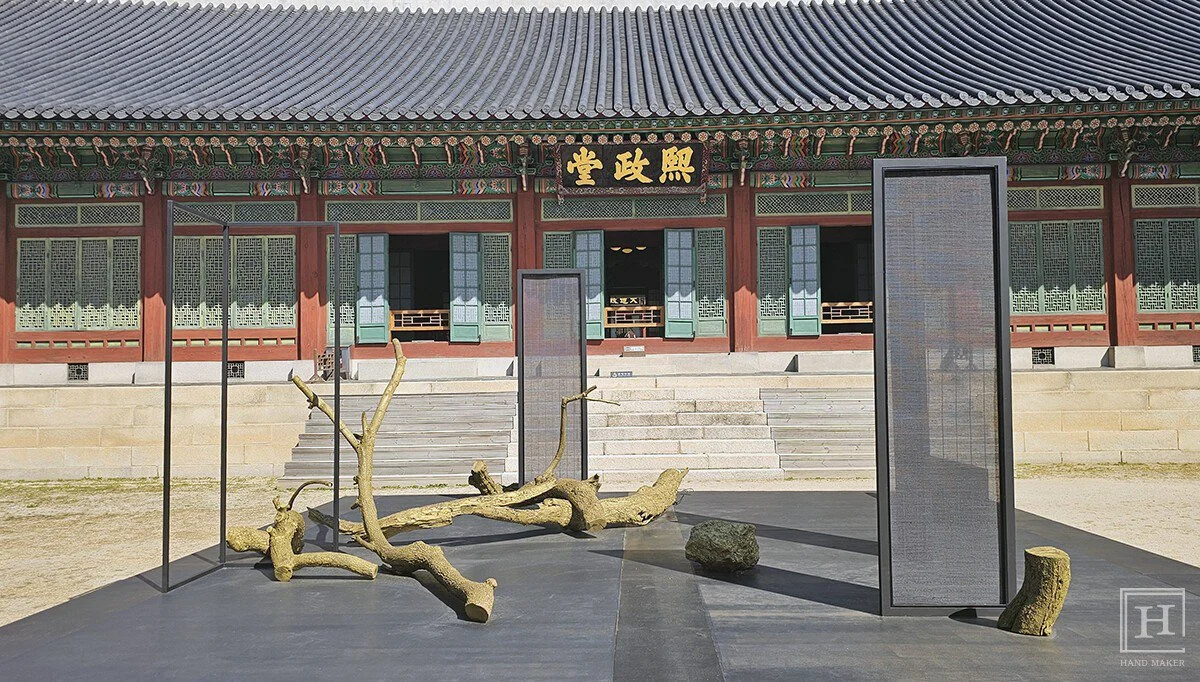
Leo Kim is a florist and artist who works through flowers, nature, and installation art. She explores the essence of nature through dense balance. Leo Kim's new work 〈Filled by Emptying, Emptied by Filling〉 is themed around the front courtyard of Huijeongdang. The front courtyard, which is both inside the building and also the outside touching nature, is a filled place within the space, but when viewed as part of nature, it is also an emptied place.
Based on this character of the front courtyard, the work shows the appearance of filling and emptying touching each other. Just as autumn begins in the place where the passing summer has been emptied, the harmony of 'this place right now' is also created by the accumulation of past time and traces. By placing things that have flowed away and disappeared alongside what remains now, she captures the flow of nature that is emptied and filled.
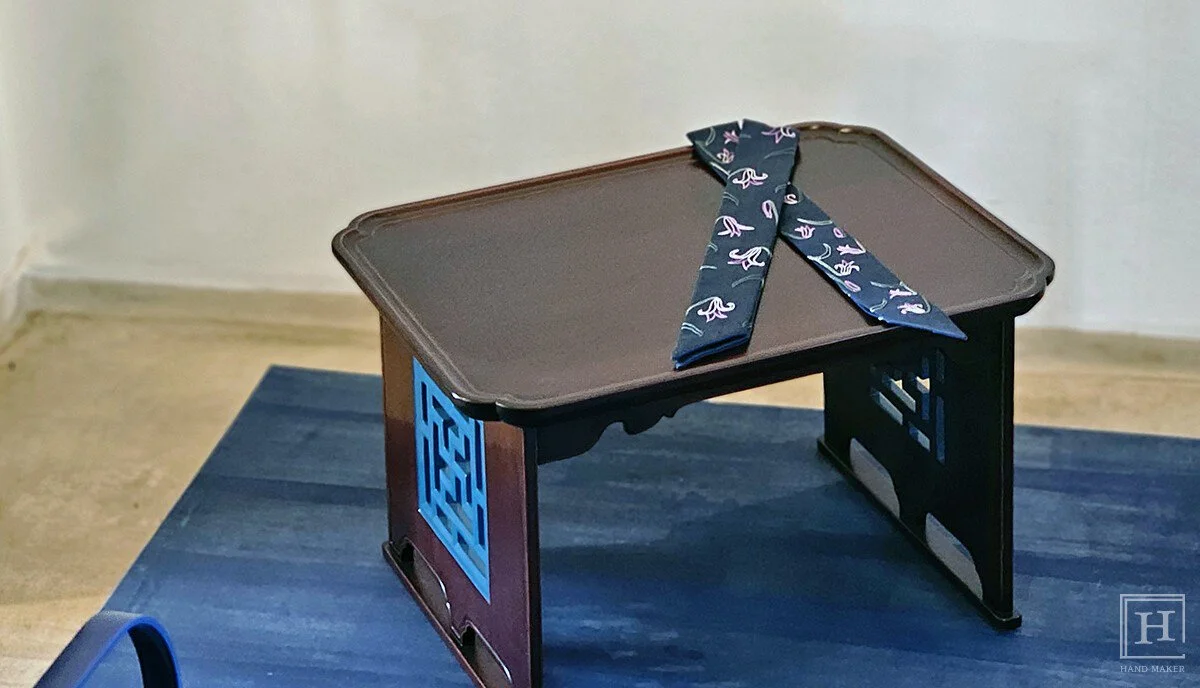
This exhibition focuses on the fundamental order of Joseon space that still remains beneath the traces of change. The rhythm of wooden structures, the axes and arrangement of space, proportion and balance, and the emptied voids maintain the unique sense possessed by Joseon architecture even through changes in eras. The exhibition calls this foundation that does not disappear even as eras change and styles transform, "White."
An official from the 2026 Autumn Royal Culture Festival stated, "《Joseon Spatial Aesthetics: The Order of White》 is a journey to find the beauty of Joseon space inherent in Huijeongdang," and added, "Through this exhibition, we hope visitors examine the aesthetics of Joseon space and discover the order and beauty dwelling in Huijeongdang."
Reporter at HANDMAKER (핸드메이커), a Korean magazine devoted to crafts and handmade culture. Covers exhibitions, traditional crafts and the makers behind them.
Related Articles
![[On-site Sketch] Humans and animals, strange beings making room for each other... Yoon Ye-jin's "Unfamiliar Solidarity"](/storage/handmk-global/2026/10/6d981395-c4b2-45f0-b5af-d4099c4b93fe-fc54ae74-thumb.webp)
[On-site Sketch] Humans and animals, strange beings making room for each other... Yoon Ye-jin's "Unfamiliar Solidarity"
![[Field Sketch] ‘Another animal inside an animal?’ Painting the coexistence of life with…](/storage/handmk-global/2026/10/6cb2787b-d326-4107-a11f-2f07a30b4850-a3af764b-thumb.webp)
[Field Sketch] ‘Another animal inside an animal?’ Painting the coexistence of life with imagination, Cho Tae-seong's solo exhibition 《Meet at Hana ZOO》 at Hana Bank H.art1
![[Field Sketch] The journey of an artist who viewed all existence as a single life: Seoul Museum's…](/storage/handmk-global/2026/10/80e8d27b-5839-4d40-b6d6-6bd2dad08403-09eff485-thumb.webp)
Comments 0
Comments are currently disabled.