[Field Sketch] Gyeonggi Ceramics Biennale 2026 ④ Excellent works that inherit and modernize the tradition of Korean ceramics, 《Beautiful Korean Ceramics Competition》
The 《Beautiful Korean Ceramics Competition》, held at the Gyeonggi Ceramic Museum in Gwangju until November 1, showcases the potential for traditional Korean ceramics to lead to future creations. This year's seventh competition features 37 selected works from 254 entries, ranging from traditional techniques to modern explorations of form and material.
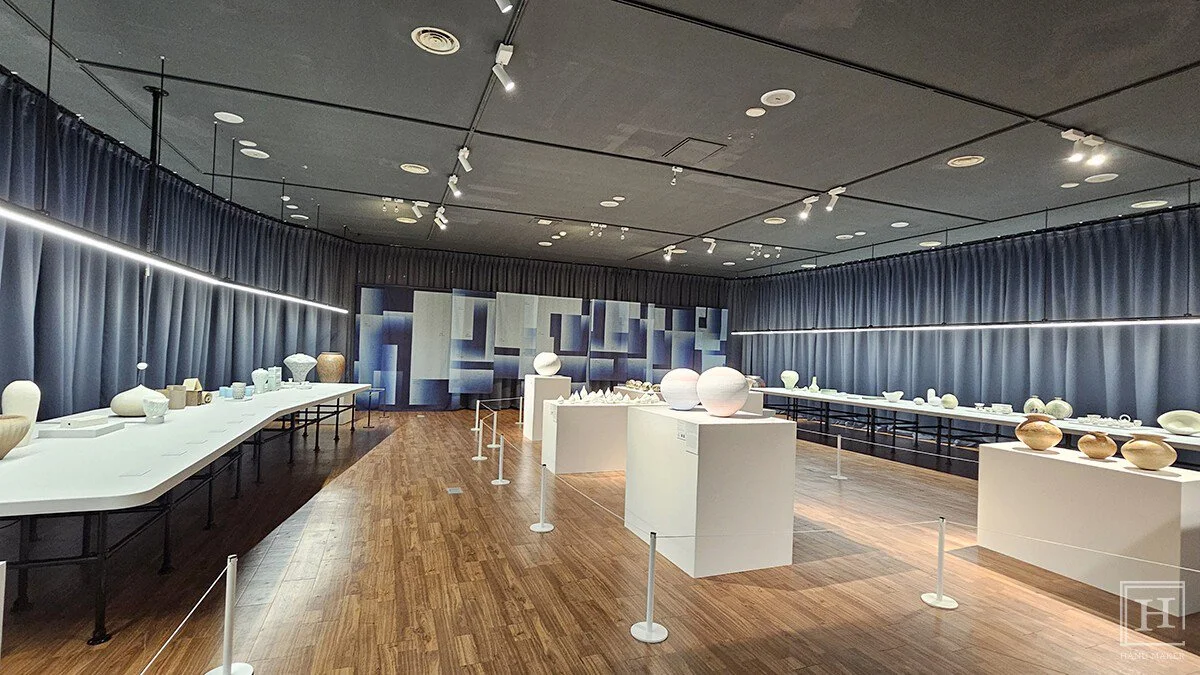
The 《Beautiful Korean Ceramics Competition》, held at the Gyeonggi Ceramic Museum in Gwangju until November 1, is a competition designed to inherit the identity of our ceramic culture by highlighting the possibility of our traditional ceramics leading to future creations.
As global interest in Korean culture rises, the tradition of Korean ceramics is also being reinterpreted through contemporary sensibilities and perspectives. The 《Beautiful Korean Ceramics Competition》 serves as a venue to examine how the formative spirit and traditional techniques of Korean ceramics are being continued and expanded today within this trend.
In this competition, which marks its seventh year, 254 works were submitted from both domestic and international sources. The works, created within different backgrounds and working environments, show diverse perspectives and interpretations of Korean ceramics. Among the 37 works selected through judging, one can encounter a wide range of attempts, from works based on traditional materials and techniques to new explorations of form, material, expression, and meaning.
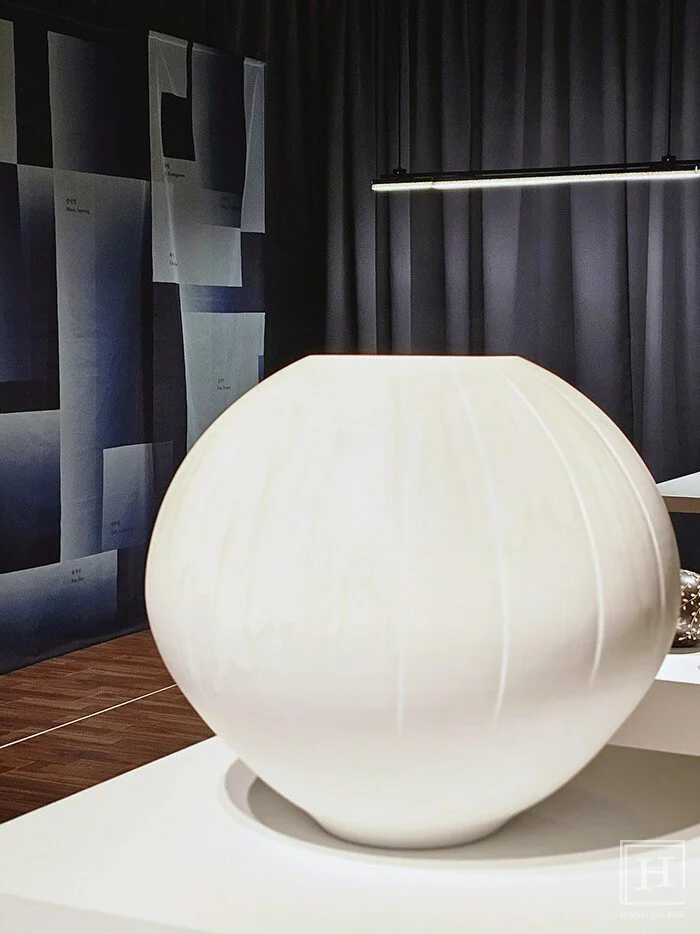
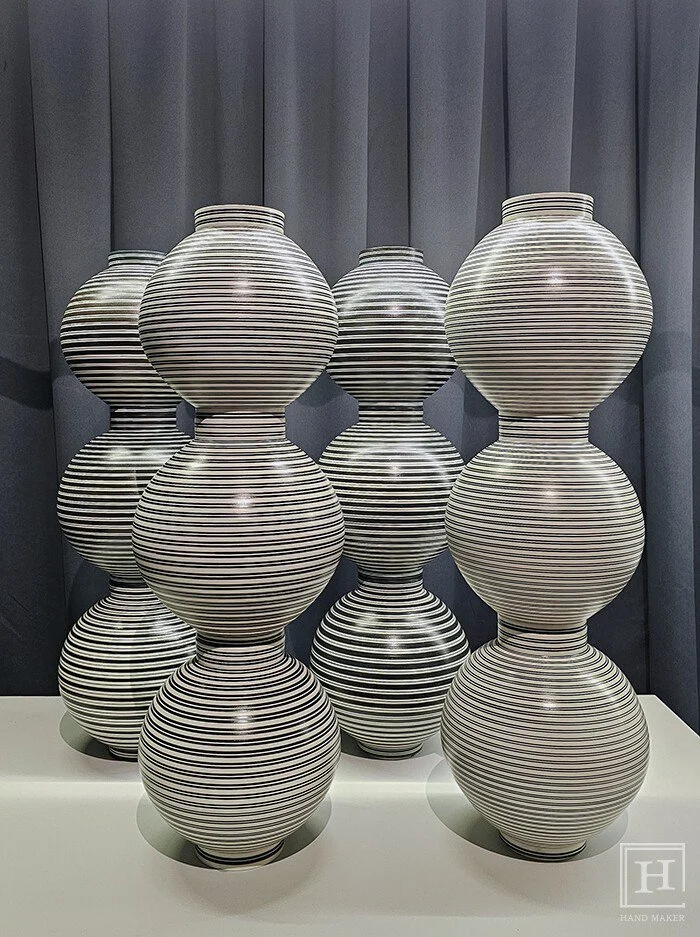
Woo Eun-joo interprets the unique round and soft impression of the Joseon Dynasty white porcelain moon jar with today's sensibility. 〈Distortion〉 creates a contrast between straight and curved lines by adding vertical lines to the round shape of the moon jar. The straightly engraved lines appear to bend along the curved surface of the jar, revealing the round shape even more clearly.
The straight lines, repeating at regular intervals, wrap around the round shape, reminiscent of the moon waxing and waning, and evoke the repetition and permanence of the moon's cycle. The soft and cozy texture of the smoothly ground surface also brings to mind the moon that dimly lights up the night sky. The moon, which has risen unchanged for ages, leads to the imagination that the people living on this land a hundred years ago, or even a thousand years ago, must have looked at the same moon, evoking a quiet sense of connection that bridges the past and present across time.
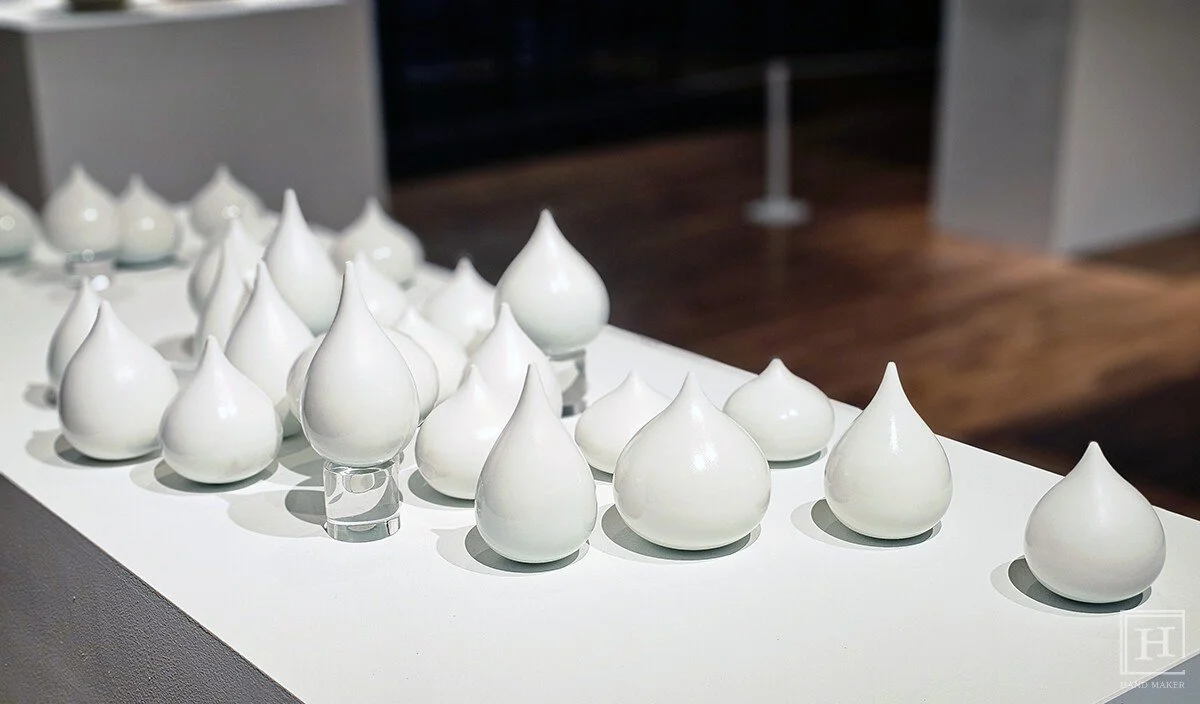
Lee Ui-yeong, who meticulously explores the properties of glaze that change according to temperature, captures the subtle changes of the moment ice melts into water on white porcelain. The artist focused on the matte texture of ice and the impression of transparent, clear water. 〈Water〉 uses different glazes for different parts and implements the different textures and atmospheres of ice and water by controlling the firing temperature and cooling speed.
This contrast clearly reveals the moment ice turns into water and shows the diverse expressions possessed by white porcelain. Furthermore, the form where several water droplets gather and connect creates a sense of rhythm through repetition and density, breathing life into the flowing water. In doing so, the artist further expands the expressive possibilities of white porcelain and glaze.
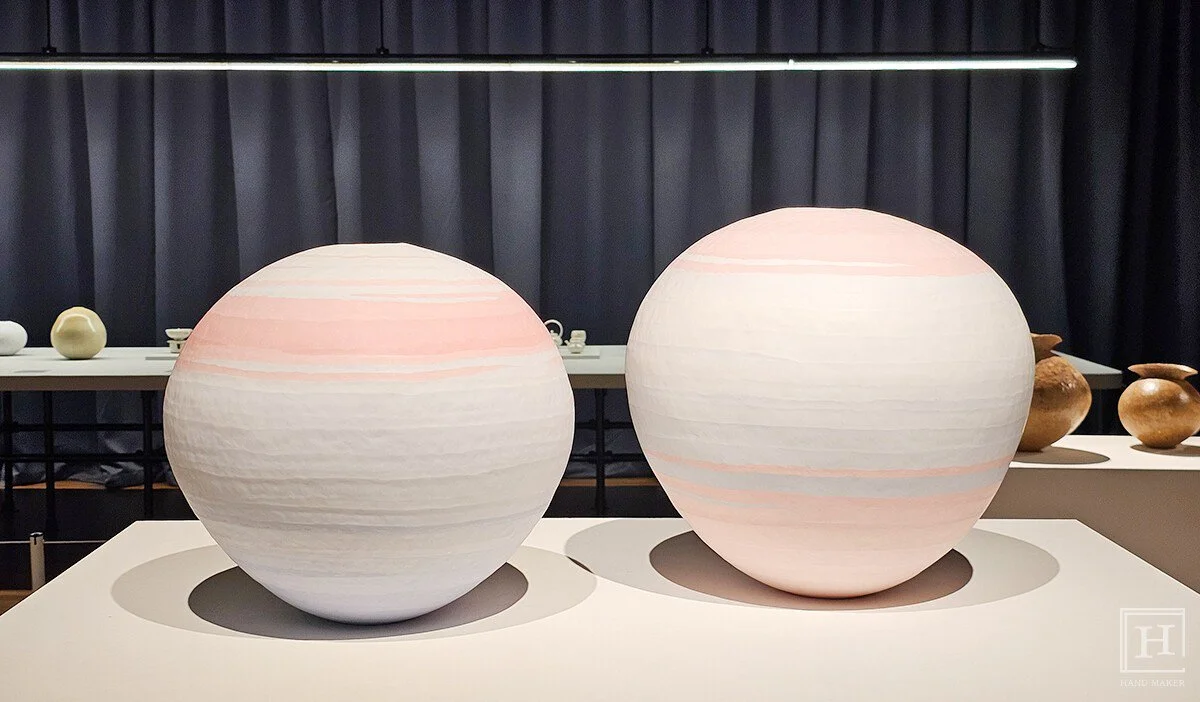
Kim Geu-rim expands the sense of ceramics by mixing pigments with clay to create colorful clay and stacking them one line at a time. The artist captures the emotions and stories of the moment of working in color, stacking them line by line to create layers of color. The images that come to mind at each moment lead to intuitive colors, and the complex and dizzying emotions experienced while facing the clay also permeate between the colors and layers. In this process, the layers of different colors form unique patterns and create a rhythm where the movement of the hands can be felt.
〈Jar with Color (Mental Image)〉, where different emotions and colors are stacked, is completed in a round and solid form while embracing diverse stories. The artist hopes that those who face the work will look into their own inner selves through the piece and discover new sensations within it.
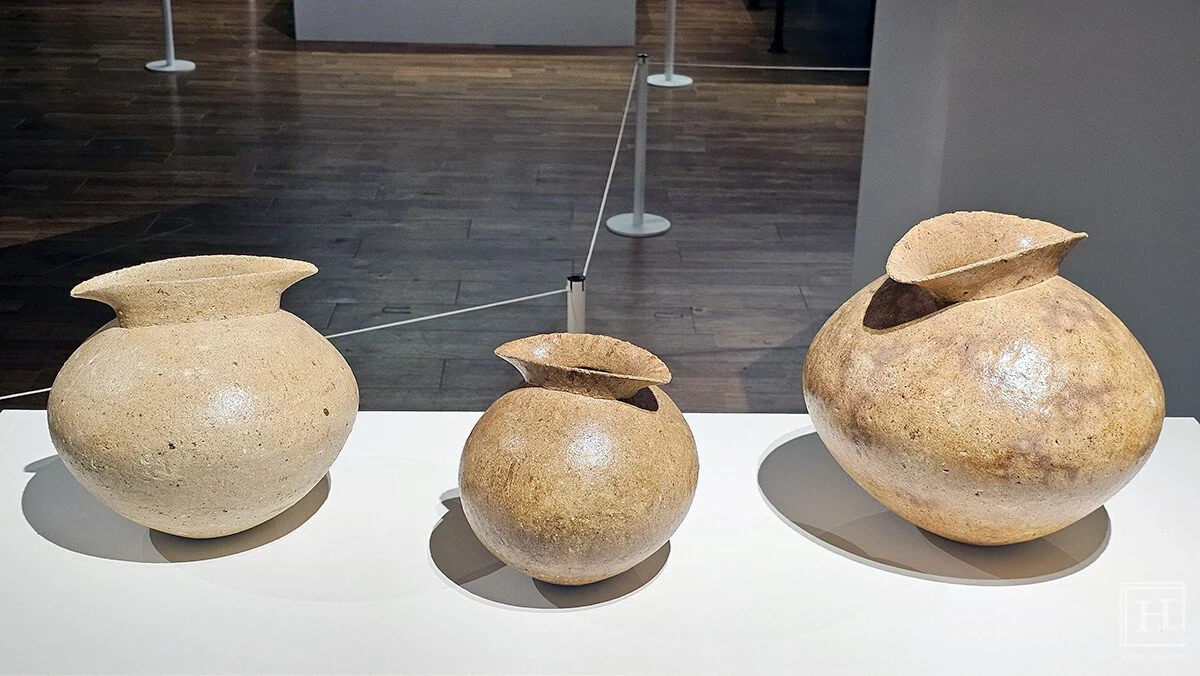
As can be guessed from the title, which combines the phonetic value of 'Bon' with the English word 'Born' meaning birth and the meaning of the Chinese character for origin/root, and the South Korean country code 82, Choi I-jae's work starts from the identity of Korea. The artist reflected the formative principles of pottery from the Three Kingdoms period in 〈Bon_082〉 through simple silhouettes, volume, form, and proportion. Along with this, the artist directly mixes clay collected from all over the country to express the unique color and materiality of the clay and create the characteristic impression of earthenware.
Each work possesses its own expression according to the clay mixture and slightly different shapes and proportions, yet they harmonize to form a single landscape. This brings to mind the ground we stand upon and the traces of time layered beneath it. Through this, the artist retraces their roots and identity, connecting those traces to the formative language of today.
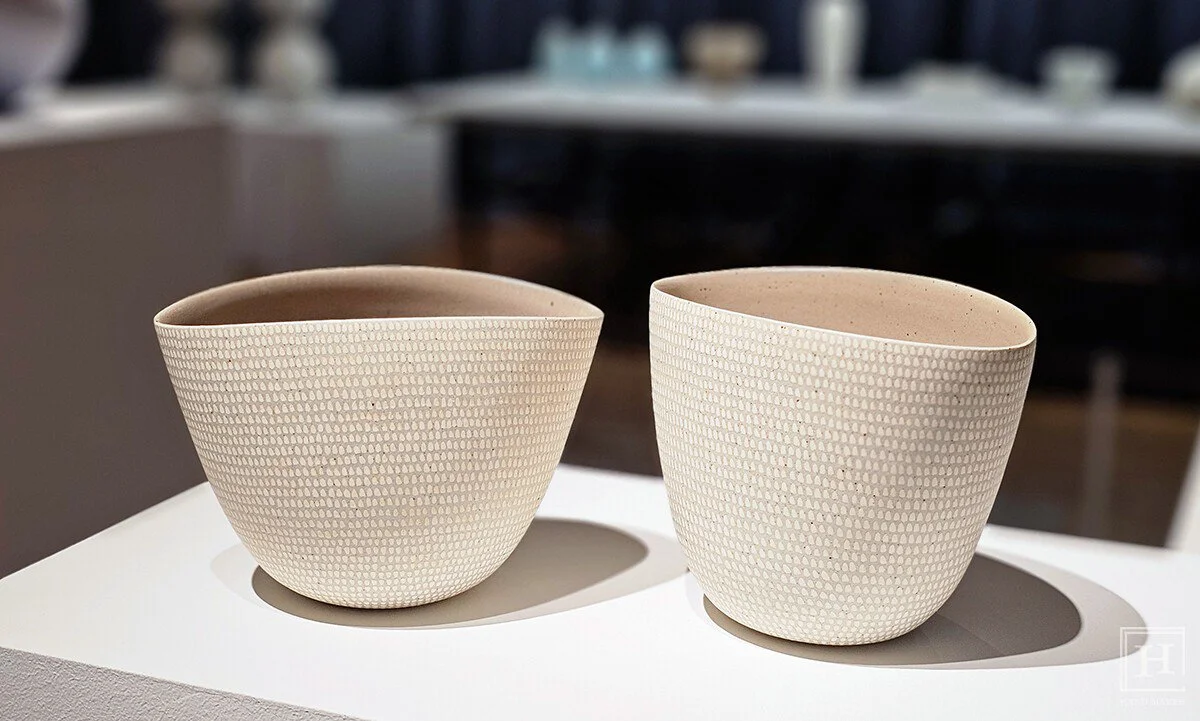
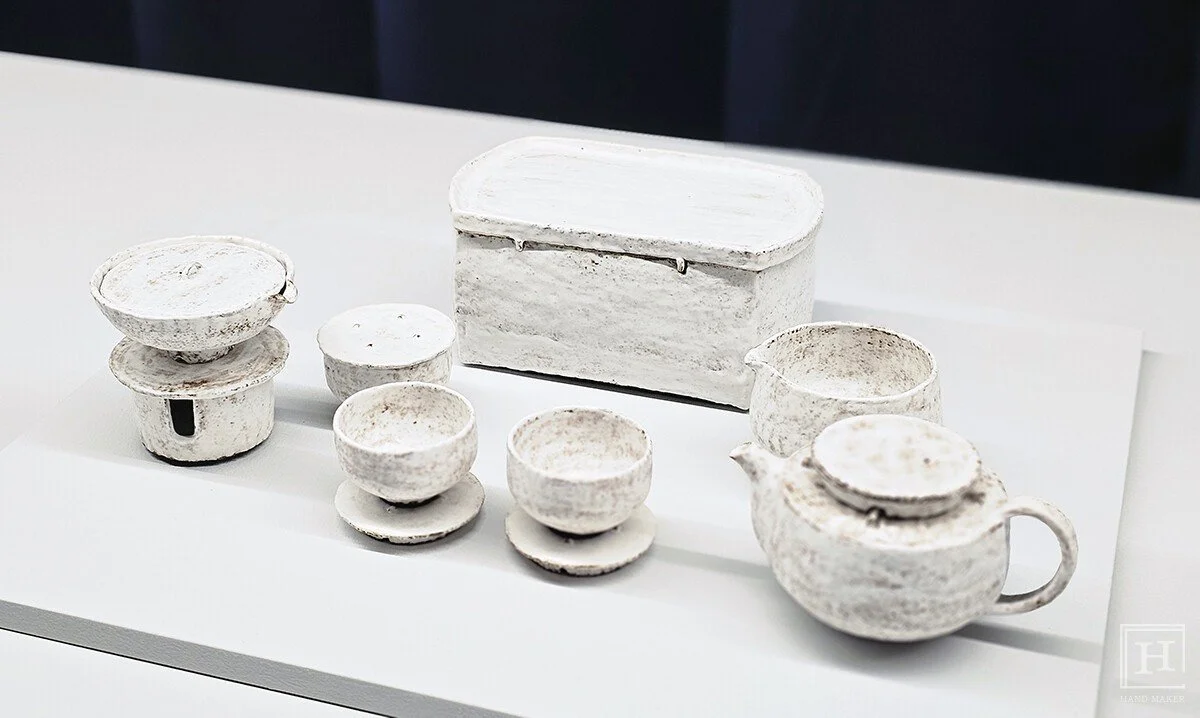
Working based on the inlay technique, where patterns are carved into the ceramic surface and filled with clay of a different color, Yoon Jeong seeks new form by adding changes in pattern and shape to this familiar method. The patterns, which repeatedly carve irregular and abstract designs, harmonize with the inherent color and refined texture of the clay to create a new sense while retaining the lingering resonance of tradition.
〈Round〉 takes a static and fixed form made by wheel-throwing, applies slip to make it loose and fragile, and then manipulates the clay body to introduce change. Other elements are restrained as much as possible to leave only the characteristics of the materials and techniques. Through such restraint and transformation, the artist focuses on the essence of traditional techniques and materials while completing their own unique sense of form.
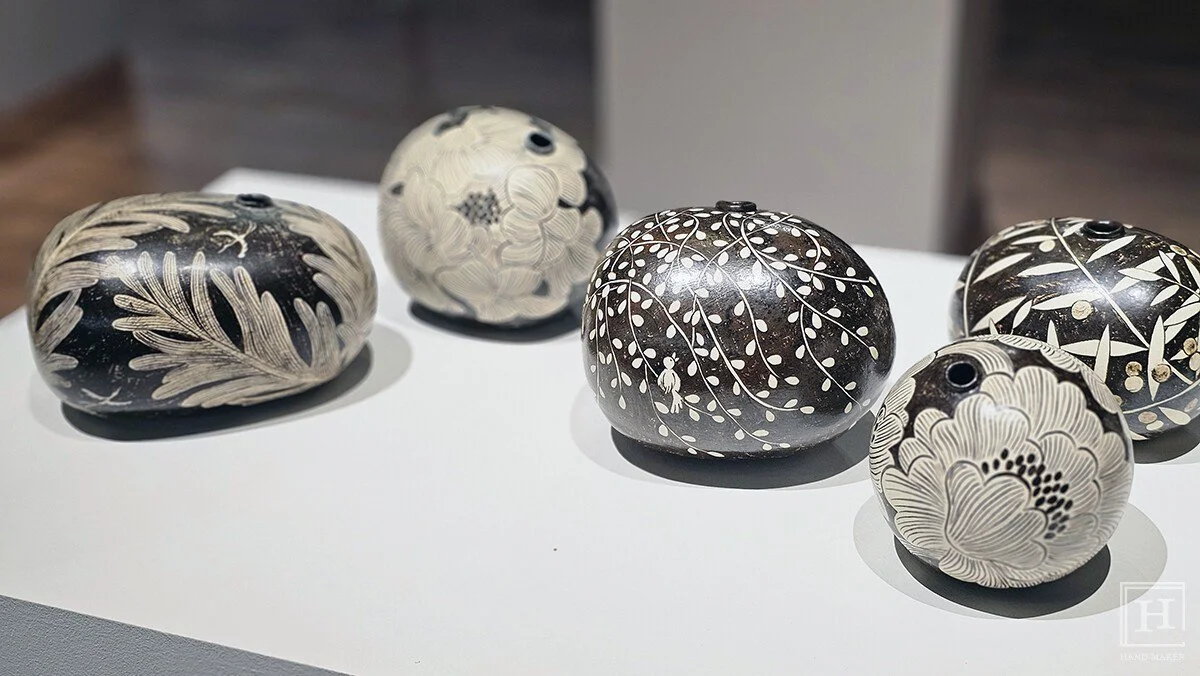
Jeon Ha-ram captures life and moments that flow and disappear, embedding the coexistence of the unchanging and the fleeting into clay. After shaping the form on a wheel, she beats the surface to create a shape resembling rocks and stones, and upon it, she paints subjects that frequently appear in old paintings, such as peonies, willow trees, plantains, chrysanthemums, bamboo, and orchids.
〈Iron Color Four Seasons 鐵彩四季〉 captures the moment nature is alive, meticulously expressing the wind brushing through willow leaves, birds moving between the leaves, and butterflies hovering around flowers. Within it, the artist's affection, regret, and longing for watching the passing moments of the seasons are permeated.
By carving the flowing nature and changing seasons onto the forms of stones and rocks that remain unchanged in their place, the artist shows a time where eternity and the moment dwell together. Through that time, the artist offers a warm greeting to all living things that live alongside us.
An exhibition official stated, “This exhibition highlights how tradition is newly interpreted and continued within today's sensibilities, serving as a place to introduce the 'tradition of today' being created at this very moment.”
Reporter at HANDMAKER (핸드메이커), a Korean magazine devoted to crafts and handmade culture. Covers exhibitions, traditional crafts and the makers behind them.
Related Articles
![[Field Sketch] 2026 Gyeonggi Ceramics Biennale ③ The Tradition and Present of Korean Ceramics…](/storage/handmk-global/2026/09/10405e53-4191-42cc-9144-d4fc12c6e3b2-15e9a4d7-thumb.webp)
[Field Sketch] 2026 Gyeonggi Ceramics Biennale ③ The Tradition and Present of Korean Ceramics Created by the Hands of Masters: "Ceramic Masters of Our Time" Special Exhibition
![[Field Sketch] Gyeonggi Ceramics Biennale 2026 ② Surveying the Trends and Diverse Works of…](/storage/handmk-global/2026/09/993f8493-7de4-48fb-84e1-80cb669c5633-535c7399-thumb.webp)
[Field Sketch] Gyeonggi Ceramics Biennale 2026 ② Surveying the Trends and Diverse Works of Contemporary Ceramics Worldwide: 《International Competition》
![[On-site Sketch] Re-weaving Past Times and Memories with Warm Knitting, Hwang Jae-won's 《Connecting…](/storage/handmk-global/2026/09/9977ab9b-6100-4ca7-8ad4-e947975824d5-d4134722-thumb.webp)
Comments 0
Comments are currently disabled.