
[On-site Sketch] Humans and animals, strange beings making room for each other... Yoon Ye-jin's "Unfamiliar Solidarity"
Artist Yoon Ye-jin's solo exhibition "Unfamiliar Solidarity" recently concluded at Gallery Color Beat, showcasing an evolution in her work from self-consolation to exploring the coexistence of different beings.
In paintings, animals sometimes serve as symbols that express human emotions on their behalf, or appear as beings that stay by one's side. Artist Yoon Ye-jin has also depicted animals and nature in her previous works as entities that comfort her wounded self and help her stand up again.
However, this time, she goes one step further from a relationship where humans and animals unilaterally exchange comfort. Different beings stay in the same space in their own forms without being fully understood, and sometimes their boundaries blur to create a single landscape. In this way, Yoon Ye-jin has unfolded the image of 'solidarity' that can be possible even among strange beings onto the canvas.
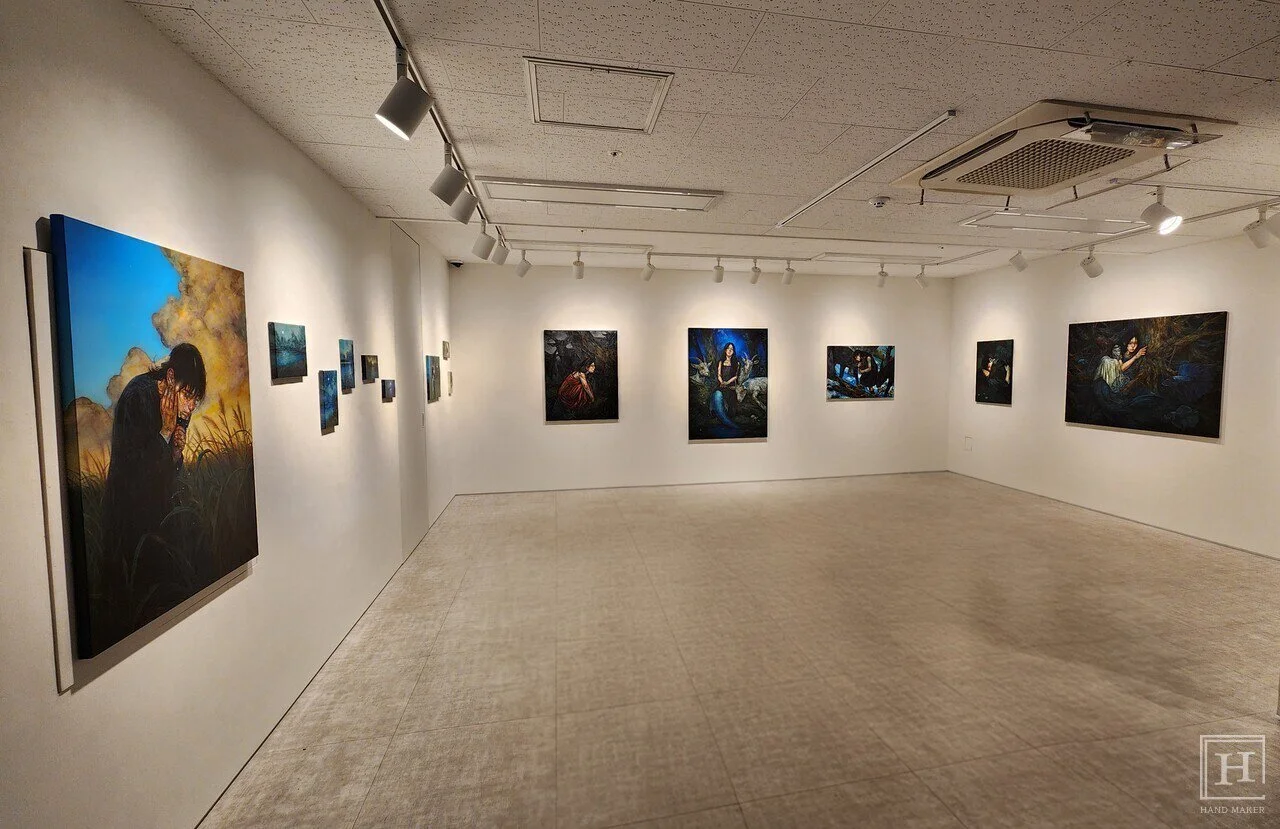
Artist Yoon Ye-jin's solo exhibition "Unfamiliar Solidarity" concluded on the 11th at Gallery Color Beat. In this exhibition, the artist showed a different work style from before. Ryu Jeong-won, the representative of Gallery Color Beat who curated the exhibition, explained, "As Yoon Ye-jin's work gradually finds its footing, she is showing an expansion in her work style and atmosphere, which makes me proud as a curator."
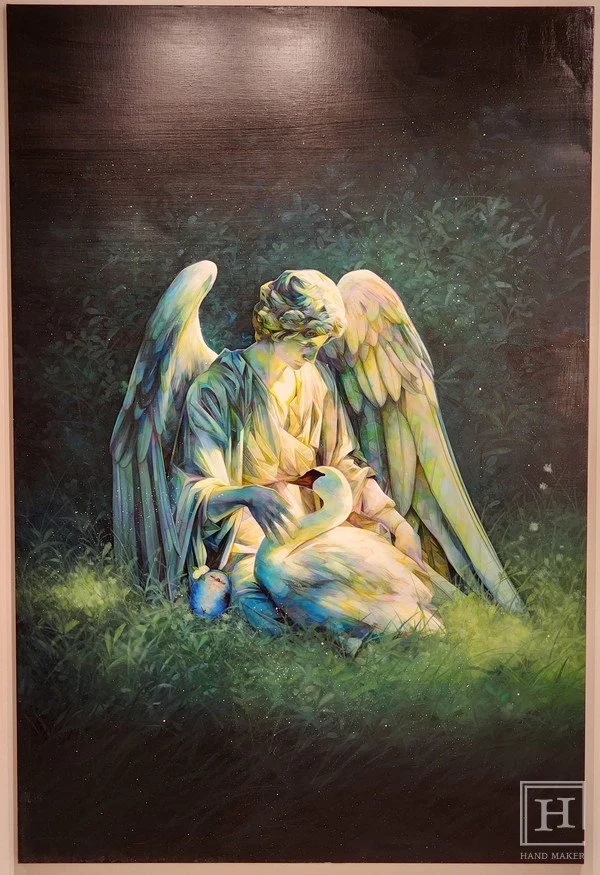
In her 2024 solo exhibition "Green flash," artist Yoon Ye-jin spoke of the 'liberation' gained in the process of accepting the pain, sadness, and anger encountered in life as part of herself, rather than turning away from them. At that time, the works featured figures appearing precarious like statues, swans, and the bluebird 'Aru,' which symbolizes hope. While delivering the message that hope can be found even in a difficult life, just as life grows in a dark and deep forest, she went beyond accepting herself to depict a life of respecting the value of all living things, including humans and animals, and living together.
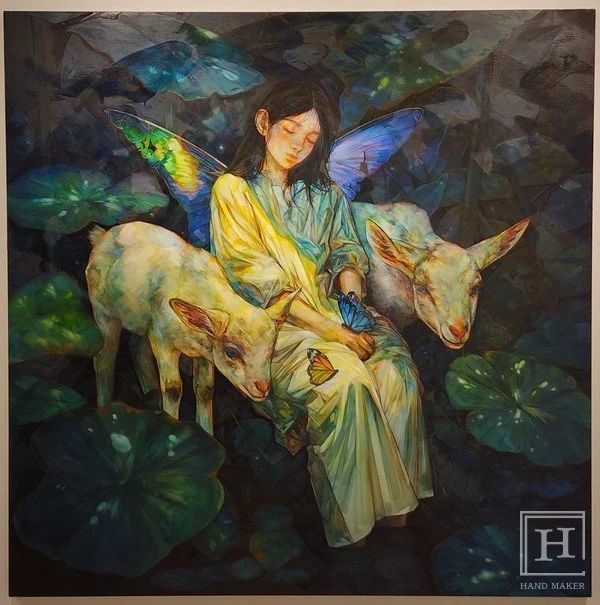
Subsequently, in "Moss Grew Wherever I Lost Myself," the perspective on the existence of 'I' and life expanded further. While she previously focused on the process of accepting her wounded self and standing up again, from this point on, she focused on how other life grows in the places where things were lost, instead of trying to restore or erase those lost spaces. Various living things, not only humans but also moss and fish, appeared on the canvas, showing that life and death, loss and creation, are not separate but are in a relationship of constant continuation and mixing.
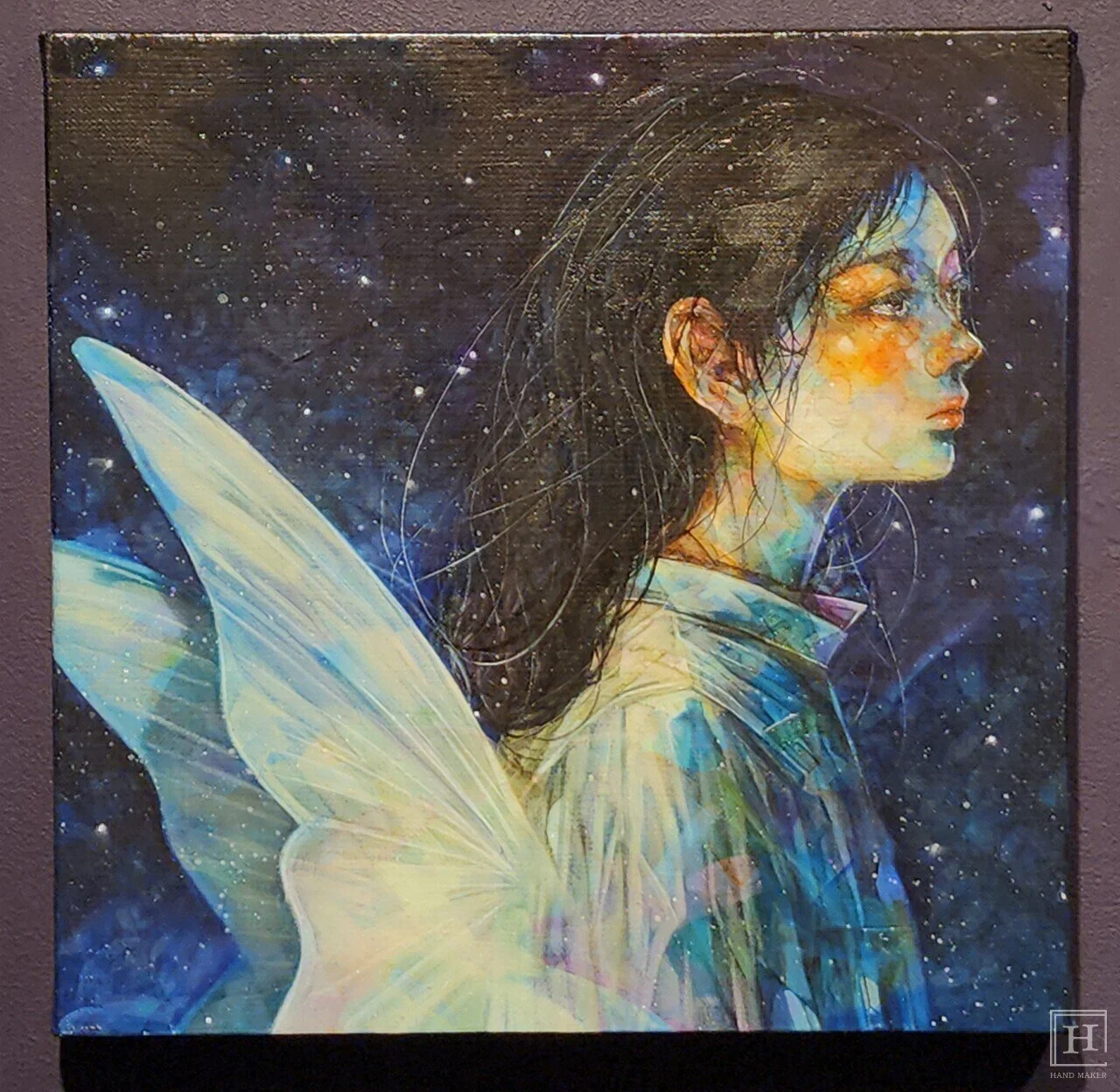
In this "Unfamiliar Solidarity," this interest turns back toward 'relationships.' However, going one step further than the coexistence discussed in previous works, she looks at relationships where beings can live together even if they cannot fully understand each other. The humans, animals, and familiar or strange forms in the paintings do not form clear relationships centered around someone, but instead create a single scene by brushing past each other, moving aside, leaning, or overlapping.
This is somewhat different from the meaning of eliminating differences or looking at all life in the same way. Rather, it is about acknowledging each other's places while leaving the parts that cannot be known and the strangeness as they are. Starting from the comfort and hope offered to her wounded self, Yoon Ye-jin's work is now expanding in a direction that asks how different beings can live together in one world.
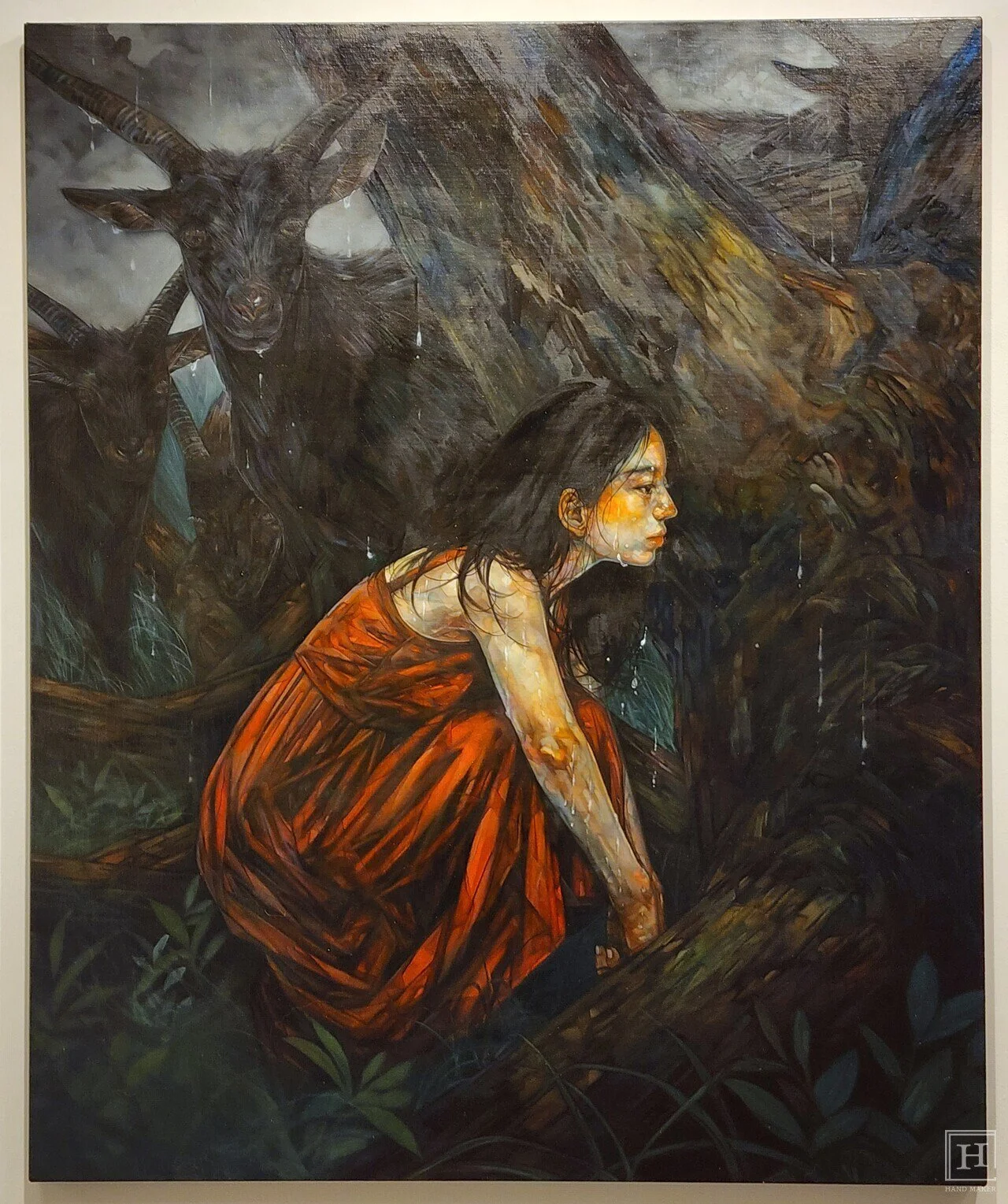
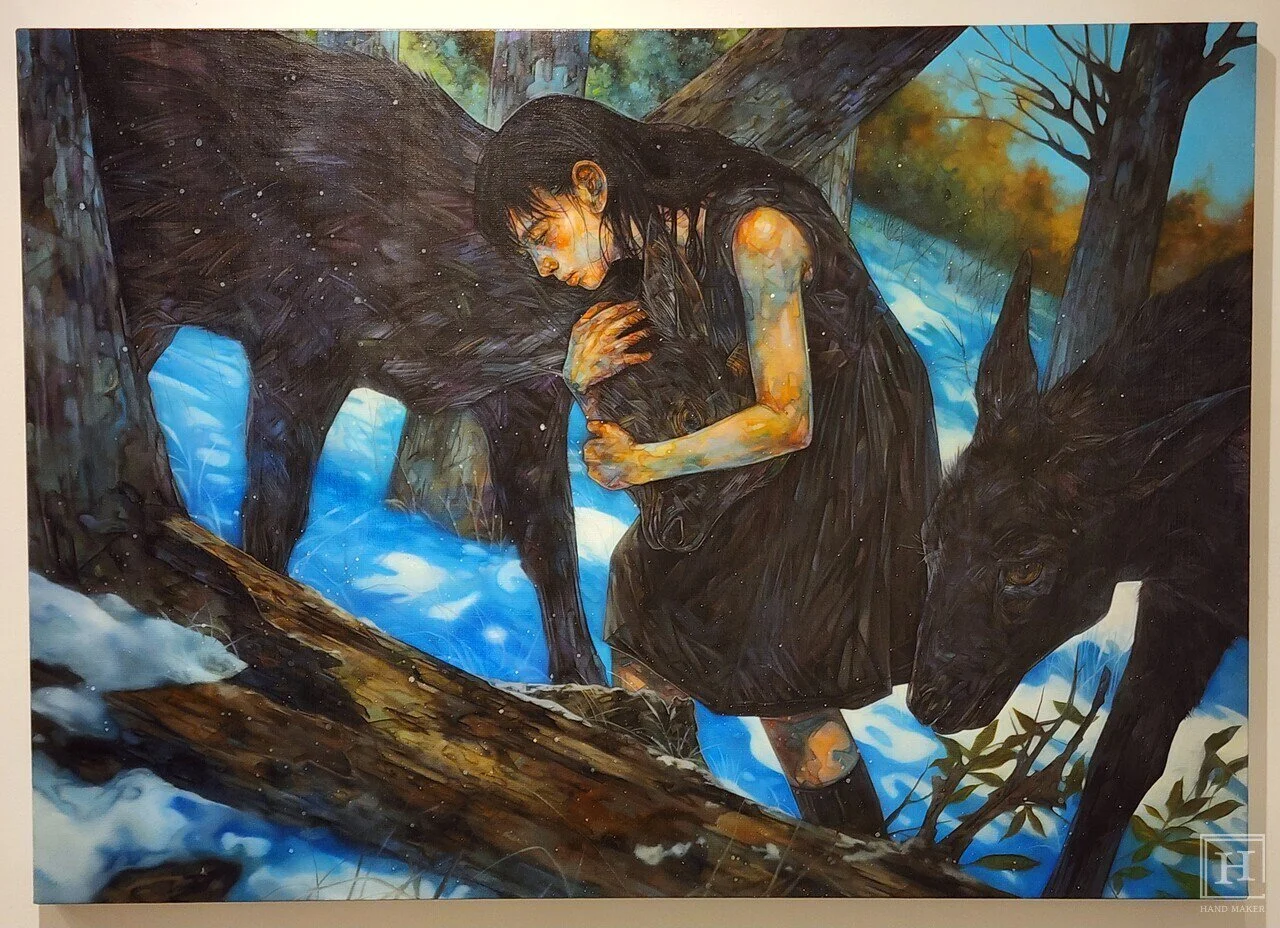
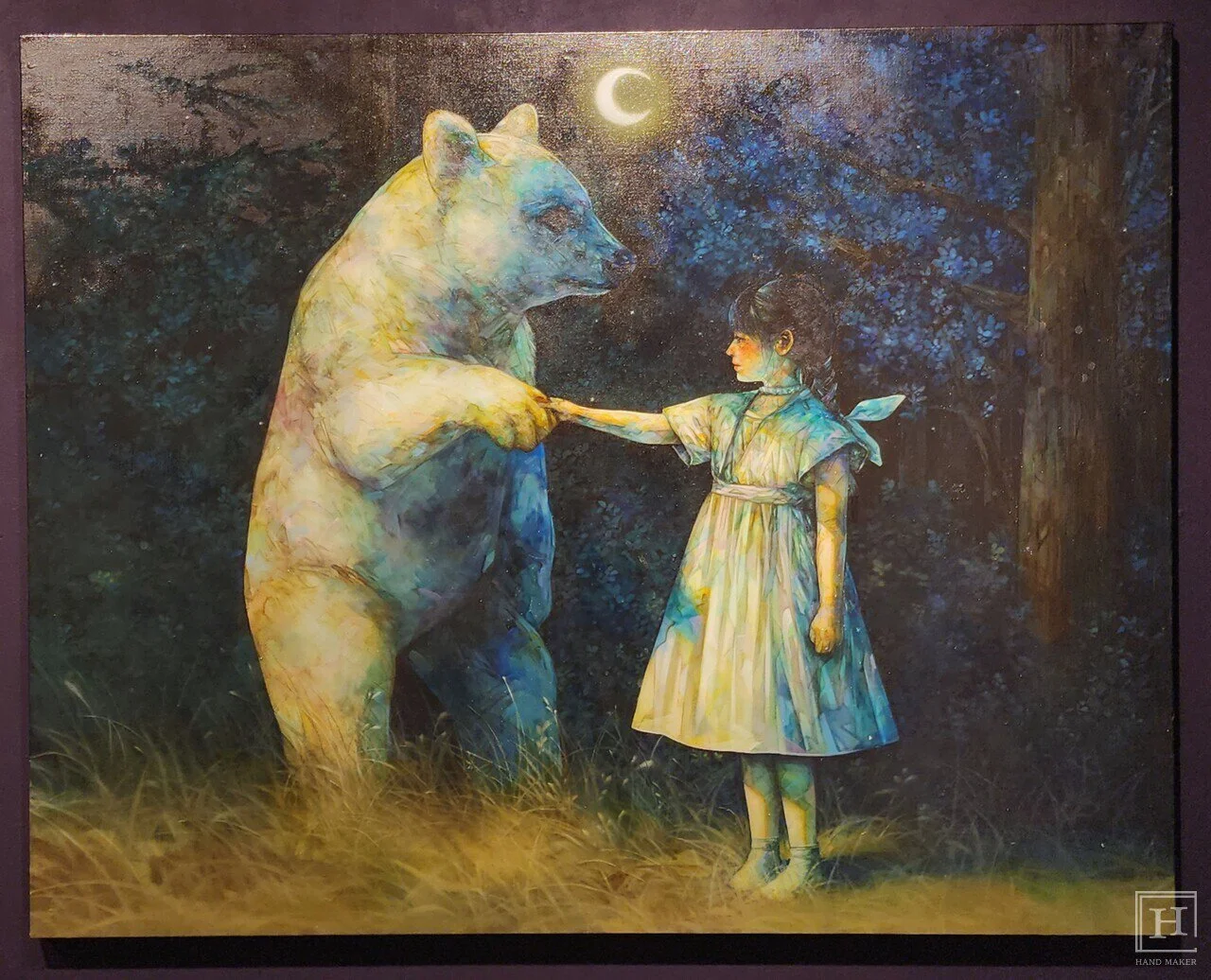
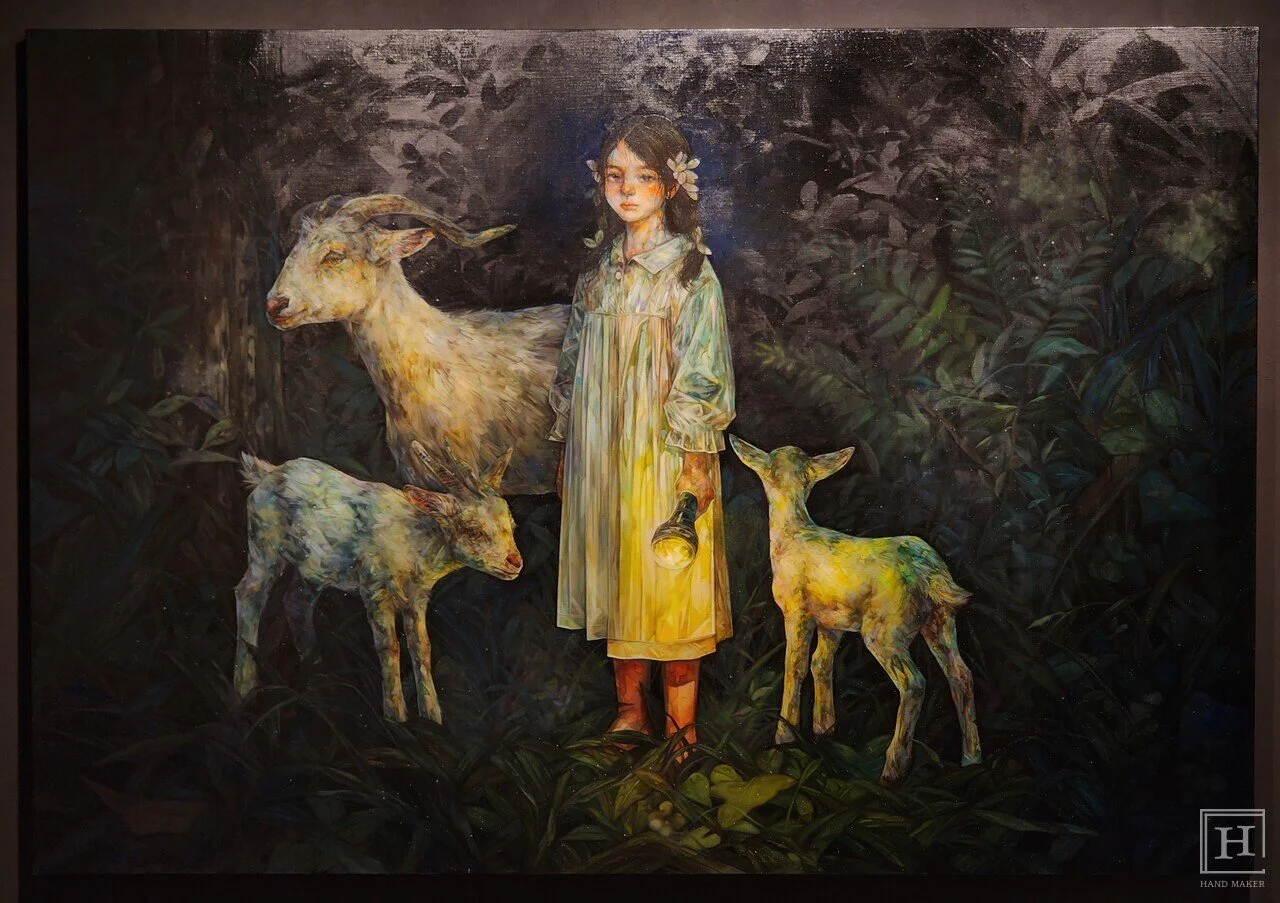
The girls or women in the works gaze blankly into space. They appear as if they have lost some goal in life, but beside them exist beings with vitality, such as animals and plants. These beings look at the girls or stay by their side. Their gaze is also clear.
Although they are beings that cannot communicate with each other, just staying by their side feels as if they are offering comfort. As if the girls know this, they embrace them tightly or hold hands. Even amidst the dark backgrounds, there exists a light suggesting that hope will be by their side.
The raindrops forming and flowing in 〈Black Horn and Red Shell〉, the white snow in 〈Direction of Unfamiliar Bodies〉, the shining crescent moon in 〈Before the Night Swallows Us〉, and even the lantern held by the girl in 〈Only As Far As the Light Reaches〉. Because of the light, their expressions do not look purely sad.
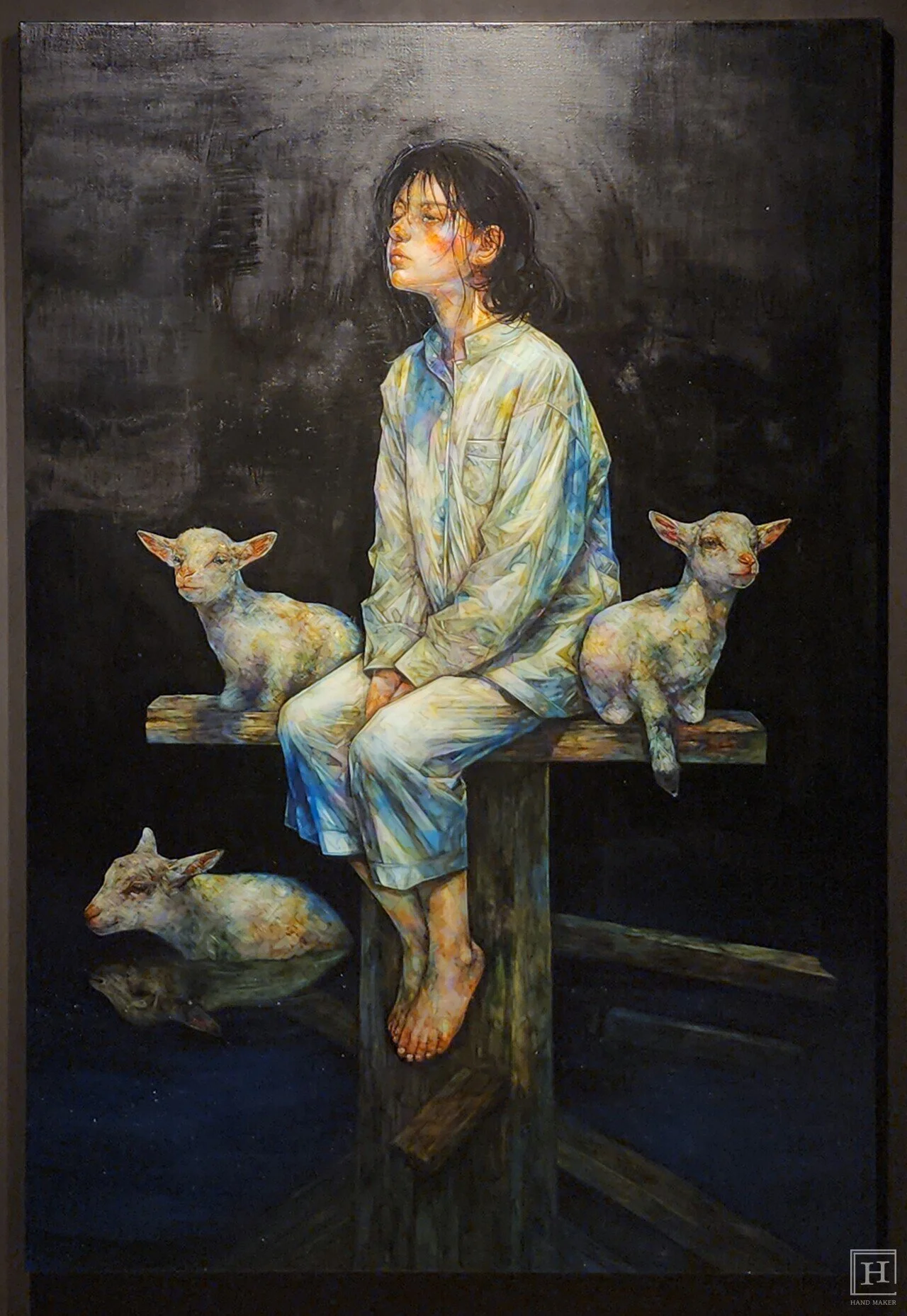
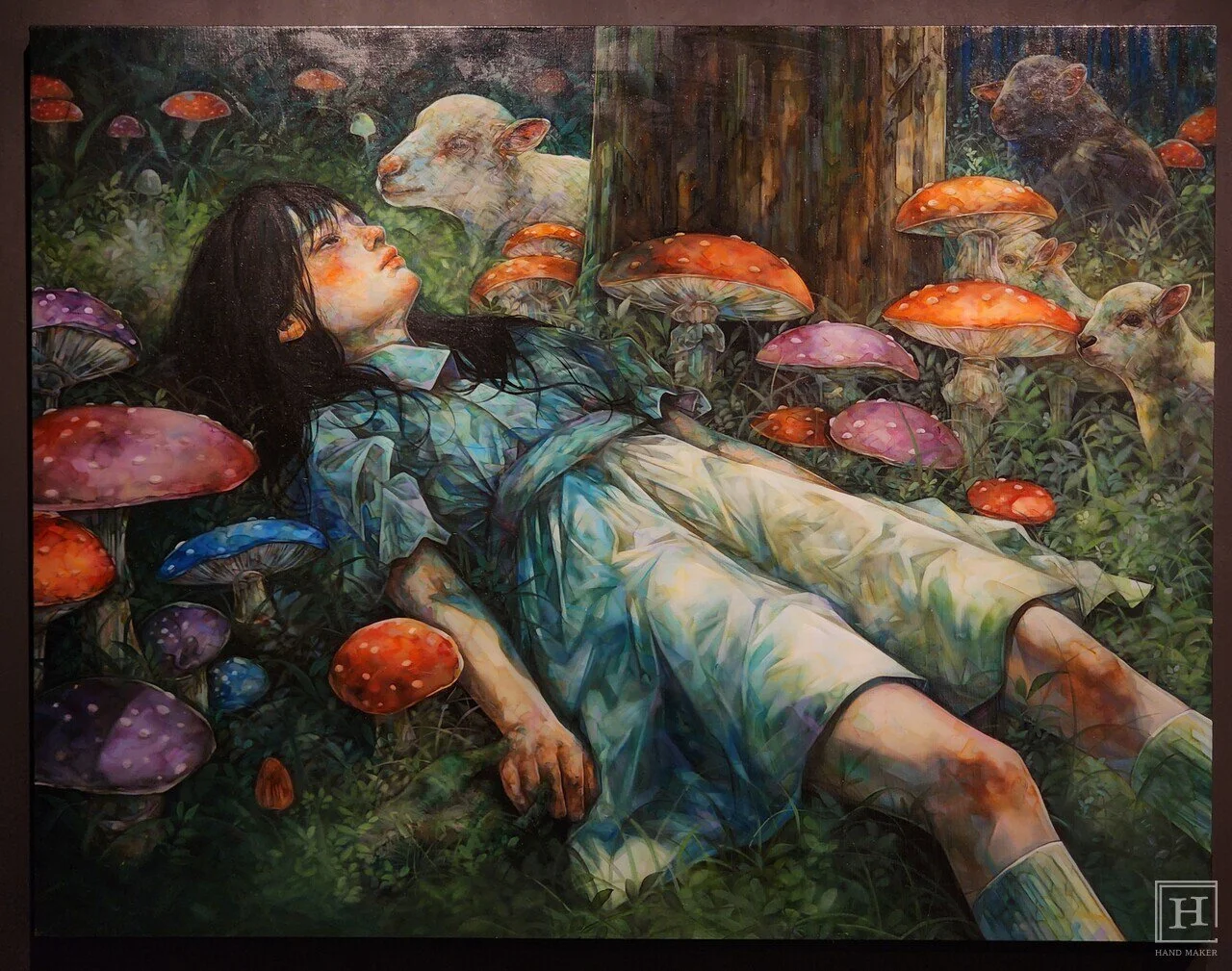
In Yoon Ye-jin's works prior to this exhibition, dark tones were generally dominant. The mysterious yet dark colors blended with the forms of living creatures or people in the works, evoking emotions of 'sadness,' 'frustration,' and 'pain.'
However, in these works, the colors have become relatively more diverse, and they give a bright feeling, as if lights are turned on only in the parts where the artist has placed emphasis. The relationships formed by animals, humans, and nature may literally be 'unfamiliar,' but they convey a hopeful and beautiful energy. In essence, the relationships they create deliver a strange strength to those viewing the works.
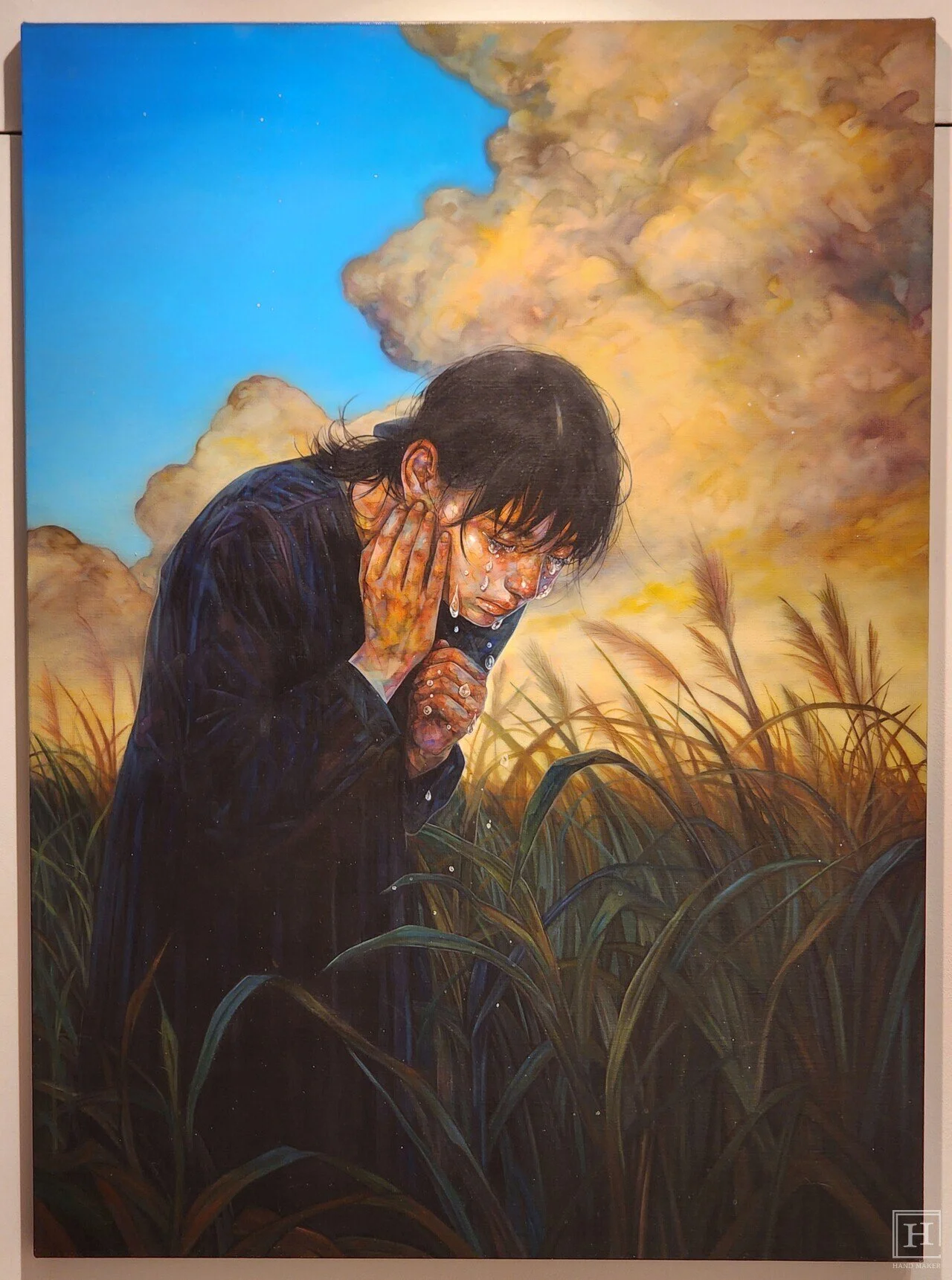
Among the works in the exhibition, this is the only one with a bright background and time of day. In a reed forest that feels as if a cool yet chilly autumn wind is blowing, a girl is weeping profusely. While the tears may be shed because she is sad, her expression is calm.
In the dry autumn air, one can even feel the will to share her tears with the reeds. Perhaps this signifies that the girl in the work is resolving her difficult emotions to some extent. Just as in previous works where she accepted and resolved the pain and sadness of life to rise above wounds, the tears in this work feel like an extension of that meaning. Just as the saying goes, sadness is halved when shared.
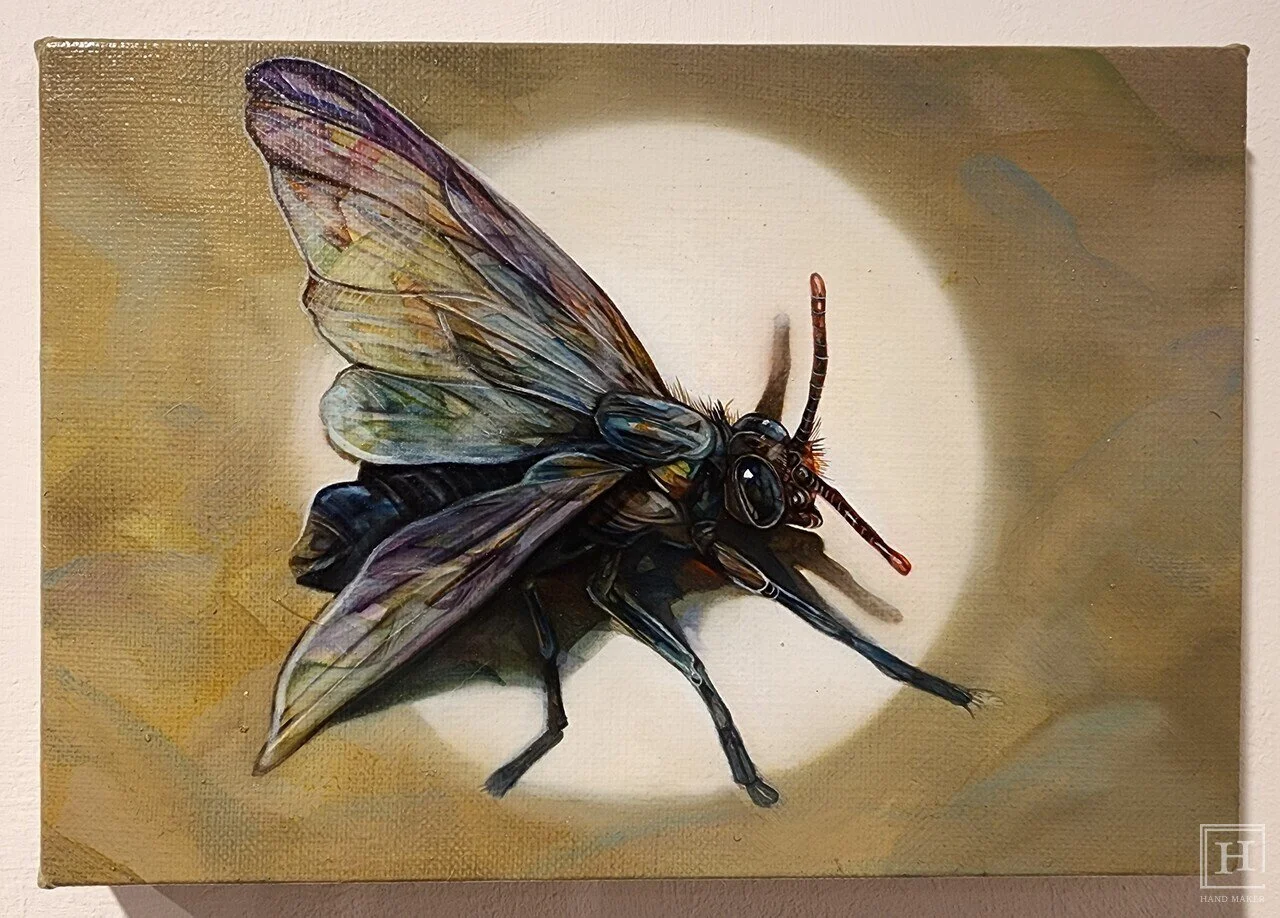
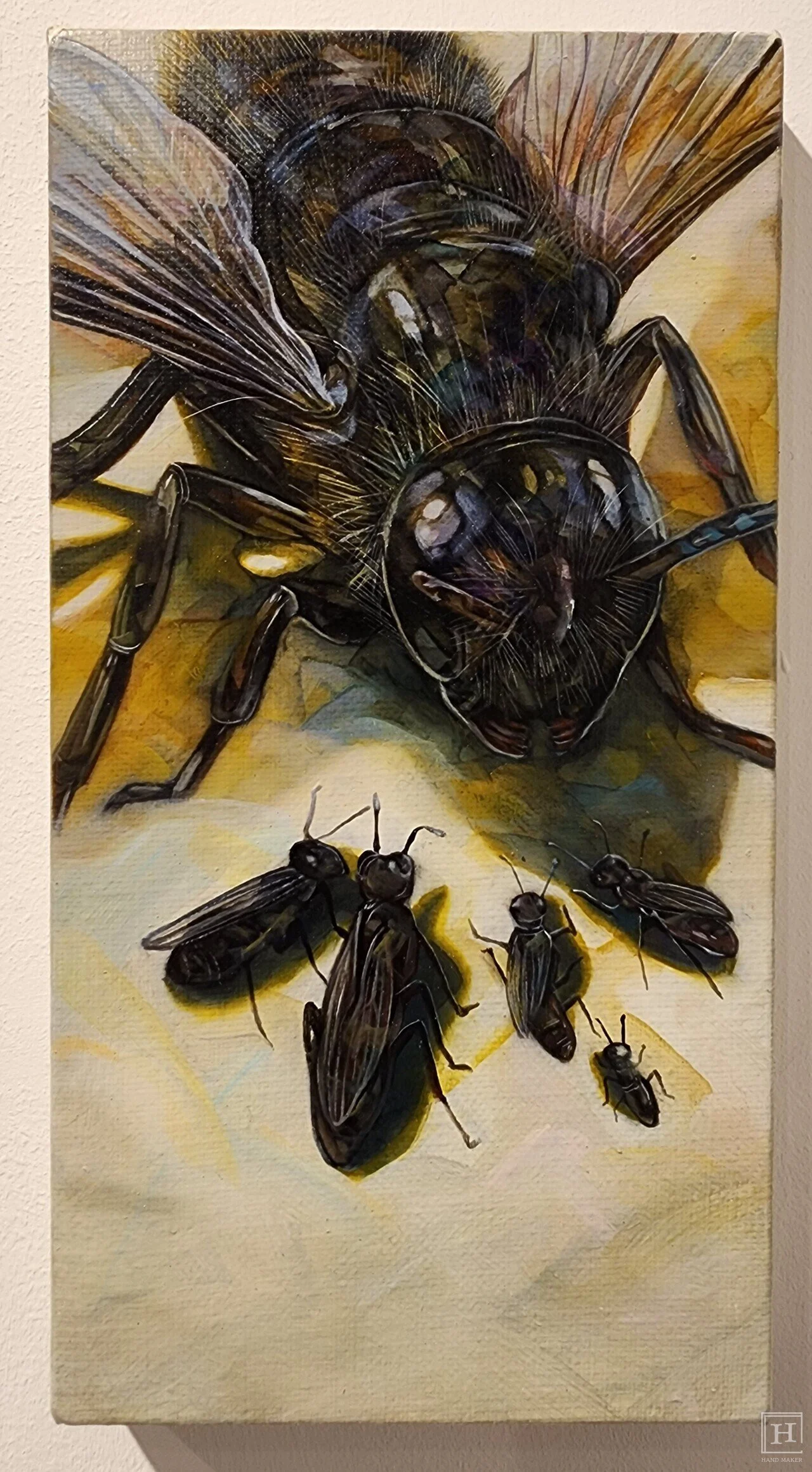
These two pieces seem to be the only ones that feature insects prominently without any humans appearing. The protagonists are flying insects like flies, which everyone avoids. Although the subtle light reflected on their wings expresses an elegance similar to butterflies, they do not appear beautiful, perhaps due to the stereotypes associated with the insect 'fly.' One can feel the tenacity of life trying to survive while being wary of its surroundings.
In 〈Bond〉, the determination of flying insects to survive for a long time to avoid human persecution is conveyed. Although it is impossible to know what they are saying, it feels as if they are discussing ways to avoid dying.
It is a scene that fits the proverb 'United we stand, divided we fall,' but if they gather like this, it feels as if a flyswatter might come flying toward them. Indeed, what kind of long-lasting life does it mean for them? As the artist suggests, should they form 'relationships' even though they are unfamiliar beings with different appearances? It provokes much thought.
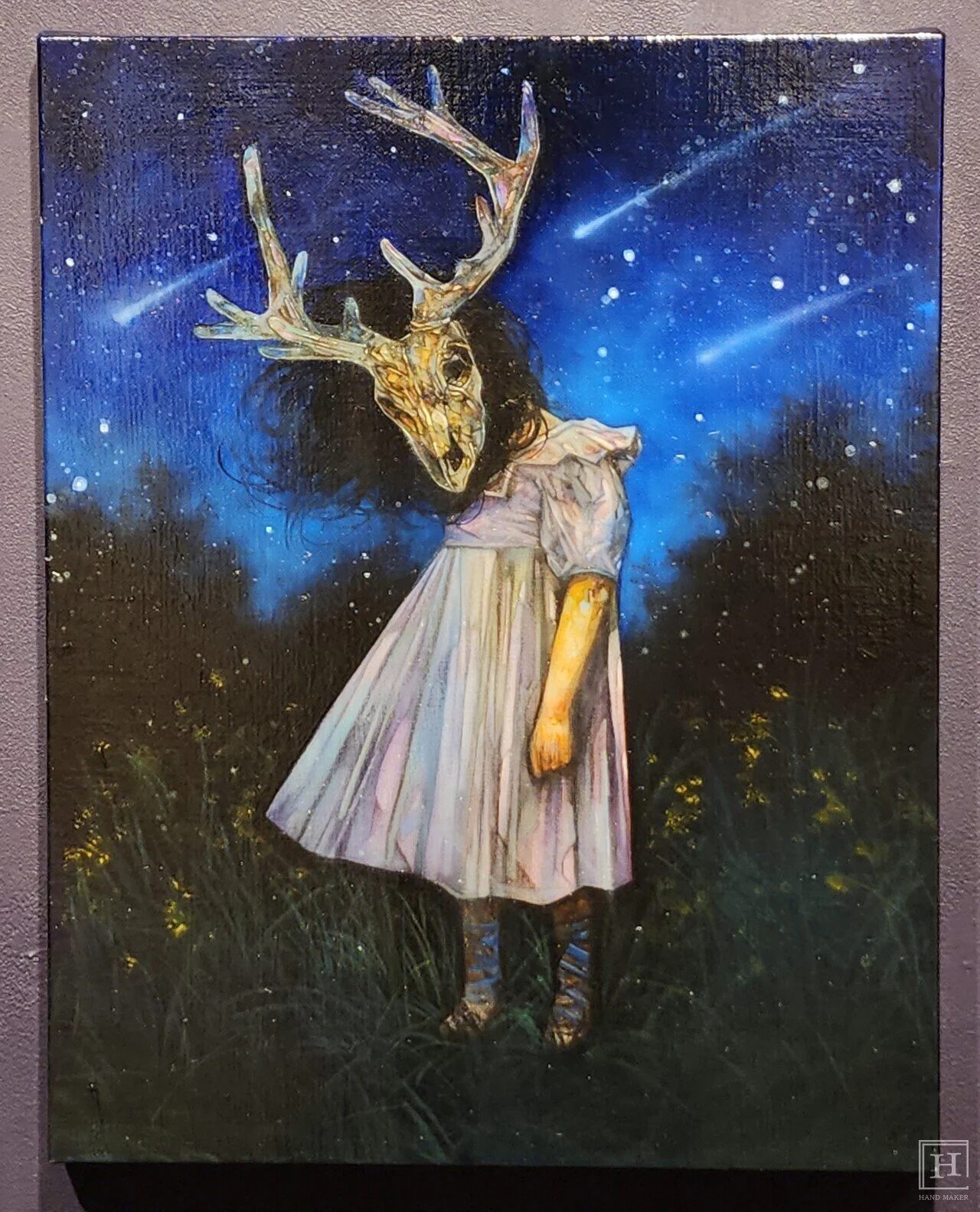
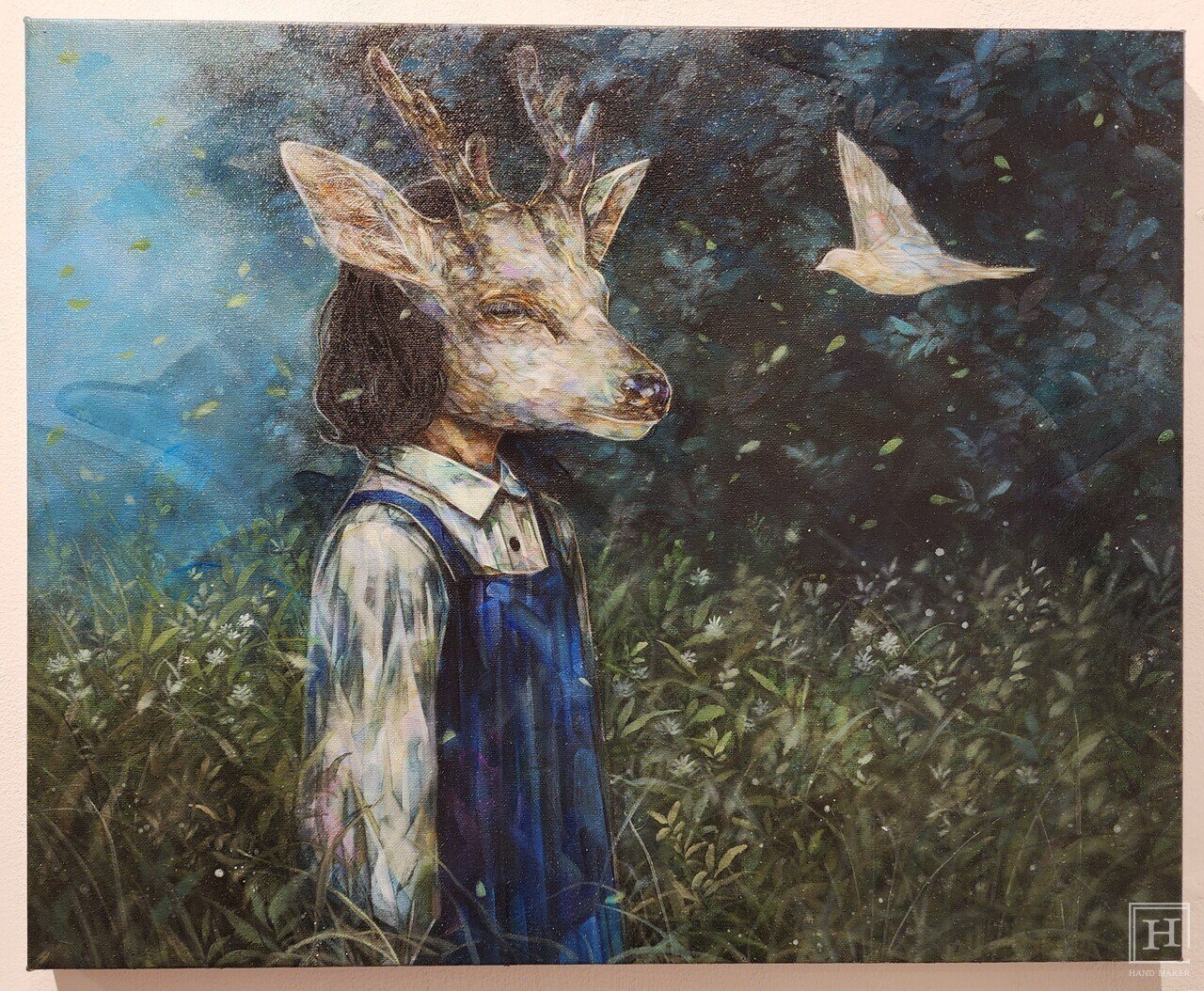
The girl, who used to gain strength by forming bonds with animals, has now changed her appearance. Although it is a somewhat strange sight, she wears a deer skull like a mask, or her face has transformed into a deer. As the beings that used to support each other combine into one, a will to live firmly is conveyed rather than sadness or despair. The background also shows numerous shooting stars pouring down or strong winds blowing and scattering leaves.
The girl, who has become an animal, merely stands still as before, but through the dynamic background, her energy is visually expressed as being different from before.
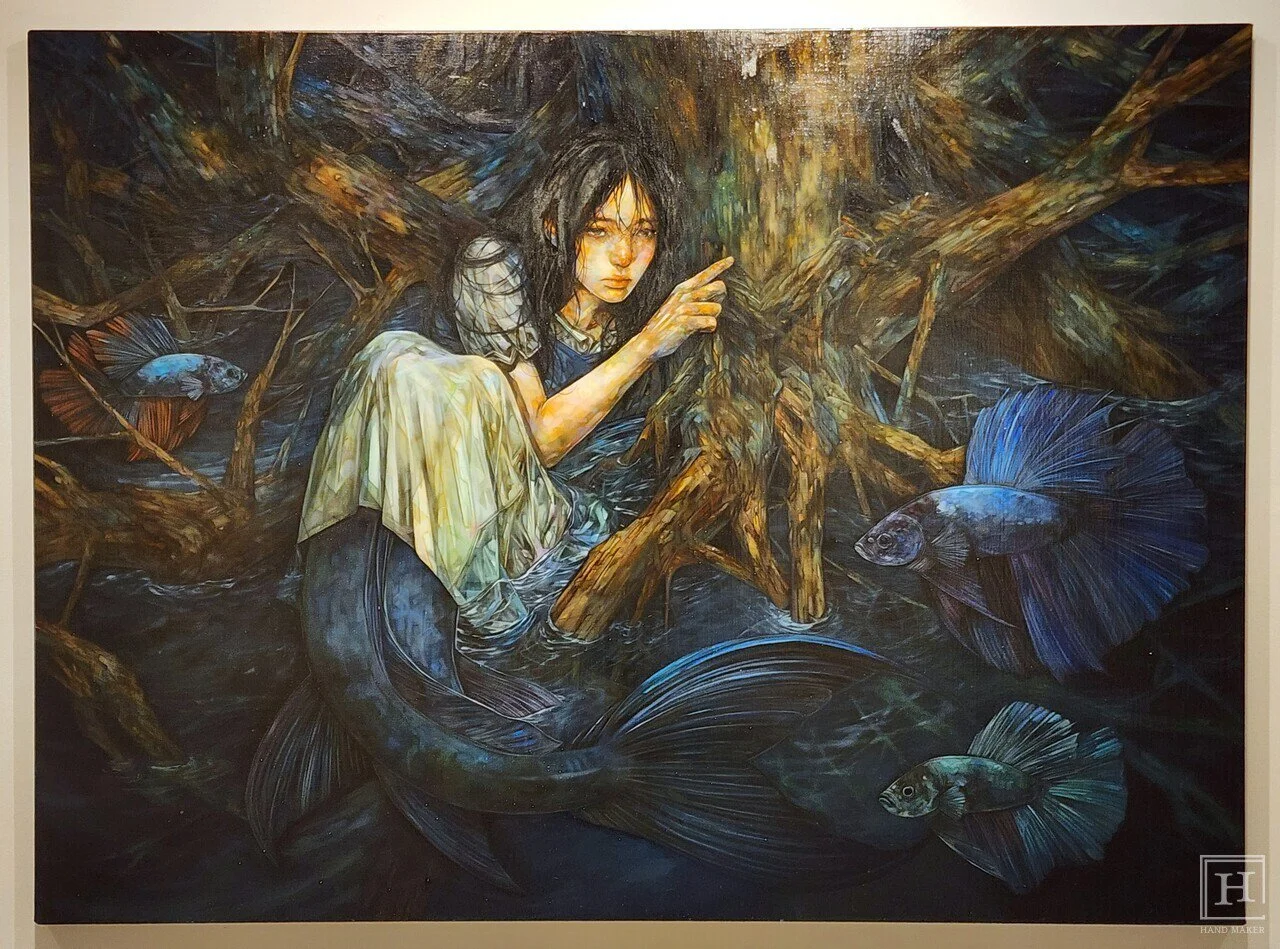
This time, the background has changed from the forest to the waterside. The girl, who looks as if she has fallen into the water, seems to be shivering from the cold, but half of her body has turned into a fish. Beside her, fish with long fins approach. It was a place filled with thick tree roots, so it was not deep water, but it could have been an obstacle for the girl. By transforming into a mermaid in such a place, she was able to rise above despair.
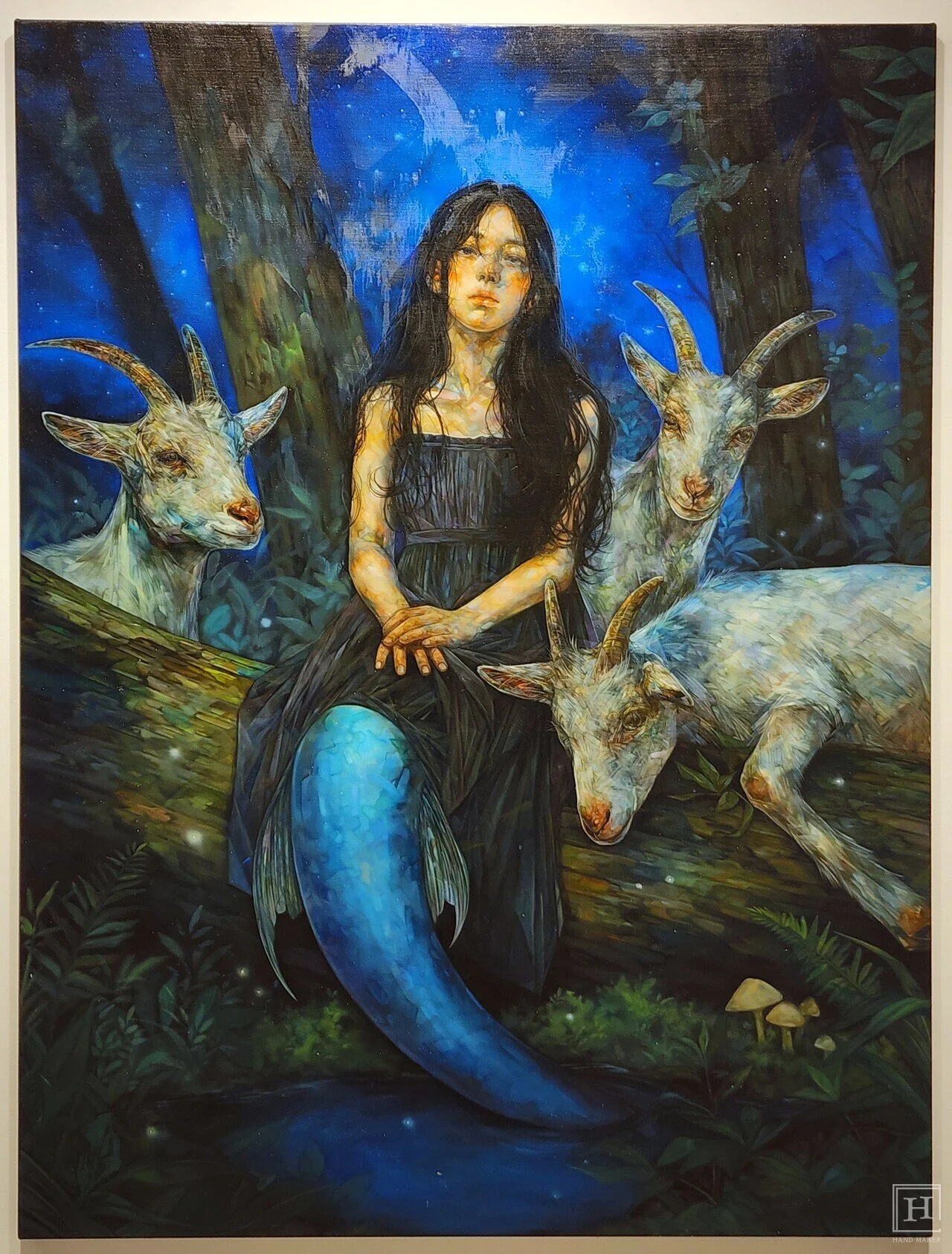
In 〈Night of Water Scales〉, the girl, who has turned into a mermaid, has become more mature and has a more confident gaze. Beside her, goats are now present instead of fish. The girl, perched on a tree in the dreamy deep forest, seems as though she can overcome any sadness that comes her way.
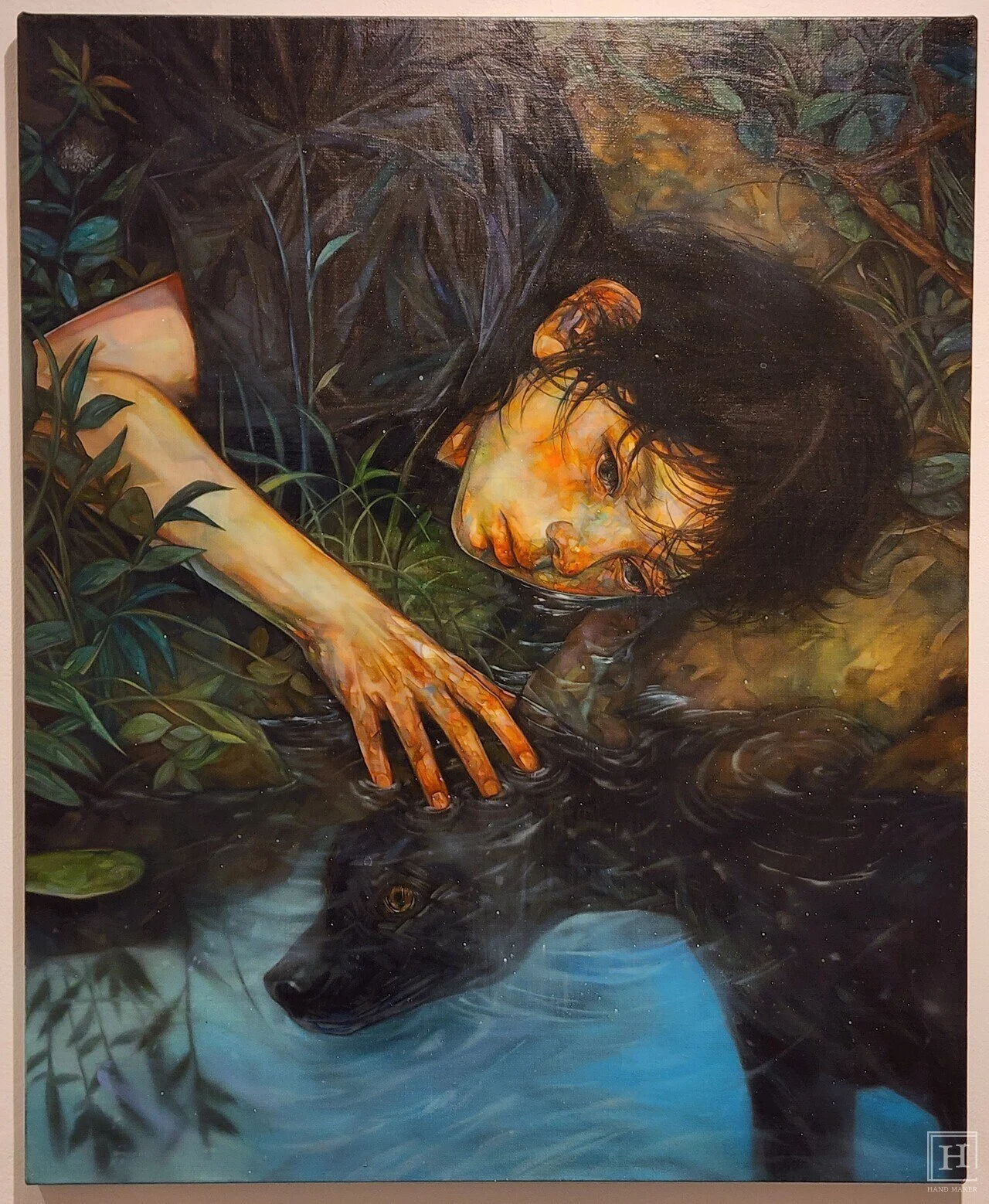
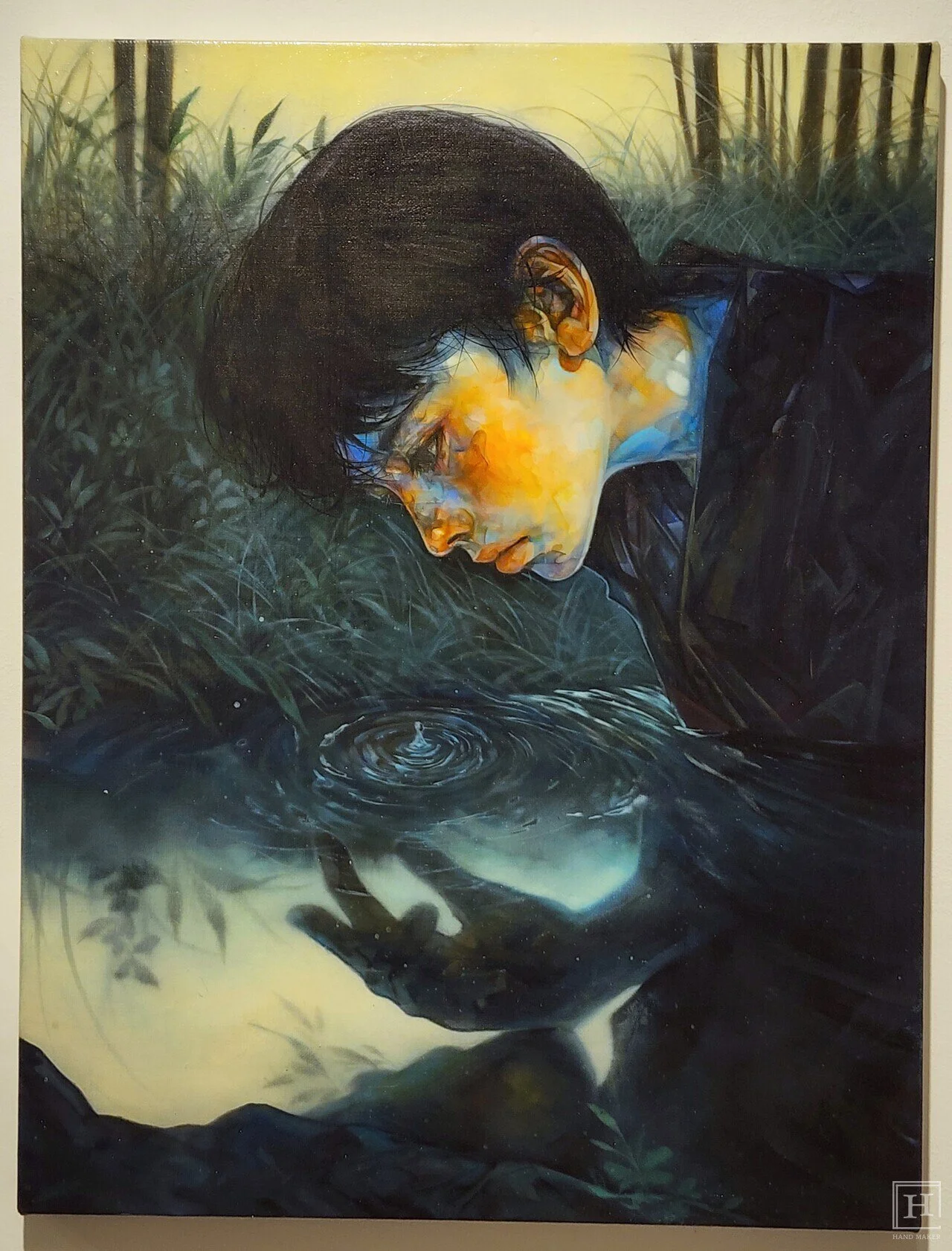
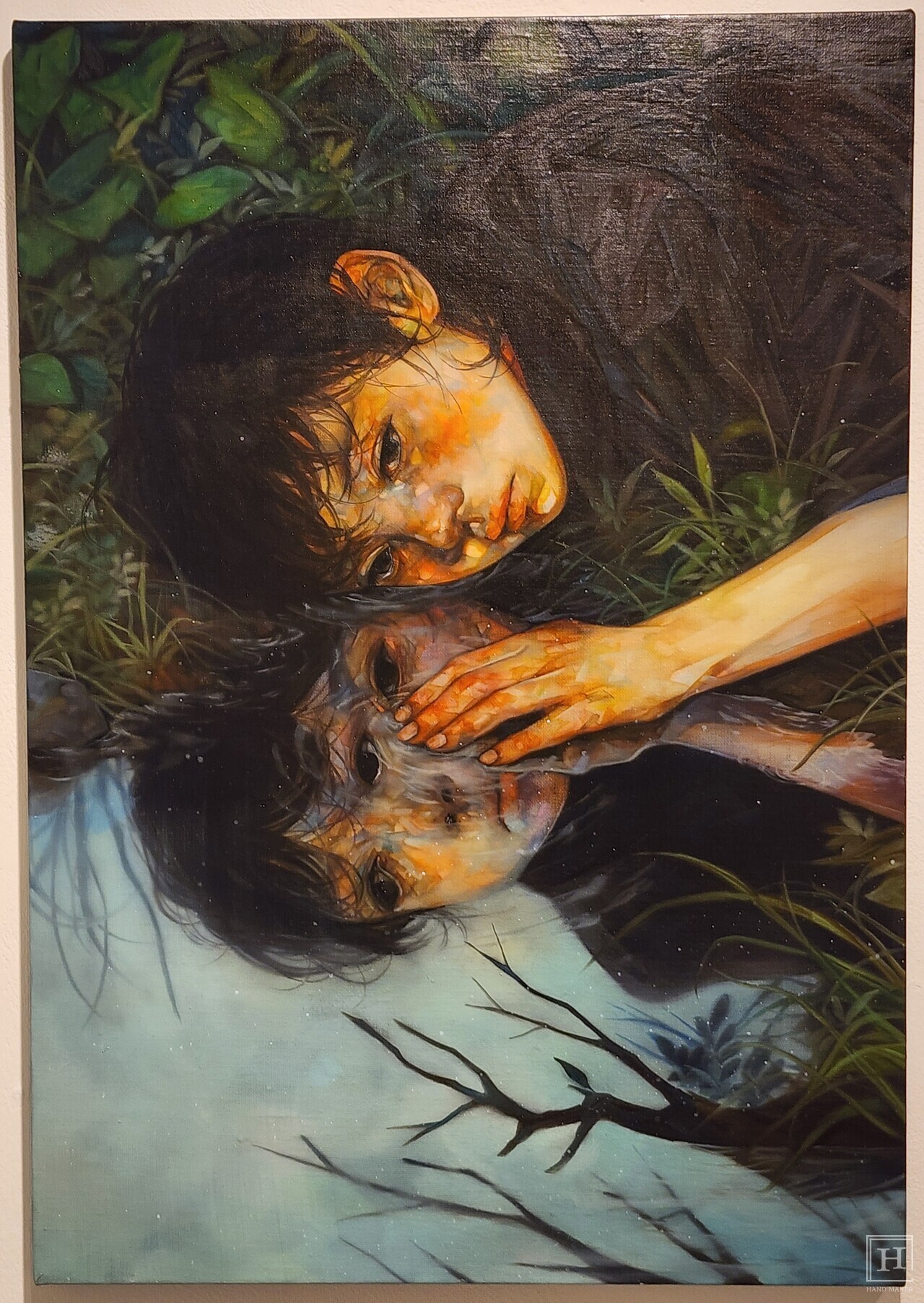
Against the backdrop of the waterside, it shows the process of gradually assimilating with nature. Although it is a reflection in the water, a goat is visible, and instead of a face, hands are reflected in the transparent water. Then, finally, her own appearance is revealed realistically.
The sight of the goat, the hands, and her own face overlapping in succession shows that the boundary between humans and other forms of life is not fixed, while simultaneously demonstrating an 'Unfamiliar Solidarity' where different beings form a single landscape while maintaining their own individual forms.
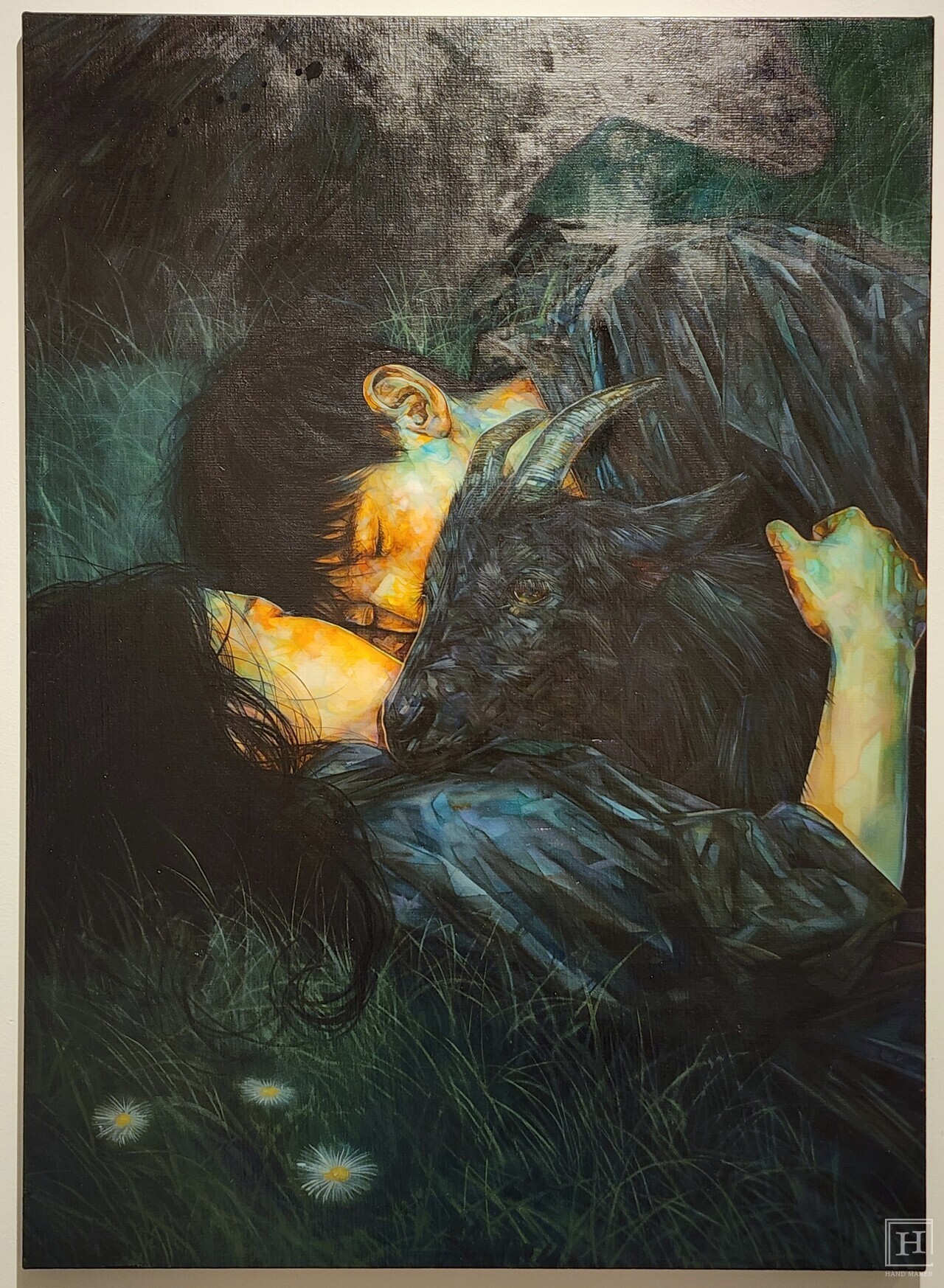
The girl who was with nature and animals seems to also draw energy from the same person. As the title 〈Rest〉 suggests, a man and a woman lying in the grass hold a black goat and wear peaceful expressions. Three beings—human, human, and animal—blend together as if sharing each other's body heat, forming a single solidarity. Since both the man and woman are wearing dark clothes and the goat seated in the middle is also black, it gives the feeling that the three beings are naturally assimilated together.
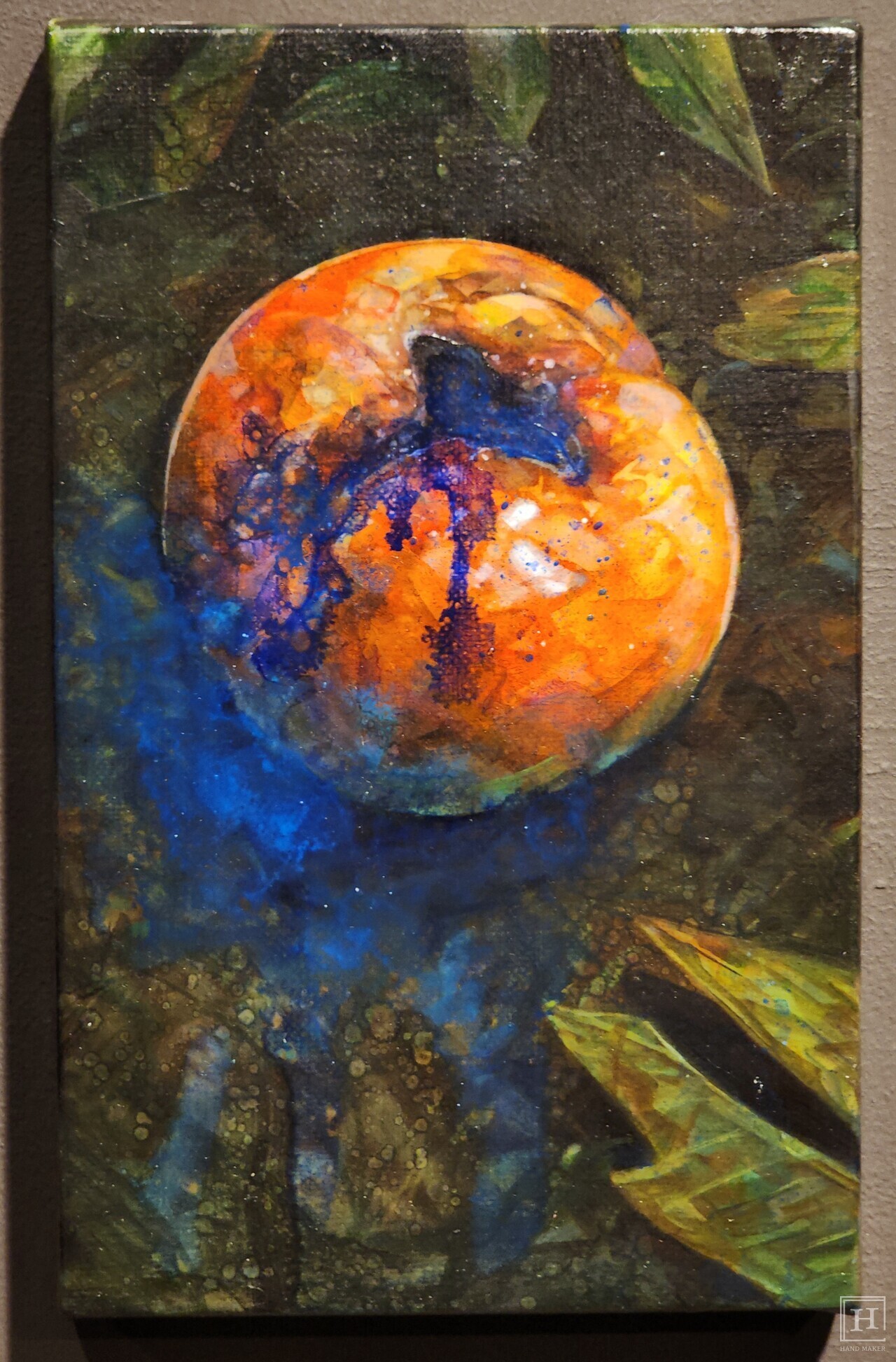
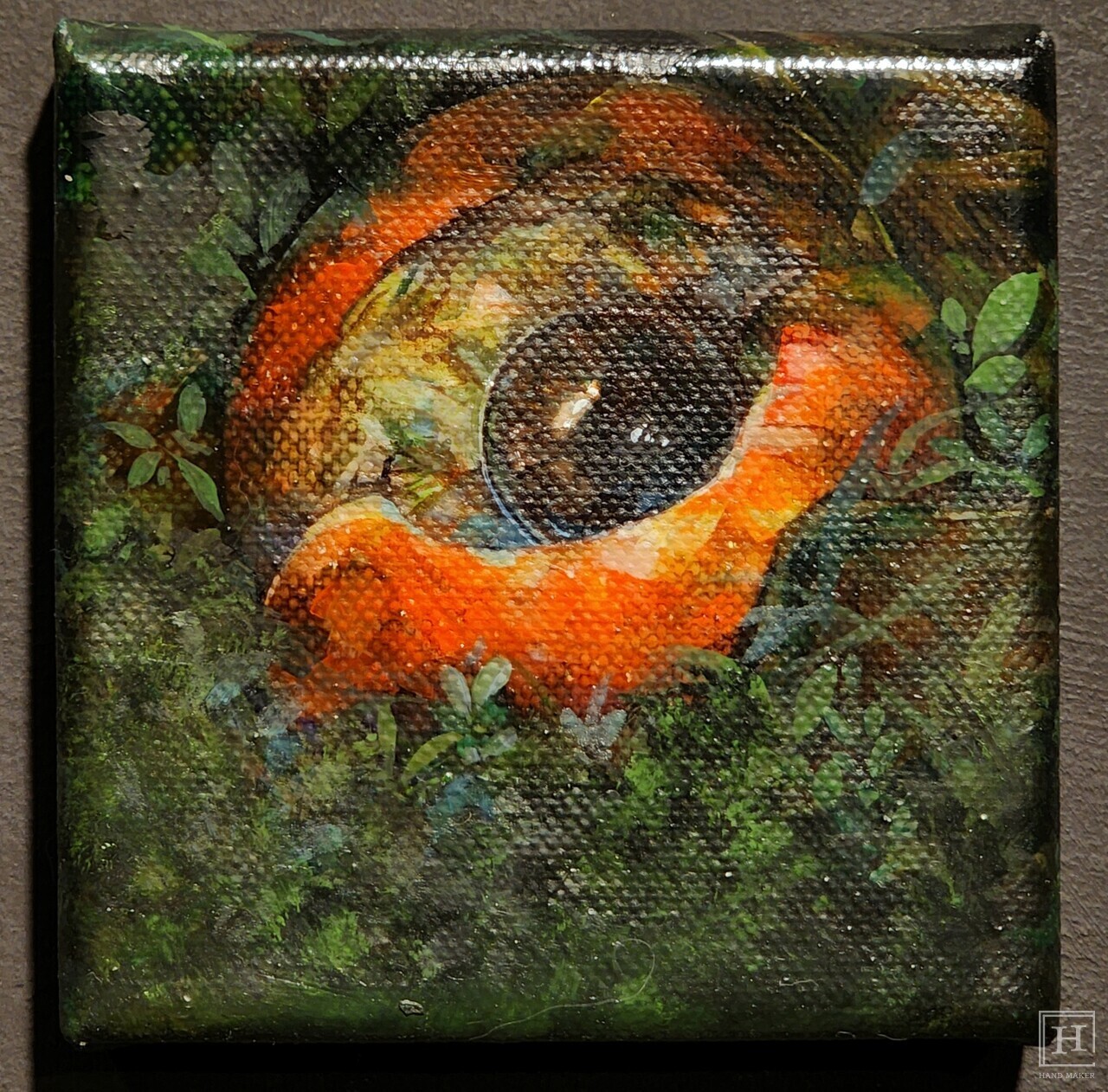
It is a luscious red apple, but it is damaged. The appearance of scattered blue paint and the opened shape show a loss of vitality. Looking closely, the cross-section of the wound approaches unfamiliarly, like an eye or a part of an unknown creature.
This is the moment when the shape of the 'apple' we were familiar with is disrupted. The artist does not push such beings that have deviated from wholeness out of the frame, but lets them stay as they are, allowing us to view even strange and incomplete states as a single existence.
If the previous works gave the energy of 'solidarity,' this work contains the despair and sadness shown in previous tasks. It seems to carry a message to live life while forming relationships even with unfamiliar beings, but not to forget that pain can arrive at any time.
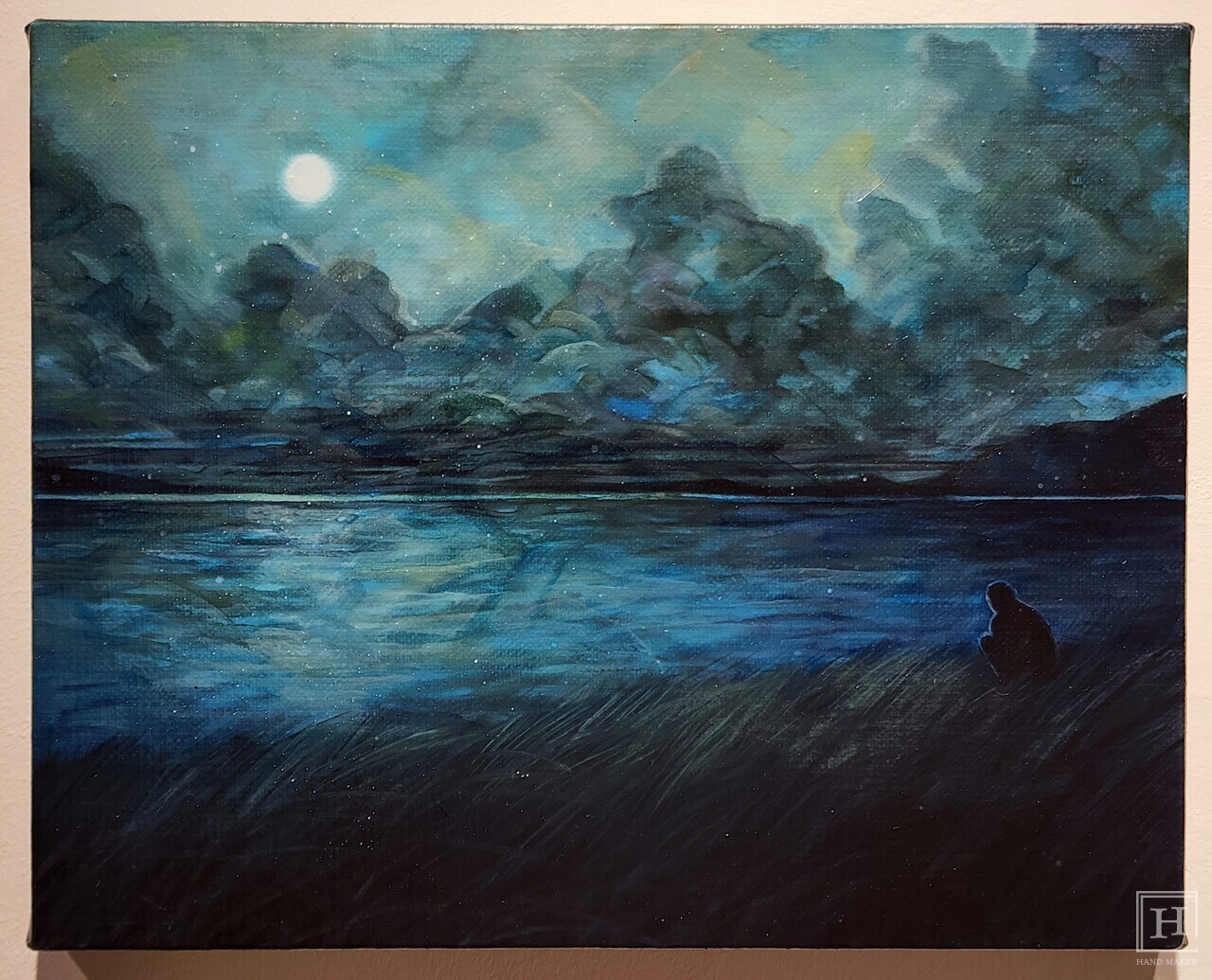
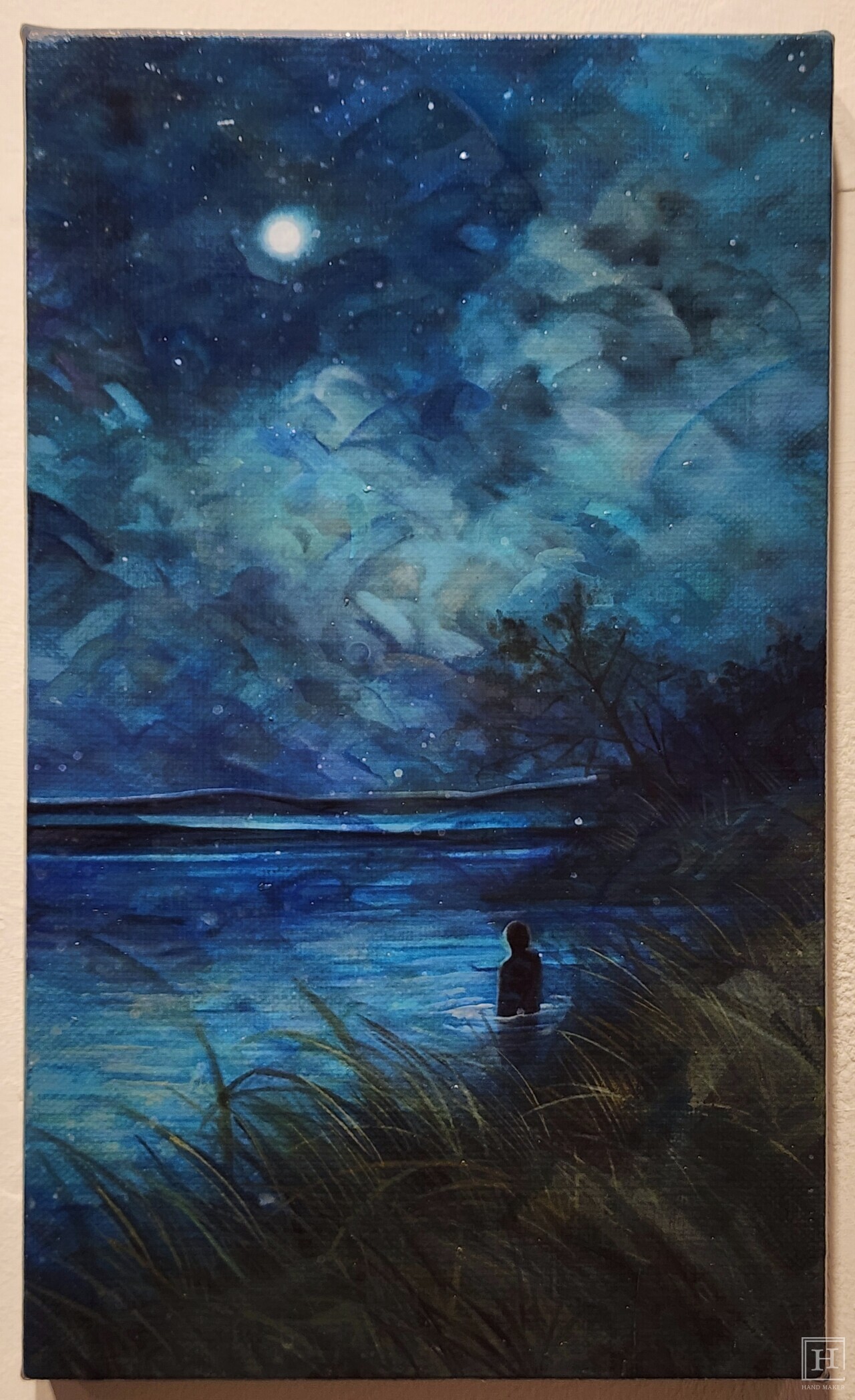
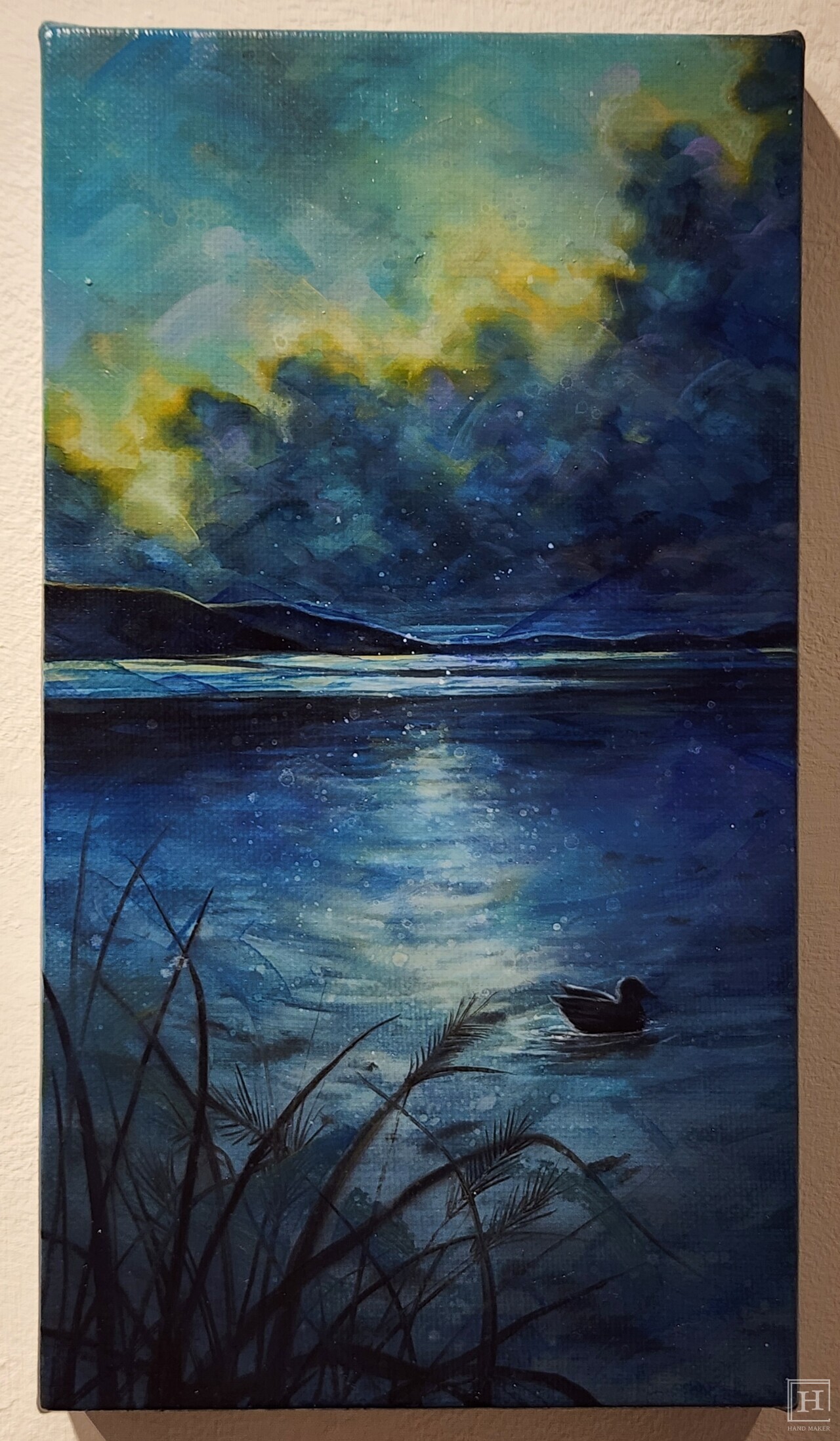
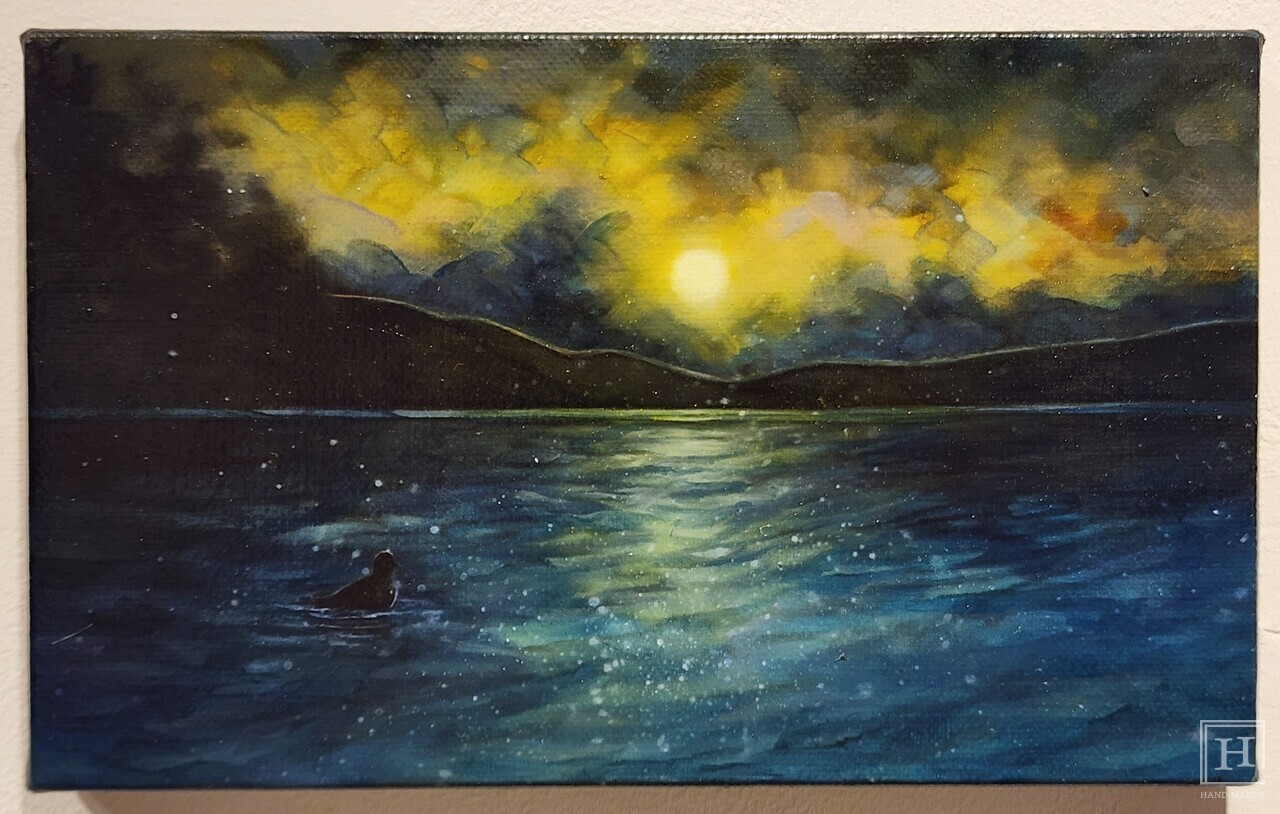
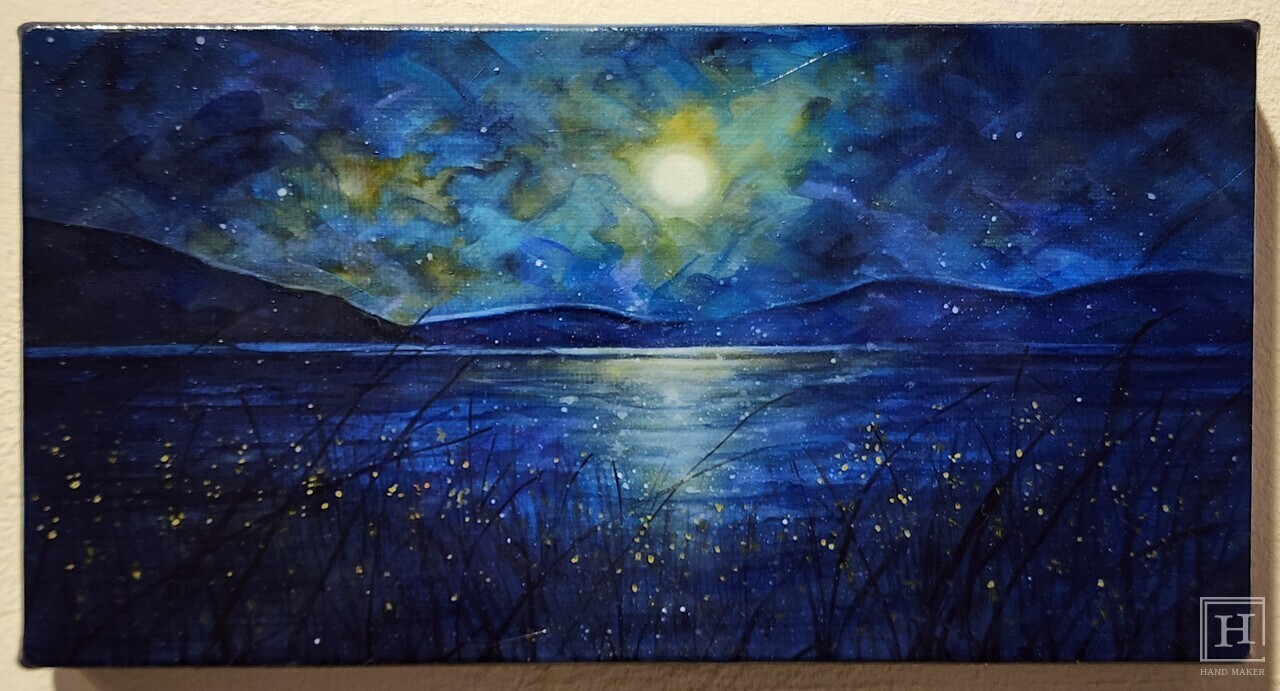
Looking only at the background of the five-piece 〈Gaze〉 series, it is a peaceful and beautiful night scene by the water. If viewed in the order the works are arranged, the person sitting by the water gradually enters the water. In other scenes, only a single duck is swimming leisurely. Then, finally, no one remains, and only the bright moonlight illuminates the waterside.
As the human and the duck appear at the waterside in turn, it gives the feeling that the boundaries between different beings are momentarily blurred. In the place where one being disappears, another being stays, and after even that disappears, only the landscape remains. The sight of humans and animals passing through the same place and disappearing in turn shows that different beings share a single world. It makes one think that even after someone disappears, that place continues with other life and nature, and that beings who seem unrelated are also connected within the same landscape.
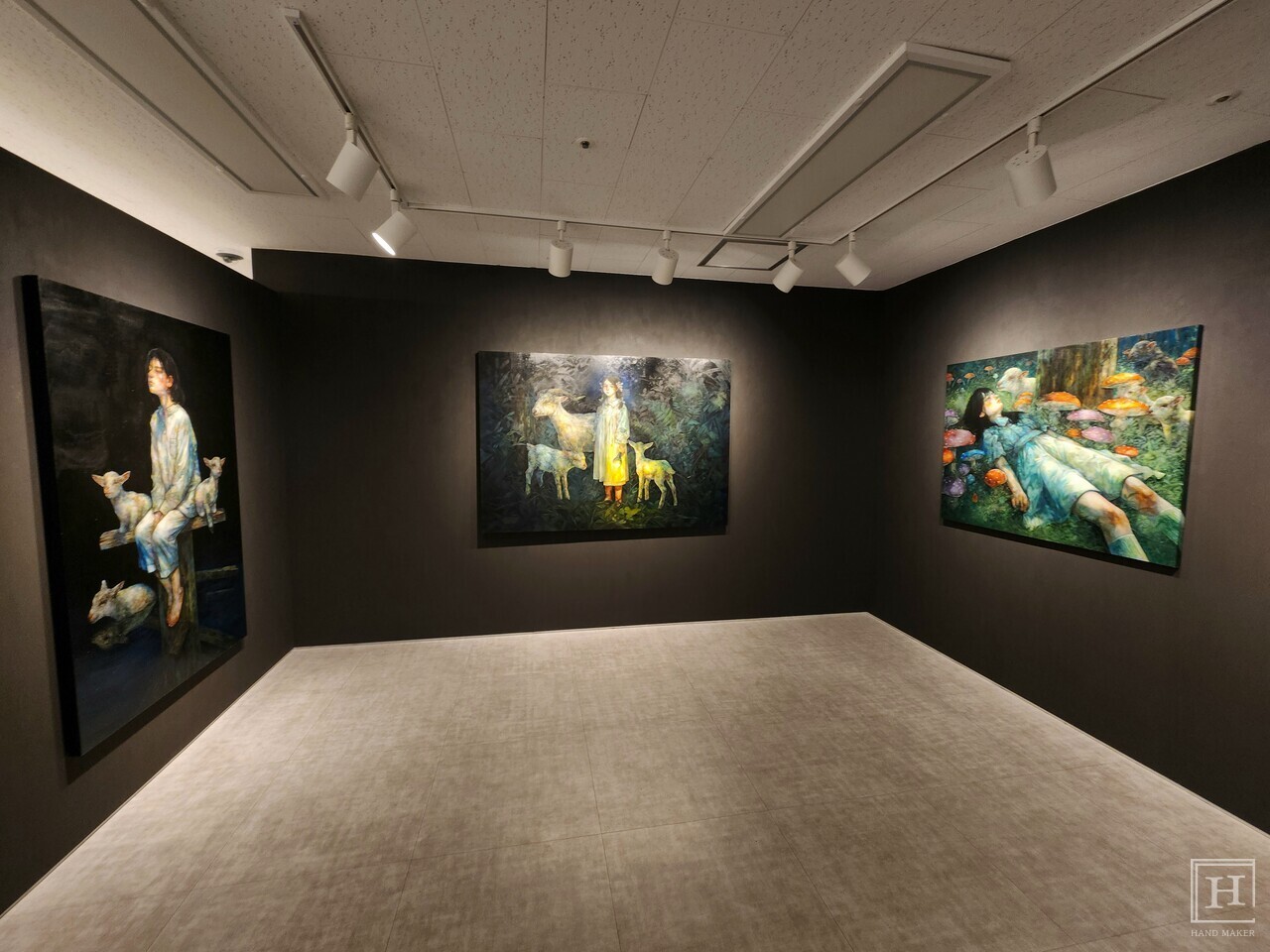
The exhibition allowed viewers to see the artistic world of Yoon Ye-jin, which has evolved from comforting her wounded self to observing coexistence and solidarity with different beings.
Reporter at HANDMAKER (핸드메이커), a Korean magazine devoted to crafts and handmade culture. Covers exhibitions, design and the people who make things by hand.
Related Articles
![[Field Sketch] ‘Another animal inside an animal?’ Painting the coexistence of life with…](/storage/handmk-global/2026/10/6cb2787b-d326-4107-a11f-2f07a30b4850-a3af764b-thumb.webp)
[Field Sketch] ‘Another animal inside an animal?’ Painting the coexistence of life with imagination, Cho Tae-seong's solo exhibition 《Meet at Hana ZOO》 at Hana Bank H.art1
![[Field Sketch] The journey of an artist who viewed all existence as a single life: Seoul Museum's…](/storage/handmk-global/2026/10/80e8d27b-5839-4d40-b6d6-6bd2dad08403-09eff485-thumb.webp)
[Field Sketch] The journey of an artist who viewed all existence as a single life: Seoul Museum's special exhibition for the 30th anniversary of Lim Jik-soon's passing, 《I Want to Paint the Inner World》
![[On-site Sketch] Looking back at 20 years of the pioneer of Korean art toy culture... Coolrain solo…](/storage/handmk-global/2026/10/a65891fb-4f63-4144-84f8-47e467697bfc-48efde25-thumb.webp)
Comments 0
Comments are currently disabled.