
Kang Je-wan and Paideia present somatic sculptures at Gallery Color Beat
Artists Kang Je-wan and Paideia are exploring the relationship between the body and its environment through sculptures made of metal and clay at Gallery Color Beat in Seocho-gu.
Artists Kang Je-wan and Paideia are currently showcasing "Somatic Effector: The Responsive Body" at Gallery Color Beat in Seocho-gu. The exhibition features sculptures that translate bodily movements into form, including metal works by Kang Je-wan created by measuring his own physical range of motion.
We extend our arms, turn our bodies, and lean against things countless times a day. These movements are so familiar that they often go unnoticed, yet they accumulate memories of contact and gestures learned while adapting to the surrounding environment.
Some express these movements through the curves of metal, while others create new bodies through traces left in clay. These sculptures, born from different materials and methods, tell stories of the body that we may not have realized, prompting us to view the movement and existence of the physical body through a different lens.
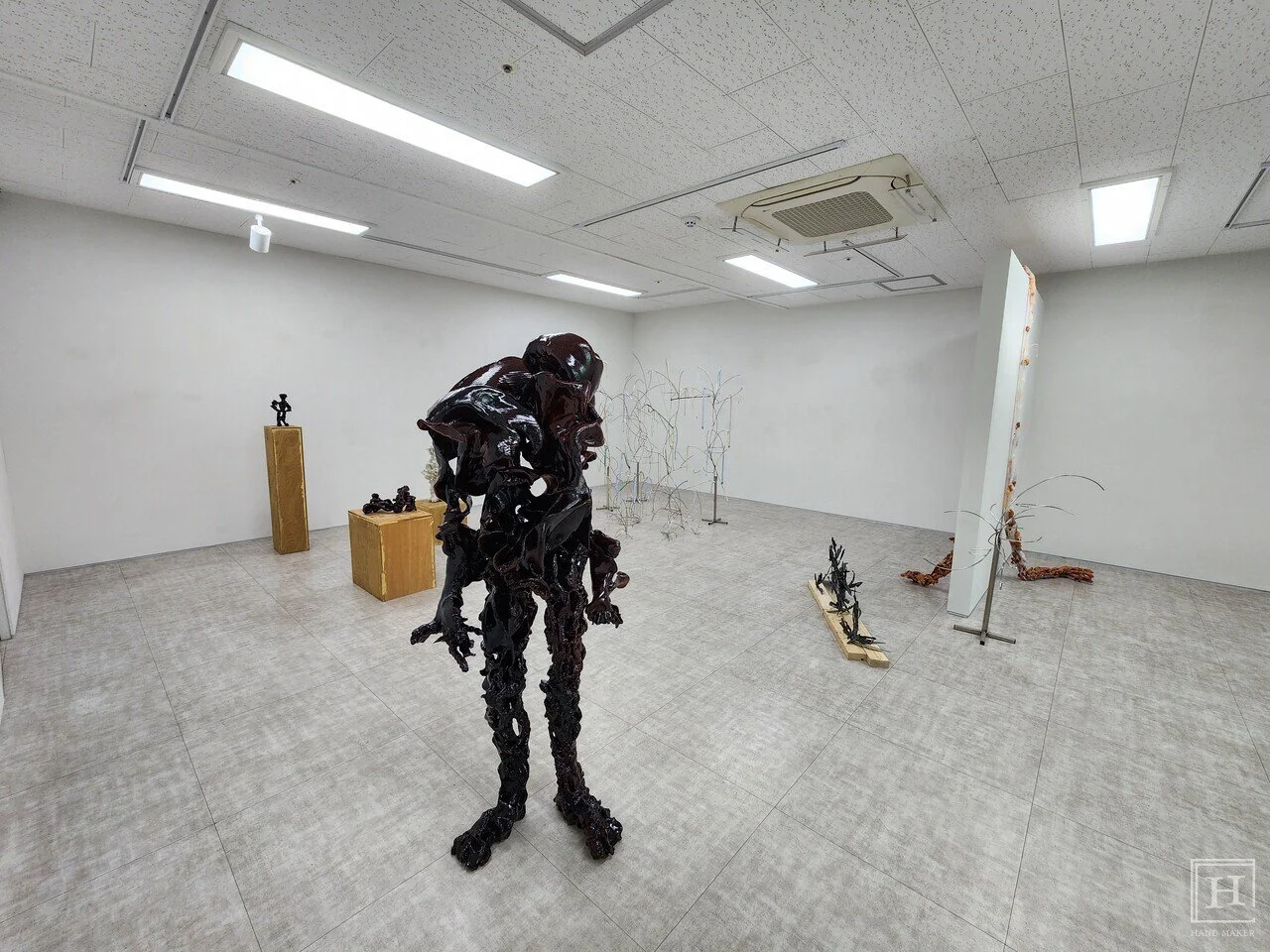
A two-person exhibition titled "Somatic Effector: The Responsive Body," featuring artists Kang Je-wan and Paideia, is currently underway at Gallery Color Beat in Seocho-gu. This exhibition translates the sensations and changes that arise during the process of the body contacting and moving within its environment into sculpture. Paideia reconstructs new bodily forms from traces left by pressing the body against clay, while Kang Je-wan expresses the body's movements in response to space through lines and planes.
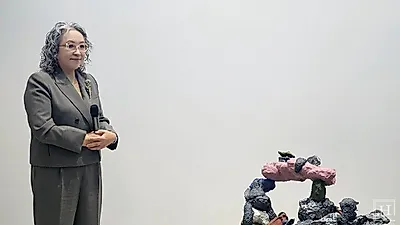
Kim Min-sik, the curator who planned the exhibition, explained, "In the sculptures of both artists, traces and trajectories hold the way the body related to the world. Paideia's fragments preserve the places the body touched, while Kang Je-wan's curves unfold the directions in which the body headed."
Sculpting the gestures created by space
- Artist Kang Je-wan
Kang Je-wan focuses on the relationship between the body and space, expressing repetitive bodily movements from daily life through sculpture. This work stems from his experience working in a cramped studio.
While repeatedly picking up objects and turning his body in a space measuring only about one to three pyeong, he realized that his movements were not determined by will alone, but were influenced by the surrounding environment and the structure of the space. The body had learned how to move efficiently within the given space. The artist began to transfer these gestures, performed unconsciously in daily life, into sculptural forms.
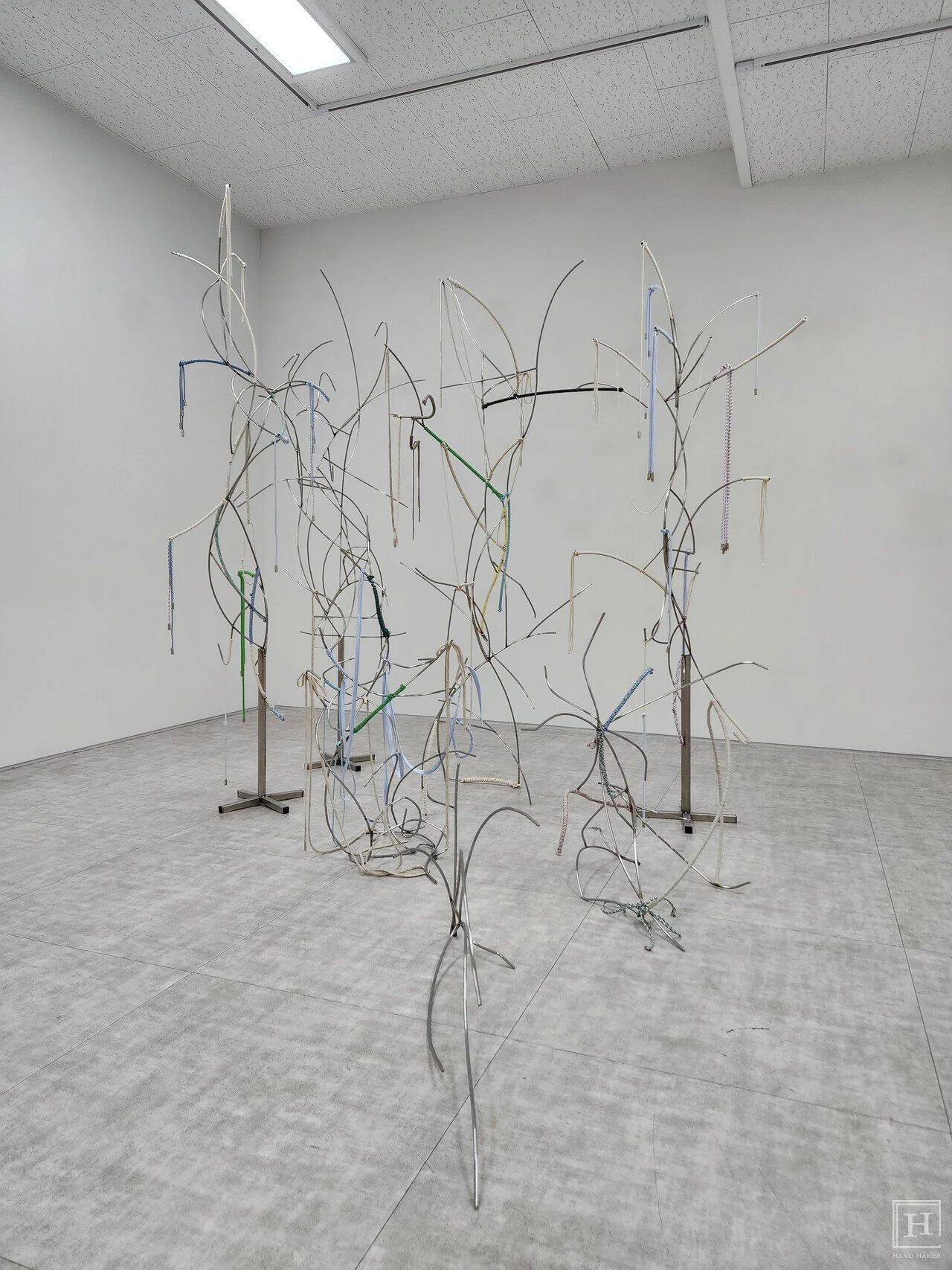
When facing the works without the artist's explanation, one may see what looks like a cluster of abstract tree branches. However, viewed through the theme of the "body," the metal intertwined with cords can feel like the movements of a dancer performing a Salpuri dance while wearing hansam (long sleeves). This can be interpreted as a reflection of how effectively Kang Je-wan incorporates bodily movement into his work.
Through his work, the artist focuses on showing the direction and trajectory of movement rather than directly reproducing the physical appearance of the body. He creates three-dimensional structures by bending or connecting metal, and he reportedly measures the lengths of his own arms, upper body, neck, and shoulder range of motion to create each piece.
He also adds textile materials, such as thread and cord, which he became familiar with while working at a clothing factory in the past. The sculptures, combining hard metal with flexible textiles, react to the space and evoke the image of a body subject to gravity.
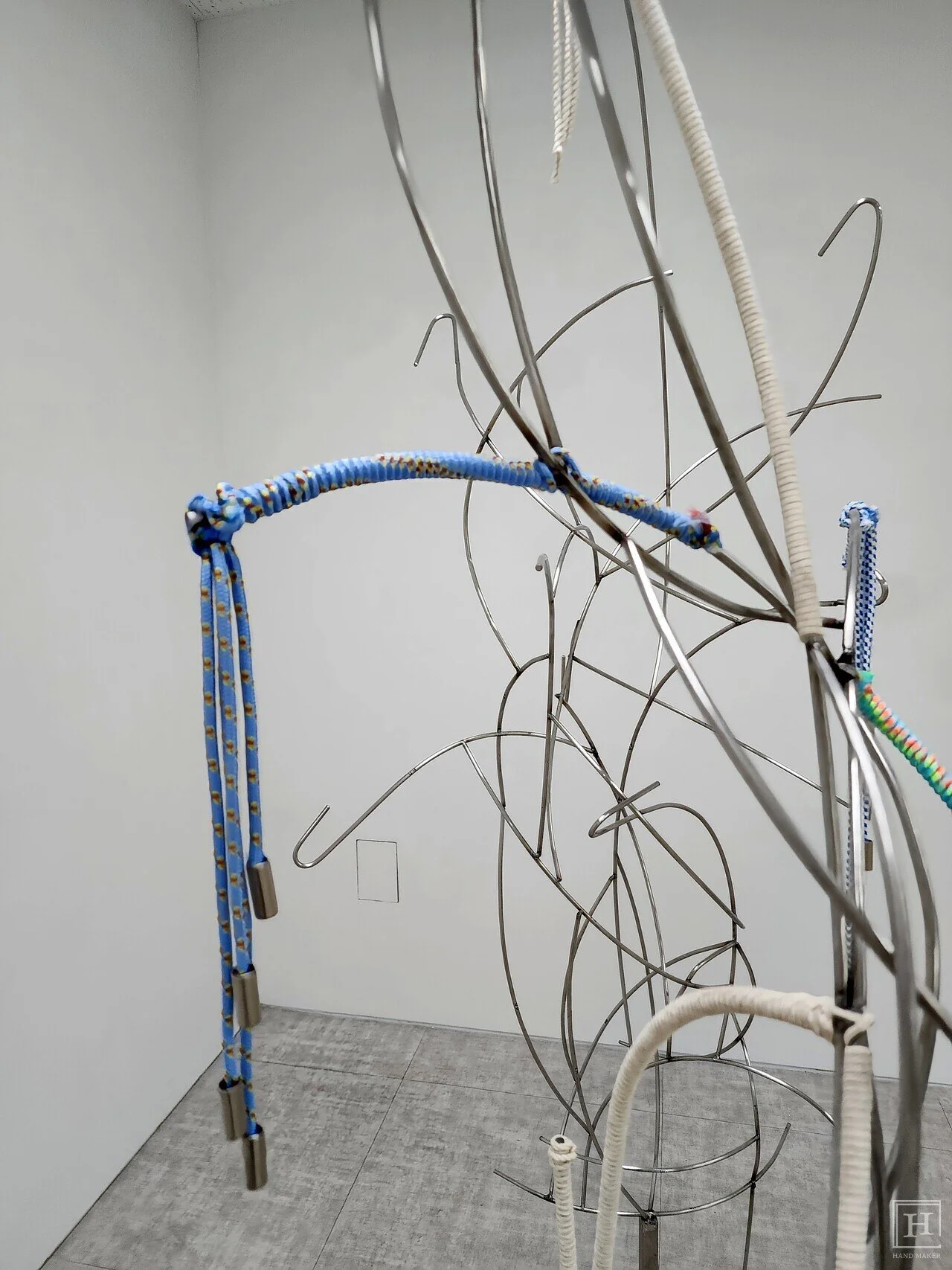
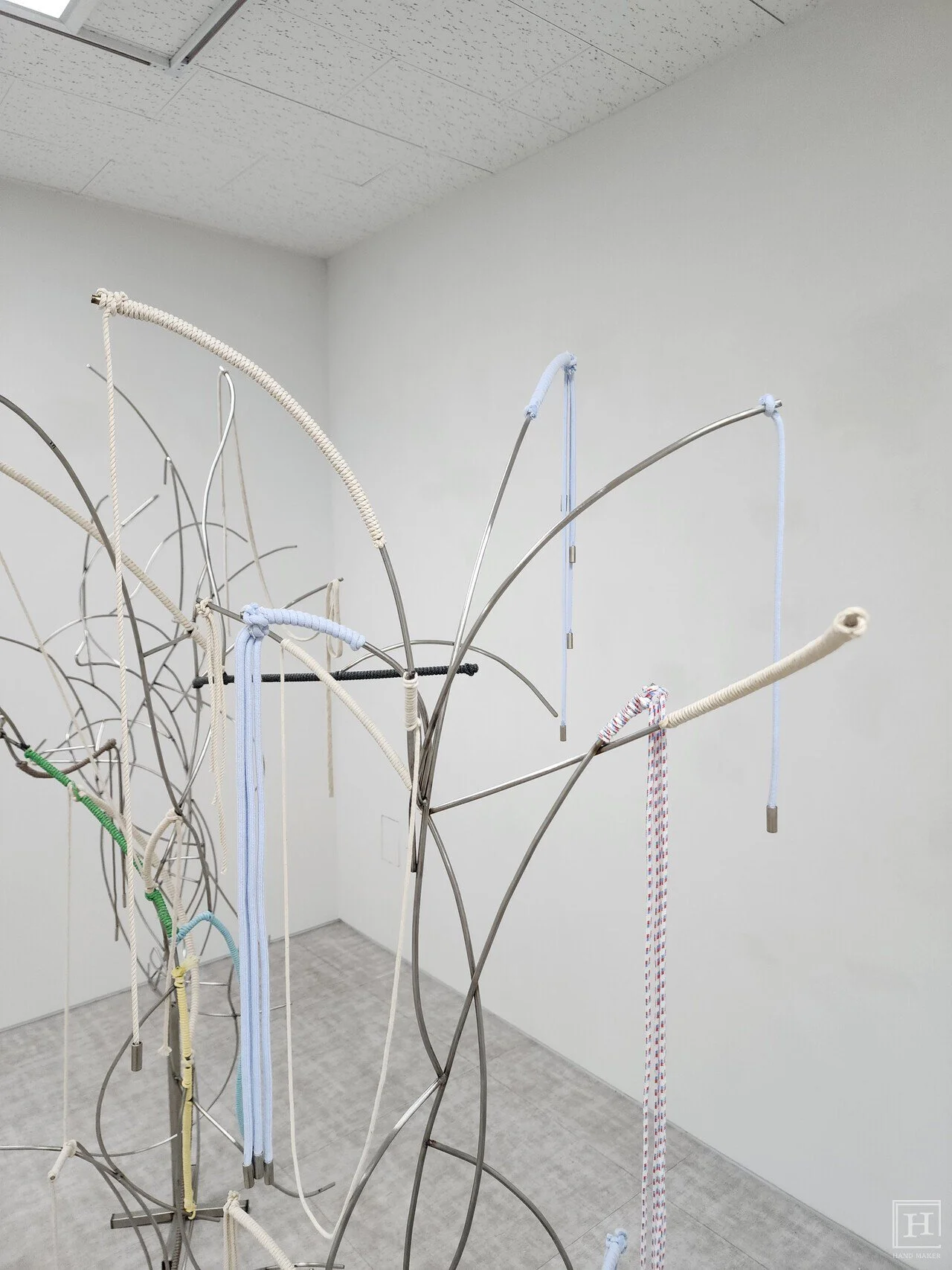
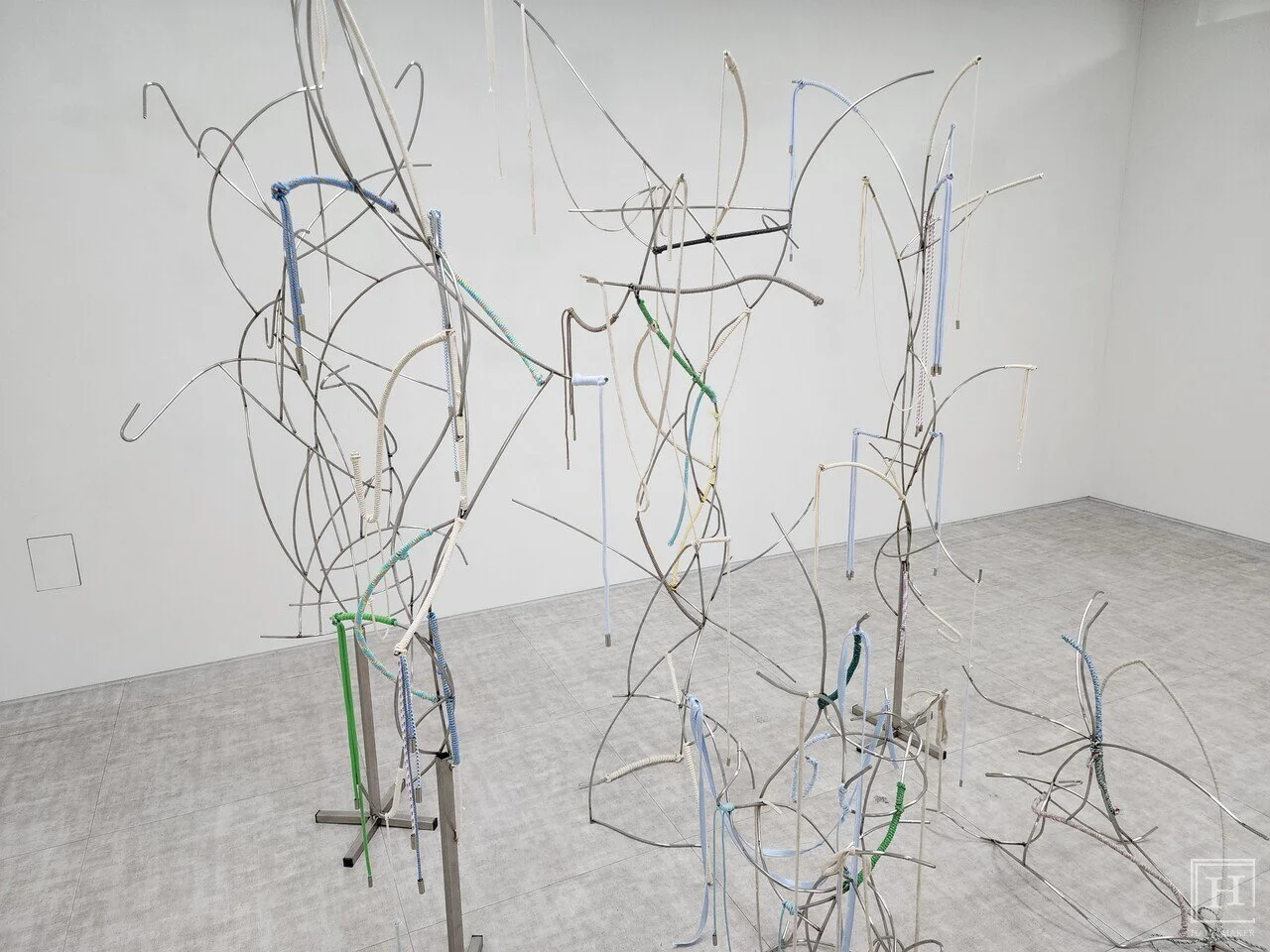
The works installed in one location are each individual pieces. They bear titles such as 〈Even if the body moves with some earnestness, it became a sculpture〉, 〈Body Mind〉, 〈Torso Seoul Trash〉, 〈Narrative of Trajectory〉, and 〈From Stride〉.
When viewing the works in connection with their titles, one feels an abstract sensation while also perceiving that the pieces form a single narrative. The bending and connection of the metal in these works invite the viewer to imagine the stories of which bodily movements were being considered during their creation, and where and how such movements were formed while working.
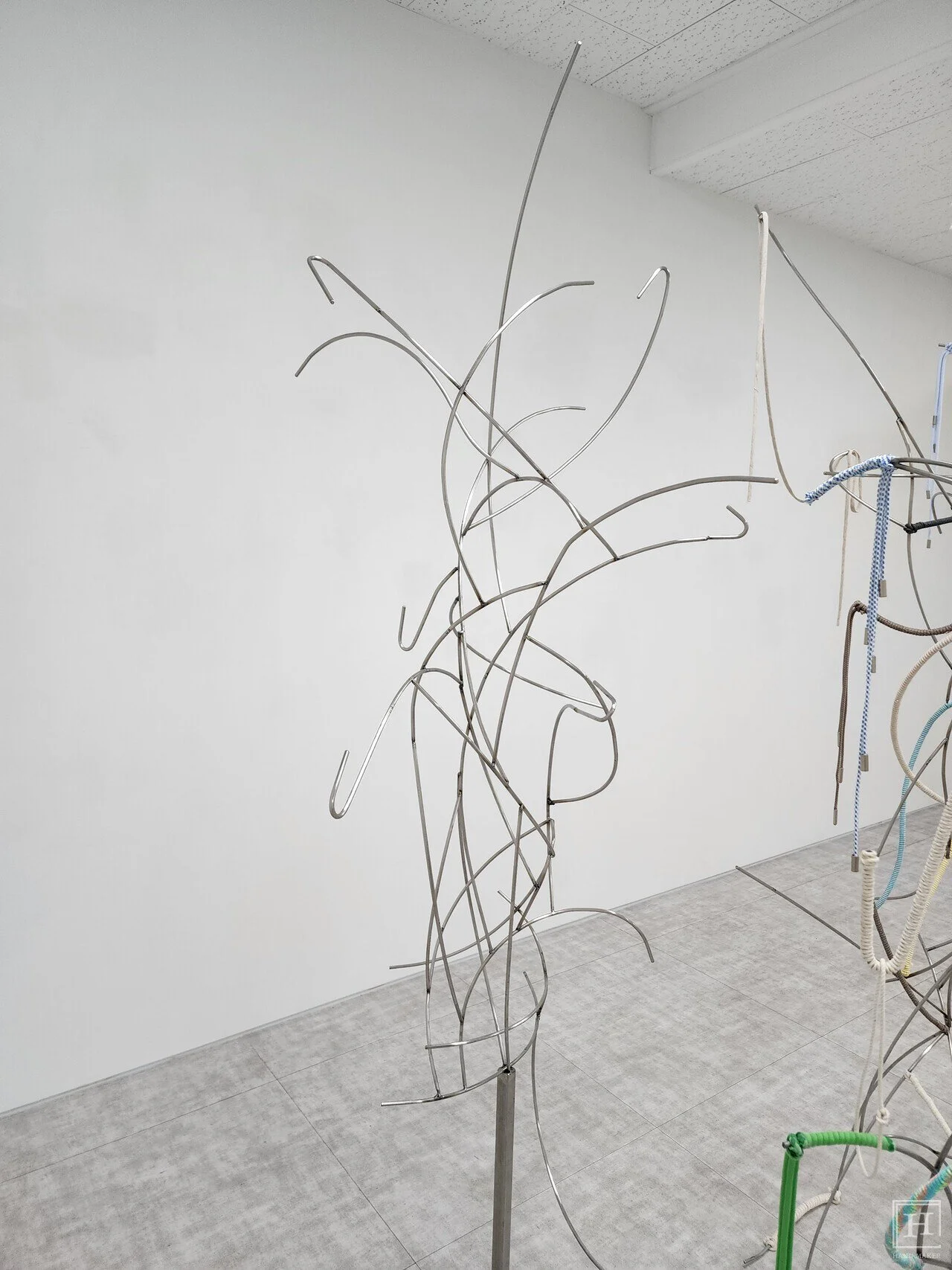
Among the works, there is one where not a single string is woven. While in other works the ends of the metal stretch straight out, in 〈Within Arm's Reach〉, some of the lines can be found in the form of inward-curling loops. Considering that these are movements of the body created by directly measuring the artist's own body, and taking the title of the work into account, one might speculate that it expresses the movement continuing from the arm to the hand.
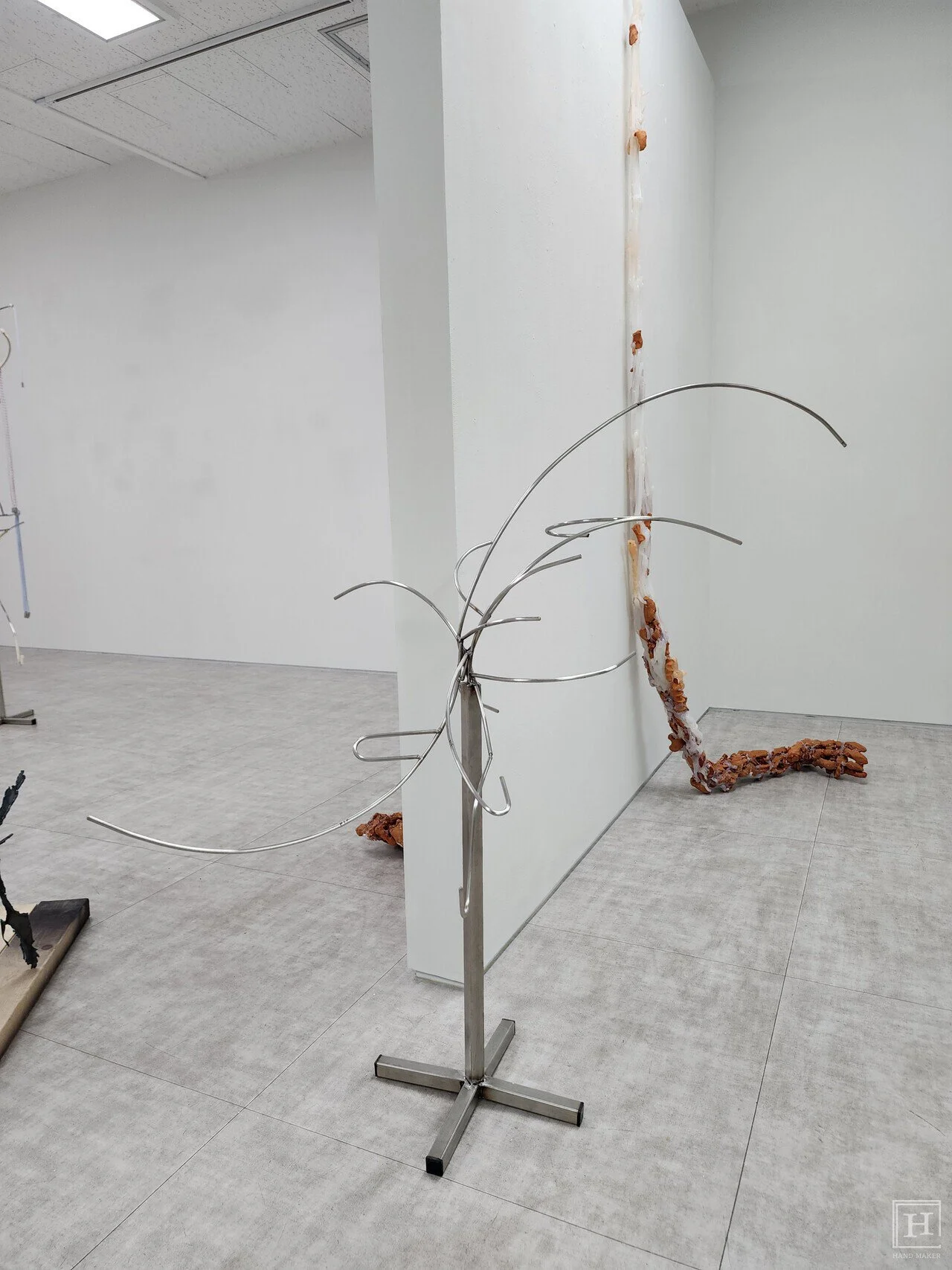
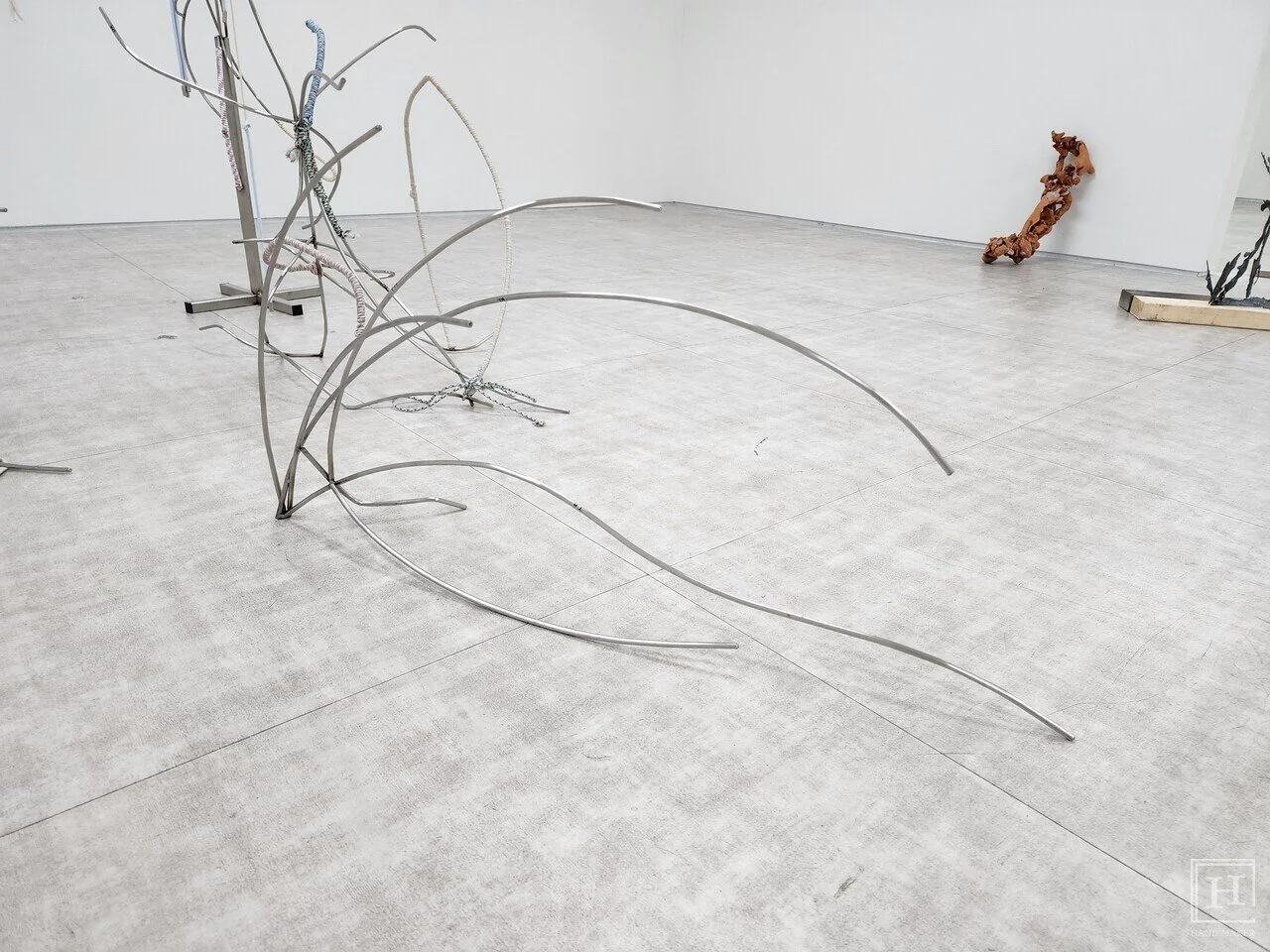
The two works, which seem similar yet different, appear to depict the moment of jumping and landing, just as their names suggest. However, rather than movements enjoying leisure like exercise, that moment feels like a leap and landing performed to get work done.
It is not important which specific body the work is modeled after. This is because the sight of slender metal lines stretching out in different heights and directions naturally evokes movements such as bending the body, stretching out an arm, and regaining balance. In the curves soaring high toward the air, one is reminded of the action of reaching a hand toward something, while in the curves stretching long near the floor, one is reminded of lowering the body or shifting one's center of gravity. Although they are static sculptures, it feels as though the tension of a body that must constantly move remains within them.
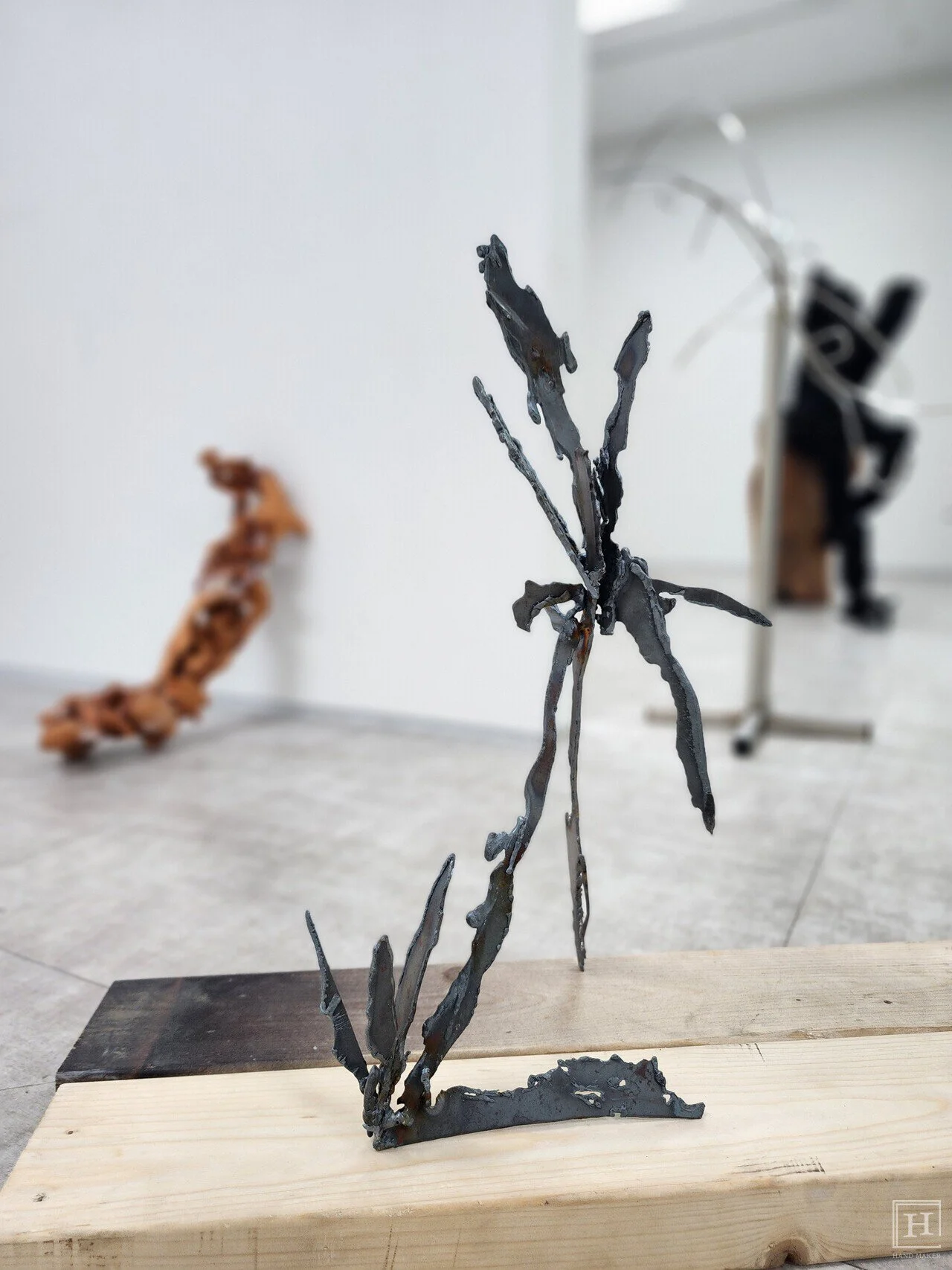
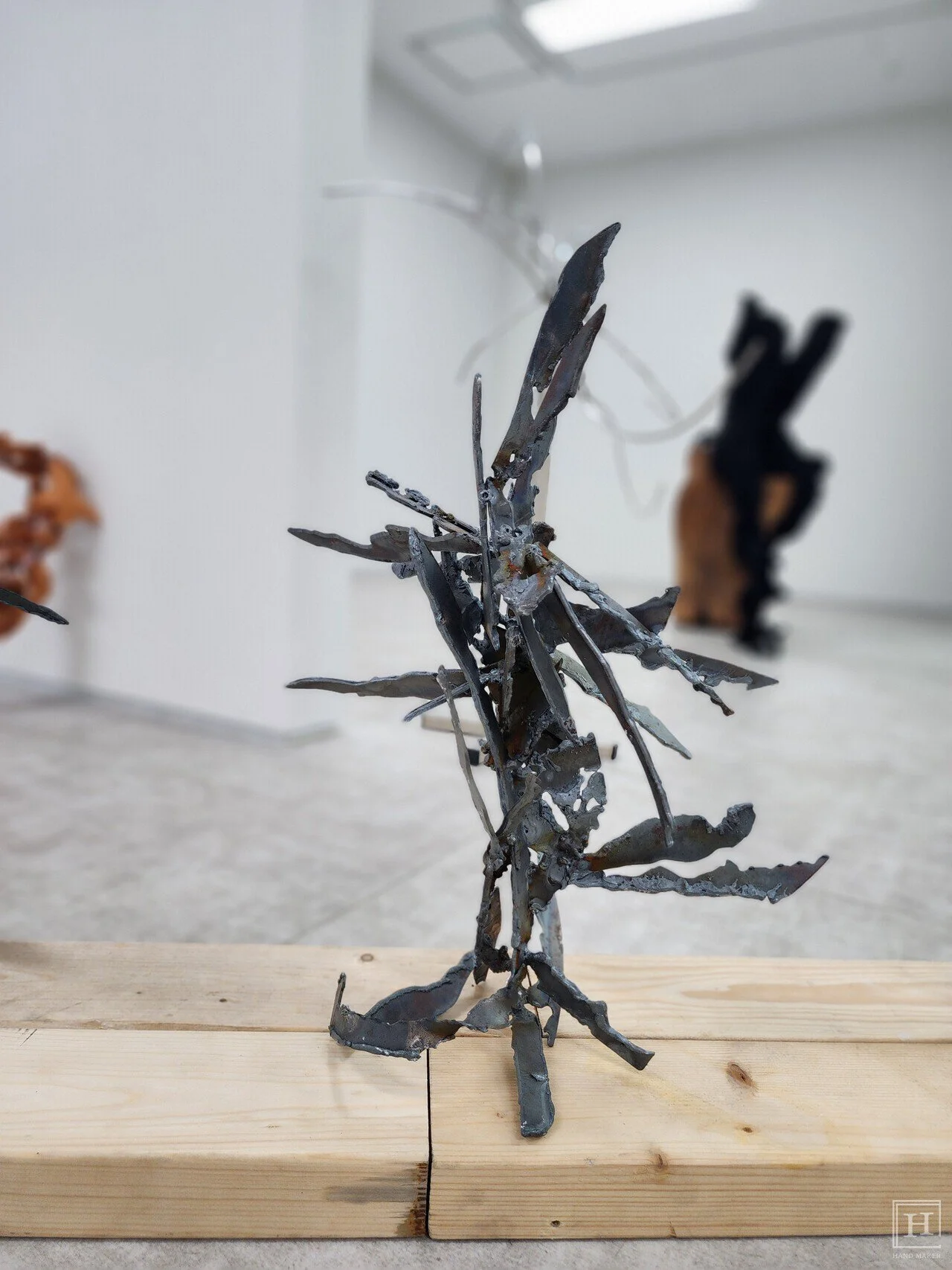
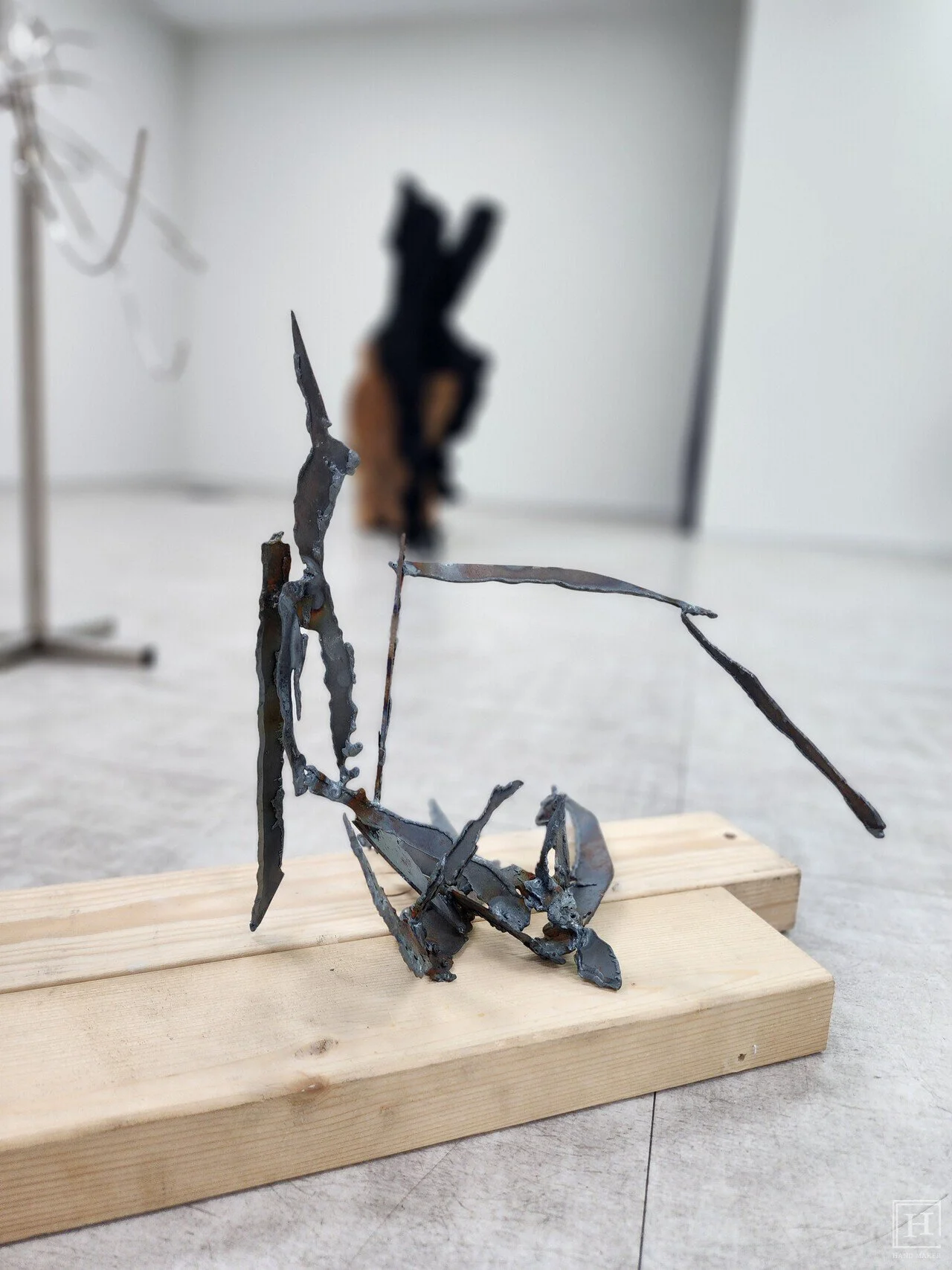
Looking at the overall feeling of the works, a sense of sharpness is felt. These works were created by artist Kang Je-wan prior to his recent work, and he says he also thought about bodily movements during this period. Unlike the work shown focusing on lines, the artist mentioned that he conducted small experiments.
Therefore, in this work, the overall movement of the body is clearly visible. The sharply rising metal pieces create appearances of twisting the body, stretching out arms, and balancing by stretching in different directions or tangling in one place. While it is not clearly distinguishable which part is an arm or a leg, following the irregularly connected pieces makes one feel as though several movements are overlapping.
In particular, the rough and sharp cross-sections of the metal even evoke the force and tension applied to the body at the moment of movement. If his subsequent works show the flow of movement through smooth curves, these works seem to have cut and pasted moments of movement into a single form.
Artist Kang Je-wan's work makes us look back at the bodily movements we do not usually notice. Even the actions of casually reaching out an arm or turning the body are movements learned in accordance with the surrounding space and environment. The artist transfers these everyday gestures into the lines and planes of metal, giving a new form to invisible movements. Looking at his sculptures, one thinks that even our gestures, which we repeat in familiar spaces, could become a work of art.
Traces of the body left in clay, proving existence
- Artist Paideia
Artist Paideia expresses the existence of the body through sculpture based on the sensations and traces left on their own body. When clay is pressed against the body, traces of the body's curves and movements are left in the clay, and the artist recombines these created fragments to create a new form of the body.
This work is also connected to the experience of living in the United States, where the artist felt their presence fading within the perception of others. It is about revealing one's invisible existence through the physical traces left by the body. While the bodies in the works differ from the human forms we are familiar with, they contain the actual moments when the artist moved their body and came into contact with clay. Through these traces left by the body, the artist Paideia speaks of the meaning of existence and the way the body relates to the world.
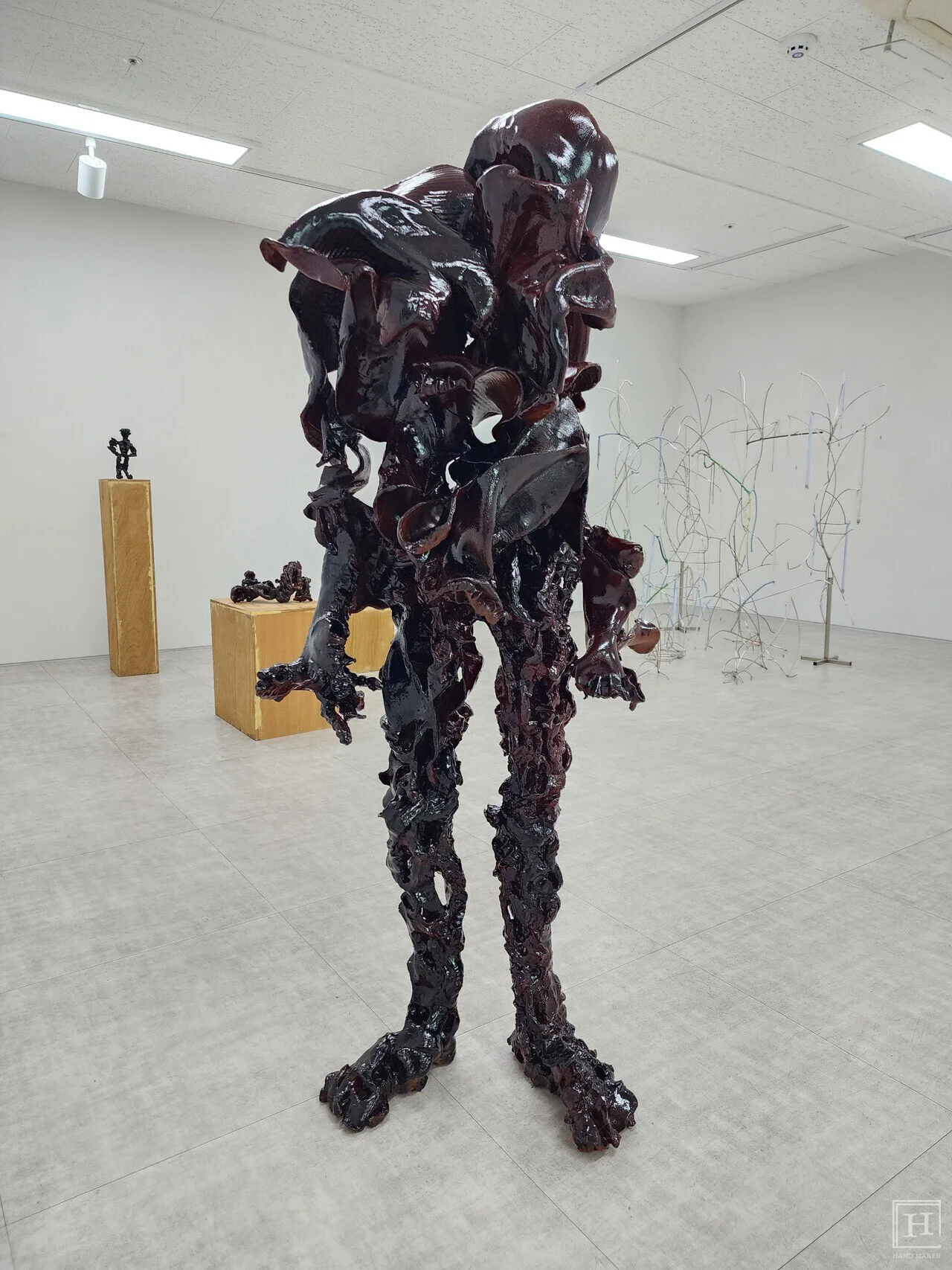
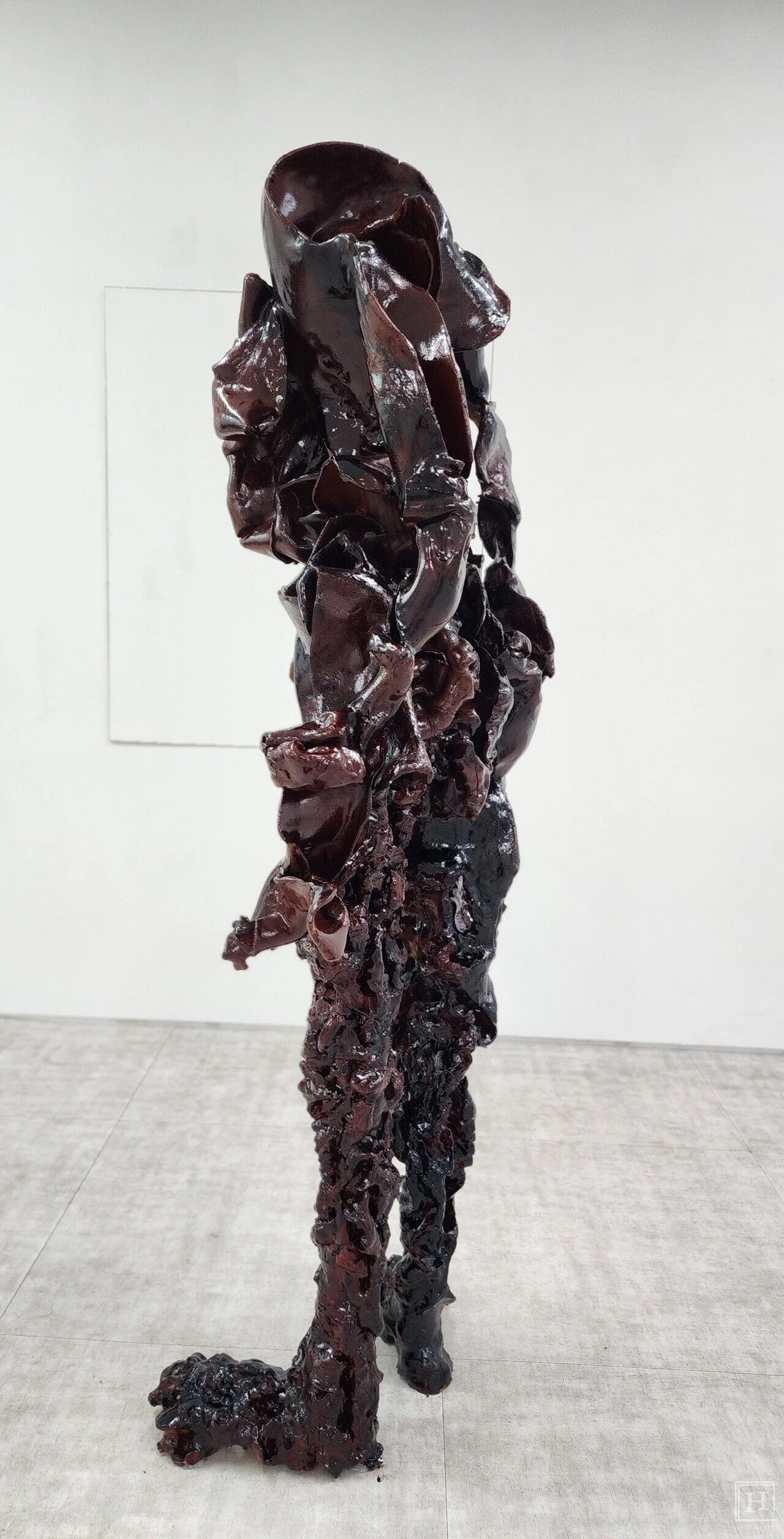
This is the work that first catches the eye upon entering the gallery. Although it is a human figure, it has only a body and limbs, with no face. While it was made by attaching clay, the surface with its deep gloss gives a smooth and unfamiliar feeling rather than the rough and coarse texture typical of clay.
When viewed from a distance, it appears as one massive human sculpture, but as one approaches, the layers of curves and hollowed traces on the surface become visible. In particular, when viewed from the side, it becomes even clearer that several pieces interlock and overlap to form a single body.
The appearance, where the boundaries between the head, torso, and limbs are not clear, may feel unfamiliar and grotesque. However, the numerous curves left within seem to show the moments when the artist's body touched the clay. Although it is a figure whose identity is unknown due to the lack of a face, the traces left by the body exist clearly.
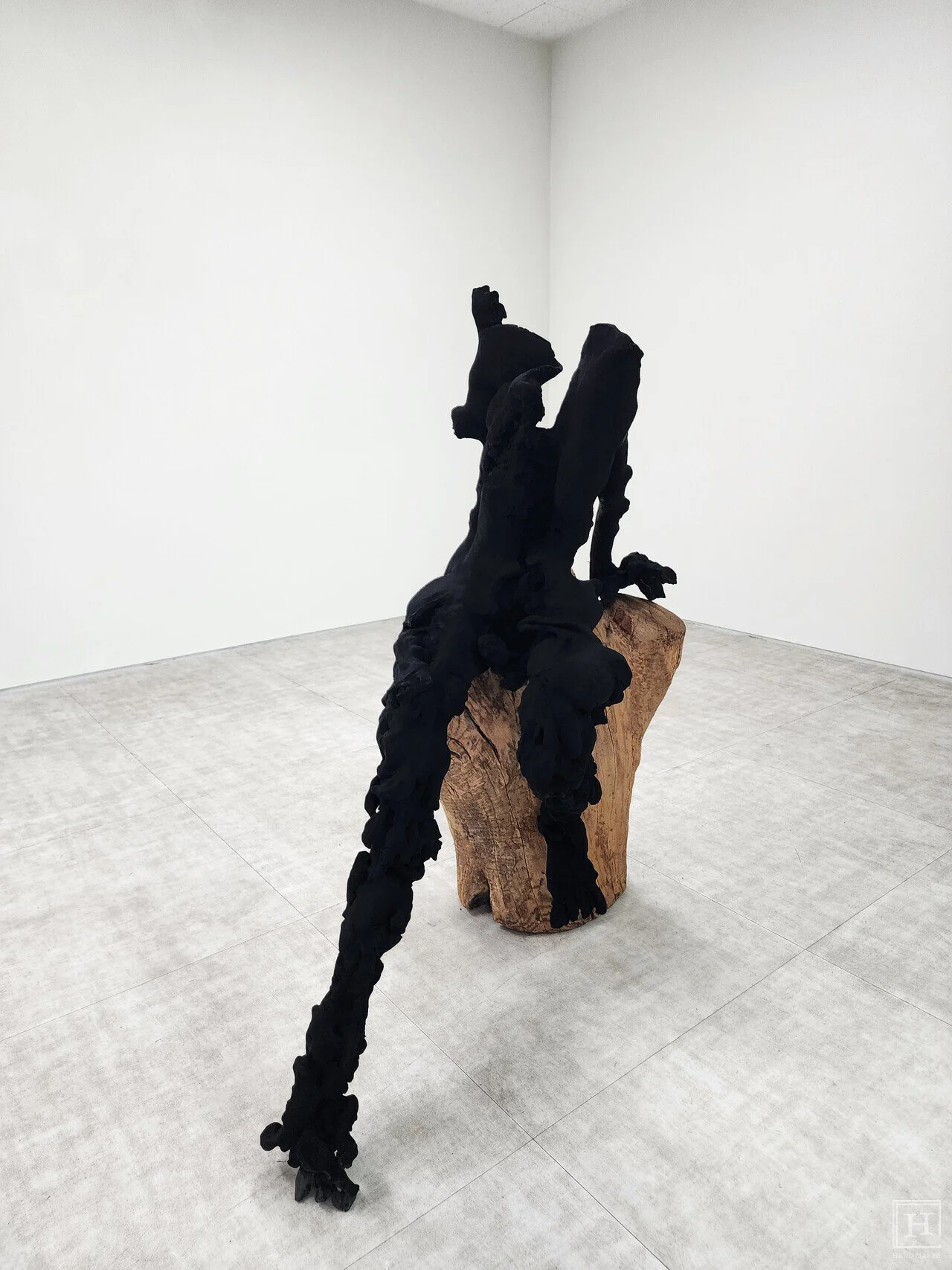
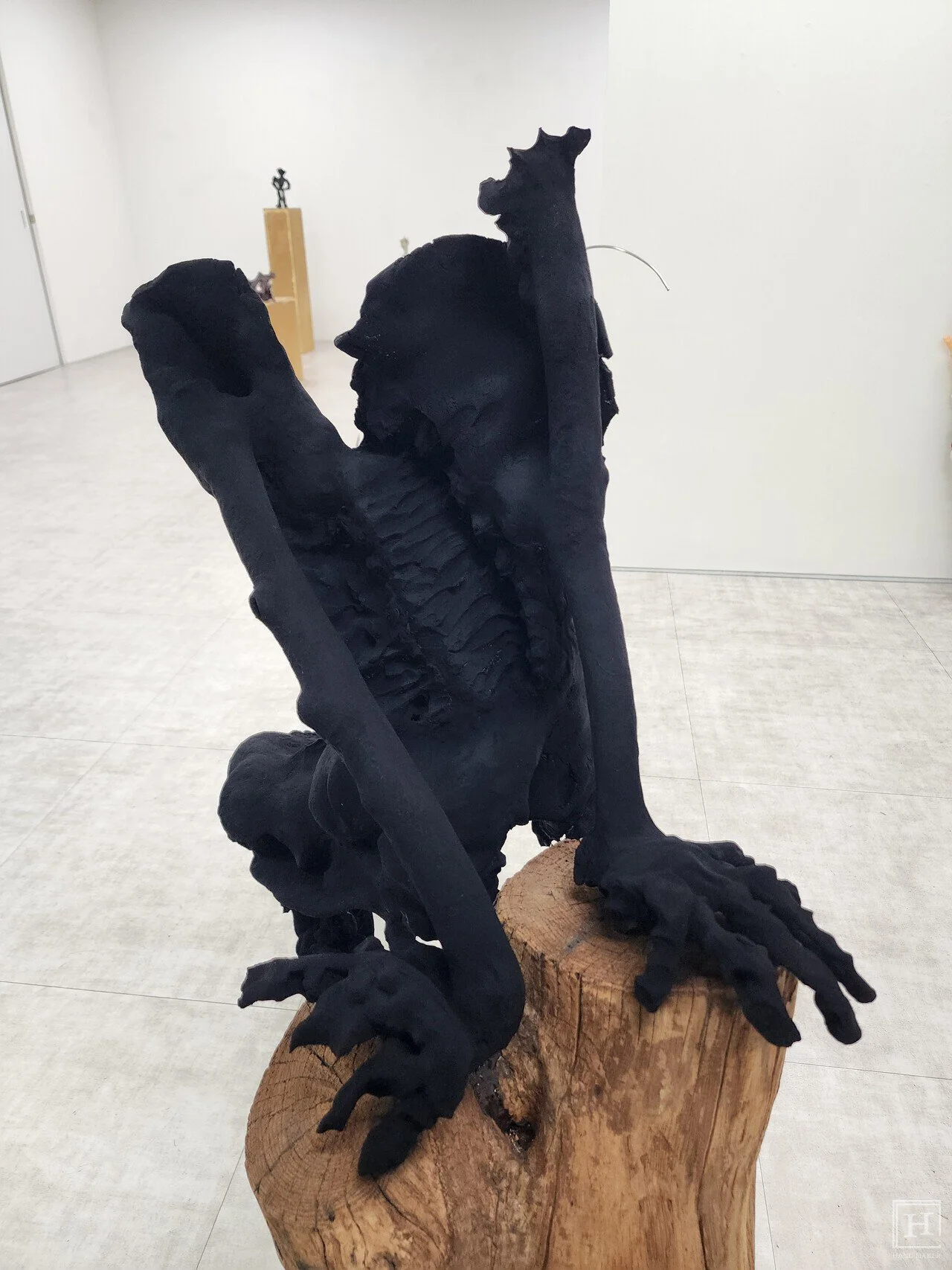
〈Tippy Toe〉 depicts a figure that is sitting but maintaining its posture precariously on its toes. An emotion that seems to feel anxiety about something is conveyed. When moving to the back of the work, the spine and ribs are fully visible. It feels more like looking at a gaunt skeleton than a person, making the feeling conveyed by the work even chilling.
Connecting this to the background of the artist having lived in the United States, the sense of alienation and anxiety about one's existence that might have been felt unknowingly seems to be expressed through the precarious posture and the shape of the body. While the artist left traces of the body, one indirectly feels the emotions felt at that time.
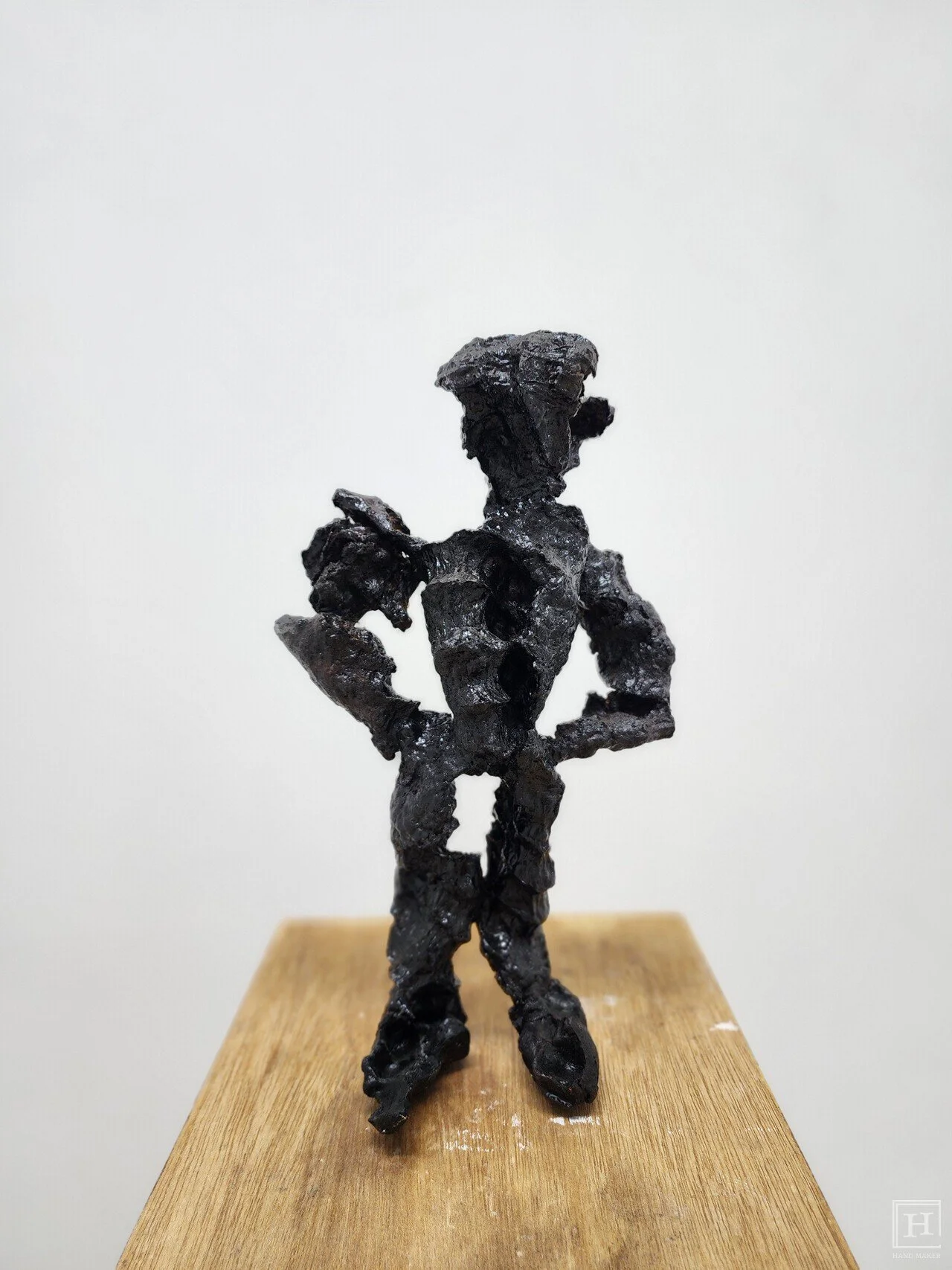
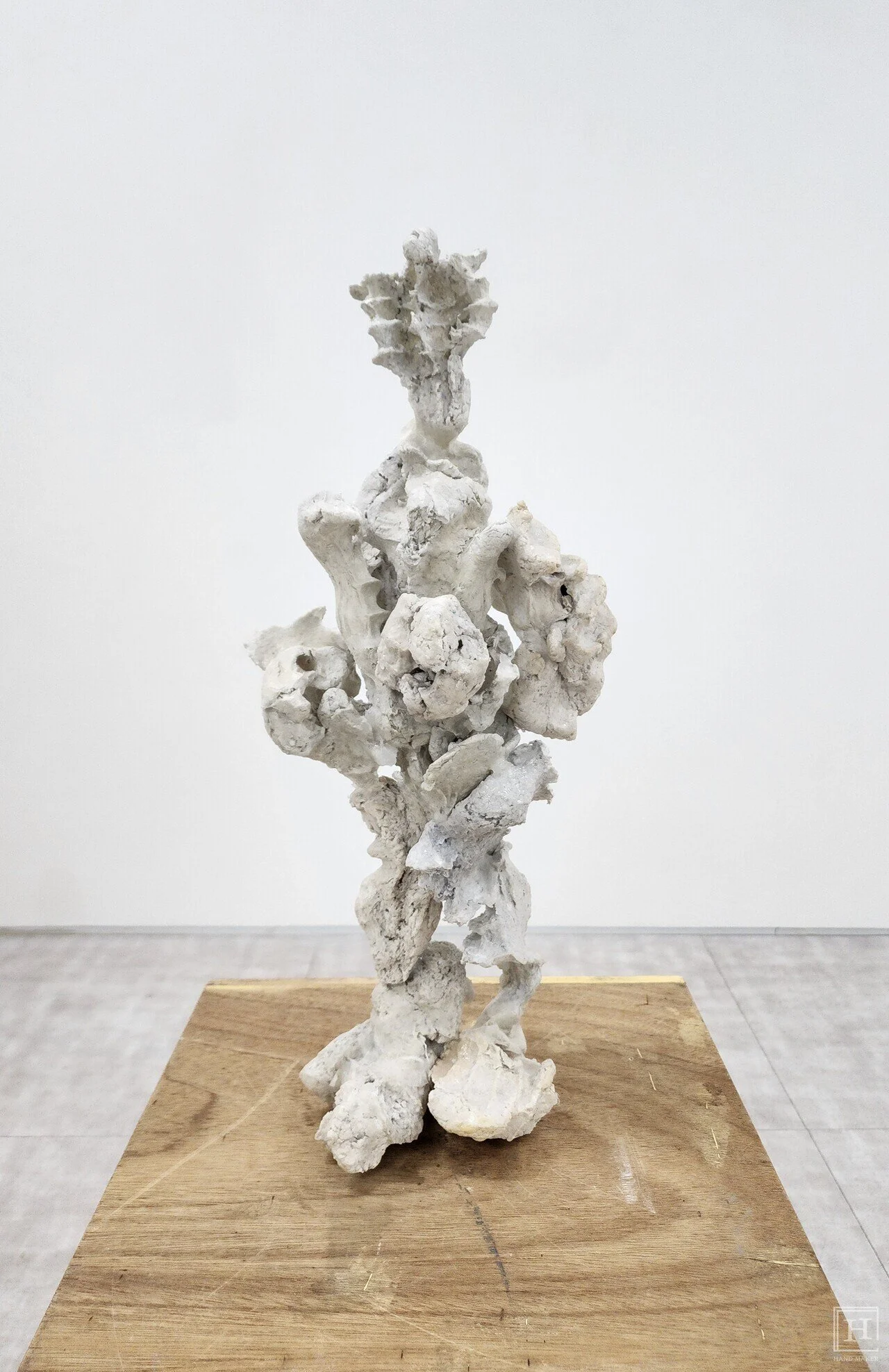
Unlike the two works viewed earlier, these are small three-dimensional works where the human form remains relatively intact. Although there are no specific facial expressions, the figure standing in a confident posture dominates the overall atmosphere of the work.
In particular, in these works, one can catch a glimpse of how the artist Paideia creates works to express their artistic philosophy. Pieces that look as if clay was tightly clenched and bunched by a fist are connected, giving a rough and coarse feeling different from smooth human sculptures. In the hollowed parts and irregularly protruding curves, the traces of pressure and contact applied to the clay can be felt.
Looking closely, each piece has a different shape, but as they gather to form the head, torso, and limbs, a single body is completed. Rather than simply making something resemble a human, the artist Paideia's method of working becomes even clearer in that they gather the traces left by the body to create another body.
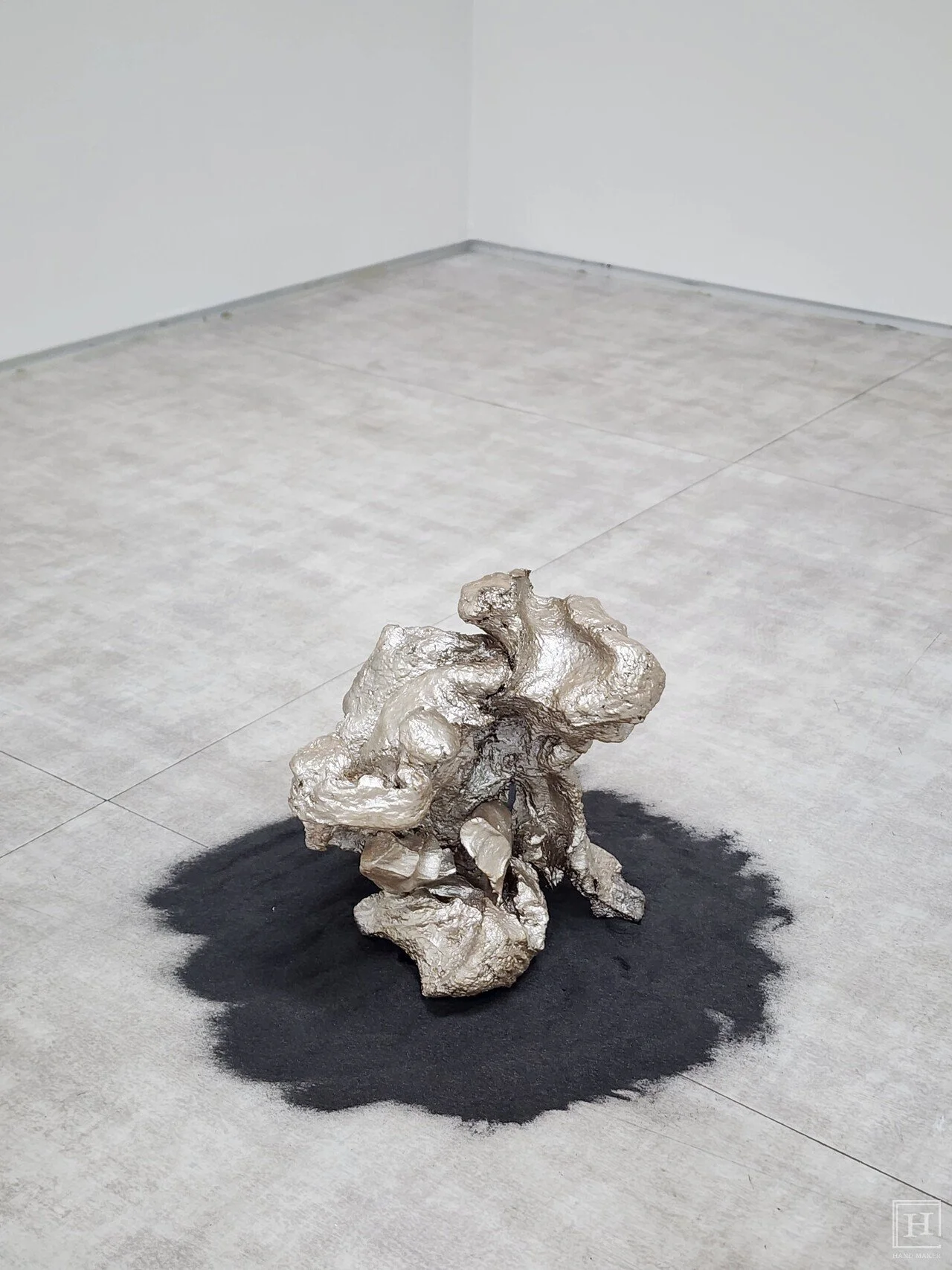
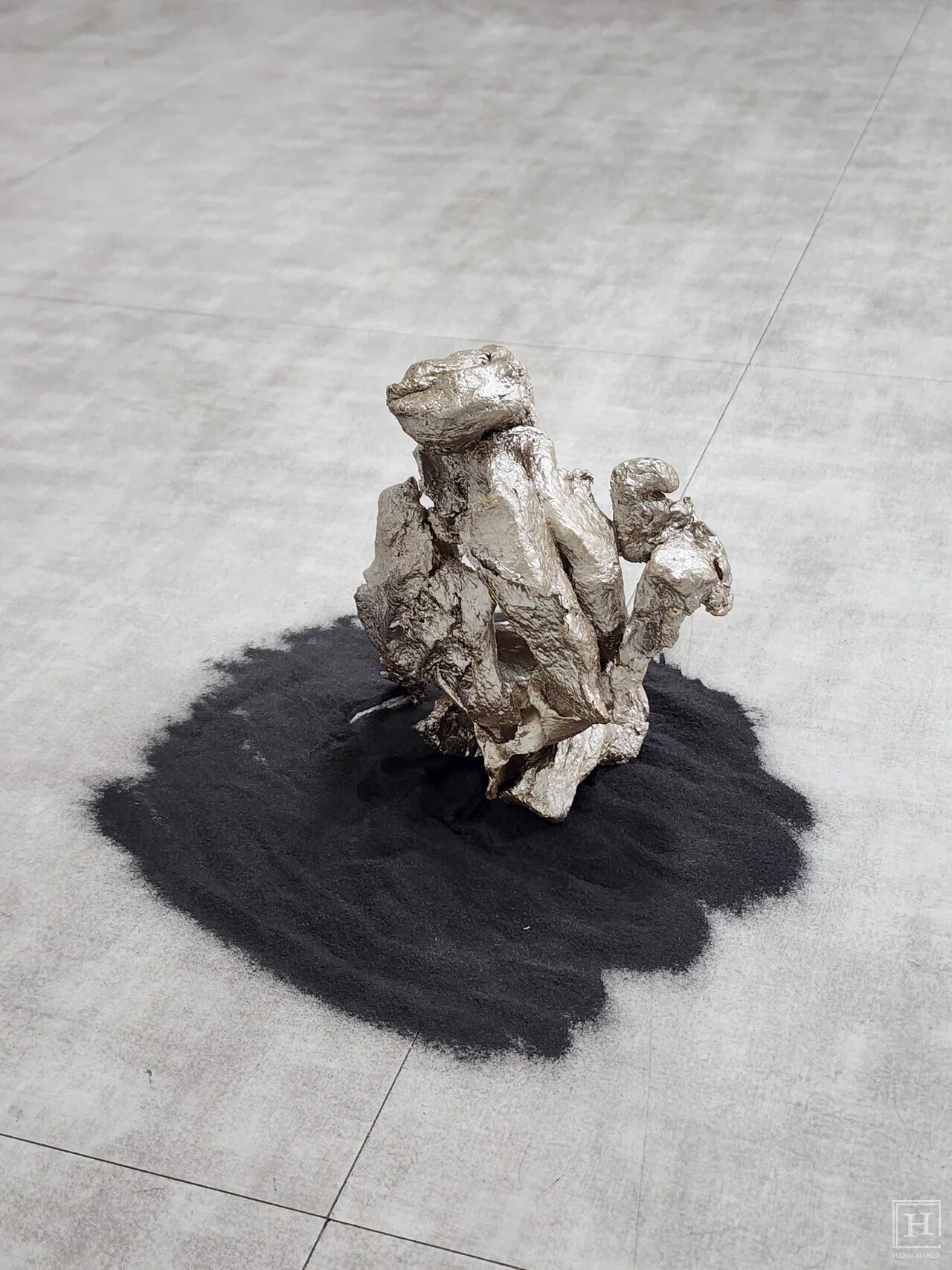
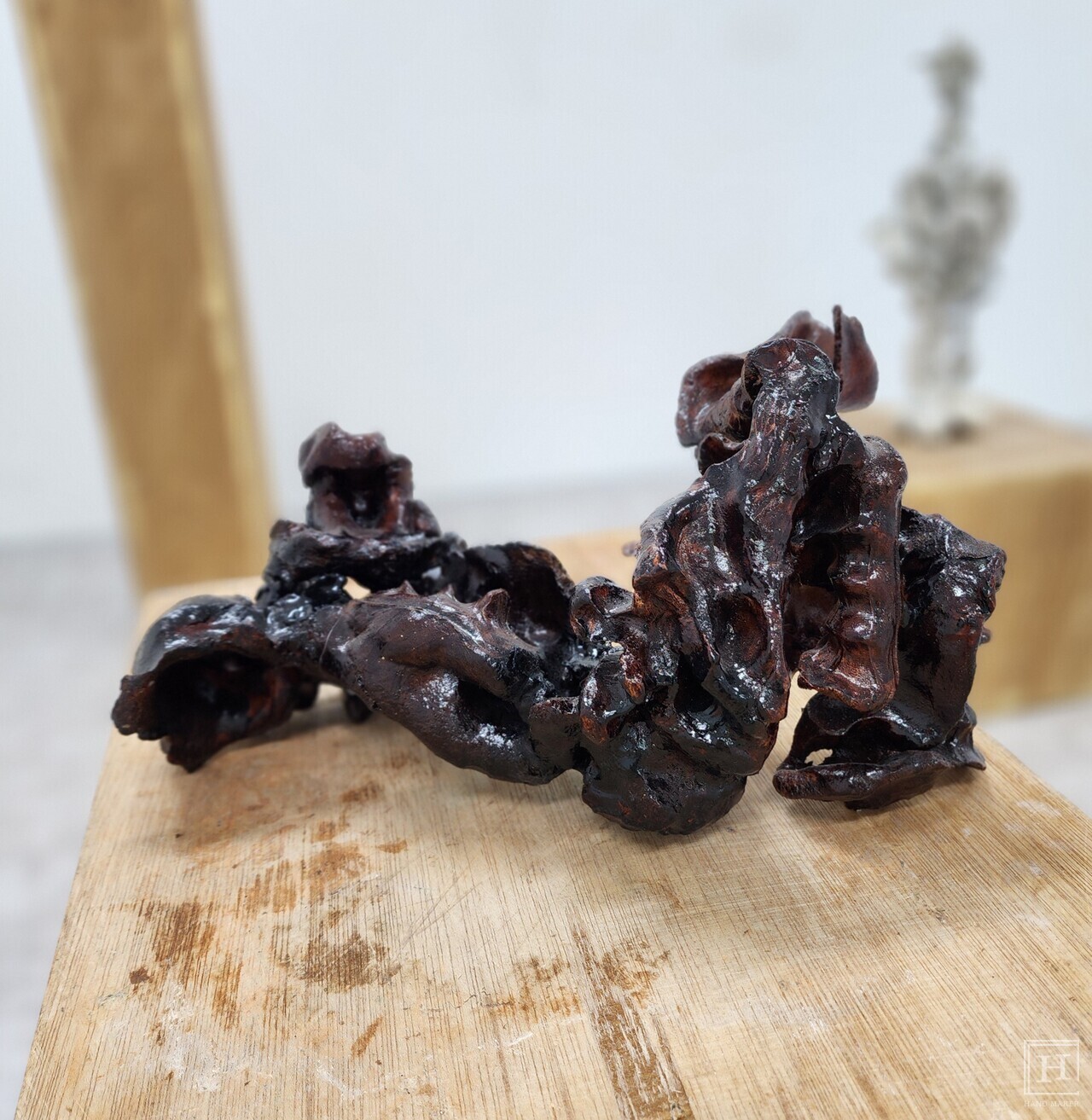
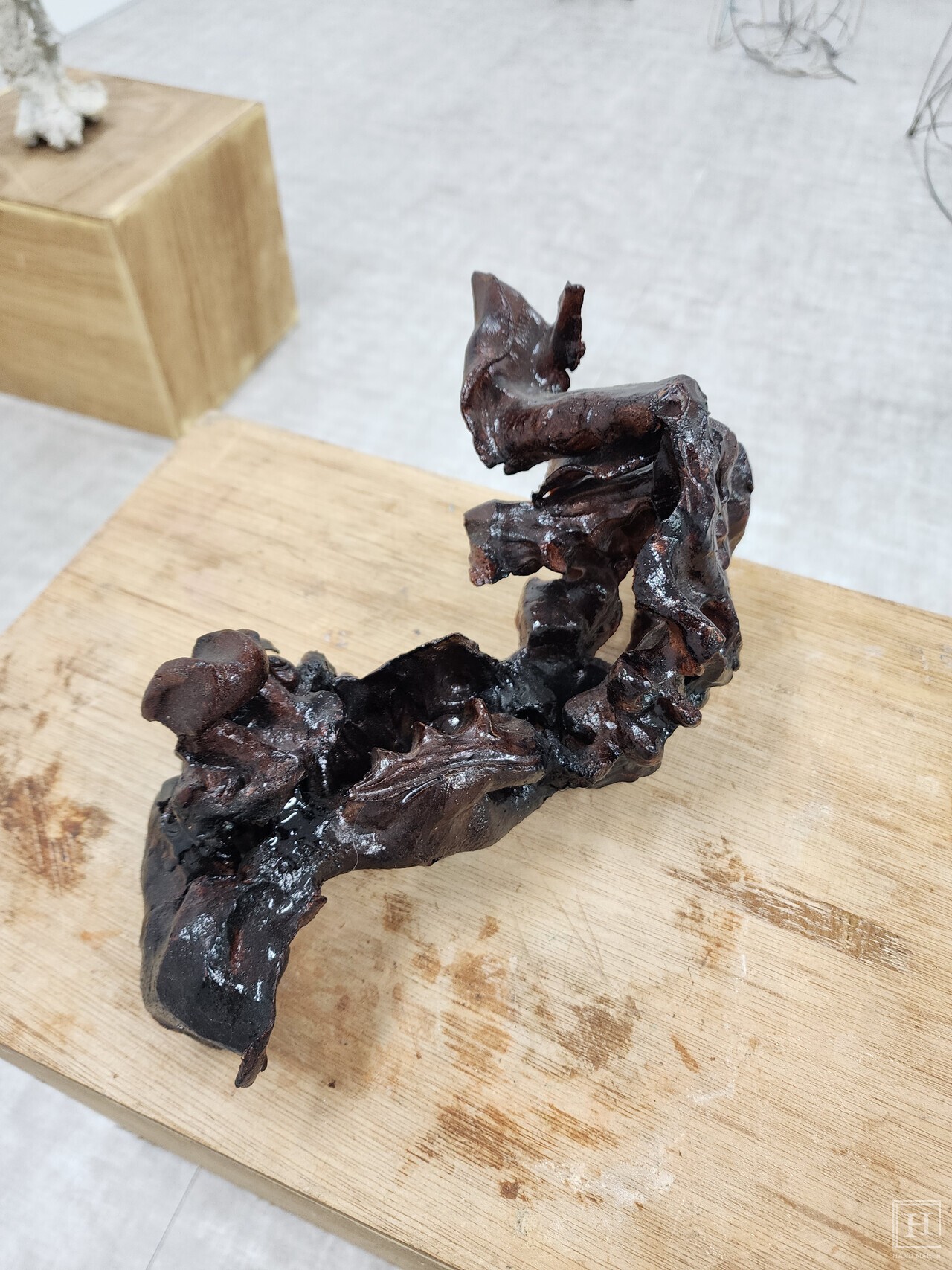
The works abstractly capture the appearance of a seated body. Both pieces seem to show a body curled up with arms and legs bent, but it is difficult to clearly distinguish which part is an arm or a leg. 〈Seated Figure II〉 is positioned low on the floor, while 〈Seated Figure III〉 appears as if several body parts are intertwined.
In particular, the curves where parts of the body seem pressed and folded convey the pressure and weight applied to the body when taking a sitting posture.
What is important to the artist Paideia is not the realistic reproduction of a person sitting, but the traces left by the body while assuming that posture. The fragments created as clay and the body touch each other connect to form a single shape, containing the sensations of the moment the body was bent and supported its weight. Even the sitting postures we take casually in daily life become special records showing the existence of the body through the artist's hands.
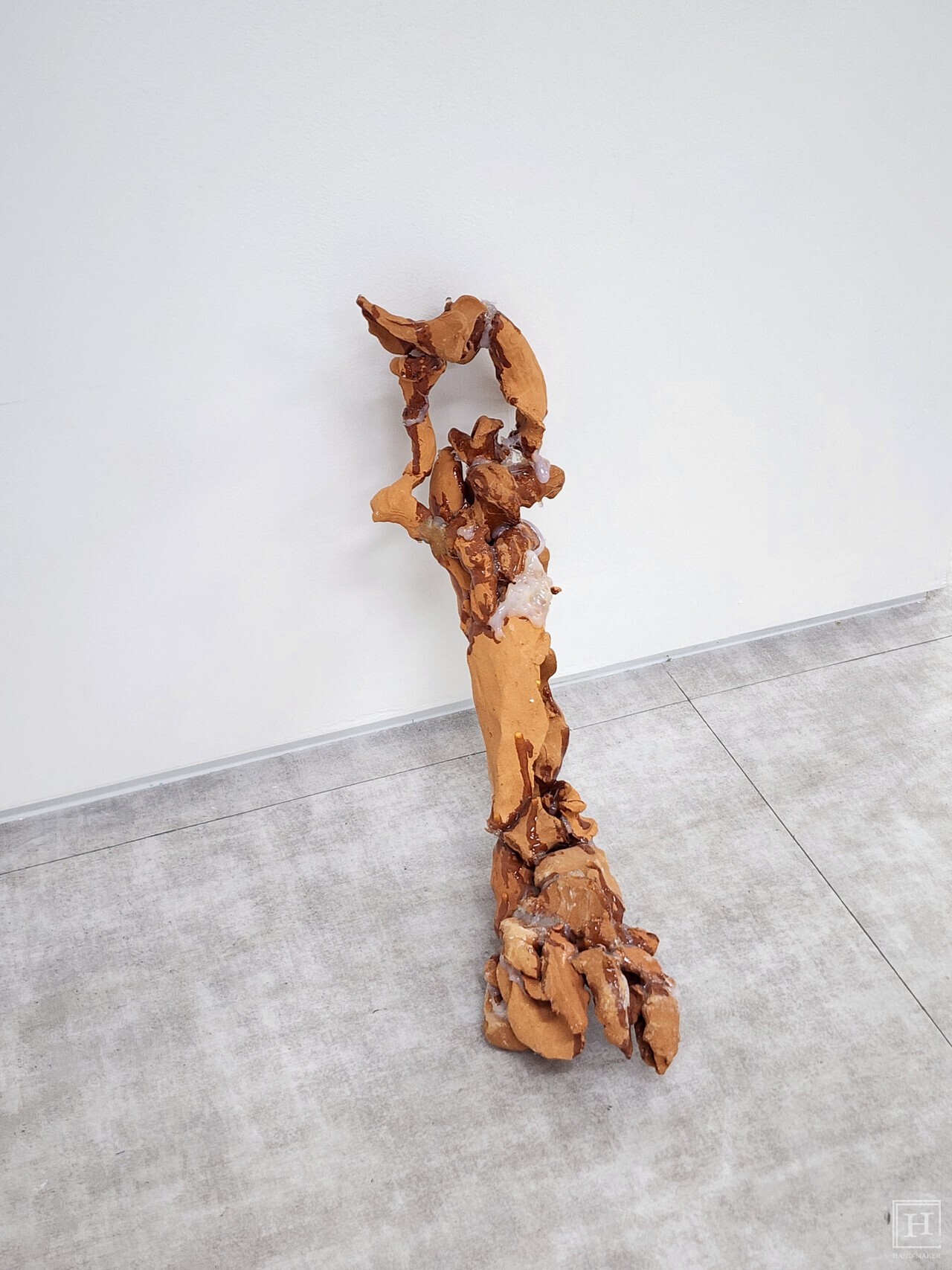
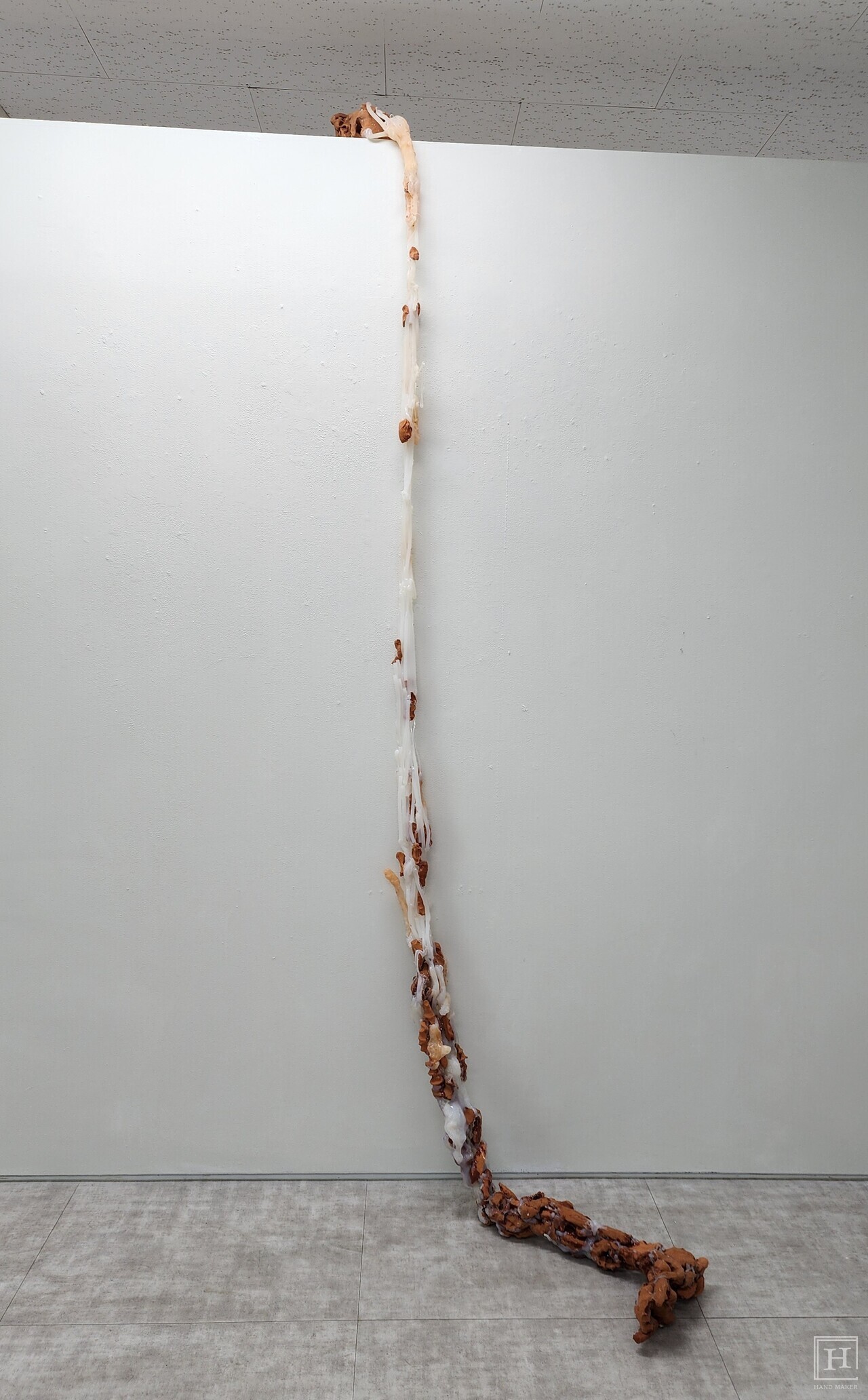
In these two works, the legs are expressed using clay, glue guns, and other materials. Compared to other works, they feel more realistic, and when connected to the title 〈Mommy Long Legs〉, it becomes startling. This is because the word 'Mommy' is usually interpreted as 'mother.' Referring to a mother's legs can be read as a metaphorical depiction of a mother's sacrifice or love.
Comparing this to the fact that the original title of the novel 《Daddy-Long-Legs》 is 'Daddy Long Legs,' one could also interpret it to mean that a mother, like 'Daddy-Long-Legs' who helps and supports someone from an unseen place, is also an existence that supports someone's life.
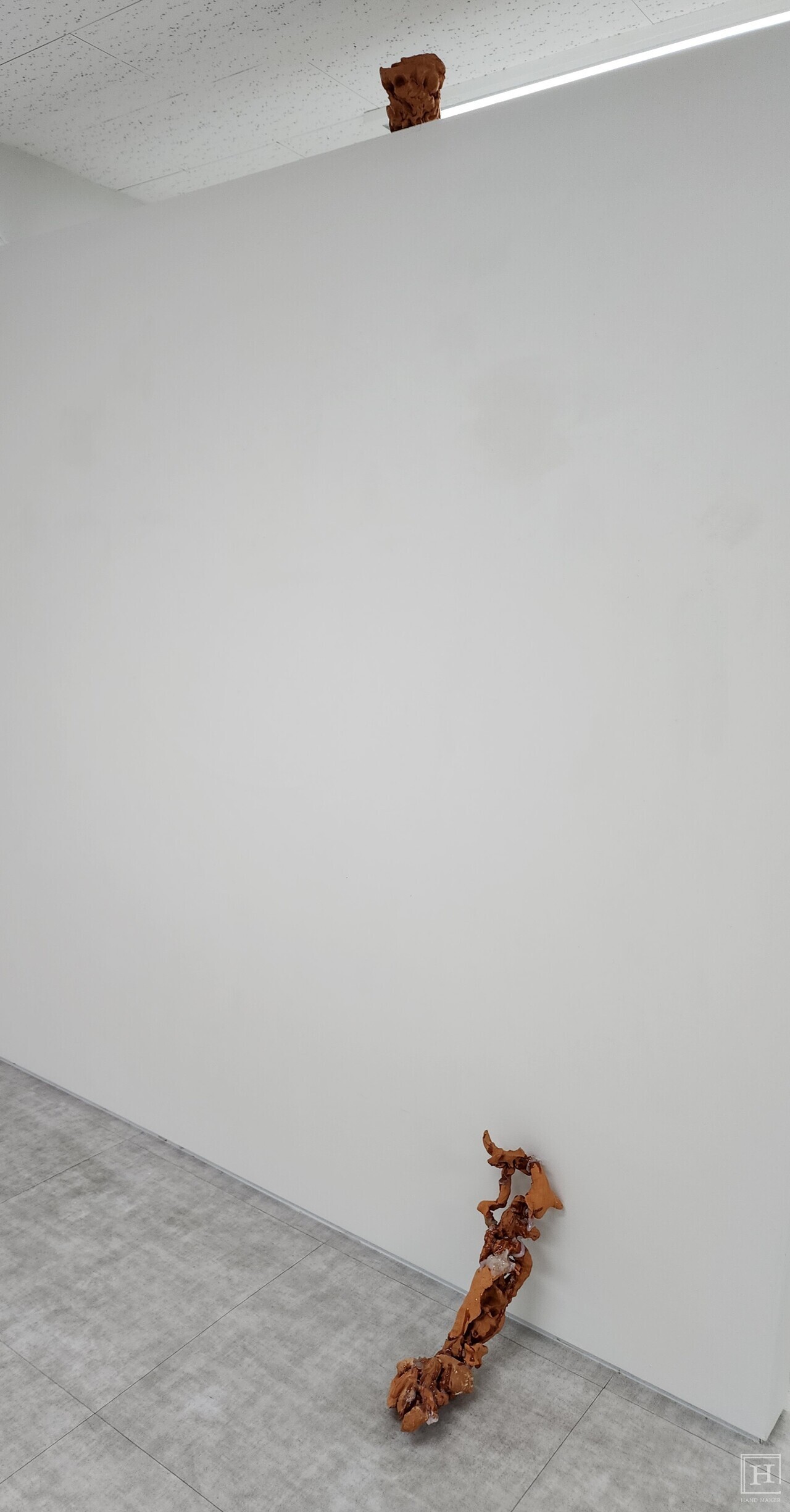
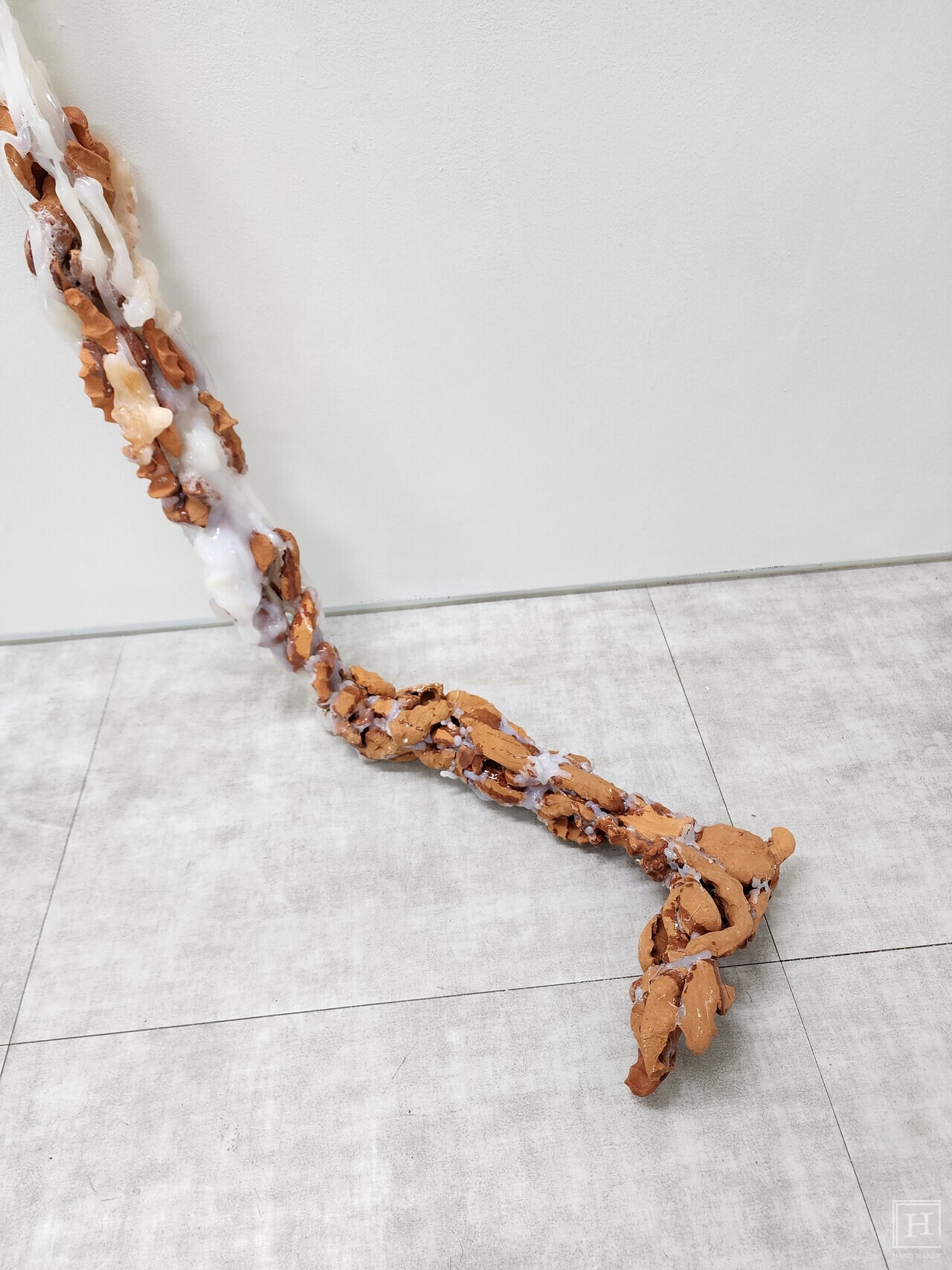
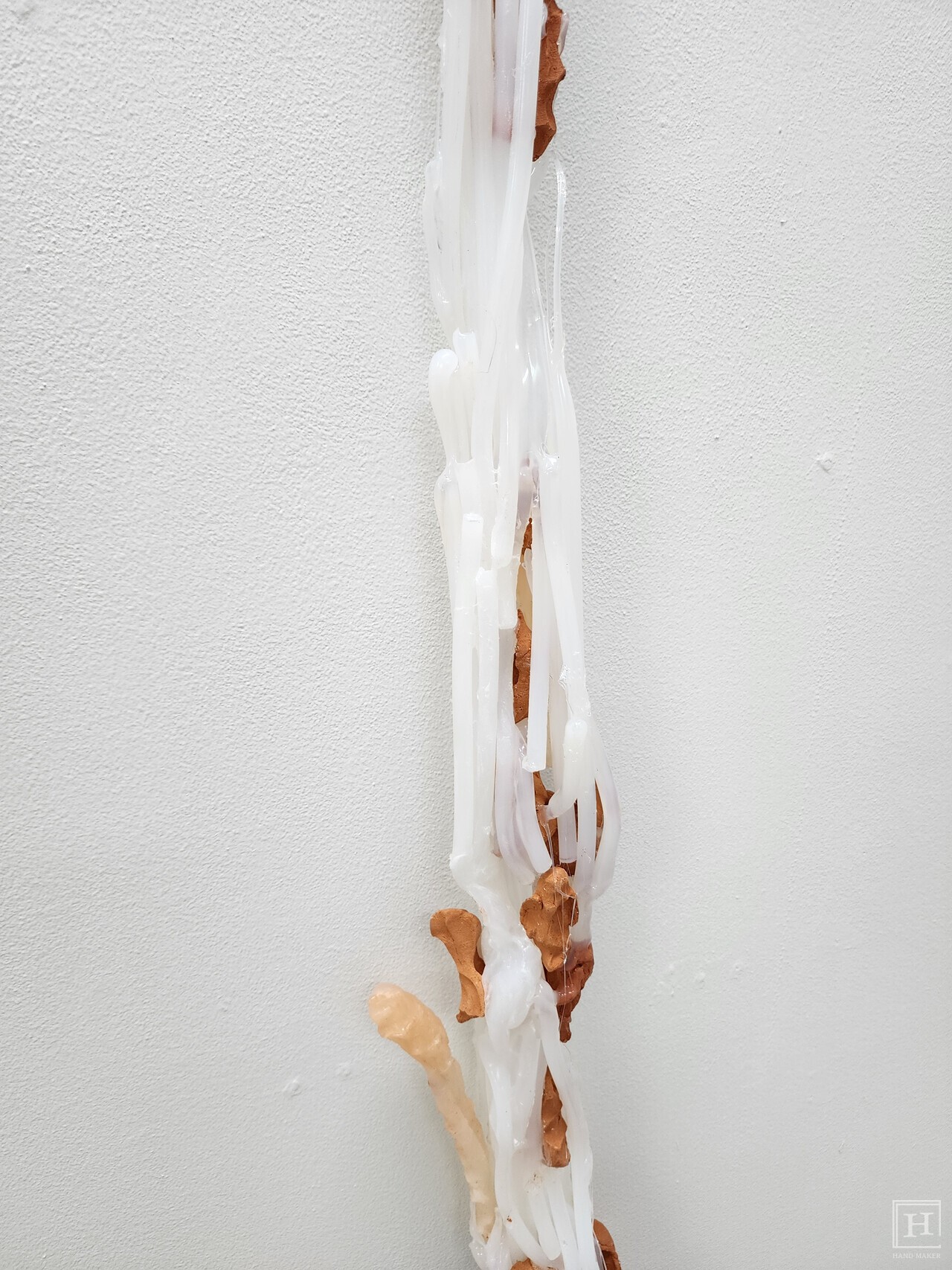
Separated by a single wall, one of the two legs is about the length of a calf below the knee, while the other side fills the wall as if artificially stretched long. The glue gun sticks connect the clay pieces like bones. The glue gun sticks connect the clay pieces like bones.
The irregularly clumped clay and the smooth, translucent connections are entirely different materials, but they hold each other to create one long leg. In particular, the form extending from the wall to the floor appears precarious, as if it might break at any moment, yet it ultimately maintains its shape.
The artist Paideia's work philosophy is revealed in the way the clay pieces containing traces of the body connect to create a new body. Even if it does not possess a complete human form, it seems that the traces of the body's existence and the force of supporting each other remain within it.
The sight of clay fragments, once scattered like shards, coming together to form a single body feels somewhat unfamiliar yet evokes a strange sense of vitality. While not a smooth and perfect physique, every uneven curve and hollowed trace holds the accumulated sensations and time of the moments when the body made contact. These traces feel even more meaningful when considering the artist's experience of seeking to confirm their own existence in an unfamiliar environment. Perhaps for the artist Paideia, sculpture is not merely the act of shaping the form of a body, but another way of leaving a record that they existed here.
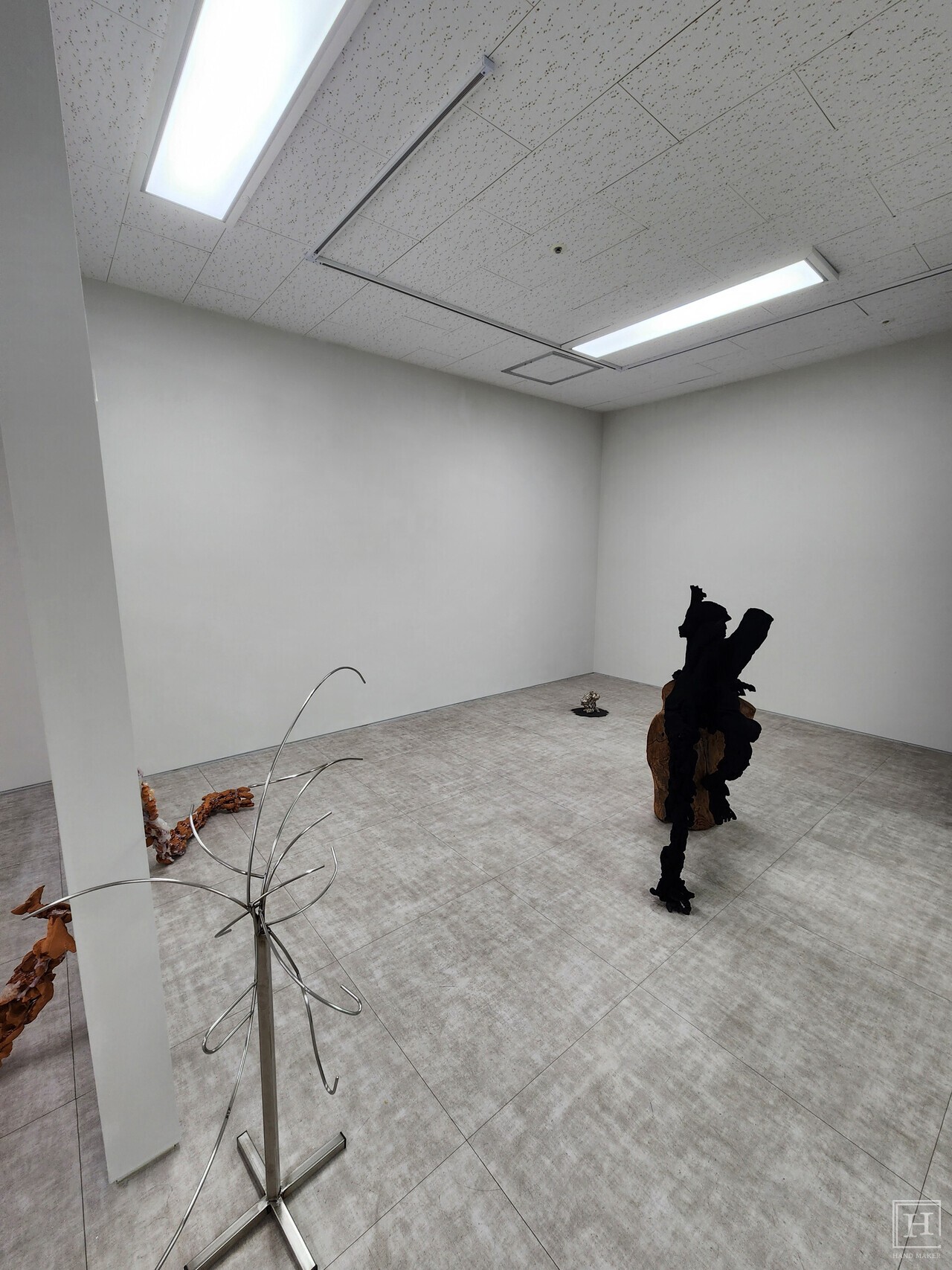
The exhibition continues until the 28th. Gallery Color Beat is open from Tuesday to Saturday, from 1 PM to 6 PM. It is closed on Sundays and Mondays.
Reporter at HANDMAKER (핸드메이커), a Korean magazine devoted to crafts and handmade culture. Covers exhibitions, design and the people who make things by hand.
Comments 0
Comments are currently disabled.