
Lee Myung-ho explores presence and absence at Gallery Hyundai
Lee Myung-ho is holding his solo exhibition "(no)thing" at Gallery Hyundai, which features his recent works and expands his "Photography-Act Project" into historical and social realms.
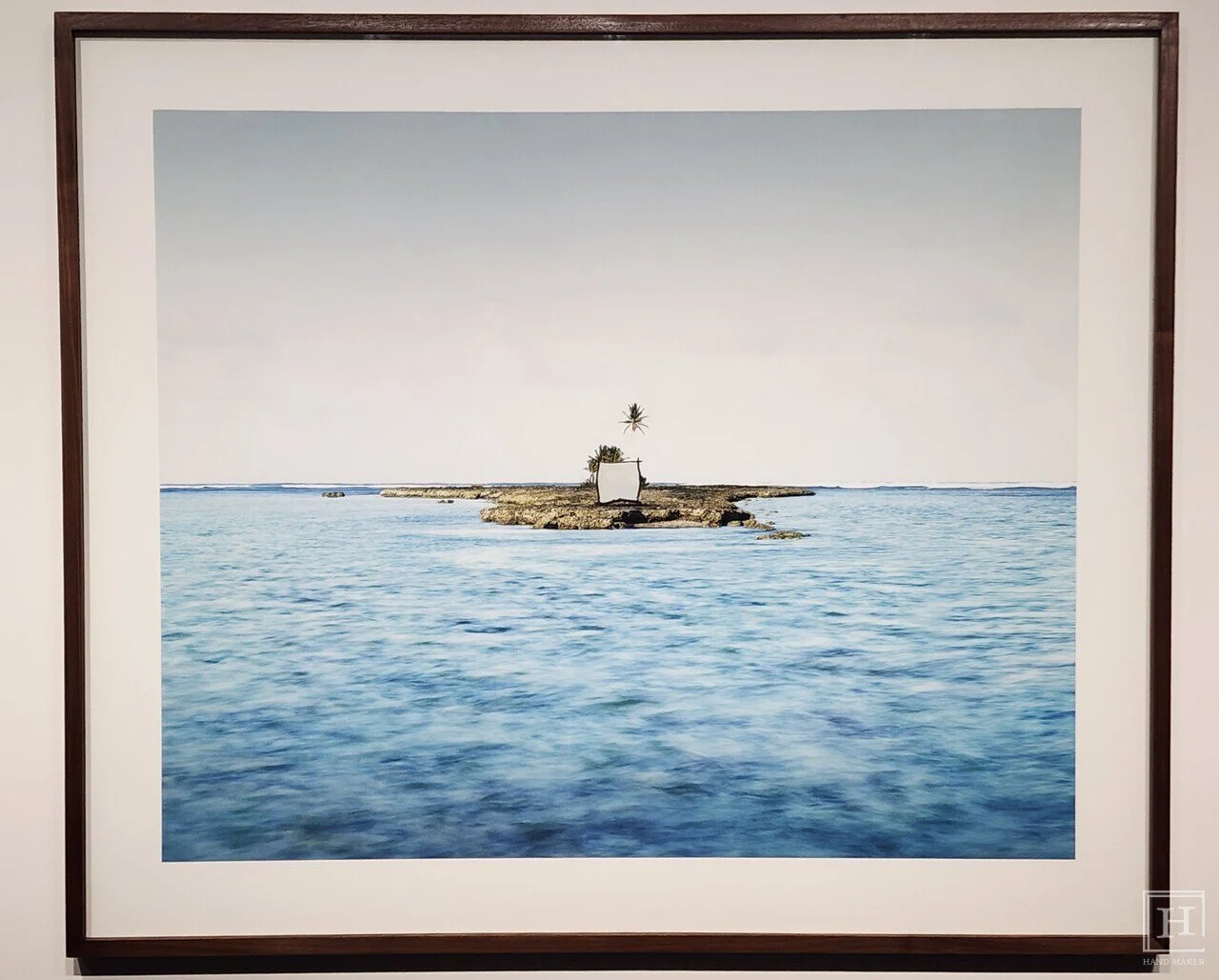
Lee Myung-ho's solo exhibition "(no)thing" has been held at Gallery Hyundai since the 29th of last month, featuring the 〈Kiribati〉 series which uses translucent coconut fiber to depict landscapes threatened by climate change.
In these works, the canvas that once made the trees in the photographs stand out now serves to obscure them. While the landscapes clearly exist, the structures installed in front of them hide parts of the view, evoking a future where these scenes might one day disappear. This is the work of Lee Myung-ho, which reveals presence through photography while simultaneously speaking of absence.
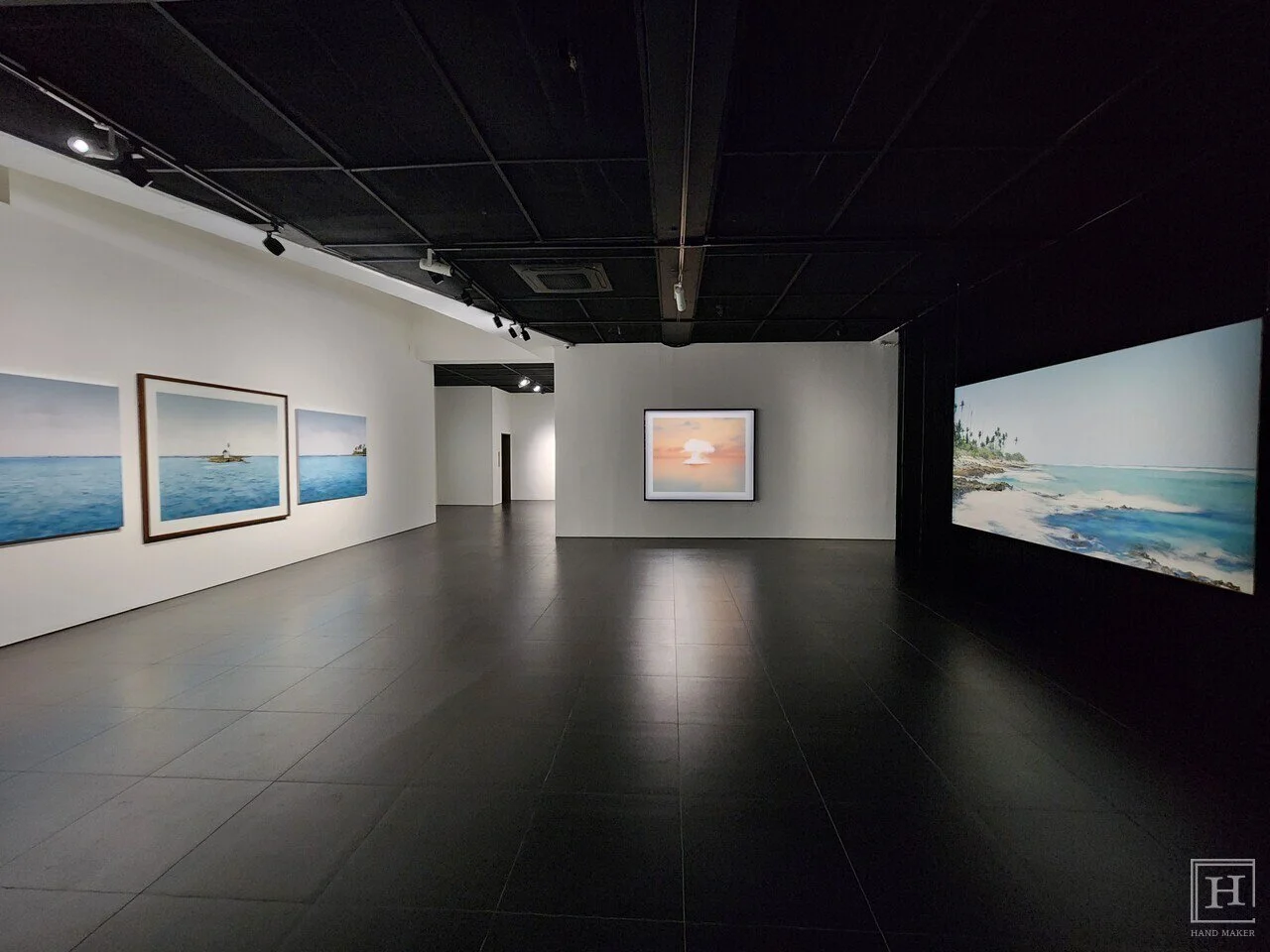
Gallery Hyundai has been holding Lee Myung-ho's solo exhibition "(no)thing" since the 29th of last month. This exhibition is being held alongside "Between or Beyond the Curtain and the Scene" at the Savina Museum of Contemporary Art in Eunpyeong-gu.
The exhibition at Gallery Hyundai focuses on Lee's recent works, such as 〈Kiribati〉 and 〈Heritage〉, showing how his artistic world has expanded into historical and social domains. The concurrent exhibition at the Savina Museum of Contemporary Art is a research-oriented exhibition that examines the creation, change, and expansion of the artist's "Photography-Act Project," which has continued since 2004.
Regarding this collaboration, Lee Myung-ho explained, "Museums and galleries have different characters. I thought this would be a good opportunity to fill each other's gaps, so we joined forces to prepare this exhibition."
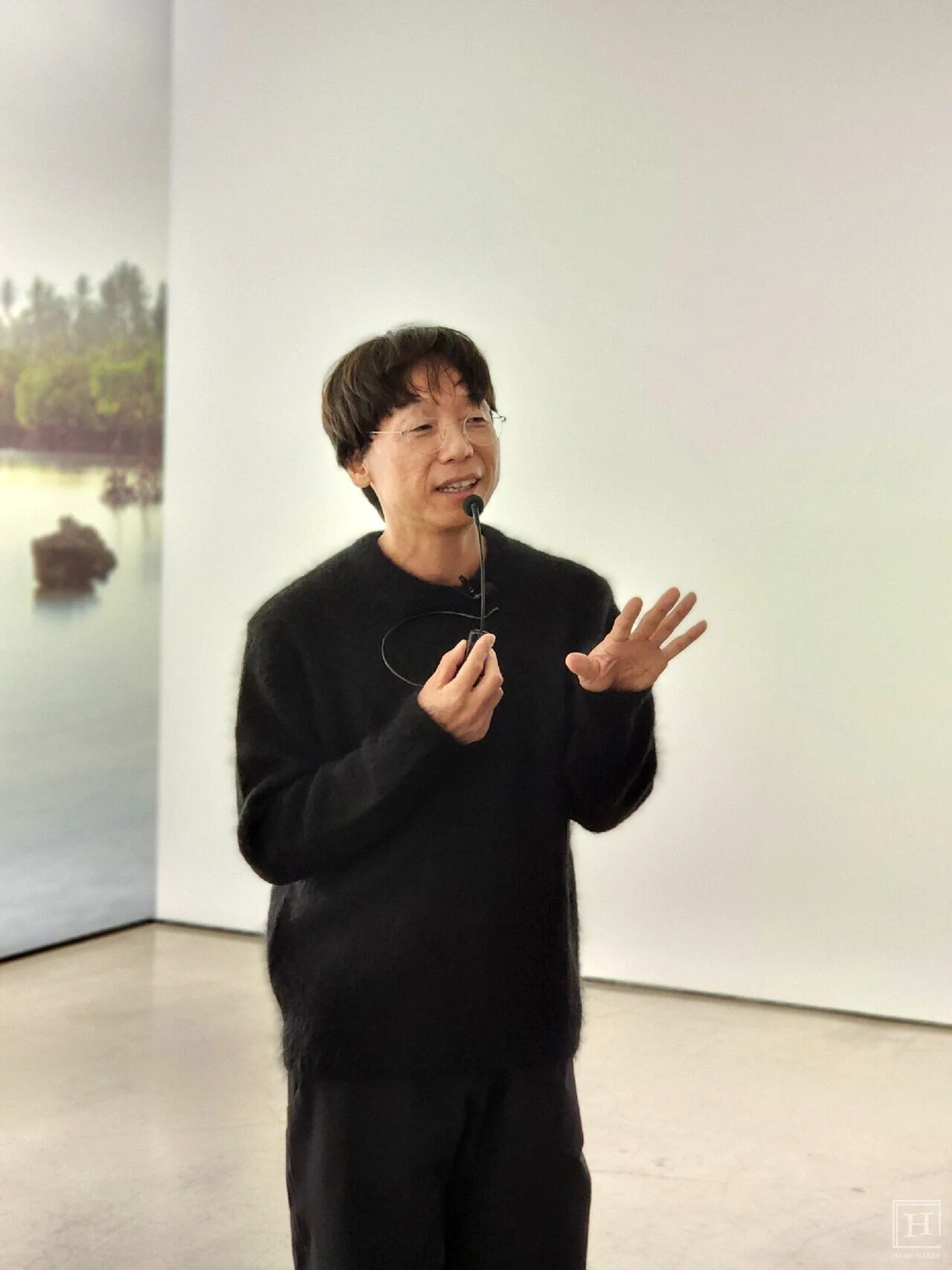
Above all, this exhibition is an extension of the "Photography-Act Project" that the artist has pursued since 2004. Starting from the question "What is photography?", this project does not stop at simply photographing the objects in front of the lens; it incorporates the artist's direct intervention in the landscape as part of the work.
A representative example is the work of installing large white canvases behind trees to reveal them as independent subjects, even though they were once part of the surrounding landscape. This is both a "representation" that shows existing subjects in a new way and a "re-enactment" that creates scenes that did not exist in reality.
"It is the process of turning the question of 'what photography is' into artwork," Lee Myung-ho said. "While I previously focused on work as pure art, the final stage is a step where I apply the artistic narrative of the Photography-Act Project to social discourse."
Such attempts in this exhibition lead to the 〈Kiribati〉 series, where habitats are threatened by climate change, and the pagoda tree at the site of Seonwonjeon Hall of Deoksugung Palace, which holds hundreds of years of history.
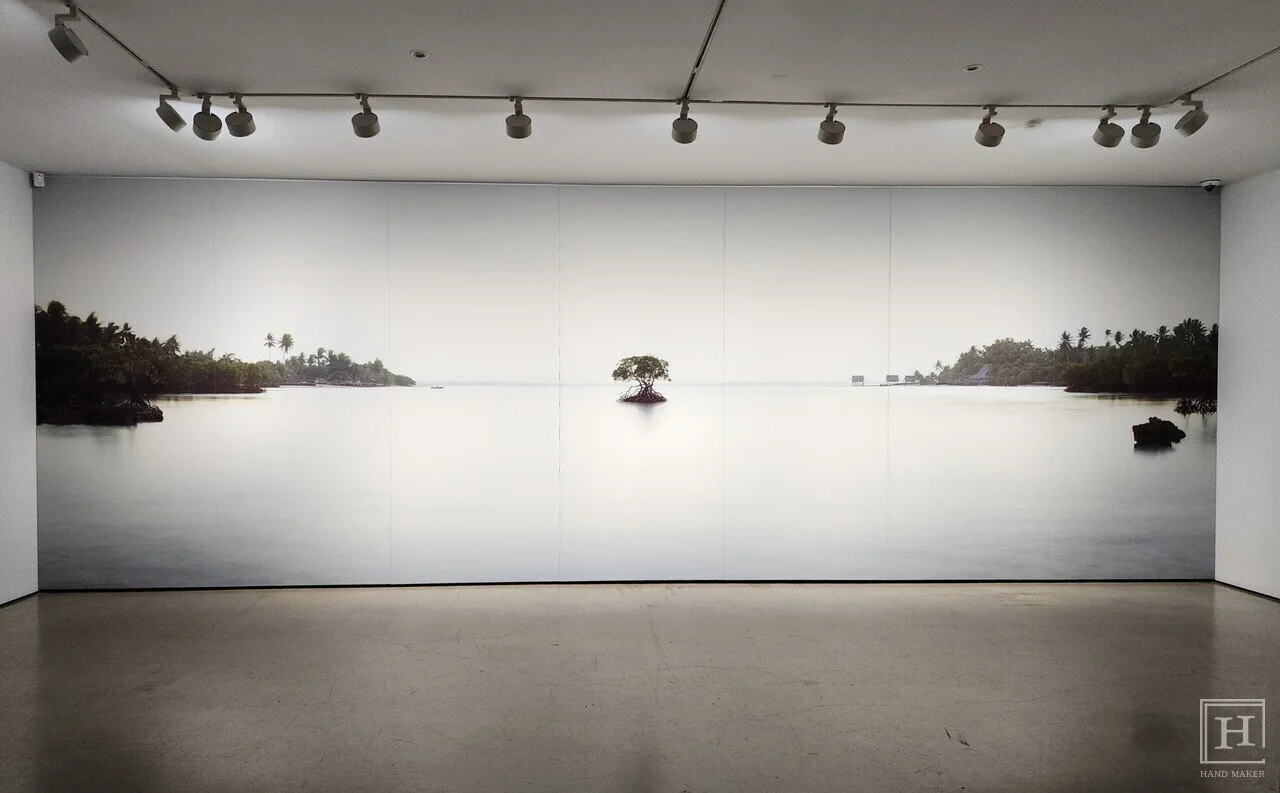
The exhibition can be viewed from the first basement floor to the second floor, featuring the artist's latest 〈Kiribati〉 series. Acting as a docent, Lee Myung-ho explained the background of his journey to the country of Kiribati.
"Kiribati might be unfamiliar. I first encountered it in the news in 2021; it is the country that will be the first to disappear from the earth due to global warming," Lee explained. "It is a strange place in the middle of the Pacific, where the Southern Hemisphere and Northern Hemisphere, as well as yesterday and tomorrow, coexist."
Kiribati is an island nation located in the Pacific, where its land and the livelihoods of its residents are threatened by rising sea levels. Lee Myung-ho focused not only on the natural environment there but also on the lives of the people living within it.
Regarding the reason for conducting photographic work in Kiribati, the artist stated, "I felt the lives of the island residents were very photographic. The essence of photography is to preserve time and space." He added, "It wasn't just a matter of artistic greed; I felt as if Kiribati called to me. I went there because of a certain attraction."
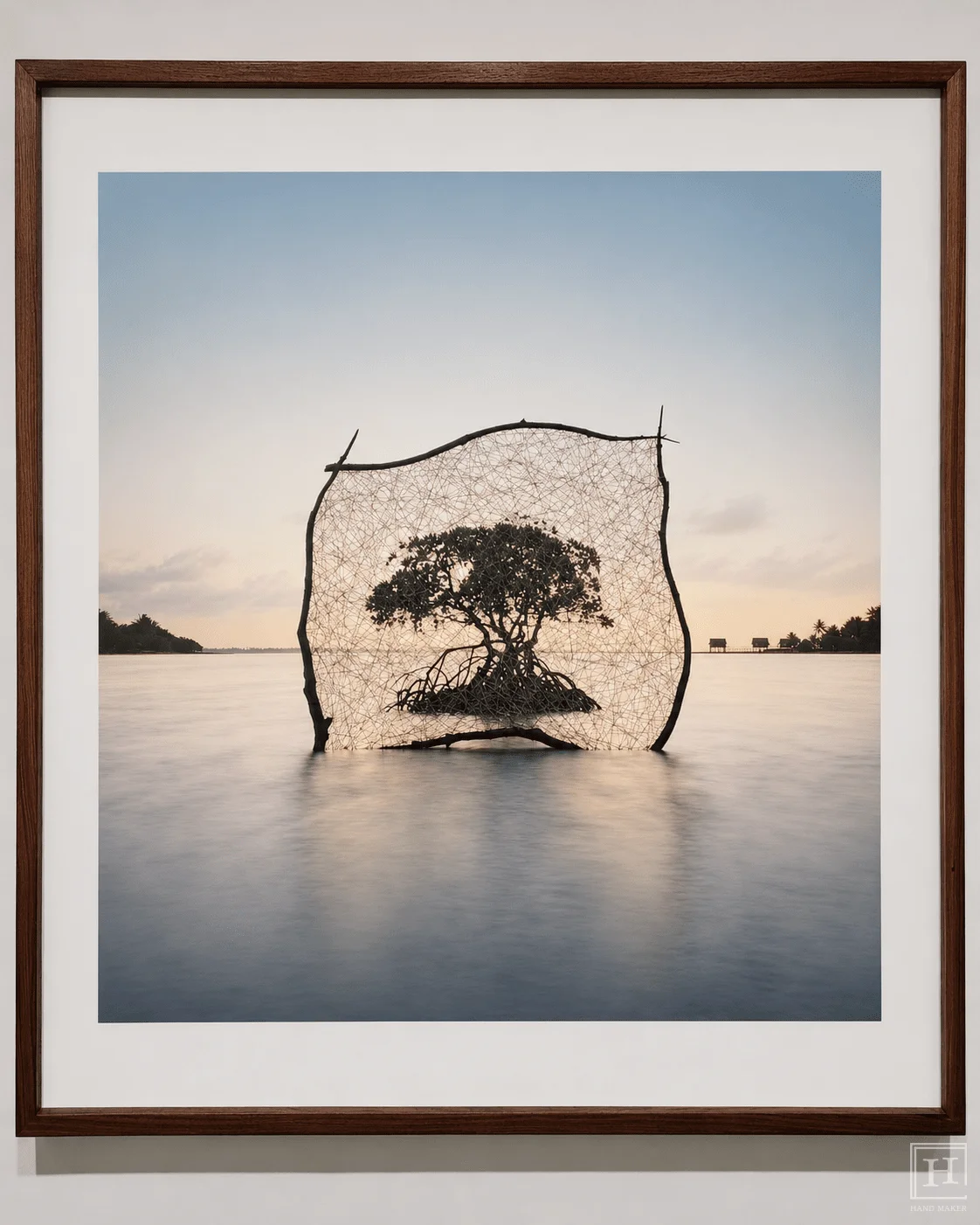
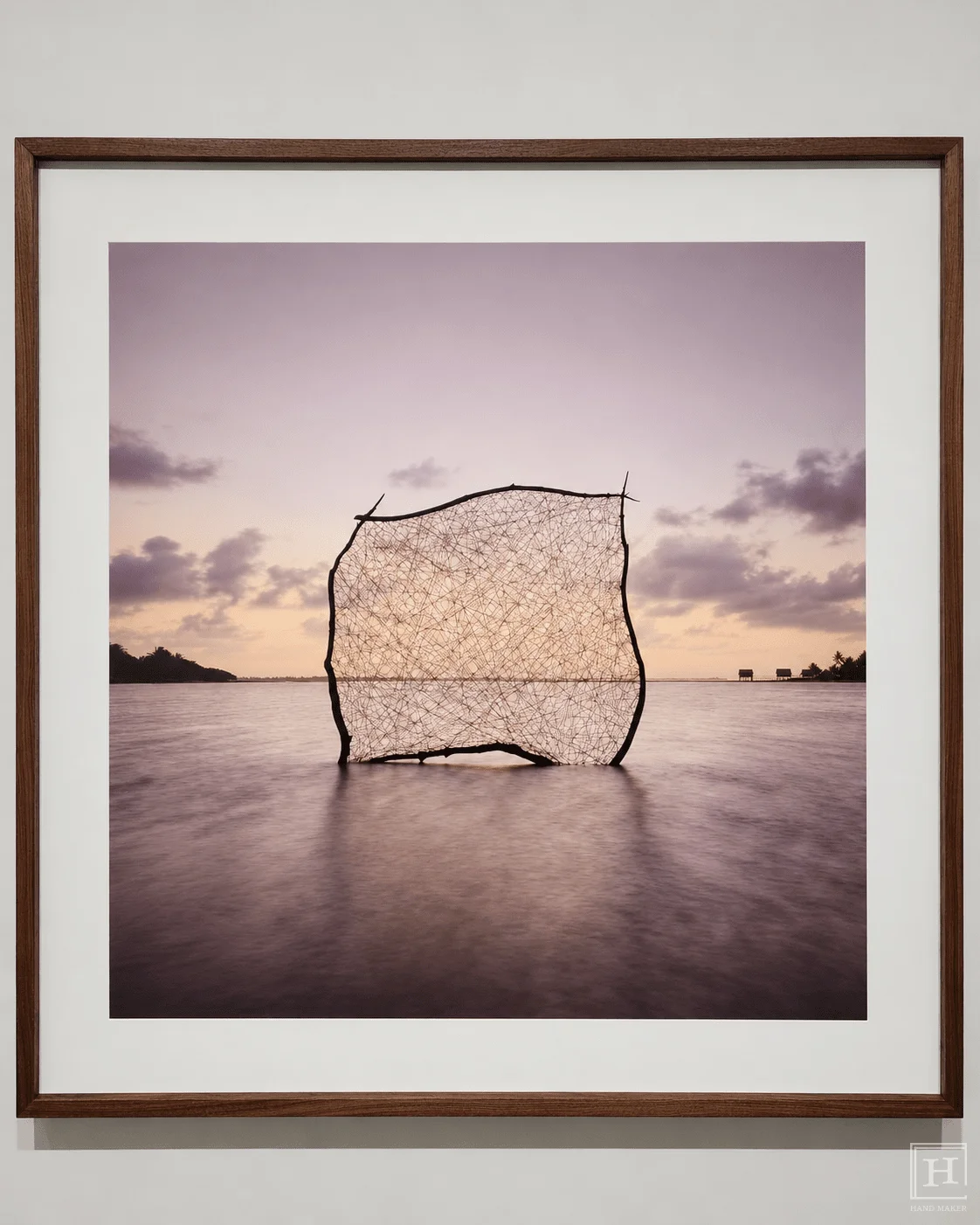
The trees in the works are mangrove trees, which actually exist. Because the water was not deep, he says he worked by entering the water during the ebb and flow of the tides. He made frames out of wood with local residents, loosely wove coconut fiber over them to create a single translucent canvas, and then took the photographs. This is an attempt to modify his existing method of placing a white canvas behind trees to emphasize their existence.
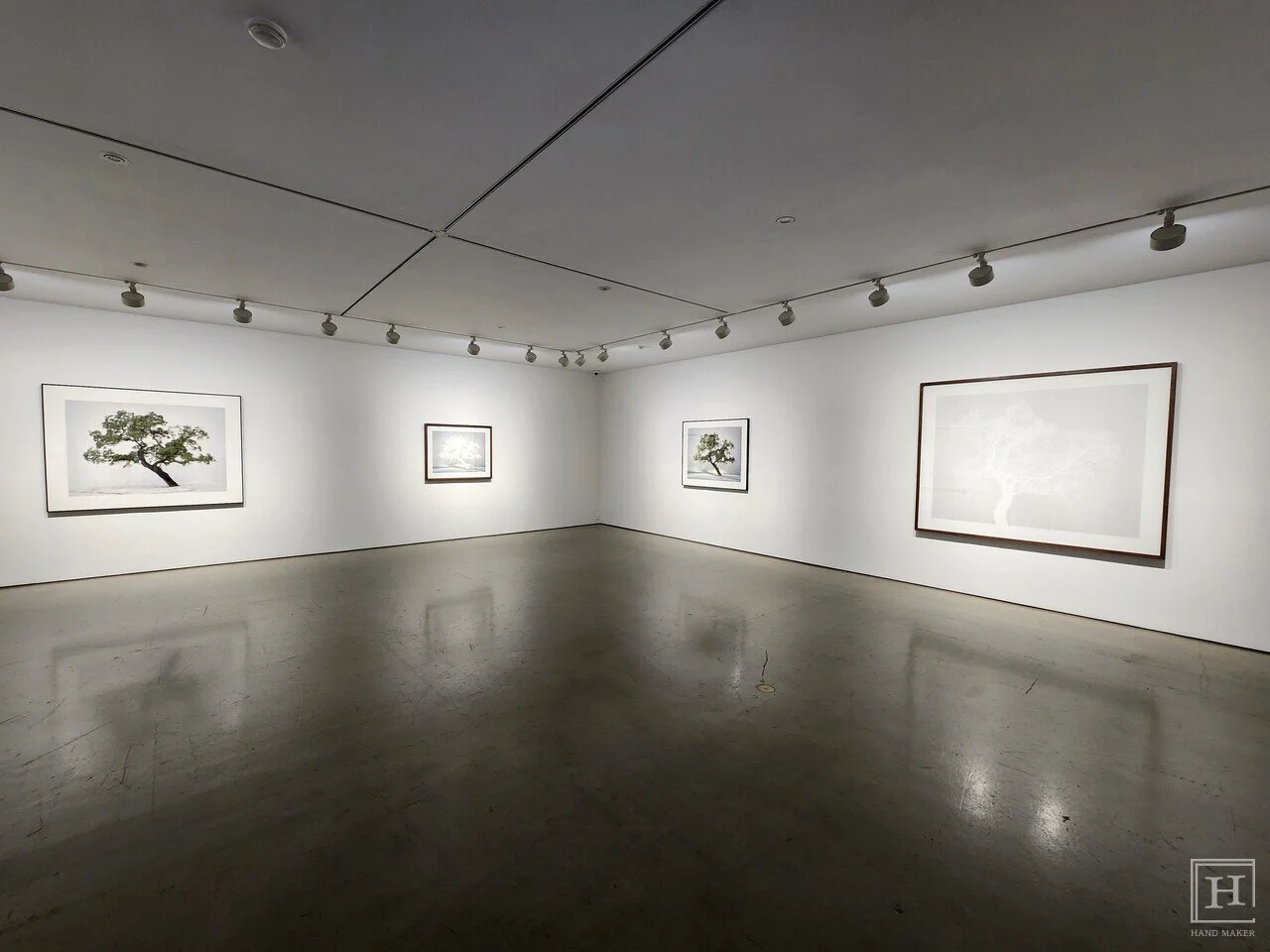
The two works were photographed in the same location by changing the position of the structure. If the structure is installed behind the trees, the mangrove trees are emphasized, but if it is moved to the front, the shape of the trees is obscured by the translucent fiber. Rather than removing the actual trees or compositing the photos, he created different scenes by changing the position of the structure.
Through this, he shows the possibility that the landscape existing before one's eyes now might disappear in the future. The canvas, which was installed to reveal the trees, conversely plays the role of obscuring them, thereby making one recall absence through existence.
These works also clearly reflect the artist's thought: "In the end, the more one tries to reveal, the more one subtracts, and conversely, the more one subtracts, the more is revealed; I am interested in that paradox." It suggests that not only the act of revealing something in a photograph but also the act of concealing and erasing can be a way to view the subject anew.
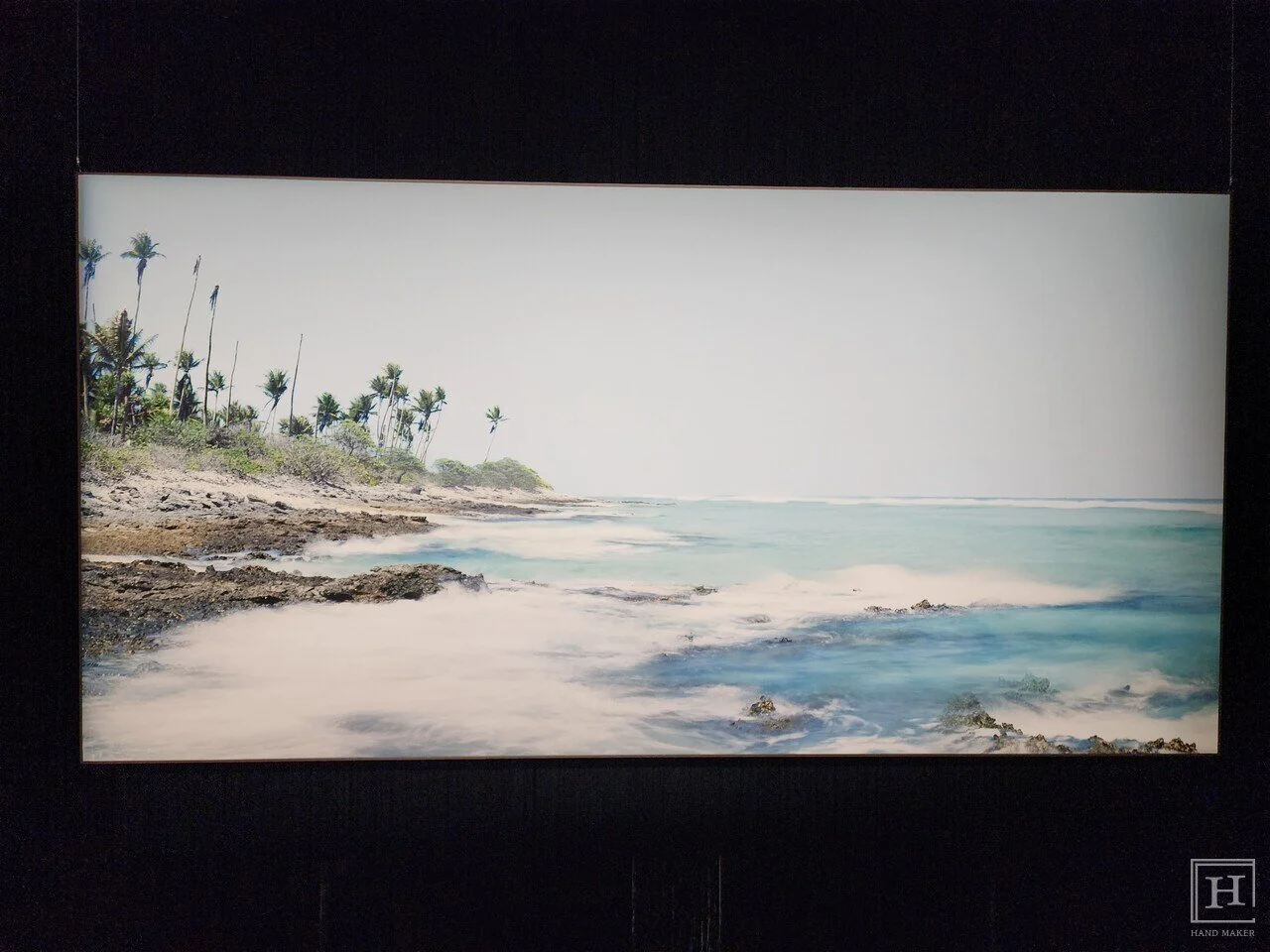
Descending to the basement, the seaside scenery of Kiribati unfolds behind a background where black lines hang like curtains. It is a landscape where one can almost feel the strong wind and rough waves just by looking at it. However, it looks more like a single painting than a photograph. This is because the artist printed it on canvas to bring out a painterly feel. Furthermore, through long exposure photography, he turned the white waves caused by the waves into traces that look like brushstrokes.
Lee Myung-ho explained, "Through long exposure, I wanted to give the feeling that the image is accumulating, placing it on the boundary between photography and painting," and "I wanted to make people chew over the story of photography and painting between the act of painting and the act of taking a photograph."
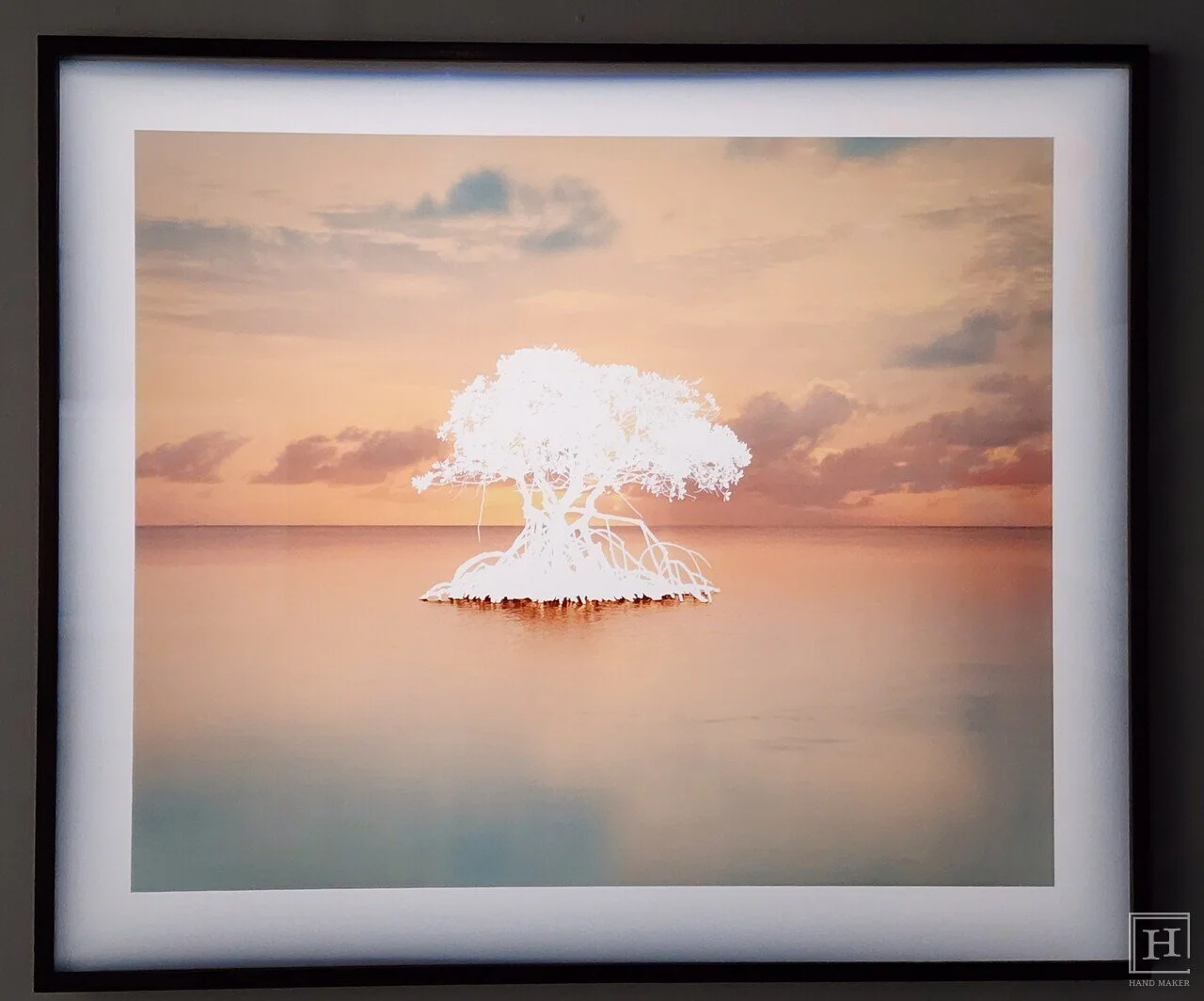
In the photograph, only the mangrove trees have disappeared, leaving only the background filled with a red sunset. This was printed using the pigment method, which applies ink to paper, and Lee Myung-ho scraped away only the trees with a knife. The artist explained that this is a performative act of revealing the appearance of the trees by removing them, much like proving existence through absence.
When asked by the reporter how long the work took, the artist said it takes about a week to a month, and if he scrapes incorrectly during the process, he has to reprint and start from the beginning. As this is being revealed for the first time in this exhibition, one could guess why the artist described it as "performance."
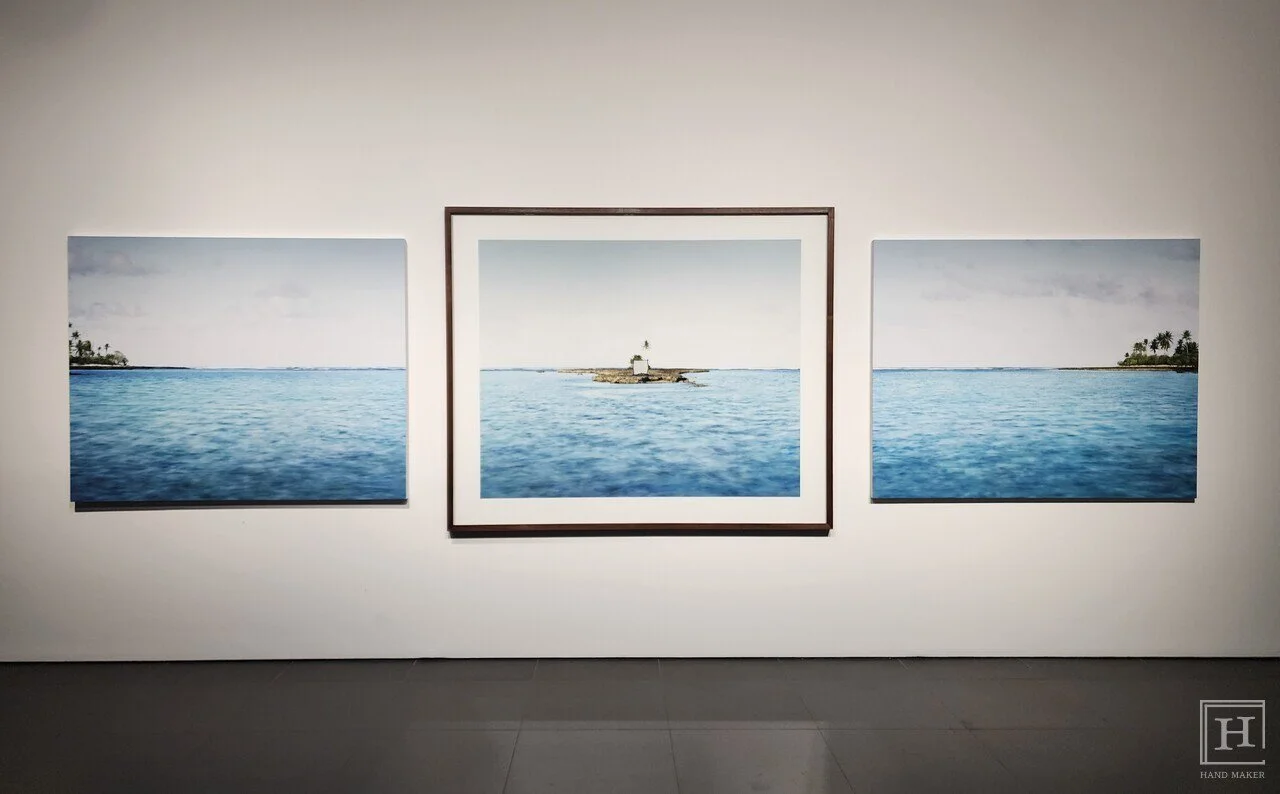
Among the side-by-side photographs, the work that emphasizes only the middle image with a frame also catches the eye. This is a visual expression of the act of detaching a single scene that the artist focused on from the entire landscape. In the middle framed photograph, a canvas in the shape of the wooden frame used by the artist is placed. It gives the impression that only the canvas part was cut out and erased using an editing program.
Lee Myung-ho explained, "I think the act of taking a photograph is an act of briefly dipping film into a point in time and space and then pulling it out," and "I staged it as a metaphor for the act of detaching a single point that the artist focuses on within the context of the entire landscape."
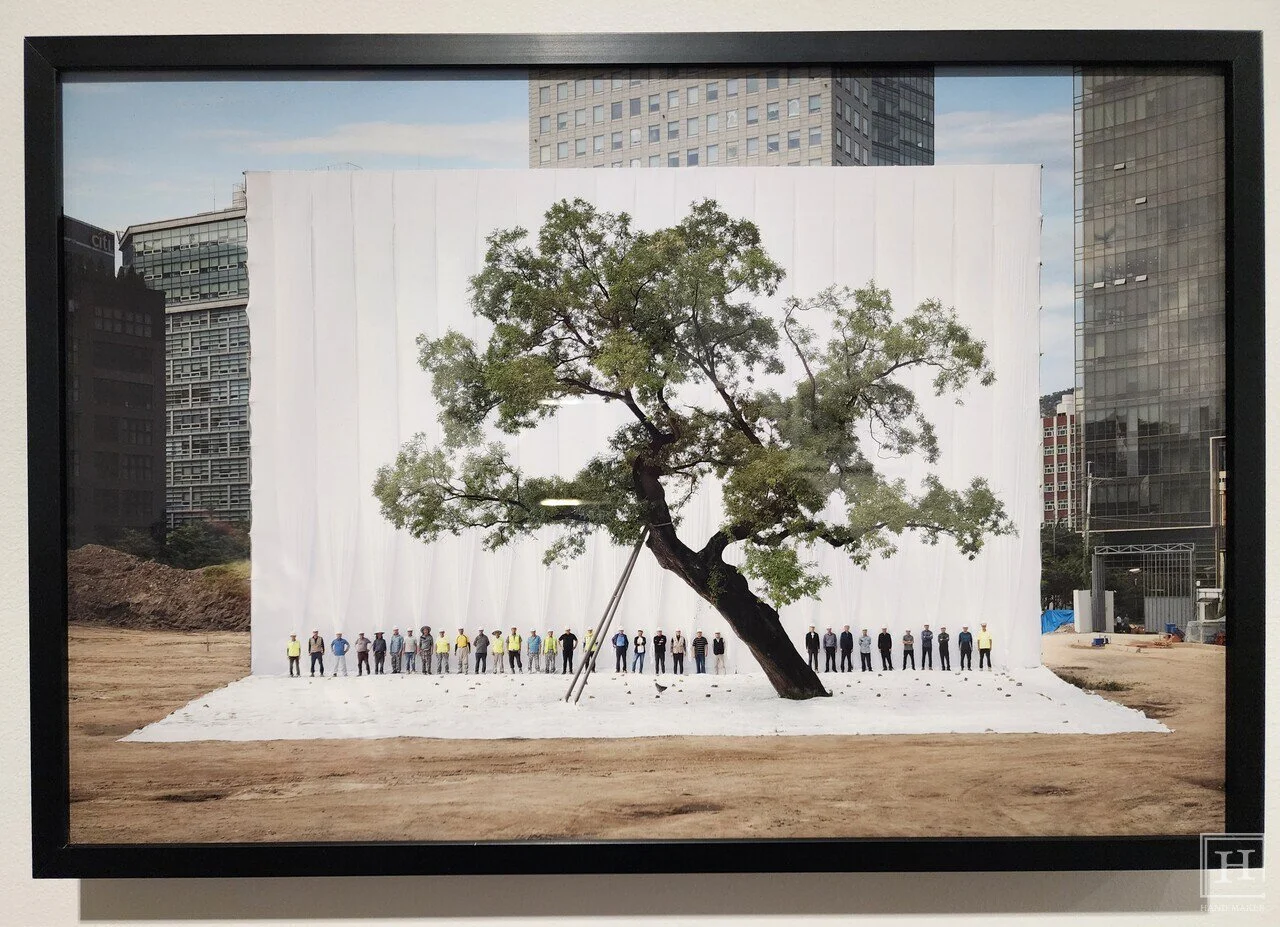
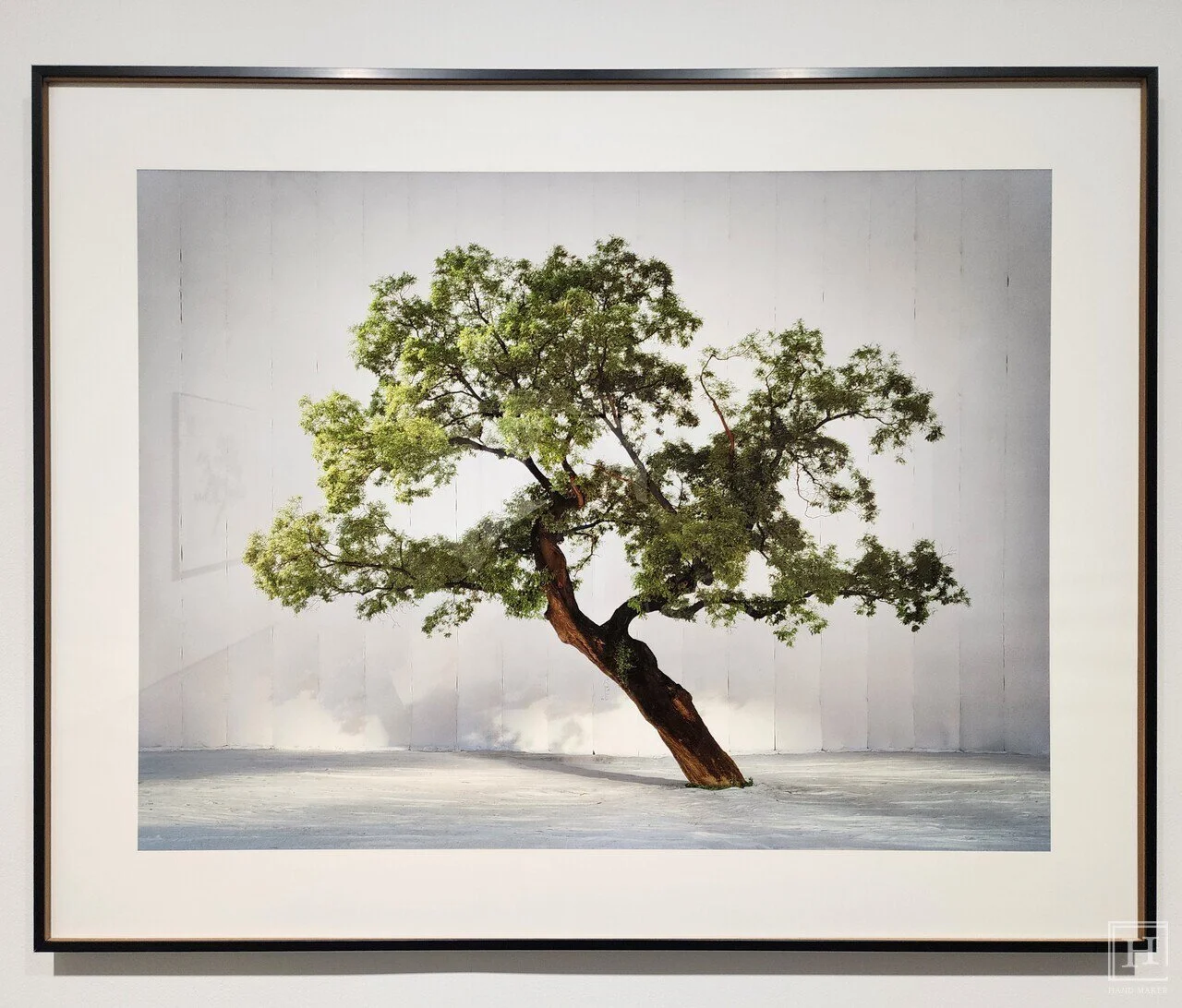
On the second floor of the exhibition hall, visitors can encounter the 〈Heritage〉 series, which captures the pagoda tree at the site of Seonwonjeon Hall of Deoksugung Palace. While his previous work captured the landscapes of Kiribati at risk of disappearing due to climate change, the Heritage series looks back at history through a tree that has held its place for a long time.
The start of the Heritage series was an art fence project conducted at the Seonwonjeon Hall of Deoksugung Palace restoration site in 2024. At the time, Lee Myung-ho, who was serving as a public relations ambassador for the Korea Heritage Service, was asked to artistically decorate the fences at the restoration site.
Seonwonjeon Hall of Deoksugung Palace was a space where the royal portraits of kings were enshrined; it was demolished during the Japanese colonial period and is currently undergoing restoration work. There is a single pagoda tree here that has held its position for about 250 years. It is a tree that has witnessed the changes in Korea's modern and contemporary history through the Korean Empire, the Japanese colonial period, and the period after liberation.
Lee Myung-ho recalled that when he first visited the construction site, the pagoda tree standing alone in the empty lot where the building had disappeared left a powerful impression. He wanted to show the story held by the tree, which preserves a long history, through his work.
The artist created an L-shaped stage by installing a massive white canvas behind and on the ground around the pagoda tree. The vertical perspective signifies the king and the past, while the horizontal perspective signifies the people and the present. Through this structure where the two perspectives intersect, he intended to allow viewers to look at the past and present together.
Furthermore, the artist stood the site workers, such as stonemasons and carpenters participating in the restoration work, in front of the canvas and photographed them together. In this way, the pagoda tree that has held its place for a long time and the people restoring cultural heritage today are captured in a single photograph.
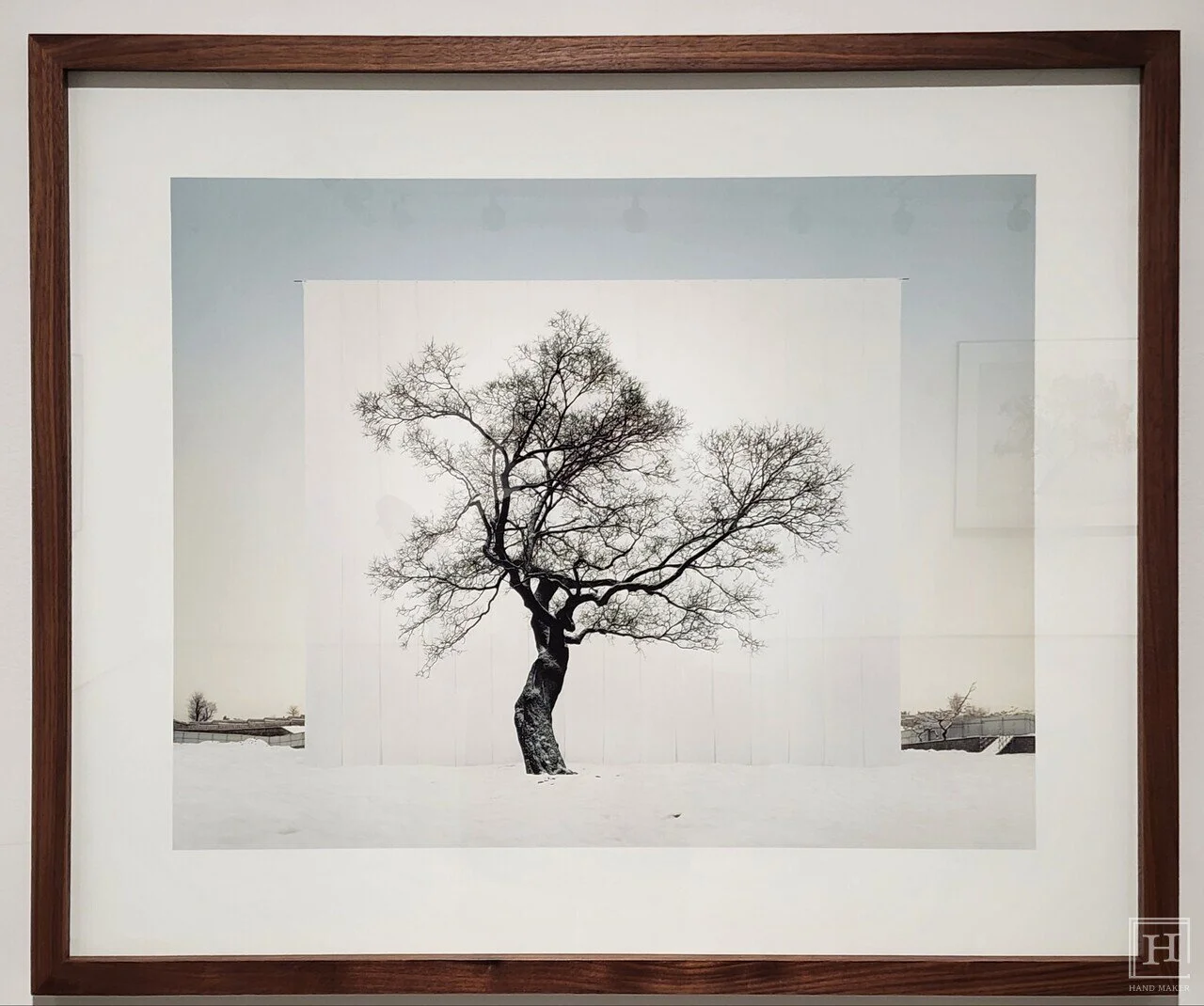
The work that began this way expanded in various ways, such as recording the changing appearance of the pagoda tree according to the seasons and weather, or scratching out the shape of the tree in the photograph or shooting from a top-down perspective. In that it makes one recall past landscapes that can no longer be seen through the remaining pagoda tree, the Heritage series also aligns with Lee Myung-ho's artistic world, which has explored presence and absence.
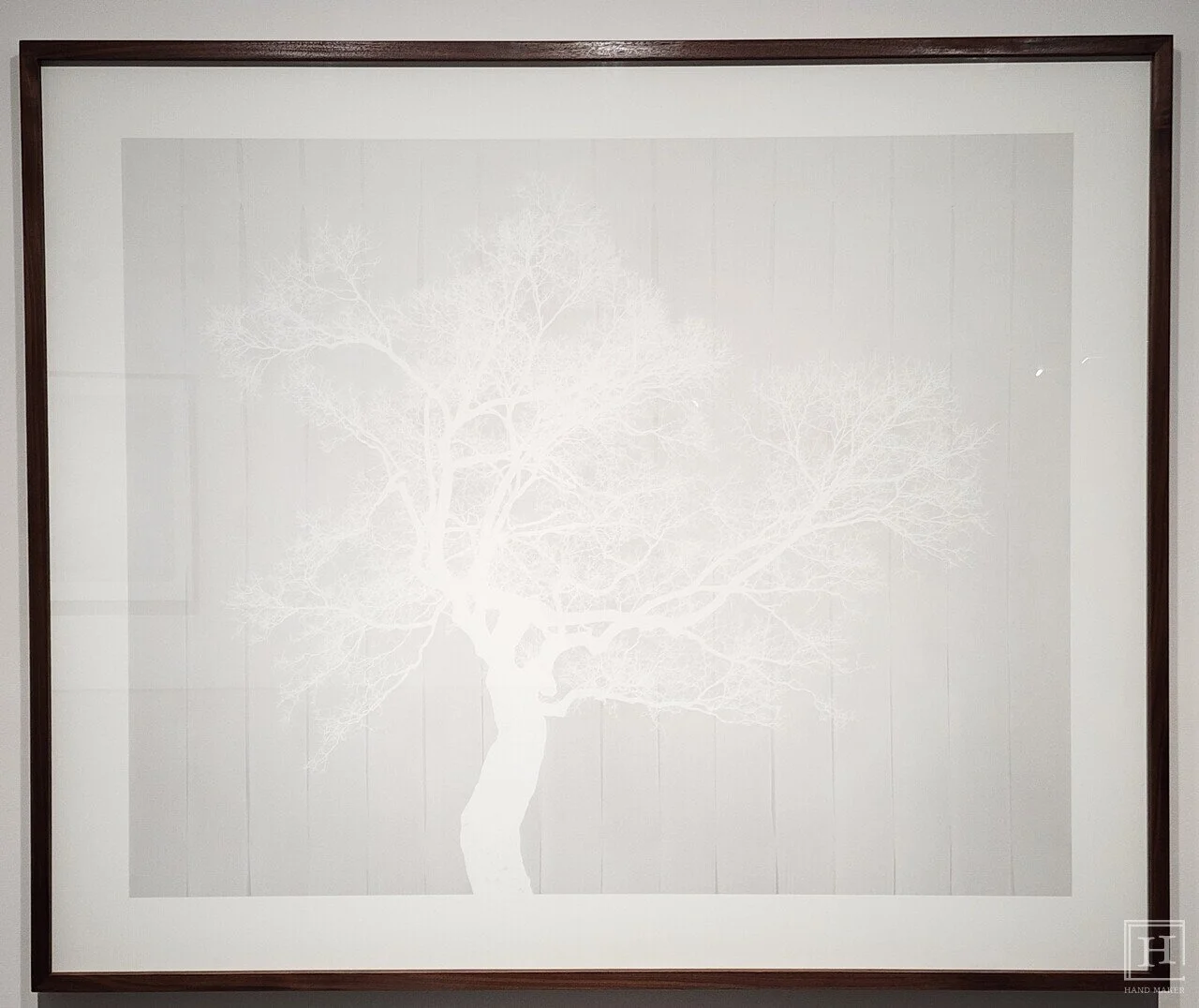
Lee Myung-ho also imbued special meaning into the direction in which he photographed the pagoda tree. This is because he believes that trees also have faces. He stated, “Trees have faces too. They generally face south, but this tree turned its face toward the east. There used to be Gyeonggi Girls' High School and Deoksu Elementary School here, and I think the tree turned its head in that direction because the students would come and go and say it was pretty.”
This is the artist's perspective of viewing the pagoda tree, which has held its place for a long time, as a living being. He explained that while coordinating opinions with the Korea Heritage Service during the process of deciding the shooting direction, he insisted on shooting from the direction the tree's head was facing.
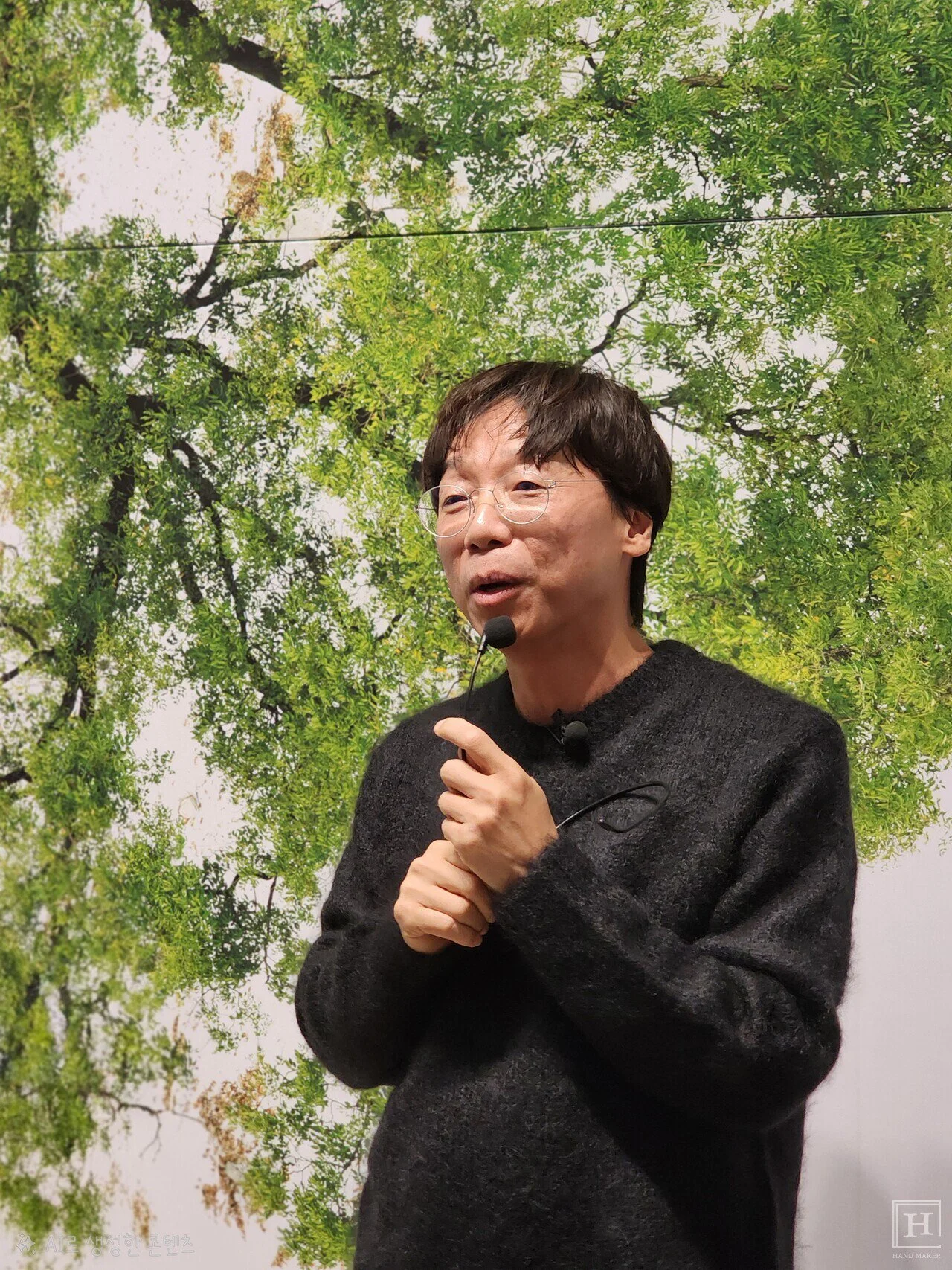
This project did not stop at leaving the pagoda tree as a work of art. According to Lee Myung-ho, at the time, the pagoda tree was not designated as a protected tree and was planned to be removed during the restoration process. However, as the tree became known following the project, the exhibition, and the publication of related books, people began to visit it, and ultimately, the tree was not cut down and remained.
The artist explained, “Because of the project, the exhibition, and the book coming out, the tree became so well-known that people came to visit. We didn't actually cut it down; instead, we did a lot of pruning.”
The pagoda tree, which has witnessed the changes in history over a long period, is recorded in photographs while simultaneously continuing another span of time by holding its place even today.
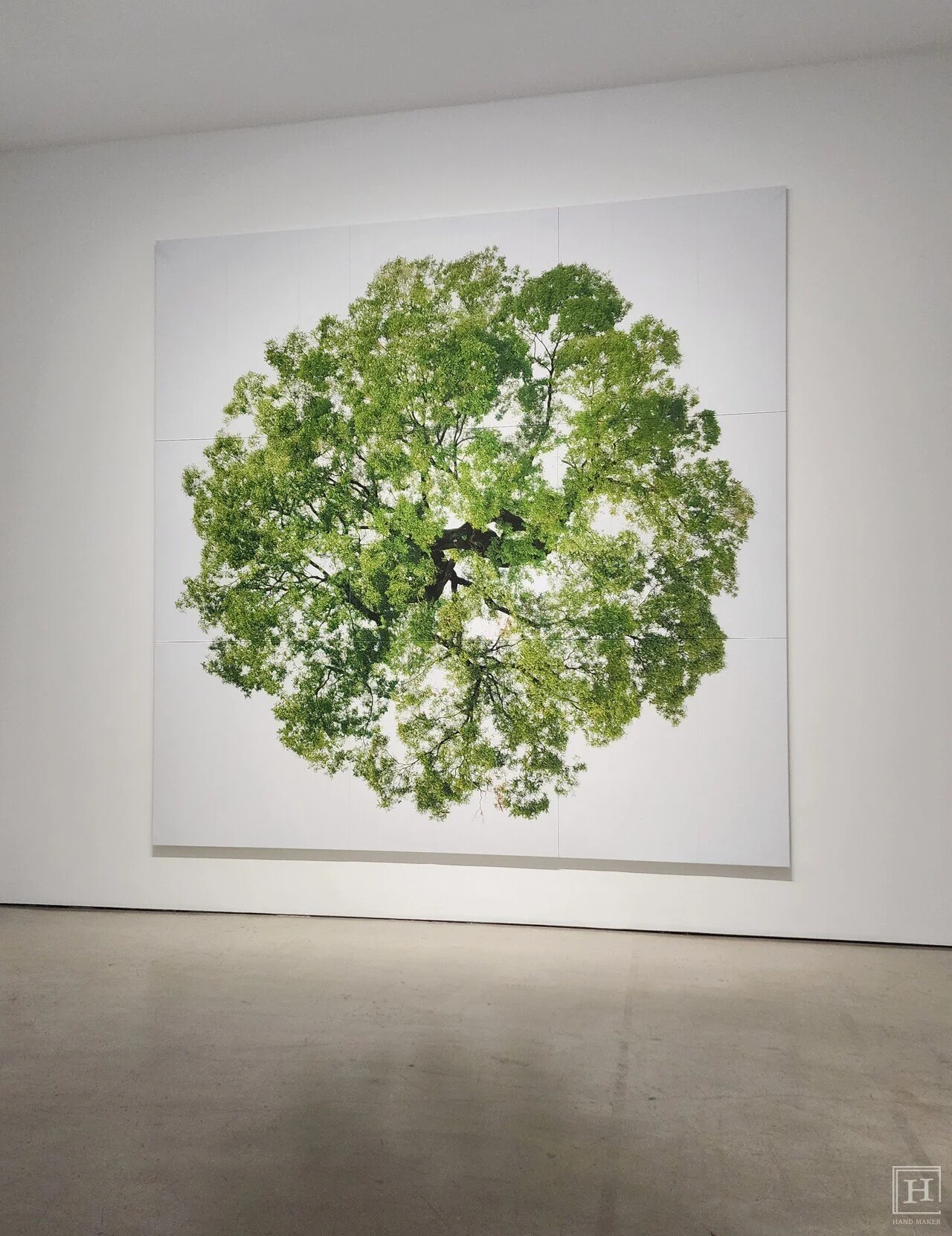
This work, which fills the gallery wall, is the result of the artist personally climbing onto a crane to photograph the pagoda tree from a vertical top-down view. It draws attention in that it changed the perspective of looking at the pagoda tree.
When a camera is held high, pointing downward, the trunks, branches, and leaves of a tree unfold across a single frame. The photographs taken in this manner are divided and arranged across nine canvases to complete large-scale works.
This method of looking down from above carries a special meaning. Artist Lee Myung-ho explained the vertical gaze as the gaze of kings and the past, and the horizontal gaze as the gaze of the people and the present. By connecting this to the history of Seonwonjeon Hall of Deoksugung Palace, which once housed the royal portraits of kings, he invites viewers to examine trees through these different perspectives to contemplate the past and present together.
Unlike when viewed from the front, a Chinese scholar tree looked down upon from above unfolds its branches stretching in all directions and its lush leaves like one large circle. It means that even for the same tree, a completely different appearance is revealed depending on the point of view from which it is observed.
Through photography, artist Lee Myung-ho newly reveals what exists and retraces the meaning of what has disappeared and what will disappear. His work goes beyond simple recording to pose questions about what we are seeing and what we are missing. The exhibition can be viewed until December 20. Gallery Hyundai is open from 10:00 AM to 6:00 PM and is closed every Monday.
Reporter at HANDMAKER (핸드메이커), a Korean magazine devoted to crafts and handmade culture. Covers exhibitions, design and the people who make things by hand.
Comments 0
Comments are currently disabled.