
Four artists explore modern Bojagi uses at Dambit Arts Warehouse
The special exhibition "WRAP: Food-Covering Cloth – Wrap, Cover, Seep In" is being held at Dambit Arts Warehouse Hall 2 until December 4. Four Bojagi artists are showcasing works that combine traditional fabrics with beeswax, inspired by the traditional food-covering cloth known as sikjibo.
The "WRAP: Food-Covering Cloth – Wrap, Cover, Seep In" exhibition is being held at Dambit Arts Warehouse Hall 2 until December 4. Four artists are using beeswax and materials ranging from silk to synthetic organza to expand the functional and formative possibilities of traditional Bojagi.
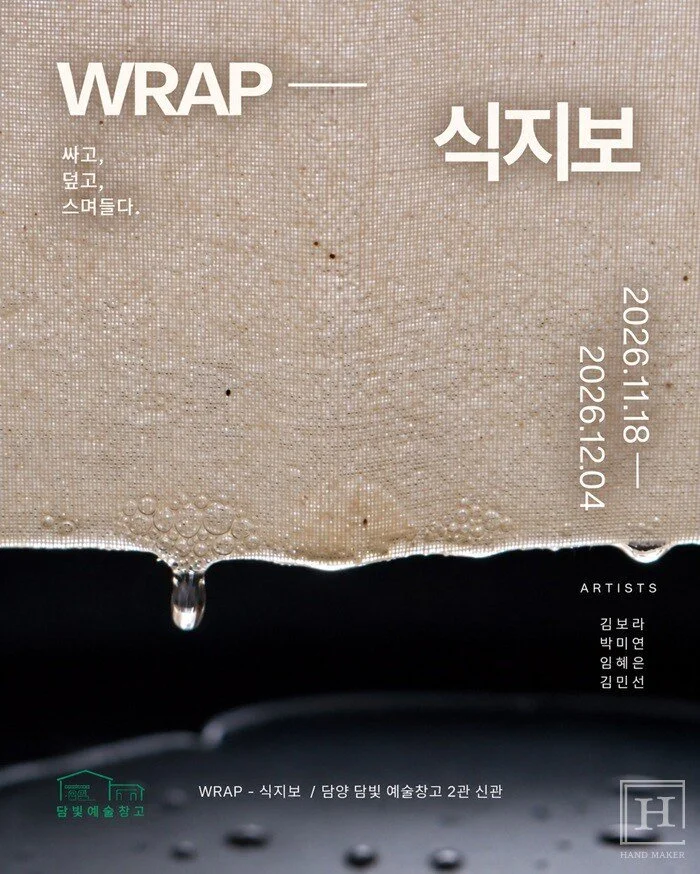
The special exhibition "WRAP: Food-Covering Cloth – Wrap, Cover, Seep In," organized with sponsorship from the exhibition spaces of the Damyang County Cultural Foundation, is being held at Dambit Arts Warehouse Hall 2 until December 4.
Four Bojagi artists—Kim Bo-ra, Park Mi-yeon, Lim Hye-eun, and Kim Min-seon—are participating in this exhibition. Using the traditional sikjibo, a Bojagi used to cover and protect food, as a starting point, the artists present works that combine traditional textiles with beeswax. They have explored the functional and formative possibilities of Bojagi by utilizing various materials, ranging from traditional fabrics such as silk, oksha, ramie, and cotton to synthetic organza.
Each artist reflected the nature of Damyang, traditional patterns, and seasonal landscapes in their works.
Artist Park Mi-yeon expressed the patterns and colors of nature through marbling techniques, drawing inspiration from the bamboo of Juknokwon and the Metasequoia forest paths in Damyang. Artist Lim Hye-eun used the flower patterns of traditional dancheong, known as juhwa, as a motif, implementing three-dimensional patterns by incorporating the formative characteristics of chaehwa, the practice of making flowers out of fabric.
Artist Kim Min-seon connected the traditional uses of Bojagi with images of nature by capturing patterns of natural objects and the colors and traces of seasonal flowers on fabric.
Artist Kim Bo-ra, who planned the exhibition, has been conducting research and exhibitions with the participating artists for two years to modernly expand the scope of traditional Bojagi usage. This time, the focus was on how the combination of beeswax and fabric can apply the functions of traditional household items to modern daily life.
Based on the common material of beeswax, the exhibition shows different interpretations and methods of expression for each artist. While maintaining the functional value of traditional Bojagi, the exhibition presents the possibility of it being used as a lifestyle culture in daily life through modern material experimentation and formative approaches.

Comments 0
Comments are currently disabled.