
National Museum of Korea displays rare Dunhuang Buddhist sutra manuscripts
The National Museum of Korea has opened a special exhibition titled "Opening a Thousand-Year Seal – Dunhuang Buddhist Sutra Manuscripts," featuring rare manuscripts from the Silk Road. The exhibition brings together four manuscripts from the museum's collection and one from the Kyujanggak Institute for Korean Studies, Seoul National University, for the first time.
The National Museum of Korea began a special exhibition on the 23rd featuring five Dunhuang Buddhist sutra manuscripts, including one authentic volume from the Kyujanggak Institute for Korean Studies, Seoul National University, that will be replaced by a reproduction after November 22.
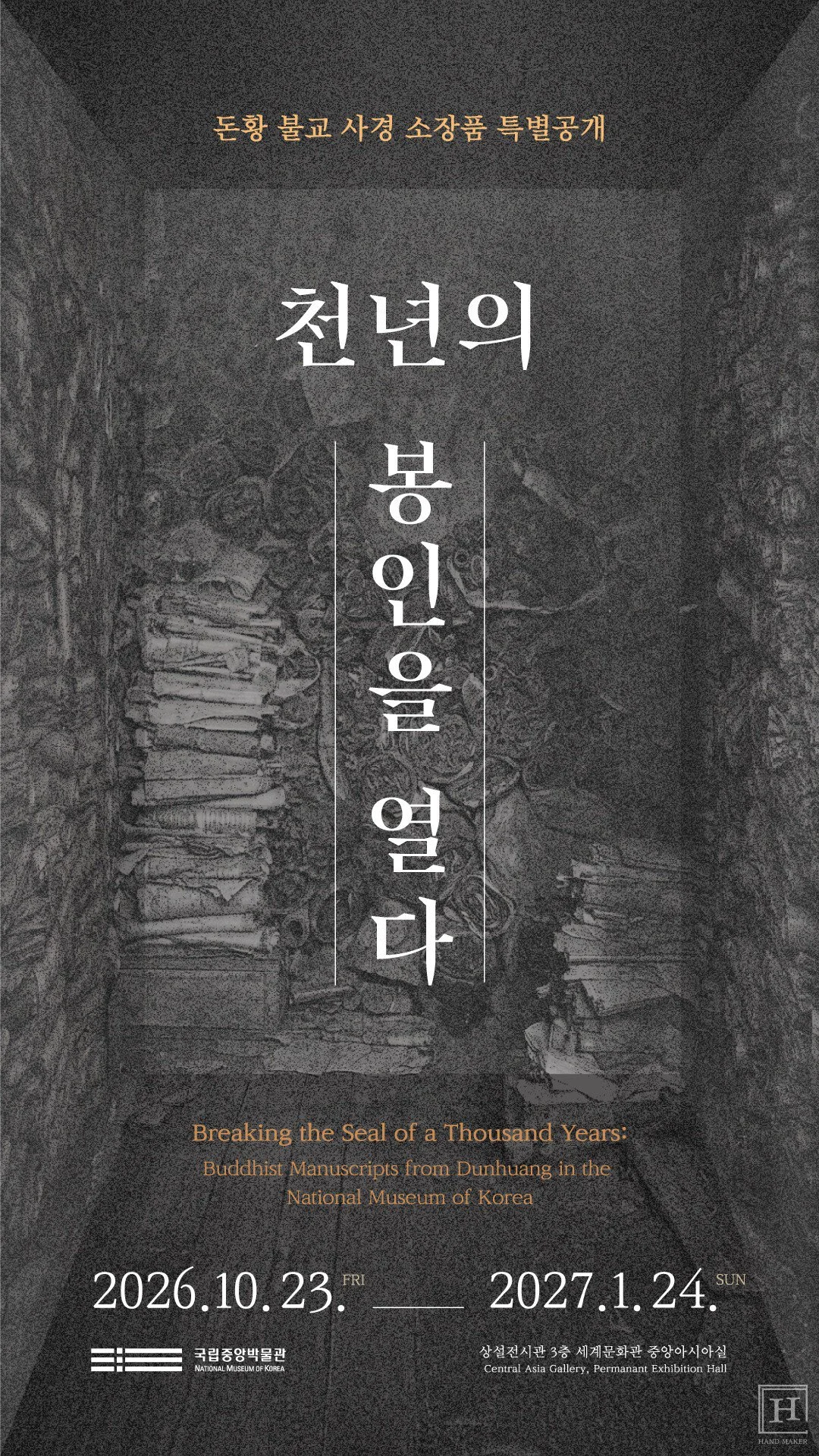
Starting today (the 23rd), the National Museum of Korea is holding a special exhibition titled "Opening a Thousand-Year Seal – Dunhuang Buddhist Sutra Manuscripts" in the Central Asia Gallery of the permanent exhibition hall.
Based on research from the 2025 publication "Dunhuang Buddhist Sutra Manuscripts in the National Museum of Korea Collection," the exhibition brings together four manuscripts from the museum's collection and one from the Kyujanggak Institute for Korean Studies, Seoul National University, in one place for the first time. The authentic Volume 50 of the Large Prajñāpāramitā Sūtra held by Kyujanggak Institute for Korean Studies, Seoul National University, will be on display for one month only until November 22, after which it will be replaced by a reproduction.
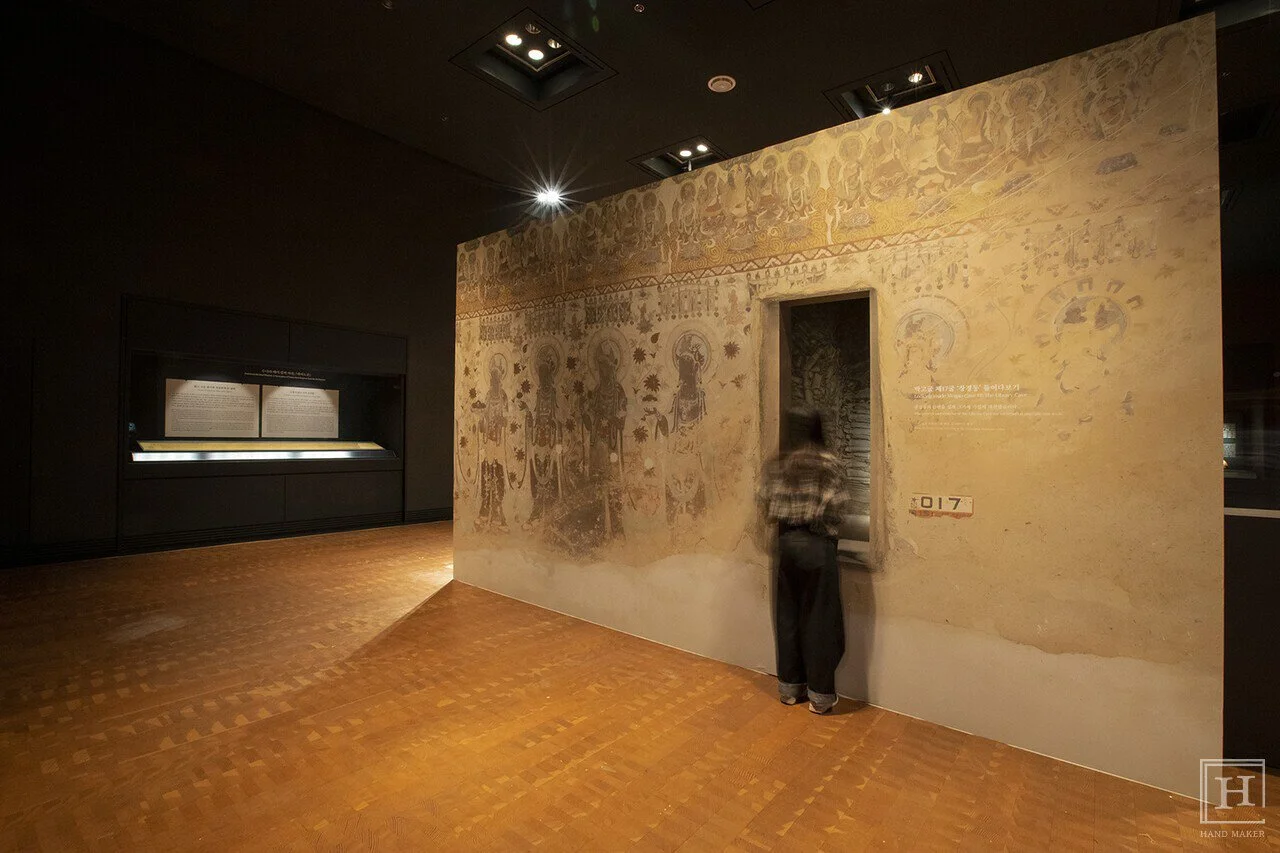
Dunhuang, located in Gansu Province, China, serves as a gateway to the Silk Road. In Mogao Cave 17, known as the "Library Cave," approximately 60,000 cultural assets, including Buddhist sutra manuscripts, were sealed for nearly a thousand years since the 11th century. Because physical documents from before the 11th century are rare, the Dunhuang manuscripts serve as a precious key to understanding the Buddhist culture and society of that era.
The four manuscripts in the museum's collection—Volume 12 of the Treatise on the Great Perfection of Wisdom, Volume 5 of the Śūraṅgama Sūtra, Volume 136 of the Large Prajñāpāramitā Sūtra, and Volume 7 of the Sutra of the Names of the Buddhas—were purchased by the Yi Royal Family Museum in 1913. Volume 50 of the Large Prajñāpāramitā Sūtra held by Kyujanggak Institute for Korean Studies, Seoul National University, was a donation from the late professor Lee Sang-baek.
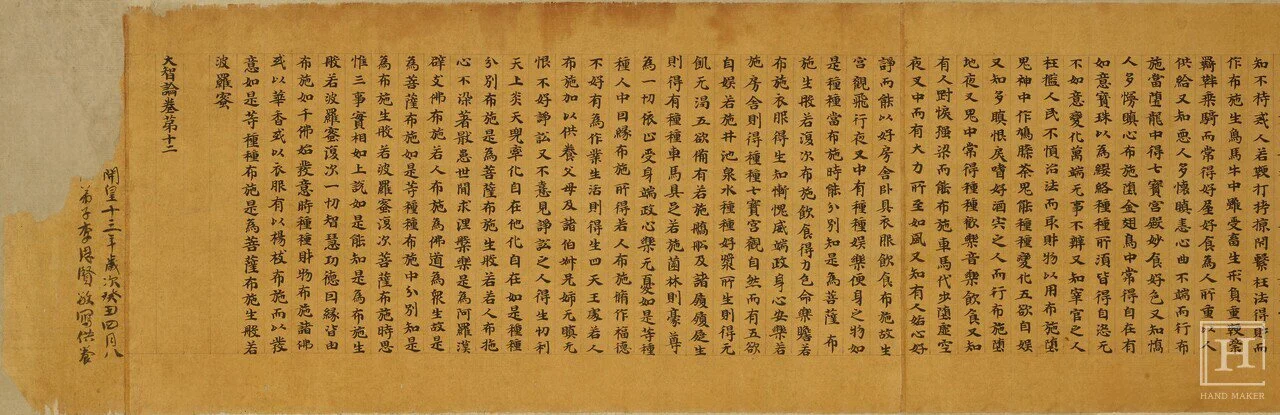
Volume 12 of the Treatise on the Great Perfection of Wisdom contains a prayer written in 593 by a Buddhist believer named Yi Sa-hyeon. This manuscript was transcribed in Dunhuang during the craze for sutra copying in the Sui dynasty. Research has confirmed that the paper is thin and uniform at 0.1mm thick, made by mixing mulberry and bark fibers and dyed with substances such as gardenia.
Volume 5 of the Śūraṅgama Sūtra is an 8th–9th century manuscript that preserves 5,470 characters on a 578.5cm scroll. Such complete versions exist in only three places: the National Library of China, the British Library, and the National Museum of Korea. The manuscript shows signs of 24 corrections, revealing the meticulous care taken to fix errors after transcription.
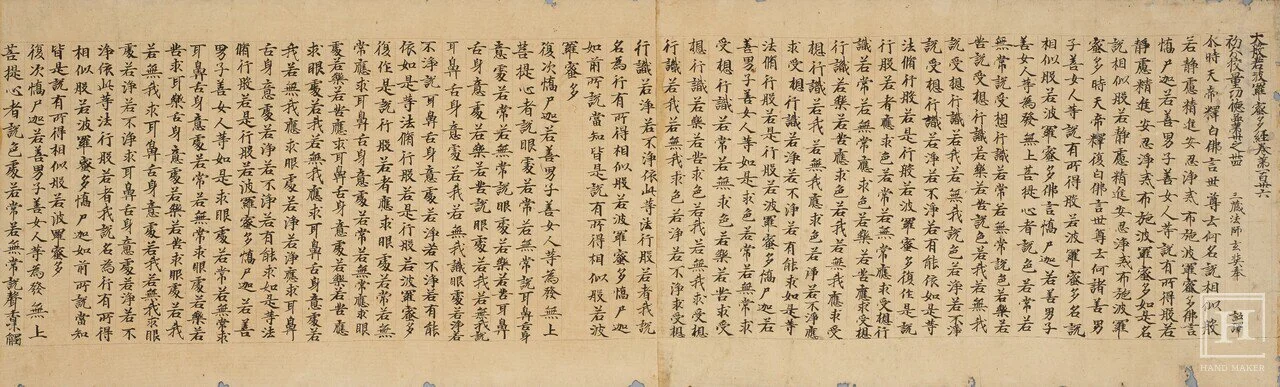
Volume 136 of the Large Prajñāpāramitā Sūtra is an 8th–9th century manuscript that illustrates the active sutra copying during the Tibetan period; complete versions remain only at the National Museum of Korea and the British Library. Volume 7 of the Sutra of the Names of the Buddhas, estimated to be from the 9th–10th century, is a scripture reflecting a popular belief that sins are washed away by calling upon the names of the Buddhas. While it is currently divided into three pieces, it appears to have originally been a scroll nearly 13m long.
With the cooperation of the Dunhuang Academy, the exhibition also features a space that recreates the interior and exterior of Mogao Cave 17 in near-actual size.
Reporter at HANDMAKER (핸드메이커), a Korean magazine devoted to crafts and handmade culture. Covers exhibitions, traditional crafts and the makers behind them.

Comments 0
Comments are currently disabled.