
DMZ as a Stage for Art… Gyeonggi Province and Paju City Hold Contemporary Art Exhibition
A contemporary art exhibition that views the DMZ as a space where history, ecology, humans, and non-humans interact will be held in Paju. Fourteen domestic and international artists will present 26 works, including paintings, photographs, videos, and installations.
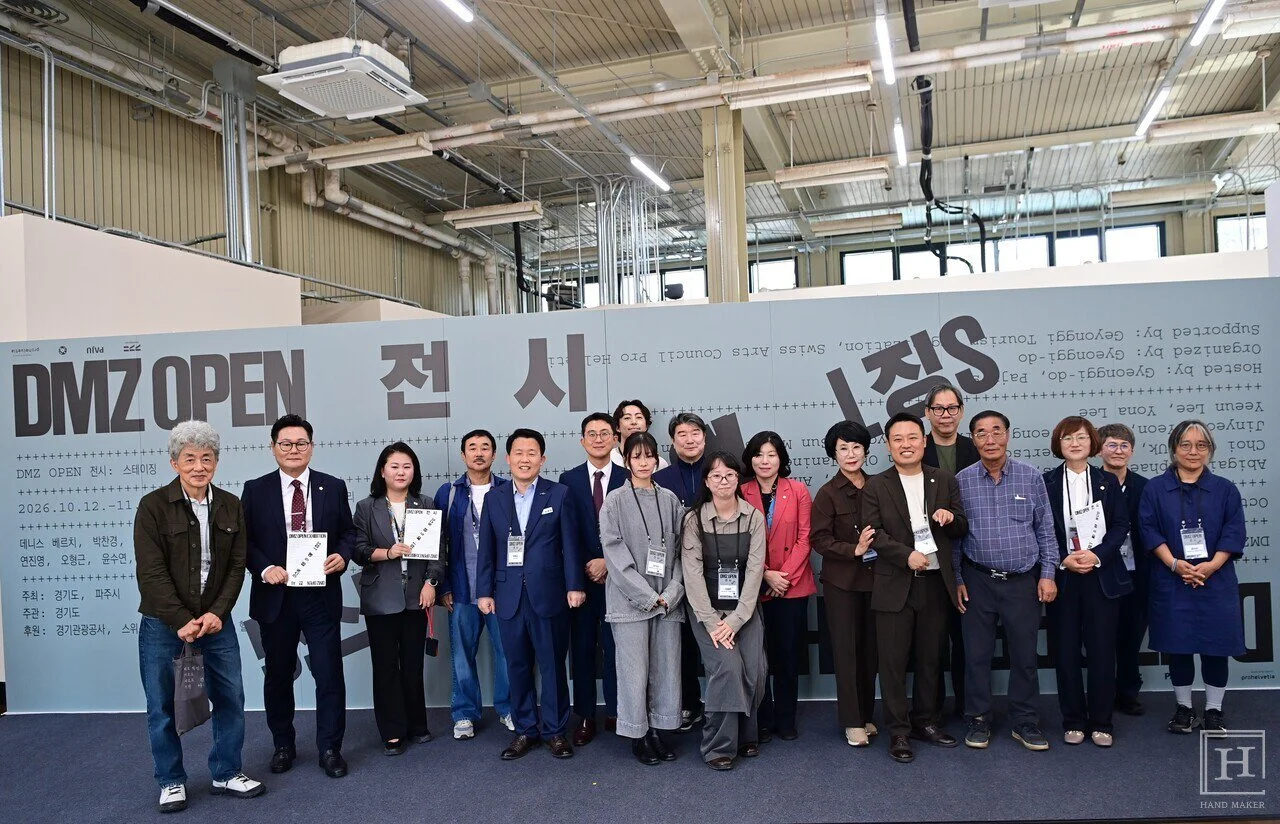
A contemporary art exhibition that views the DMZ beyond a symbol of division as a space where history and ecology, humans and non-humans, form relationships, will be held in Paju. Fourteen domestic and international artists will participate, presenting 26 works including paintings, photographs, videos, and installations.
Gyeonggi Province and Paju City announced that they will co-host "DMZ OPEN Exhibition: Staging" from October 12 to November 29 in the areas of Paju Camp Greaves and Imjingak Pyeonghwa Nuri as part of the "DMZ OPEN Festival."
The exhibition title "Staging" was taken from the concept of French scientist Bruno Latour. Focusing on the process in which objects and beings are revealed within specific environments and relationships, the exhibition interprets the DMZ as a single stage where history and the present, humans and nature, are intertwined.
The exhibition will take place at Cafe Greaves, Studio BEQ, Gallery Greaves, Documenta Hall 2, and Imjingak Pyeonghwa Nuri within the Civilian Control Line at Camp Greaves. Kim Sun-jung, artistic director of Art Sonje Center, is in charge of the curation.
The main works deal with the memories left by war and division from various perspectives. Park Chan-kyong presents 〈Black Box: Memories of Cold War Images〉, a reproduction of his first solo exhibition work from 1997. Denise Bertschi's 〈State Fiction. Neutral Only on the Surface〉 examines the meaning of neutrality through records left from 1953 to 1980 by officers of the Swiss Neutral Nations Supervisory Commission dispatched to the DMZ after the Korean War. Abigail Raphael Collins exhibits the experimental documentary 〈Blackout〉, which traces the relationship between the American film/broadcasting industry and the US military.
Works dealing with the traces left on individual lives by war and division are also introduced. Yoon Su-yeon presents the 〈Homecoming〉 series, which records the lives of veterans and their families while traveling through 42 US states, and Oh Hein-kuhn presents the 〈Theater of the Absurd〉 series, which reveals the paradox of the division system through portraits of young Korean soldiers. Jeong Ga-hui exhibits 〈Grandmother/Heirloom〉, which realizes the brainwaves of her maternal grandmother, who experienced the Japanese colonial period and the Cold War, through 3D printed white porcelain, and Sun Mu exhibits 〈Spring Outing〉, which uses the format of North Korean propaganda posters to depict scenes of South and North Korean youths mingling together.
Many new works produced specifically for the exhibition will also be unveiled. Janine Randerson, in the video 〈Demilitarizing Moss〉—a collaboration with novelist Lee Hyeon and sound artist Rachel Shearer—imagines life and time continuing even after the war through the moss growing over military facilities.
Ahn Kyu-chul expresses the tension of absence and stillness using nine chairs with the legs, backrests, and seats removed. Lee Ye-eun records a tower made of everyday items received from residents of Tongilchon through photography, and Lee Yo-na deals with the reality of restricted movement caused by division through 〈Waiting Room〉, which places objects symbolizing movement, such as traffic lights and streetlights, inside a sealed stainless steel structure.
Abraham Cruzvillegas presents a large-scale wall work that covers printed materials collected while traveling to and from the DMZ with the blue color symbolizing the United Nations. Yeon Jin-young presents an installation dealing with the culture of grooming and the masculinity formed by the military against the backdrop of military restrooms, and Choi Jin-wook unveils new paintings capturing the backs of visitors in front of the Imjingak Mangbaedan and plazas after the winter of 2024.
Citizen participation programs linked to the exhibition will also be operated. In "The DMZ's Little Residents," endangered wild animals such as the leopard cat, otter, and red-crowned crane that inhabit or visit the DMZ area are introduced. "Hearts Come Together to Make a Home," which involves elementary school students, is a program that reinterprets the work of participating artist Lee Ye-eun.
"DMZ OPEN Exhibition: Staging" will run until November 29. During the same period, various programs such as an international music festival and the Eco Peace Forum, themed around ecology and peace, will be held in the DMZ area, including Paju and Goyang, as part of the "DMZ OPEN Festival."
A Gyeonggi Province official said, "We hope this serves as an opportunity to examine the historical meaning and the possibility of peace held by the DMZ through culture, art, and solidarity." Paju Mayor Son Bae-chan stated, "Through this exhibition held at Camp Greaves and Imjingak Pyeonghwa Nuri, we hope people will look back on the traces of history and life engraved in the DMZ and imagine peace and coexistence."
Reporter at HANDMAKER (핸드메이커), a Korean magazine devoted to crafts and handmade culture. Covers exhibitions, traditional crafts and the makers behind them.
Related Articles
Gyeonggi Province to hold marine waste upcycling exhibition 《Sea, Breath, Light》
Exhibition of Design Support Project Achievements at DDP... Eco-friendly Product Experience Event Also Held

Comments 0
Comments are currently disabled.