
The evolution of the pumpkin from a survival crop to a seasonal icon
The pumpkin has evolved from a vital survival crop for indigenous Americans into a global symbol of autumn, appearing in diverse culinary traditions and fine art.
Originally cultivated in the Americas 10,000 years ago, the pumpkin has evolved from a crop used to supplement food shortages into a diverse seasonal staple. Today, it is featured in global culinary traditions ranging from Korean pumpkin beombeok to Mexican desserts used during Día de Muertos.
Every season has fruits or vegetables that represent its unique atmosphere. When the chilly winds begin to blow in autumn, the orange pumpkin is undoubtedly a central figure. While spooky pumpkin decorations appear during Halloween, ripe pumpkins are also a familiar sight that evokes autumn, much like colorful foliage or fallen leaves.
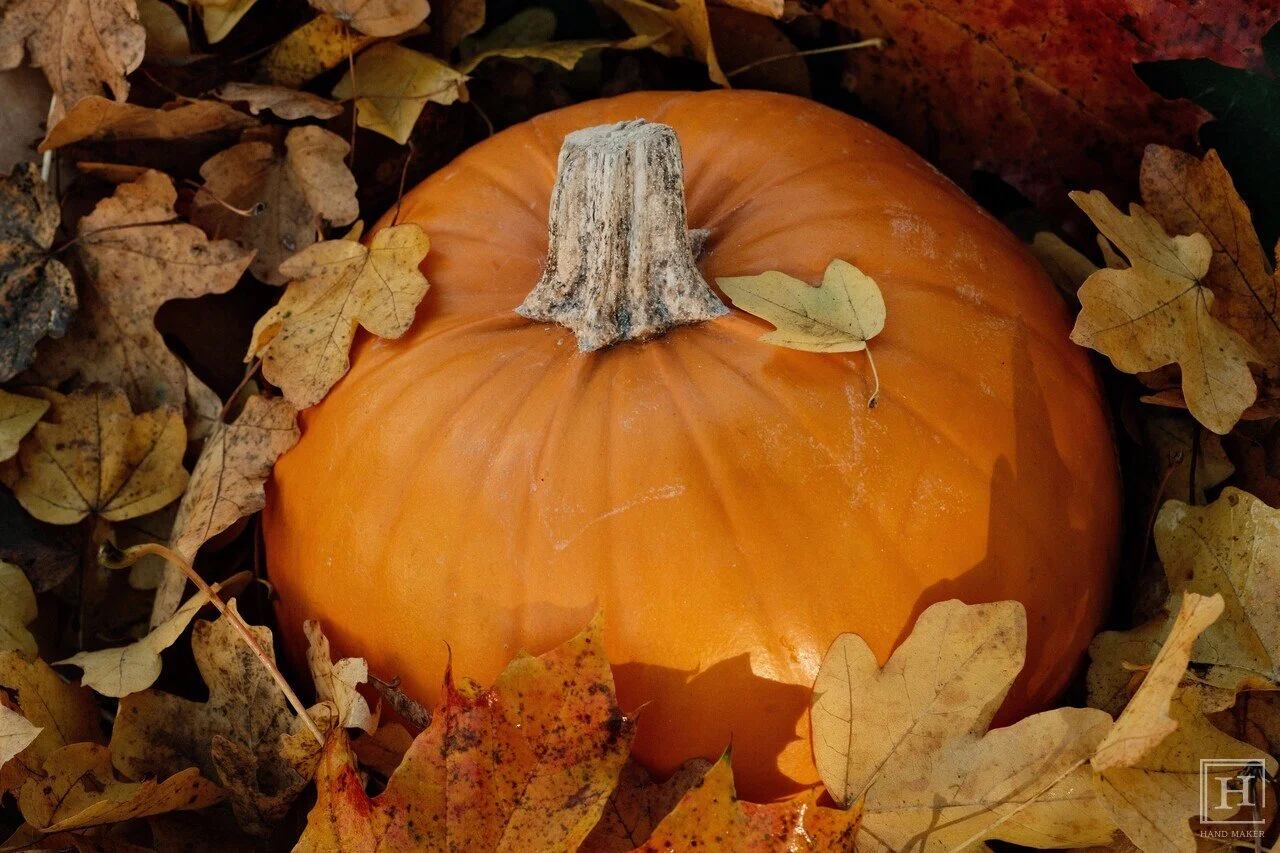
However, the pumpkin was not always a symbol of seasonal romance. Once a crop used to supplement food shortages, it gradually became a special seasonal food over time, appearing in painters' works as a subject capturing the abundance of daily life and memories of rural life.
Today, the pumpkin serves as a means to experience autumn not only through its taste but also through the scents and colors it evokes. What stories are contained within the pumpkin?
A Crop from Across the Sea Becomes Autumn Food
Though it is a familiar ingredient now, the pumpkin is a crop that was originally cultivated in the Americas. It played an important role in the diet of indigenous Americans starting approximately 10,000 years ago, and after being introduced to Europe and Asia after the late 15th century, it began to be utilized according to the culinary cultures of each region.
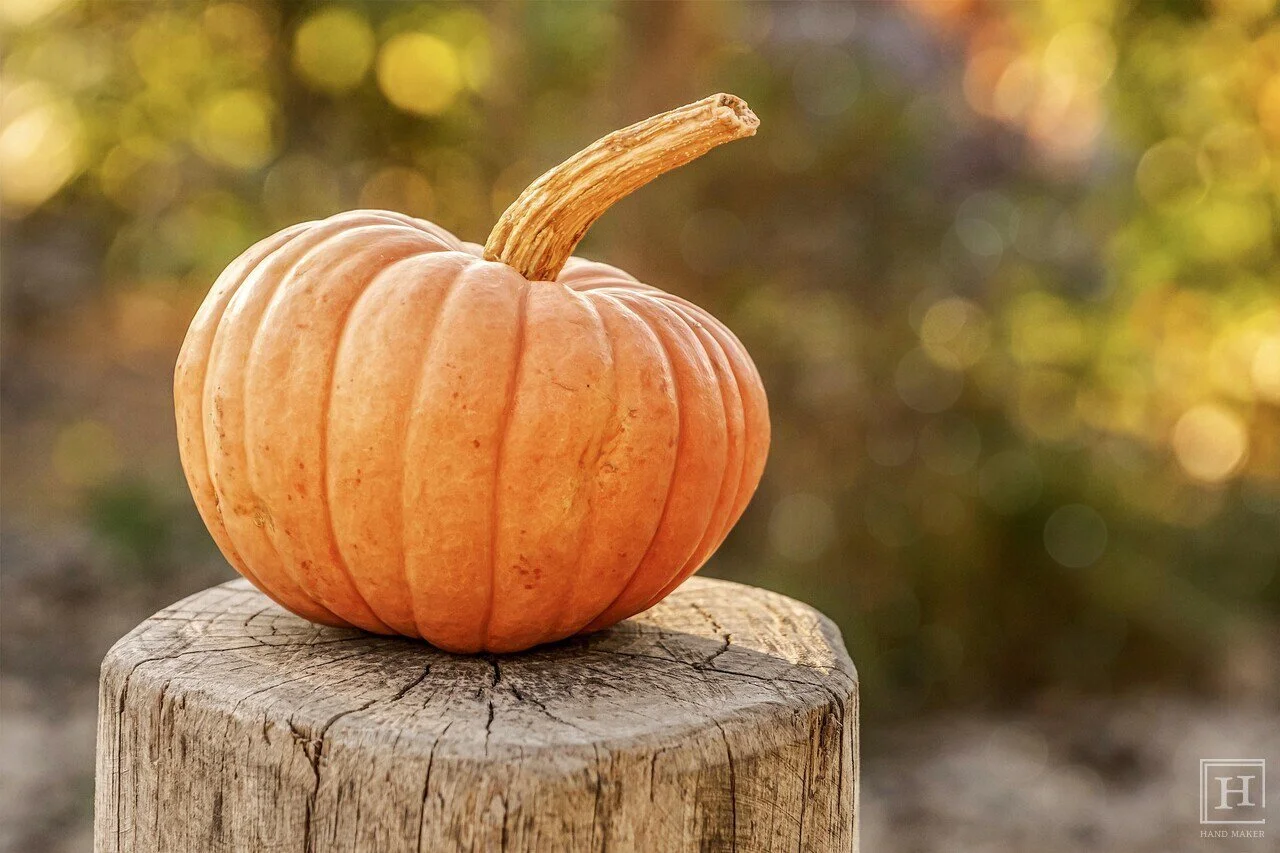
The pumpkin is estimated to have been introduced to Korea around the 17th century. While there are theories that it arrived from Japan or China, the exact route remains unclear. During the Joseon period, pumpkins were sometimes called "seungso," meaning vegetables eaten by Buddhist monks. They were initially cultivated and consumed frequently in temples, eventually becoming a common ingredient for ordinary people by the late Joseon period.
The widespread use of pumpkins was made possible by their relatively easy cultivation and storage. They grow well even in barren soil, and fully ripened pumpkins can be stored for long periods. In particular, old pumpkins harvested in autumn were precious ingredients that could be used throughout the winter.
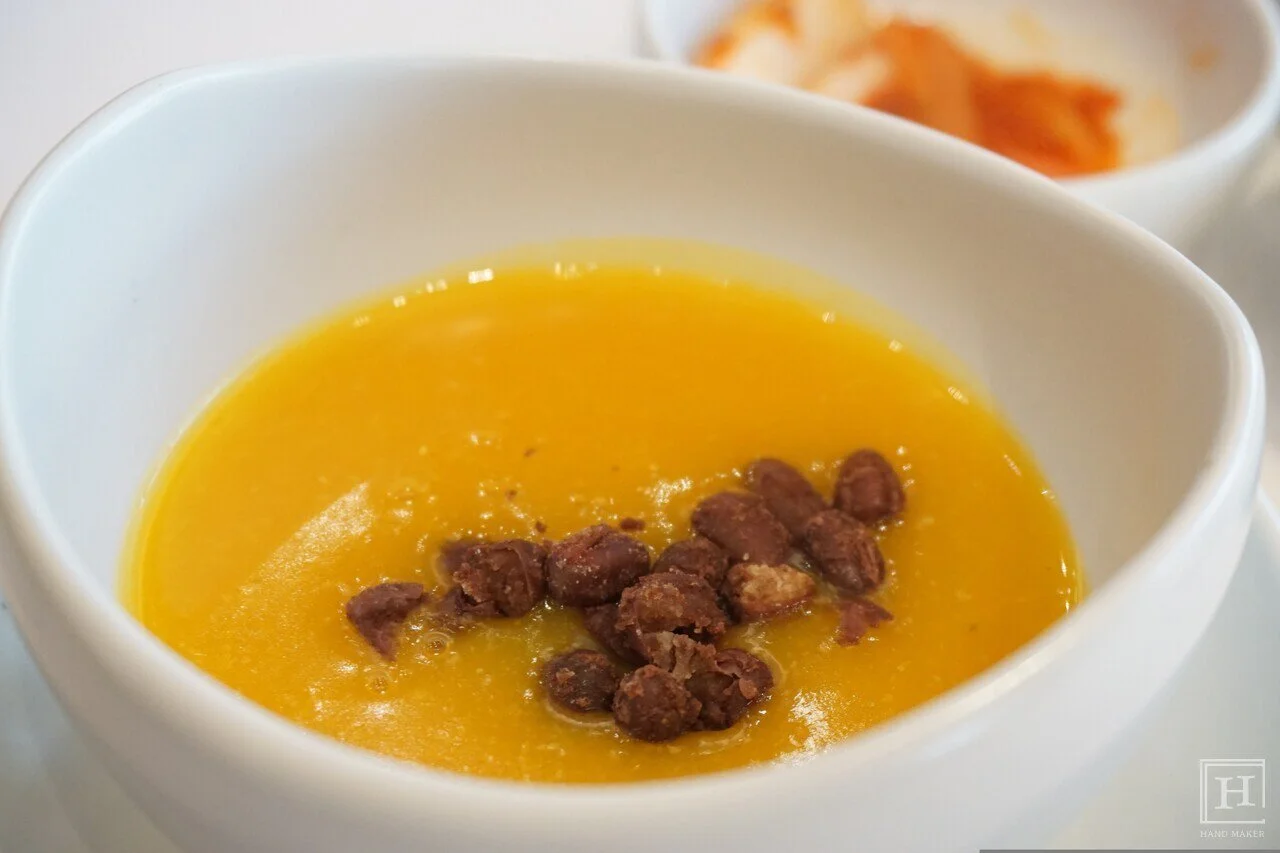
Representative dishes include pumpkin porridge and pumpkin beombeok. Pumpkin beombeok is a dish made by boiling old pumpkins with red beans, beans, chestnuts, and sweet potatoes into a thick consistency. While similar to pumpkin porridge, it is characterized by a rich texture from the combination of various grains and vegetables. Ingredients and recipes varied slightly depending on the region.
According to the Encyclopedia of Korean Folk Culture, in the Seoul, Gyeonggi, Gangwon, and Gyeongnam regions, old pumpkins are sliced thickly and boiled thoroughly; the solids are then removed, and red beans, sweet potatoes, and chestnuts are cooked in the remaining liquid. Glutinous rice powder is added to thicken the mixture before the boiled pumpkin is added back in. In Chungcheong-do, old pumpkins are halved, the seeds are scraped out, and they are boiled together with red beans and kidney beans. Once the pumpkin is cooked, only the flesh is scraped out and added back with glutinous rice powder and foxtail millet powder.
Gyeongsangbuk-do enjoyed pumpkin beombeok in a somewhat unique way. By adding non-glutinous rice powder, wheat flour, and glutinous sorghum powder, they made it thick—somewhere between a porridge and a rice cake—and then ate it as it cooled, or scooped it up to coat it in bean powder or red bean powder. Even though it is the same pumpkin beombeok, it was enjoyed like porridge in some regions and like rice cake in others.
There are also regional dishes where pumpkin is eaten without sweetness. A representative example is galchi-hobak-guk, a local specialty of Jeju Island. This dish is made by boiling hairtail caught in autumn with old pumpkins, combining the soft taste of the pumpkin with the clean flavor of the hairtail. It is an example that demonstrates the Korean food culture of combining autumn-harvested pumpkins with various other ingredients.
How has the pumpkin established itself as a food in other countries across the sea? In the Americas, the pumpkin's place of origin, the crop has been prepared in various ways for a long time. Indigenous people ate pumpkins roasted over fire or added them to stews, and they also preserved them by slicing them thinly to dry or by turning them into powder.
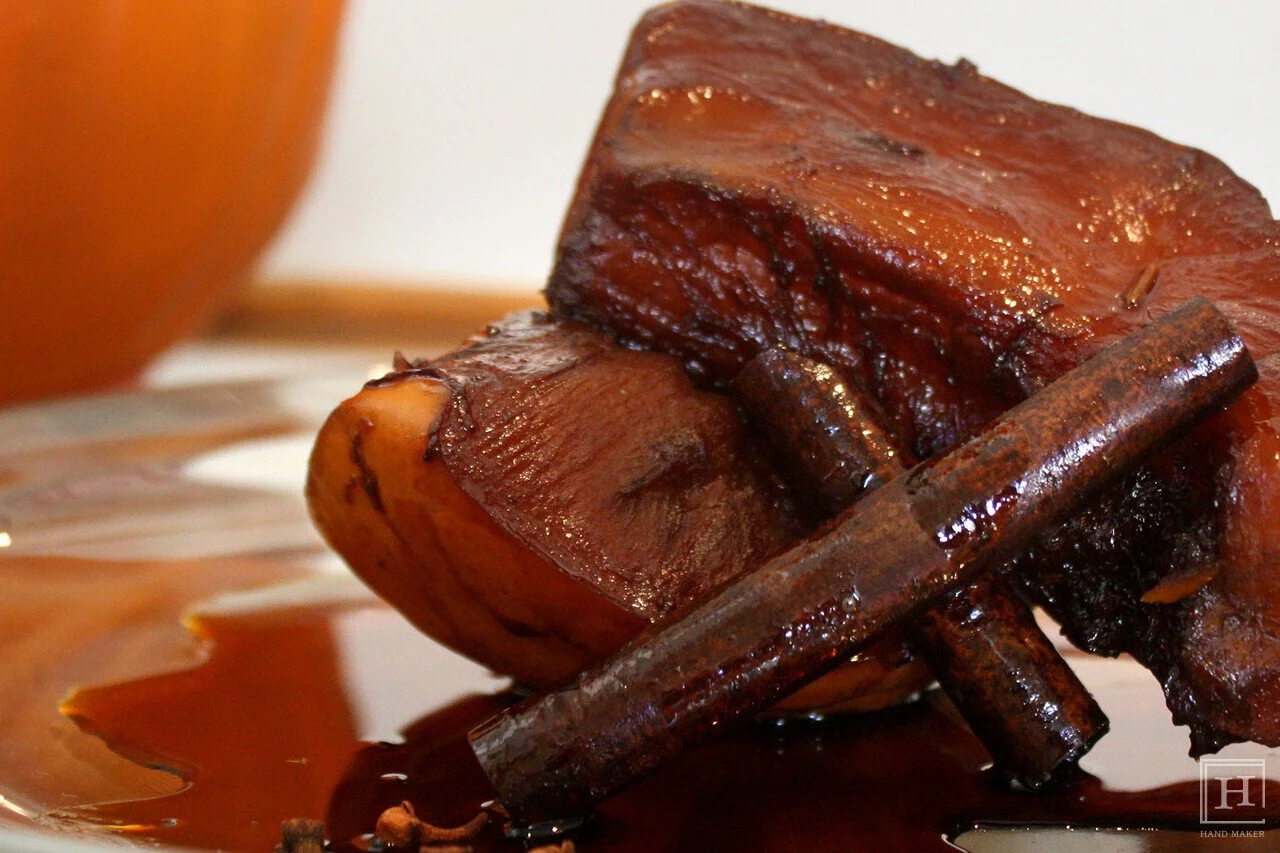
In Mexico, a traditional dessert called Calabaza en Tacha is made using pumpkin. Large pieces of pumpkin are simmered for a long time with piloncillo, an unrefined sugar made from sugarcane, as well as cinnamon and cloves. Depending on the region or household, orange peel and guava may also be added. The pumpkin, infused with sweet syrup, is eaten as is or enjoyed with milk.
In particular, this food is closely linked to Mexico's 'Día de Muertos' in early November every year. It is one of the foods placed on altars prepared to remember deceased family members and ancestors.
Pumpkin has become a food that commemorates and honors family, going beyond a sweet snack enjoyed in autumn.
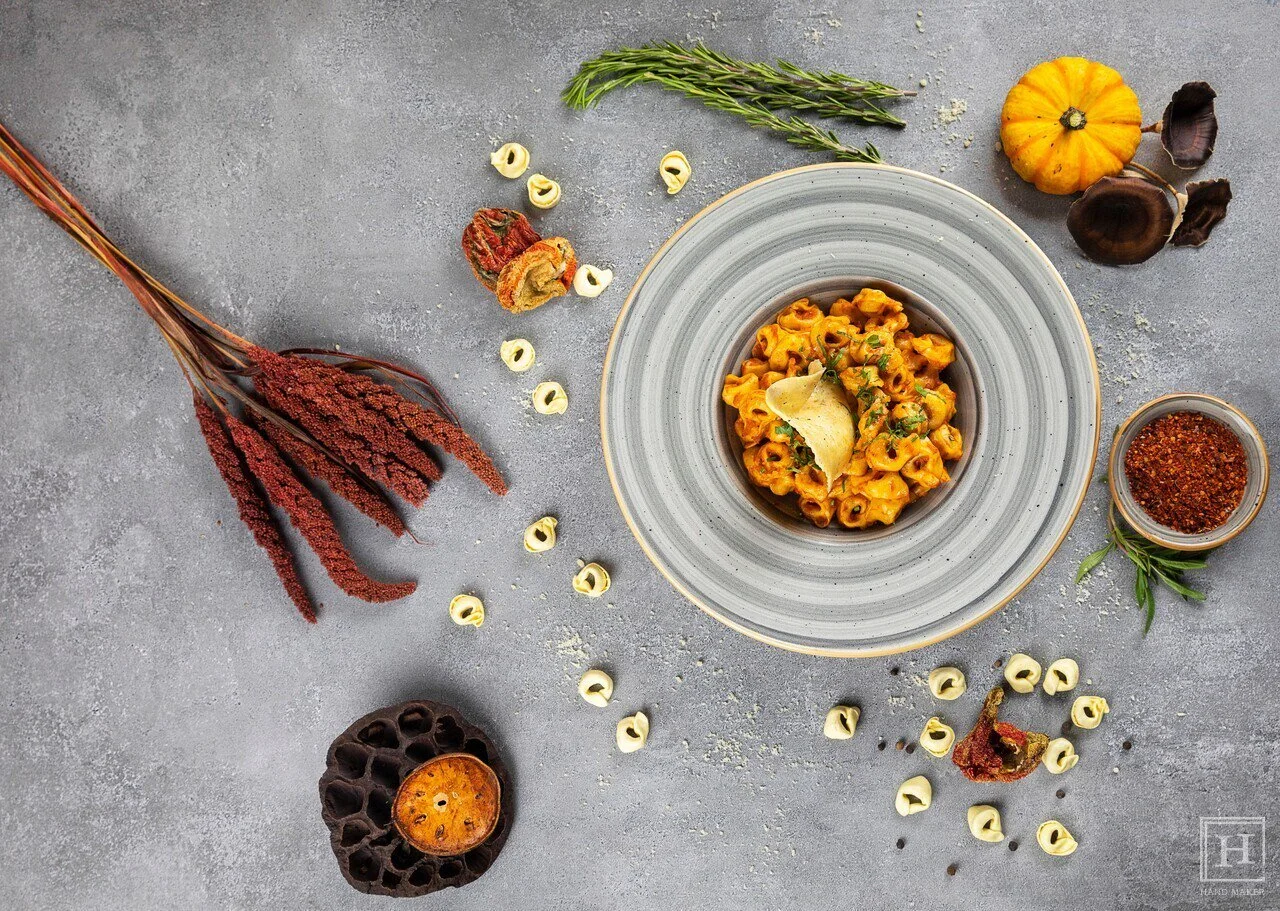
In Italy, pumpkin is used as a filling for pasta. A representative example is 'Tortelli di Zucca', a traditional food from the Mantua region in the north. The filling is made by mixing mashed cooked pumpkin with amaretti (almond cookies), mostarda (fruit preserved with sugar and mustard scent), and cheese.
This is wrapped in thin pasta dough, boiled, and served with melted butter and sage.
It is characterized by the harmony of the sweetness of the pumpkin, the nuttiness of the amaretti, and the sweet and pungent taste of the mostarda. In Mantua, it is also known as a traditional food enjoyed by families on Christmas Eve. Pumpkin is utilized not only as a sweet dessert but also as a special dish for holidays.
In this way, pumpkin has developed into different foods on dining tables in various countries. Although the recipes and the timing of consumption differ, they are similar in that a food culture was formed where harvested pumpkins are stored for a long time and shared with family.
Pumpkin, which was once considered a mere food source, has become a food for special days and a medium for sharing memories.
Pumpkin entering the painting, capturing autumn landscapes
Pumpkin, which was familiar as food, is also found in the paintings of artists. In particular, looking at old paintings, one can see that pumpkin was used not just as an ingredient for eating, but as a subject to express the beauty of nature and the atmosphere of daily life.
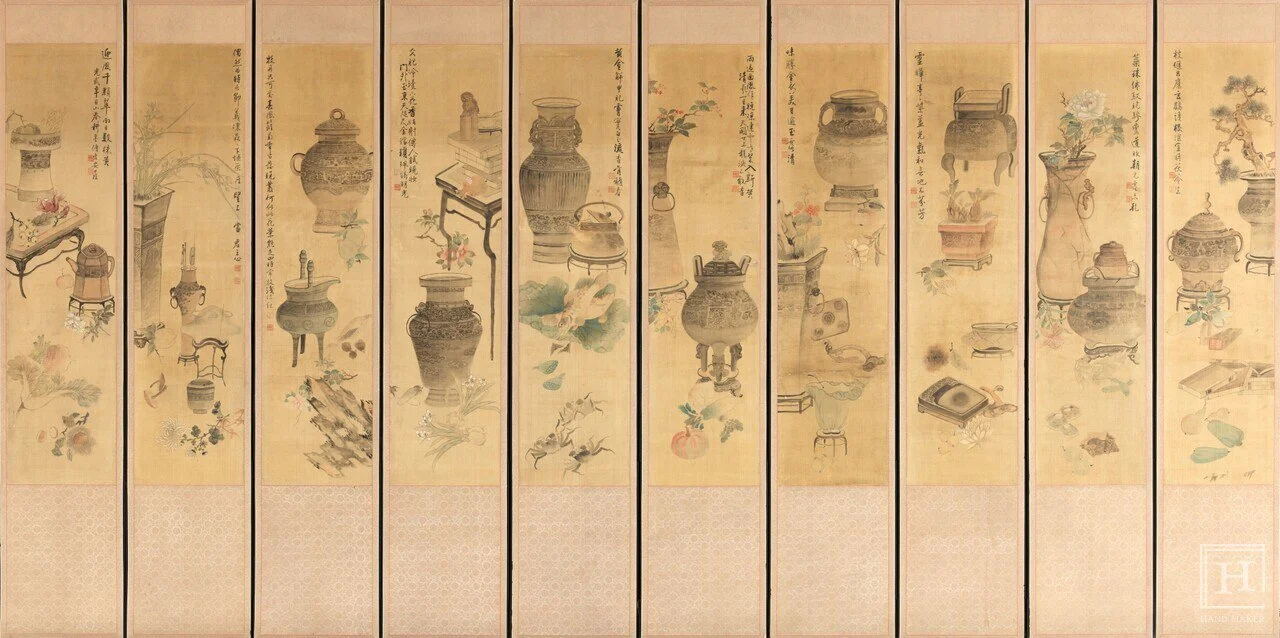
In Korea, pumpkin can be found in the "Folding Screen of Antiques, Flowers, and Fruit" produced by the late Joseon painter An Jung-sik in 1901. This work, held by the National Palace Museum of Korea, is a folding screen consisting of 10 panels, featuring a harmony of stationery items such as ancient bronzes, ceramics, books, and inkstones, along with flowers, fruits, and vegetables. Among the panels, a round, reddish pumpkin is depicted beneath two long, extending radishes.
"Folding Screen of Antiques, Flowers, and Fruit" refers to paintings that arrange various objects such as old vessels, flower branches, and fruits together. While reflecting the taste for appreciating rare objects and beautiful plants, it also contained auspicious meanings such as longevity, wealth, and peace. From the late 19th century to the early 20th century, these paintings became popular and established themselves as objects of appreciation for the royal court and literati.
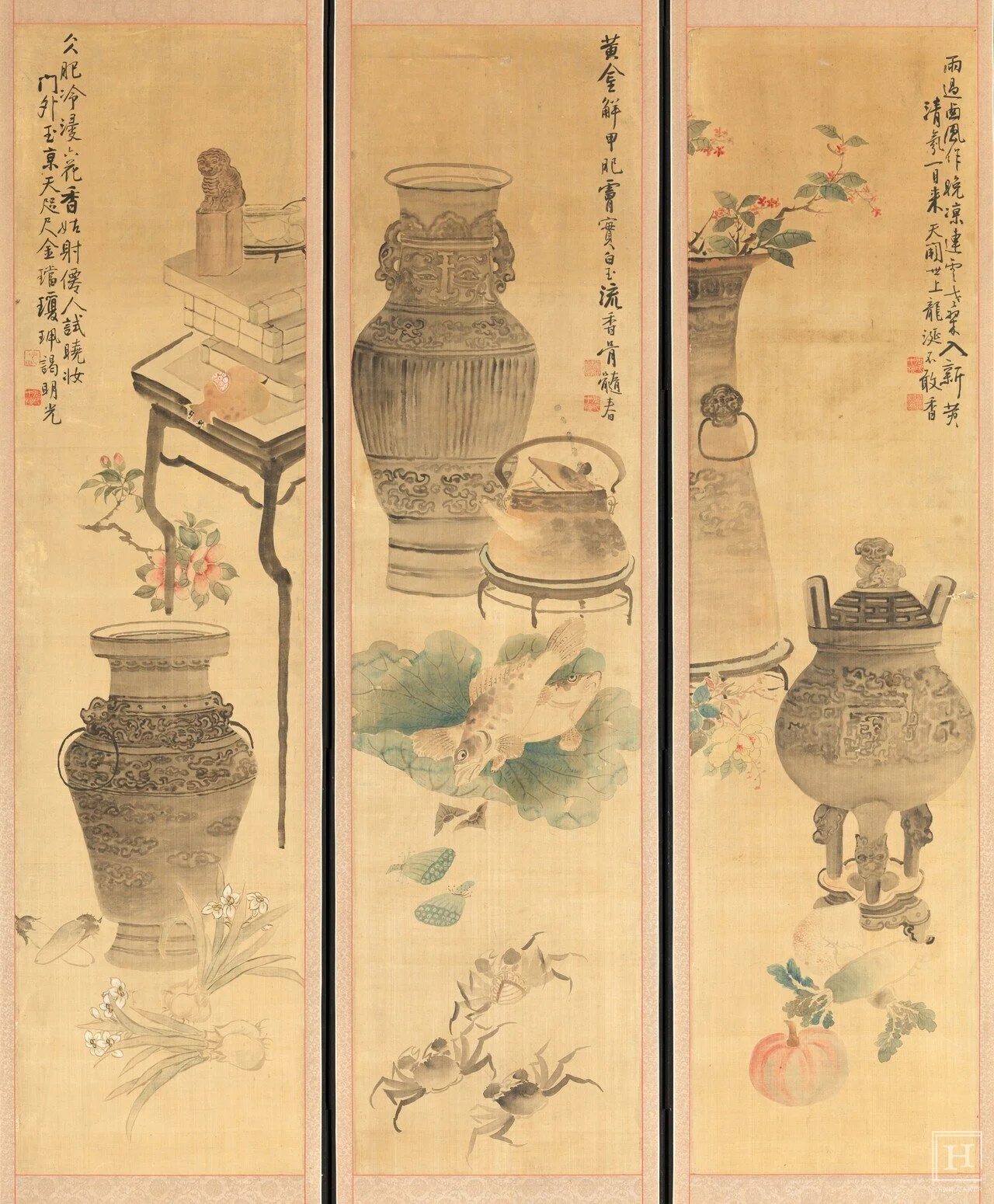
These characteristics are also evident in the work of An Jung-sik. Although the radish and pumpkin are placed without flamboyant decorations or backgrounds, their respective shapes and colors harmonize to fill a part of the screen. Ordinary vegetables have become objects of appreciation through the hand of the painter.
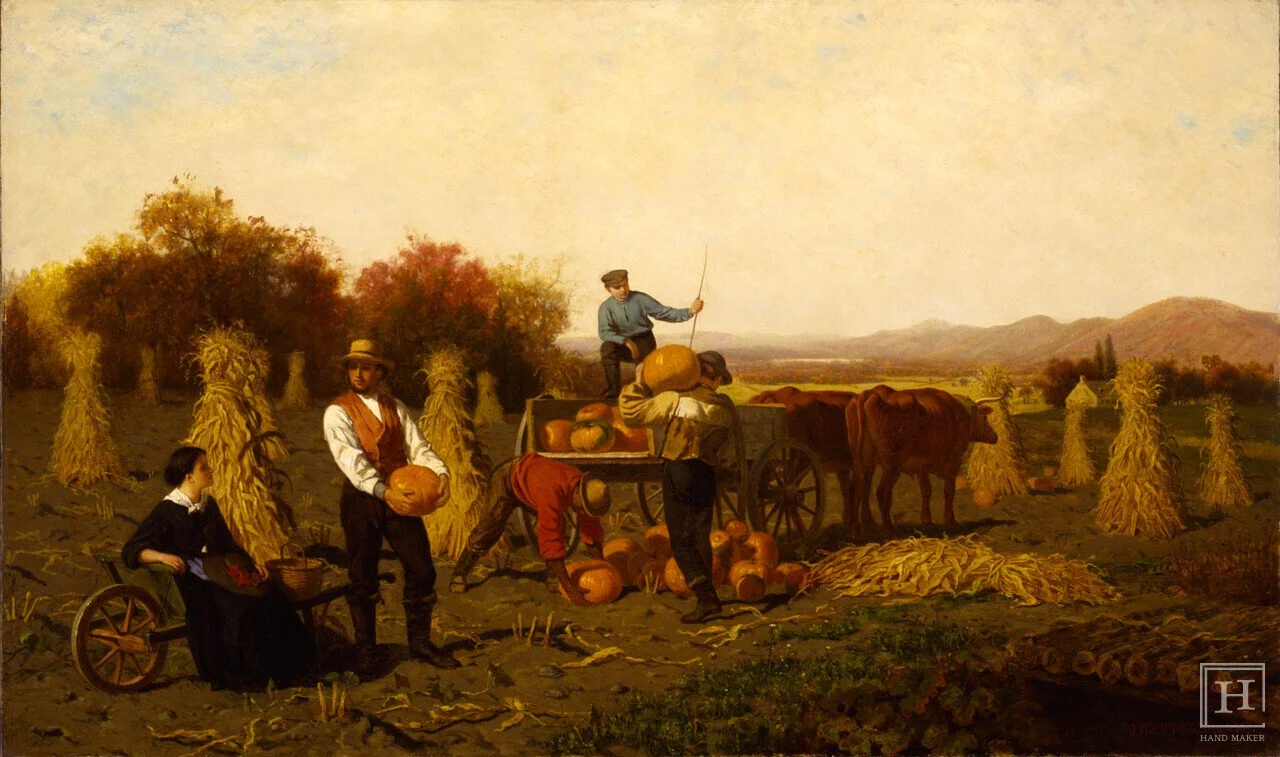
In the West, pumpkin also drew the interest of painters. Particularly in the United States, it appeared as a subject showing the autumn harvest and the abundance of rural areas. A representative work is "October," painted by American artist John Whetten Ehninger in 1867. It captures a scene of people harvesting pumpkins in fields colored golden.
Looking at the work, one man stands holding a large pumpkin in his arms, while others are loading harvested pumpkins onto a cart. The cart is full of large and small pumpkins, and cows stand beside it. In the background, trees colored with autumn hues and wide fields unfold. Although it depicts the labor of a busy harvest season, the overall atmosphere is peaceful and abundant.
Another meaning is revealed when looking at the period this work was produced. It was 1867, only two years after the American Civil War ended. The Smithsonian American Art Museum, which holds the work, explains that in the society devastated by the war at that time, the peaceful rural landscape held special meaning. The sight of people harvesting alongside the golden fields evoked memories of the peaceful and prosperous times before the war.
An interesting point is that in a poem published in the same year this work was created, pumpkin also appears as a subject that evokes memories. In a poem published in the American magazine 《Harper's Weekly》 in November 1867, pumpkin pie was described as a food that brings back memories of childhood and days gone by. It was as if the pumpkin was not just a simple crop, but a food that calls up memories of one's hometown and childhood, and a symbol of autumn.
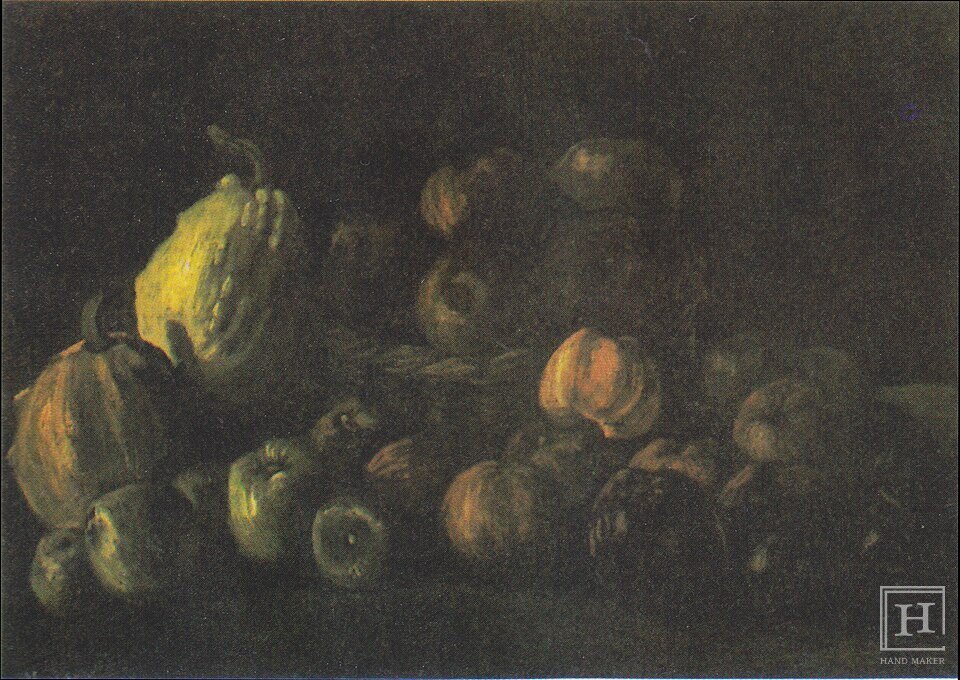
Another perspective on pumpkins can be found in the works of Vincent van Gogh. In 〈Still Life with Apples and Pumpkins〉, created by van Gogh in September 1885, apples in a basket and bumpy pumpkins appear.
In the painting, large apples and pumpkins are contained in a basket, and several apples and decorative pumpkins are placed around them. The deep colors and rough brushstrokes filling the entire screen reveal the textures of the fruits and vegetables even more vividly.
According to the Kröller-Müller Museum in the Netherlands, which holds the work, during this period van Gogh produced still life paintings using everyday ingredients such as potatoes and apples as subjects, researching ways to express three-dimensionality using color. In this work, he added depth using the light coming from the upper left and the resulting shadows, and expressed the uniquely bumpy surface of the pumpkin by layering the paint thickly.
While Ehninger's pumpkin shows the abundance of autumn and memories of the countryside, van Gogh's pumpkin shows that artistic beauty can be contained even in ordinary ingredients. In the paintings of An Jung-sik in Korea, pumpkins also became objects of appreciation by harmonizing with other surrounding objects.
From Pumpkin Injeolmi to scented candles, the changing flavors of autumn
While in the past, foods enjoyed at the dining table such as pumpkin porridge or pumpkin porridge mix were the focus, they are now transforming into various desserts such as rice cakes, cakes, and ice cream. Even if actual pumpkin is not included, people feel the atmosphere of the season just by recalling its taste and scent.
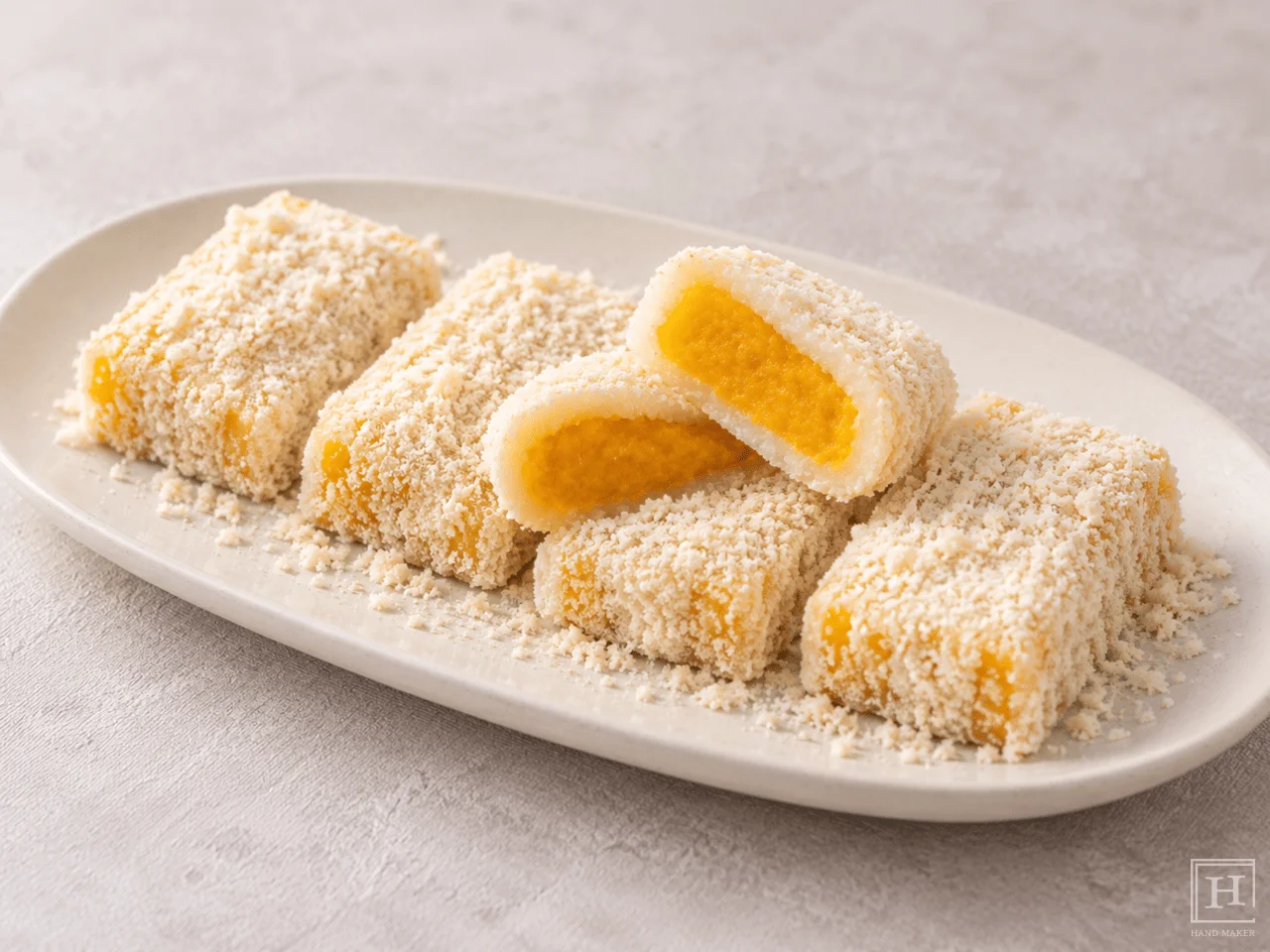
In Korea, the pumpkin injeolmi from the famous Gwangju rice cake shop 'Chang-eok Tteok' gained great popularity this year. Opened in 1965, Chang-eok Tteok is a rice cake shop that has been loved by local residents for a long time, and pumpkin injeolmi was also one of its representative products previously sold. However, interest grew among young consumers after it was introduced in a Gwangju travel video on a YouTube channel this past March.
Pumpkin injeolmi is a food made of thin, chewy glutinous rice cake containing pumpkin, coated with freshly baked castella powder. While typical injeolmi emphasizes the savory taste of bean powder, Chang-eok Tteok's pumpkin injeolmi is characterized by the harmony of the subtle sweetness of pumpkin and the softness of castella. It is also sold as a frozen product, allowing it to be easily enjoyed at home by thawing it naturally.
As purchase reviews spread online, long lines formed in front of the Gwangju main store, and the expression 'tteok-ji-sun-rye' (rice cake pilgrimage) emerged, comparing it to 'ppang-ji-sun-rye' (bakery pilgrimage) where people visit famous bakeries. The popularity led to actual sales. According to a report from this past September, the transaction volume of Chang-eok Tteok pumpkin injeolmi sold on Kurly from June to August this year increased by 336% compared to the same period last year.
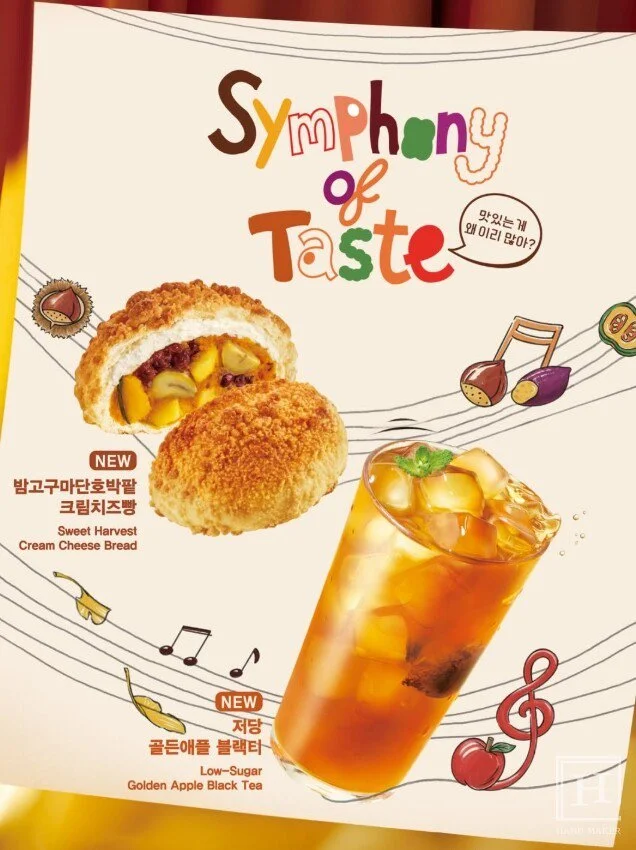
New desserts utilizing pumpkin are also appearing. This past September, MEGA MGC COFFEE introduced 'Chestnut Sweet Potato Sweet Pumpkin Red Bean Cream Cheese Bread', which combines chestnuts, sweet potatoes, sweet pumpkin, red beans, and cream cheese, as a new autumn menu. By combining various seasonal ingredients, they allowed people to enjoy familiar autumn flavors in a new way.
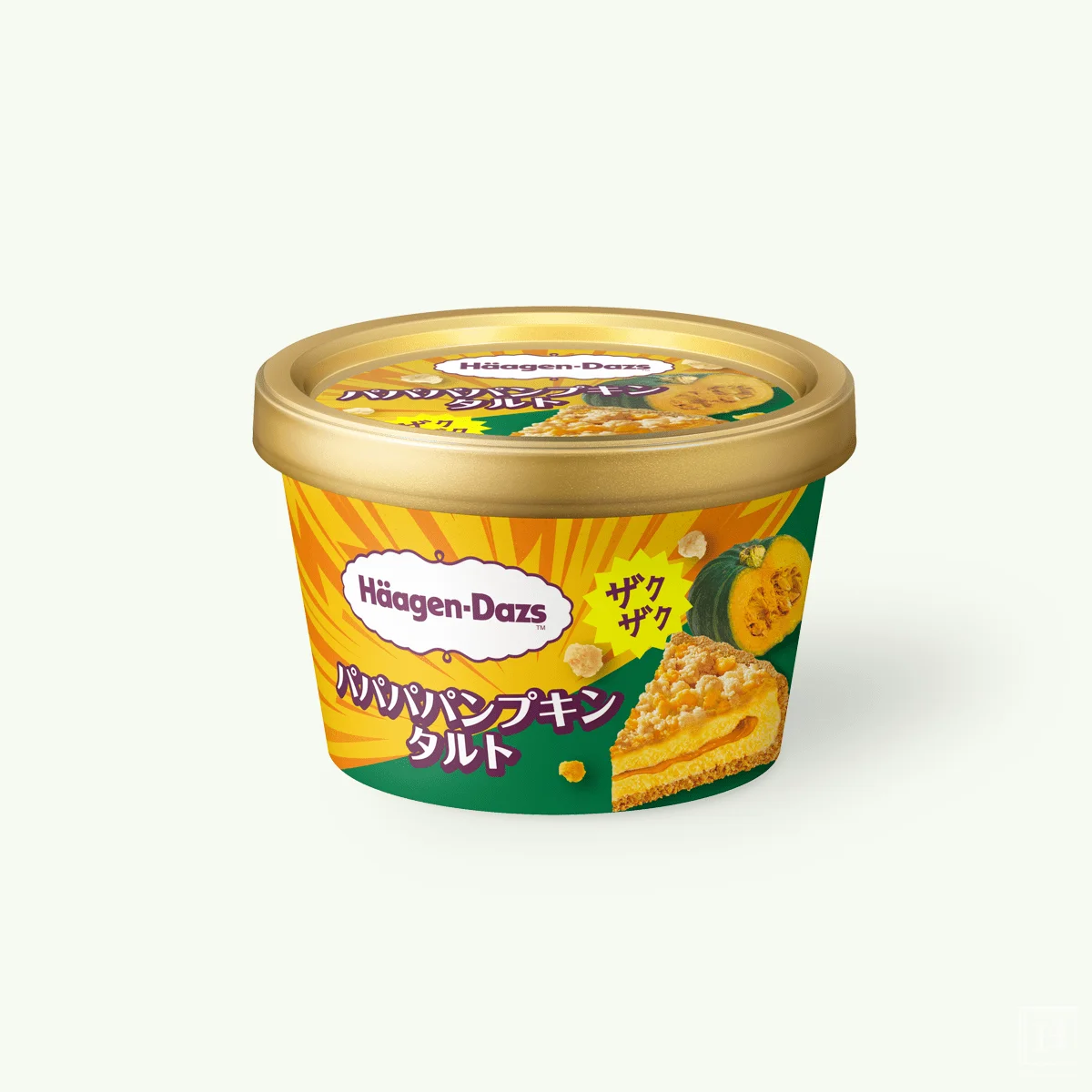
These changes can also be found overseas. In Japan, various seasonal limited desserts utilizing pumpkin appear. This October, Häagen-Dazs Japan released an ice cream called 'Pa-pa-pa Pumpkin Tart'. It is a product that expresses the taste and texture of a tart by mixing pumpkin sauce into pumpkin ice cream and adding pumpkin coating and pumpkin cookies. It captures the pumpkins harvested in autumn in various forms within a single dessert.
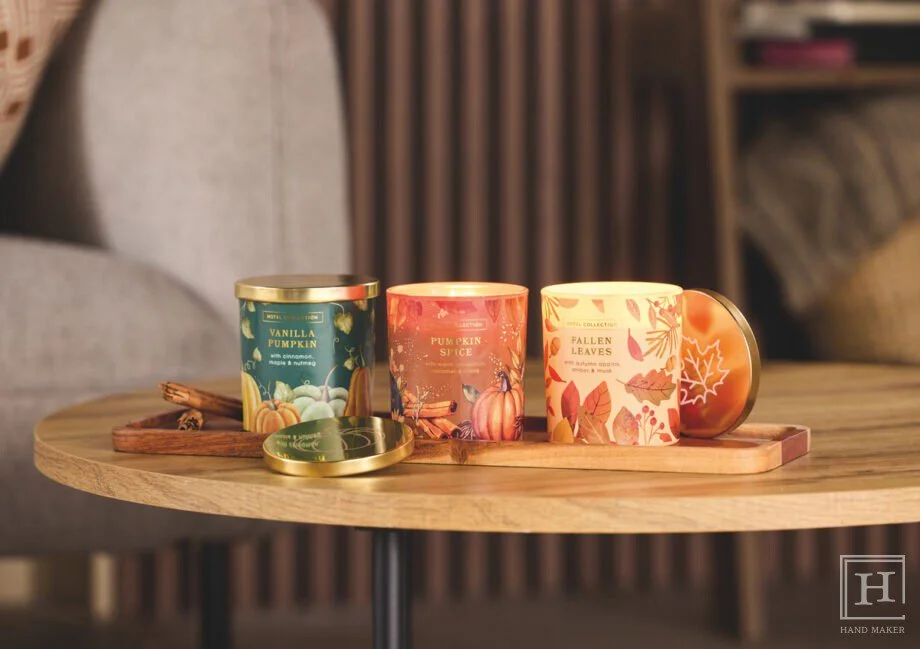
In the United Kingdom, ways of enjoying autumn have emerged that do not involve eating pumpkins. A representative example is household goods utilizing the "Pumpkin Spice" scent. Pumpkin Spice originally refers to a combination of spices such as cinnamon, ginger, nutmeg, and cloves used when making pumpkin pie. Contrary to its name, it does not necessarily have to contain pumpkin.
The British retailer Aldi introduced autumn-limited scented candles utilizing the Pumpkin Spice scent last year. By combining the scents of cinnamon, nutmeg, and cloves, the products evoke the image of pumpkin pie, allowing people to feel the autumn atmosphere through the scent even without actually eating pumpkin.
While in the past, pumpkins harvested in autumn were used to make food to eat, today, people also look for pumpkins to feel the autumn atmosphere. Sometimes, even if actual pumpkin is not included, one can recall the season through its unique color and scent alone. From crops that supplemented insufficient food supplies to food for special days, from prosperous landscapes in paintings to modern desserts and scented candles. The meaning held by the pumpkin has changed according to the era, but it remains a familiar presence that brings autumn to mind.
Reporter at HANDMAKER (핸드메이커), a Korean magazine devoted to crafts and handmade culture. Covers exhibitions, design and the people who make things by hand.
Comments 0
Comments are currently disabled.