
Ilmin Museum of Art presents mana exhibition exploring bodies and machines
The Ilmin Museum of Art is hosting the special exhibition "mana," which examines the forces acting upon bodies, machines, and objects through the lens of contemporary art.
The Ilmin Museum of Art opened the "mana" exhibition on the 25th to commemorate the 100th anniversary of its architecture. Six artists use sculpture, installation, and video to examine the interplay of forces between humans, machines, and objects through January 24, 2027.
The Ilmin Museum of Art is holding the special exhibition "mana" from today (the 25th) until January 24, 2027, to commemorate the 100th anniversary of the museum's architecture.
"mana" is an exhibition that highlights the various forces acting on bodies, machines, and objects from the perspective of contemporary art. It examines the process by which humans exchange forces with other entities and reflects on the relationship between the force that causes movement and the effort required to maintain that movement. The focus is not only on humans but also on things that react to and move within their surrounding environments.
Six participating artists—b.1995, Kwak Ji-su, Koo Dong-hee, b.1994, b.1969, and Jung Kum-hyung—use sculpture, installation, and video to address the external conditions that change the body, the resistance and balance that support the form of objects, and the interdependence between machines and humans. In an era where artificial intelligence, which extends into physical reality, exerts an increasingly large influence on life, the artists' processes of manual work, practice, and tuning reveal the necessary entanglement and toil required for a force to arise.
The exhibition title "mana" originates from traditional Oceania culture, meaning an impersonal force that dwells within an object and exerts influence on the world. In modern novels or games, it refers to energy used to exert special abilities, often used with the setting that it is depleted when using abilities and naturally replenished over time. Borrowing these attributes of mana, the exhibition reminds viewers that the action of force requires a corresponding cost and recovery.
Exhibition Hall 1 examines the time of adaptation when the body meets specific objects and the acts of repetitive training and tuning through the works of Jung Kum-hyung (b.1980) and Lee Hyung-gu (b.1969).
Jung Kum-hyung grants a body to machines, and in turn, the machines grant movement to her. On her stage, it is no coincidence that the person moving the machine appears to be led by the machine instead. This is because the performance of breathing life into objects is coupled with the technique of using oneself like an object.
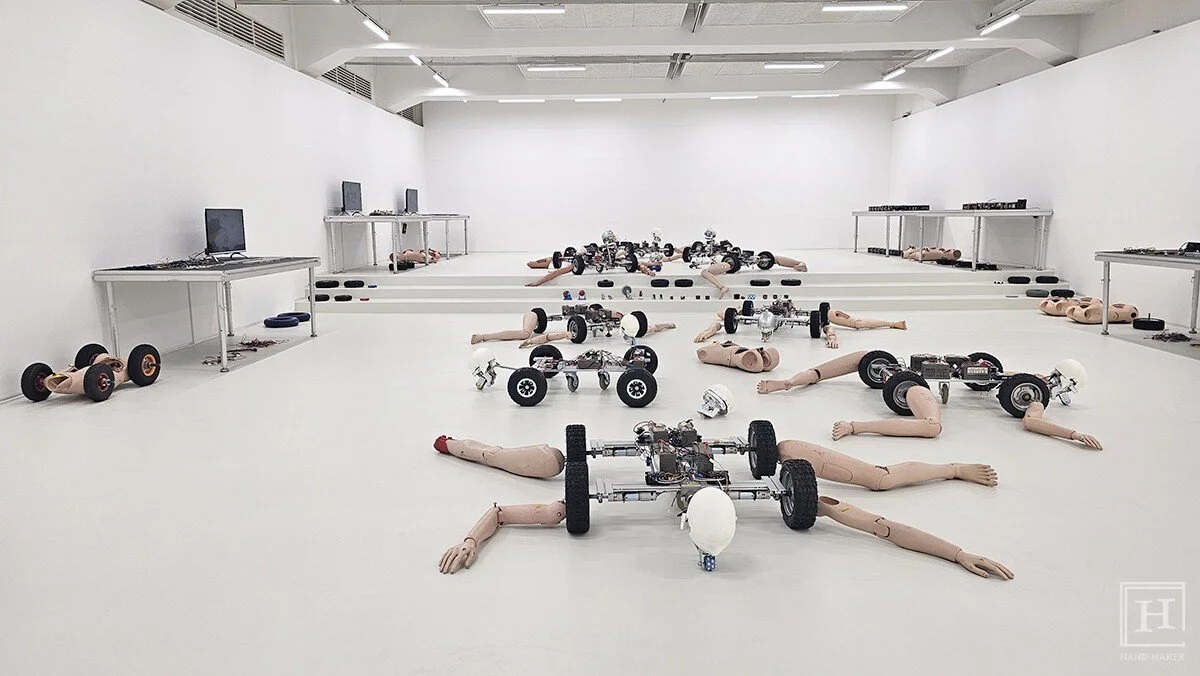
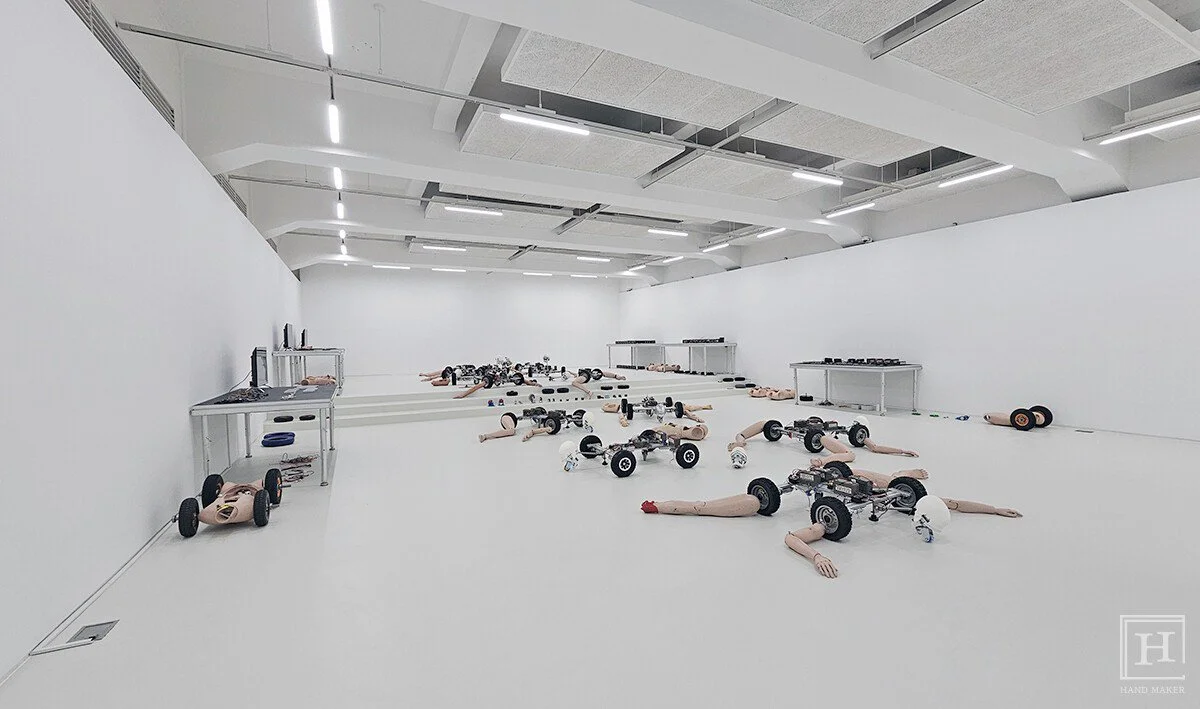
As artifacts with familiar uses become objects of attachment and desire, the human body handling them also deviates from its original purpose. As the body that assembles and tunes components—such as metal brackets, batteries, wires, wheels, medical torsos, and skeletal models—adjusts its breathing to match the machine, the machine is reborn in the next moment as an active subject requesting human care.
Jung Kum-hyung's experiments have led to robot making, where she directly develops power devices, since 2019. As the title "Homemade RC Toy" (2019) summarizes, the clumsiness of a remote-controlled toy assembled by hand at home further strengthens the bond between machine and human, through which the artist accurately points out where the longing for care resides. “There is interdependence, but ultimately machines do not need us. We need machines.”
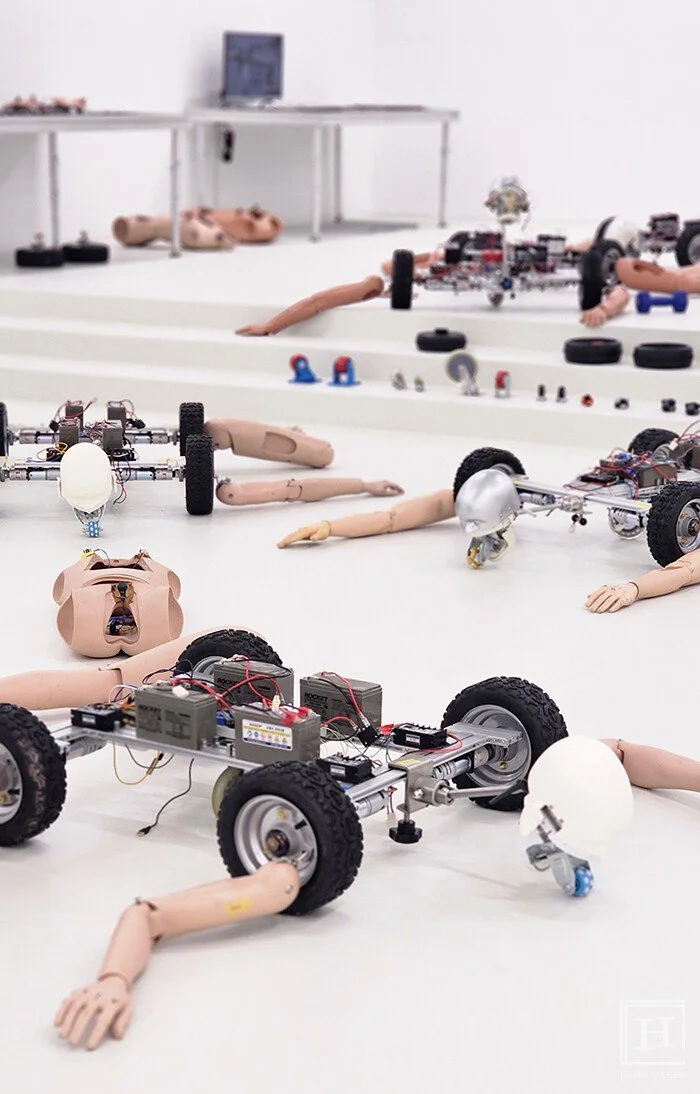
Toy Collection (2026) reconstructs artifacts she has handled in the past within Exhibition Hall 1 of the museum. For her, who perhaps longs for desires that may be eternally unreachable, the act of reassembling parts is important. Utilizing the entire floor of Exhibition Hall 1, the work flips the perspective of humans looking unilaterally at machines and blends the space between them.
While stopped machines may suppress movement, Toy Collection contains traces of past motion and the lingering possibility of future movement. Above all, since the machines are inducing human movement in the exhibition hall, their state of stillness is like another way of movement that calls for human care.
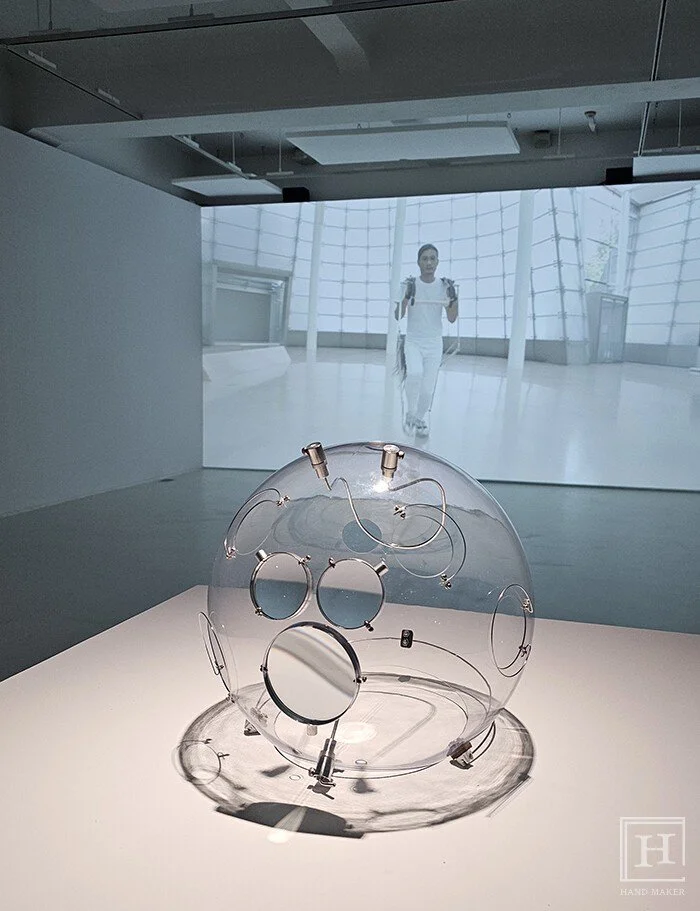
Lee Hyung-gu's sculptures are rules imposed upon the body. It can be said that the effort to create sculptures to change the body, and then changing the body again to fit those sculptures, has been the experiment that permeates his past work. Lenses that adjust body proportions, mirrors that change the direction of gaze, and apparatuses that mimic the skeletons of other animals are all tools that impose unfamiliar conditions on the body.
His early works mainly stem from experiences of becoming newly conscious of his own appearance in relation to others during his time studying abroad, with the 'The Objectuals' series, which distorts the size or appearance of the body as seen in 〈H-E〉(2018), being representative. This interest gradually leads to attempts to coordinate movement and perception through prosthetics that change the external appearance.
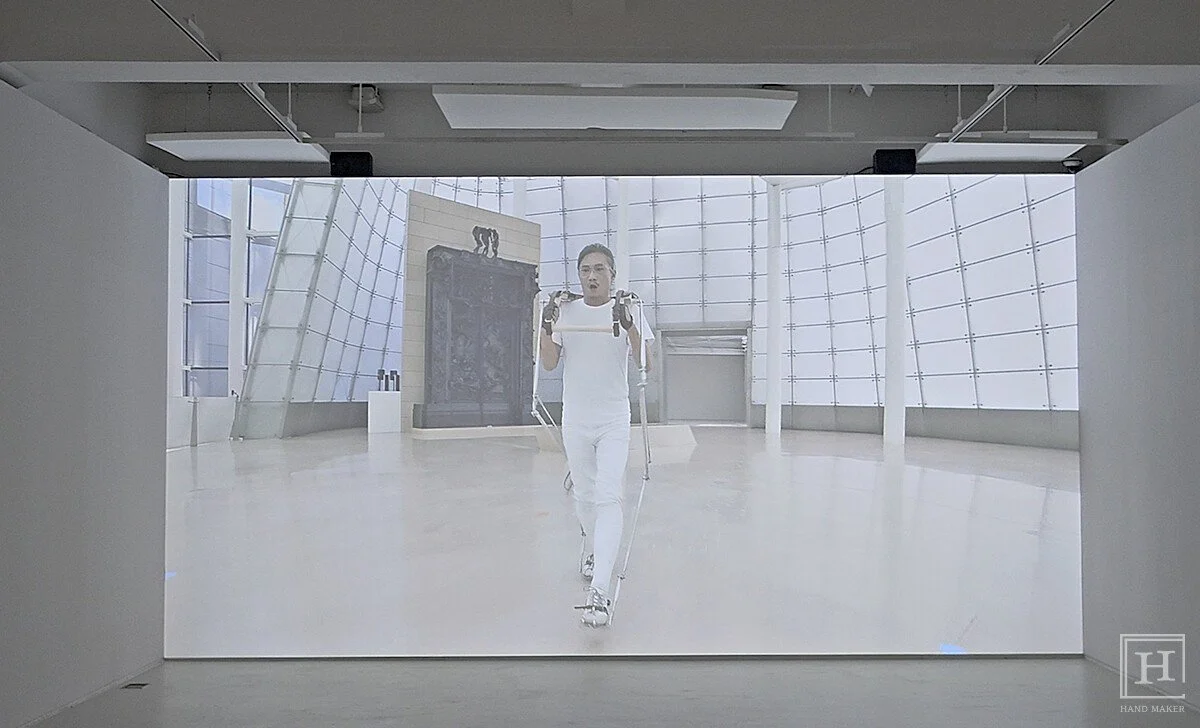
In 〈Measure〉(2014), which carries the meaning of scale or measurement, he reenacted dressage movements while equipped with 〈Instrument 01〉(2014), which mimics the hind leg skeleton of a horse. While studying the movements of insects and animals, he became interested in dressage and sought to transfer the rules involving the heterogeneous bodies of humans and horses onto his own body. This shows the artist's practice of mimicking other beings, going beyond an engineering attitude of improving or developing the body.
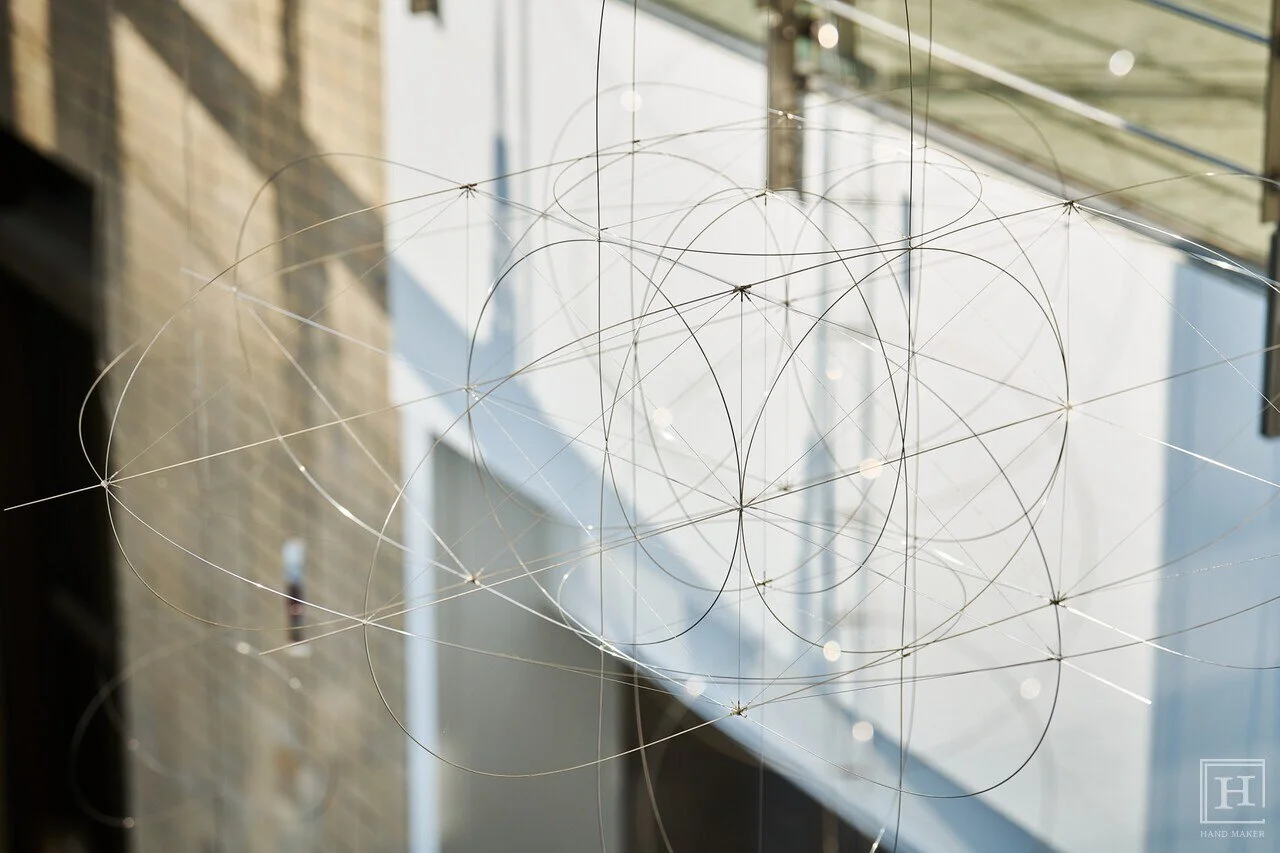
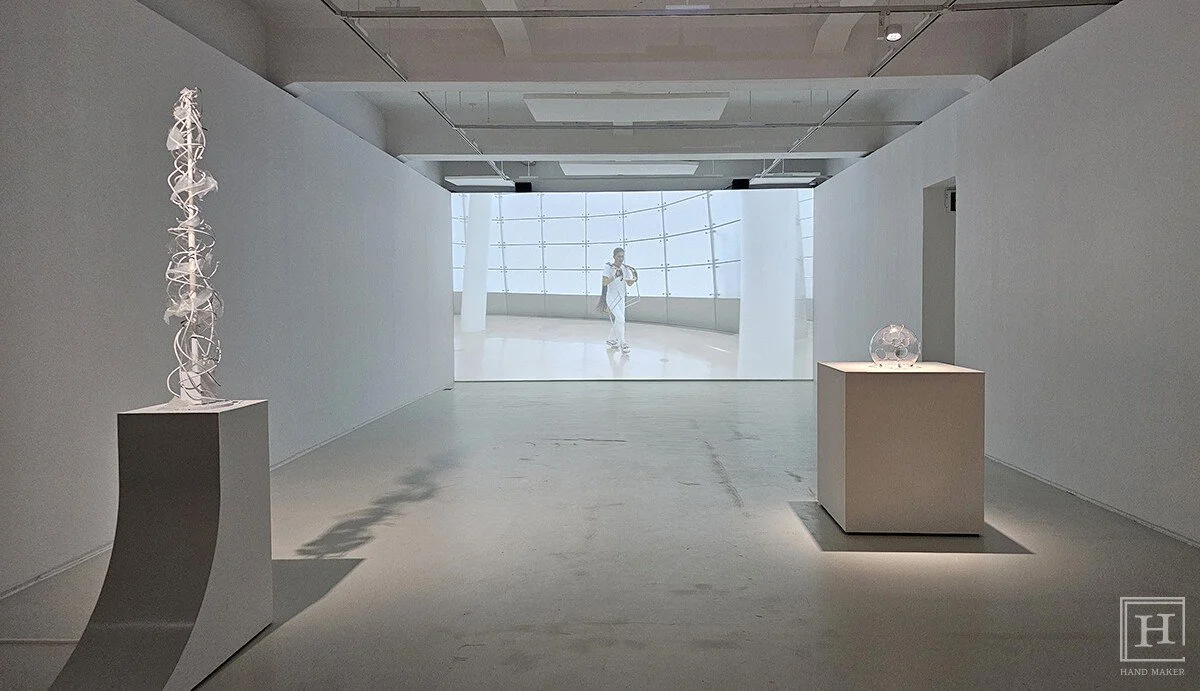
The new work 〈Viz Vextor〉(2026), installed in the atrium of the Ilmin Museum of Art, condenses the exploration of movement and perception into the relationship between the force that supports matter and light. The attempts to train perception through sculptural devices are coordinated in relation to the external environment and expand into spatial structures and a sense of direction outside the body. 'Resistance' to maintain form is also a principle of aesthetic coordination thought of by the artist. The sculpture, in which the tension of stainless steel wires achieves a taut equilibrium, occupies space by drawing in the external environment without filling the volume.
The name of this work combines 'pre-visualization,' the process of visualizing an object in advance, with 'vector,' meaning direction and speed. The meaning of 'visualizing the force of moving forward' connects with the long history of the building where the museum is located. In a space where information and people, radio waves and paper intersected, the movement of the mobile hanging vertically still makes one imagine the flow of energy that moves this place. Meanwhile, 〈Viz Vextor〉 was produced through the sponsorship of Tiffany & Co.
The second exhibition hall explores different balances of force through sculptures, videos, and moving devices. Koo Dong-hee often adds heterogeneous forces to familiar scenes shown by certain objects or phenomena. These include elements such as objects whose use has changed while maintaining a familiar appearance, bodies that move but cannot advance, and cameras that lose their position while following an object.
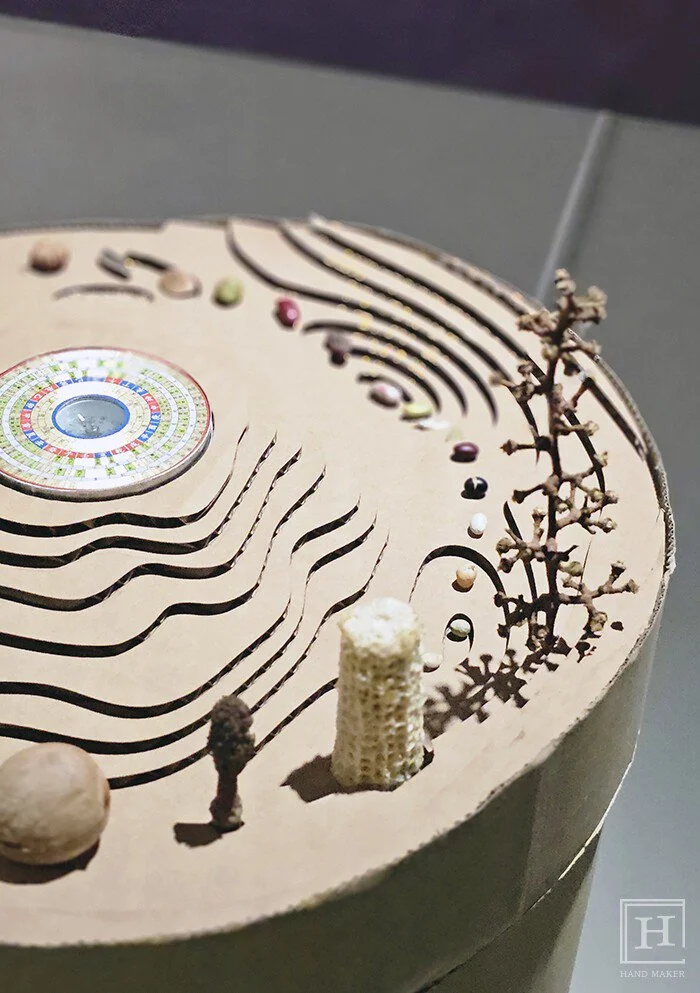
〈Re: Sequence 528〉(2026) regularly arranges various natural objects such as a compass, corn silk, nuts, beans, and seeds on a circular turntable. The sequence of natural objects forming the outer edge of the disk, the direction indicated by the compass placed at the center, and the rotation speed of the disk move in different orders depending on where the gaze is placed.
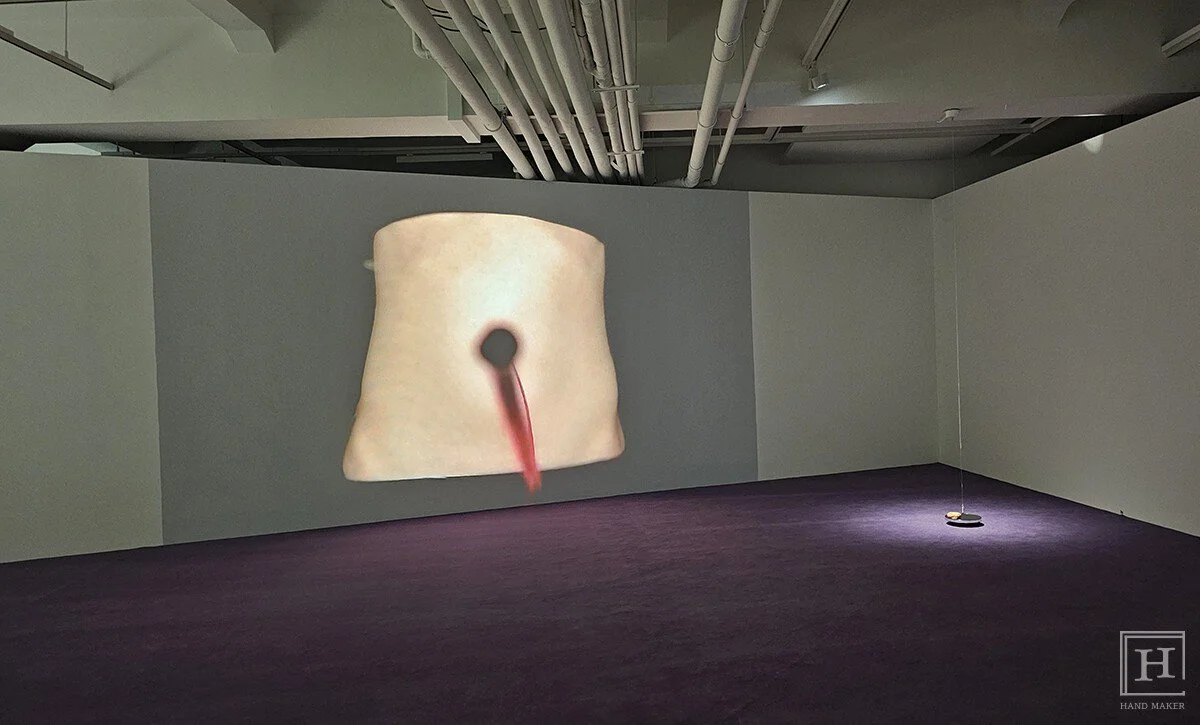
〈Close-up〉(2013) begins with a scene where a belly dancer's navel piercing and a camera lens are connected by a single red thread. When the vibration of the waist is transmitted to the lens along the thread, the distance between the focus and the subject shakes, and the camera observing the body is also caught up in that movement. In a situation where the lens looking at the body is held by the body, the trembling of the body, which was observed like an error, gradually spreads into the vibration of the screen and space through the tension of the thread.
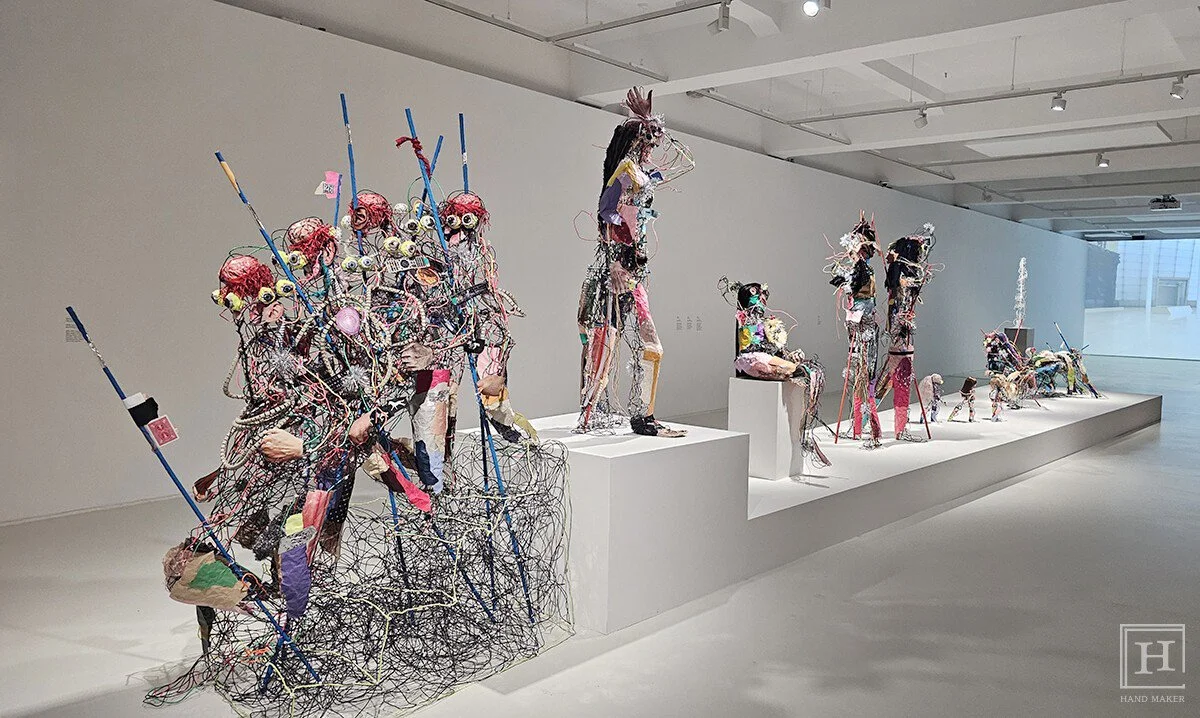
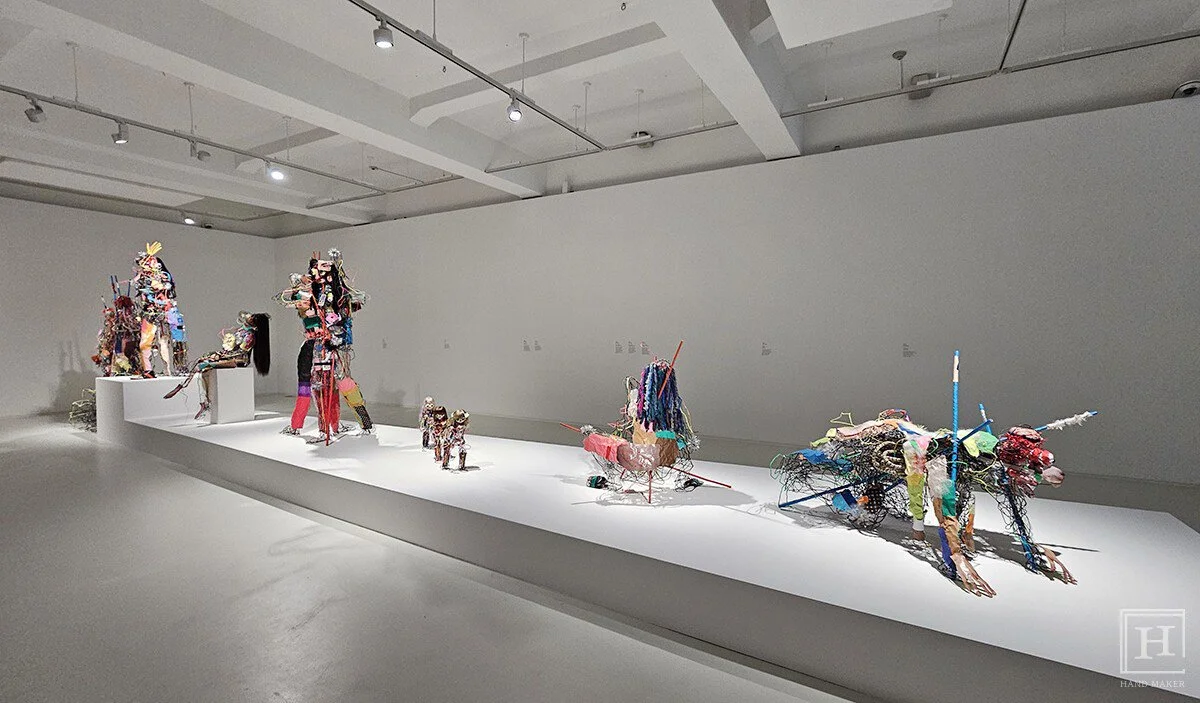
Kwak Ji-su builds bodies with things that bend and sag easily. The forms he creates by twisting wire and weaving electric wires and hoses have numerous joints that share each other's weight instead of a solid center. As beads, stock images, fingernails, and collected objects are mixed into the framework bound with tape and cable ties, the task of balancing the shaking also becomes more difficult. During a period when getting out of bed every morning felt like intense exercise, the artist began to imagine scenes where such fragile things entwine to endure.
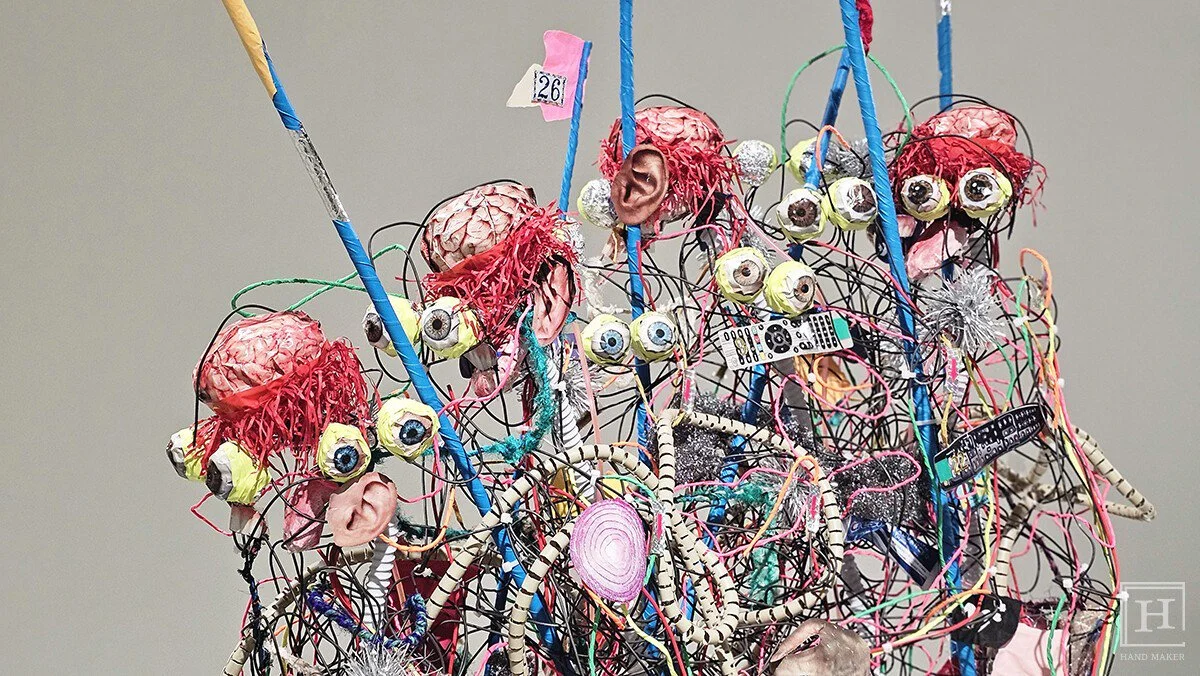
Sculptures that combine objects and images from various sources do not represent only a specific culture or era. The five forms on a long pedestal reference the grammar of fashion along with Pablo Picasso's 〈Les Demoiselles d'Avignon〉 (1907). 〈Person Descending a Staircase〉 (2026) takes Marcel Duchamp's 〈Nude Descending a Staircase, No. 2〉 (1912) as its prototype.
In this way, while the artist transfers pictorial expressions or movement into the conditions of contemporary sculpture, they mix anonymous, crude, and rough bodily images into the female bodies found in art history. The bodies they create contain histories that cannot be identified through the source of the images alone.
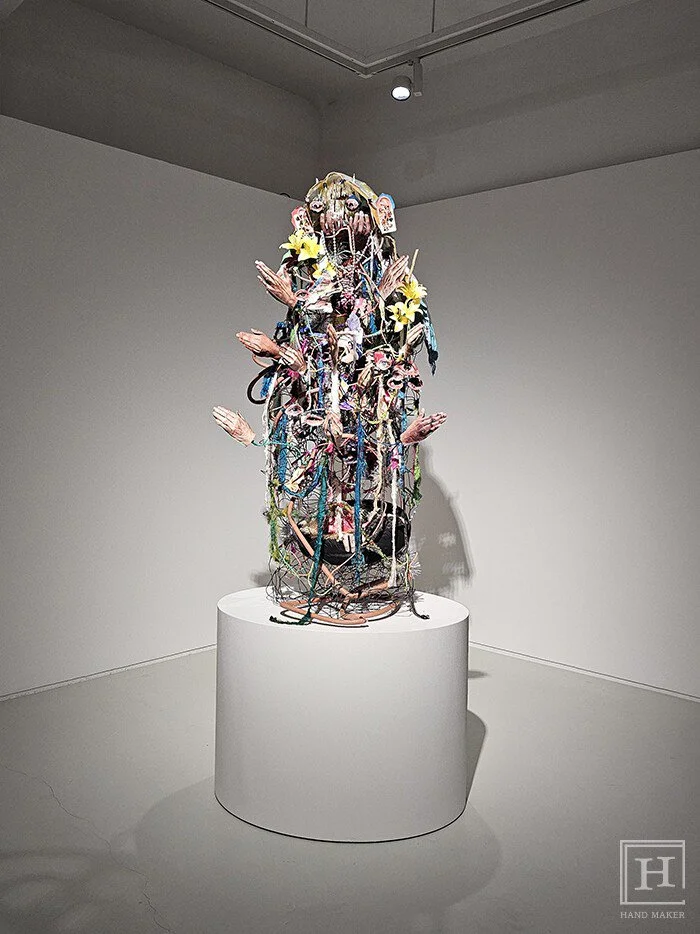
〈Praying Woman〉 (2025) overlays the artist's memories of experiencing changing family boundaries while staying at various homestays during their time studying abroad, with the story of a woman who felt she could not become a "real mother" even after adopting a child she had cared for for a long time. The form of the folded hands evokes a statue of the Virgin Mary, but at the same time, it may bring to mind indigenous motifs such as decorations on a sacred tree.
In Exhibition Hall 3 and the Project Room, the works of b.1994 and b.1995 are placed. These two artists transfer objects and memories salvaged from daily life into sculpture and installation.
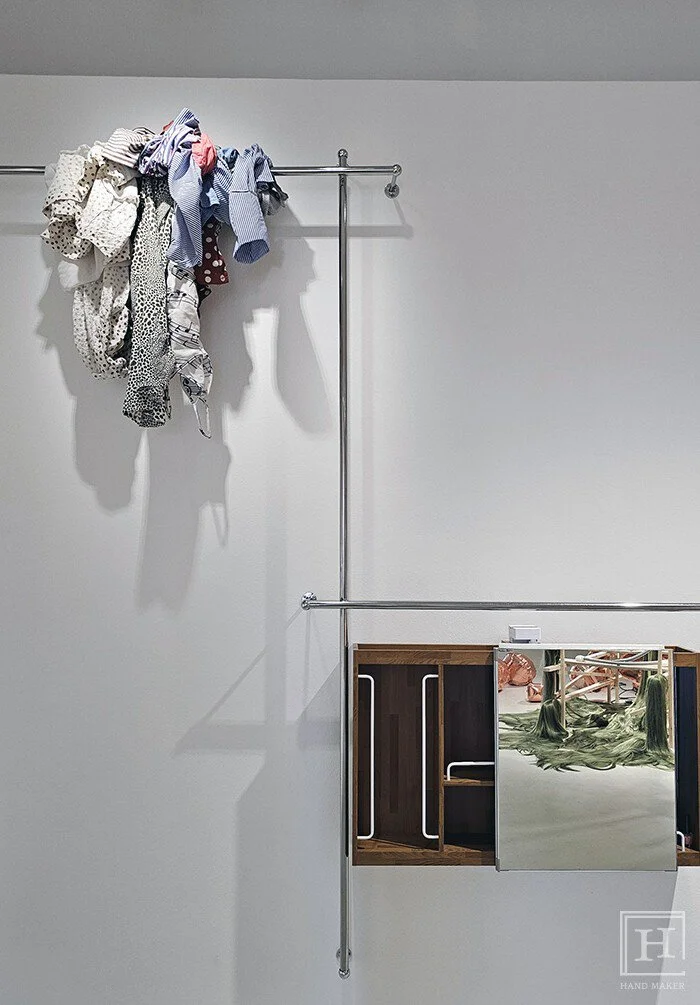
The objects of b.1994 begin to move from the places where they have fulfilled their promised uses. Daily necessities such as mobiles, cradles, massage devices, and sorbet makers obtained from flea markets and second-hand trading platforms are artifacts with their own functions and movements. Machines produced in entirely unrelated categories are gathered into a single mass by the artist and assigned new missions. By finding the moment when ready-made goods reach the end of their lifespan or their functions are exhausted, the artist transforms them into a kind of "eccentric species," and through this, discovers the temporary states taken by objects and bodies.
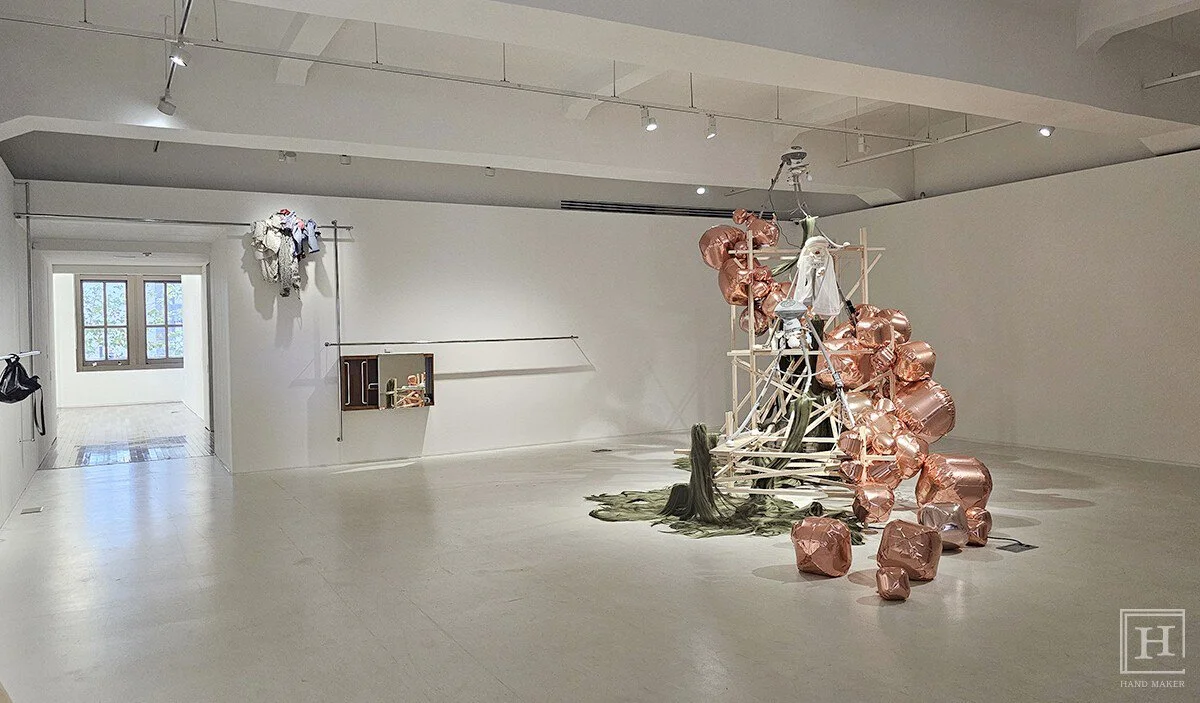
In this exhibition, b.1994 imagines the specific living space of a bathroom. The bathroom is a space designed for washing and managing the body, but it is also a place where contaminated things and things shed from the body temporarily reside. 〈Ari Ari II〉 (2026), which features a sliding motor attached to a storage cabinet purchased from Karrot, repeatedly reveals and hides the items left in a disarray inside whenever the mirror moves.
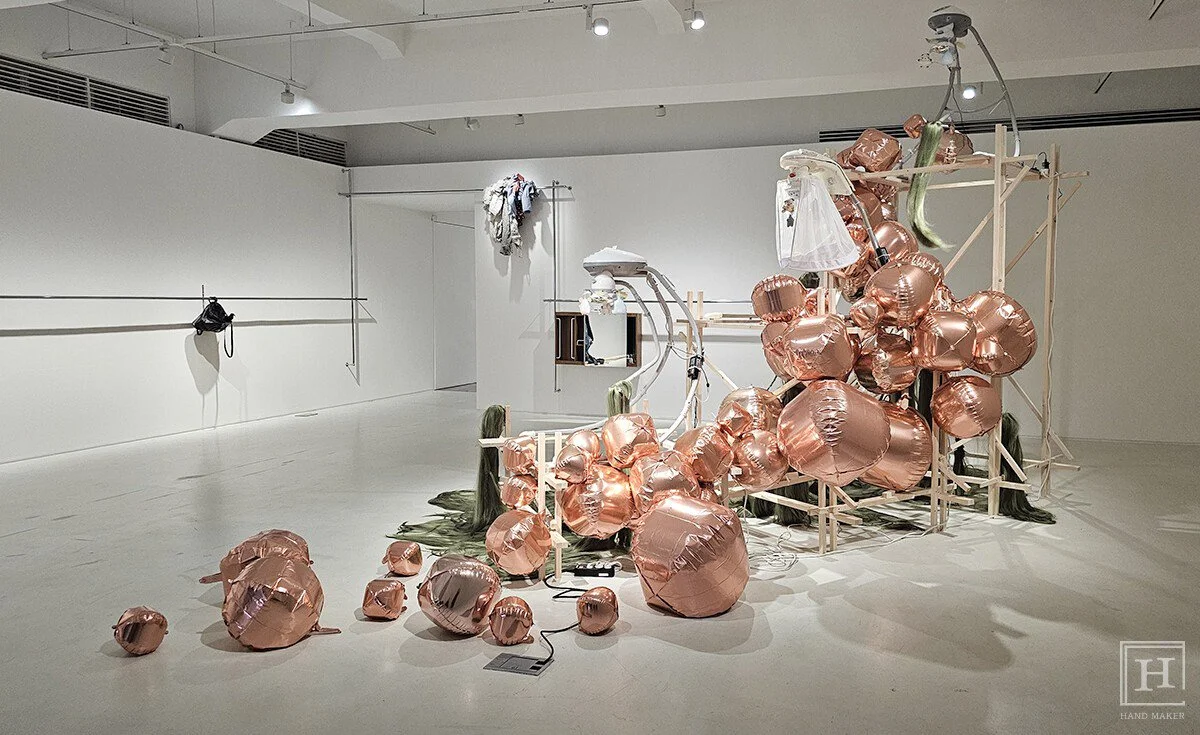
〈There Is No Longer a Quiet Awakening〉 (2026) shows a scene where shiny balloons, a reciprocating electric bouncer, and long, trailing green wigs invade and unite with each other's boundaries and movements. To the artist, balloons are artifacts that appear at moments when expectations for the future are reinforced, such as birthdays, first birthday parties, or gender reveals. While observing the air slowly escaping from balloon decorations—ideational entities containing human wishes—the artist connected this to a bathroom where substances discharged from the body and bubbles gather, flow, or scatter.
In the past, the artist has treated the reciprocating motion of the electric bouncer, which creates a hypnotic rhythm, as a force that transitions the body from awakening to sleep, blurring the boundary between care and neglect. Just as when the body leans toward a state of relaxation, the "trance state," in which a fixed-form substance unravels and turns into a damp solution, is also a transition process that interests the artist.
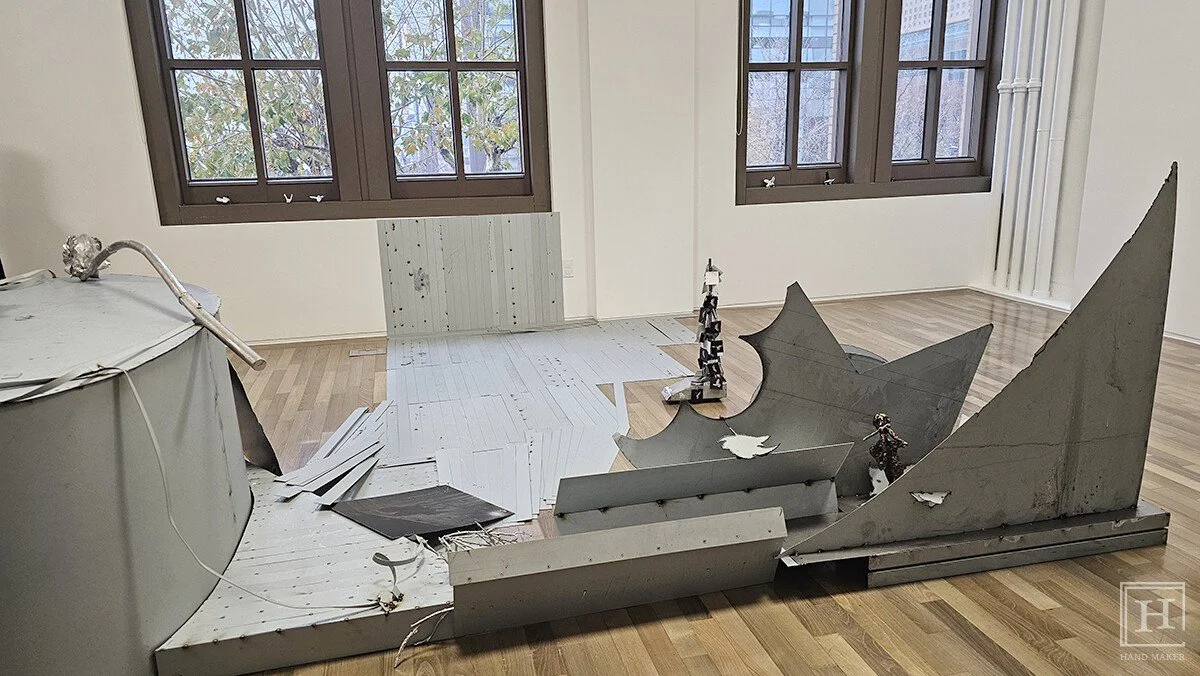
b.1995 has experimented with various ways to remove "weight" from sculpture. Here, weight encompasses not only the inherent meaning of the material's mass, but also the psychological distance felt in front of objects that cannot be easily moved or transformed, the convention that sculptures should not be touched carelessly, and the authority bestowed upon monuments. The experience of when they first attempted sculptural work, where a large human figure made of paper boxes became wet and the ankles collapsed, became an opportunity to take interest in the state changes of sculpture or the environment of the work that cannot be controlled by oneself.
This artist's mindset leads to the act of drawing out different types of forces surrounding sculpture. His sculptures—which can be stepped on, lifted, sat upon or leaned against, or even put into the mouth to be eaten and disappeared—open up the possibility of remembering someone through the medium of the work, or entrusting one's next state to someone not yet met.
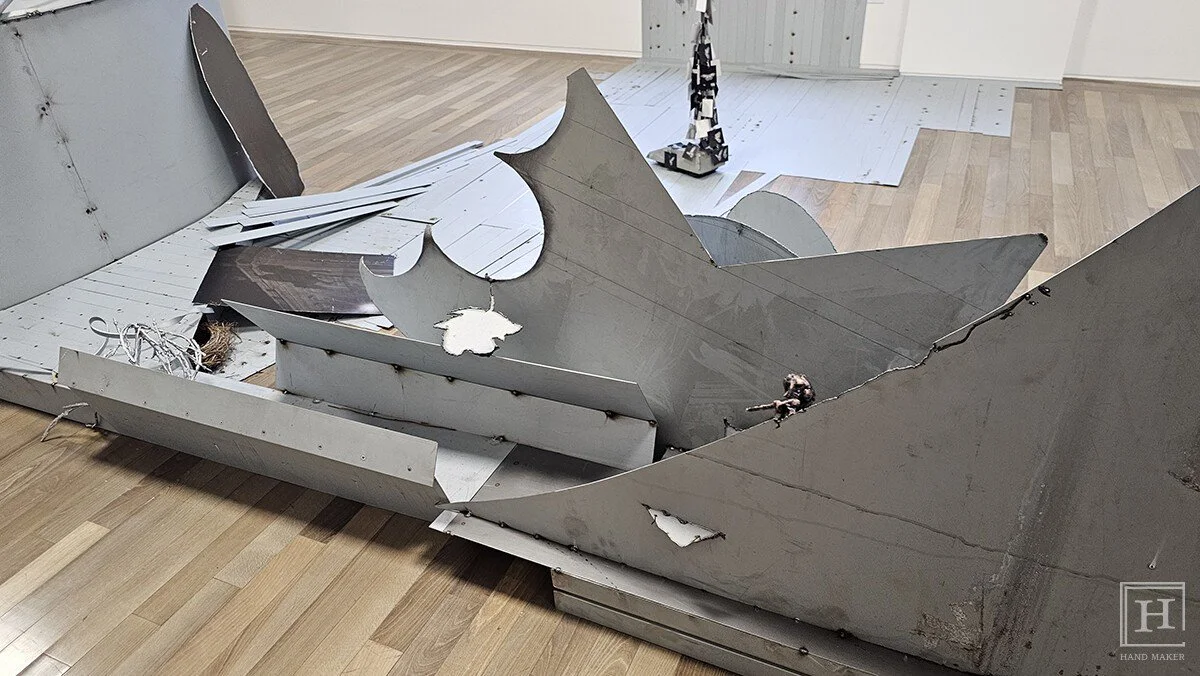
In this exhibition, b.1995 combines mechanical devices, the rules governing those devices, and records collected over the past year. 〈Strangely, when January comes, there was a fantasy-like hope that everything would be organized and I could start again〉 (2026) is a part of a post left on a blog at the beginning of the new year. On a steel plate cut as if drawing using an oxygen cutter, small objects that materialize records accumulated in photo albums and blogs, as well as words and scenes sent by acquaintances, are placed. Using a controller, the audience directly moves the sculptures, exploring the topography of the time the artist spent throughout the year.
The fact that the performance of the hand can be extended through invisible signals gives the operator greater freedom, but it cannot make the weight of the object or the friction of the floor disappear. The limited movement of the controller ultimately becomes similar to the activity of carefully receiving the reaction of the object and indirectly stroking the surface of the sculpture.
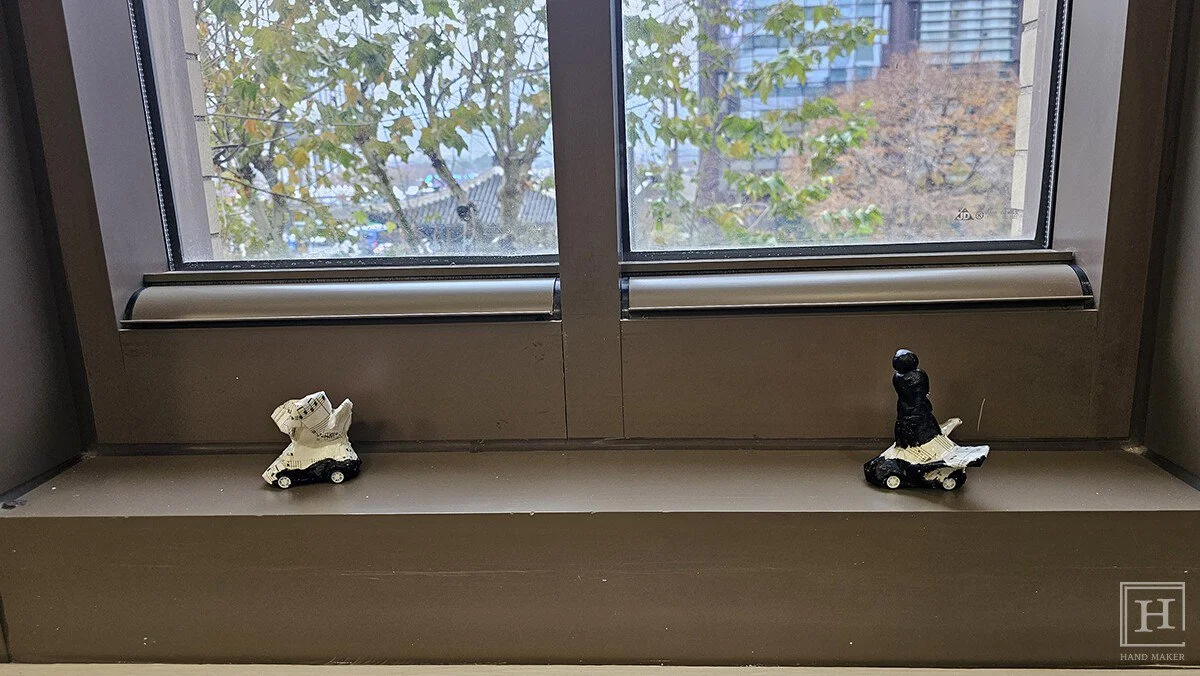
On the other hand, Pullback Toy makes one observe the movement and state of an object that has left the hand. The feedback that makes one stand up objects that have stopped or fallen and look back at the topography is inevitable in interaction with any subject. This also resembles the relationships with colleagues and family that the artist has reflected upon through the works.
The works placed in 《mana》 commonly attempt to understand machines and objects with inherent motility, and the state of the body responding to that force. Learning about force is not about finding a special ability dwelling in an object, but is similar to an exploration of retracing the entanglement with other existences.
In a museum that constantly creates and exhibits works, such attempts become concrete movement every day. Through the practice of raising what has stopped and filling what has run out to align the body, art implies that the act of dealing with force and efficacy is not far from the effort to maintain that force.
An official from the exhibition stated, “In celebration of the 100th anniversary of the Ilmin Museum of Art's architecture, the starting point of this exhibition was the fact that the space is alive and moving because there are people who open the museum doors, work, and present works every day,” and added, “《mana》 is an exhibition about something being alive and the force and energy that maintains it.”
Reporter at HANDMAKER (핸드메이커), a Korean magazine devoted to crafts and handmade culture. Covers exhibitions, traditional crafts and the makers behind them.
Related Articles
Hwang Se-na and Ji Mi-rye explore deficiency and consolation in dual exhibition "Nevertheless, We"
Large corporations and local bakeries unite at Gwanghwamun festival
Comments 0
Comments are currently disabled.