
Artist Baek Seung-ah transforms the human body into unfamiliar forms in solo exhibition "Floating Islands"
Gladstone Seoul is hosting "Floating Islands," a solo exhibition by Pittsburgh-based Korean artist Baek Seung-ah, featuring new works from her "Self Configuration" series through January 9, 2027.
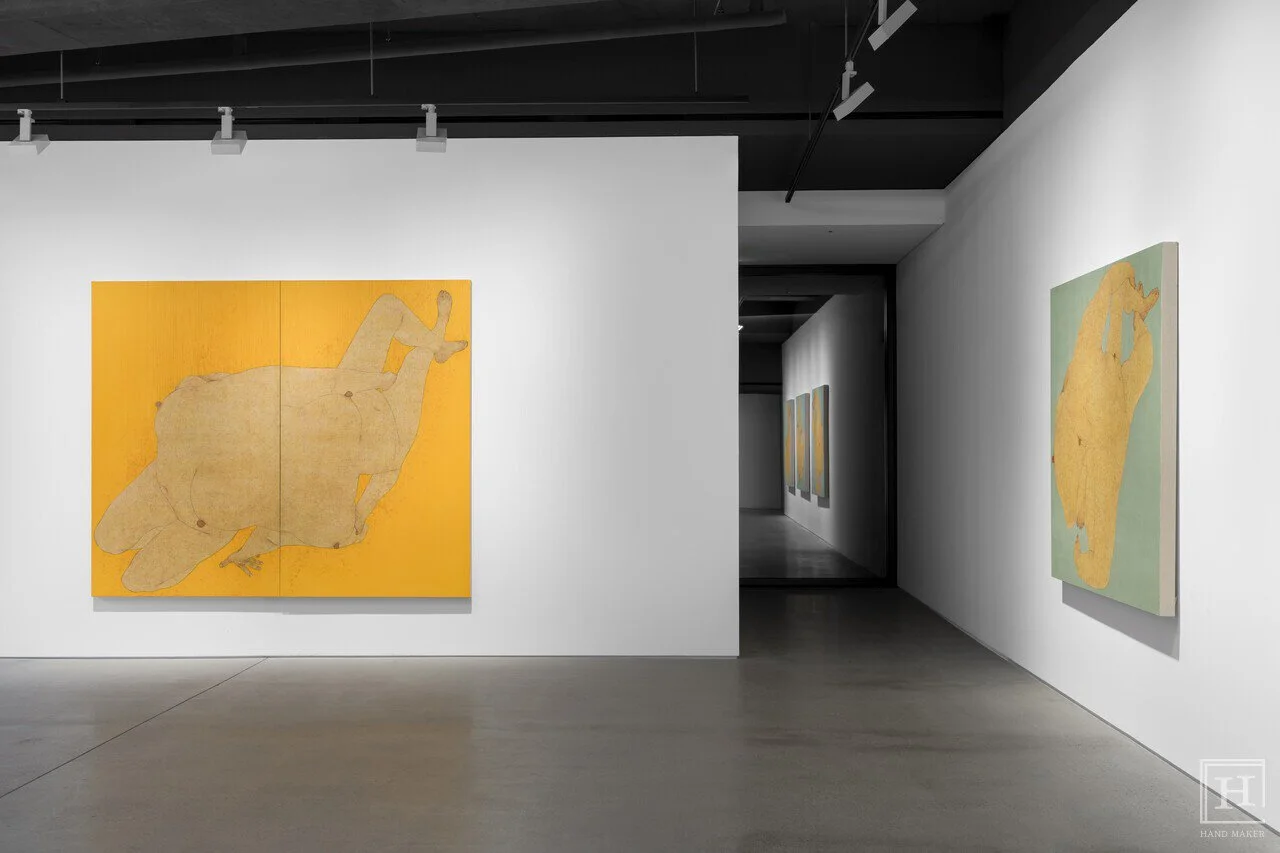
Gladstone Seoul is holding "Floating Islands," a solo exhibition by Korean artist Baek Seung-ah, who is based in Pittsburgh, USA, running until January 9, 2027. This exhibition consists of new works from the artist's ongoing "Self Configuration" series, presenting a total of 11 pieces, including large-scale multi-panel paintings.
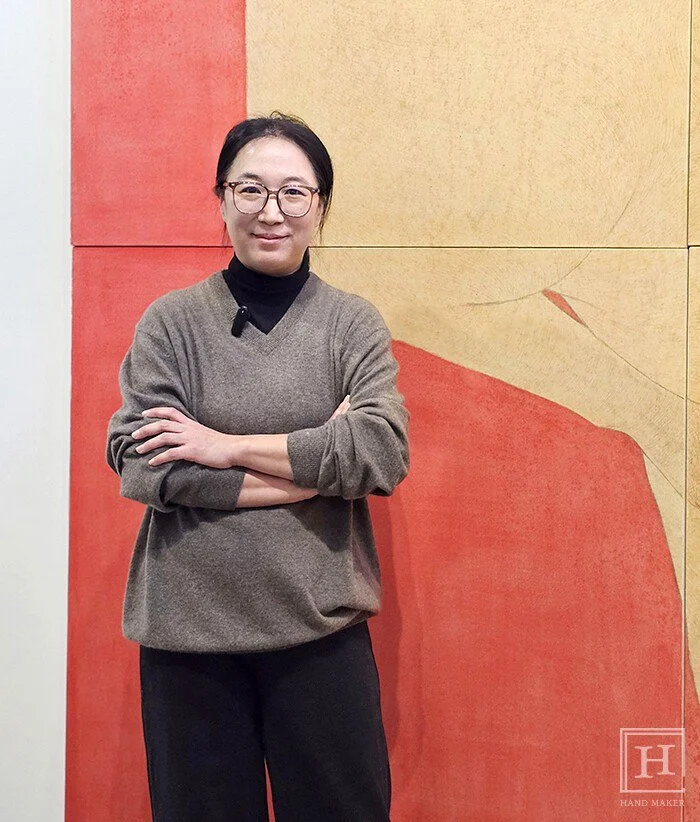
Currently active in Pittsburgh, Baek Seung-ah explores the relationship between nature and humans by using the female body as a symbol of change and self-exploration. Rather than representing her body as a traditional self-portrait, she deconstructs it into a collection of various objects. By viewing and reconstructing these fragments from constantly changing perspectives, she expresses her sense of self through painting.
This intentional fragmentation of the body transforms it into an object that is simultaneously familiar and strange, blurring the boundaries between the artist and the work. Through a vision that is not limited to a single fixed viewpoint, Baek expands the body into a field of exploration. In this process, the body is revealed as an entity that is intensely personal yet universal, appearing as an object that is both intimate and distant.
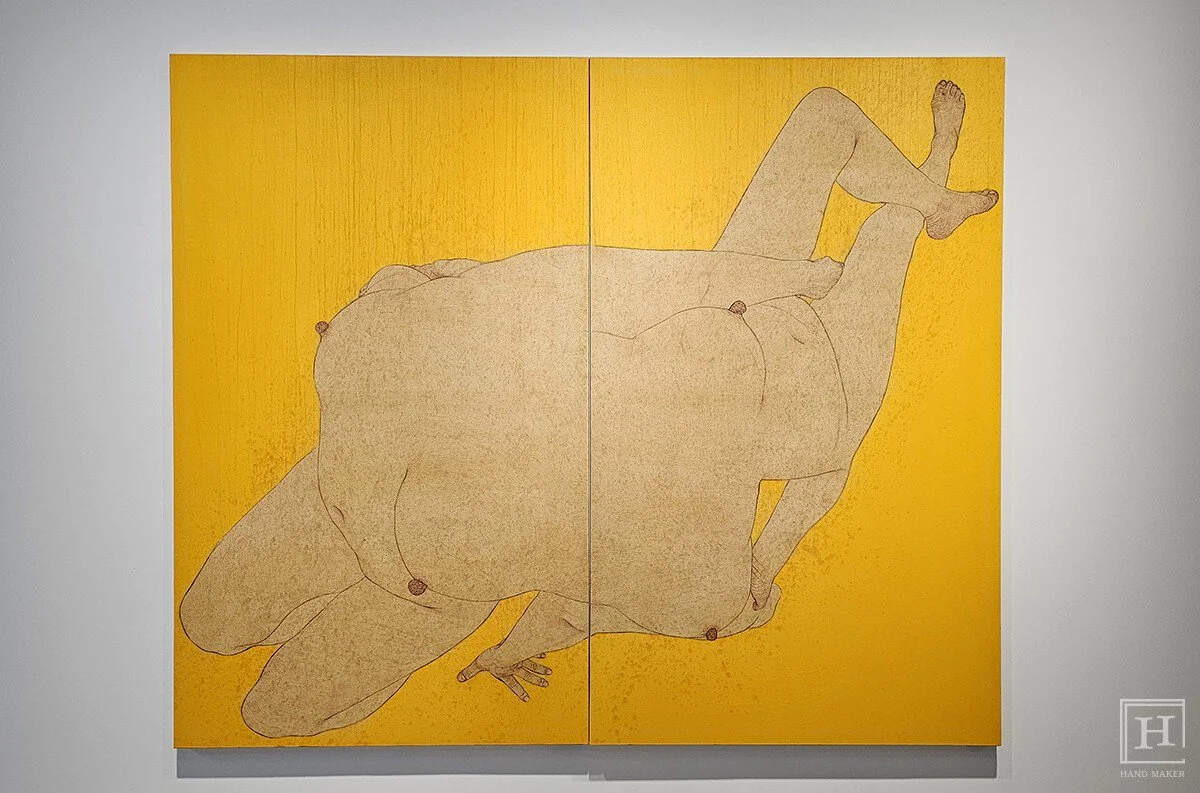
"Floating Islands" began from a continuous interest in looking at the body from various changing perspectives. While fragments of the body were often scattered across the canvas in previous works, they have recently begun to gather into denser, more mass-like forms. In that process, the body becomes increasingly difficult to recognize, transforming into something strange and sometimes monstrous, like islands floating on a field of color," the artist said in an interview.
Baek Seung-ah uses her own body and the perspective of looking at it as her primary subject matter. Based on hundreds of photographs she took looking down at her own body, the artist combines different first-person perspectives into a single frame. Fragments of limbs and the torso overlap and entwine, creating compositions where the boundaries of each shape become blurred. The artist's face remains out of view, and her right hand holding the camera is also often omitted.
"The theme of this work is my own body. It is also the most important subject throughout my work. My brother-in-law is a painter, and when I was starting my work, he advised me to focus on drawing what I am most familiar with, what I want to do, and what I am interested in. Since then, I have been painting my body.
When people think of a typical self-portrait, they think of expressing identity through the face. While my paintings are self-portraits, they are not about showing my identity to others, but rather subjective self-portraits that reconstruct my appearance from various perspectives. When I first started working, I had a lot of dissatisfaction with my body, but as I painted it, I began to see more interesting parts when looking at my body as an object, which became an opportunity for me to love my body more," the artist said in an interview.
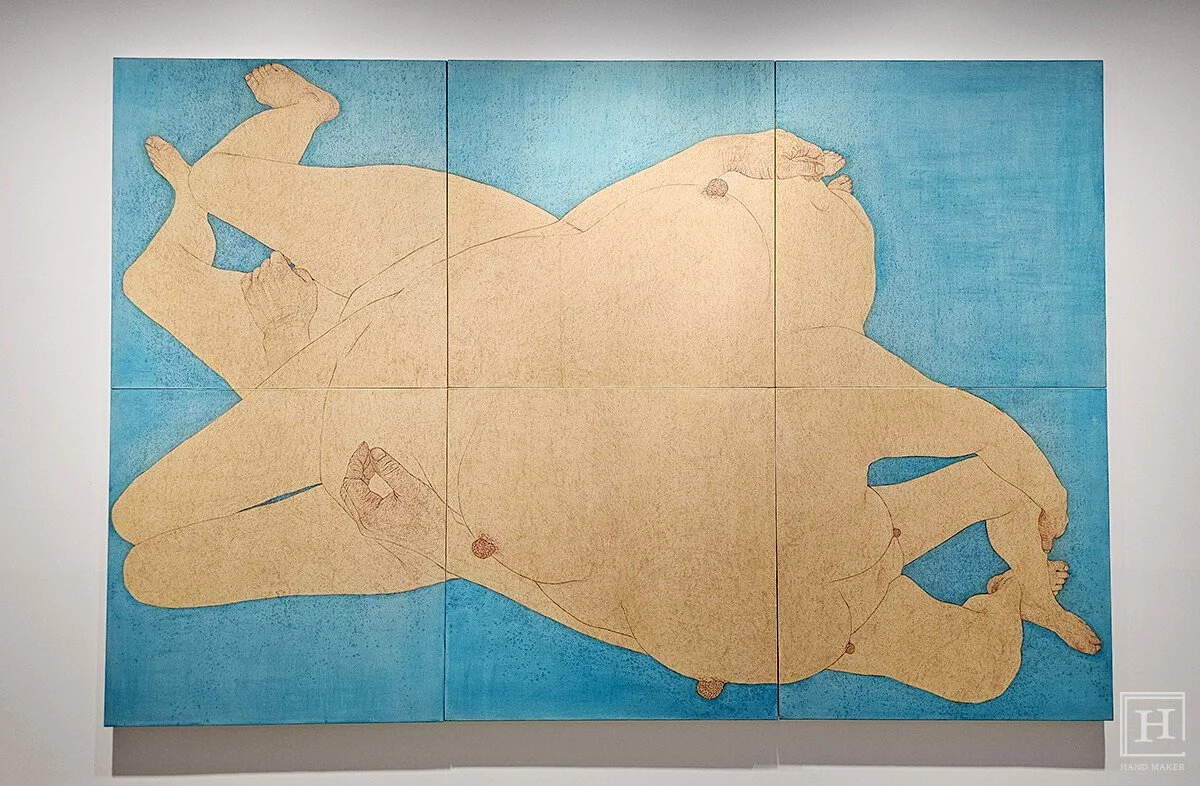
Her face does not appear in her works. The artist explained, "The reason I excluded the face is that I have never seen my own face directly. Since my eyes are on my face, I always had to look at myself through media, whether it was a mirror or a photograph. Some days the photo comes out well, and some days it doesn't. Because of that, I couldn't tell if the photo was actually good or not. I wondered, 'Is this really the face I think it is?' So I decided to paint the version of myself that I see directly, and that is how I came to paint this way."
Based on traditional portraiture techniques of the Joseon Dynasty and the multi-point perspective (sanjeom tusi) of Oriental landscape painting, the artist reconstructs her body, viewed from various angles, into a single complex image.
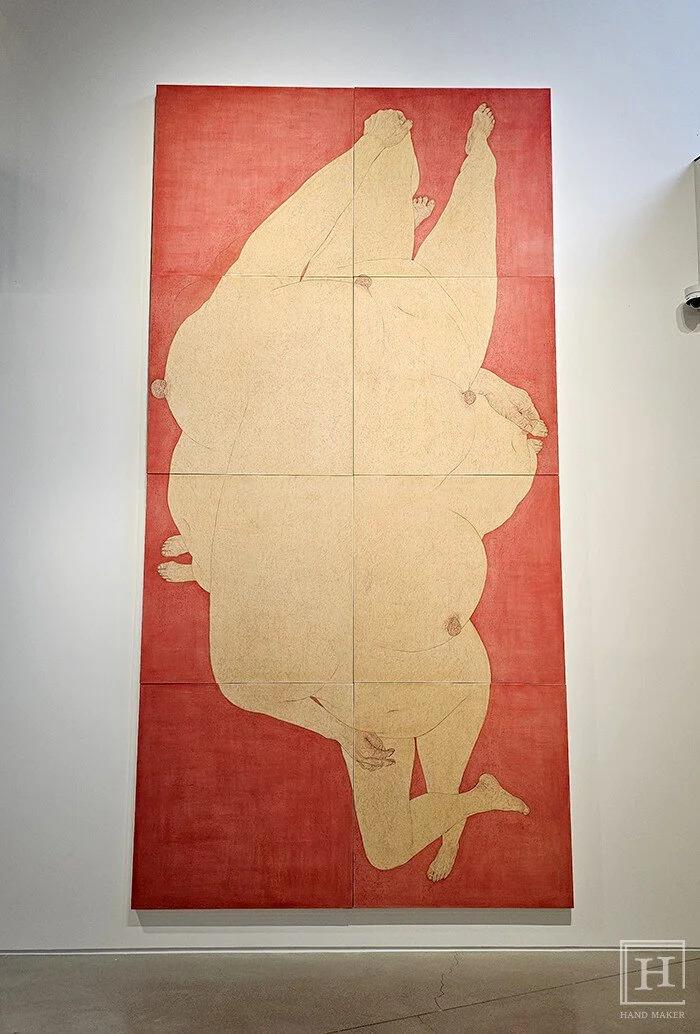
“Since it is the body as seen through my eyes, most of the paintings do not have a back or a face. They may look very realistic, but I painted the images I subjectively wanted to draw. The reconstructed parts are also realistic, but there are parts that differ from reality, and I only drew the parts I wanted to describe or emphasize. That is why many parts are omitted... I hope you view them as subjective and reconstructed self-portraits.
The work of gathering multiple perspectives rather than a single viewpoint can feel monstrous or like an unfamiliar alien form, which is quite interesting. So, by mixing these, I think multi-layered forms have emerged. Although it does not match anatomically at all, this work is the image of myself as I think of myself.” - Artist Interview
The artist regards the canvas as an extension of the skin, capturing detailed features such as the folds and wrinkles of the body as traces of time and experience. In this way, Baek Seung-ah views painting as both a portrait and a landscape, exploring the process in which familiar parts of the body transform into unfamiliar shapes within different perspectives and unexpected relationships.
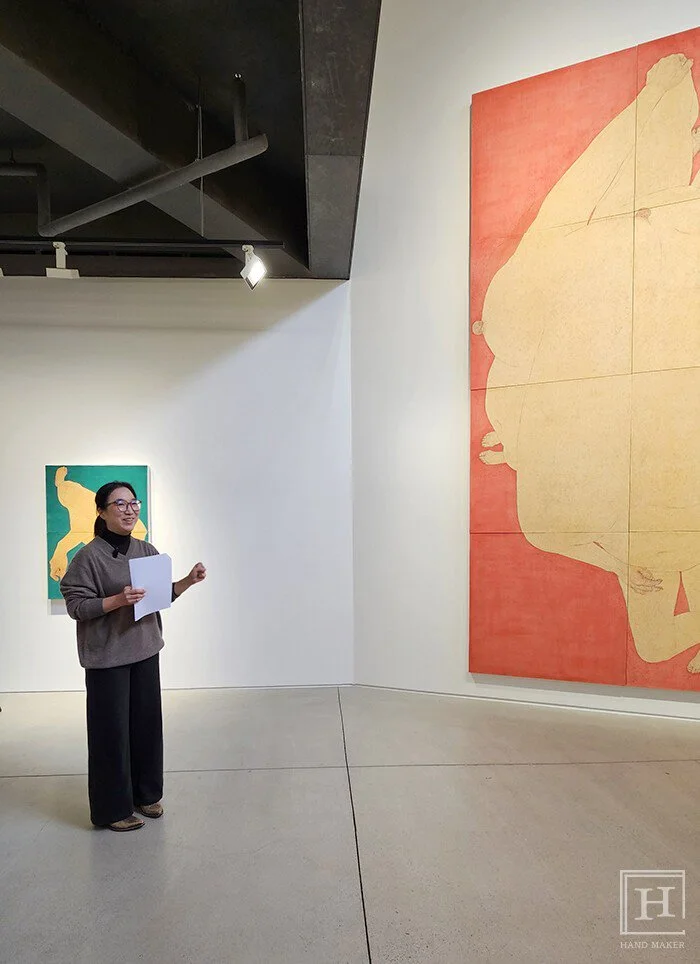
Her works are produced on unprocessed calico fabric. While studying fashion design at Central Saint Martins, she first encountered this material during the draping process, where fabric is applied directly to a mannequin to shape the garment, and she has used it continuously throughout her subsequent work.
After sketching with charcoal, the artist layers multiple thin coats of pigment, allowing the pigment to soak into the unprimed fabric rather than staying on the surface. In this process, while some parts of the body are described in detail, other parts are exaggerated or omitted. This demonstrates the artist's attitude of focusing on the subjective perception of looking at the body rather than reproducing the external appearance of the body as it is.
“I use a lot of photographs in my work. The direction of the skin texture didn't come out well in photographs, so I draw it all on my body, take hundreds of photos, and then create images and work by recombining them with Photoshop.” - Artist Interview
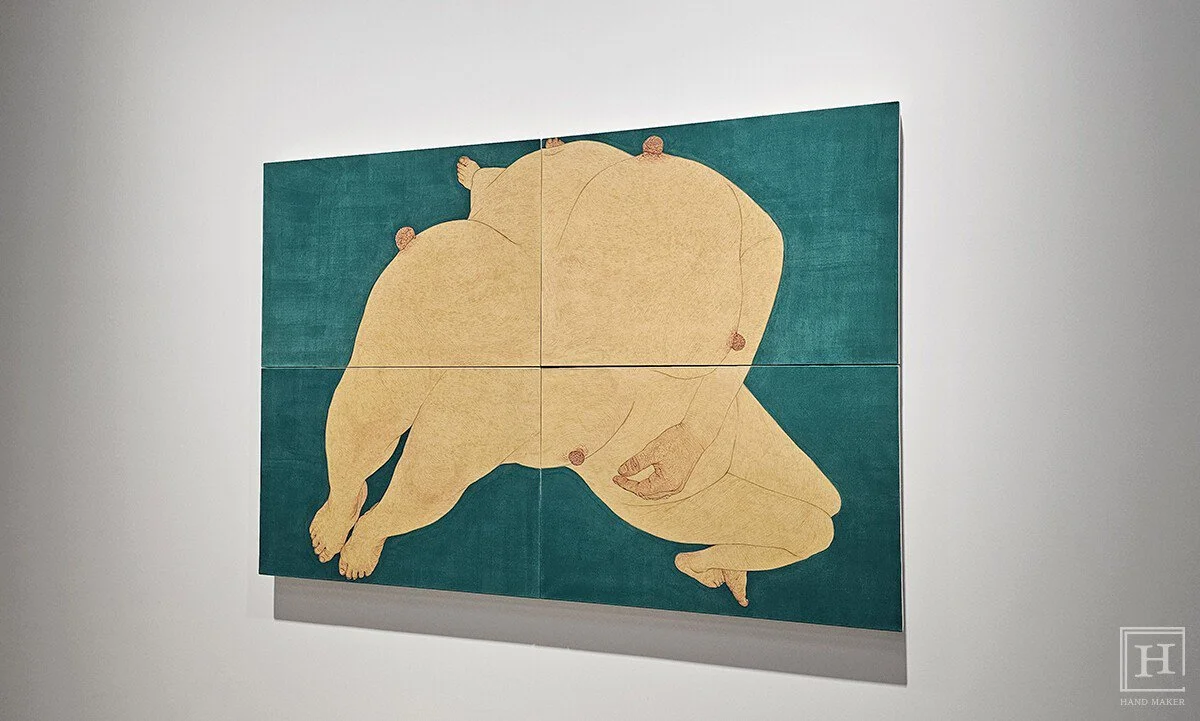
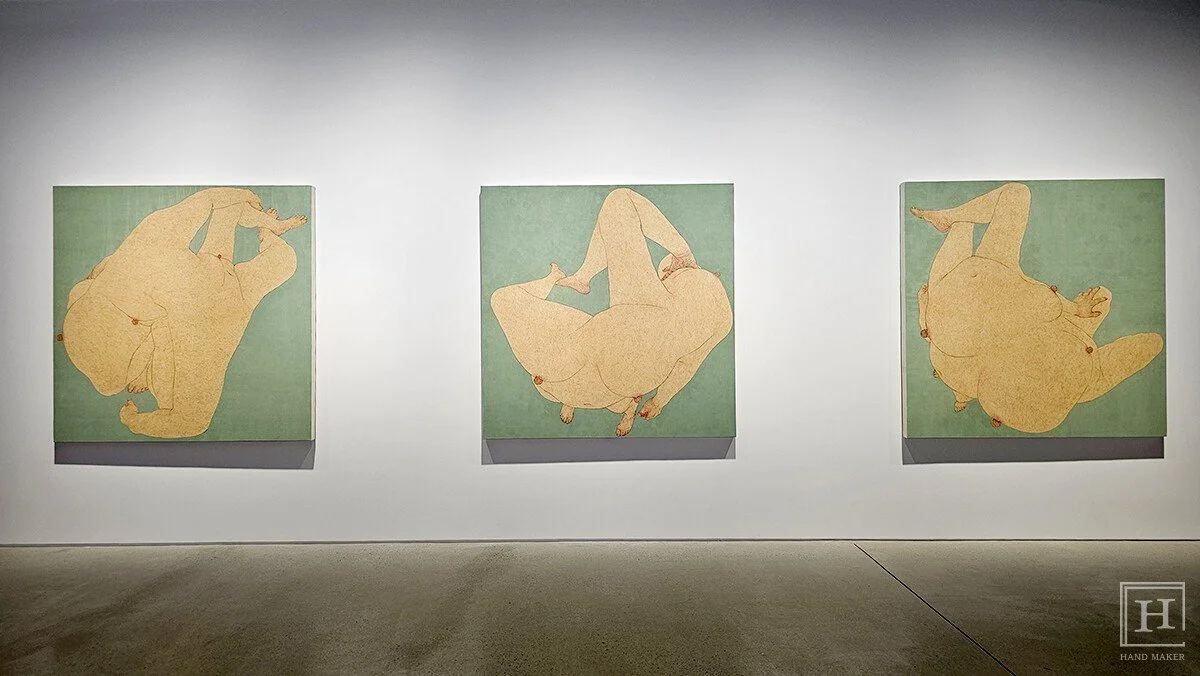
In this exhibition 《Floating Islands》, Baek Seung-ah presents new works that have further developed her compositional style. While fragments of the body were scattered throughout the screen in her early works, in the new works, she adjusts and rearranges the size and position of photographic images to combine them into a single cohesive form. The body composed in this way is in a state where the original human structure is difficult to recognize, sitting like a single island upon a widely spread monochromatic color field.
Instead of describing a specific place or environment, the artist intuitively selects background colors by considering the body and the overall composition of the screen. She explained, “The background colors are painted monolithically in single colors, because I felt that if a background is included, the perspective and place become specified, a story is created, and it becomes difficult to focus on the body itself,” and added, “When painting colors, I sometimes choose colors that express the emotions of that moment, and due to the characteristics of the paint, there are colors that catch my eye, so I work by choosing colors at those times to finish the background.”
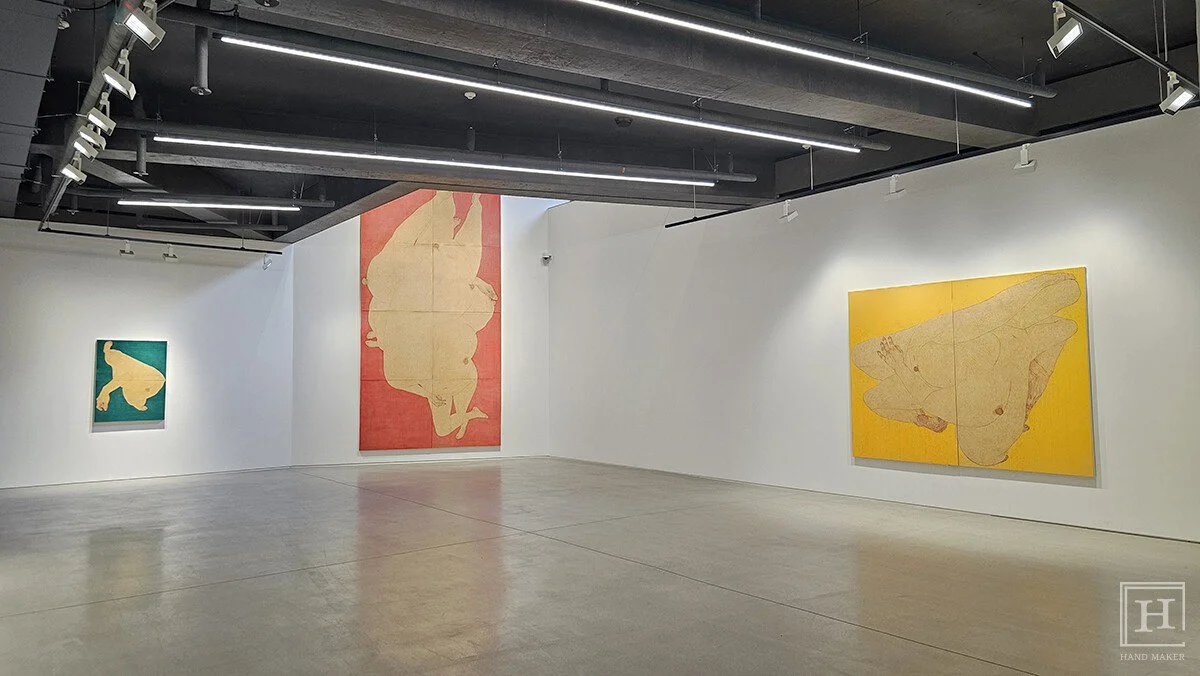
Artist Baek Seung-ah stated, “My work can be abstract or realistic,” and added, “I hope viewers do not feel bound by the appreciation defined by the artist, but rather enjoy it freely as they feel.”
Reporter at HANDMAKER (핸드메이커), a Korean magazine devoted to crafts and handmade culture. Covers exhibitions, traditional crafts and the makers behind them.
Related Articles
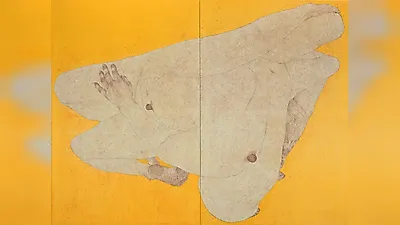
A Familiar Body Becomes an Unfamiliar Landscape… Gladstone Seoul to Host Seung Ah Paik’s 《Floating Islands》 in November
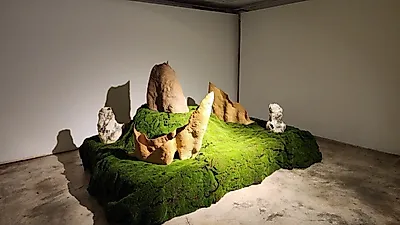
Ceramicist Jung Hee-seung explores the intersection of chance and intention in solo exhibition "Seeping Water and Standing Earth"
Comments 0
Comments are currently disabled.