
Ceramicist Jung Hee-seung explores the intersection of chance and intention in solo exhibition "Seeping Water and Standing Earth"
Ceramicist Jung Hee-seung is holding her first solo exhibition in Korea, titled "Seeping Water and Standing Earth," at Craft on the Hill in Bukchon. The exhibition features works that transform natural accidents into intentional artistic expressions through the use of water and pigments on white porcelain.
Ceramicist Jung Hee-seung is presenting her first solo exhibition in Korea, "Seeping Water and Standing Earth," at Craft on the Hill in Bukchon. Selected through an artist competition, Jung uses white porcelain and hand-building techniques to transform accidental natural traces into intentional landscapes.
Water does not flow only along predetermined paths, and soil leaves different traces wherever it touches. Unpredictable changes in nature sometimes create accidental landscapes. While some might simply pass by these traces, ceramicist Jung Hee-seung discovers her own memories and emotions within them.
Where water and pigments have flowed, she paints inner landscapes, and using traces taken from wood, stone, and earth, she shapes them with clay to raise new existences. The process of accepting chance while choosing what to leave or erase resembles our own lives, which do not always flow according to plan.
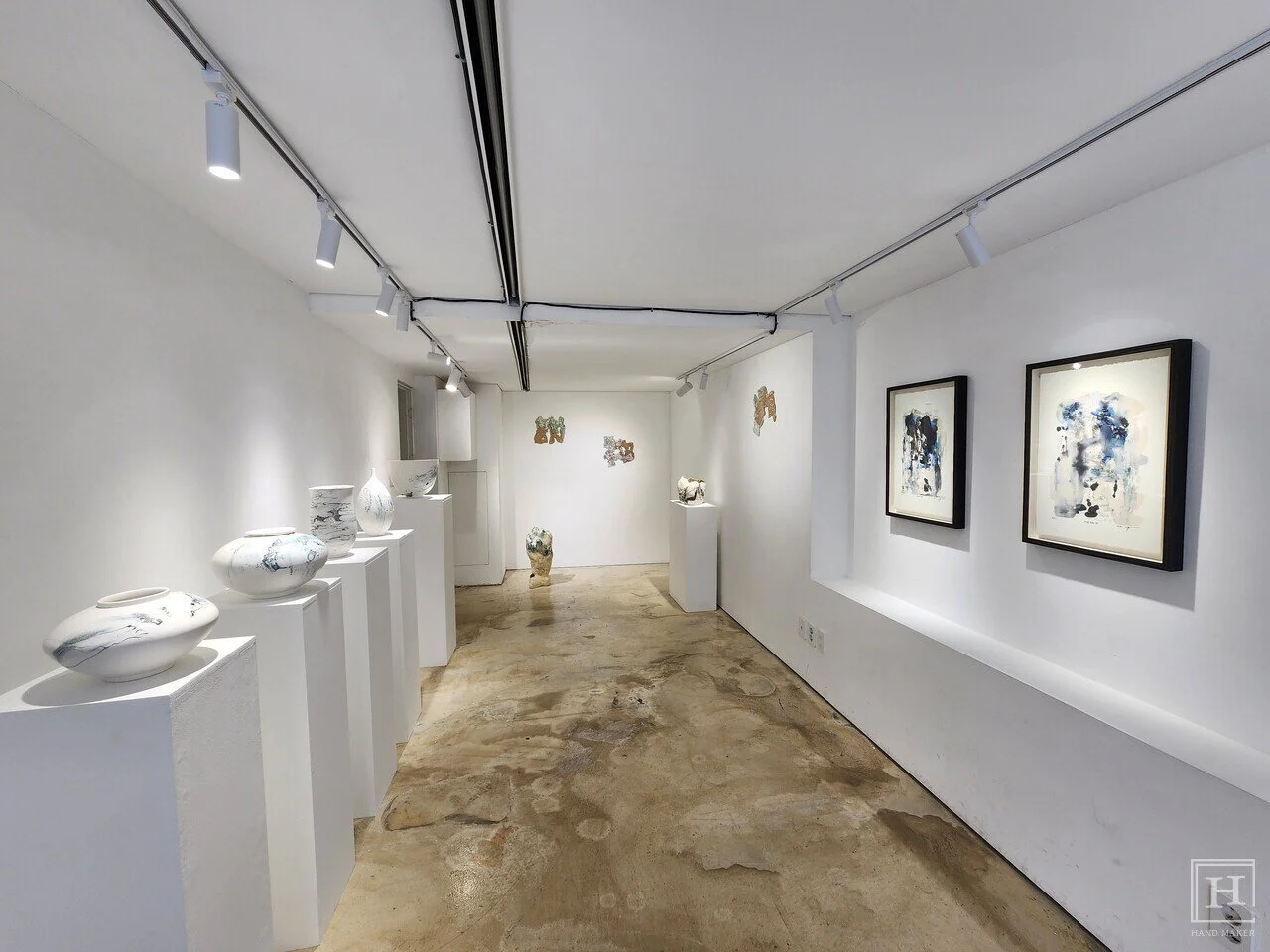
The solo exhibition "Seeping Water and Standing Earth" by ceramicist Jung Hee-seung is currently underway at Craft on the Hill in Bukchon. This marks the artist's first solo exhibition in Korea and is being held after she was selected through the Craft on the Hill artist competition.
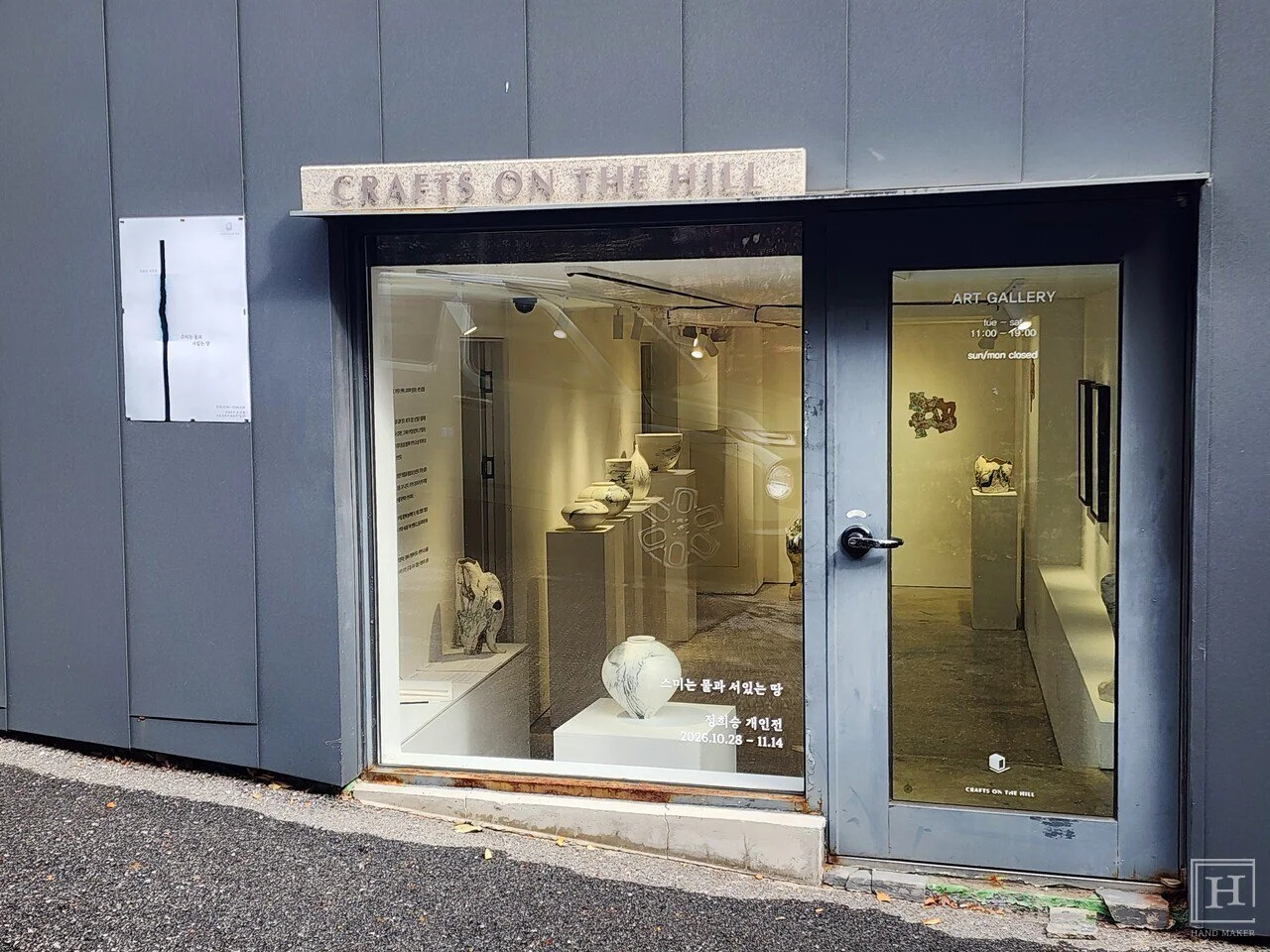
Craft on the Hill is a space created by furniture designer Han Jeong-hyeon, which has expanded from a showroom for small items and furniture to a full exhibition space. Since 2016, the venue has focused on exhibitions centered around emerging artists, and since 2020, it has operated through a competition process, providing opportunities for approximately 10 artists each year to meet the public.
"As this is my first solo exhibition in Korea, I put a lot of thought into choosing the exhibition space," Jung Hee-seung said. "Craft on the Hill was one of the spaces I considered because it aligned with the atmosphere of my work and the message I want to convey. I am happy to hold this exhibition through such a good opportunity after being selected in the competition."
Han Jeong-hyeon stated, "In this coming December, 90 artists who have exhibited with us for 10 years will participate in the Craft Trend Fair." He added, "Craft on the Hill is expected to be reborn as a cultural space that showcases the unique art of emerging artists under the name COTH."
This exhibition shows how works produced with different forms and techniques are connected by a single context: transforming accidents found in nature into the artist's intention. "Although the things I have done so far may look different, they share the commonality of converting elements of chance into the intentions I have conceived," Jung Hee-seung said. "I opened this exhibition with the hope of being able to gather and show the works I have worked on until now."
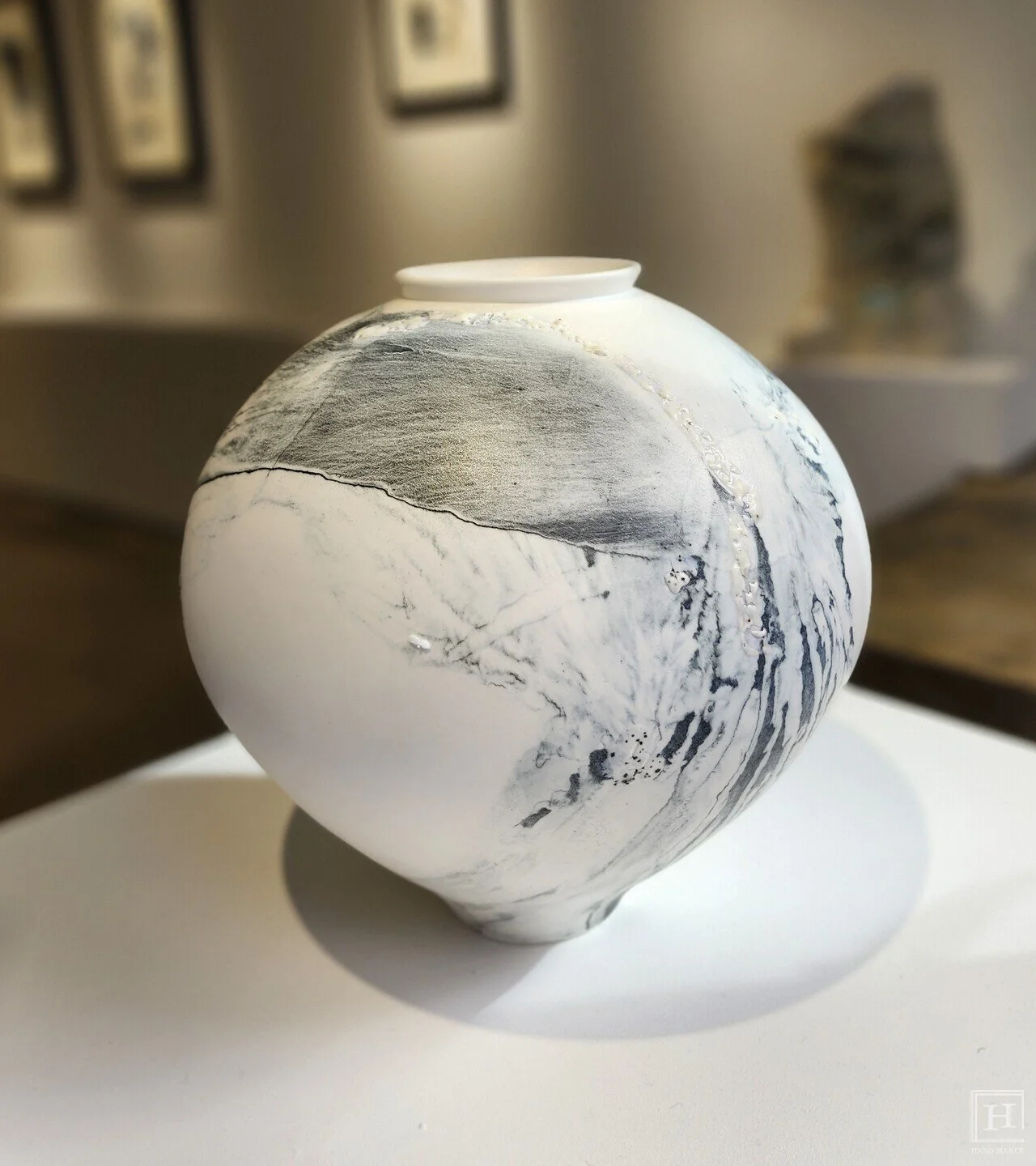
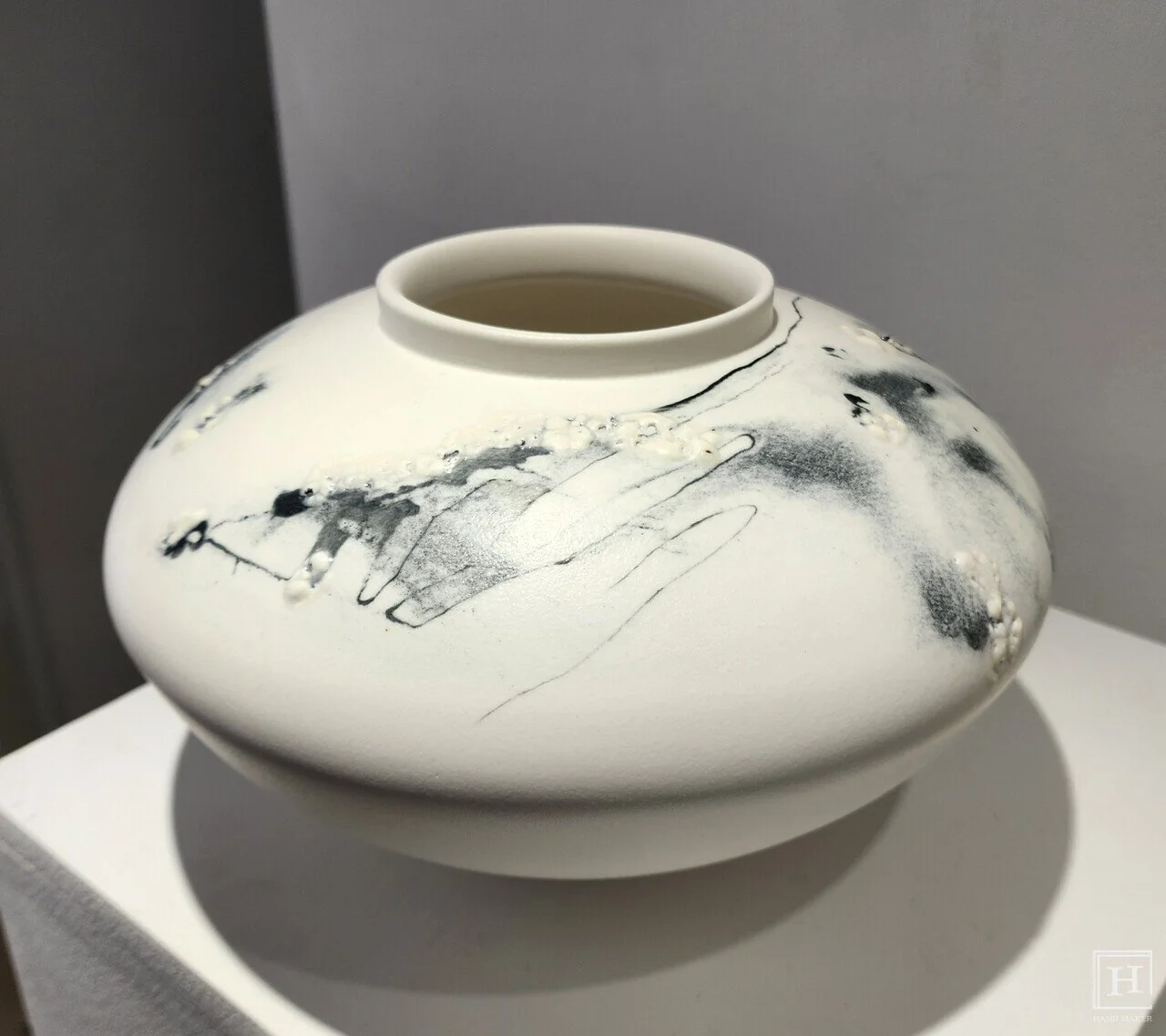
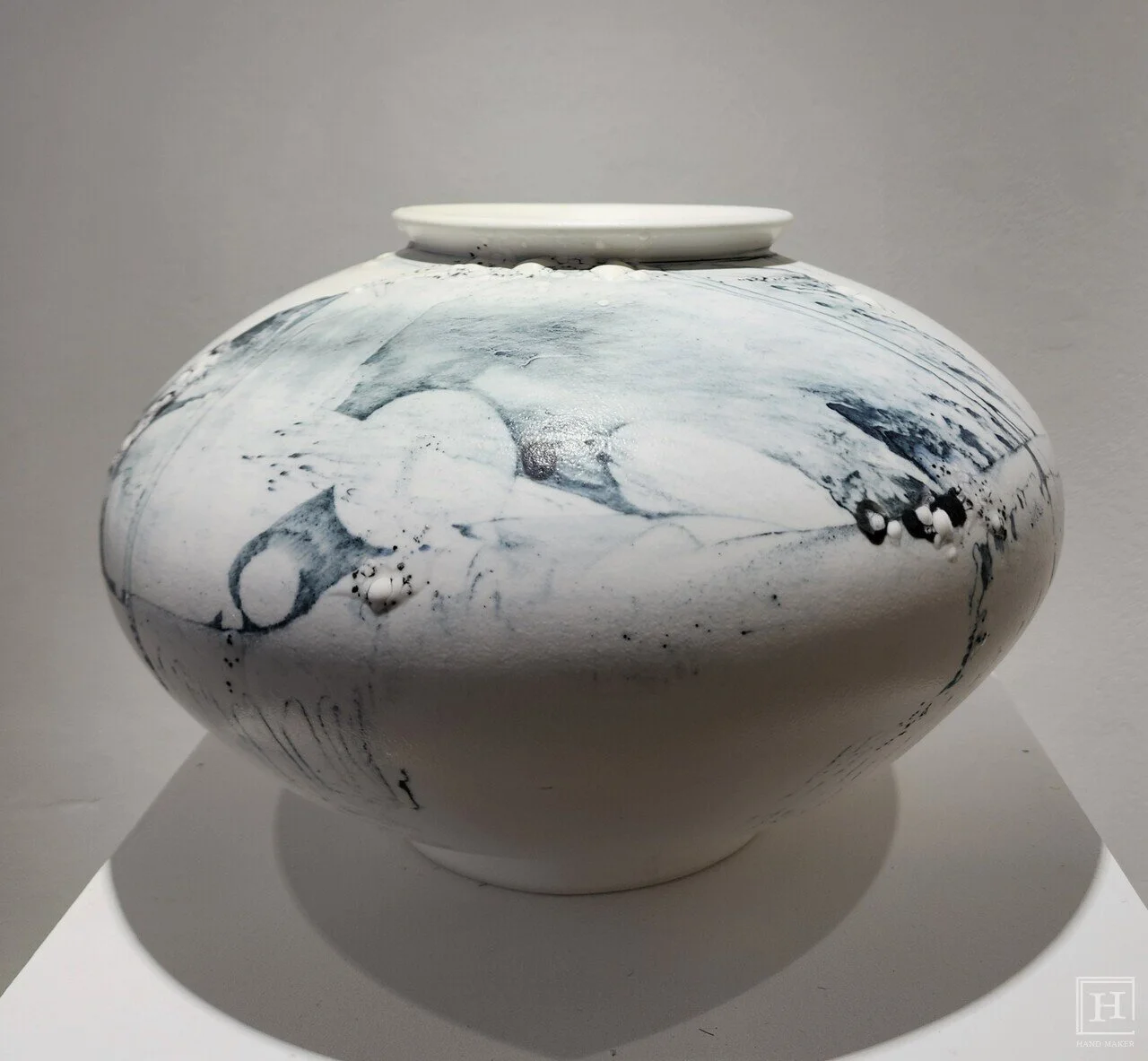
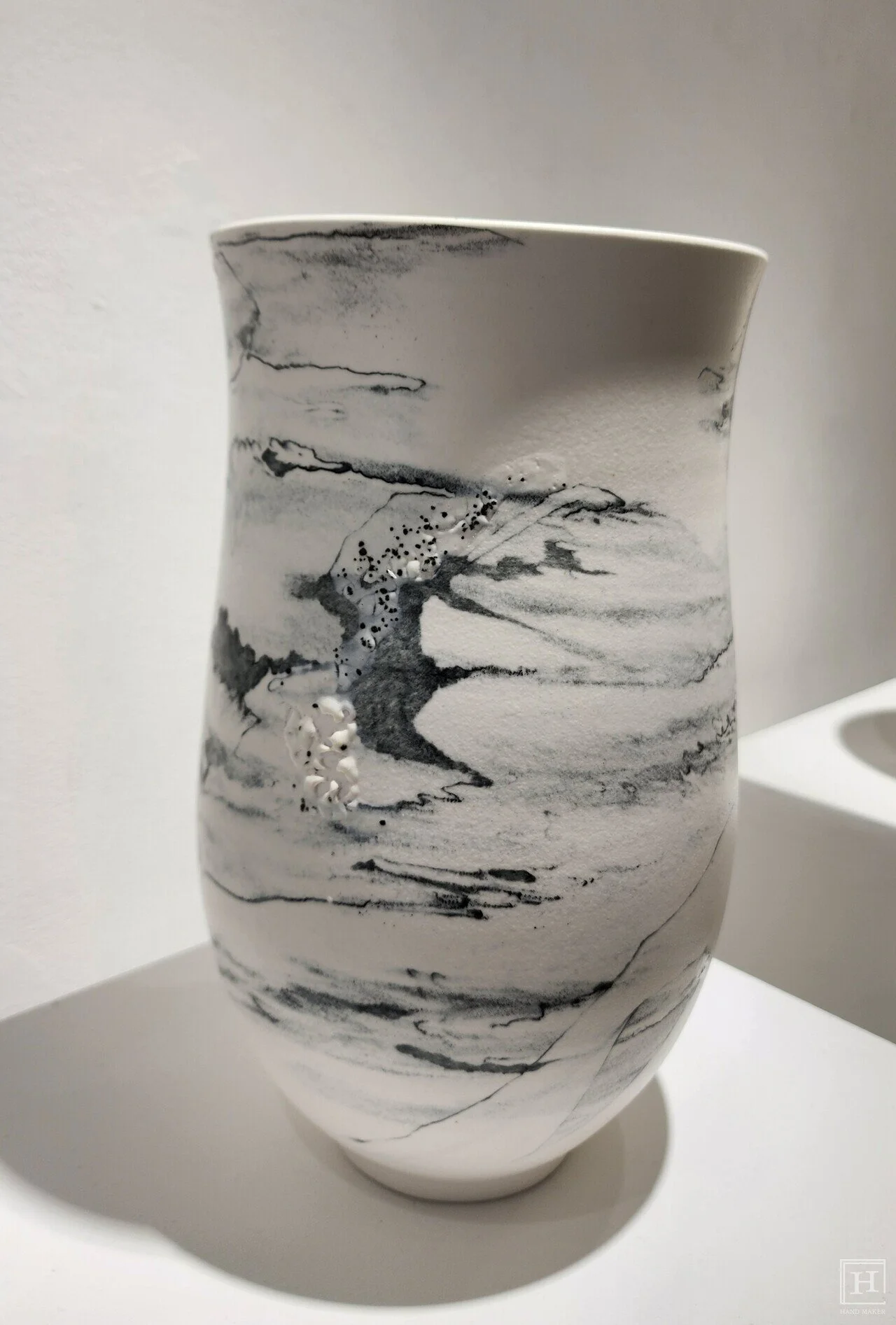
Jung Hee-seung's <Black Calligraphy> and <Black Line and Shadow Dance> series are works that express natural landscapes and the artist's emotions using water and pigments on the surface of white porcelain. The black lines flowing over the white porcelain and the traces created by the spreading pigments are reminiscent of ink wash paintings. At times, they look like tree branches swaying in the wind, and at other times, like waves or mountain ridges. These abstract images originate from the natural scenes the artist encountered in daily life and the emotions felt at those moments.
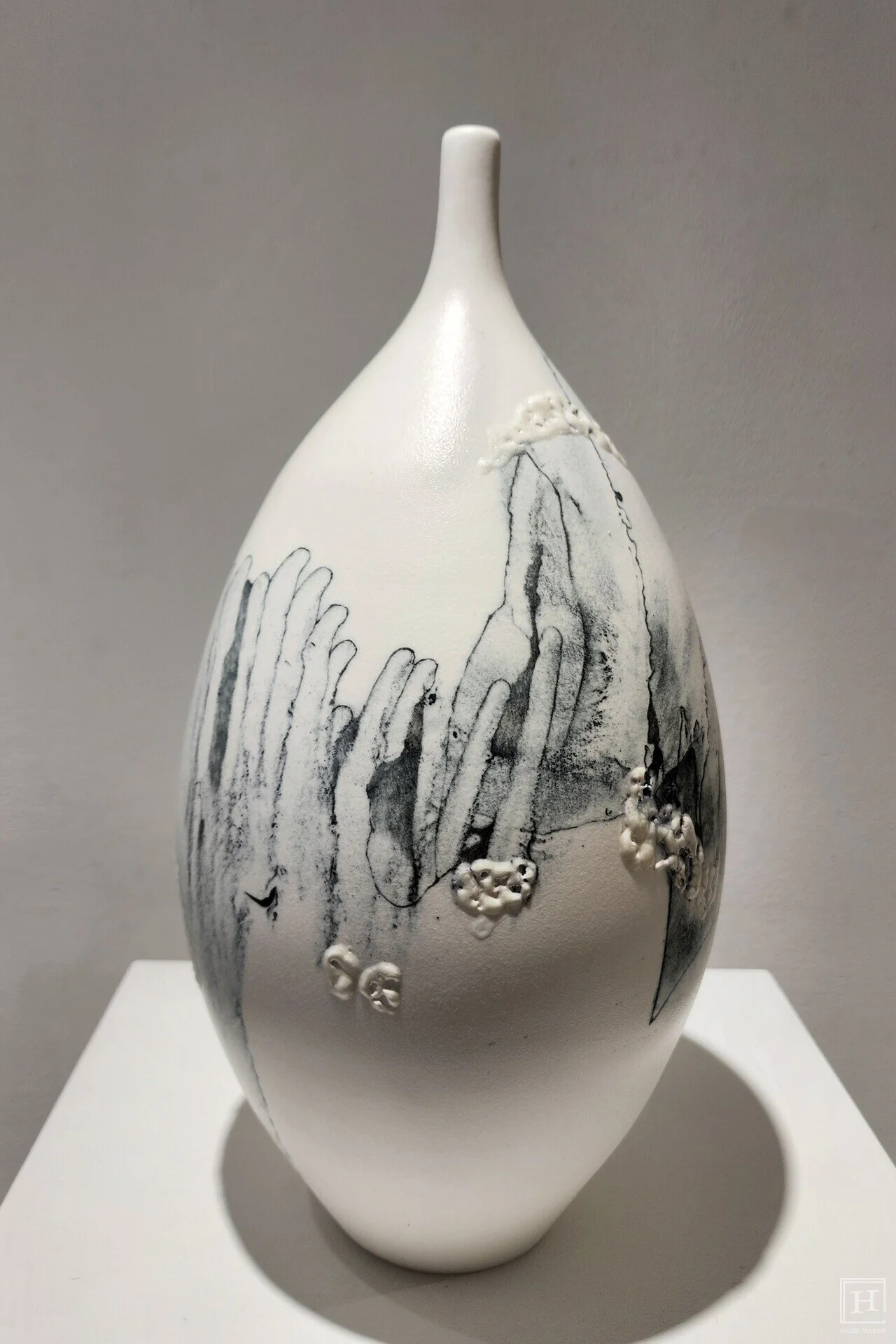
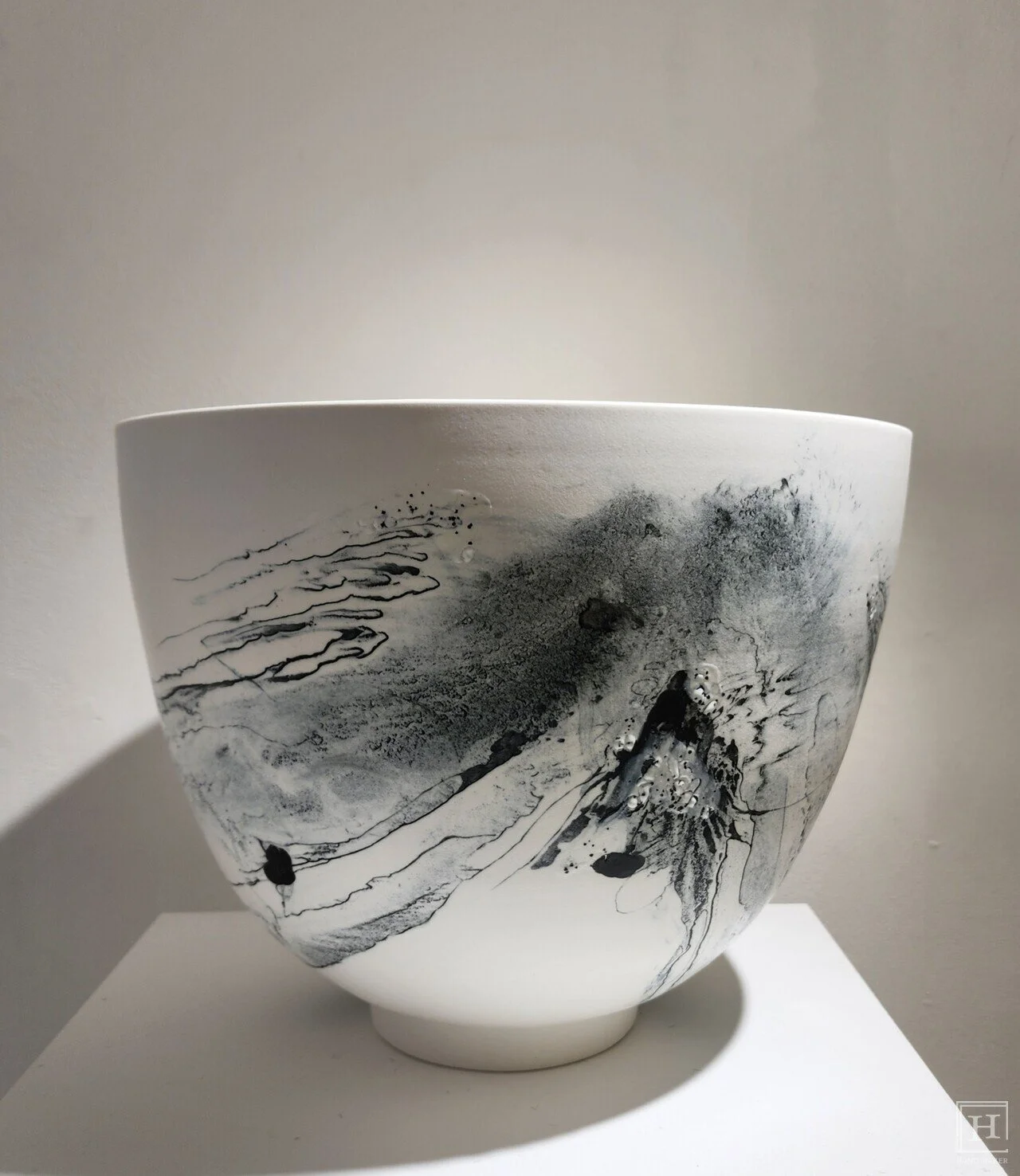
The working method is also unique. After applying glaze to ceramics first-fired at 850 degrees Celsius and allowing them to absorb sufficient water, ceramic pigments dissolved in water are poured onto the surface. At this time, the pigment is not immediately absorbed but moves as if floating on the water, creating unexpected traces.
The artist dries and fixes the desired parts, then repeats the process of spraying water to let some parts flow or adding new pigments. Rather than leaving all traces as they are, the artist completes the accidentally created patterns into their own unique landscape by choosing what to erase and what to leave.
In this exhibition, a more diverse range of white porcelain works made on a potter's wheel was presented. Artist Jung Hee-seung said, “Because the surface of white porcelain is smooth, drawings can be made more freely. Actually, it's not that I want to make something pretty. White porcelain is just one of the means of expression. My work is originally closer to hand-building. So, since I have done a lot of standardized wheel-thrown work in the past, I want to try a lot of new hand-building work in the future.”
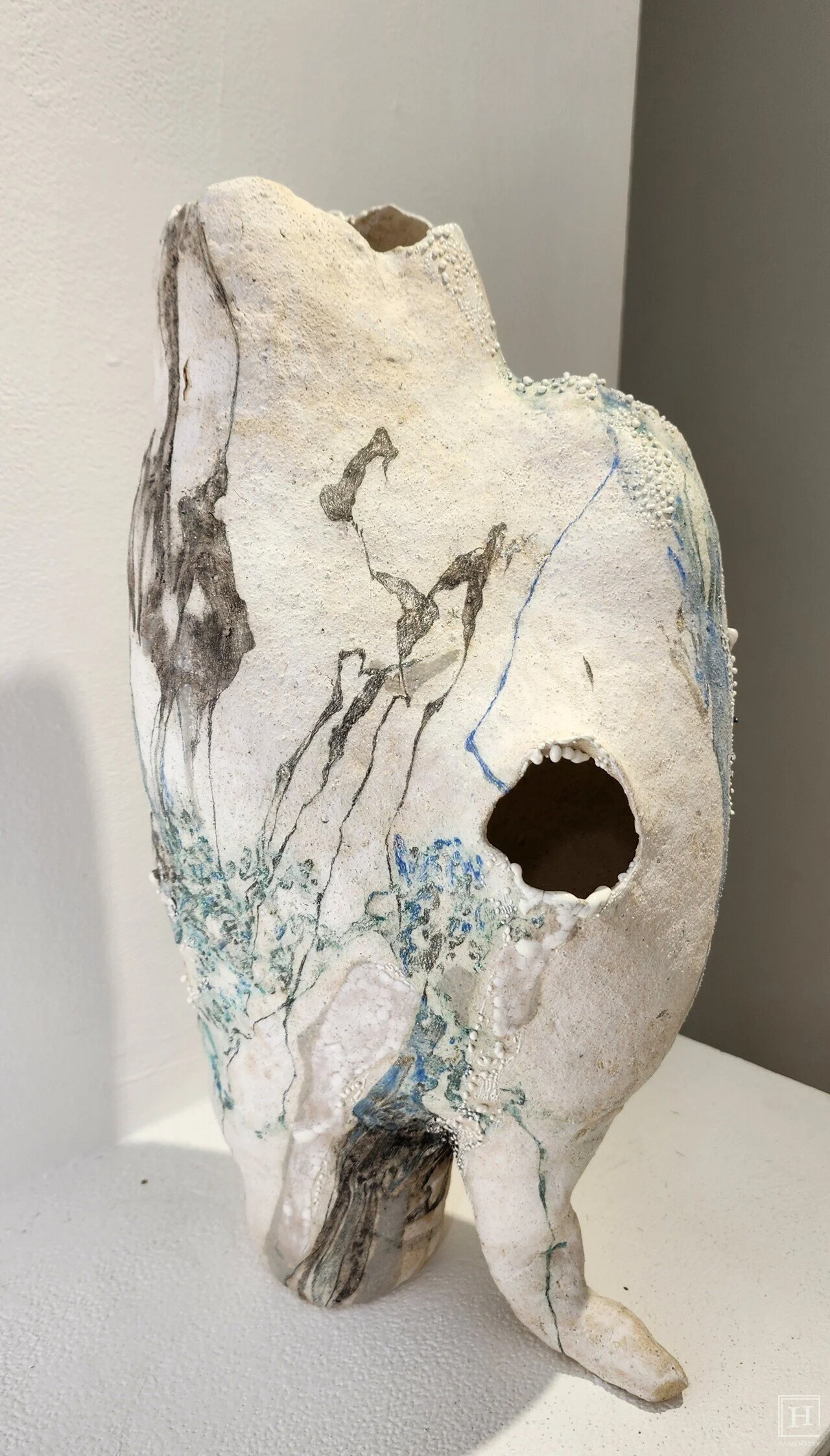
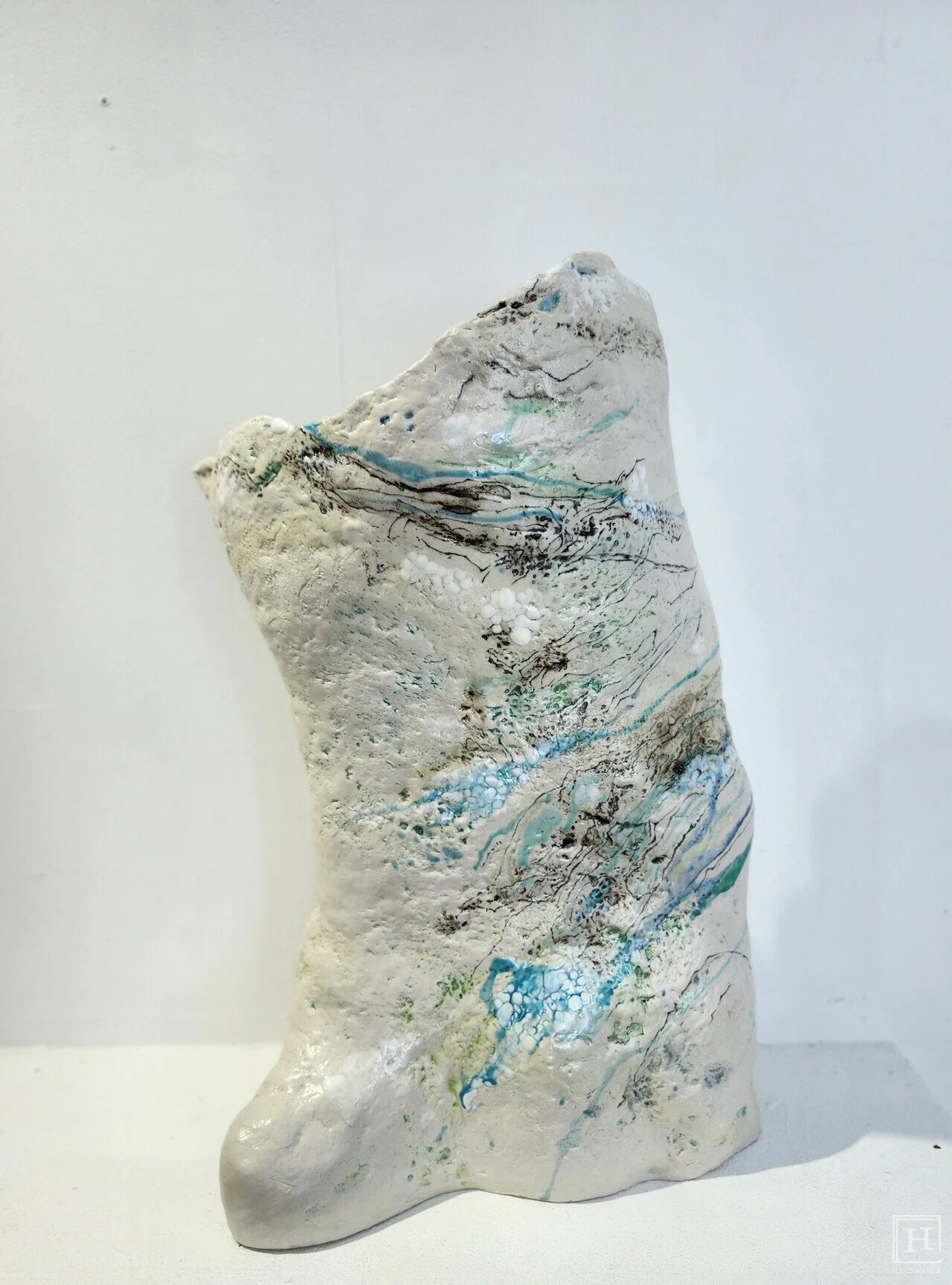
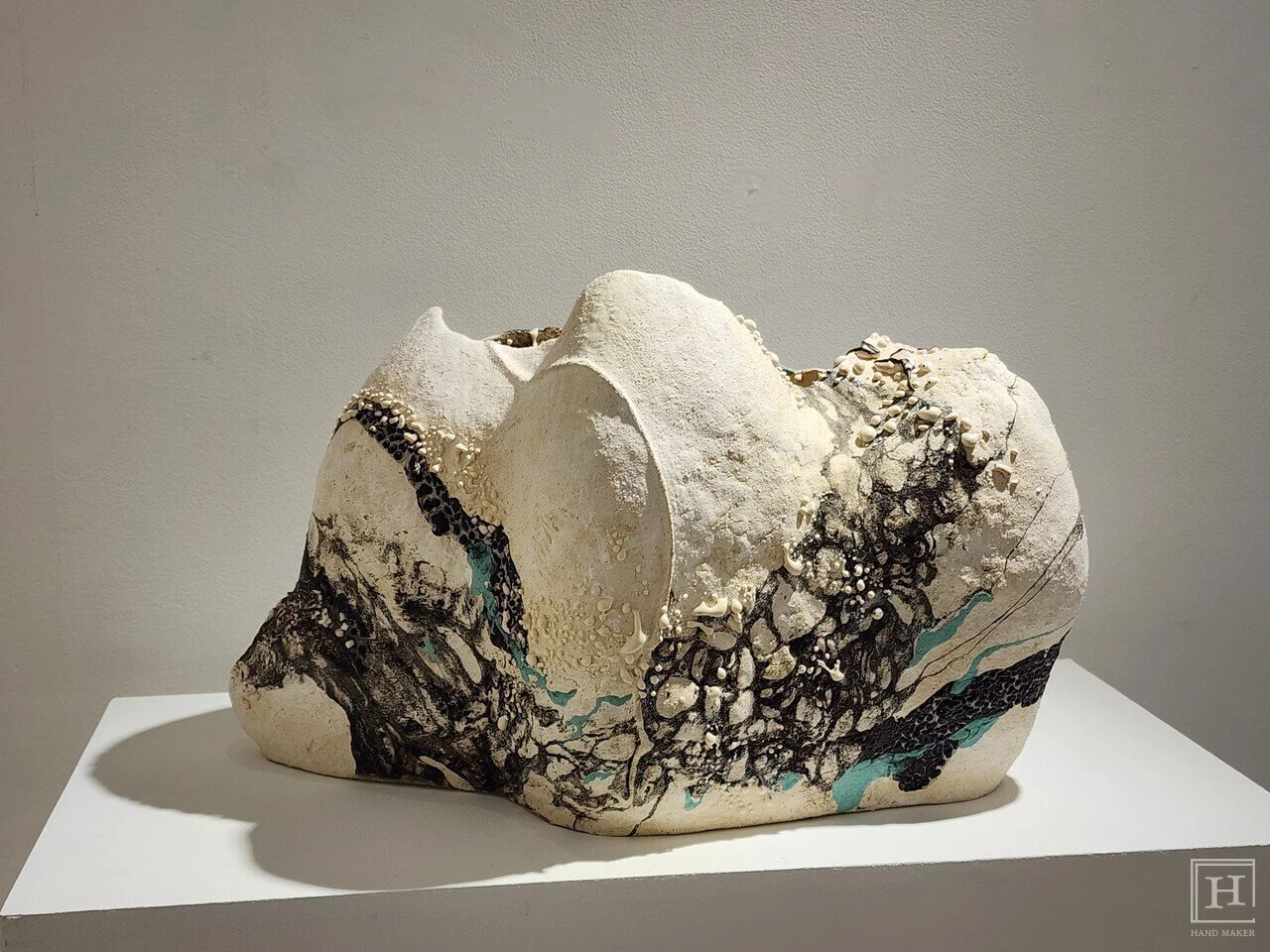
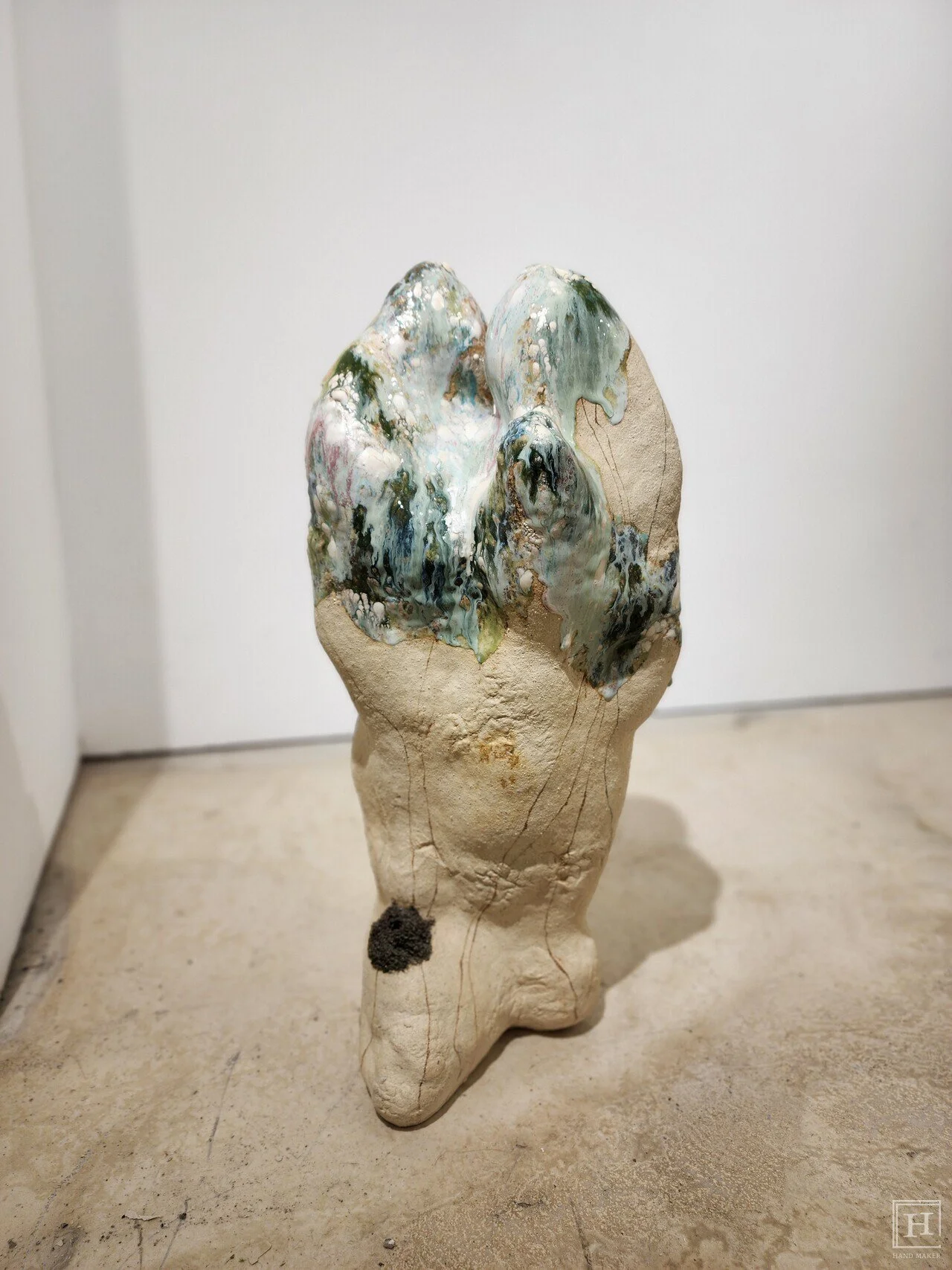
These are the results of the artist working more freely with hand-building techniques. Works utilizing clay, pigments, and ceramic pencils show continuous curves, holes, and rough surfaces without a fixed rule. As black and blue pigments spread and flow over forms reminiscent of weathered rocks or cross-sections of the earth, they give the impression of directly transplanting landscapes found in nature.
This type of work connects to "Standing Earth," one of the two themes running through this exhibition. Unlike the smooth white porcelain made on a wheel, in hand-building work where clay is stacked and shaped directly by hand, the direction in which the pigment flows also changes according to the undulations of the surface. Artist Jung Hee-seung explained that they felt constraints in expression due to these characteristics.
In that they embrace accidentally created traces while combining and transforming them according to their own intention to create a new existence, the hand-building work also shows the relationship between coincidence and choice that the artist pursues.
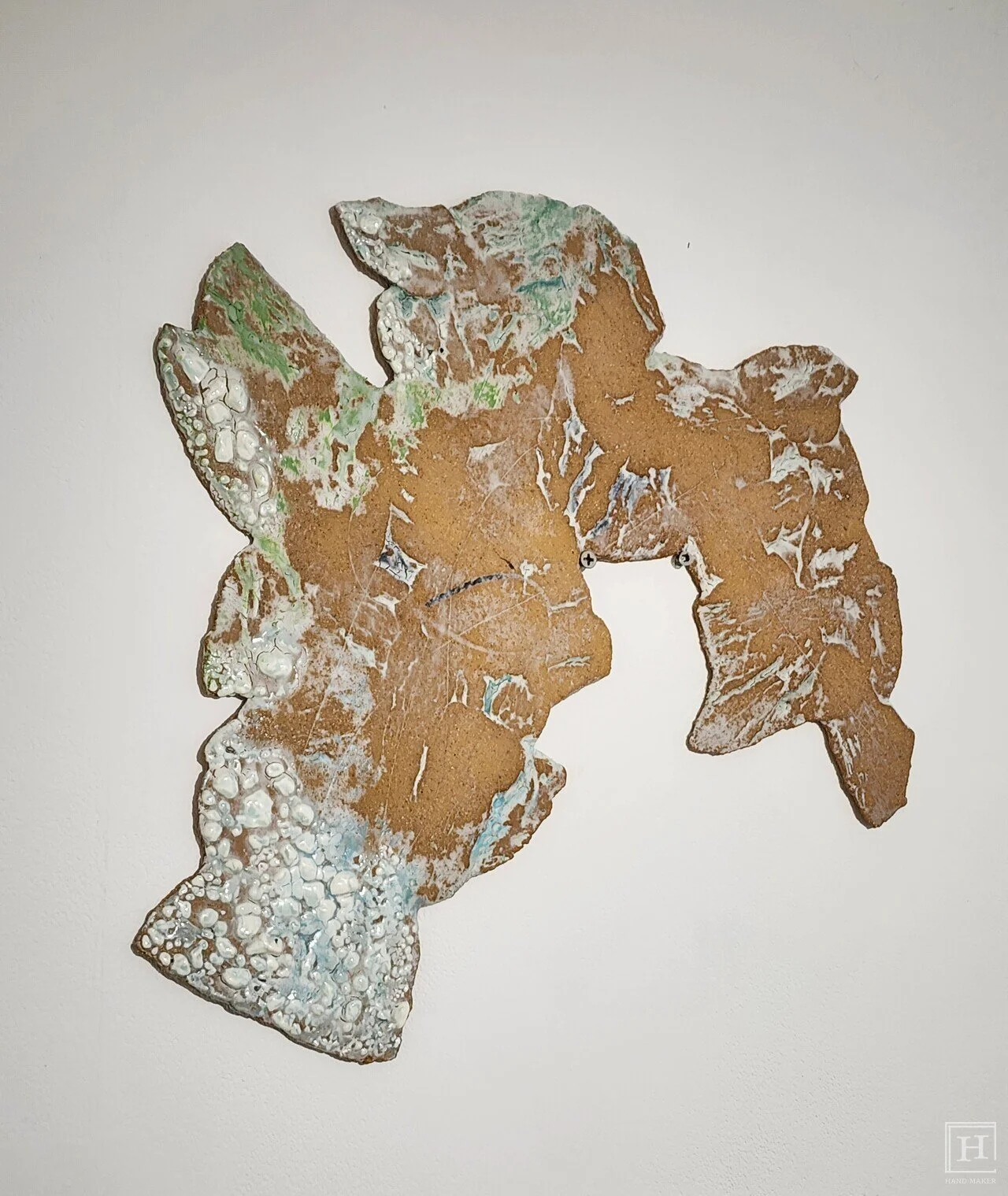
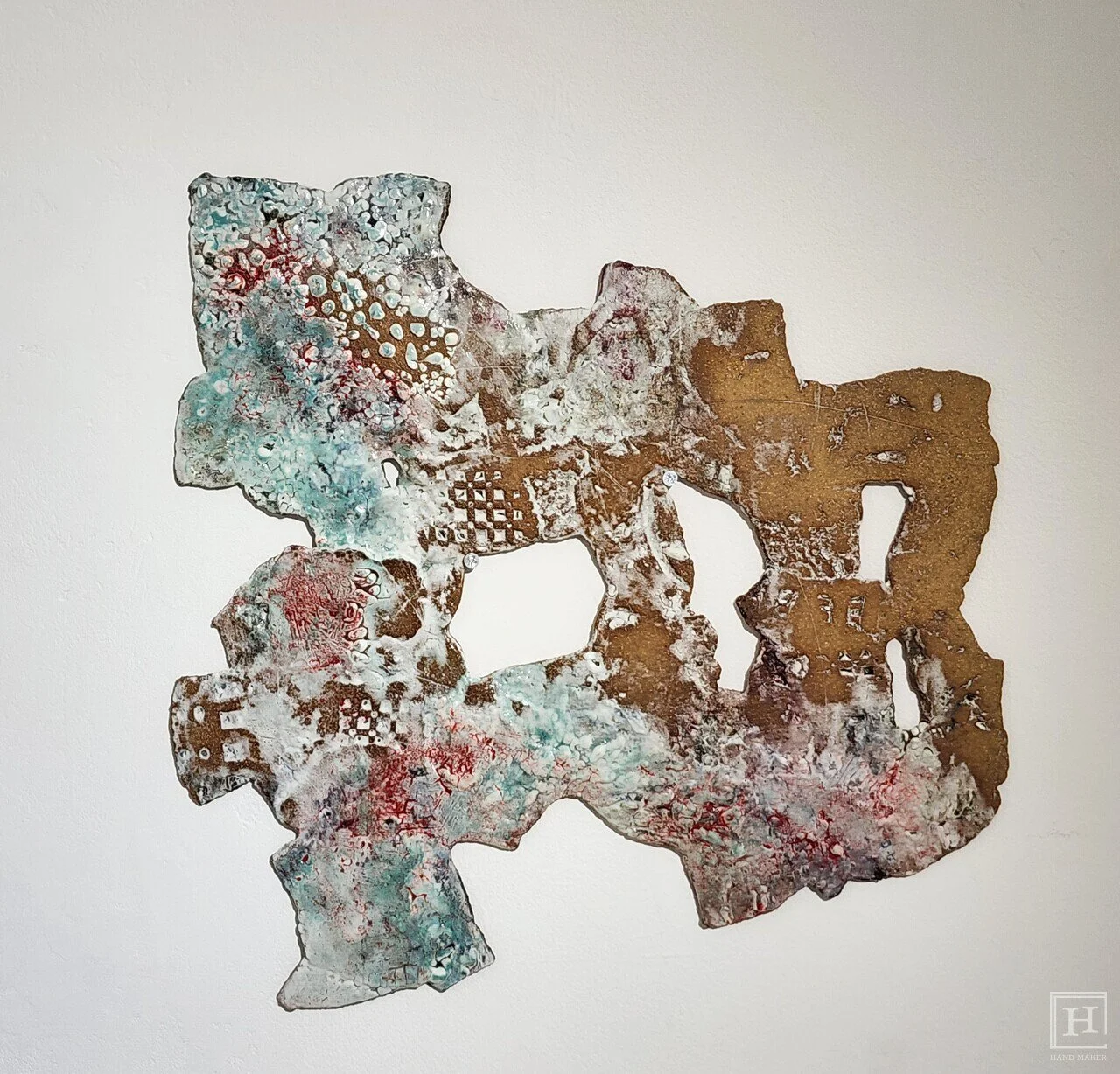
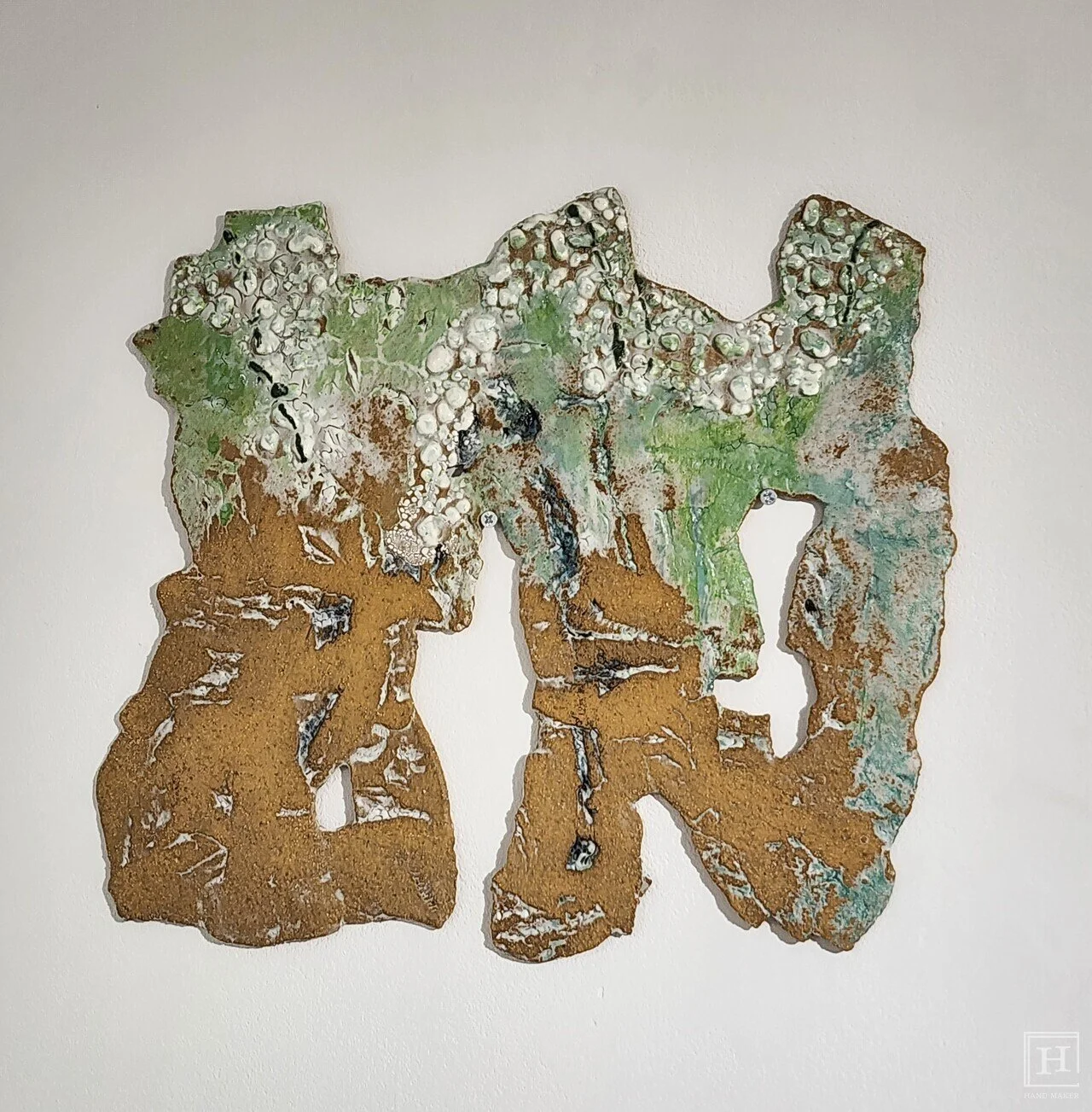
The 〈Fragments of Earth〉 series consists of works created by transferring traces found in nature and daily life onto clay plates. The artist presses thinly spread clay plates against the surfaces of objects encountered in everyday life, such as wood, stone, and asphalt, to leave traces. The grain of the wood or the rough texture of the ground is engraved directly into the clay.
These clay plates are connected irregularly, and with the addition of white, green, and blue pigments and glazes over a brown base, they evoke the cross-sections of weathered rocks or earth. Over the natural brown of the clay, pigments and glazes in white, green, and blue are added, reminiscent of rock or earth cross-sections that have changed due to the influence of nature over a long period.
Looking closely at the works, the traces left on each clay plate are different. 〈Fragments of Earth (1)〉 has white glaze clustered in places on a rough surface, with spreading green hues reminiscent of moss-covered rocks. 〈Fragments of Earth (2)〉 features a surface where red and blue are mixed with repeating small square patterns, appearing as if natural traces and artificial textures coexist. 〈Fragments of Earth (3)〉 shows green and white spreading over relatively wide areas of brown clay, looking like ground that has been exposed to wind and rain for many years. As the clay plates with their different traces and colors unfold on the wall, they cause us to view the surfaces of daily life, which we might have passed by indifferently, through a new perspective.
The traces left on the clay plates are accidental results depending on the surface of the natural objects and the state of the clay. Artist Jung Hee-seung explained that when she paints on these clay plates, the pigments flow along the irregularities of the surface, creating unexpected patterns.
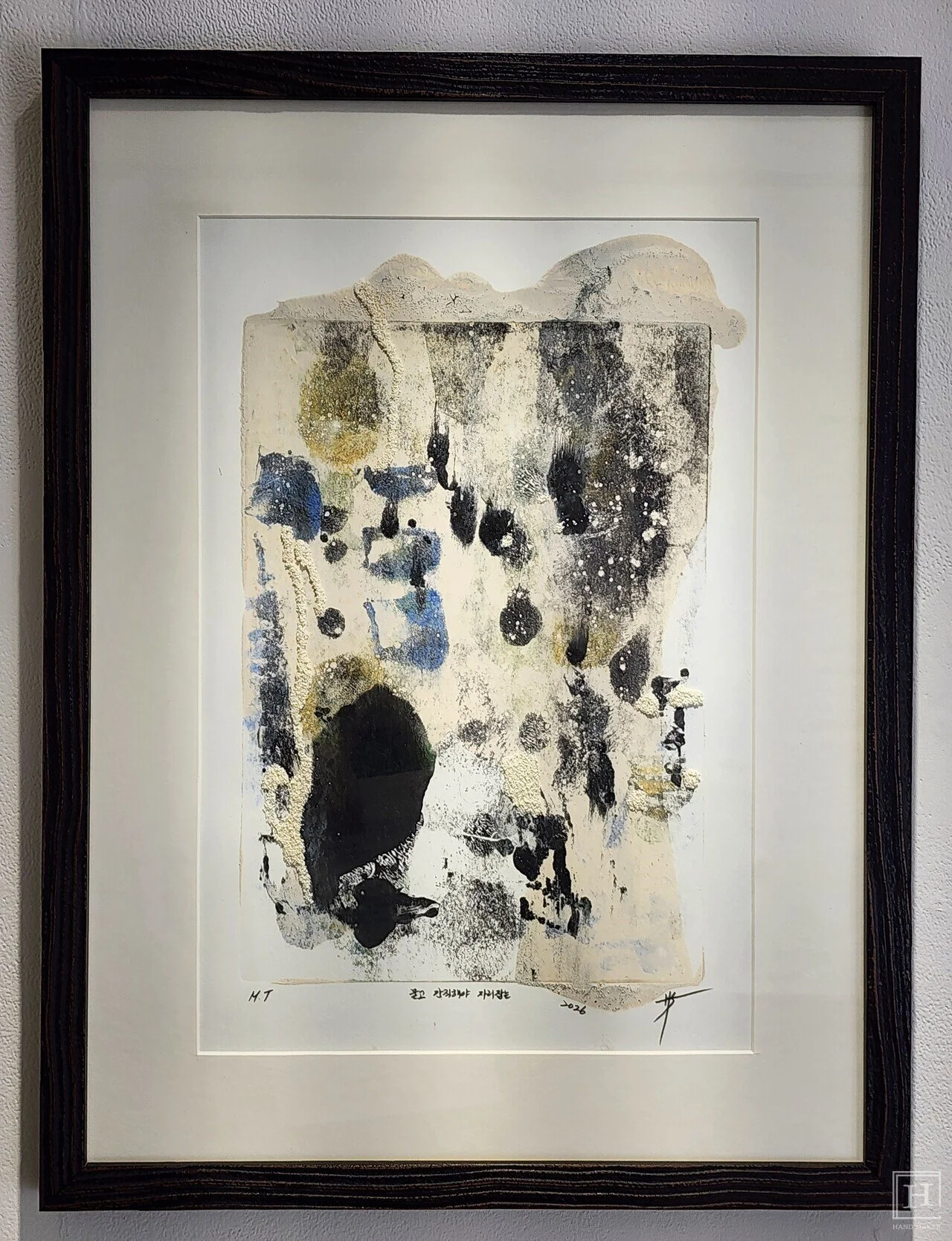
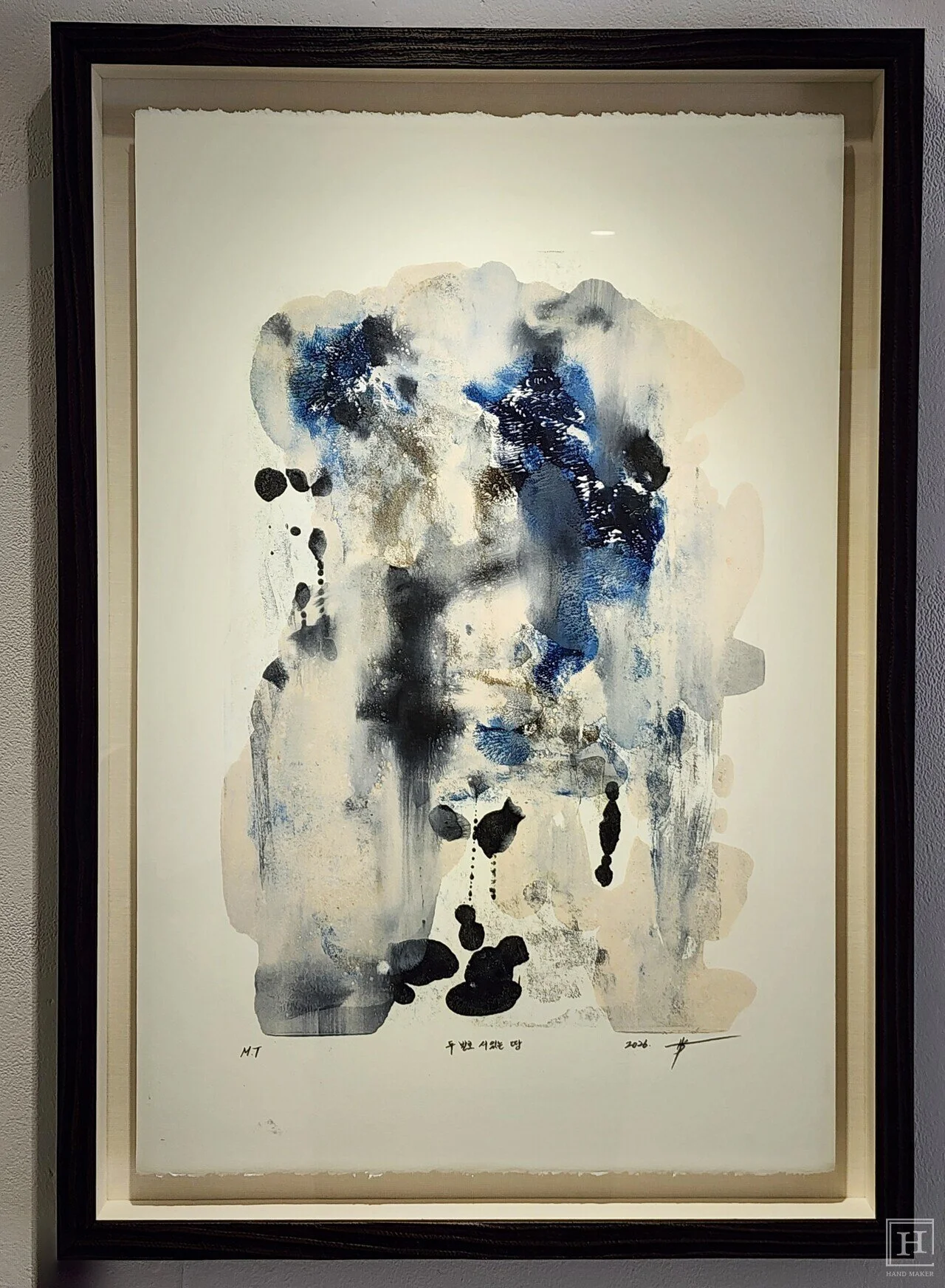
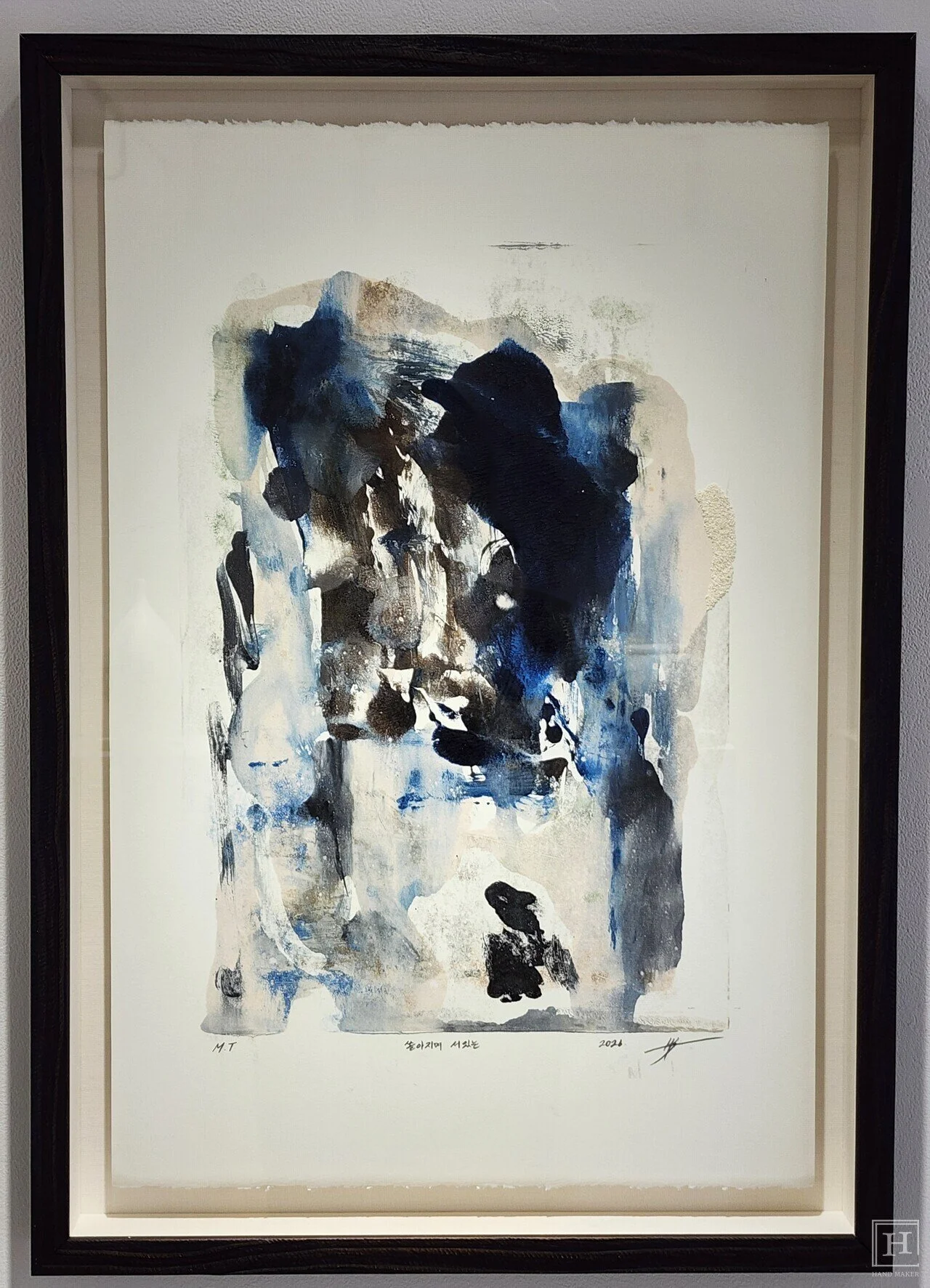
These are print works produced using the monotype technique. The artist paints on an acrylic plate, prints it onto paper, and then repeats the process of layering new paintings over the plate without erasing the remaining traces before printing again.
In this process, a portion of the previously painted image remains faintly in the next work, which is called a ‘Ghost Print.’ A single image does not disappear completely but leaves a trace in the next image. The landscapes created by the overlapping and blurring of black and blue images in the works also look like abstract paintings drawn with ink, and also feel like faint memories surfacing from a long time ago.
This work also connects to the expressive methods Jung Hee-seung shows in her ceramic work. Just as she utilizes the traces left by water and pigments, in printmaking, she accepts the afterimages of previous works as part of the next work.
Furthermore, by adding stone powder used in ceramic work, she provides a three-dimensional texture to the flat surfaces. Although different materials and techniques are used, a commonality can be found in that unexpected results are developed into new expressions.
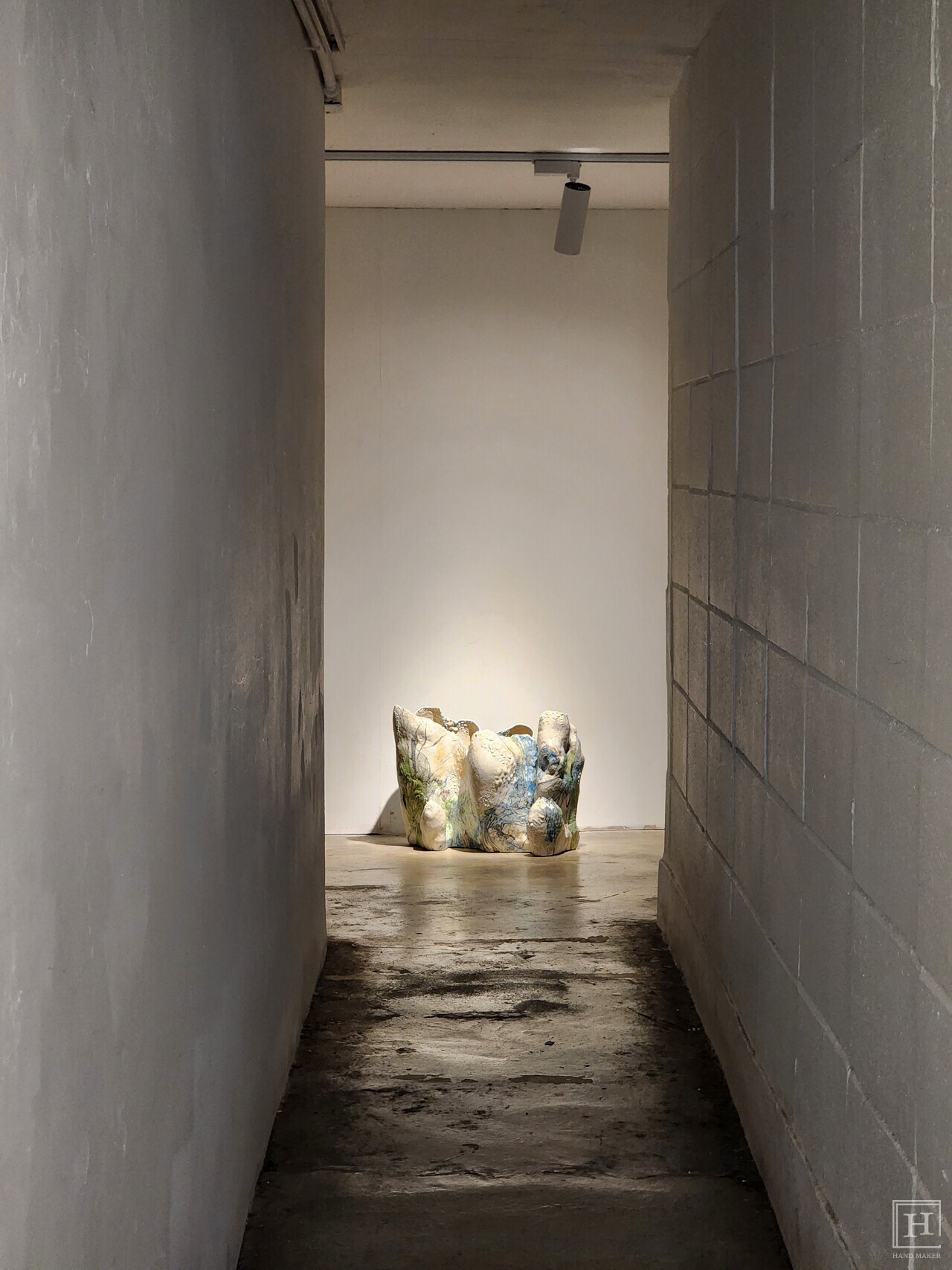
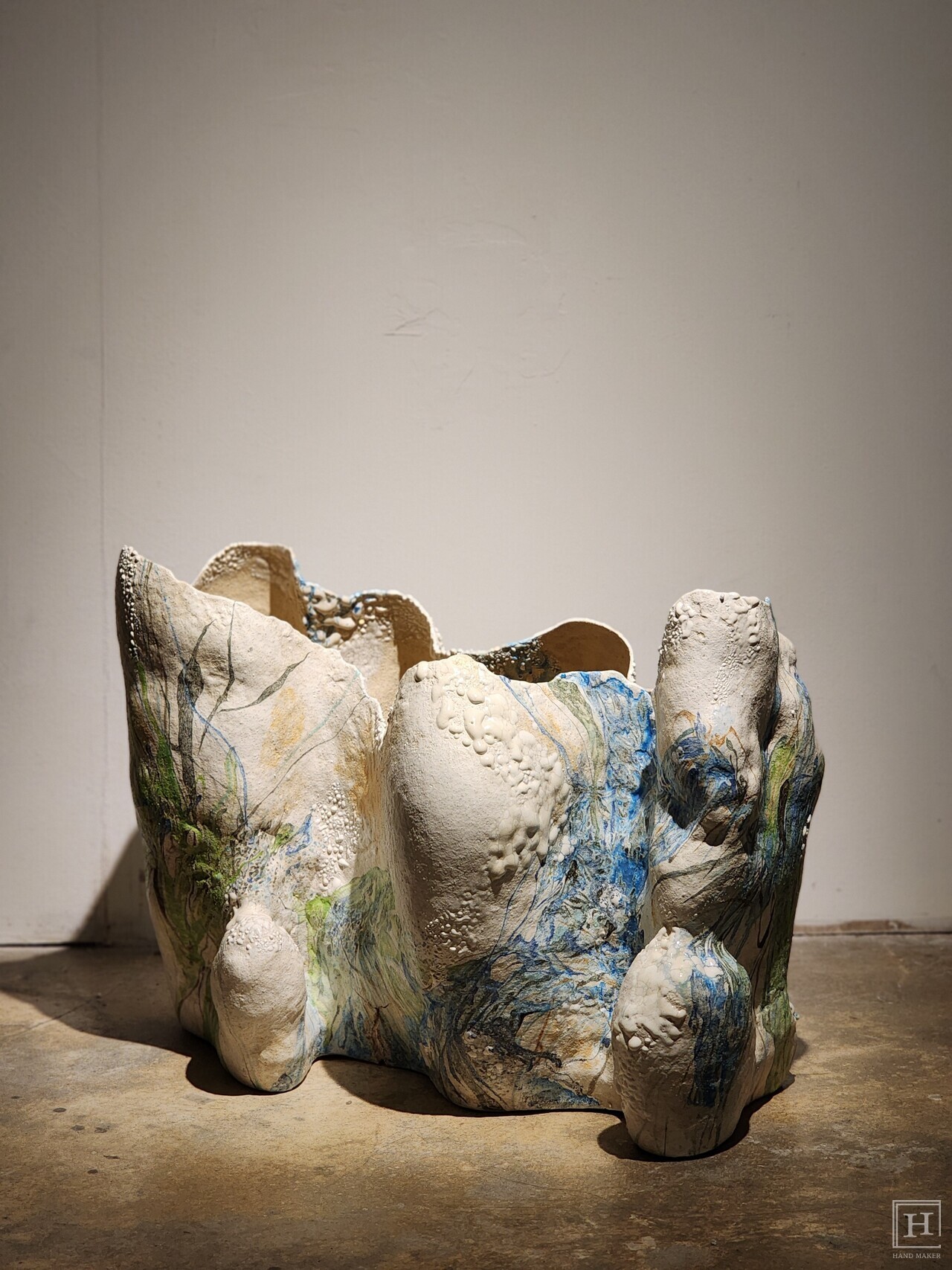
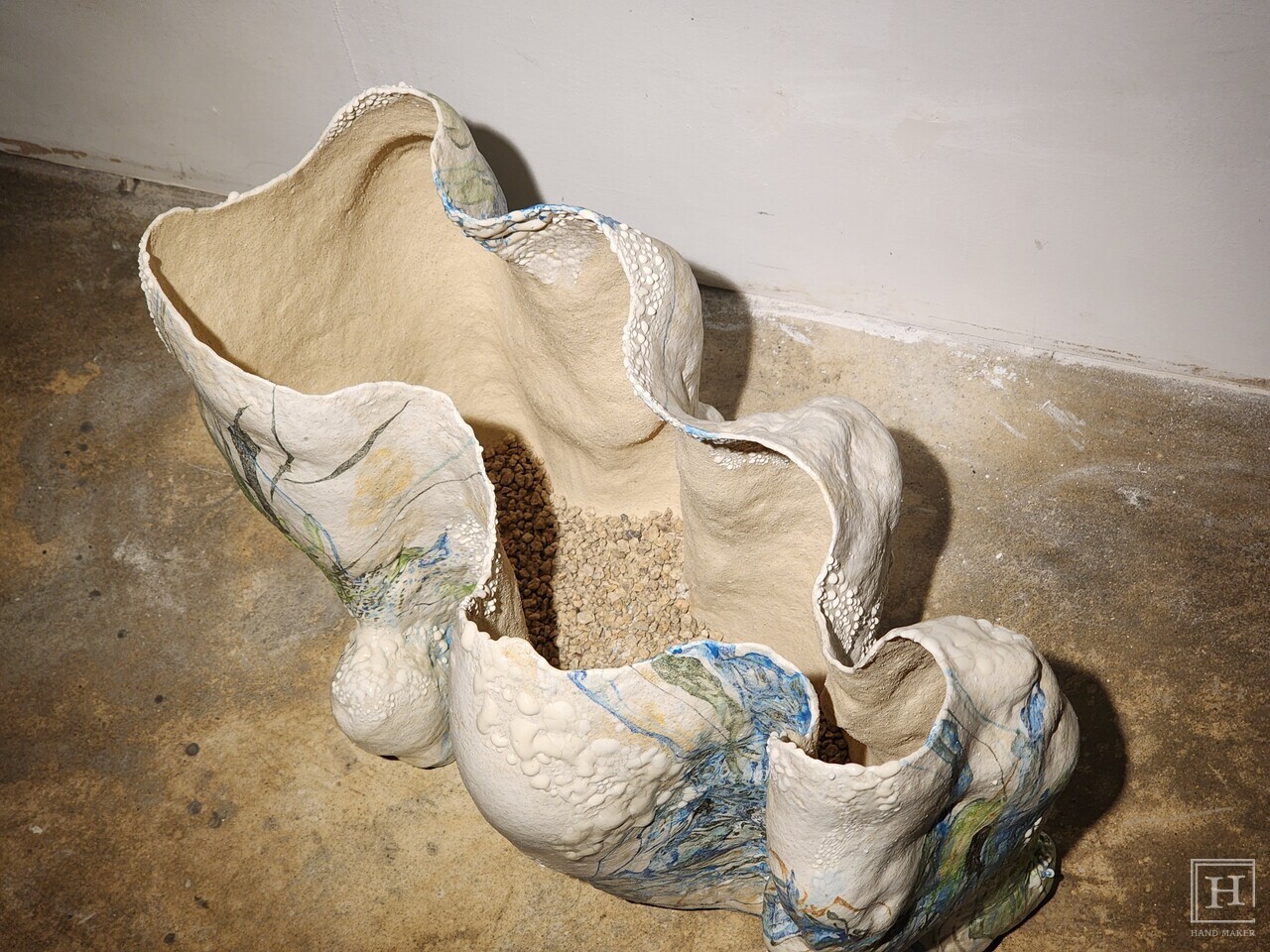
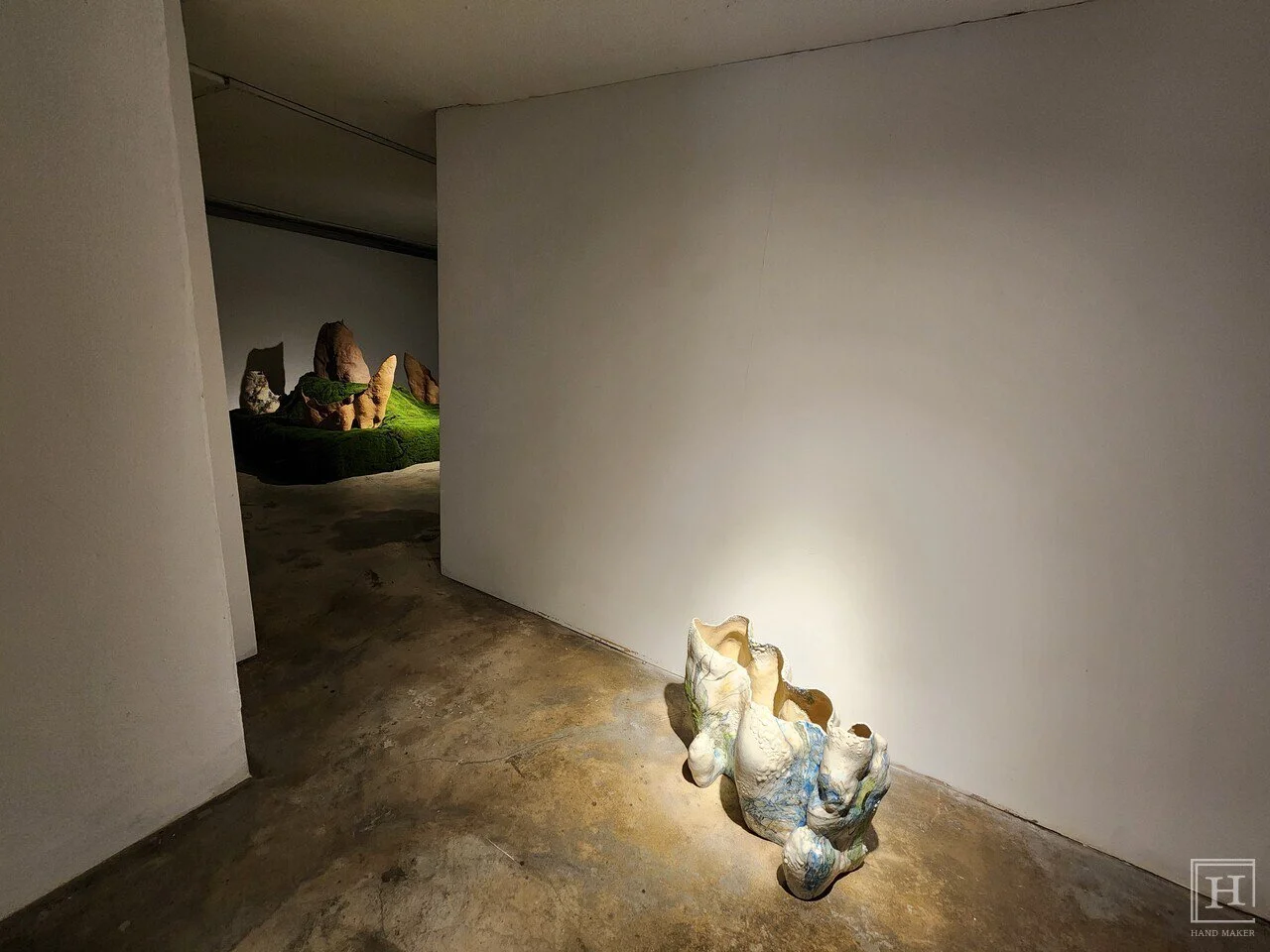
Upon entering the maze-like exhibition space, a single work shines under a spotlight. This hand-built piece contains sand similar to fine gravel inside. On the surface of the work, the flow of water and grass, appearing as if fluttering in a thin rain and wind, blend together naturally.
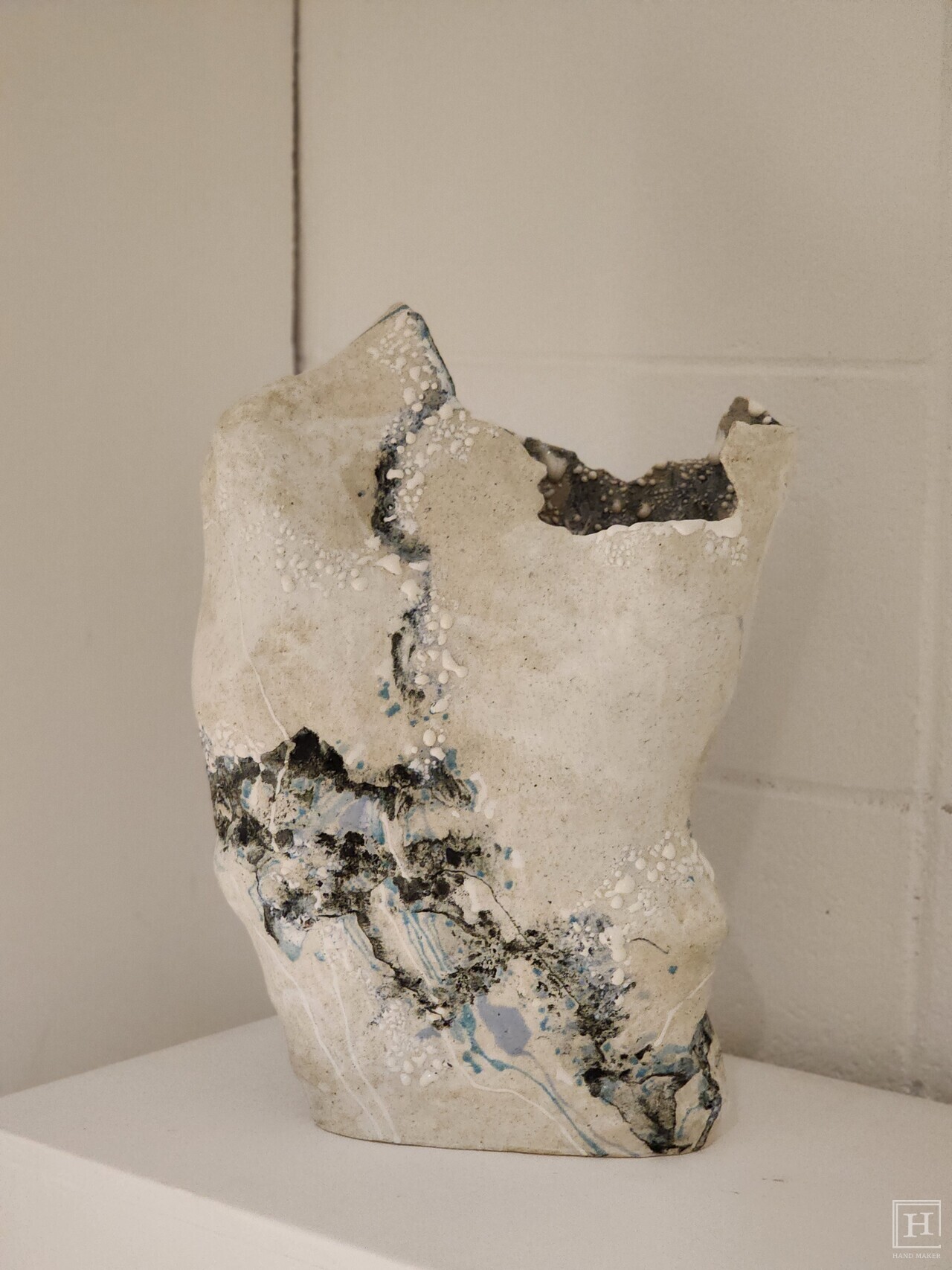
Next to it sits 〈Small Valley〉. On the irregularly undulating surface of the earth, traces of black and blue pigments flowing down remain. It evokes a small valley where a stream flows between mountains, and the white protrusions appearing here and there feel like moss clinging to rocks or the texture of rugged stones.
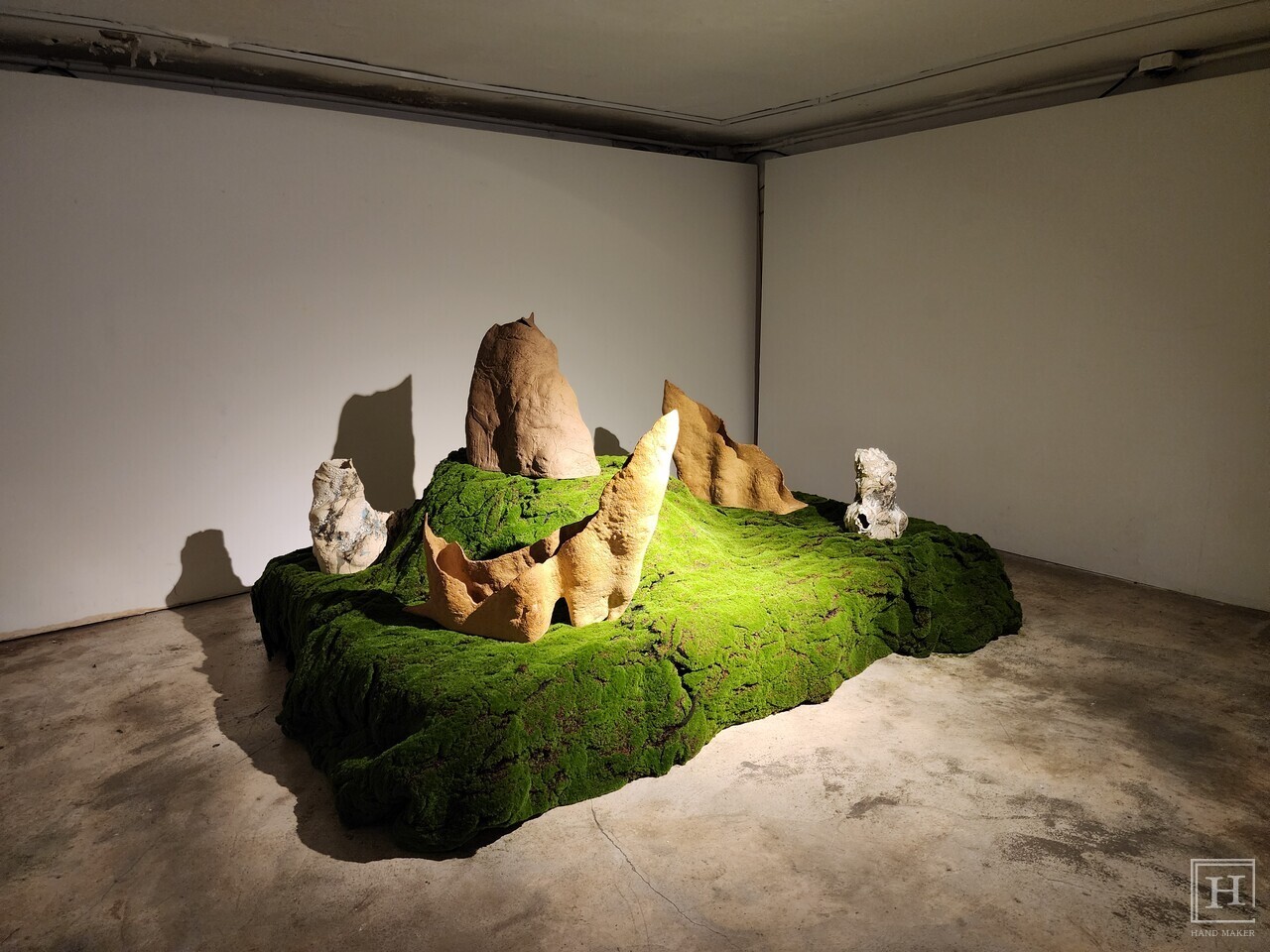
At the innermost part of the exhibition room, an installation work unfolds as if a mountain landscape has been moved there in miniature. The five works stand in different forms upon a hill covered in green moss. The sculptures, resembling rough rocks or sharply rising peaks, look like strange rocks shaped by nature over a long period, giving the feeling of having entered a small mountain.
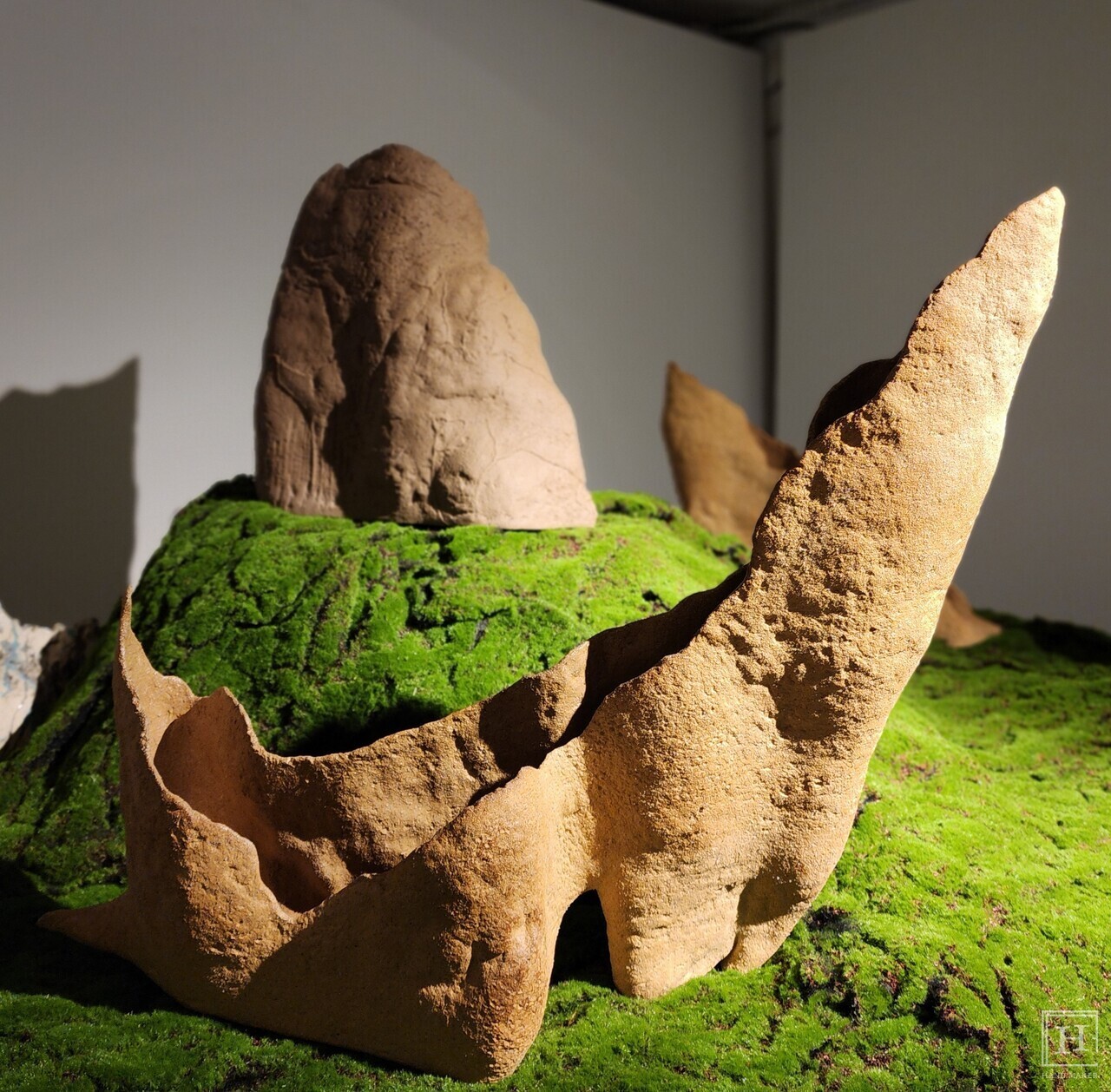
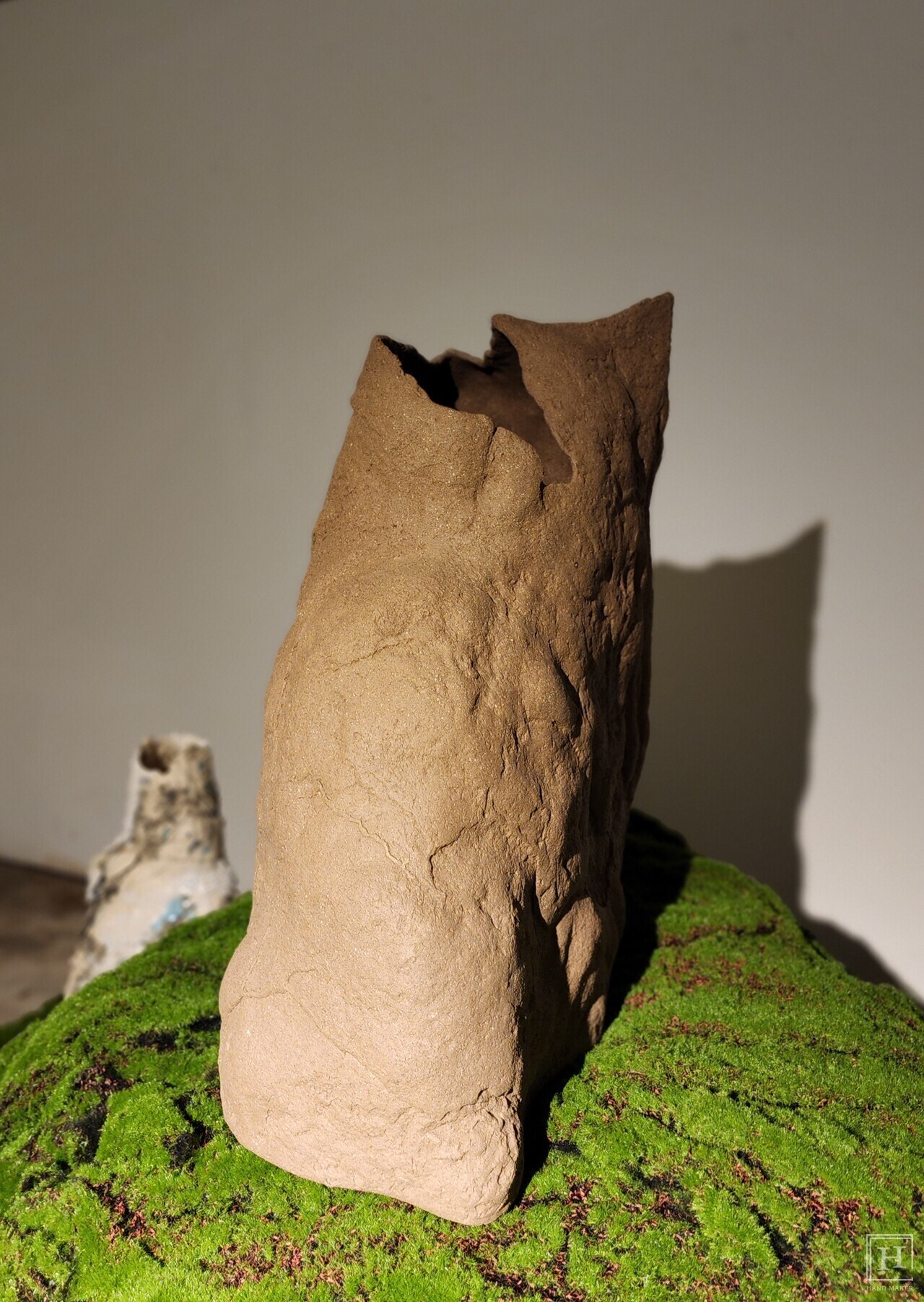
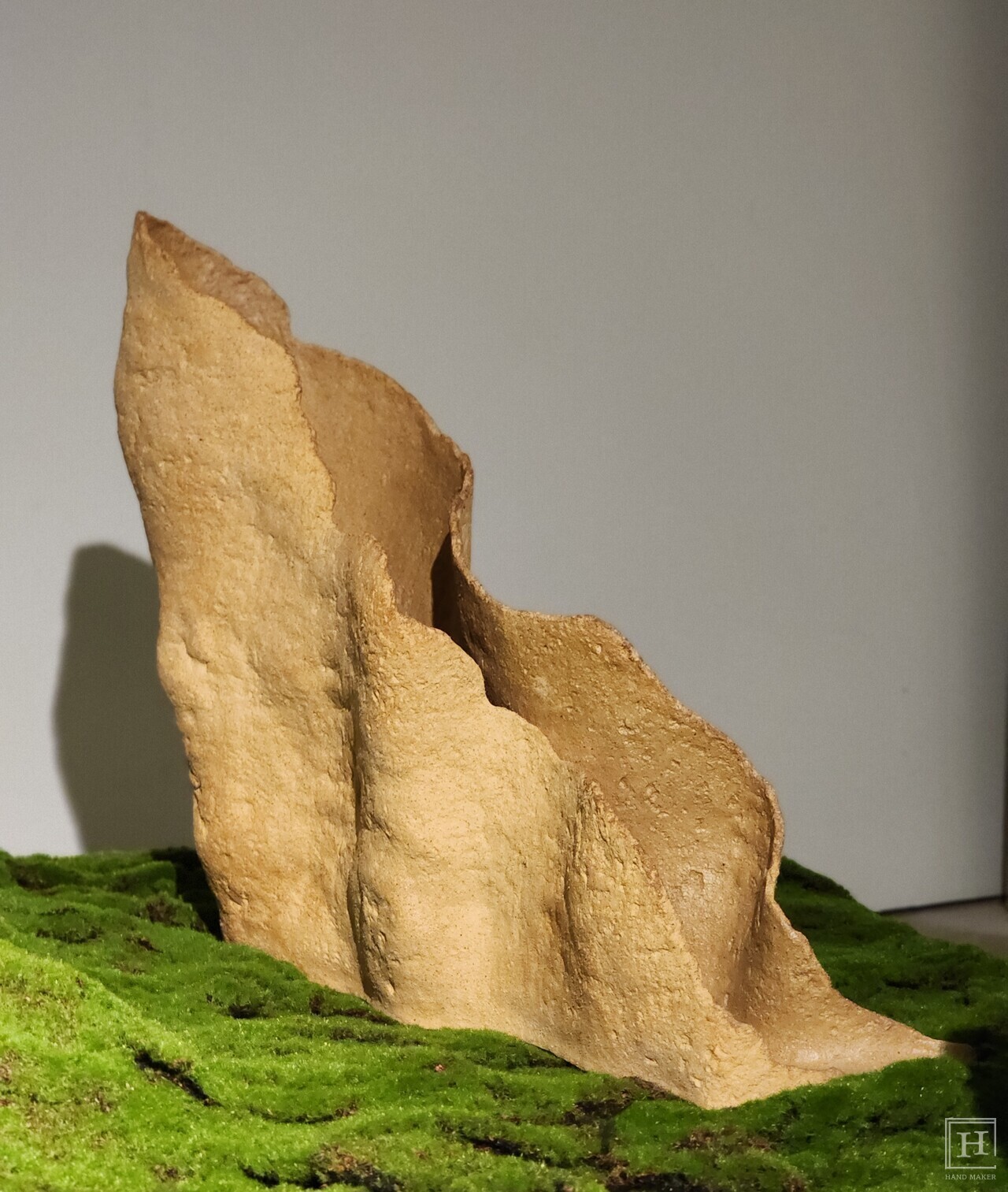
Three of the works are created by the artist using only the original color and texture of the clay. While giving a raw feeling, the irregularly rising or curved forms seem to capture natural landscapes exactly as they are. Although the artist's intervention through hand-building is present, traces of coincidence that seem naturally created are felt in the finished appearance.
Artist Jung Hee-seung explained, “Even without drawing, I felt that traces of coincidence or elements of coincidence continue to repeat in my work,” and “I discovered the possibility that I can express the story I want to convey through the form of uncolored clay alone.”
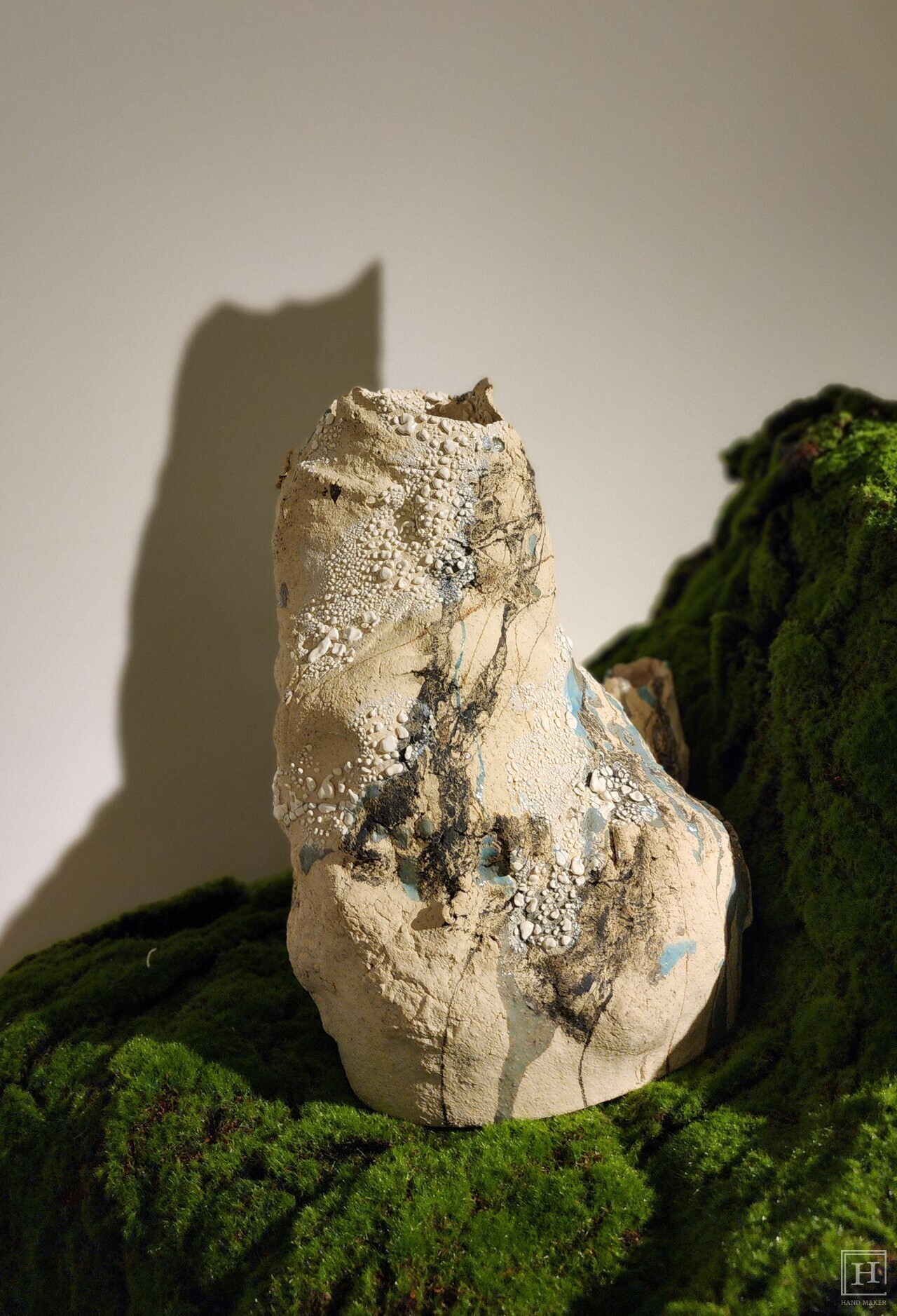
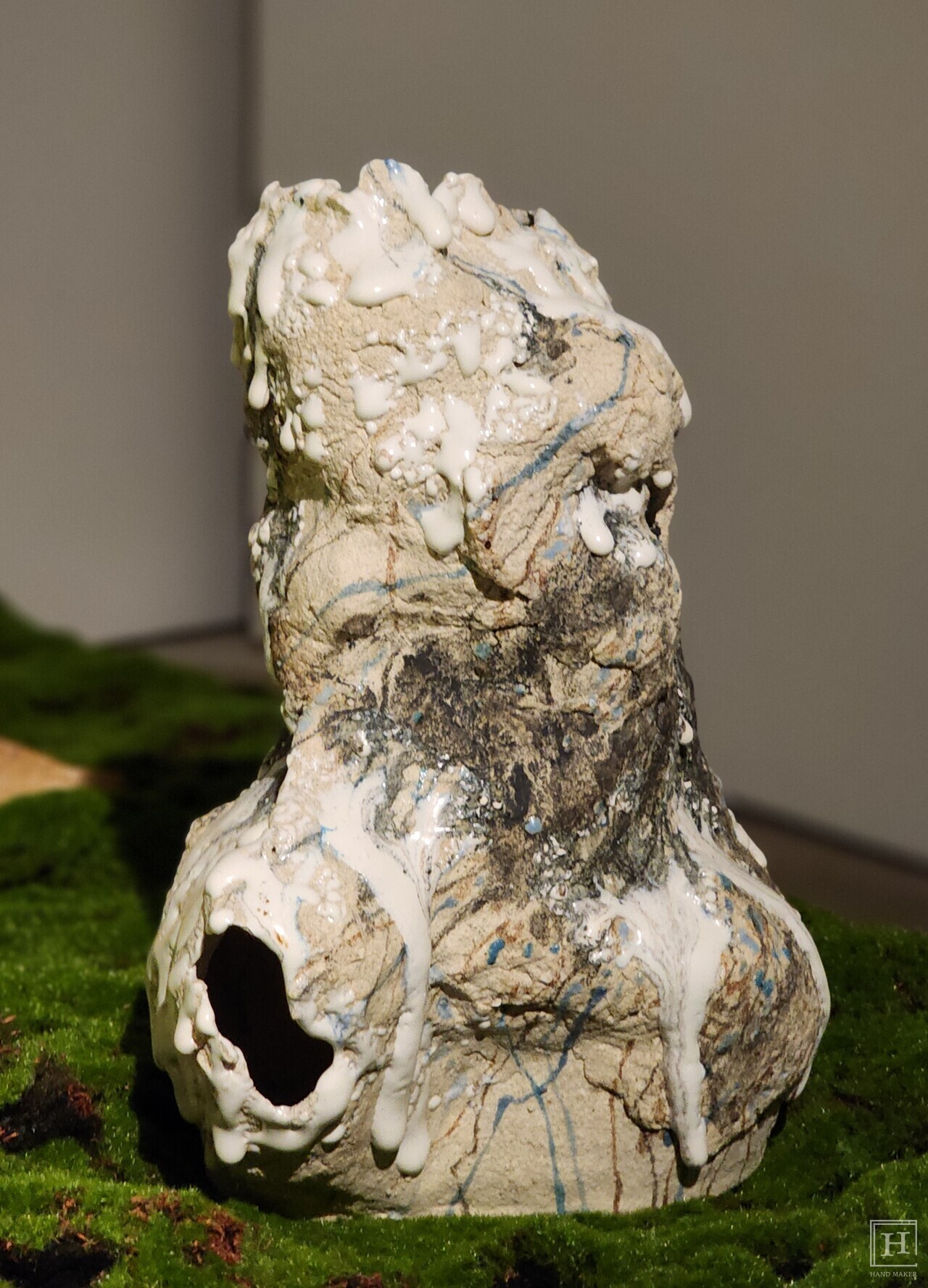
〈Dialogue of Stones〉 is similar to the hand-built works seen earlier, but stands out with a much rougher and more crude texture. On the surface where black and blue pigments are mixed, traces of white glaze flowing down and hardening remain, and holes pierced here and there and cracked-like forms add a sense of three-dimensionality.
When placed alongside works that utilize the original color and texture of the clay without coloring, the difference in expression methods is clearly revealed. Although shaped from the same clay, the sculptures, which possess different colors and expressions, form a single natural landscape on the moss-covered hill.
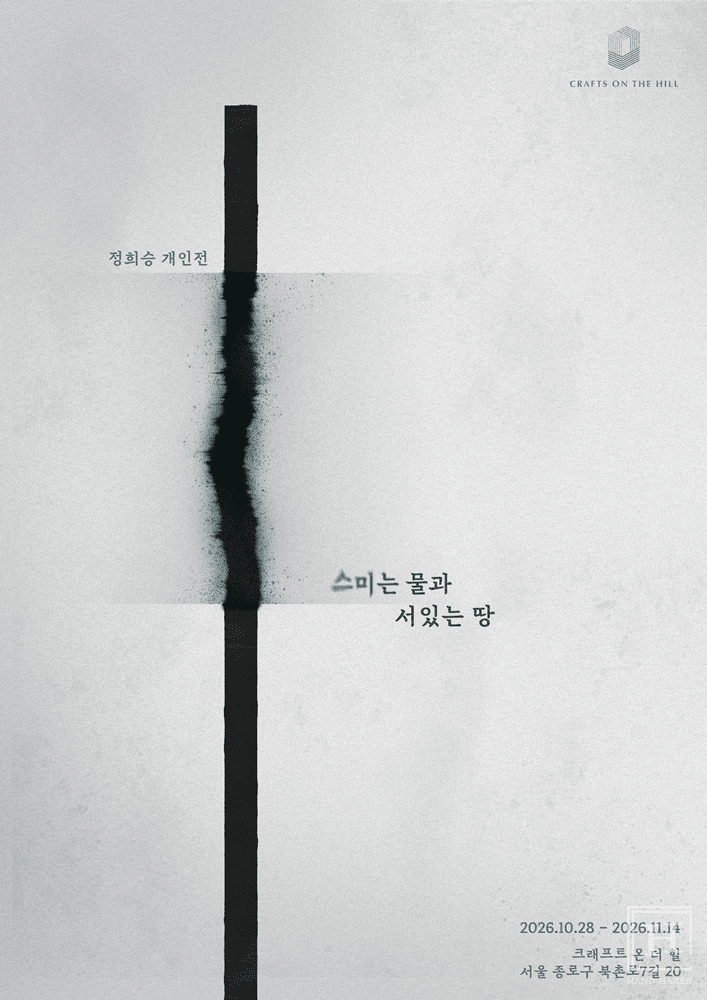
The exhibition continues until the 14th. Craft on the Hill can be viewed from 11:00 AM to 7:00 PM, and it is closed every Sunday and Monday.
Reporter at HANDMAKER (핸드메이커), a Korean magazine devoted to crafts and handmade culture. Covers exhibitions, design and the people who make things by hand.
Related Articles
[Field Sketch] Gyeonggi Ceramics Biennale 2026 ① A creative journey made by clay and the Earth, the "Earth Makes" exhibition
[Field Sketch] 2026 Gyeonggi Ceramics Biennale ⑤ The Diverse History and Formative Spectrum of Korean Ceramics, "Unfamiliar Traditions" Exhibition
Comments 0
Comments are currently disabled.