Hwang Se-na and Ji Mi-rye explore deficiency and consolation in dual exhibition "Nevertheless, We"
Artists Hwang Se-na and Ji Mi-rye present a dual exhibition titled "Nevertheless, We" at Gallery Color Beat, exploring how imperfect beings care for themselves and form relationships.
In the course of living, we experience losses and deficiencies, both large and small. At times, we desperately cling to something to protect ourselves, and at other times, we find comfort in the minor actions of another.
Throughout life, people experience various degrees of loss and deficiency. At times, they desperately cling to something to protect themselves, or find consolation in the minor actions of others.
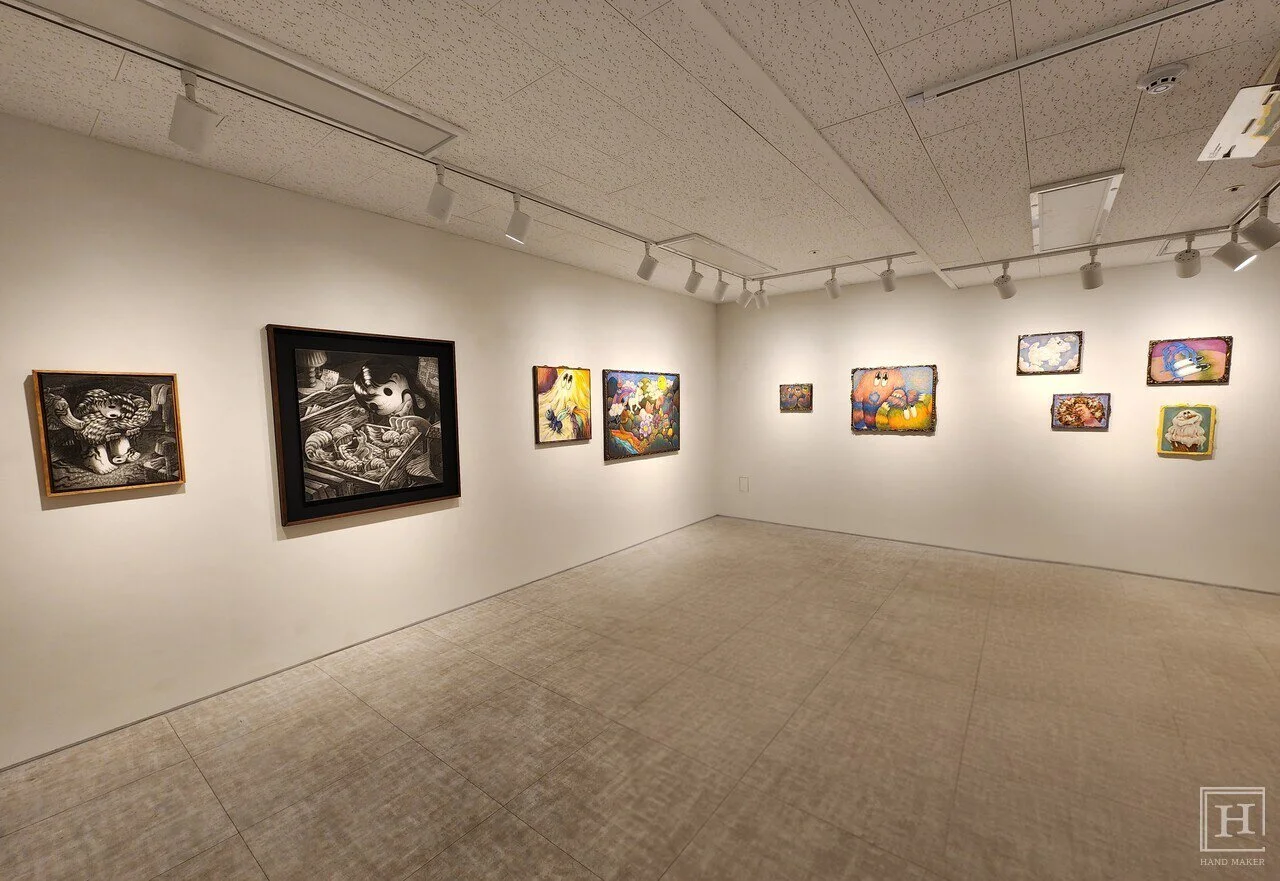
The dual exhibition "Nevertheless, We" by artists Hwang Se-na and Ji Mi-rye has been held at Gallery Color Beat since the 17th. Themed around "deficiency and consolation," the exhibition captures how imperfect beings live by caring for themselves and forming relationships with others.
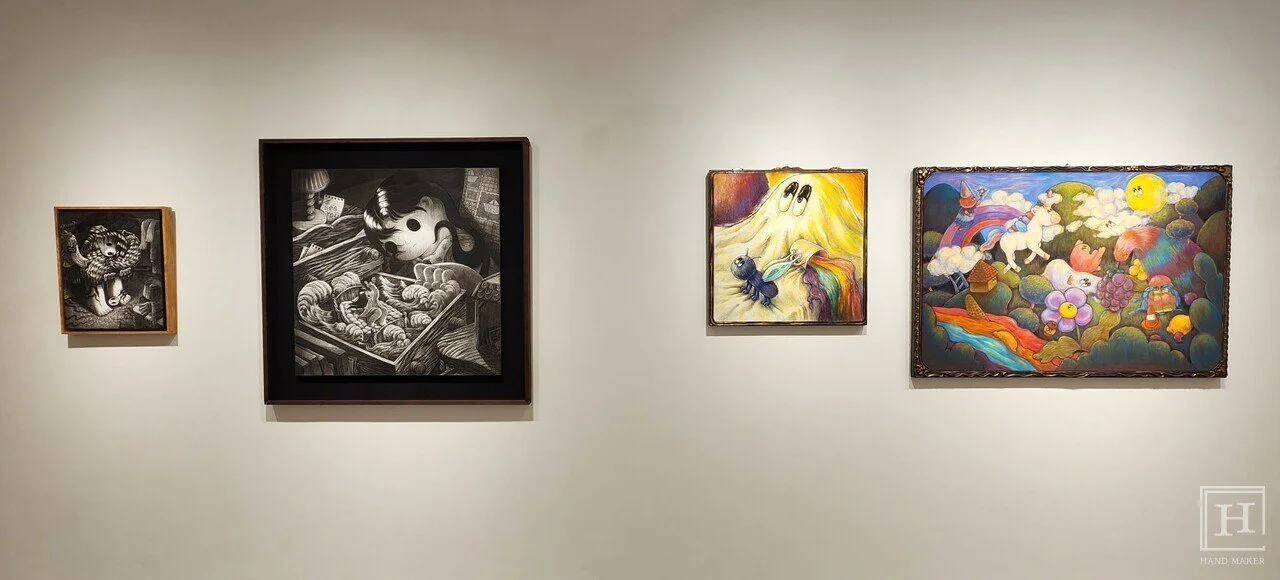
While the two artists' works stem from different narratives, they are connected by the common theme of the attitude toward understanding and accepting oneself and others. The works suggest that fully understanding oneself becomes the foundation for empathizing with others, and that a small consideration from another person can become the strength to sustain one's life.
While Hwang Se-na focuses on the things that sustain her amidst loss and anxiety, Ji Mi-rye focuses on how people with their own deficiencies treat one another and maintain relationships.
Both artists place emphasis on the eyes: Hwang Se-na uses empty pupils to convey loss, anxiety, and a desperate longing for oneself, while Ji Mi-rye uses half-closed eyes to capture various emotions, including interest in and indifference toward others. This expression of the eyes contributes to the strangely similar atmosphere shared by the two different artists' works.
Consolation blooming from fingertips clutching to avoid losing oneself
- Artist Hwang Se-na
Hwang Se-na depicts individuals clinging to something to protect themselves amidst loss and anxiety. Her work begins with the question, "How can one make a cold room warm?" In this context, the "cold room" is not merely a living space, but a symbolic space for the emotions of deficiency, anxiety, and loss experienced by an individual.
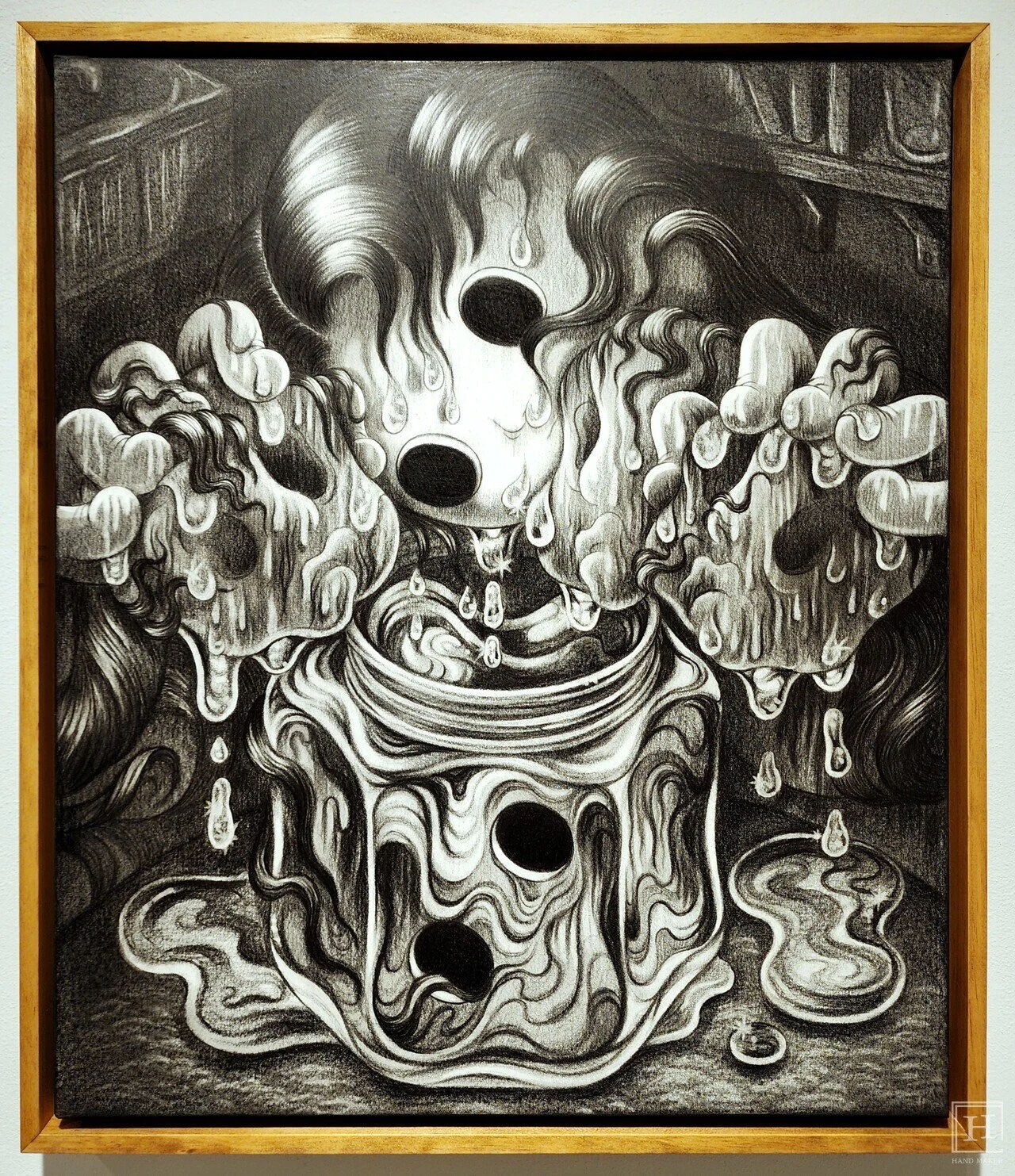
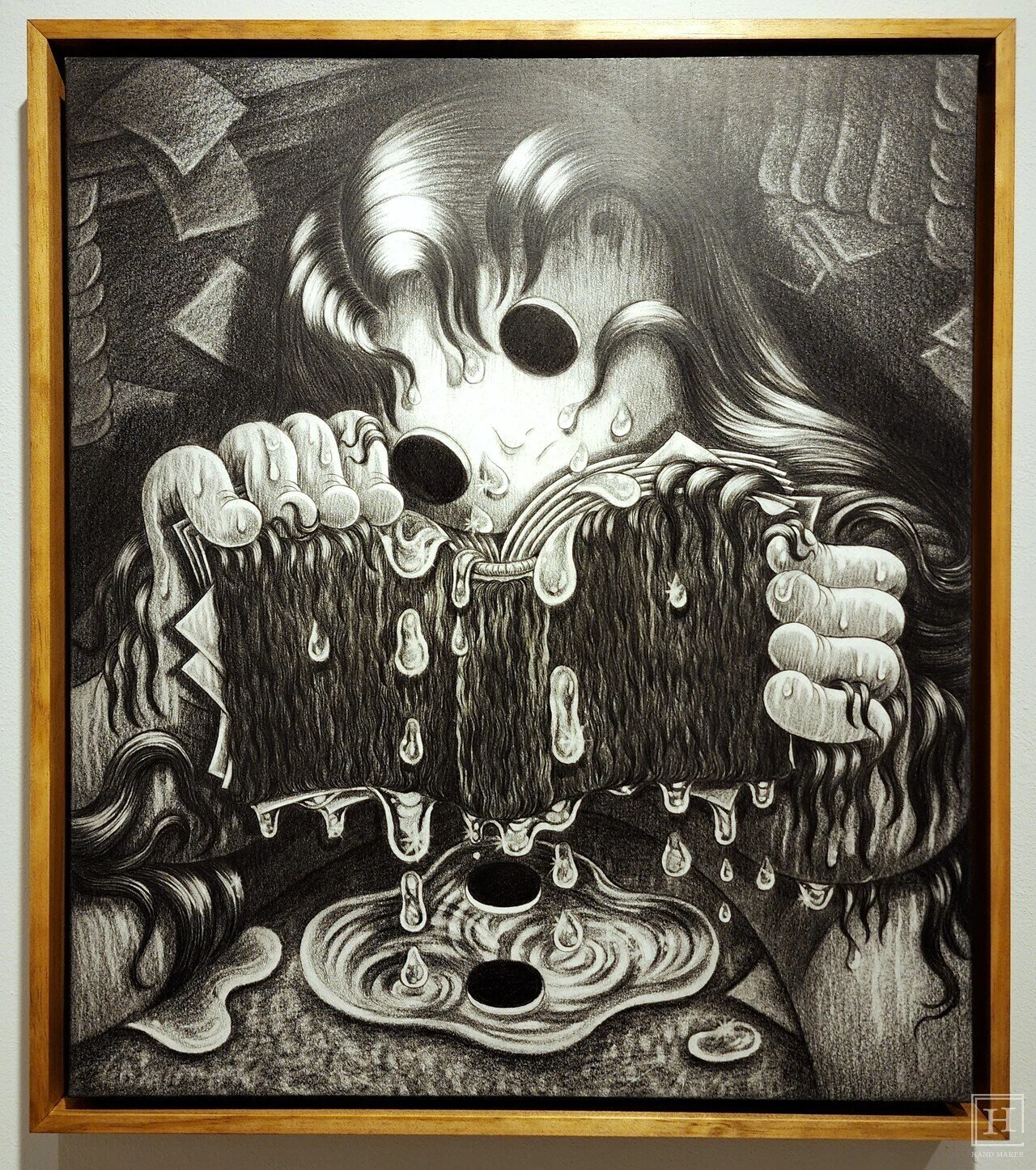
The works feature hands clutching something tightly, with shapes flowing down beneath them. The objects held in the hands symbolize the artist herself, and the process of gripping them as if to crush them causes memories and emotions to flow out. These flowing shapes become another ego that looks back at the self with new eyes. The things held to protect oneself ultimately appear as another version of the self.
The desperation of the figures in the works is palpable, with fingers clutching so tightly that the knuckles appear bent. The flowing shapes further maximize the intensity of these emotions, perhaps signifying the profound desire not to lose one's own self.
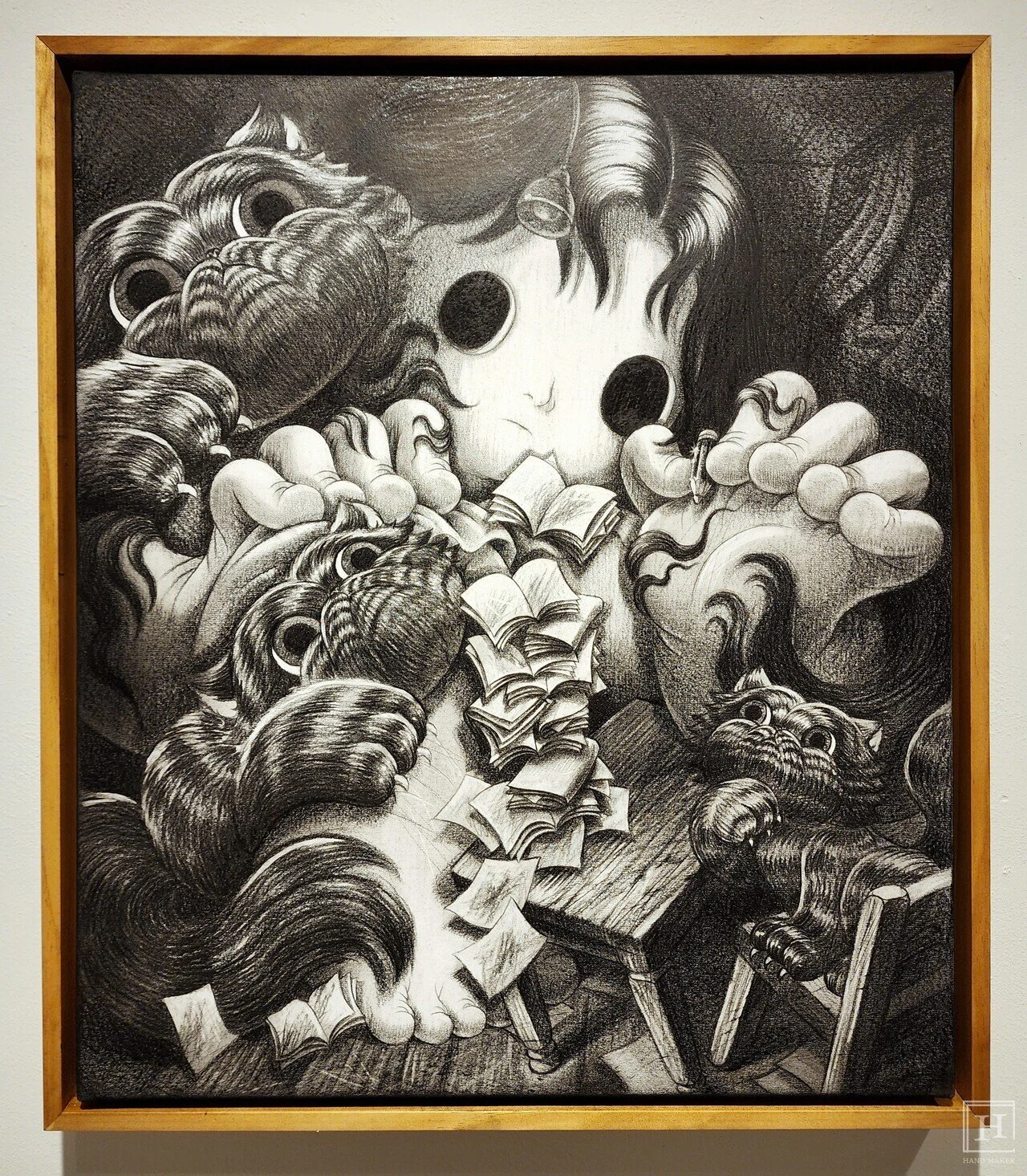
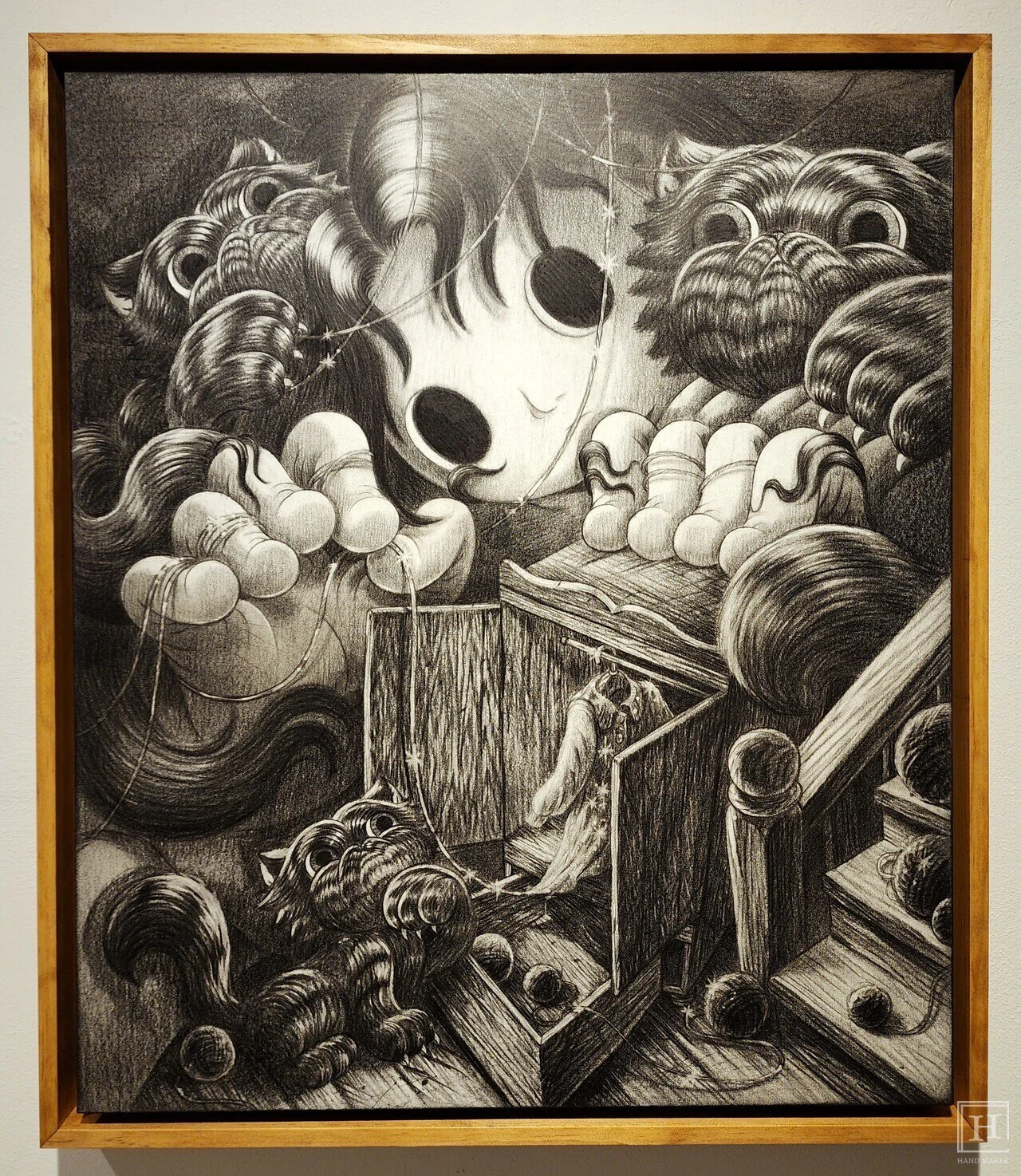
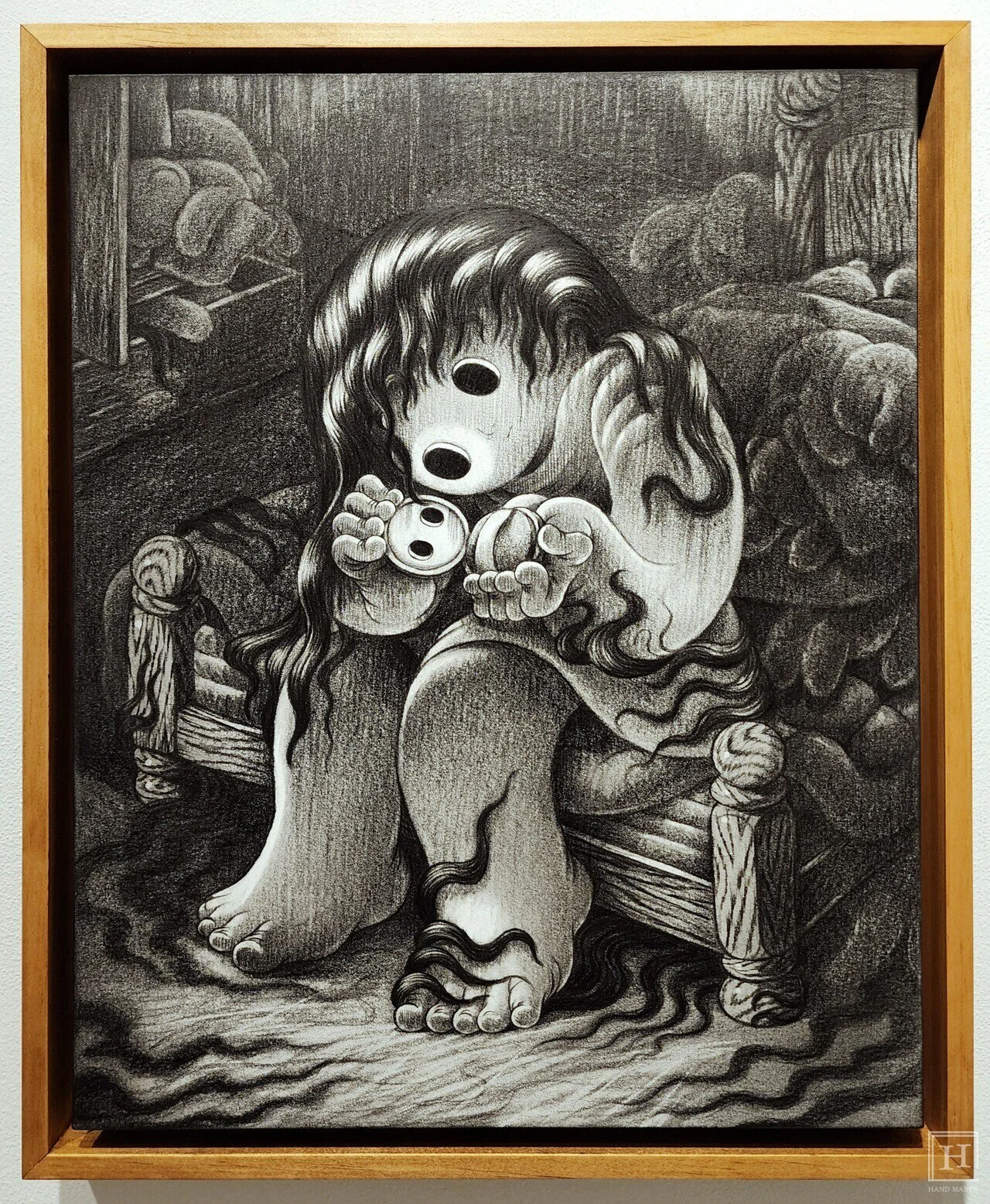
Cats appear in 〈It feels like reading an inverted book〉 and 〈To fill with warmth〉. While the figures in these works still possess hands clutching tightly, attempting to write while reading or to possess beautiful clothes, it is not easy because cats with sharply revealed claws are by their side.
This can be interpreted as the effort to avoid losing one's self and ego while facing external obstacles. This is evident when comparing the empty eyes of the figures to the cats, which possess lively eyes and gazes. Reflecting the exhibition title "Nevertheless, We," the figures in the works clutch their hands even more firmly to protect themselves.
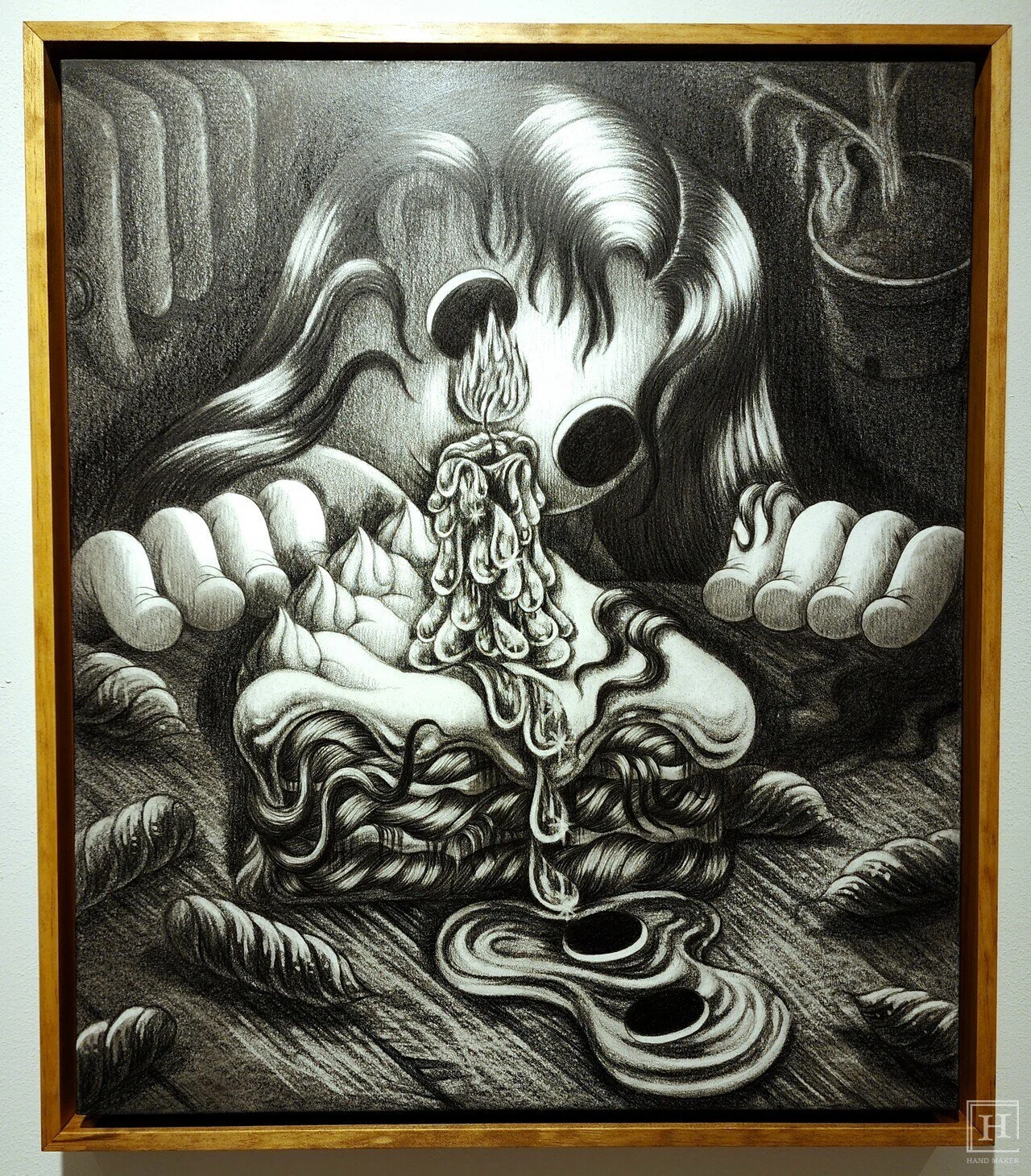
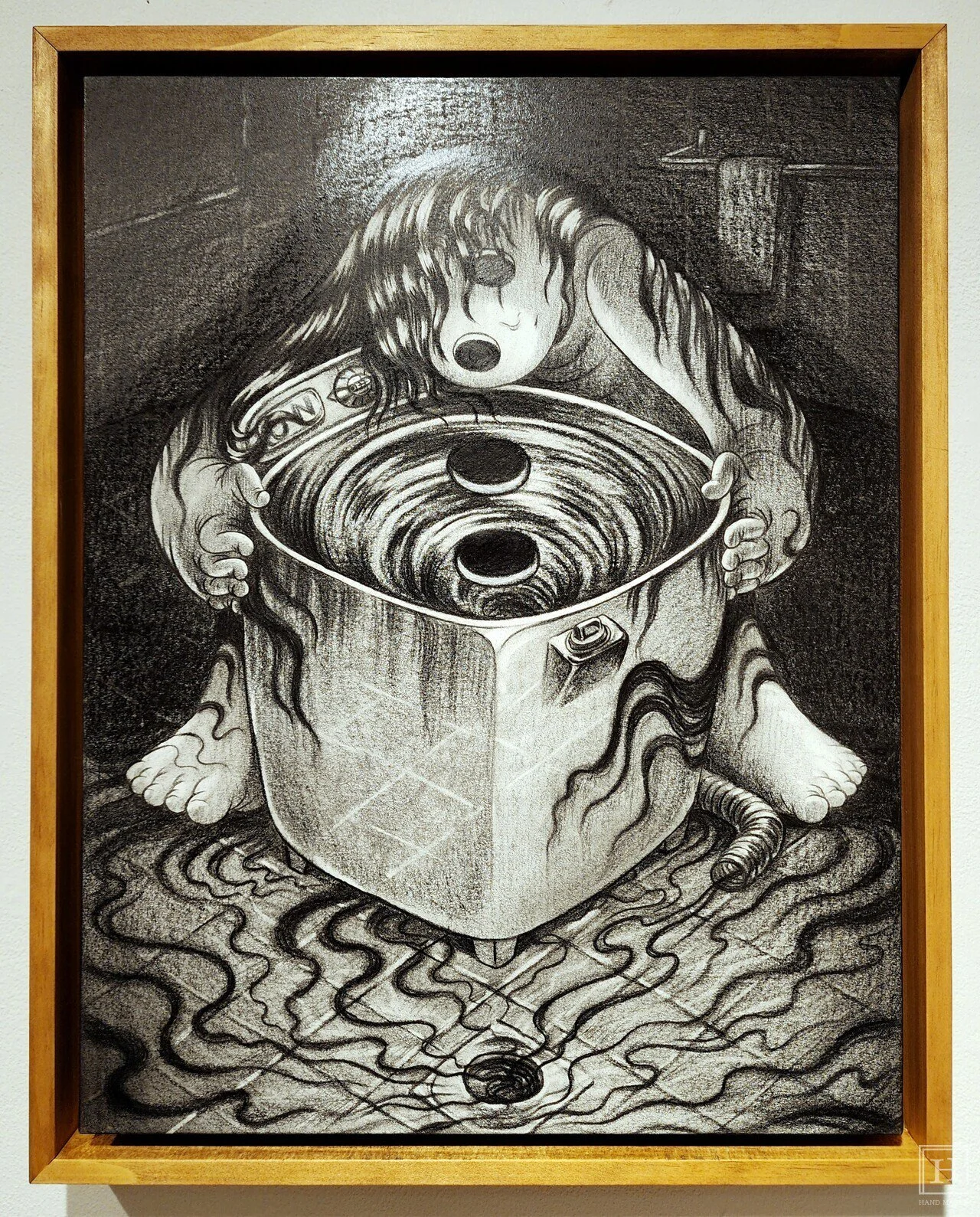
The desperation of the characters connects to melting candle wax that flows like fire and a washing machine that spins incessantly. 〈Making countless wishes〉 is filled with candles that have either not yet been lit or seem to be the remnants of those that have burned out, and the candles on the cake have melted to create the 'eyes' of another self.
Commonly, 'candles' are objects that contain a heart wishing for desires to be fulfilled. Perhaps artist Hwang Se-na is expressing unfulfilled wishes and desperation. Although cakes and candles are indispensable when celebrating something, the characters in the works are far from happiness. The collision of opposing objects and emotions more vividly demonstrates the characters' sense of loss.
〈Leaning on noise〉 evokes a feeling of wanting to leave reality for a moment, as if engaging in 'water-gazing' while watching the water swirling inside the washing machine. This is because 'eyes' symbolizing the artist's other self have appeared inside the washing machine. However, reality does not leave 'I' alone. In this work, hair flows down to the point of heading toward the drain.
Since her previous works, Hwang Se-na has used hair as an important subject. Considering that it symbolizes both her own memories and the roles and expectations demanded by those around her, it appears like an invisible shackle that constricts the self, added to the expectations of others and one's own compulsions.
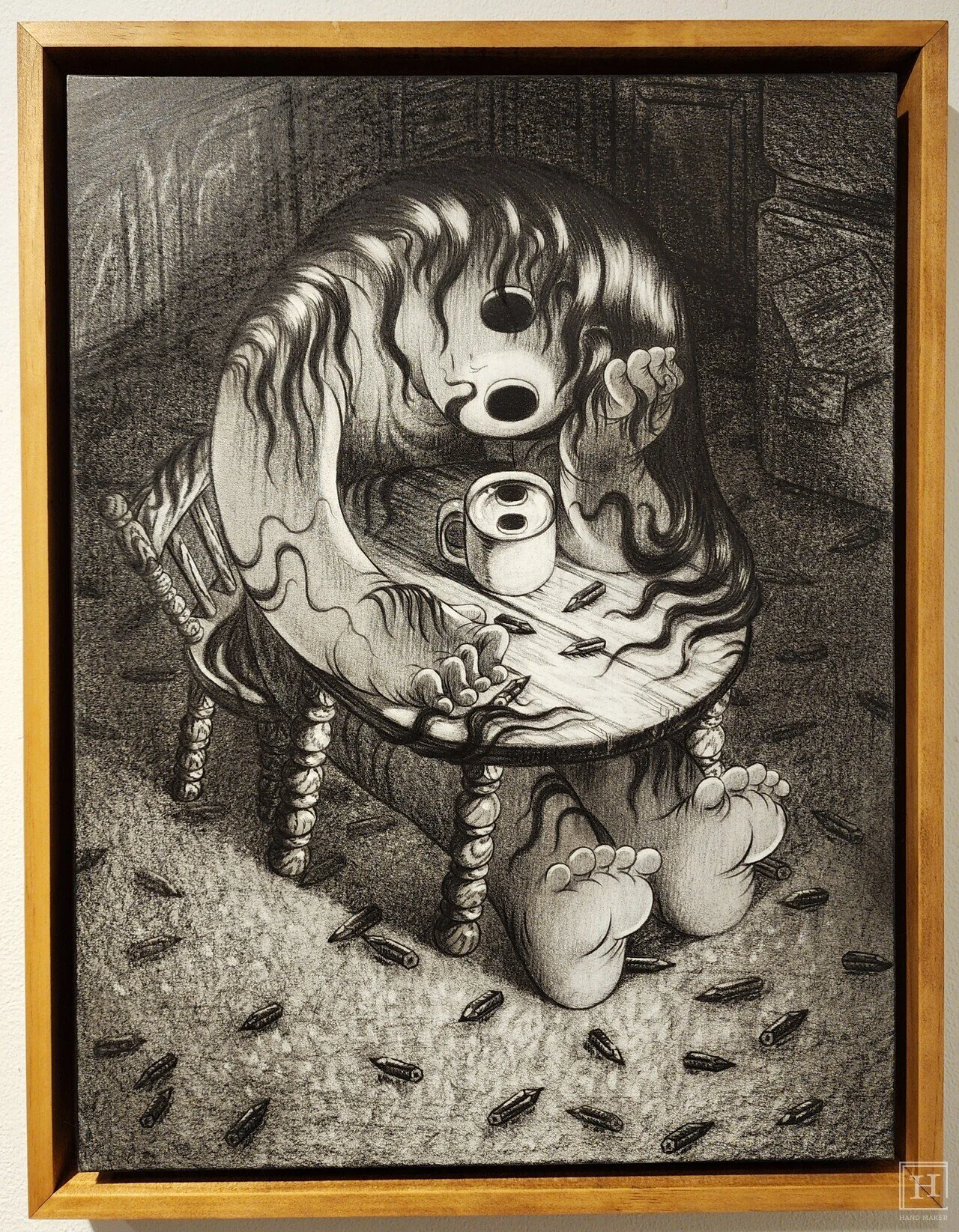
This work gives the feeling of being lost in 'narcissism.' Although hair grows long and flows down, or numerous stubby pencils fill the space as if gradually encroaching upon the self, despite such surrounding circumstances, the character in the work only looks at the 'other me' reflected in the mirror or the coffee cup. While appearing intoxicated with oneself, it might perhaps be a form of self-love created by the desperation to not lose oneself.
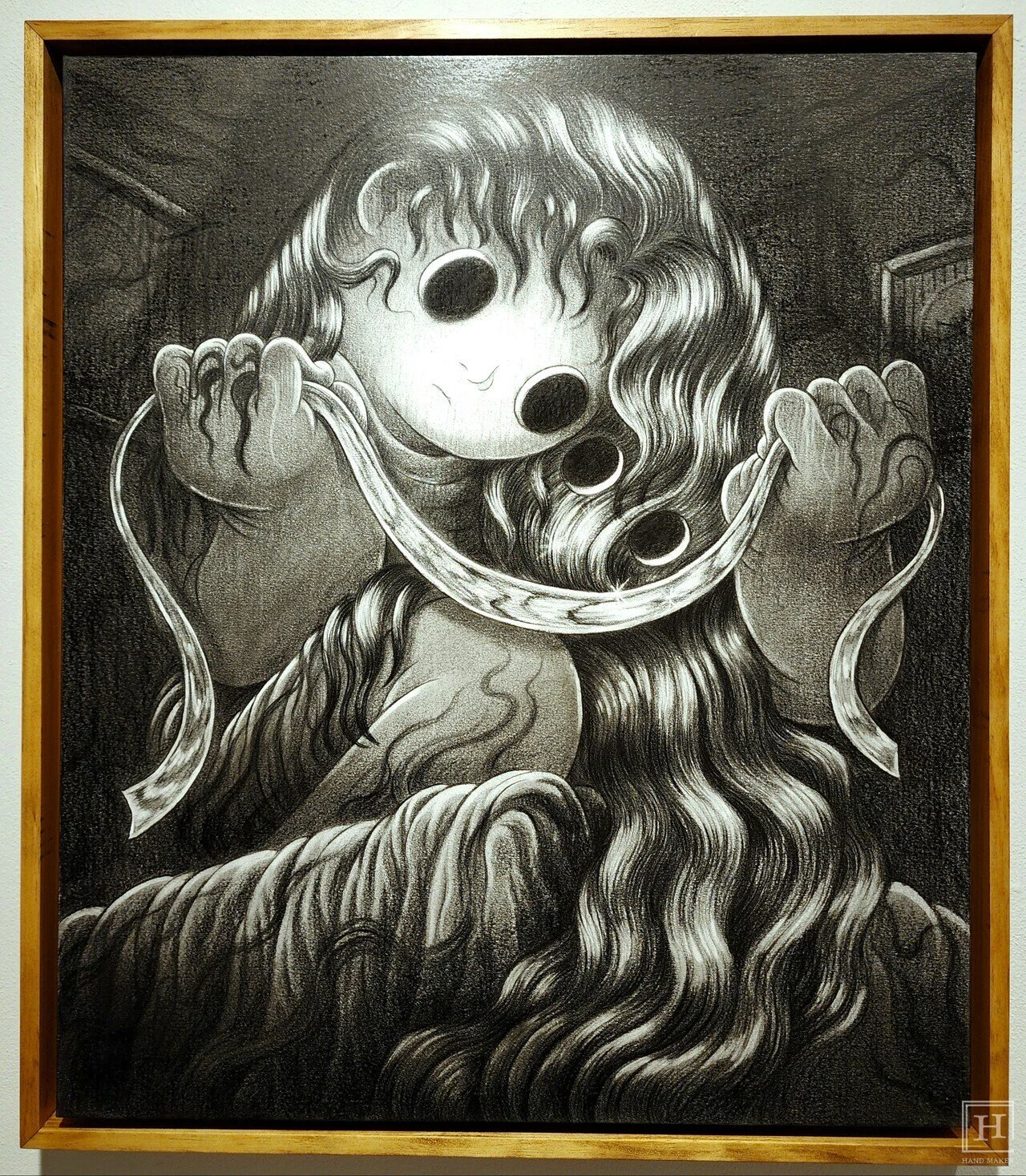
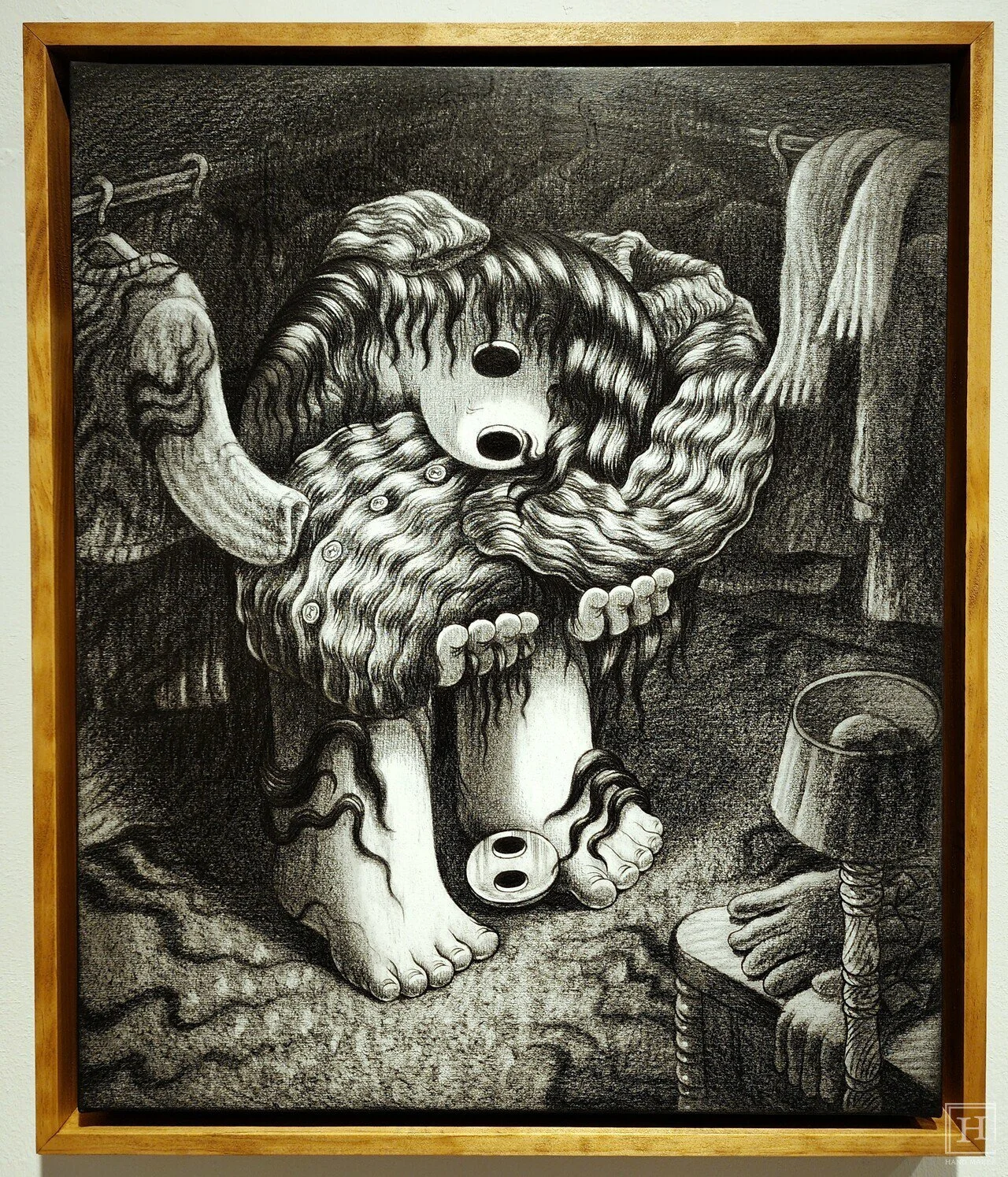
The selves expressed as if flowing now seem to be becoming one rather than being another self. 〈dear dear my dear〉 looks at the self, as if trying to tie the long-grown hair with a ribbon, with eyes of another self appearing in the hair. 〈Find me and embrace me〉 finds 'I' among the many clothes in the closet and embraces each other.
In the image of trying to tie the hair that used to constrict the self with a ribbon in 〈dear dear my dear〉, one can feel a heart that intends to kindly care for and accept oneself.
In particular, 〈Find me and embrace me〉 is a work that Hwang Se-na chose as one she particularly likes. The artist explains, “The roles that clothes hold are all different, such as clothes for others or clothes I want to wear. Within that, I found 'I'. The 'clothes,' which are another me, embrace me, and the other 'me' in the fallen mirror is also looking at me.” This seems to contain a heart that seeks to find the true self and face that appearance while living amidst various roles and expectations.
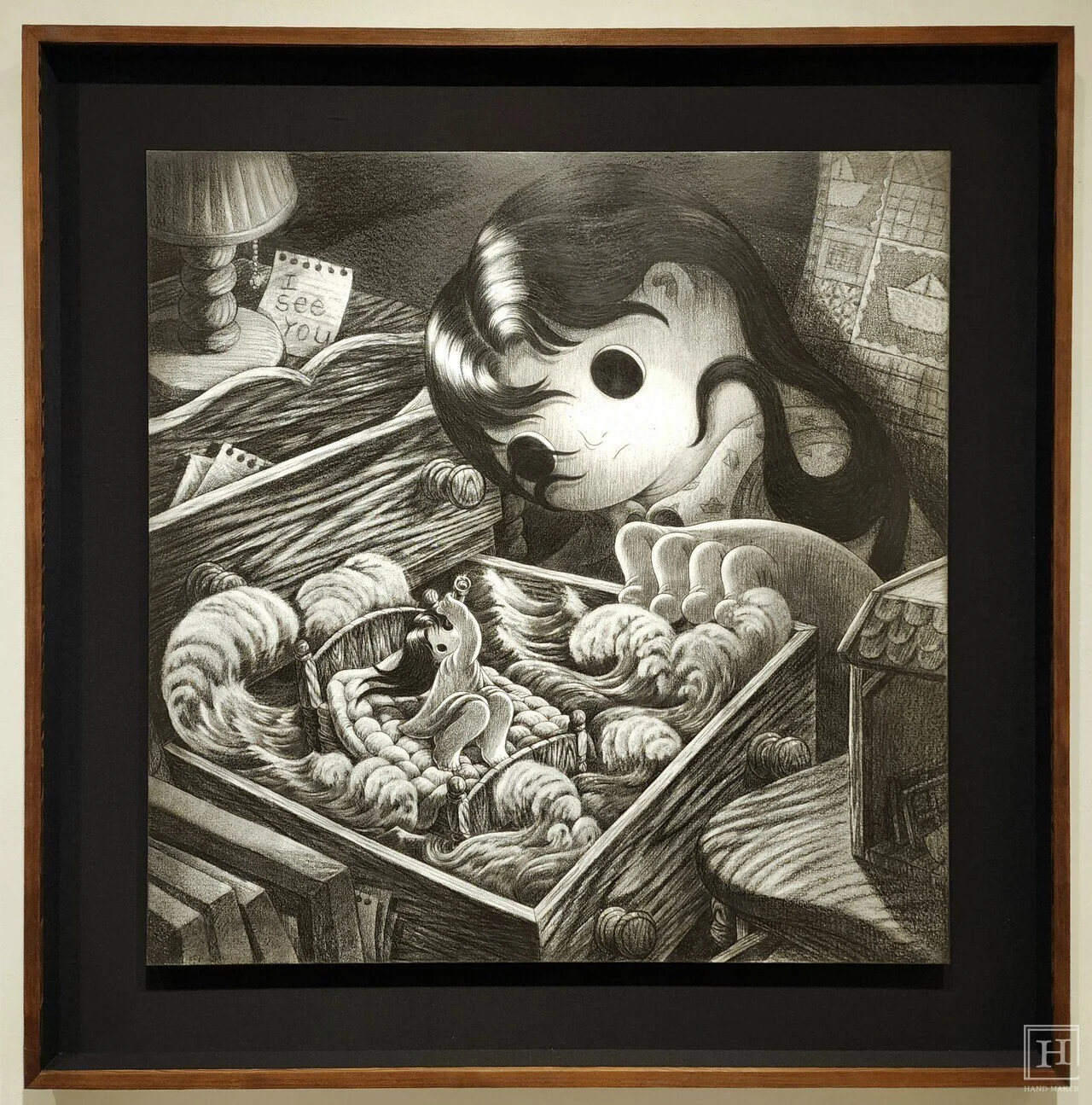
Among the works in artist Hwang Se-na's current exhibition, this piece most clearly reveals the will of 'I'. When opening a drawer that preserves the rough texture of raw wood, one discovers rough waves inside, and upon them, a small 'I' as if sailing on a bed.
Unlike the empty 'I', the 'I' inside the drawer seems to be running toward a goal while looking through a telescope. The 'I', who had lost their direction in life and almost lost themselves, seems to be strengthening their will by bringing out the past self who possessed a heart moving toward dreams. Perhaps that is why a memo saying 'I see You' was left.
Even inside the quilt-patterned blanket worn by the figure in the work, it is filled with paper boat shapes. One can feel the desperation to move somewhere even amidst the rough waves.
However, the artist's intention is slightly different. Hwang Se-na explained, “I wanted to express the anxious emotions and the self that I tried to turn away from as being deeply hidden inside the drawer. I wanted to escape those emotions for a moment and be free,” adding, “That is why I tried to make the patterns of the drawer appear somewhat sharp, and why I left the memo 'I see You'.”
No matter how it is interpreted, the 'I' in the work chose the object of a drawer because they did not want to lose their precious self, or to escape the emotions of being obsessed with not losing 'I'. A will to face the hidden self again is felt.
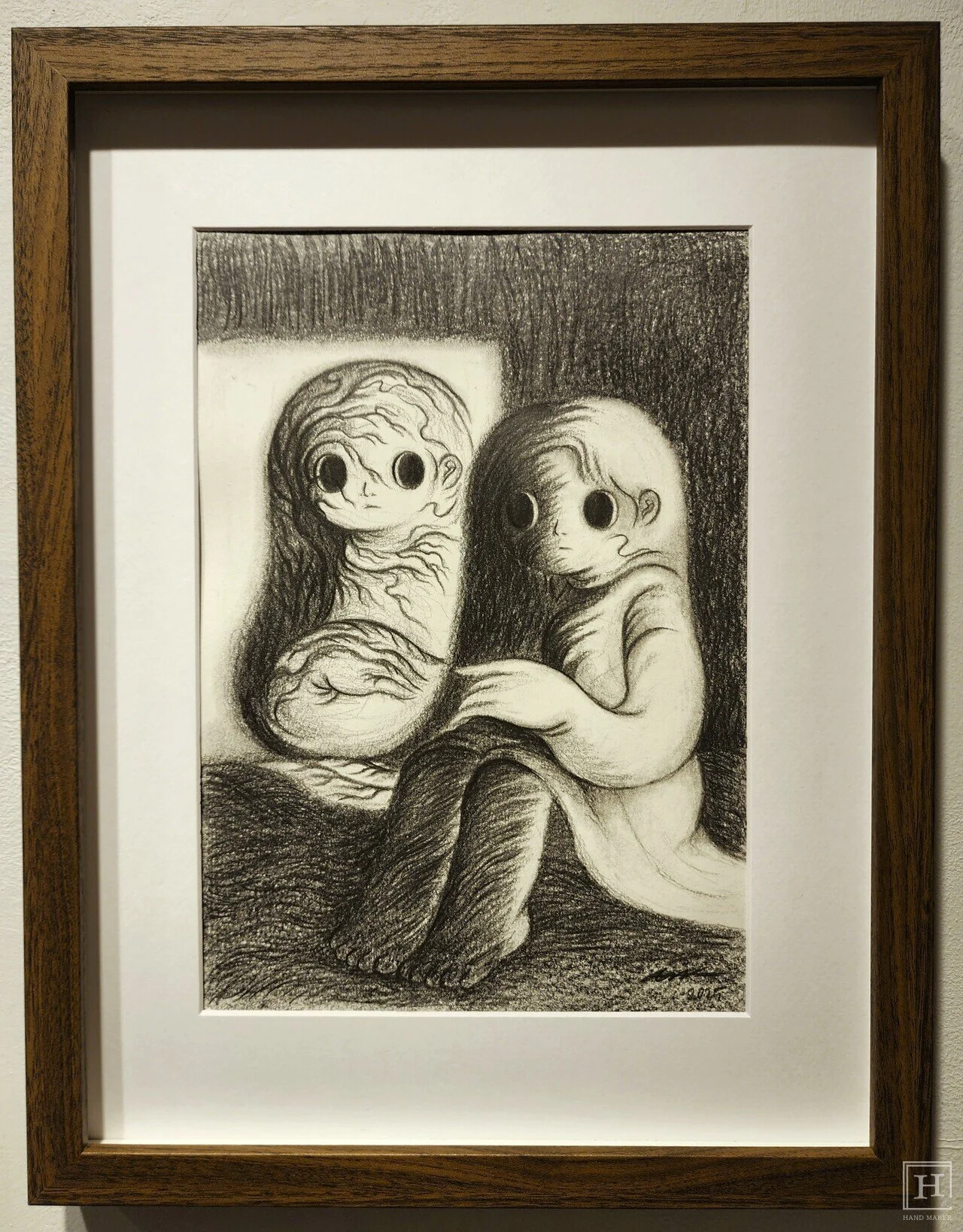
〈The Swarming Possibility Within Me〉 also gives a similar feeling to 〈I see you〉. What is reflected on the wall is the figure's shadow. However, if it were a shadow, it should be dark, but the shadow is instead cast upon the figure in the work. To that extent, the artist intended to show the possibility of changing life by drawing the 'shadow', which is another self, brightly and clearly.
Furthermore, hair grows like roots onto the shadow, enveloping it. The hair that constricted the self in previous works feels like a symbol of vitality that takes root and grows this time.
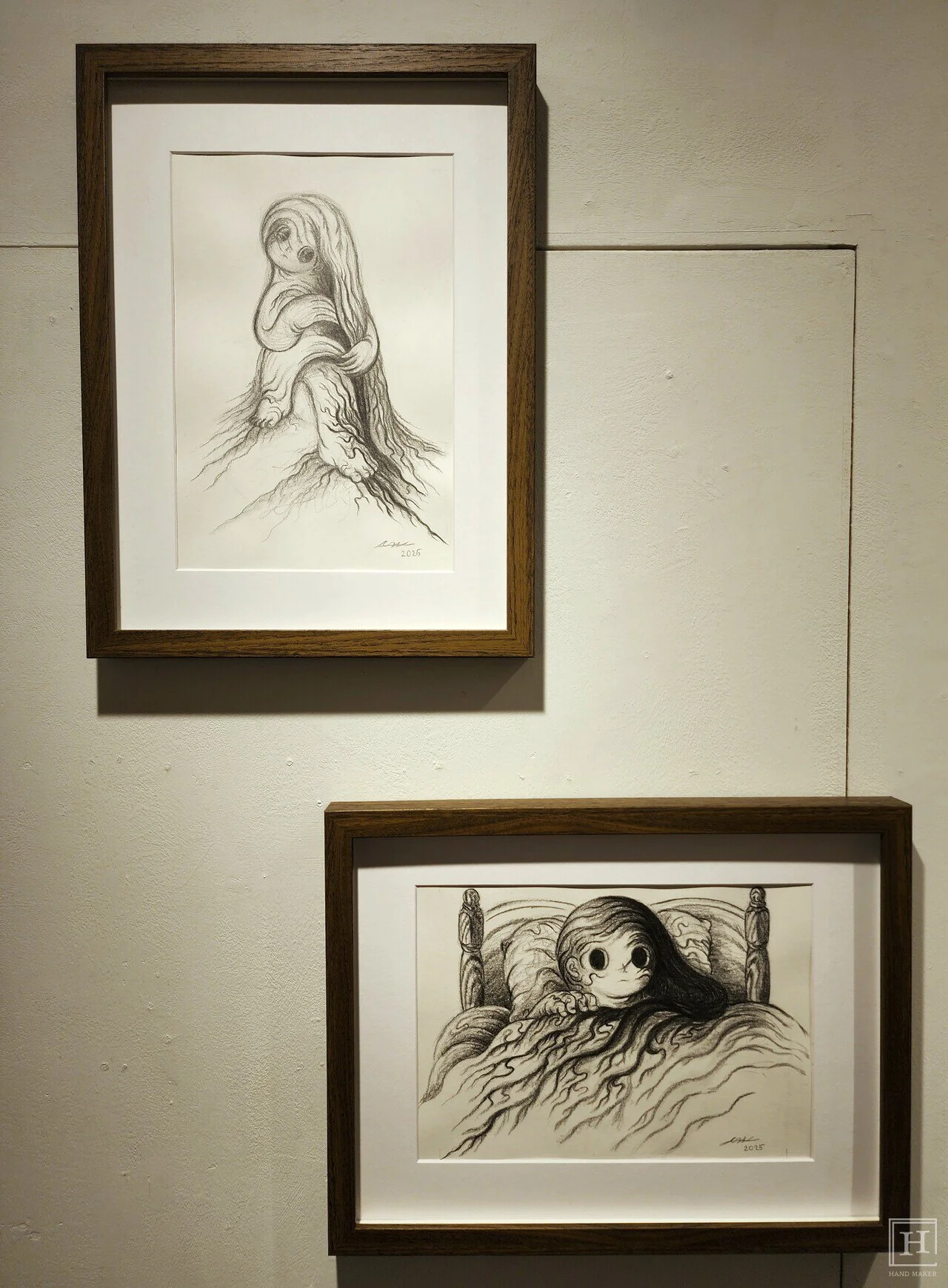
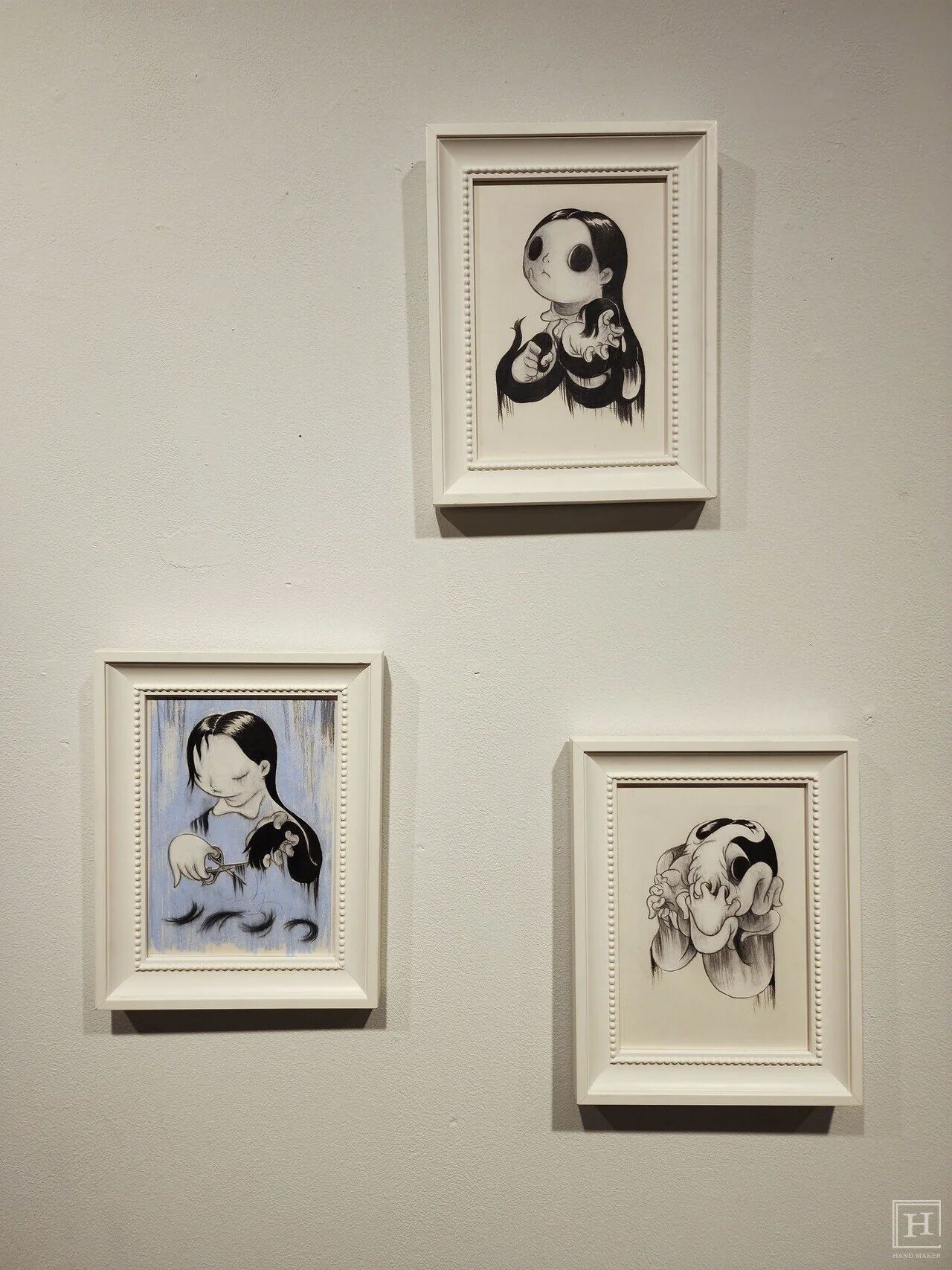
〈Spreading Roots〉 and 〈I Wanted to Draw Spreading Roots〉 focus on the hair that the artist has utilized since before. Even in these works, the hair grows like roots and envelops. While it represents the memories and oppression that constrict the self, on the other hand, it looks like roots that sustain and grow life.
〈Memory〉, 〈Delusion〉, and 〈Emotion〉 are the artist's early works. The expression of hair is also prominent in these works, where the hair sometimes envelops the figure but also cuts it away shortly after. Or, hands like the tentacles of an octopus constrict the figure to the point where they cannot breathe. In these appearances, one can feel the artist's will to protect the self and to escape from the things that oppress them. It shows that currently, they have been able to grow in a direction of accepting even their own deficiencies.
In this exhibition, Hwang Se-na said, “I thought that if it is held together with Ji Mi-rye's works, it would become an exhibition where one can be comforted. So, I prepared a series of self-portraits that can show the anxiety and sense of loss of the modern era.” The figures in the works still look somewhere, but it is impossible to know what is at the end of that gaze. Because there is no clear answer or conclusion, viewers discover another story by projecting their own experiences and emotions.
It's okay even if it's not perfect, monsters that fill each other's deficiencies
- Artist Ji Mi-rye
Artist Ji Mi-rye focuses on the 'deficiency' that everyone possesses. While deficiency is often accepted as a negative meaning referring to a state of being lacking or unfilled, the artist views it as a force that moves life and an opportunity to understand oneself.
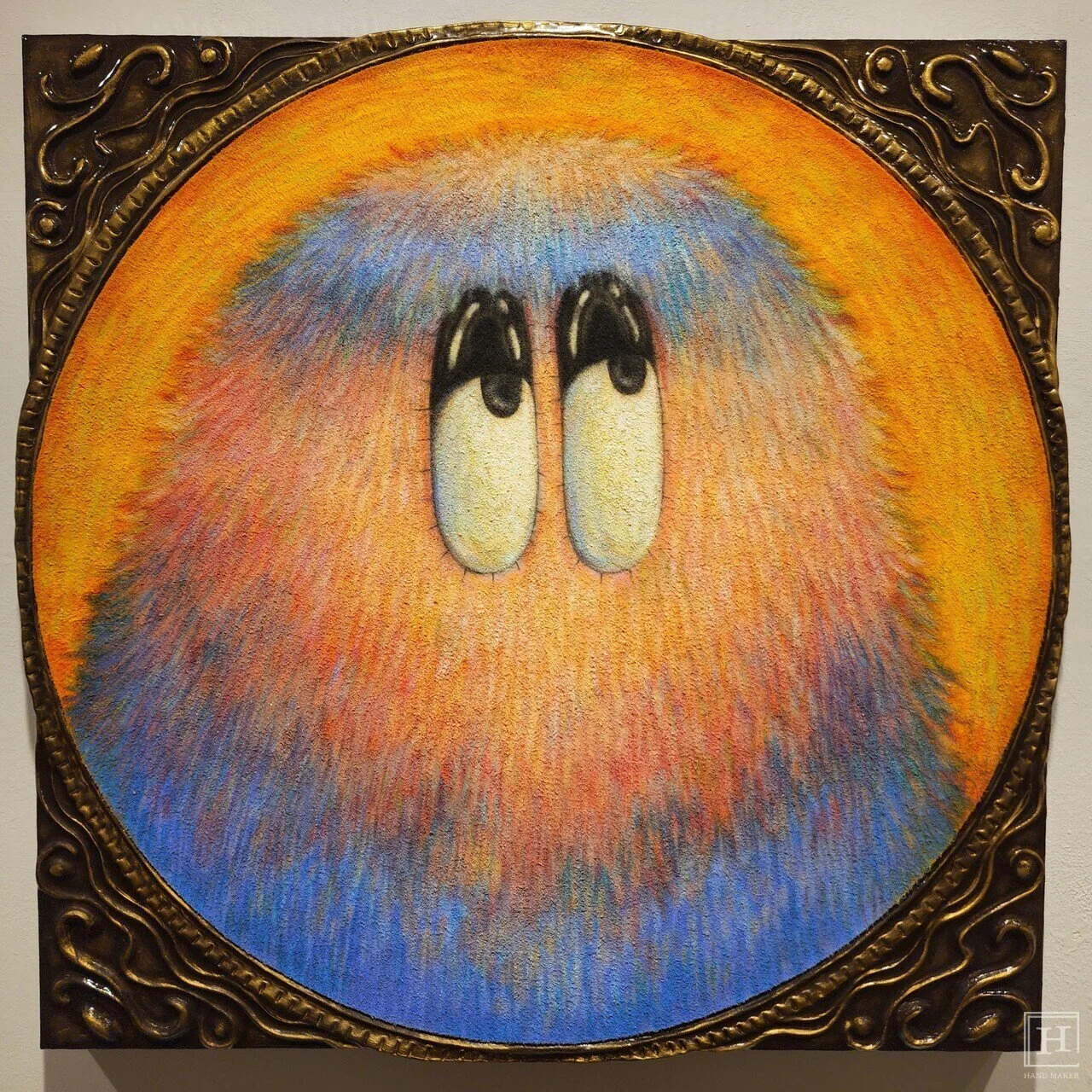
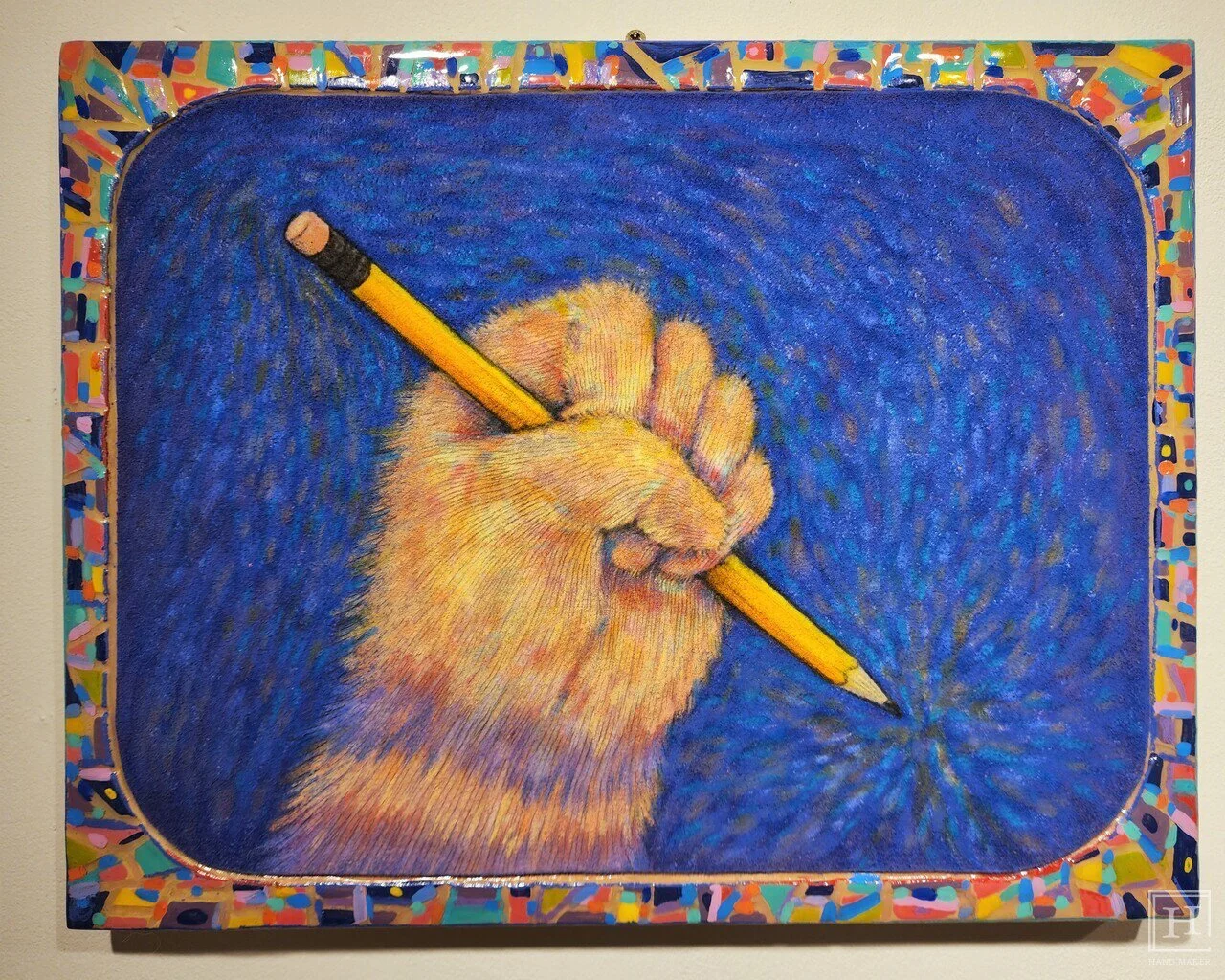
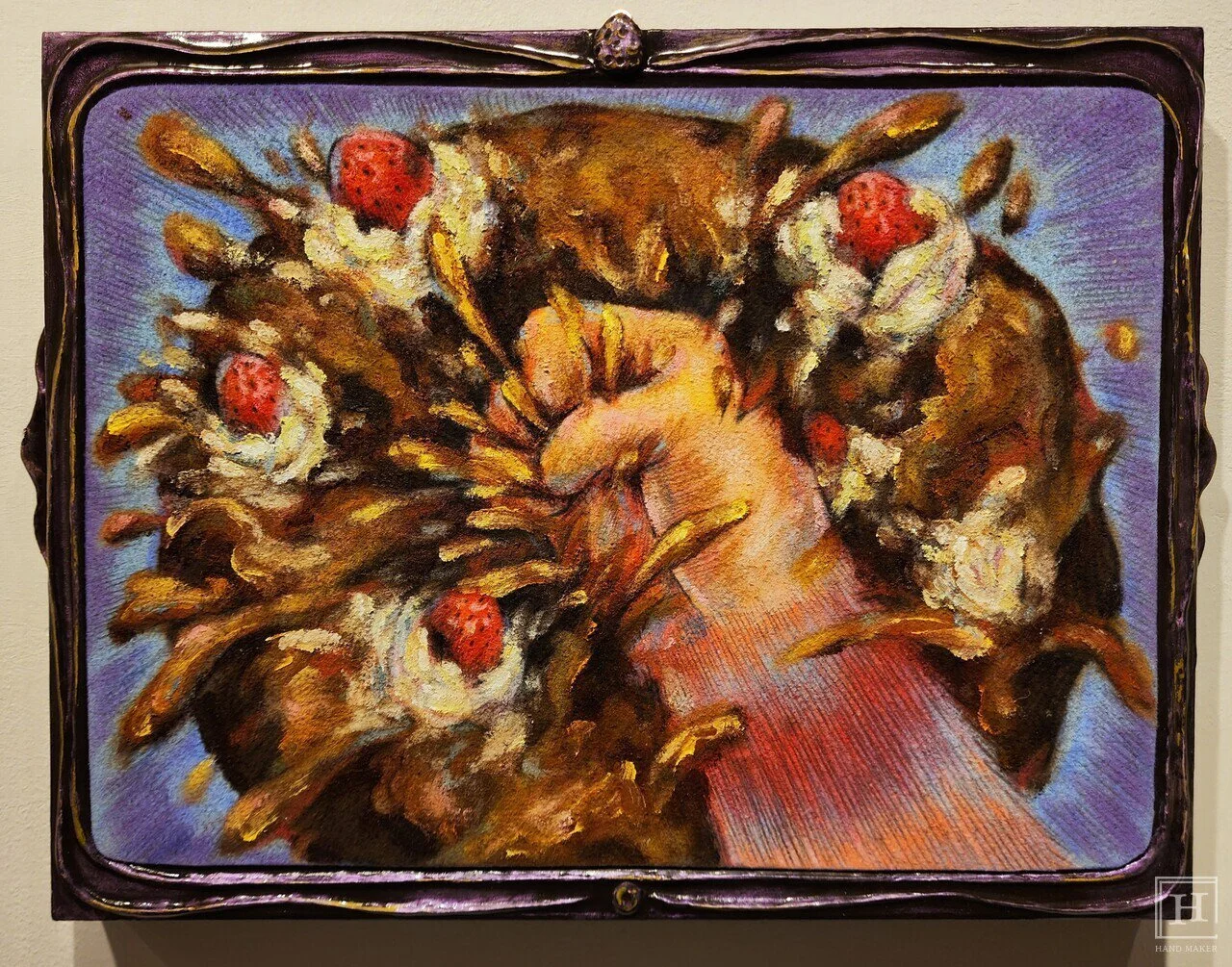
Various "deficiency monsters" with unique colors and shapes appear in the works. They look cute and friendly like fairy tale characters, and also appear warm, like Ji Mi-rye's original expressions drawn on felt.
However, these are beings with different emotions and inadequacies. The people and landscapes the artist encounters in daily life, as well as her own experiences or thoughts, are expressed in the form of monsters.
Like 〈Intended Indifference〉, they look at someone with half-closed eyes but do not interfere recklessly. Like 〈Sharp Burden〉, one cannot let their guard down because they live while being conscious of others' gazes. A sharp pencil stands in for that emotion. Then, as accumulated emotions soon explode, one might want to smash a cake, like in 〈Bang!〉.
These appearances are emotions that we all can feel while living. By pretending to be fine, we end up becoming "deficiency monsters" as we unknowingly lose something.
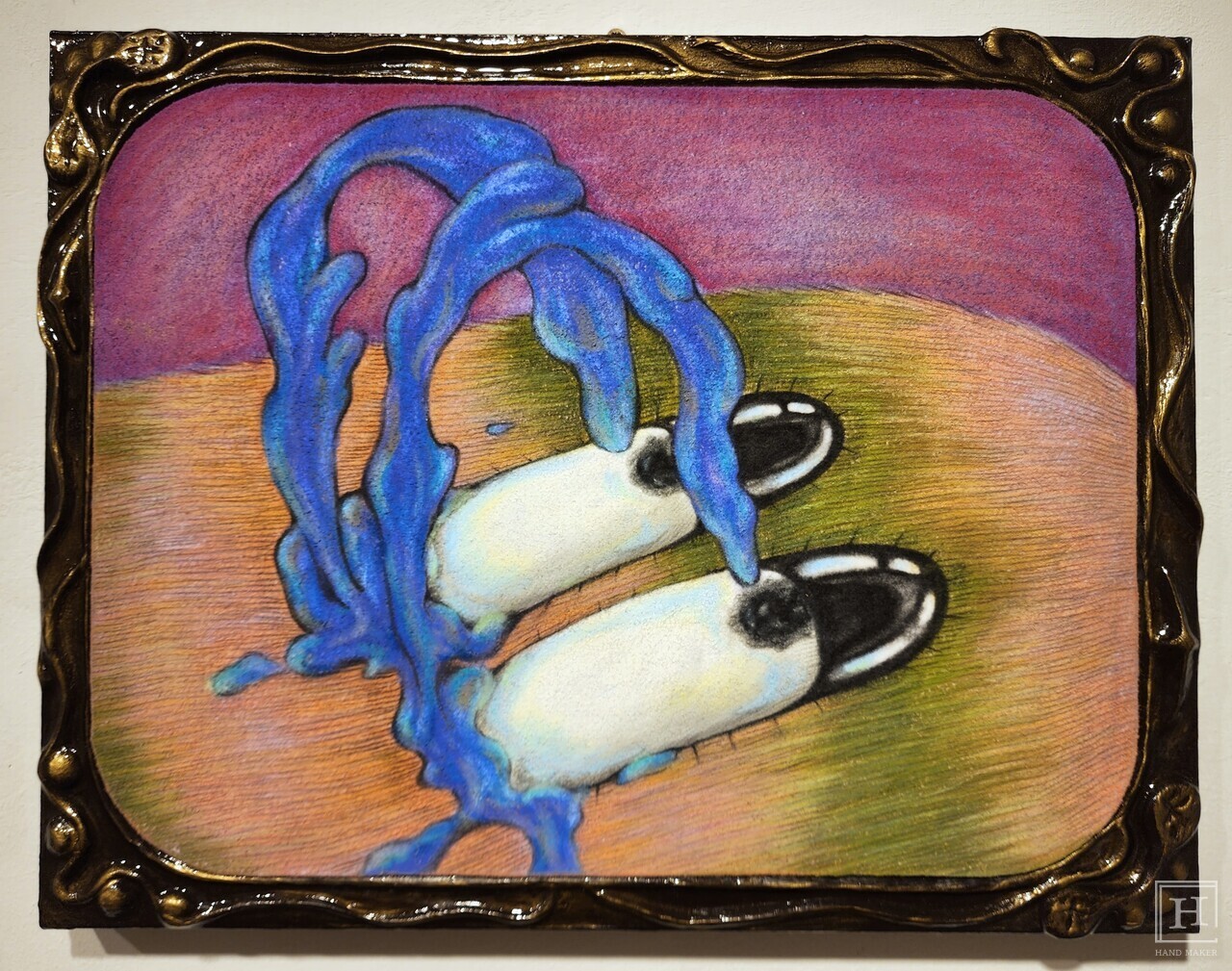
As we live, we express various emotions such as joy and sadness, anger and resentment through tears. However, those tears do not flow down, but surge back up and return to the eyes. It shows our appearance in a fairy-tale-like way, unable to express emotions as honestly as a young child. Like tears that were ultimately not shed, unexpressed emotions seem to pool in a corner of the heart.
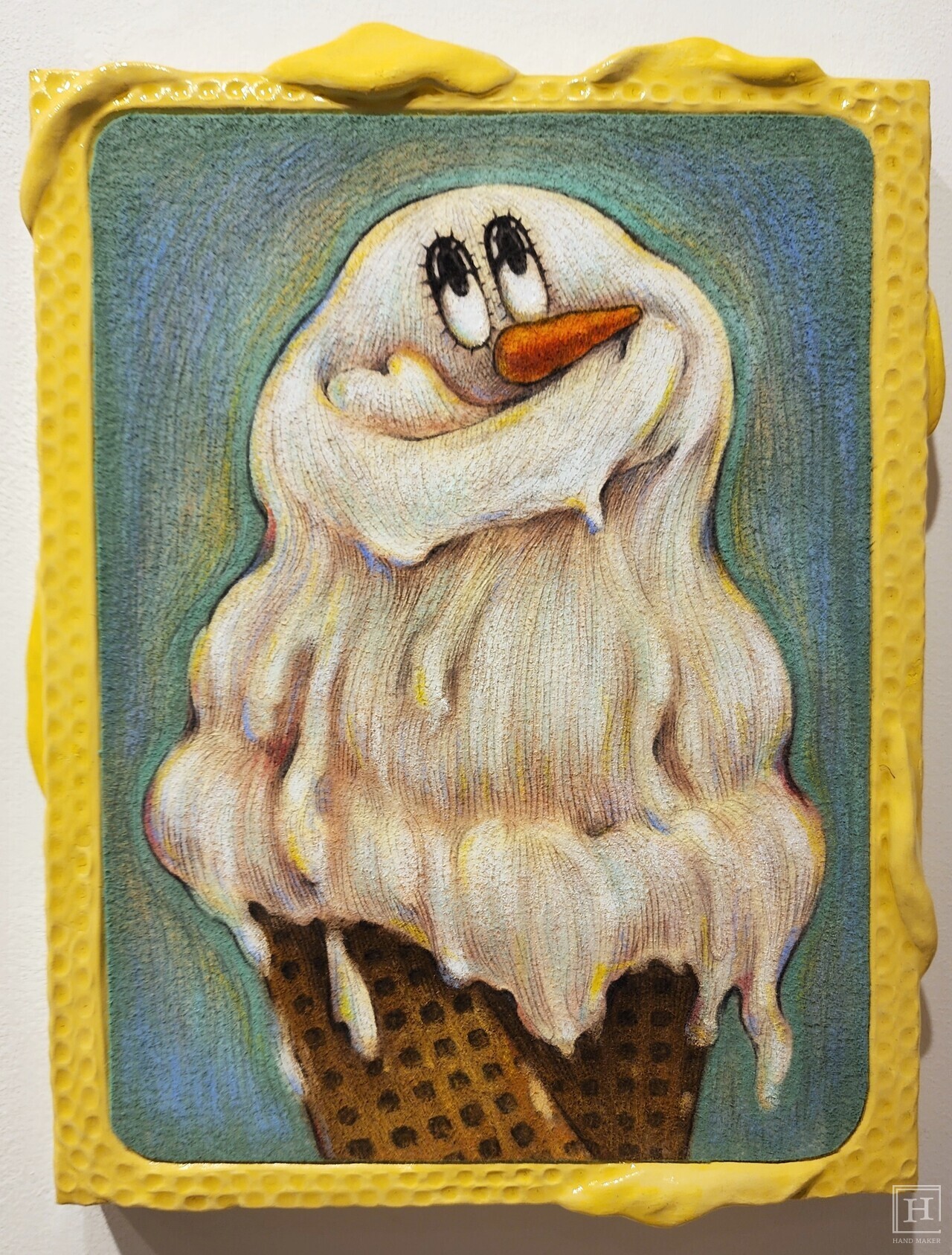
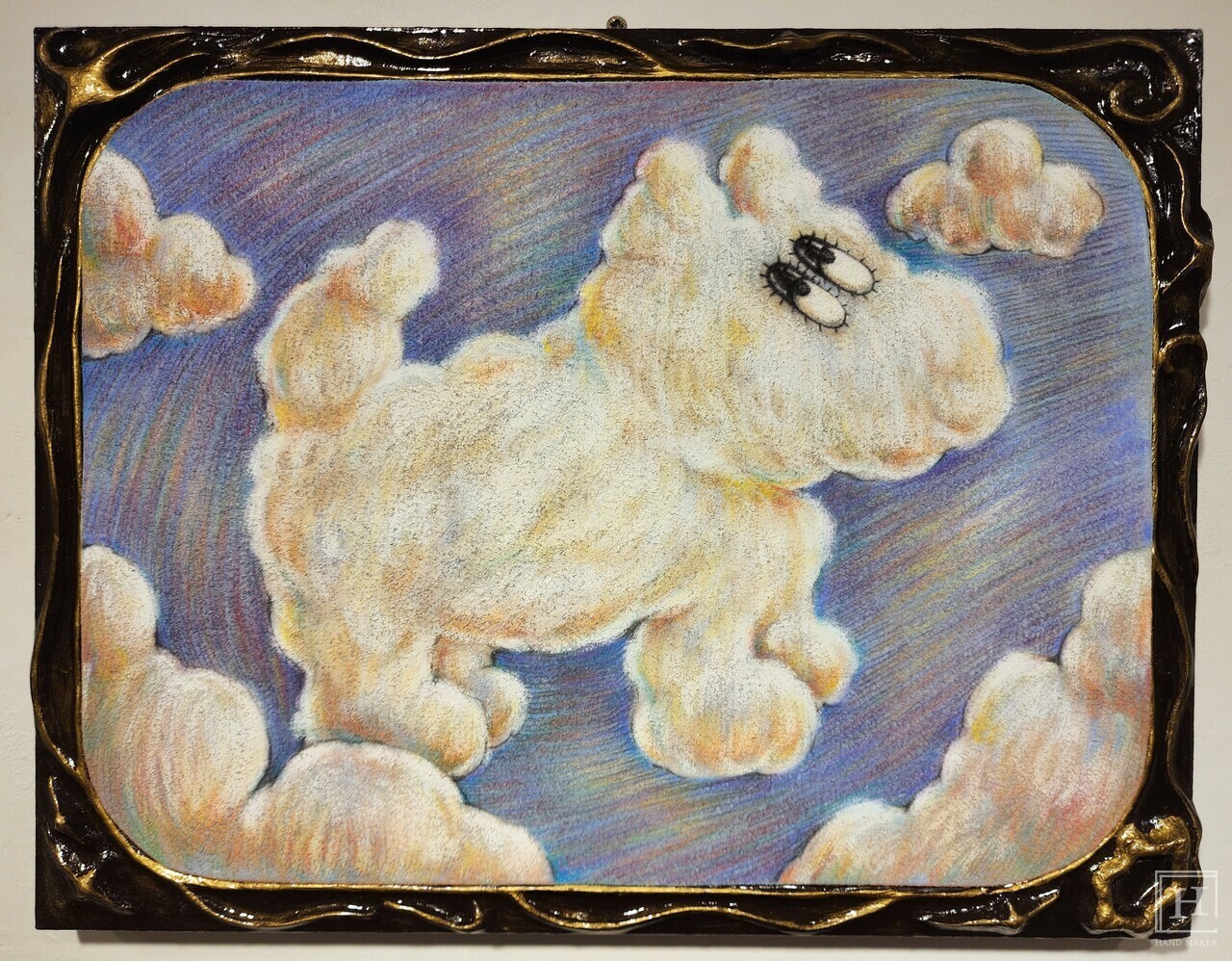
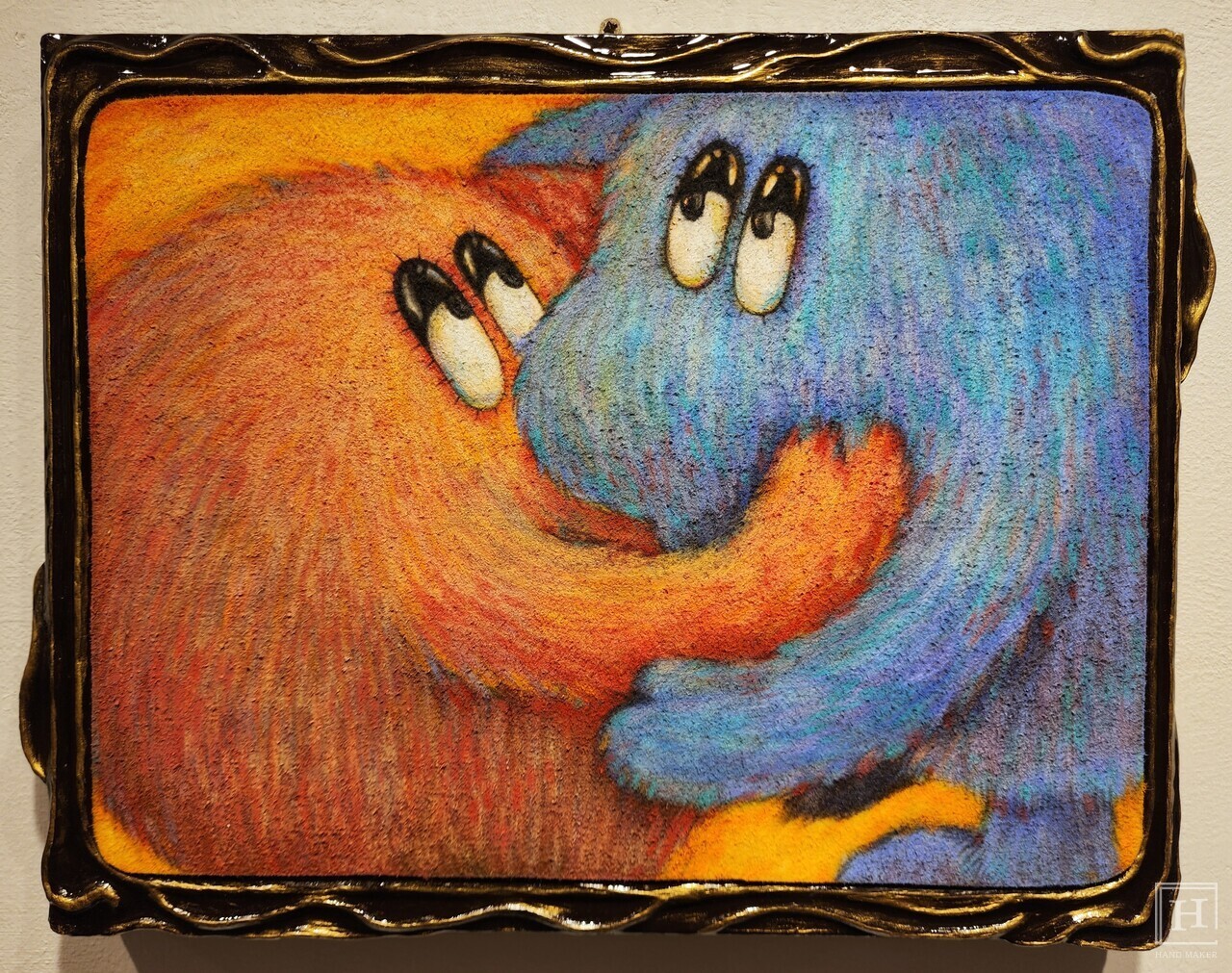
The monsters that were deficient alone are then thrown into society. Within it, they meet others who embrace and comfort them or give them strength. Ji Mi-rye said, “Since I heard artist Hwang Se-na does a lot of work regarding rooms, I thought it would be good to draw the appearance of individuals coming out of that room and facing each other this time.” She added, “I usually did a lot of portrait-like work where a single character appears, but this time I wanted to capture the feeling of interacting with others, so I tried to draw paintings where multiple figures appear.”
〈Snowman Embracing Warmth〉 is an ice cream shaped like a snowman, which should be far from warmth, but nevertheless, it embraces with its arms full. Even though it melts and flows away, its expression looks happy. The puppy made of clouds in 〈Woof!〉 is in a similar context. The clouds that were scattered separately gathered to form the shape of a puppy. It could be called a coincidence, but it is something that could not happen if they were individual clouds.
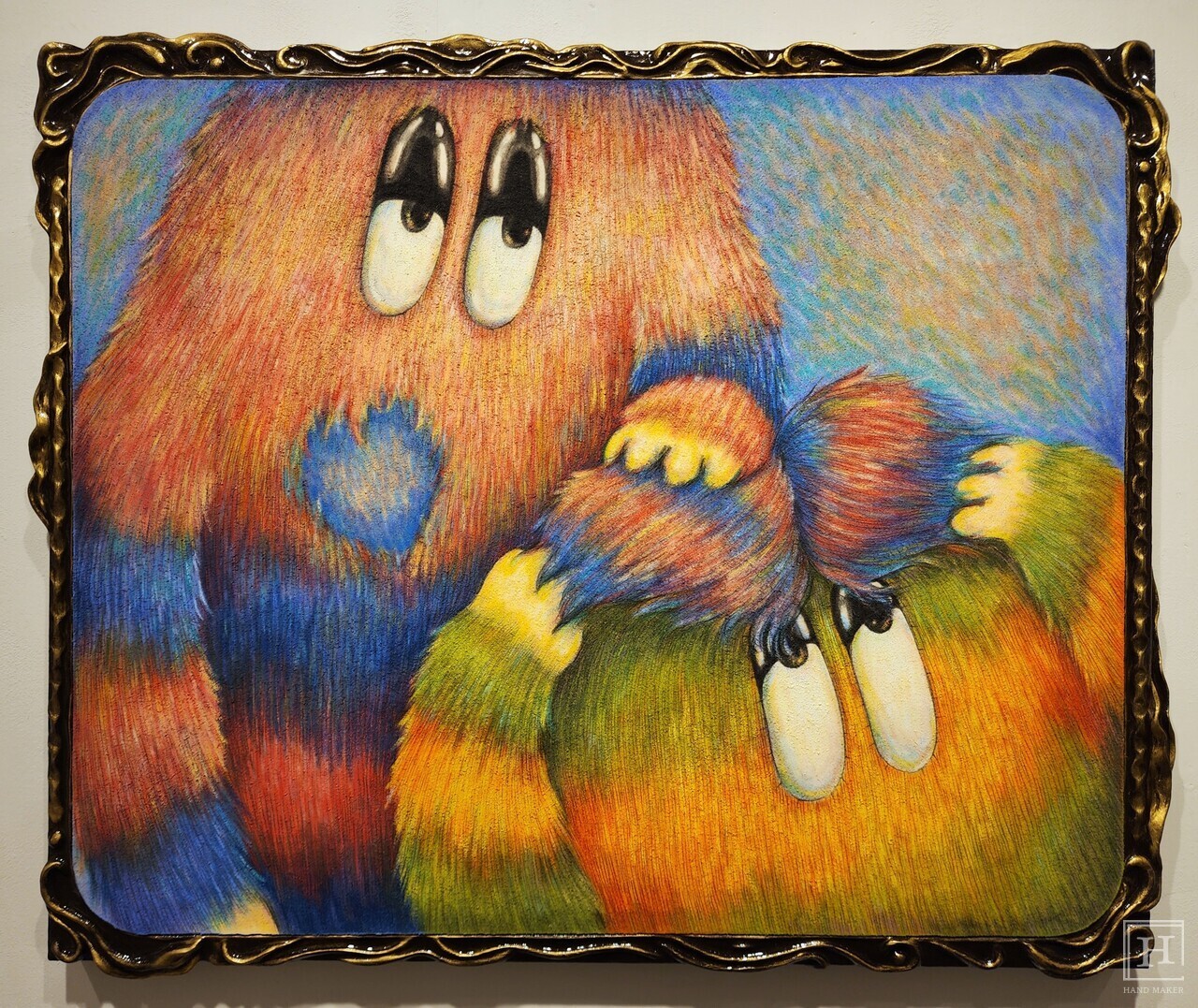
〈Hug〉 also shows monsters of different colors meeting and embracing each other. Through this, it seems the artist wanted to convey that it is enough for imperfect beings to meet and simply soothe each other's deficiencies.
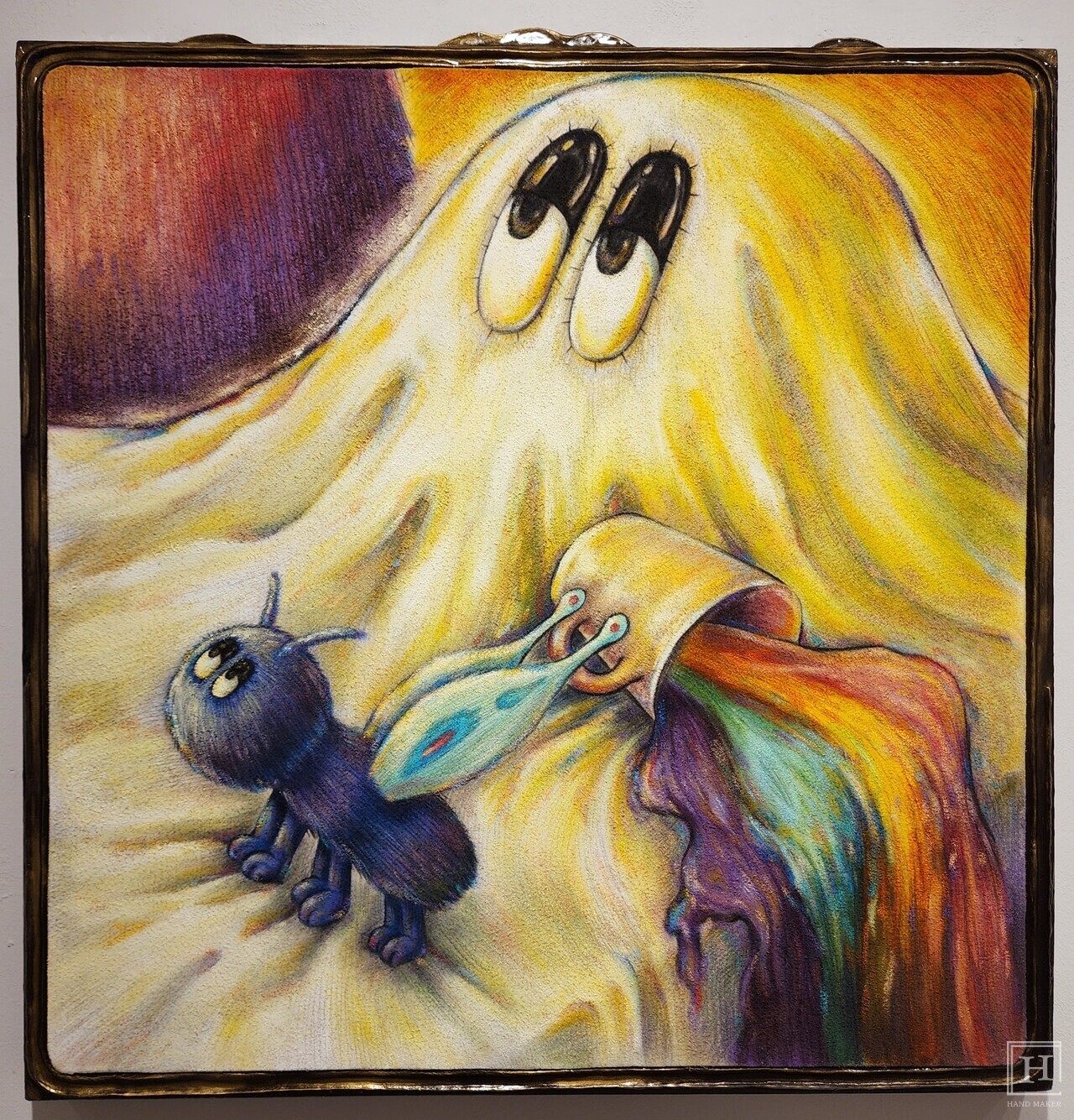
However, not all others met in such a way are warm or kind. As in 〈Looking Closely at the Alienated〉, even when rainbow-colored liquid flows from a cup, monsters covered in cloth or insects with unique wings are all ignored. It shows a scene where people cast pitying glances at the alienated, yet find it difficult to actually approach them.
In 〈I'll Give Myself to You〉, a monster appears to pull fur from its own body and hand it to another being. A heart shape is left where the fur was removed, which can be seen as conveying one's sincerity to another. However, the other monster receiving the fur does not seem happy. It is a work that can be empathized with if one has experienced a time when kindness was extended to someone but the gratitude was not returned. It also brings to mind the movie line, "If kindness continues, people think it's a right."
While it may look like sacrificing oneself to be considerate of others, the artist explained that personal greed to gain the other's attention is also contained within it.
In 〈Enough!〉, while various beings pour out their own opinions, everyone is covering their ears. It depicts the image of people who wish to avoid unnecessary conflicts of opinion or those who find communication with others difficult, shouting "Enough!" and refusing further communication. We also experience various conflicts in relationships with others, and sometimes different thoughts clash within ourselves. The artist expressed these complex emotions through a scene where several monsters pour out their opinions all at once.
In this way, the artist does not simply distinguish between consideration and greed, interest and indifference, or understanding and conflict that appear in relationships. This is because a kind act to someone can be a burden to another, and even an act that appears to be goodwill may contain personal desire.
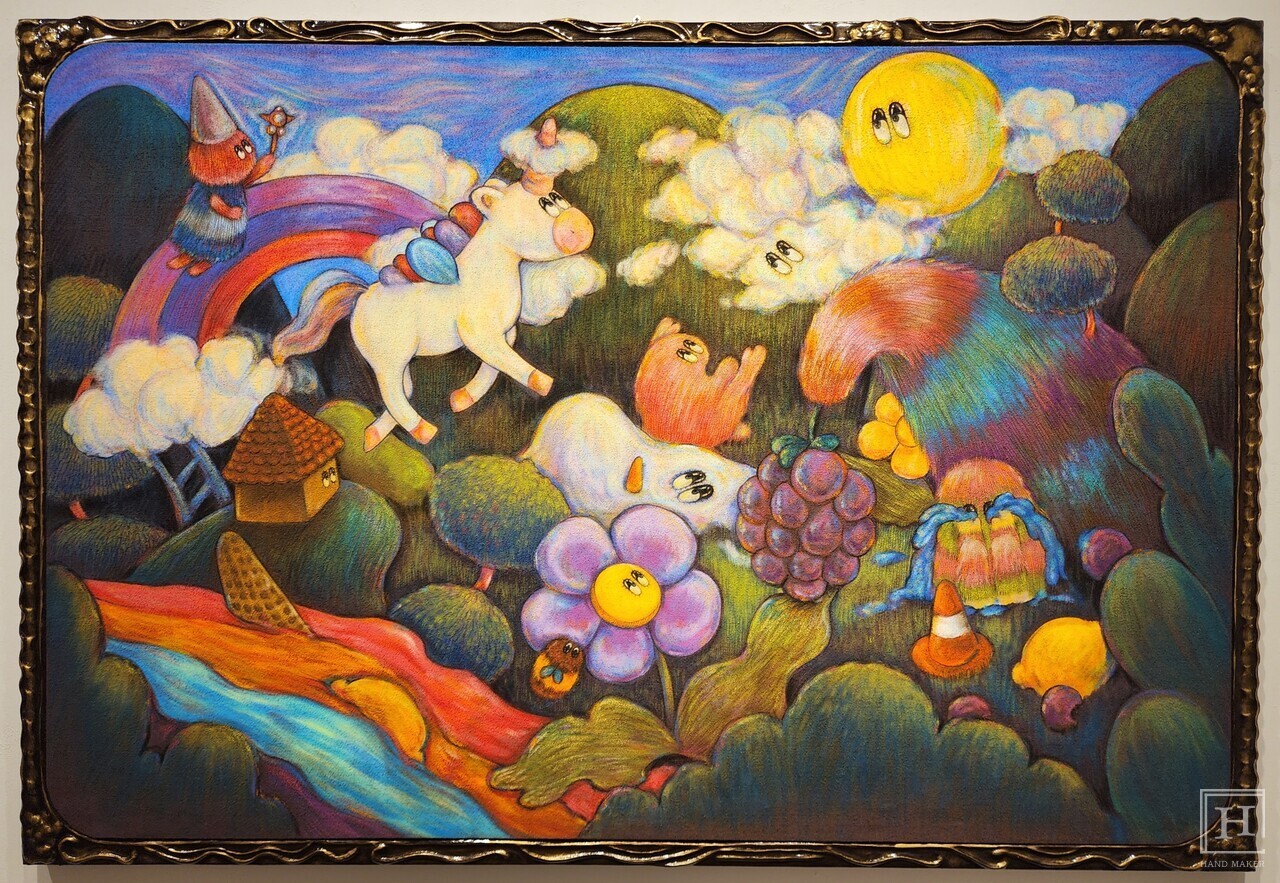
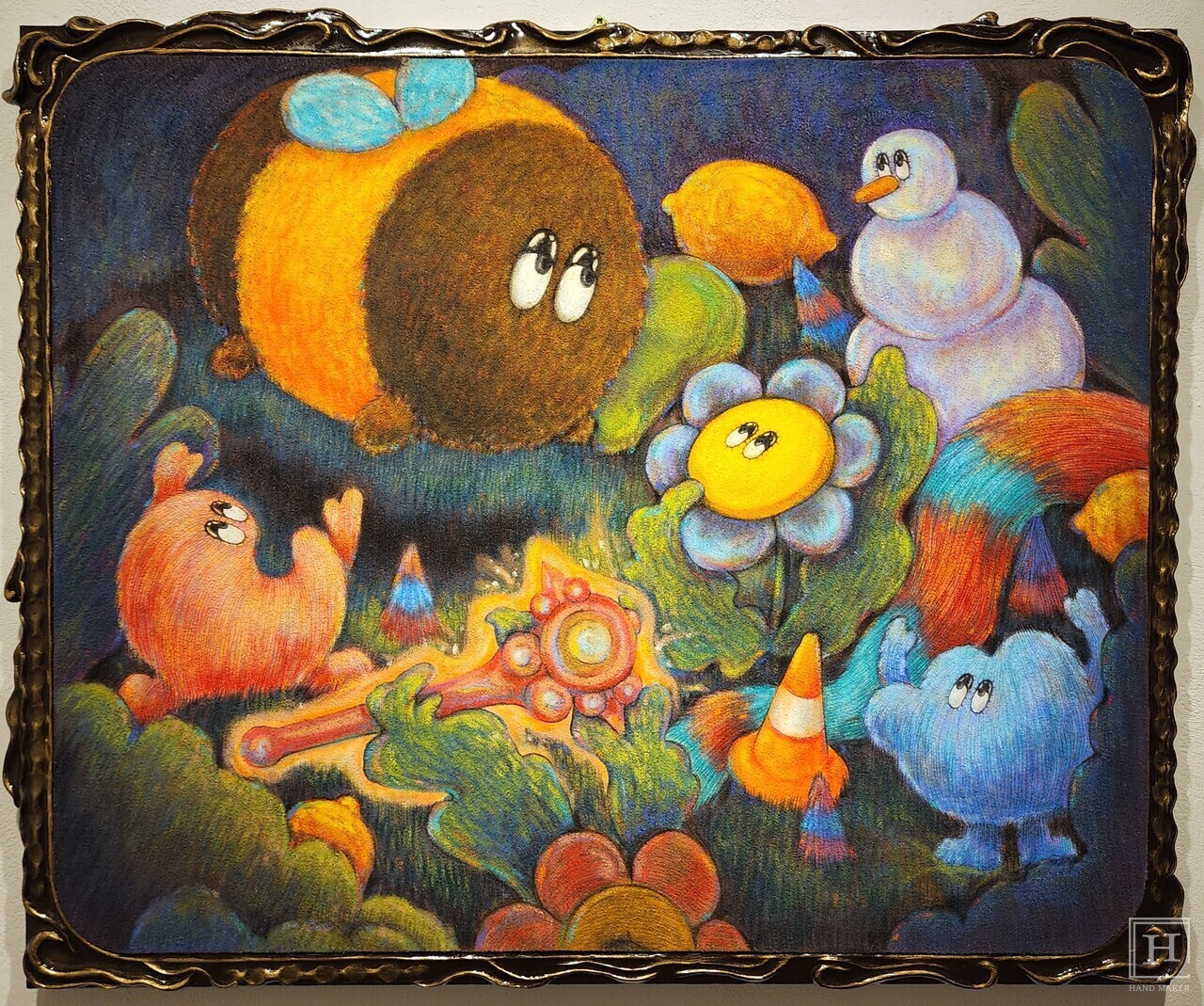
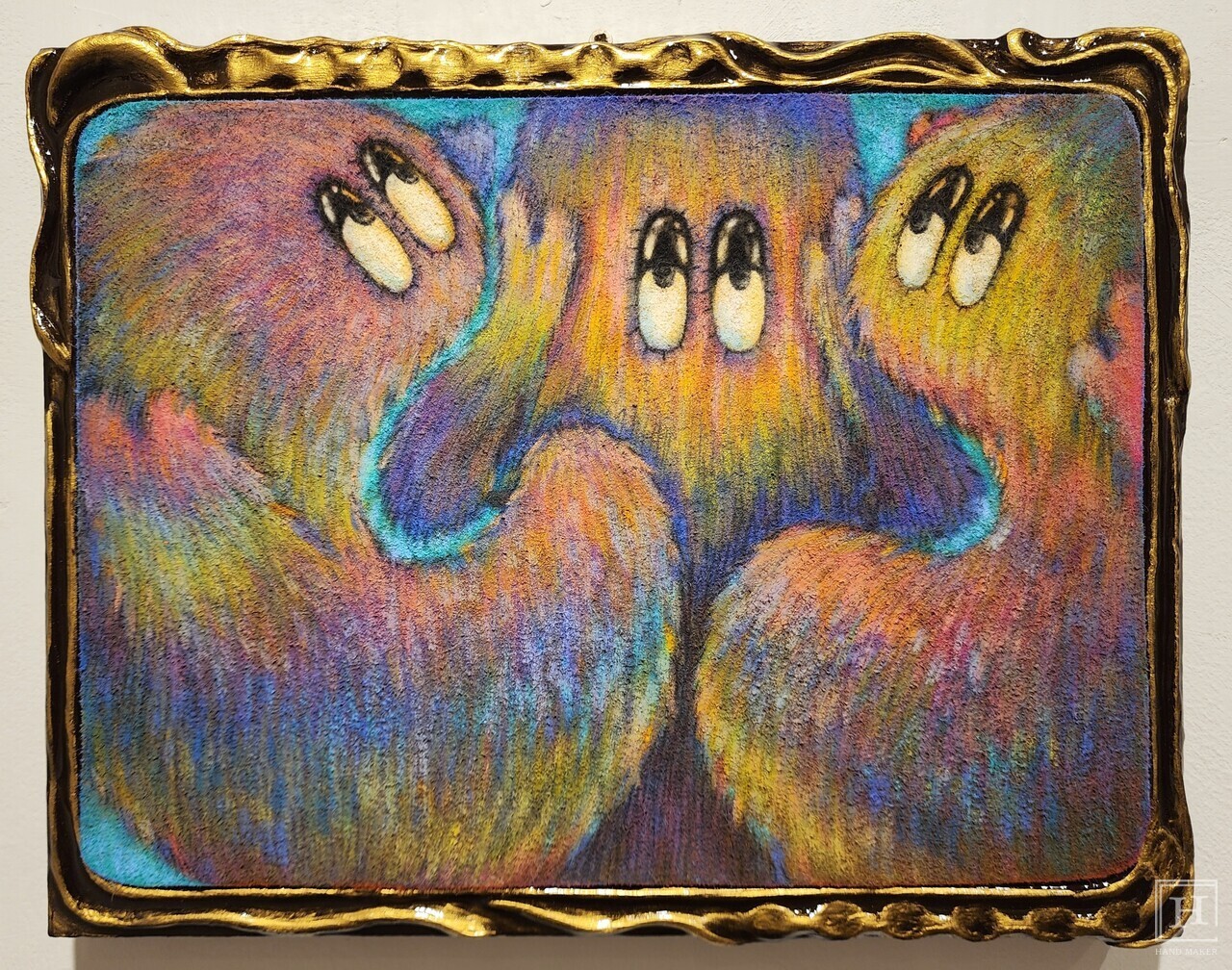
In 〈Random Thoughts〉 and 〈Mingling & Wiggling〉, several monsters appear together. While the beings in the exhibited works appear and express various forms and emotions, they do not look at or intervene with each other, maintaining their own individual forms. However, some face each other and influence one another.
It is impressive how they maintain their own forms while communicating and comforting each other in their own ways. Perhaps due to the fairy-tale-like expression, even if their facial expressions are not so, they look happy and warm.
Through these various depictions, the artist tells us that we cannot easily judge others based solely on their outward actions. Beings with their own circumstances and deficiencies understand each other and seek ways to live together, sometimes by adjusting their distance.
Artist Ji Mi-rye said, "It wasn't a drawing made with a warm heart, but the viewers actually felt it was warm." It is interesting that the warmth conveyed by the work does not necessarily stem only from pure goodwill. Therefore, the world of the deficiency monsters seems less like a purely beautiful fairy tale and closer to our reality, where we live together while embracing inadequacies and contradictions.
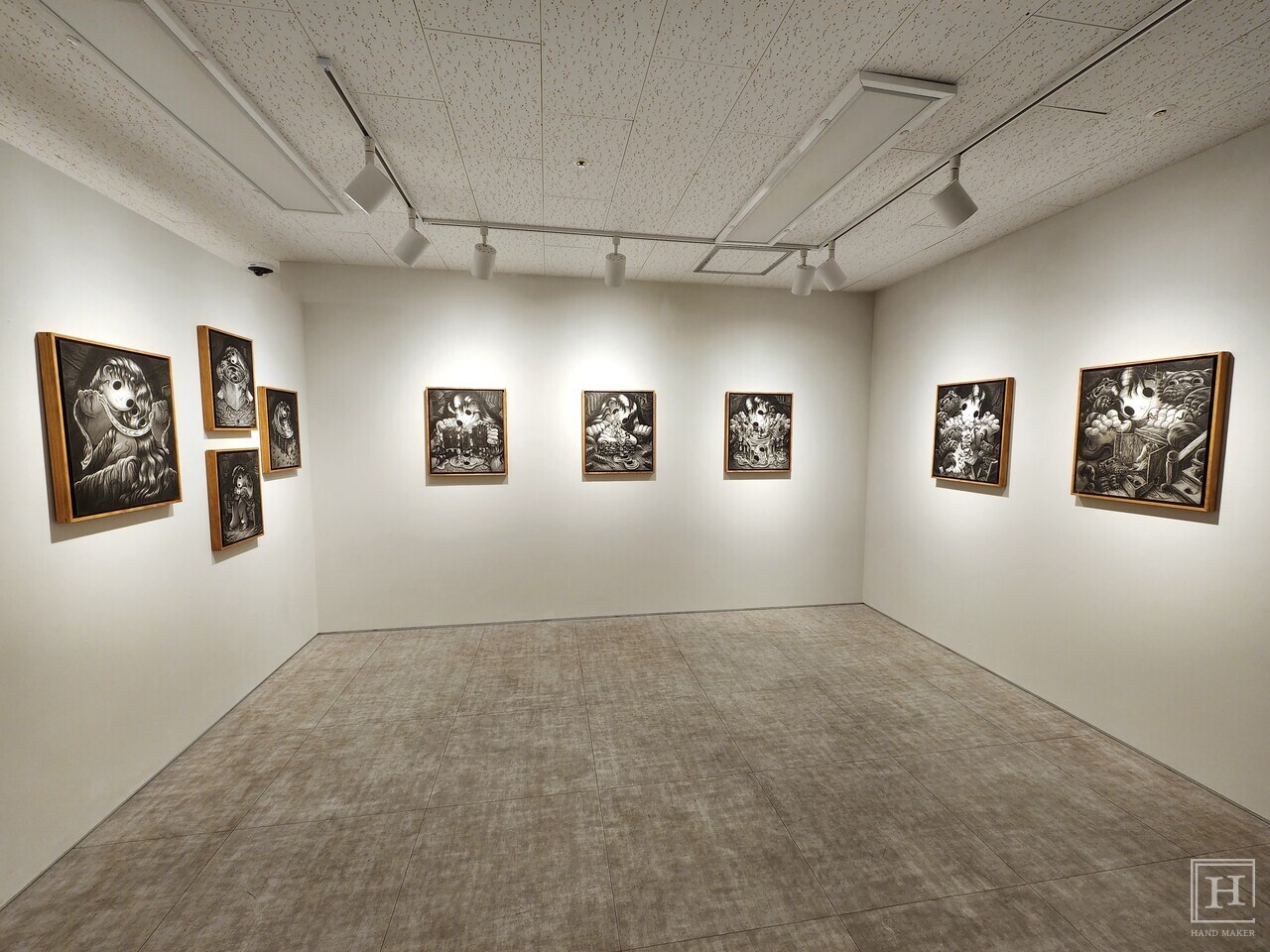
In this exhibition, which is being held for a special period of three weeks, artists Hwang Se-na and Ji Mi-rye are also conducting a participatory event where they draw visitors' stories on 5×5cm paper panels. Only the person who provided the story can know the story contained in the drawing. One becomes curious about the stories that will fill the empty walls. Stories can be submitted through the Gallery Color Beat Instagram story.
The exhibition continues until December 5. Gallery Color Beat is closed on Sundays and Mondays, and can be viewed from 1 PM to 6 PM.
Reporter at HANDMAKER (핸드메이커), a Korean magazine devoted to crafts and handmade culture. Covers exhibitions, design and the people who make things by hand.
Comments 0
Comments are currently disabled.