
Three artists explore life and existence in "Each Their Own Light, One Landscape"
The three-person exhibition "Each Their Own Light, One Landscape" at Gallery Color Beat features works by Kim Ju-hee, Lee Dong-eun, and Ha Haeng-eun that interpret life and existence through diverse materials and expressions.
Although people live in the same world, the landscapes they perceive differ for everyone. What appears beautiful to one may seem fleeting to another, and while some pass through daily life without a second thought, others find special meaning in the ordinary. The way one understands life changes depending on what they look at and what they feel within it. This raises the question of what life and existence look like through the eyes of artists.
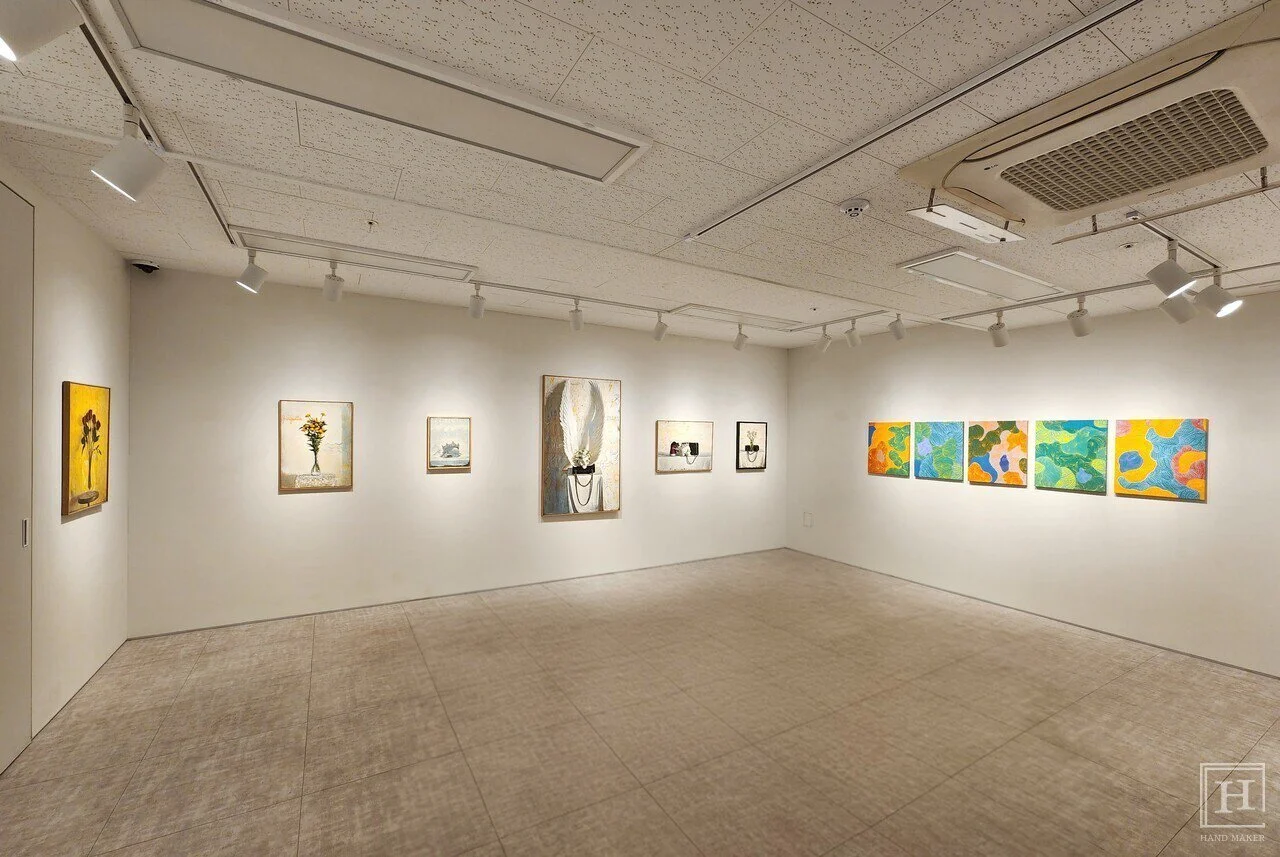
Gallery Color Beat is currently hosting "Each Their Own Light, One Landscape," a three-person exhibition featuring artists Kim Ju-hee, Lee Dong-eun, and Ha Haeng-eun. The three artists unfold stories about life and existence using different subjects and methods of expression. Kim Ju-hee discovers her inner self within everyday landscapes, Lee Dong-eun reveals human desire and finitude through symbolic objects, and Ha Haeng-eun explores the relationship between life and art through the repetitive structure of knitting.
The light of life blooming in the everyday, a journey to find the true self - Artist Kim Ju-hee
Kim Ju-hee reflects on the meaning of existence through natural landscapes she observes in her daily life, such as flowers, trees, and moonlight. Flowers placed in a vase represent finite life, while a small car driving toward a destination captures the journey of finding one's true essence.
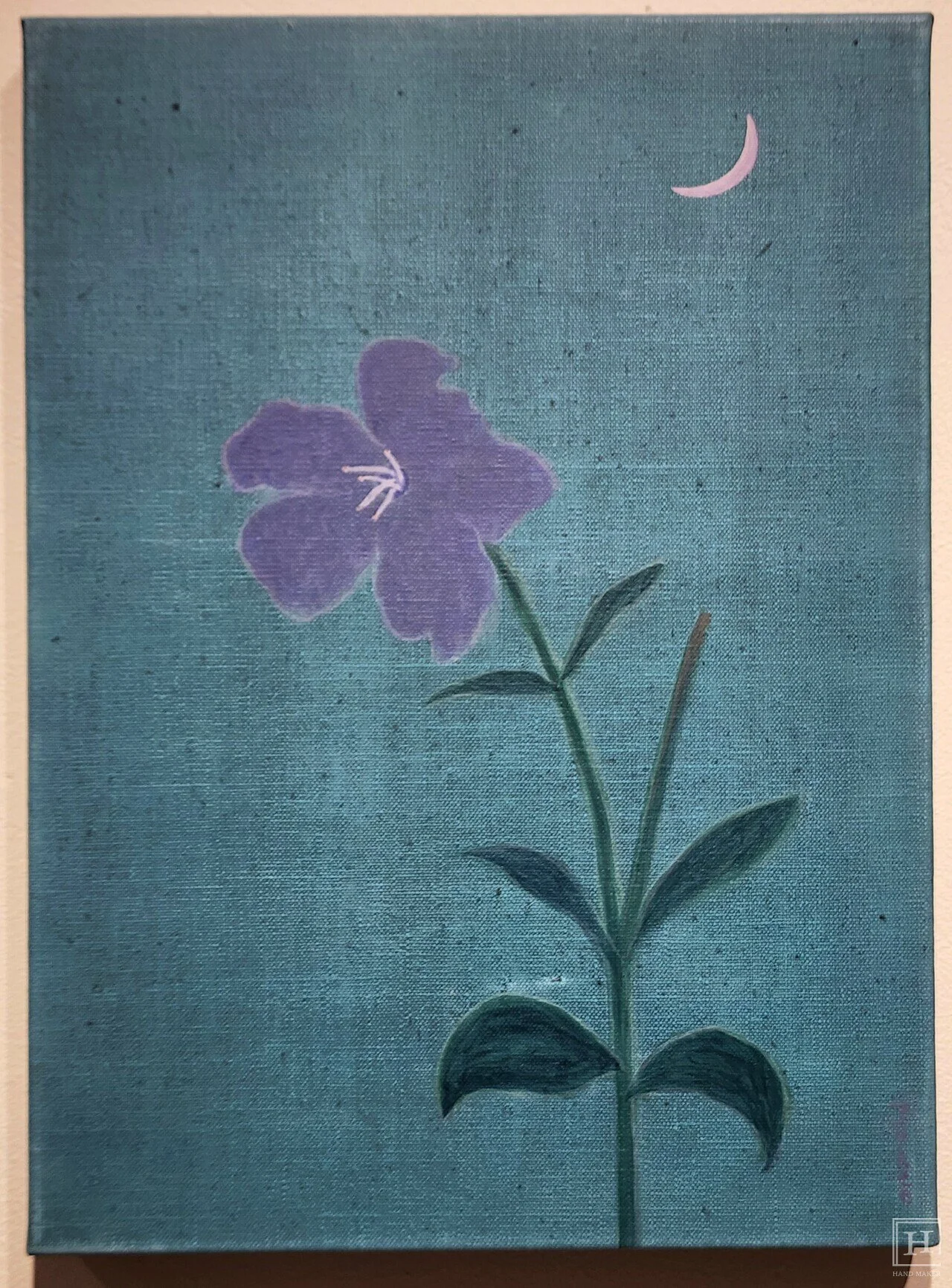
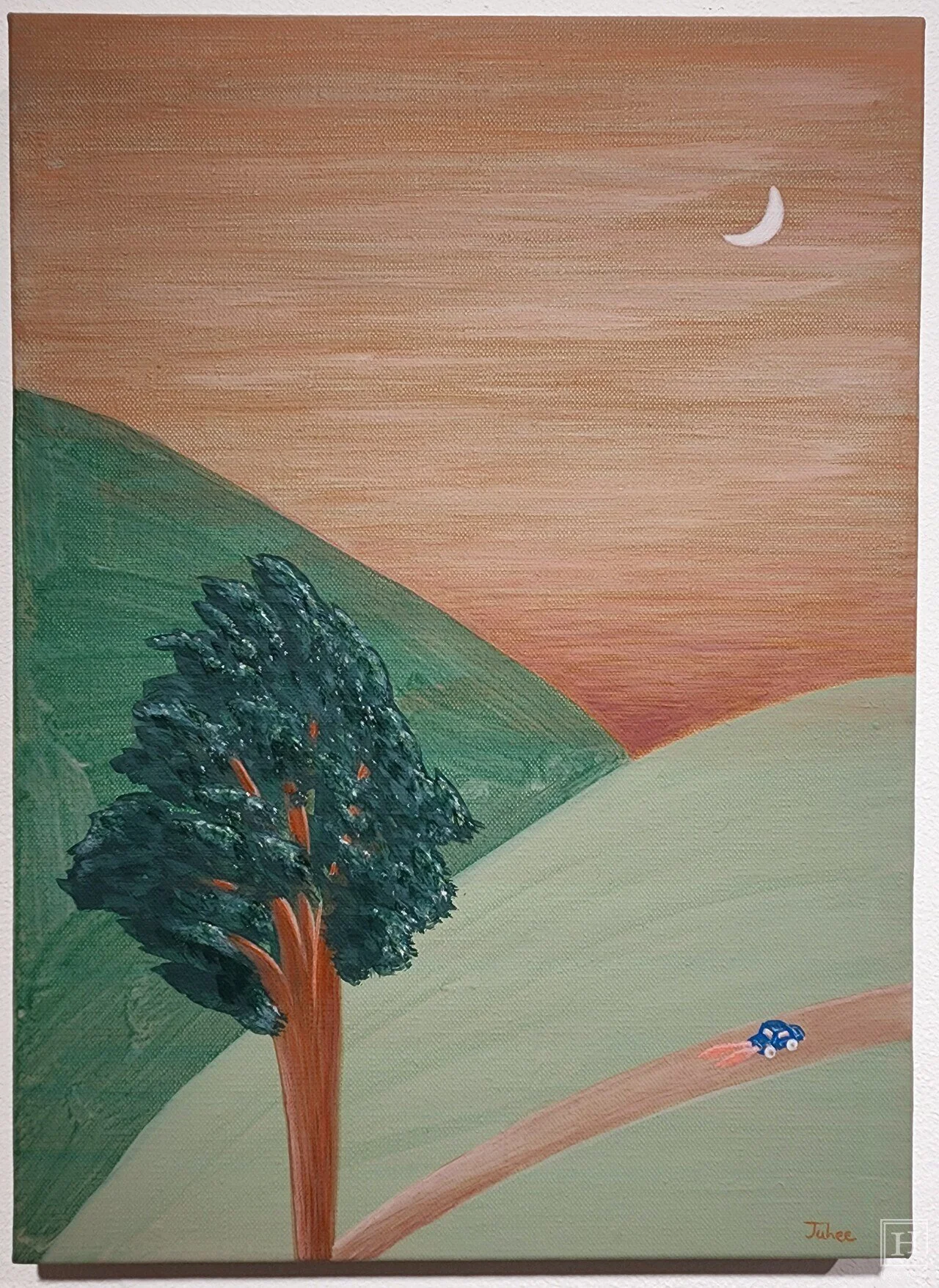
The moonlight in the night sky simultaneously illuminates the world warmly and evokes the light existing within the human soul. Through the process of looking back at herself and facing her inner emotions and thoughts, the artist speaks of the possibility of true freedom and happiness.
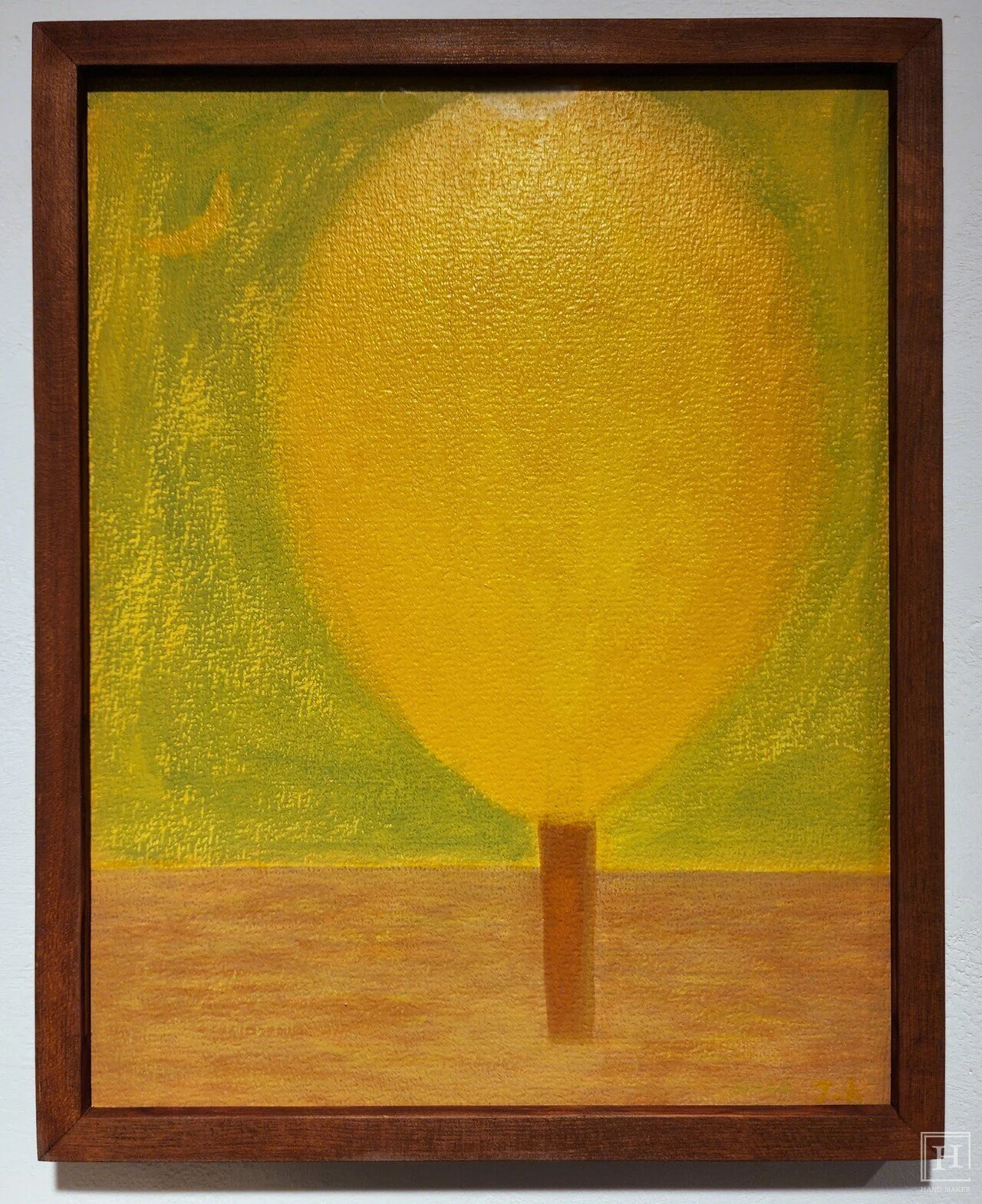
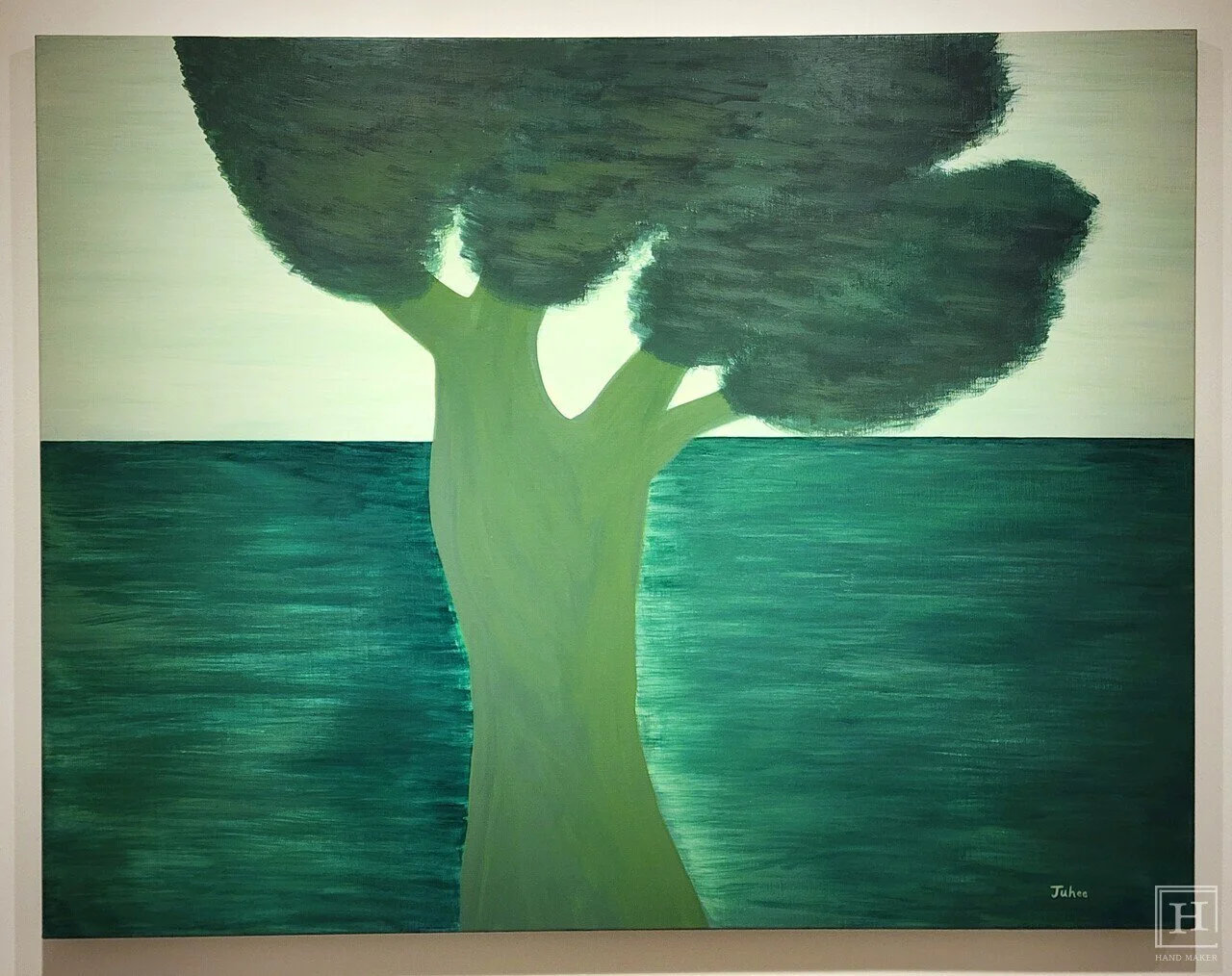
The calm color palette complements the landscapes presented by the artist. Even without special techniques or detailed expressions, the works bring comfort to the viewer. One can almost feel the wind blowing through a large tree filled with summer greenery or see a single tree colored yellow, prompting viewers to pause and observe a peaceful moment of daily life.
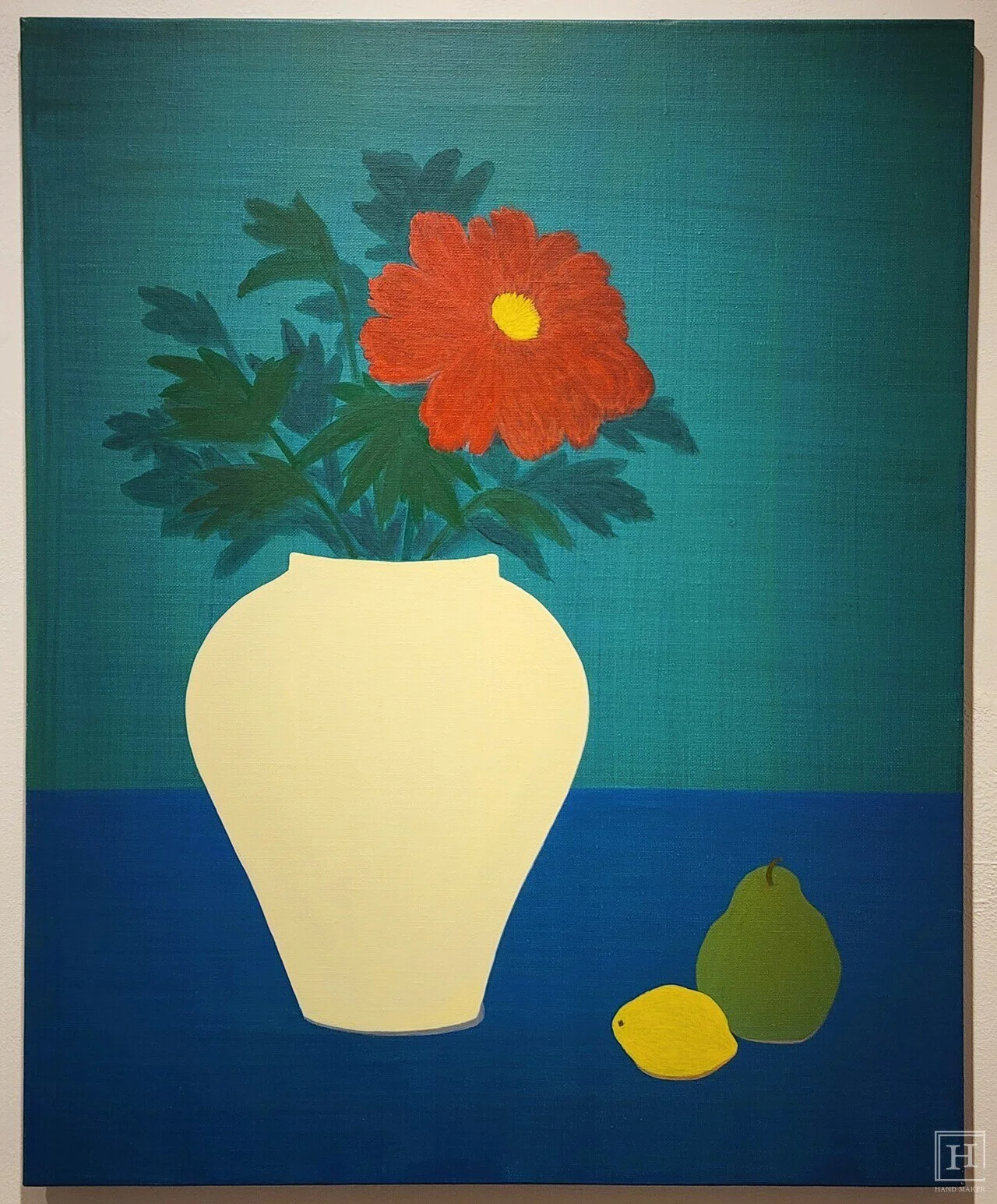
In this exhibition, Kim Ju-hee presents the most works featuring vases. As a major in Oriental painting, her unique colors and expressive techniques are clearly evident. In 〈Precious You〉, a single flower, such as a peony known as the queen of flowers, blooms fully to boast its vitality. Beside it sit fruits that resemble quince or lemon, asserting their presence while filling the blue background space. The horizontal and vertical brushstrokes visible in the background add subtle texture and depth to the potentially monotonous composition. A notable element is the vase; while it resembles common white porcelain, it stands out against the background in a way that makes it feel as though the vase itself has been extracted from the work. It creates a mysterious sensation of being clearly present, yet simultaneously empty.
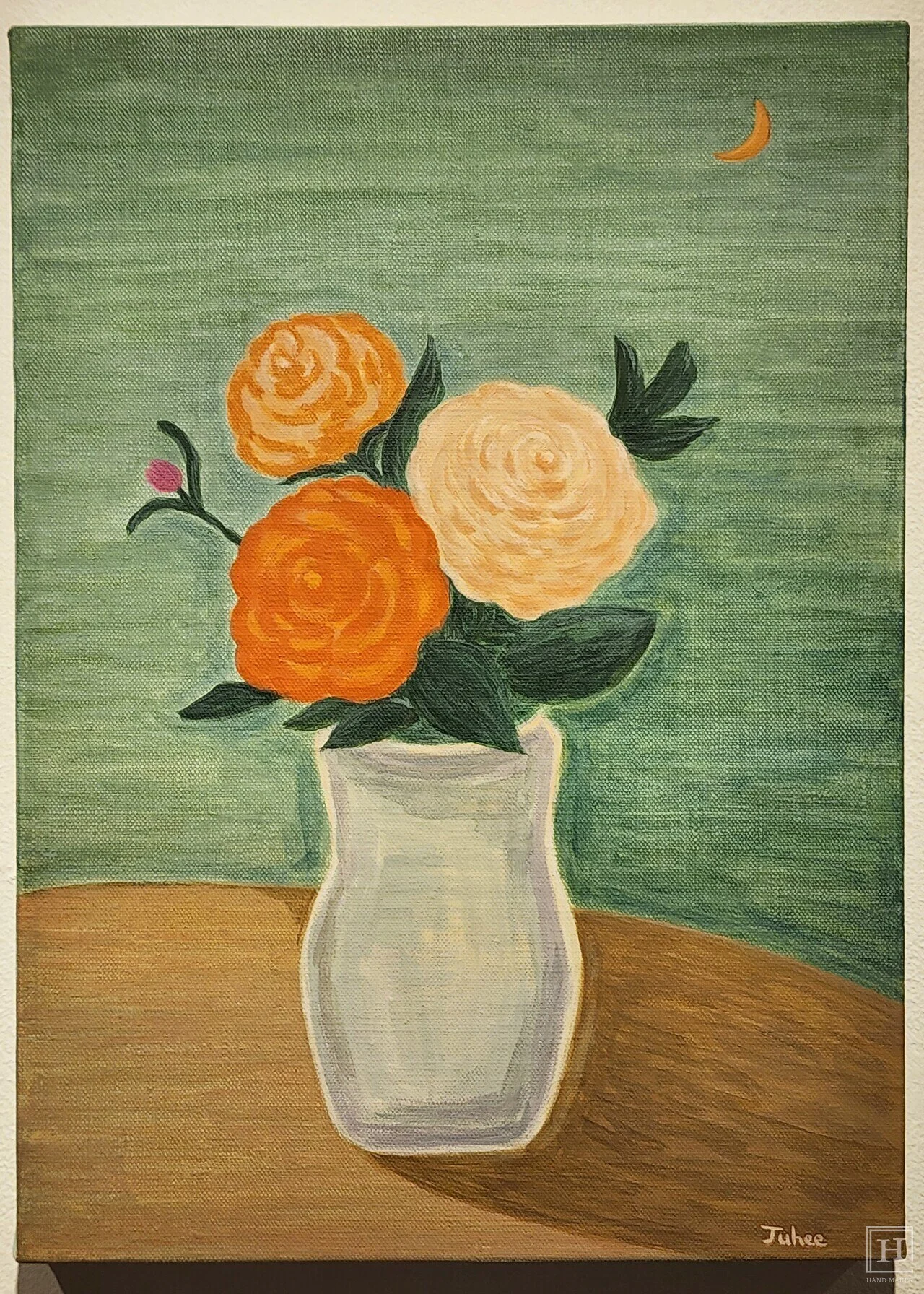
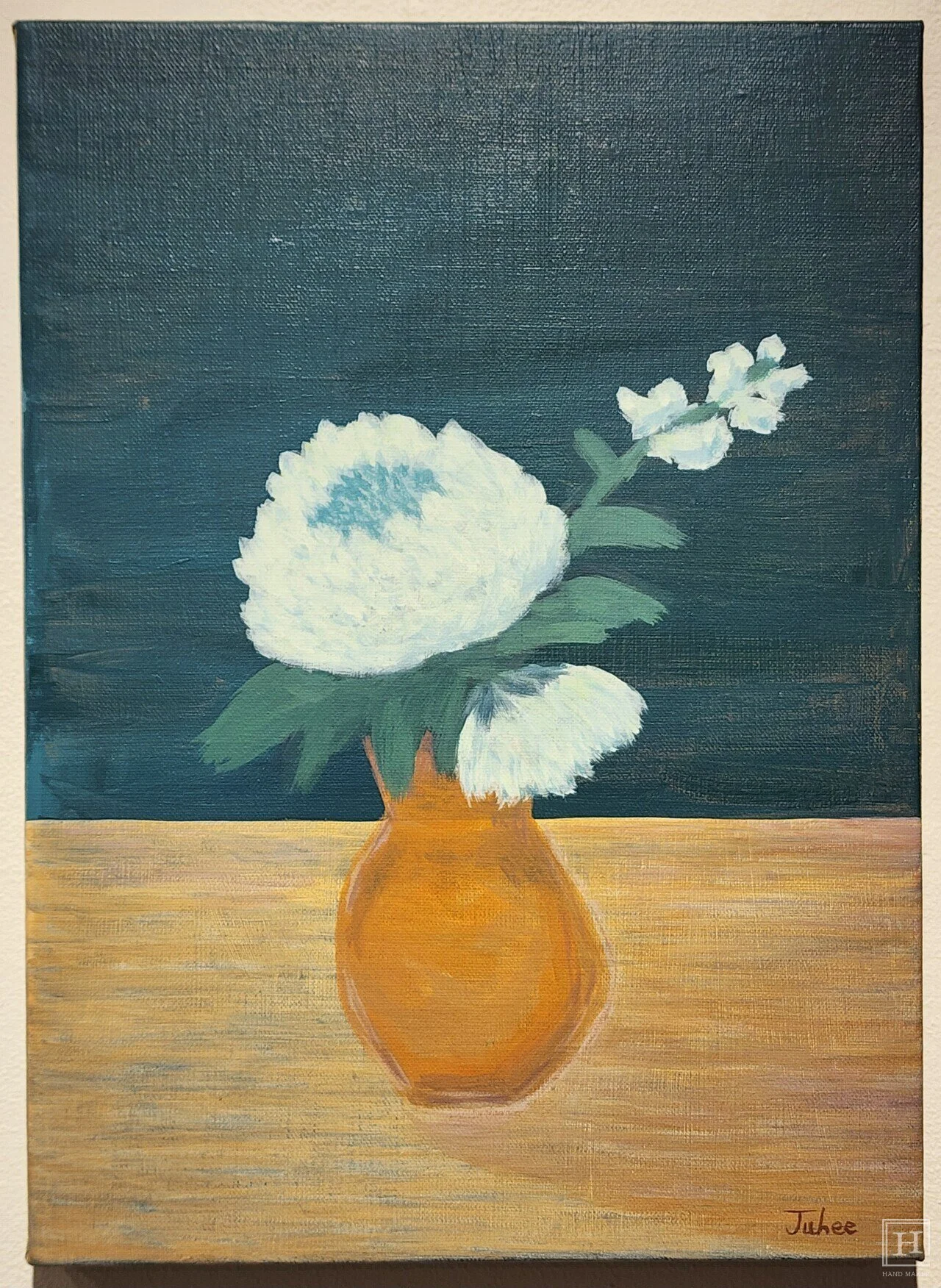
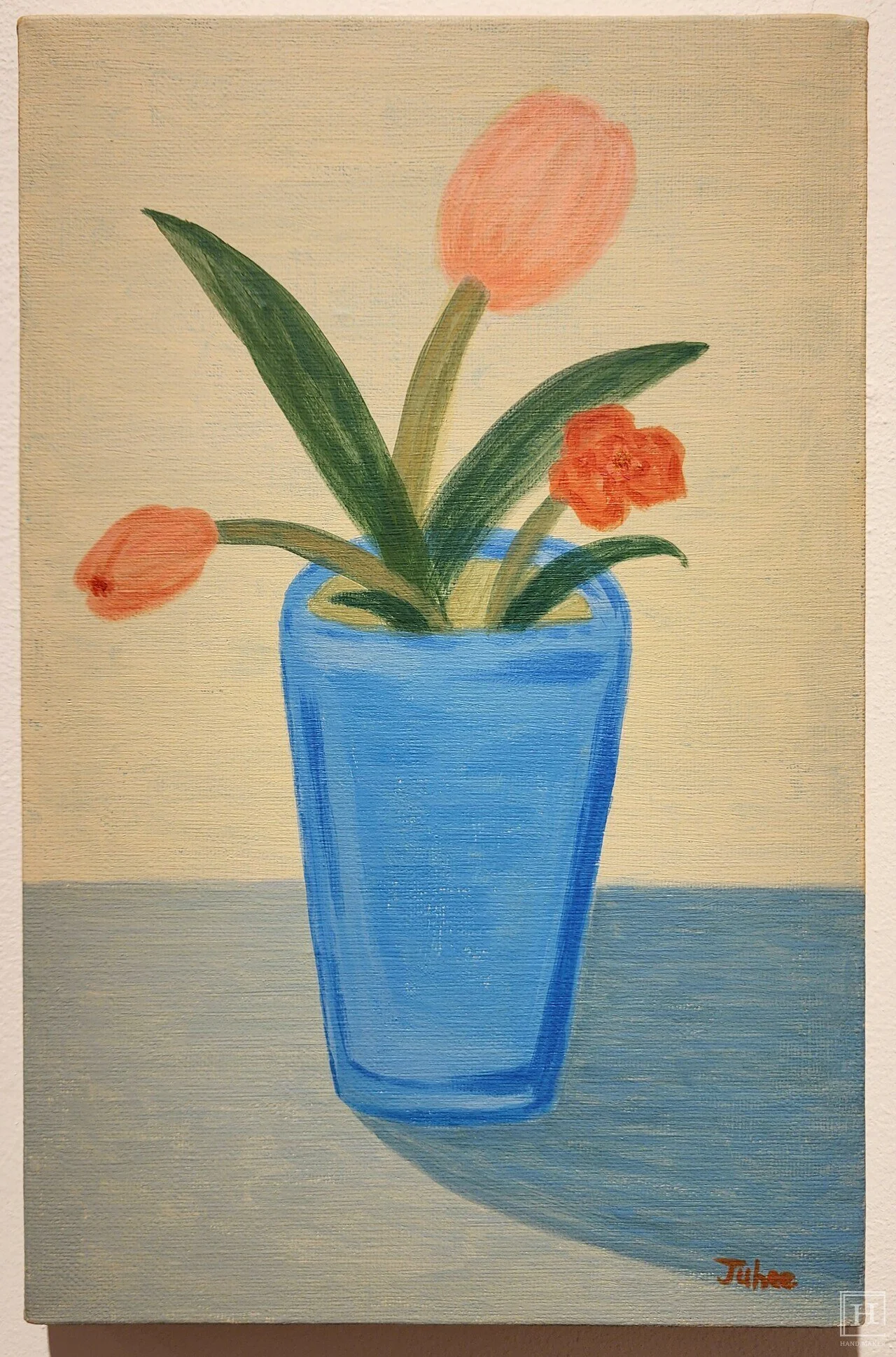
The expression "you" appears particularly frequently in the titles of the works. The "you" mentioned by the artist could be a flower, or perhaps the moon appearing in a corner of the background. Or, it might be that the artist refers to herself as "you," looking at herself through the eyes of a third party.
The flowers contained in such diverse vases vary in species and color, but they share one commonality: they are all in full bloom, showing that they are alive. Perhaps artist Kim Ju-hee, while observing the vitality shown by nature in everyday life, is suggesting that we too should live without losing our own sense of existence, just like them.
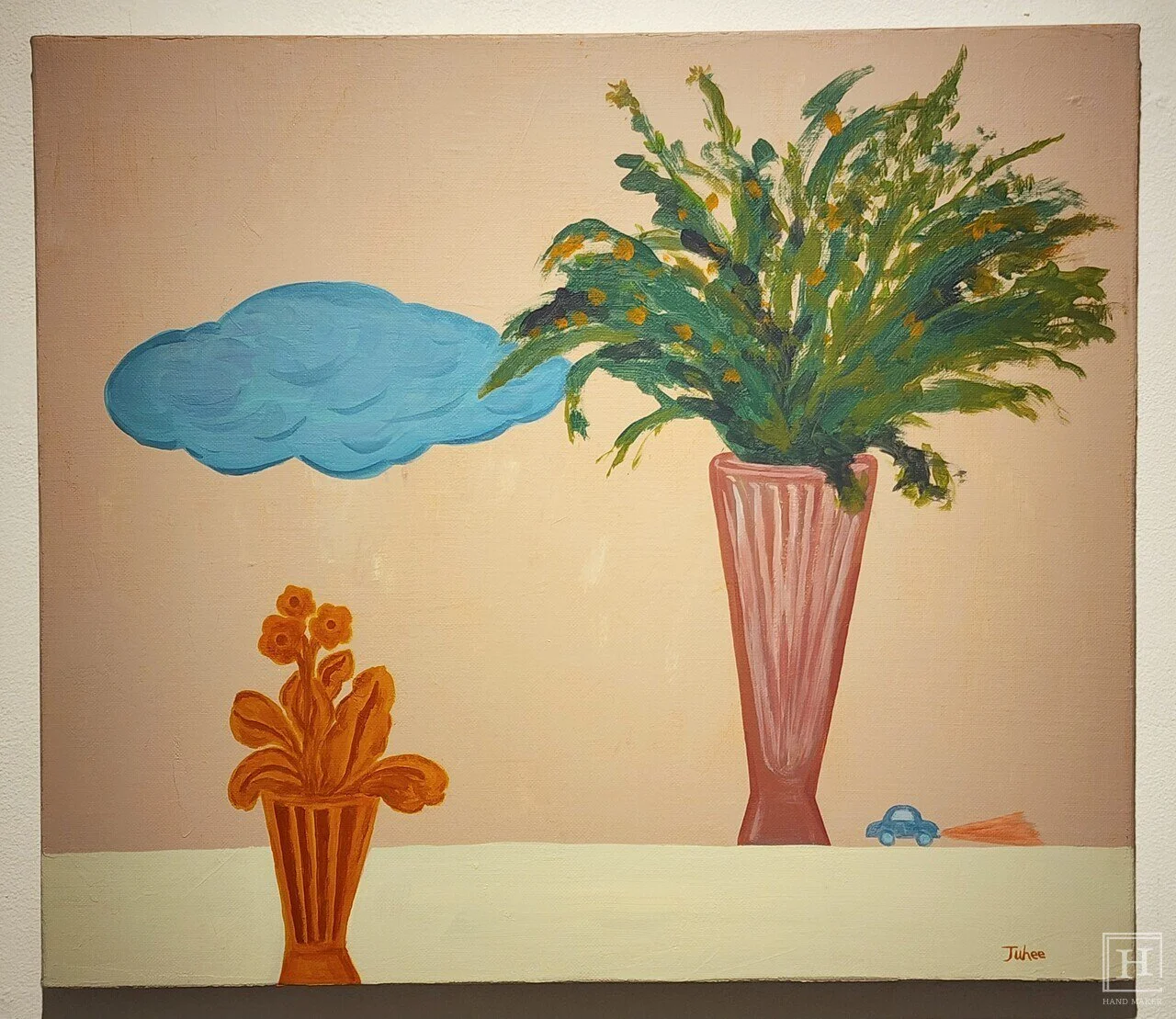
It seems as though the message the artist wishes to convey is all contained within the work 〈Finding Myself〉. Two vases drawn much larger than actual cars, a car moving forward with its headlights on beside them, and even fluffy clouds that seem to be filled with water vapor.
While it may look like a scene from a fairy tale, the car moving forward with its lights on and the vases that have not lost their blue light seem to show the artist's will to move forward in search of her true essence.
Conversely, the orange vase evokes the image of having temporarily lost one's essence and sense of existence. The car is far away from such a vase, and instead, clouds float above it. It feels as though a determination is being conveyed to leave behind desolate situations or a wavering heart and to move forward again to find oneself.
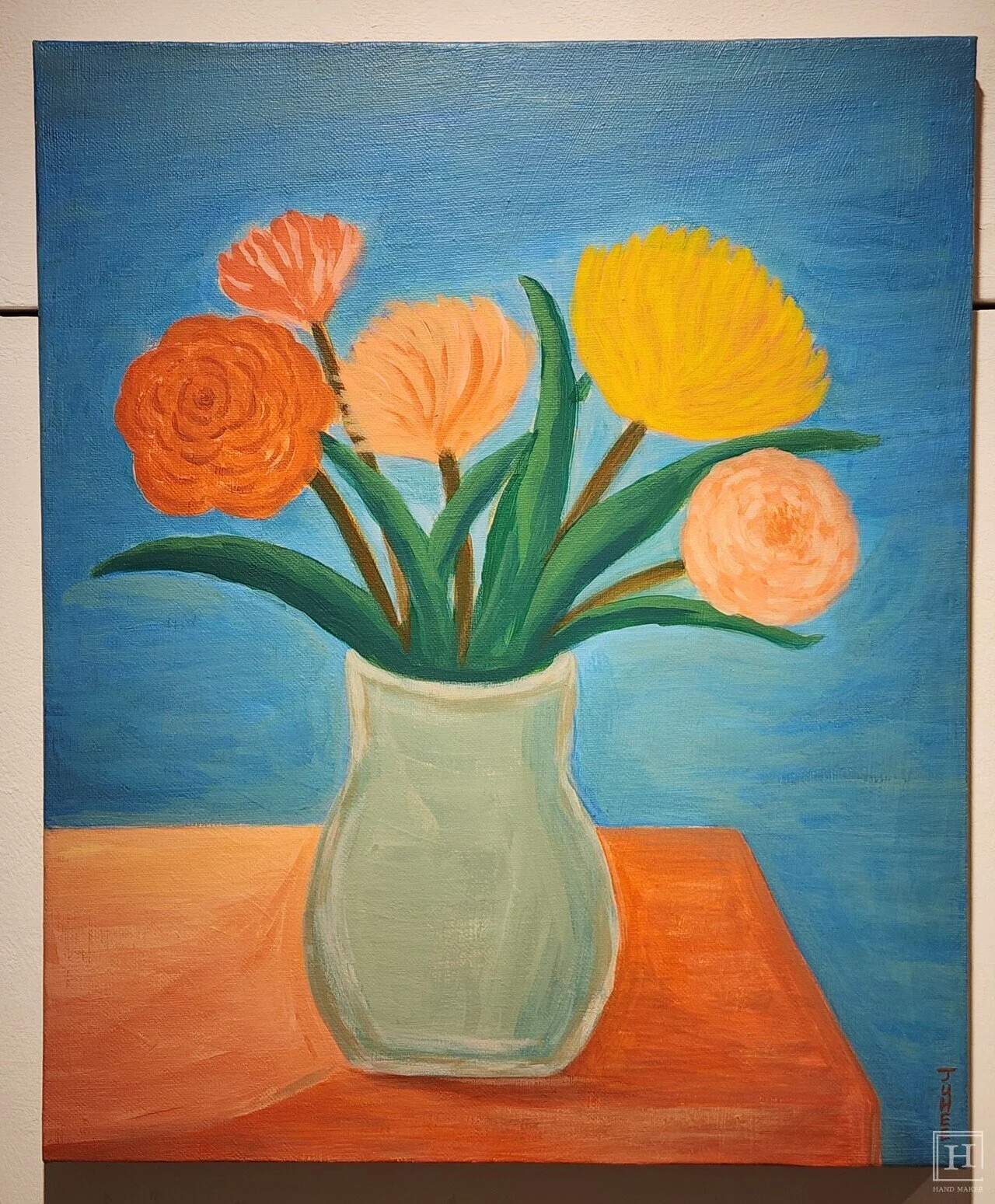
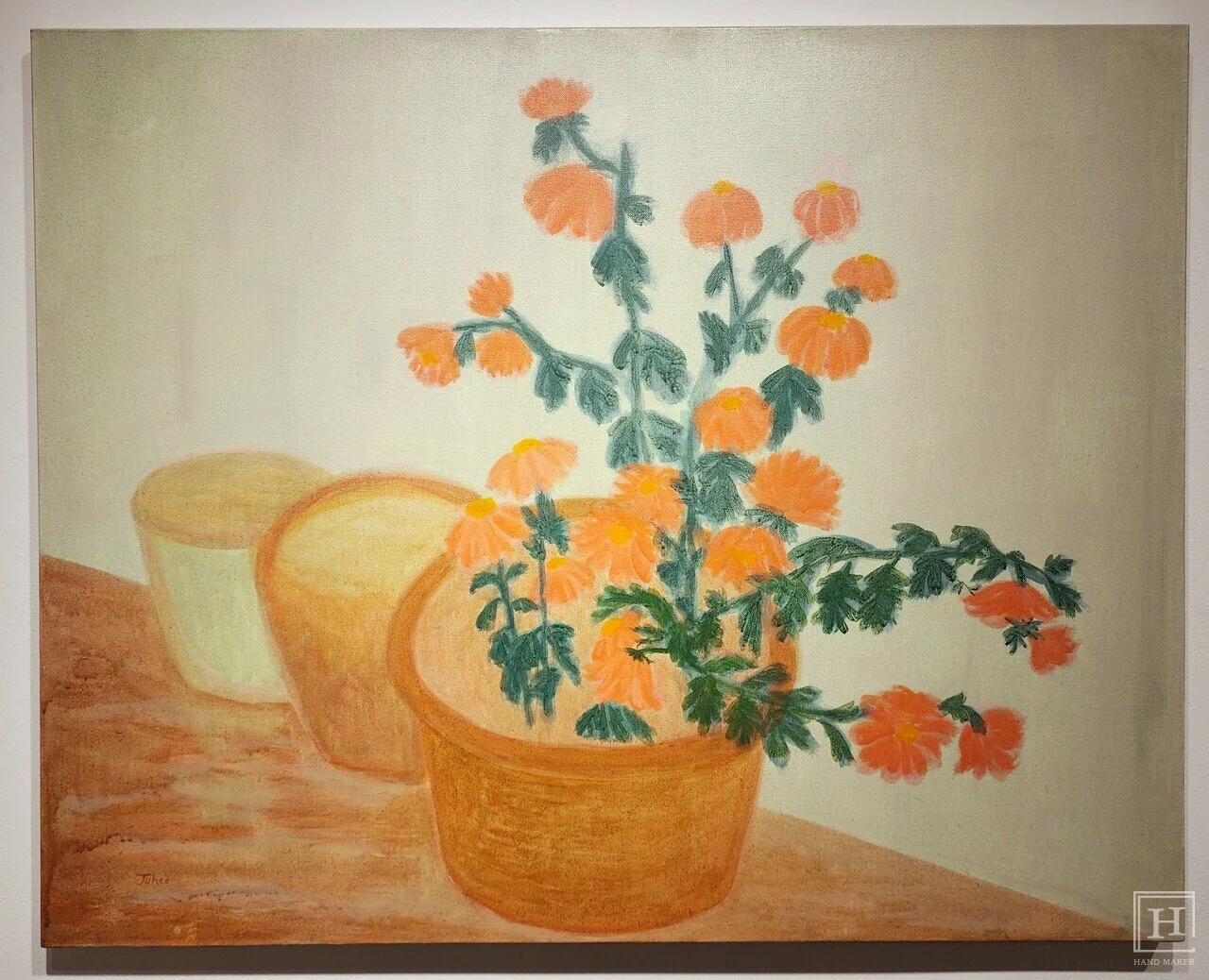
The will to regain one's own light is emphasized again through the vases that have bloomed fully once more. As the titles 〈Bloom Fully〉 and 〈Wait, I Will Bloom Again〉 suggest, there is a sense of belief that even if one withers for a moment now, one can bloom again someday. It seems to contain a heart that affirms one's own existence and waits for the tomorrow when one will bloom again.
Death hidden behind splendor, desire engraved on old walls
- Artist Lee Dong-eun
Artist Lee Dong-eun found the clues for her work in the old building walls in Italy that she encountered familiarly during her childhood. Having grown up moving between Korea, Italy, and the United States, the artist has long sought her sanctuary in painting, and in this work as well, she views human life and existence based on the landscapes she has experienced.
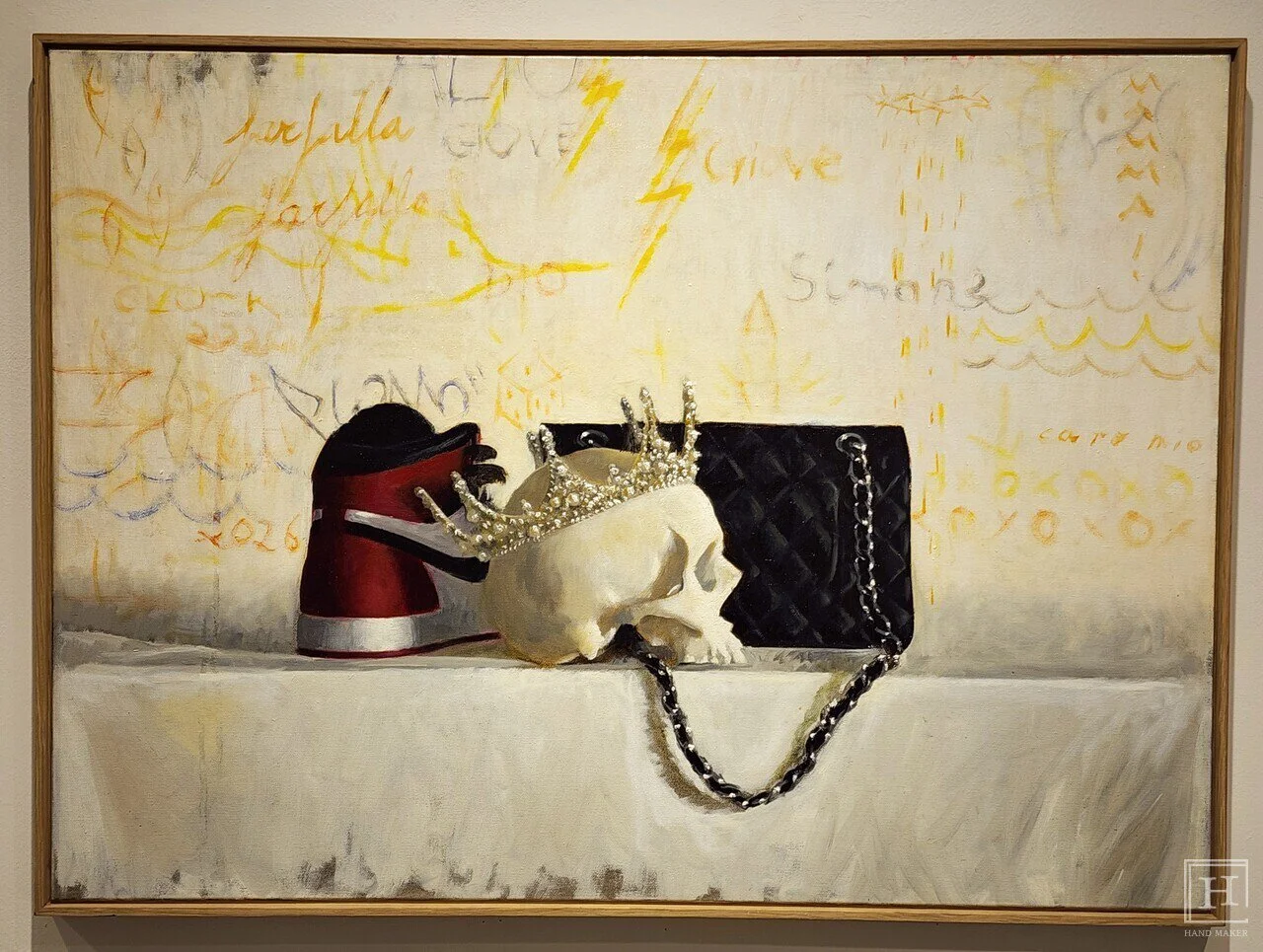
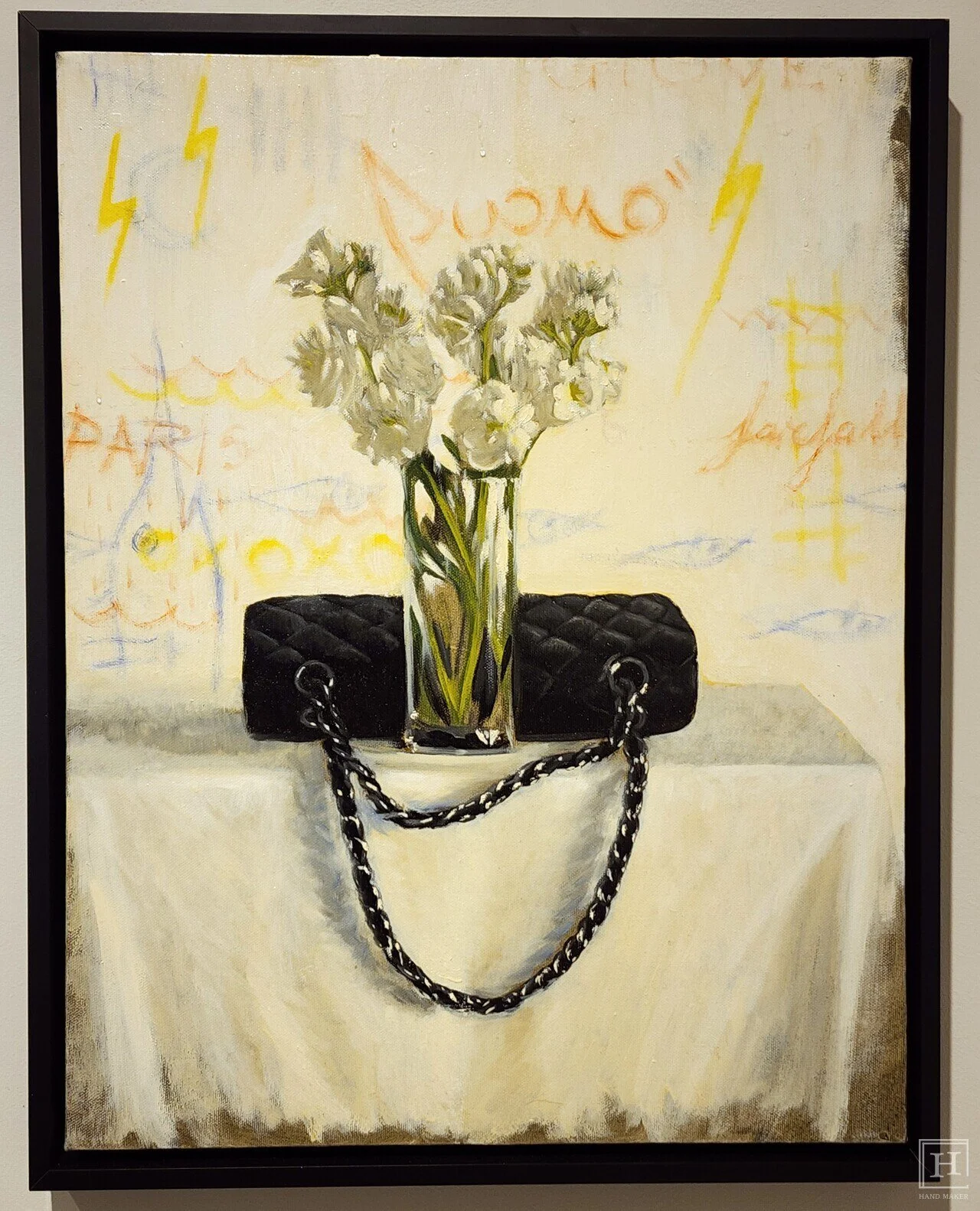
Recalling the memory of walls where numerous graffiti are layered, she arranged objects such as skulls, luxury goods, and flowers on the canvas. These materials contain opposing meanings of death and desire, beauty and transience.
Things that seem unlikely to go together are gathered, but they are mostly items connected to femininity. Upon seeing luxury goods such as crowns or designer bags, one would naturally think the artist is female, but in reality, the artist is male. Perhaps it was the stereotype of the viewer that assigned a specific gender to the objects. It is a moment that prompts one to look at the work again, breaking away from familiar perspectives.
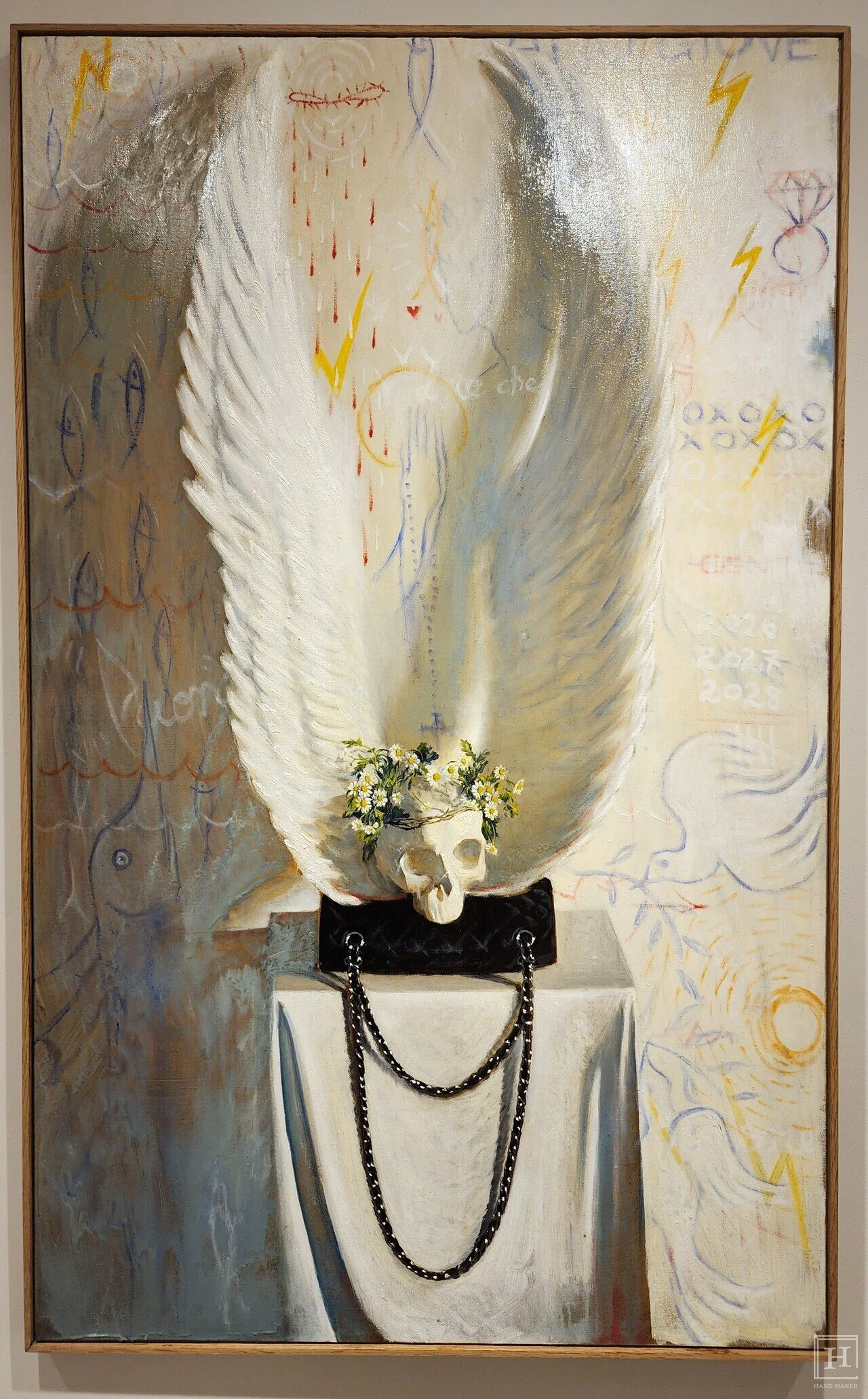
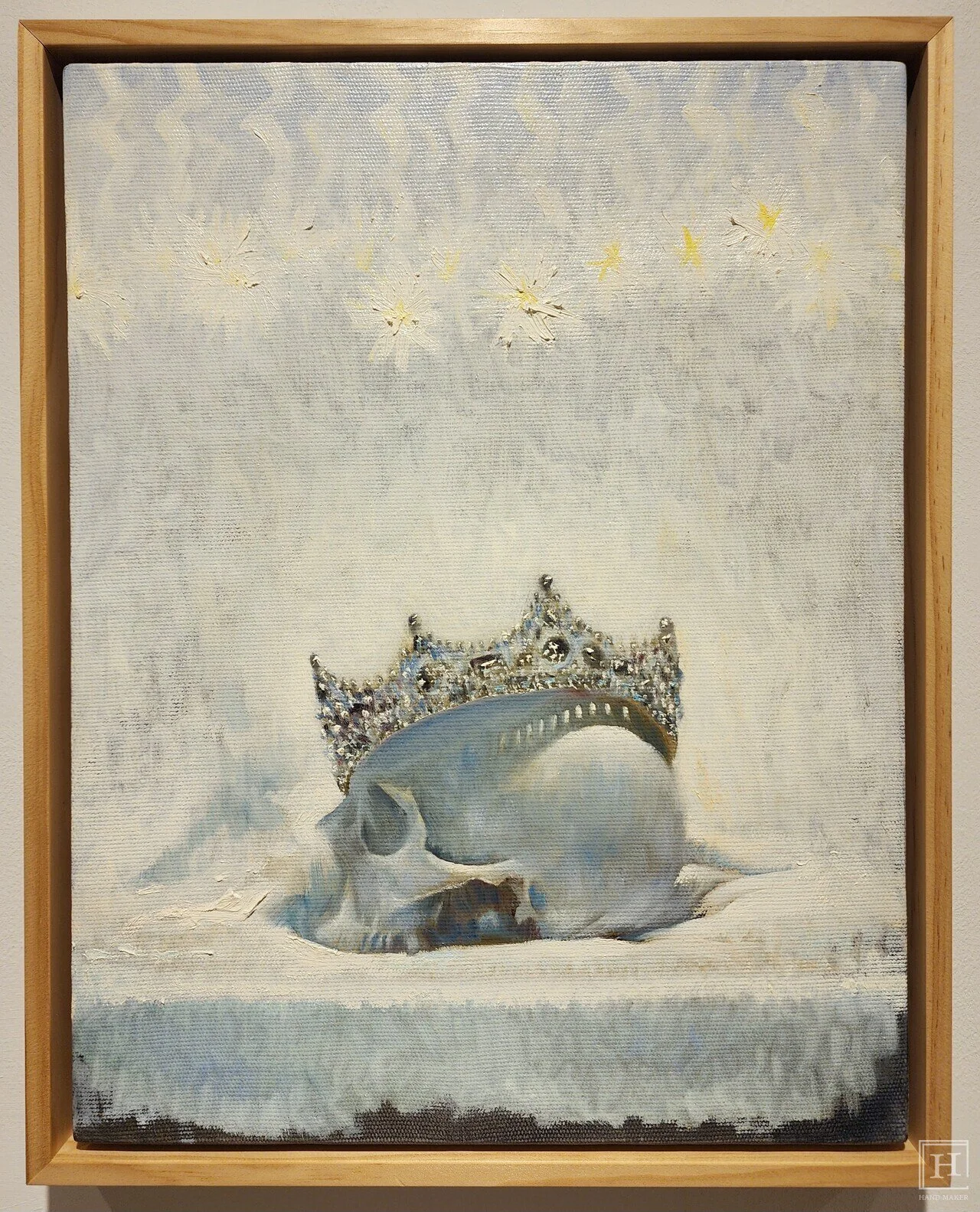
Ordinary people tend to focus first on things that catch the eye. In these works, that includes crowns, flower wreaths, angel wings, and luxury bags. However, if you look closely at the works, skulls appear. The moment you see those skulls, you are startled and take a step back. Even if you were just looking at them thinking they were "pretty" a moment ago, that beauty vanishes with the appearance of the skull.
As the names of the works suggest, they evoke the image of 〈MEDUSA〉 from Greek mythology. Medusa, who was also described as a beautiful woman, is known as a being whose hair turned into snakes due to the curse of Athena, turning anyone who faces her face into stone. The image of Medusa, where beauty and horror coexist, resembles these works where flamboyant decorations and skulls are placed together. Perhaps the artist intended this contrast.
Just as the saying goes that visible beauty is not everything, these works urge viewers not to focus solely on the outward flamboyance but to look toward the finitude of life existing behind it. It seems to remind us that no matter how beautiful or expensive something is, it is bound to disappear someday.
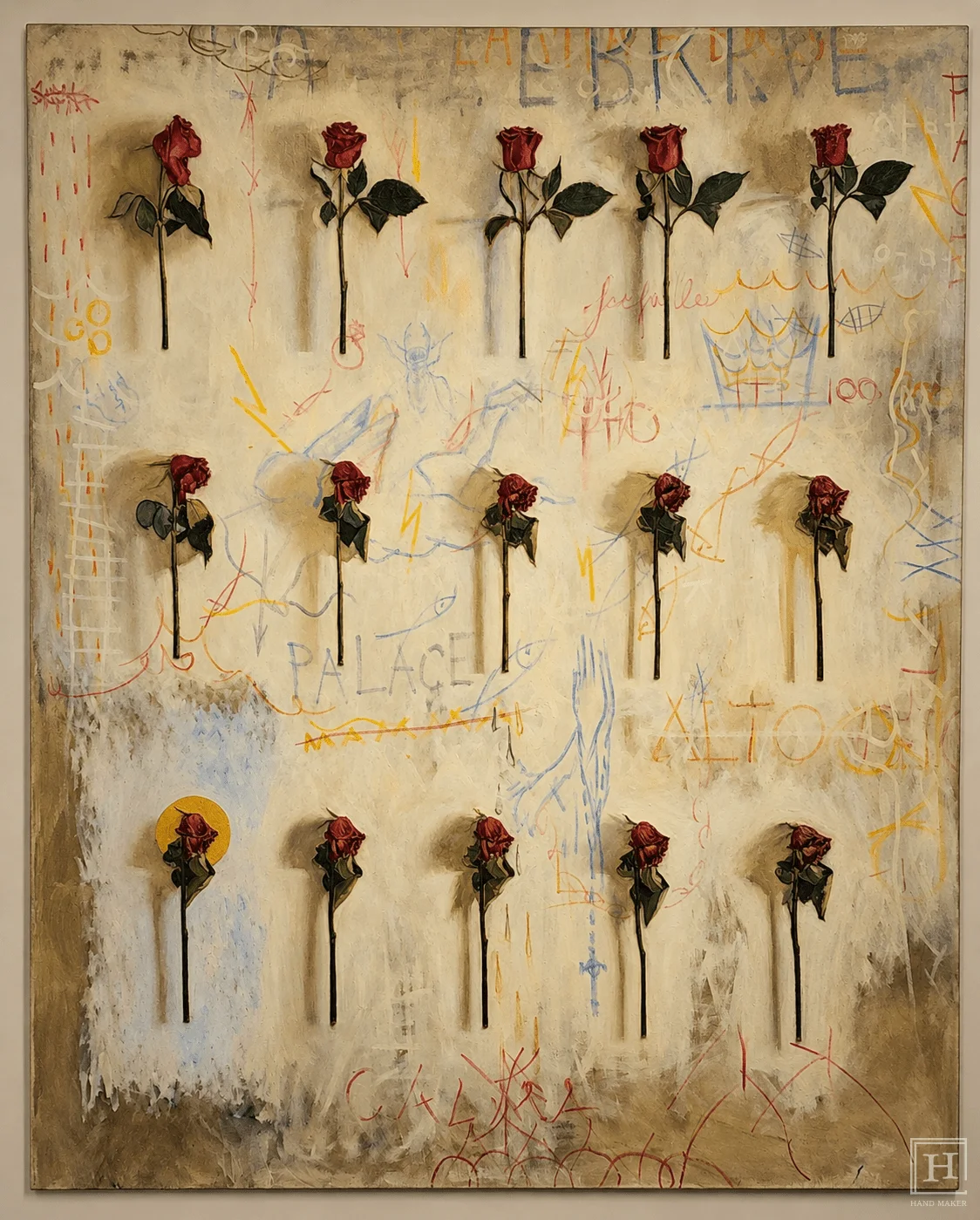
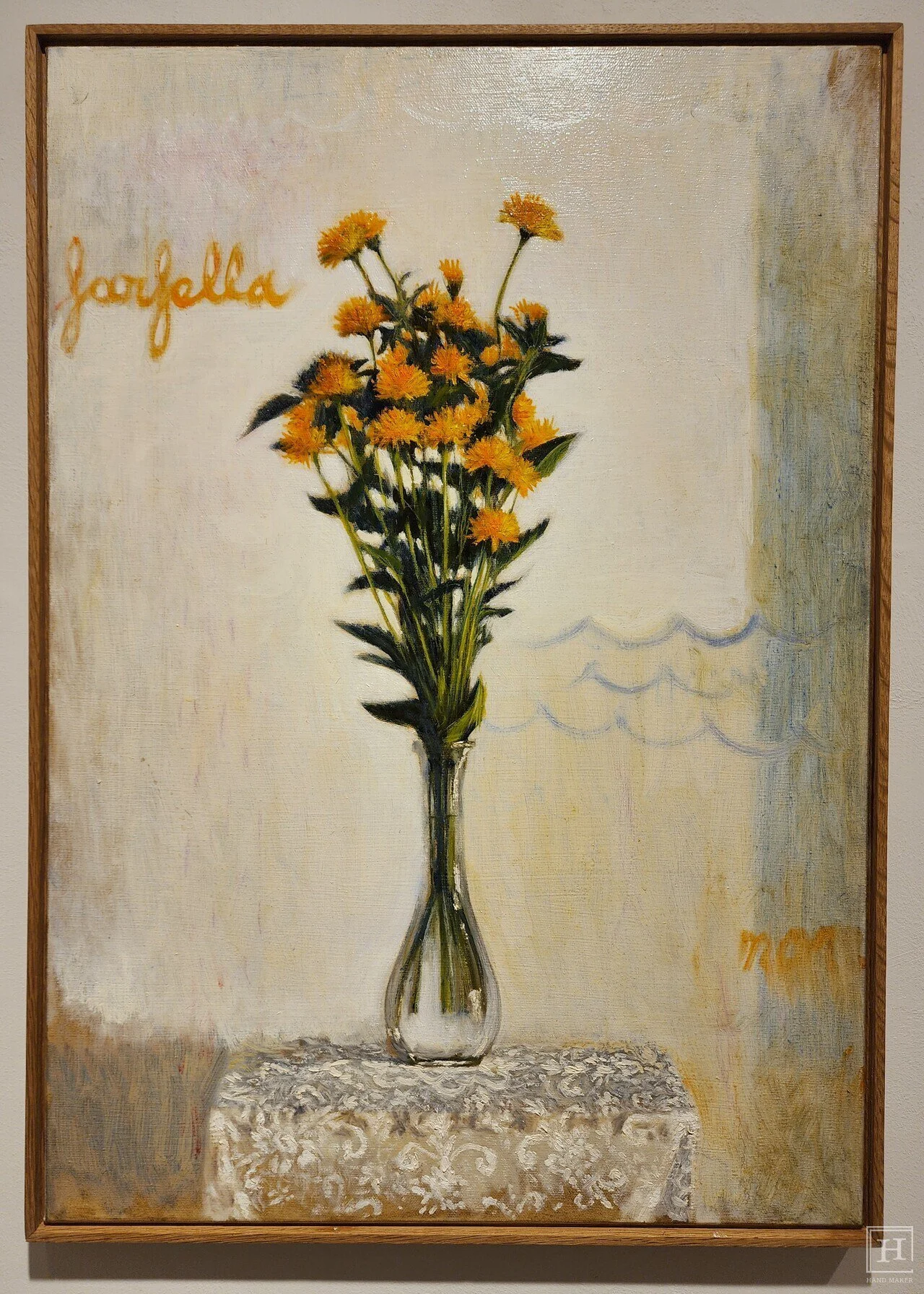
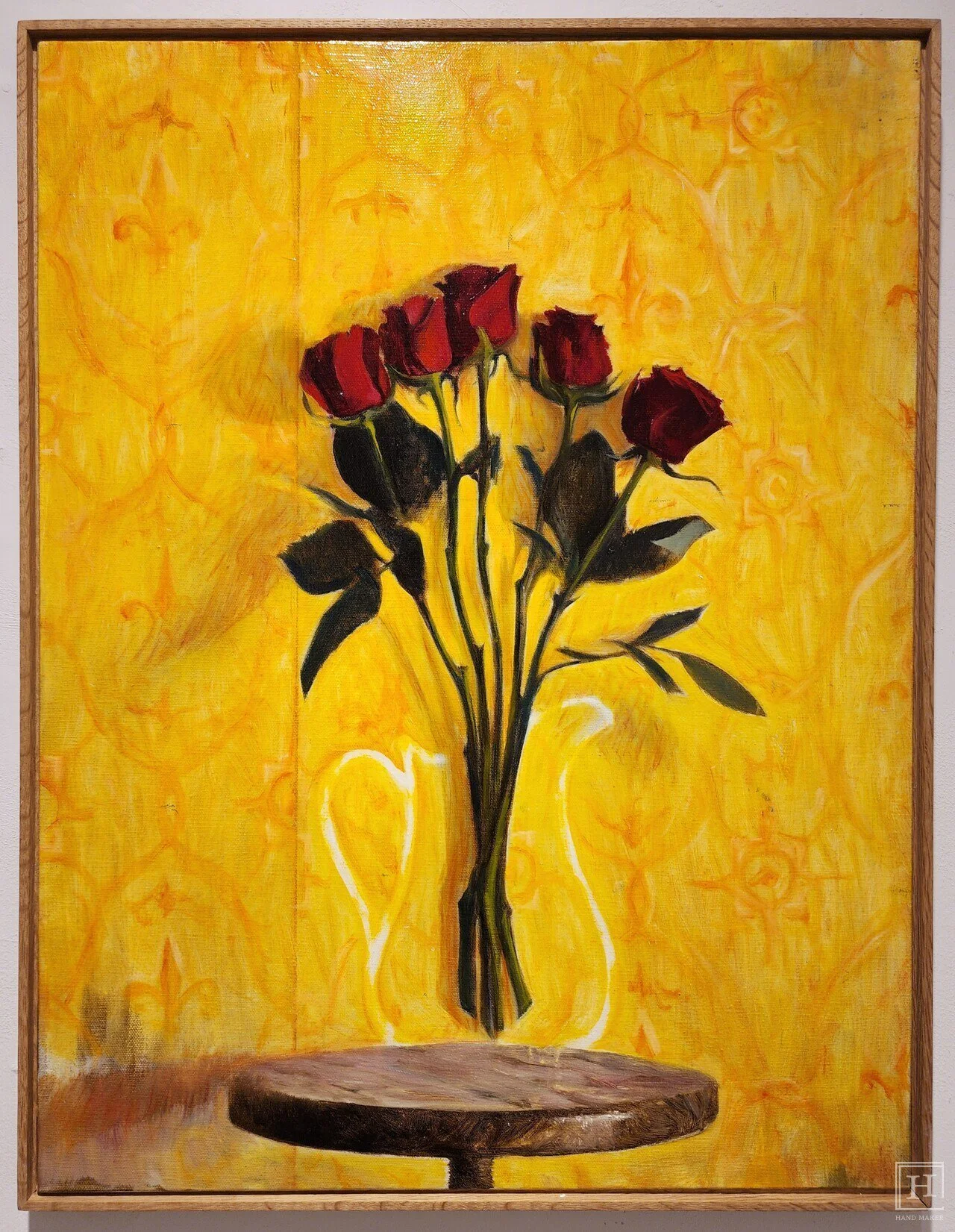
Flowers, which signify beauty, also appear in these works, but they are not all beautiful. Some depict roses that are gradually withering, as if preserved like laboratory specimens.
Consequently, one's gaze naturally shifts to the background. The graffiti on walls that the artist observed while living abroad is fully reflected in the works. While graffiti is often considered a dirty or disorderly trace, it can also express emotions or thoughts that could not be spoken aloud through words and drawings. In this sense, it can be seen as a more honest form of expression.
The walls, where such traces are layered, feel like a record of time passed by countless people. The flowers, luxury goods, and skulls placed in front of them also exist in their own different forms, but they are ultimately not free from the flow of time. The old walls and the objects placed upon them seem to tell us that beauty that feels eternal and desires that seem endless will all disappear someday.
The breath of life connected by a single knitting stitch
- Artist Ha Haeng-eun
In her solo exhibition, artist Ha Haeng-eun calls the form where a child and an elderly person coexist an "old child," capturing opposing concepts of life and death, birth and extinction, within a single frame. Humans move toward death from the moment they are born, but in between, they constantly change and live their lives. The artist has revealed this aspect of existence through the face of the "old child."
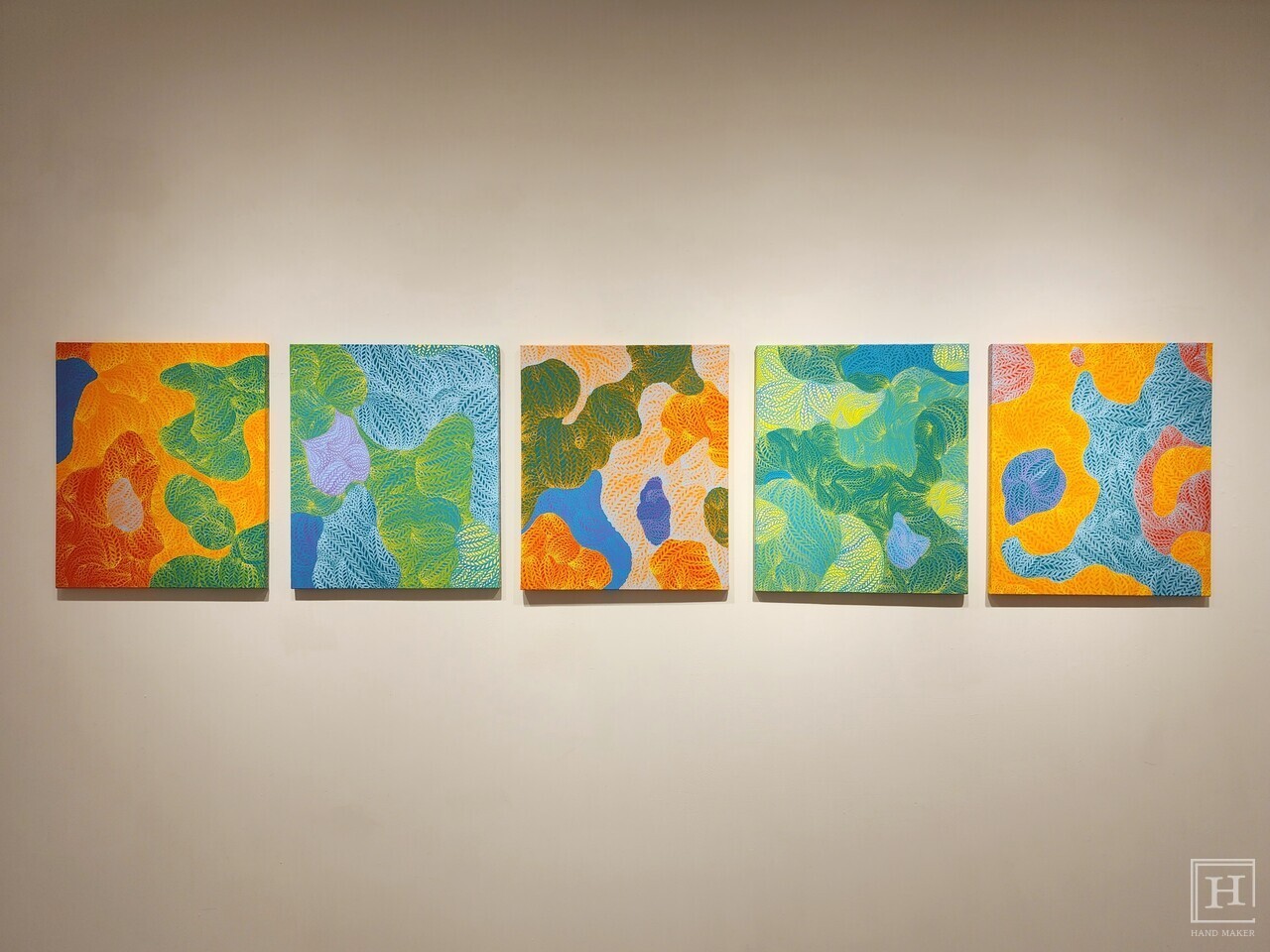
This time, she presents the 〈Breath〉 series, which focuses on the structure and repetition of knitting. The form of knitted fabric, which appeared as clothing for figures or objects on a desk in previous works, has expanded in this work to become an element that constitutes the entire screen.
To the artist, knitting is an act that connects the care she performs as a mother with the creative labor she continues as an artist. The regularly repeating knitting patterns transform into unpredictable, organic forms. The artist compares this process—which continues incessantly yet appears in a different form at every moment—to breathing, thereby unraveling the relationship between life and art, and repetition and generation.
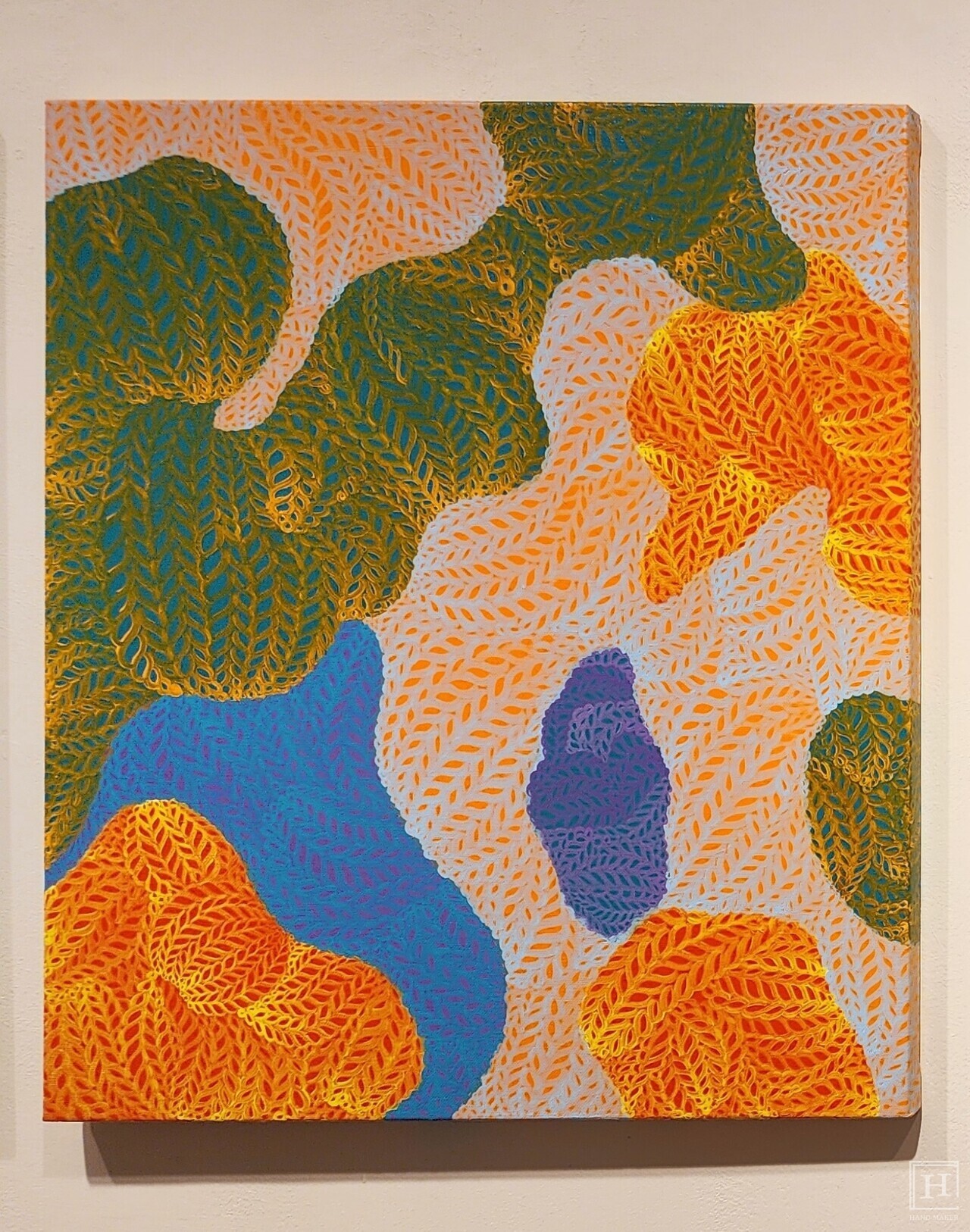
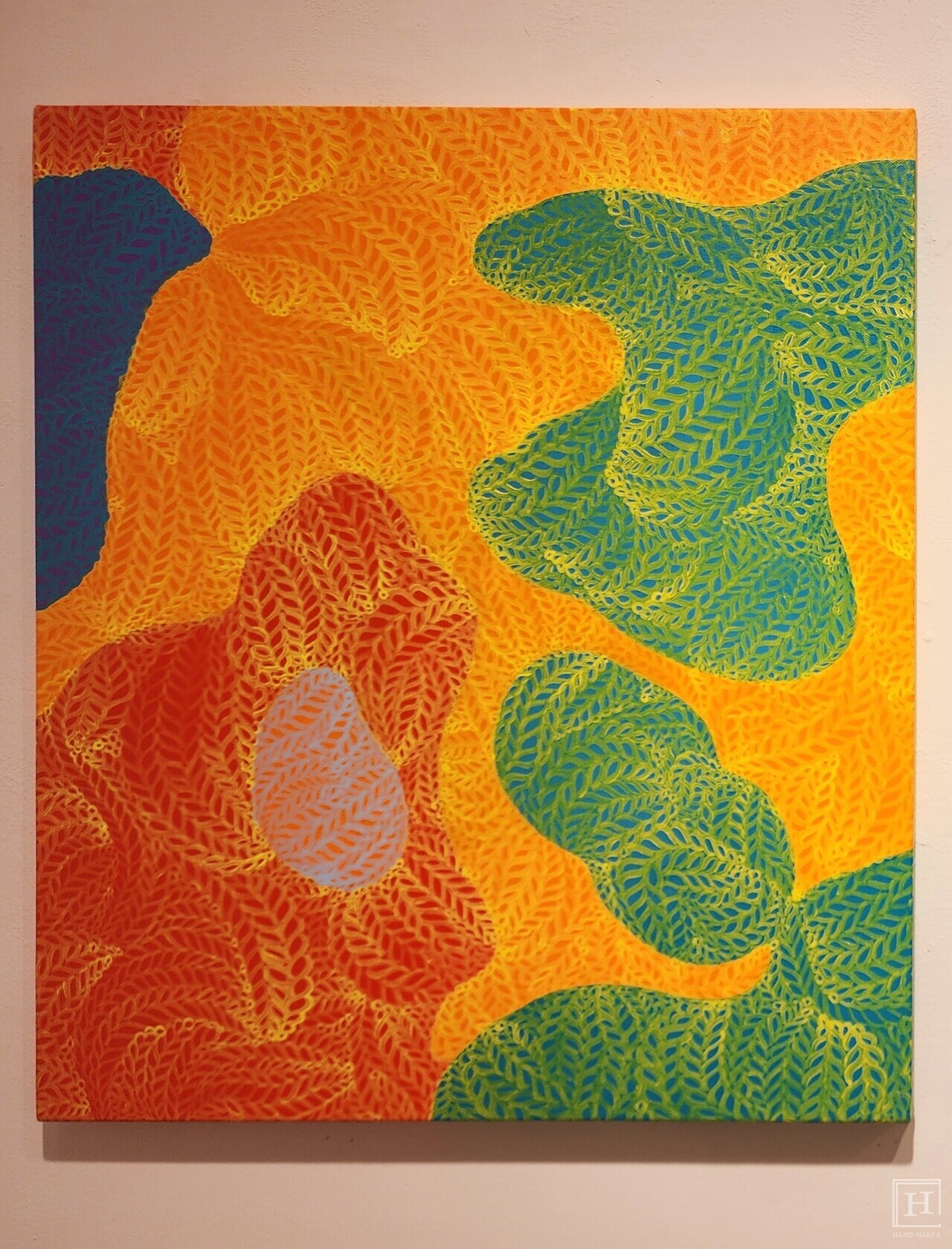
The artist's particular focus on knitting is influenced by her mother. This is because she discovered the meaning of long-lasting, repetitive hand movements and care in the sight of her mother enjoying knitting. When connected to the name 'Breath,' it seems that the artist's gaze, which focused on the female body conceiving life in previous works, has now expanded to the maternal care that grows that life into a complete person.
If conceiving life is the beginning of existence, then caring for that life so it can be born into the world and continue its own breath is a task that requires a mother's long time and devotion.
Knitting, which connects yarn stitch by stitch, resembles this life of a mother. Just as the accumulated time of daily repetitive care allows a single life to grow, the constantly continuing shapes of knitting also create new vitality within the canvas. It seems the artist has captured both the time of a mother conceiving and raising life and her own life as an artist within the shapes of knitting that continue stitch by stitch.
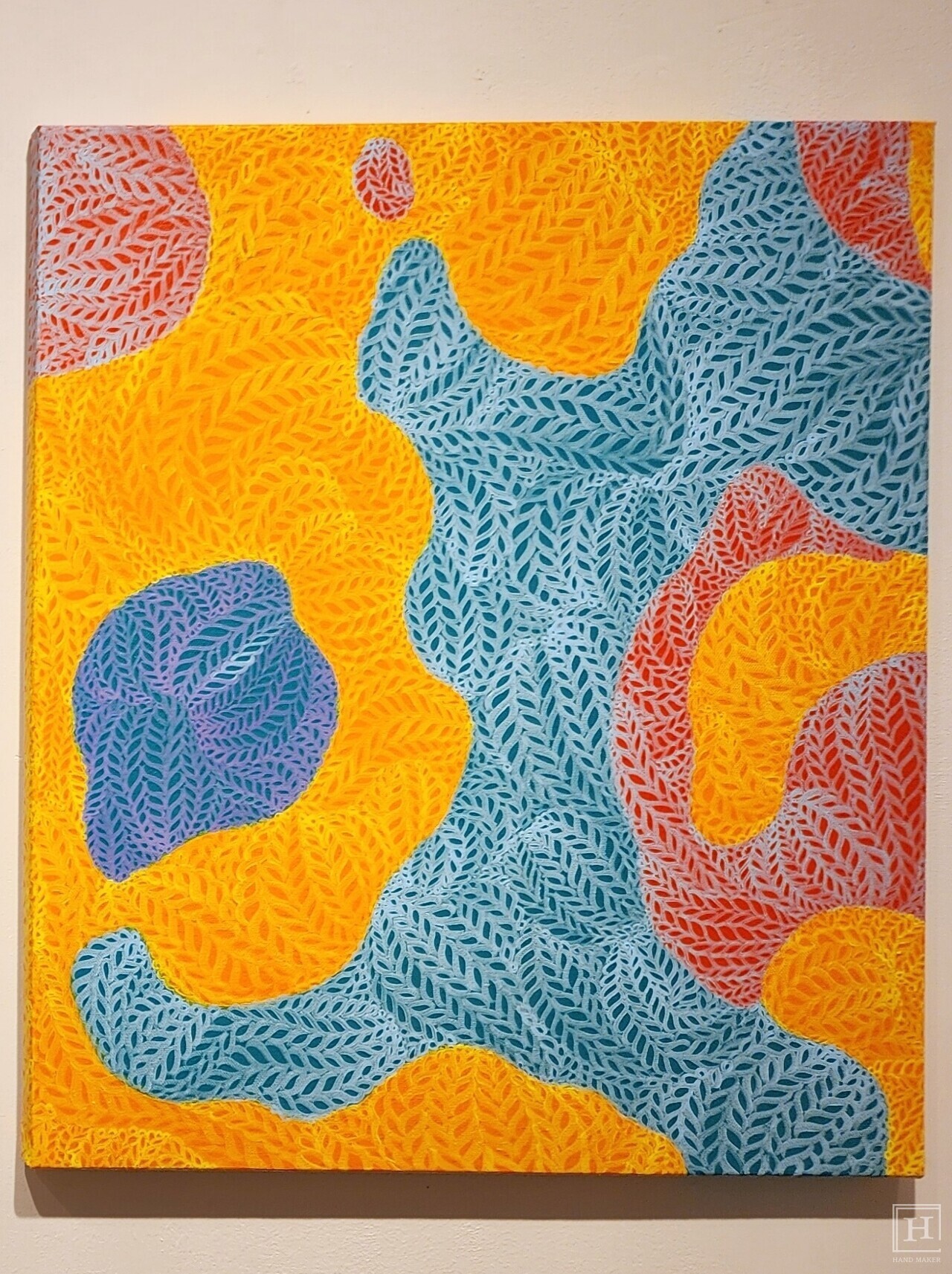
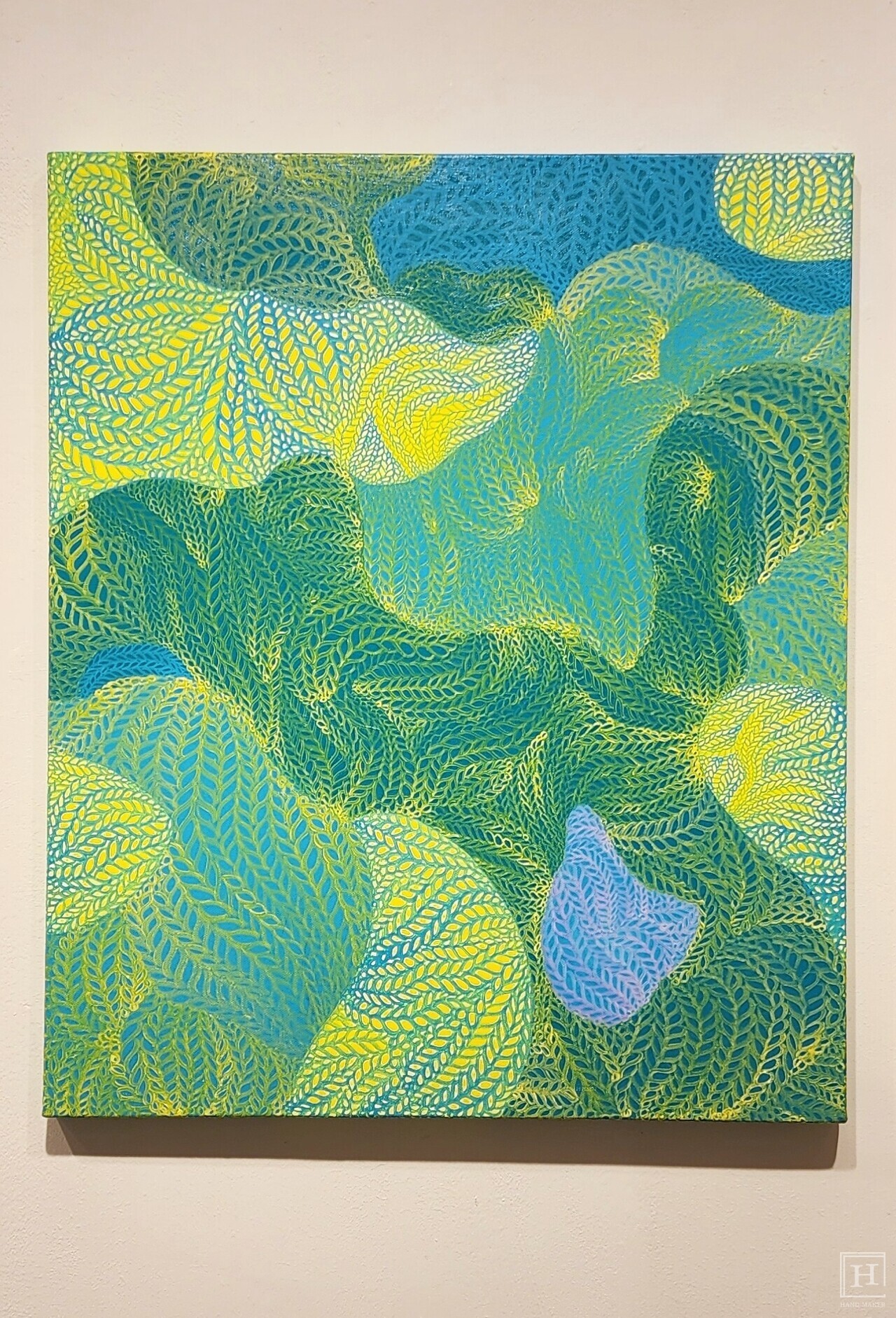
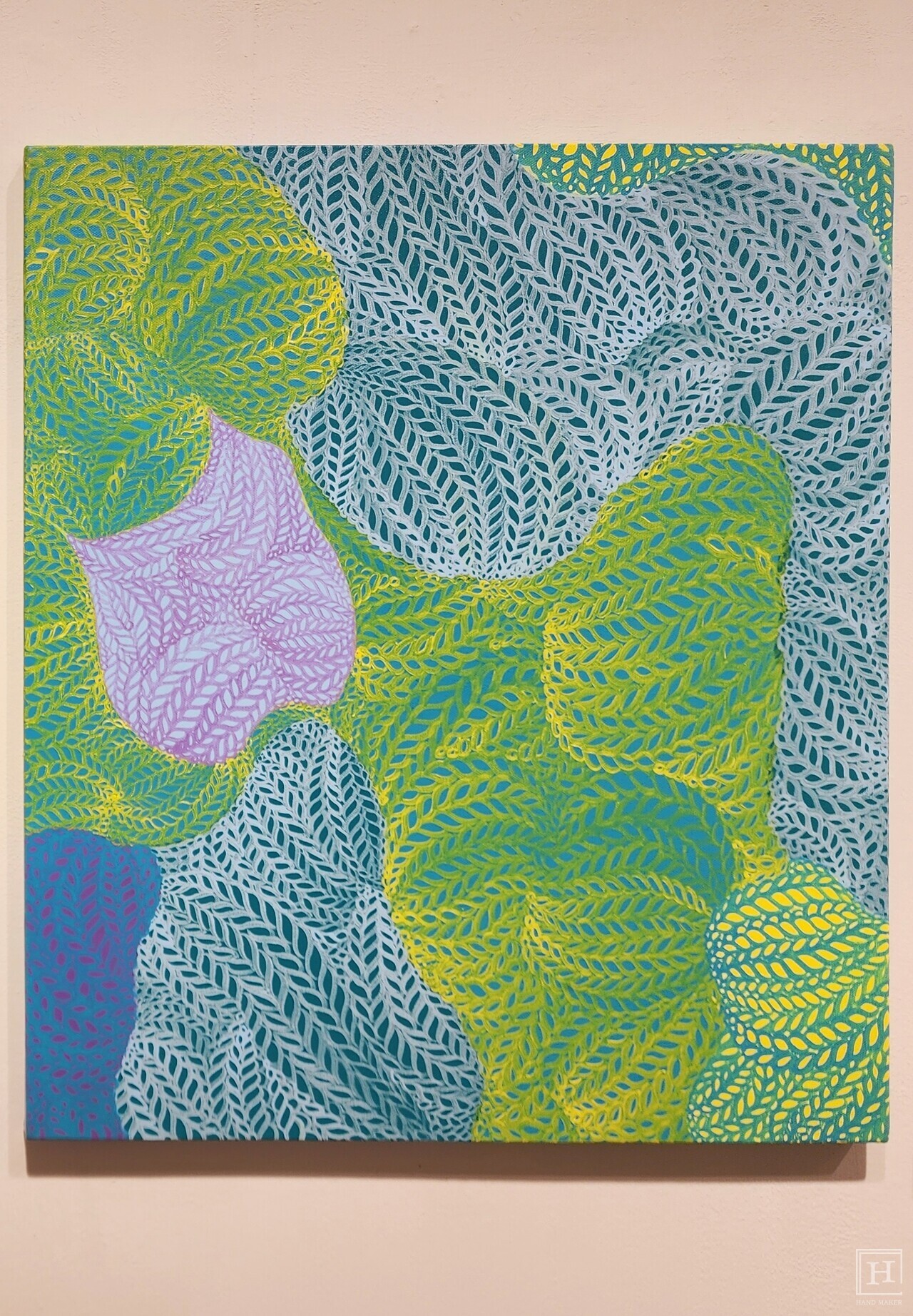
Therefore, when looking at the knitted shapes in the works, one feels a sense of three-dimensionality and liveliness simultaneously, rather than calmness, as if cells are moving. It is as if various colored knitted shapes gather to grow into a single living organism.
Intense yellow sometimes fills the screen, and calm green resembling nature sometimes spreads out like waves. Although the same patterns repeat, no two are exactly alike. It is much like how we do not always repeat the same breath even as we breathe every moment. Within the shapes that continue stitch by stitch, the movement of life and the sense of being alive that the artist intended to convey can be fully felt.
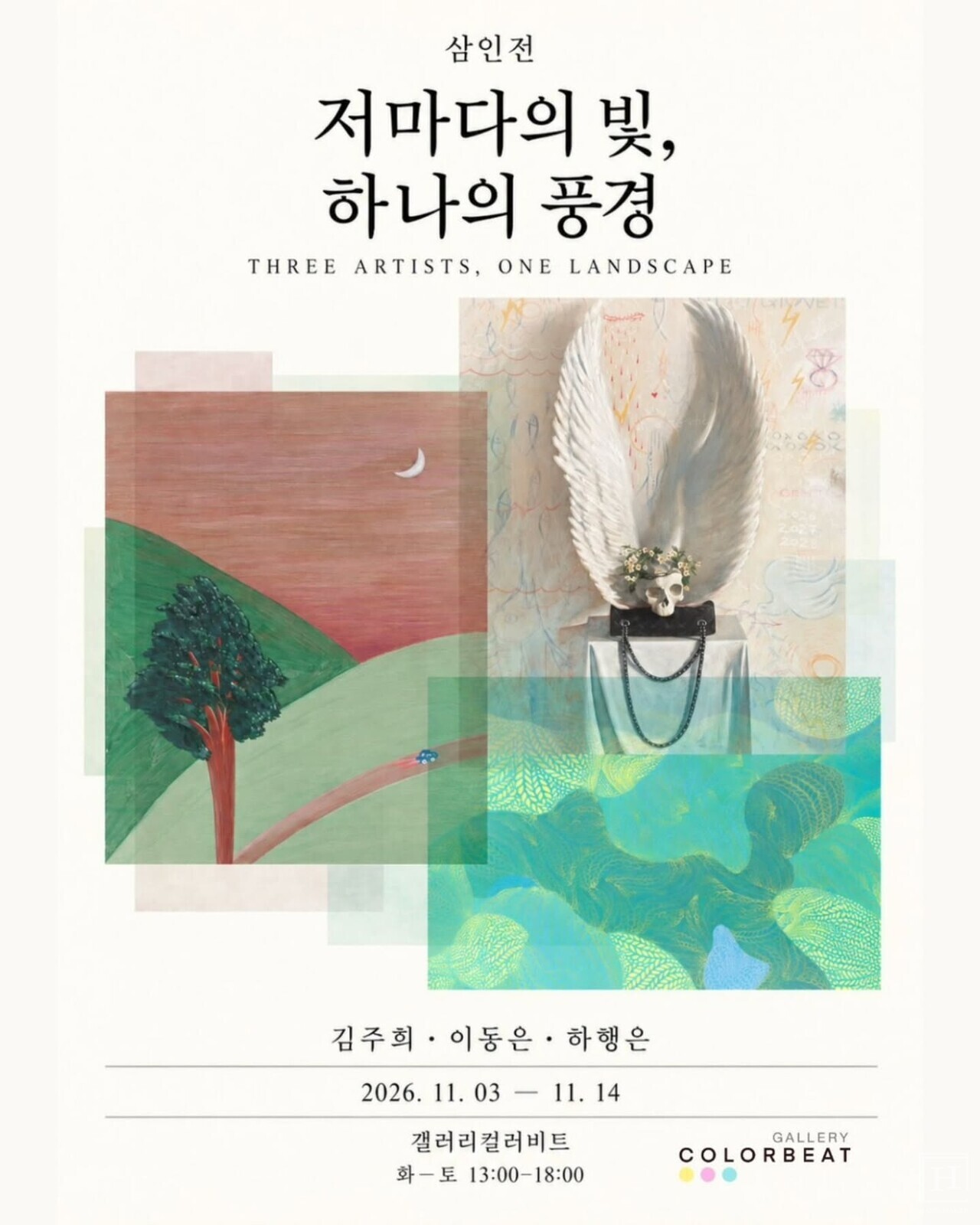
The similar yet different perspectives of the three artists will continue until the 14th. Gallery Color Beat is open from Tuesday to Saturday, from 1 PM to 6 PM. It is closed every Sunday and Monday.
Reporter at HANDMAKER (핸드메이커), a Korean magazine devoted to crafts and handmade culture. Covers exhibitions, design and the people who make things by hand.
Related Articles
[Field Sketch] Unexpected Encounters and Records of 26 Teams Touching Summer: 《To Our Summer》 Exhibition
Kang Je-wan and Paideia present somatic sculptures at Gallery Color Beat
Comments 0
Comments are currently disabled.