
Lee Myung-ho solo exhibition explores 20 years of photographic experimentation
The solo exhibition "Between or Beyond the Curtain and the Scene" at the Savina Museum of Contemporary Art showcases Lee Myung-ho's two-decade journey of photographic inquiry and experimentation.
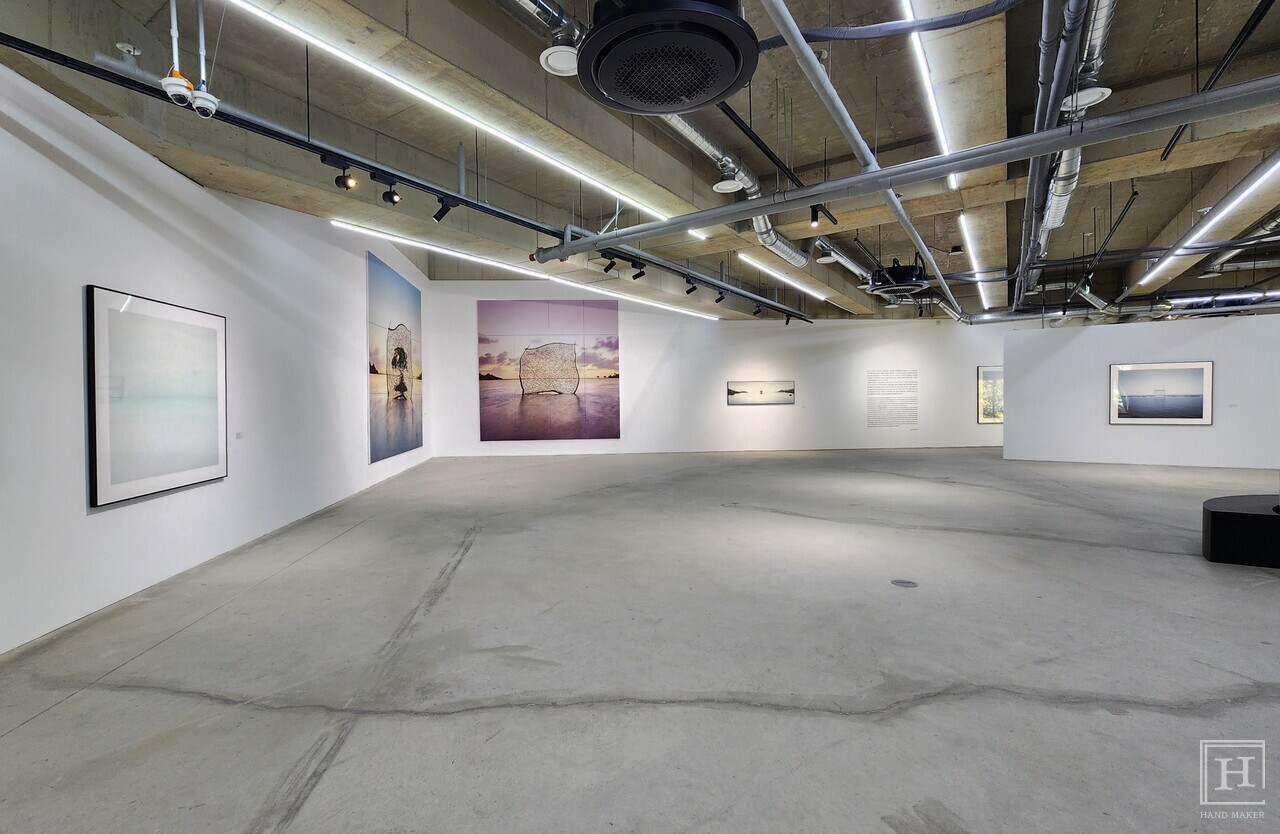
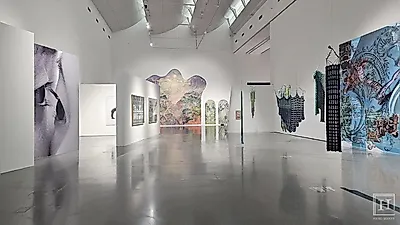
The Savina Museum of Contemporary Art is hosting "Between or Beyond the Curtain and the Scene," an exhibition showcasing Lee Myung-ho's "Photography-Act Project" through December 13. The display features a conceptual diagram on the third floor to map the artist's various experiments spanning over two decades of work.
How many questions does an artist ask before a single work is completed? What to show, how to show it, and what story to tell through that scene? Behind a single photograph encountered by a viewer lie countless thoughts and actions.
Lee Myung-ho is known for his unique practice of erecting massive white canvases behind trees. An exhibition is currently being held that allows viewers to examine the flow of his work, which has continued for over 20 years.
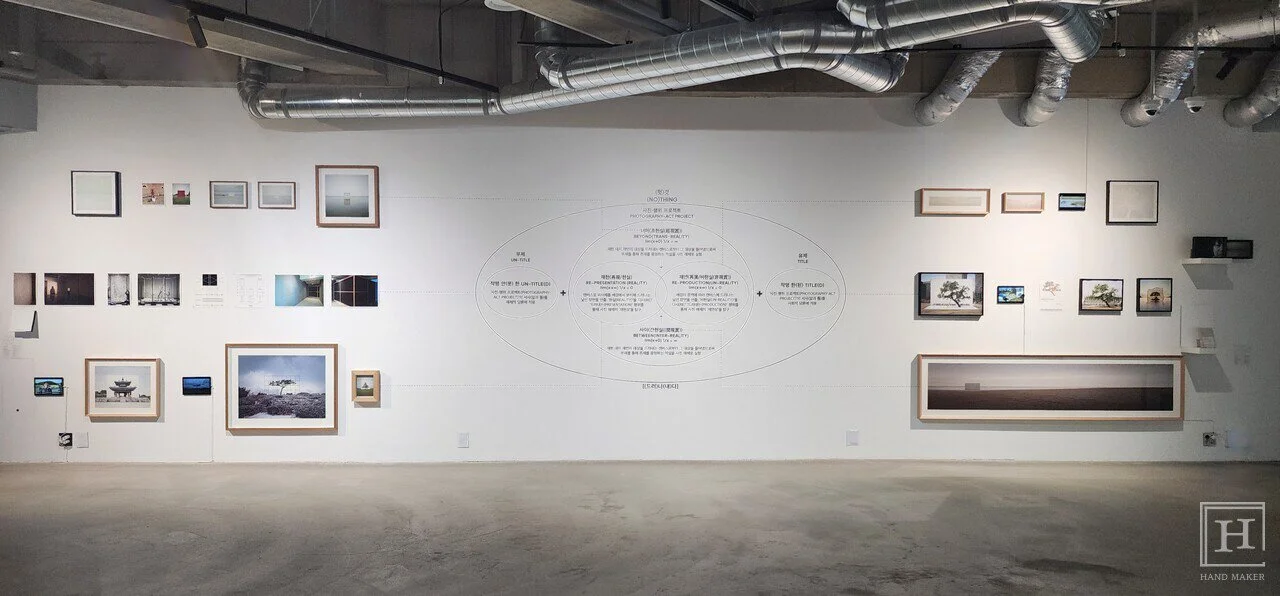
The Savina Museum of Contemporary Art is presenting Lee Myung-ho's solo exhibition, "Between or Beyond the Curtain and the Scene," until December 13.
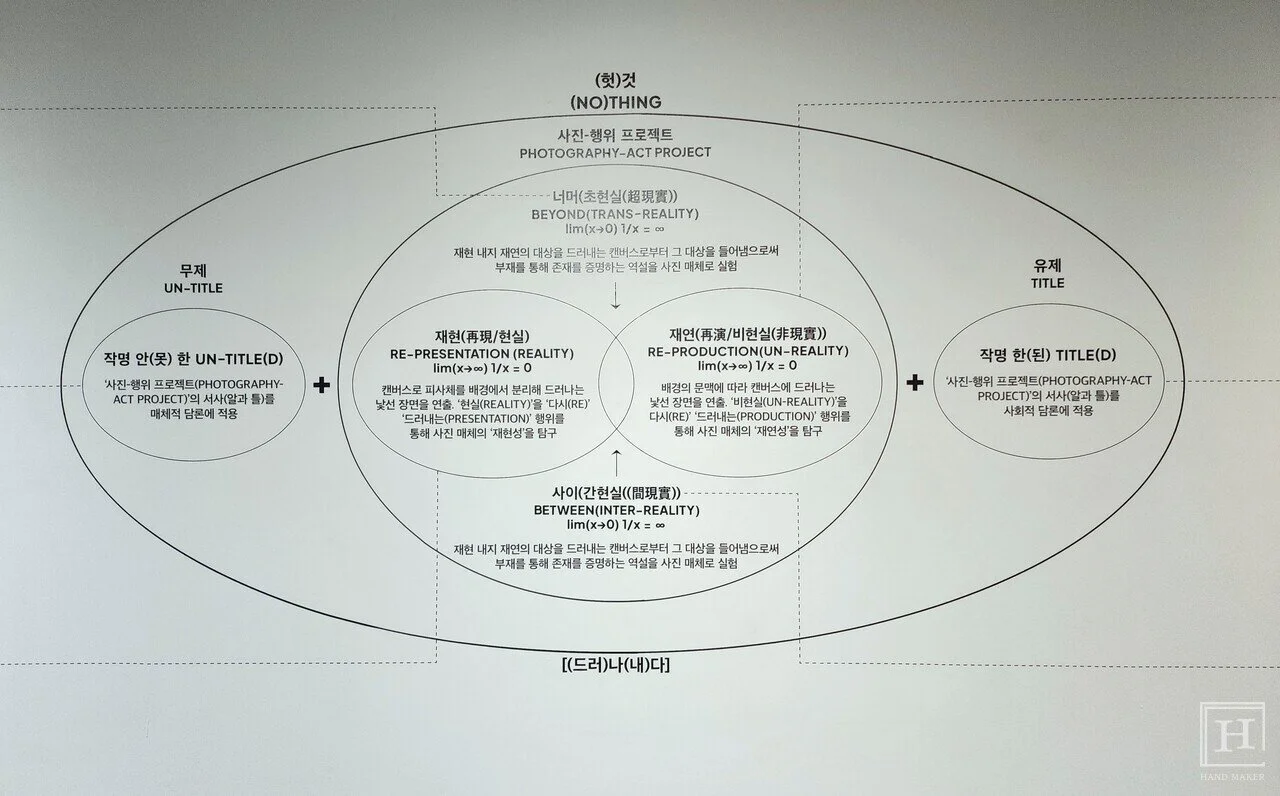
This exhibition goes a step beyond merely appreciating the works themselves. It is structured to examine the concepts that gave birth to the works and the relationships between each series, centered on the artist's "Photography-Act Project" which has continued since 2004. In particular, the conceptual diagram spread across the 3rd-floor wall serves as a guide to understanding where the artist's work began and how it has changed and expanded.
Interestingly, these concepts do not apply to only specific series. Within a single series, the work moves between representation, reenactment, and the realm beyond, depending on the method of expression. Therefore, the conceptual diagram is less a list classifying works by theme and more a map showing the various experiments Lee Myung-ho has conducted over a long period and their relationships.
The 'Photography-Act Project' spanning 20 years
A massive conceptual diagram summarizing Lee Myung-ho's 20 years of work is displayed on the 3rd-floor wall of the exhibition hall. This diagram, in which various concepts such as representation, reenactment, between and beyond, and titled and untitled are intricately intertwined, was not created simply to classify his past works.
Since starting his first work after graduating from graduate school, the artist has been organizing his contemplations on photography into concepts. Based on the basic framework established in his early stages, he has continued various experiments to reach his current world of work.
Kang Jae-hyeon, curator at the Savina Museum of Contemporary Art, explained the significance of this exhibition, stating, "We noted that the artist has had such a conceptual foundation since the beginning of his career. He has chewed over a single thought for a long time and developed it into actual work."
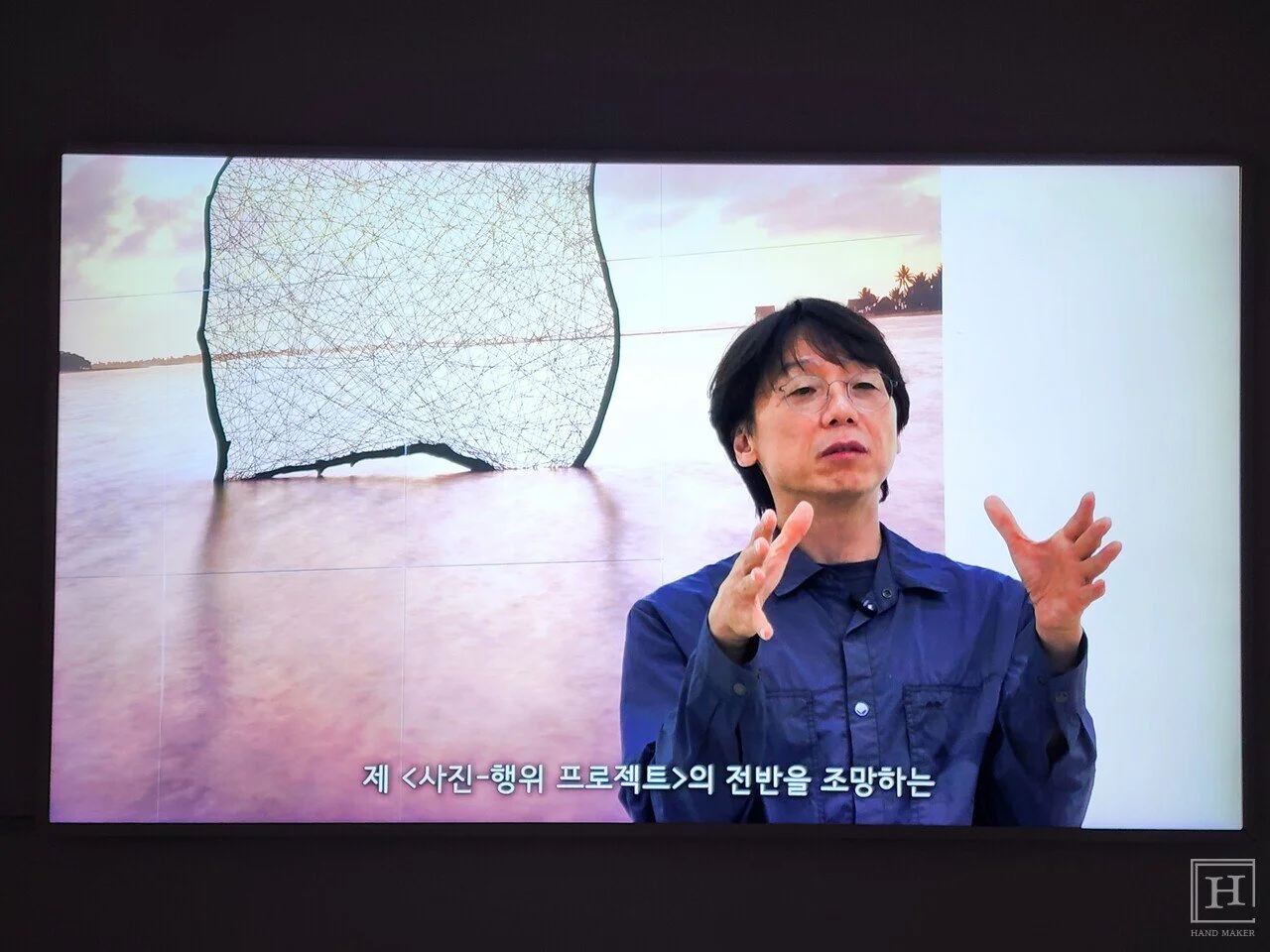
This structure of thought does not stop at appreciating the finished photographs, but allows viewers to follow which questions each work started from and how those questions led to different works. Lee Myung-ho also expressed through an interview with the museum that he hopes viewers will understand the conceptual diagram and appreciate the works through it.
Revealing what exists and creating what does not
- Representation and Reenactment
The fundamental concepts for understanding Lee Myung-ho's work are 'representation' and 'reenactment.' Representation is a way of newly revealing an object that actually exists, while reenactment is the work of creating scenes that did not exist in reality.
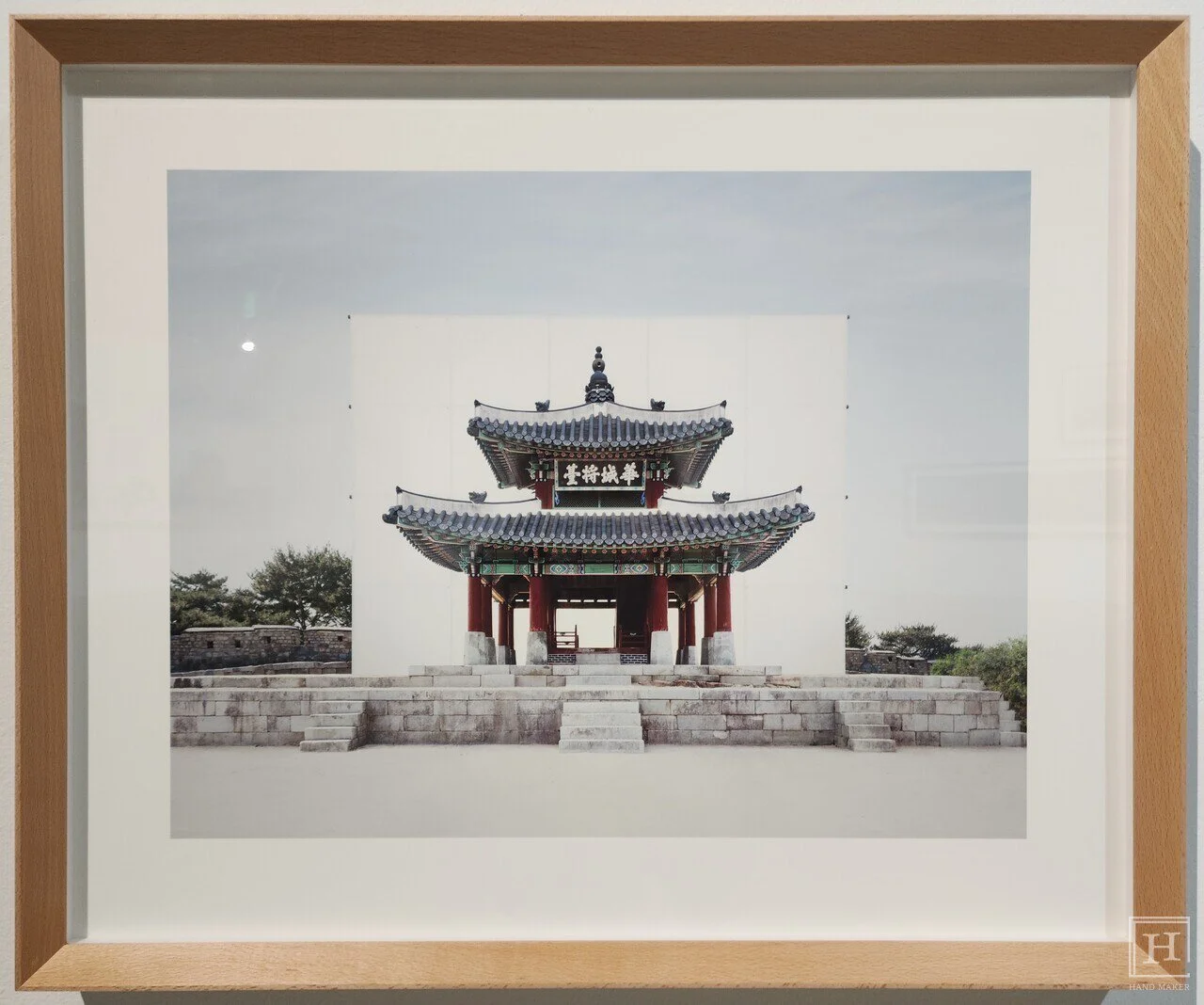
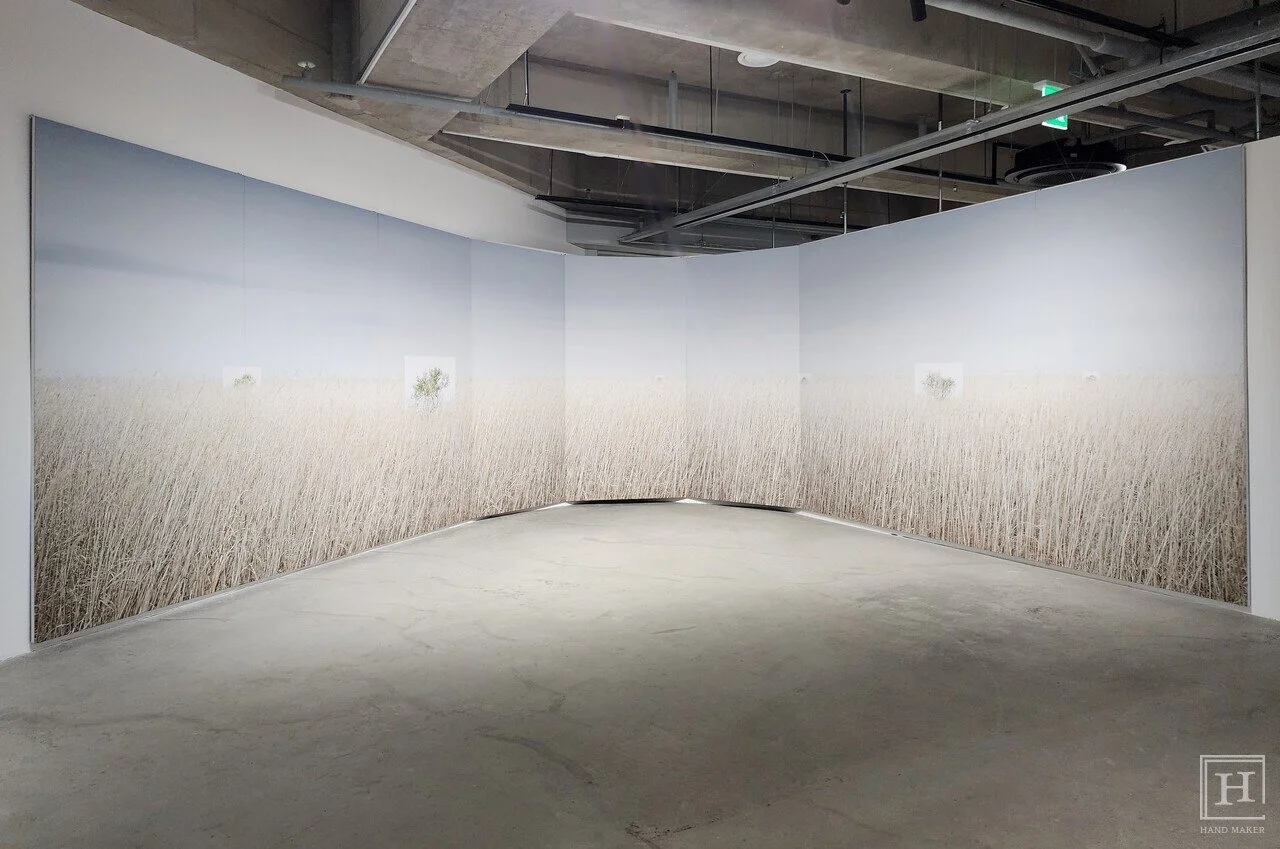
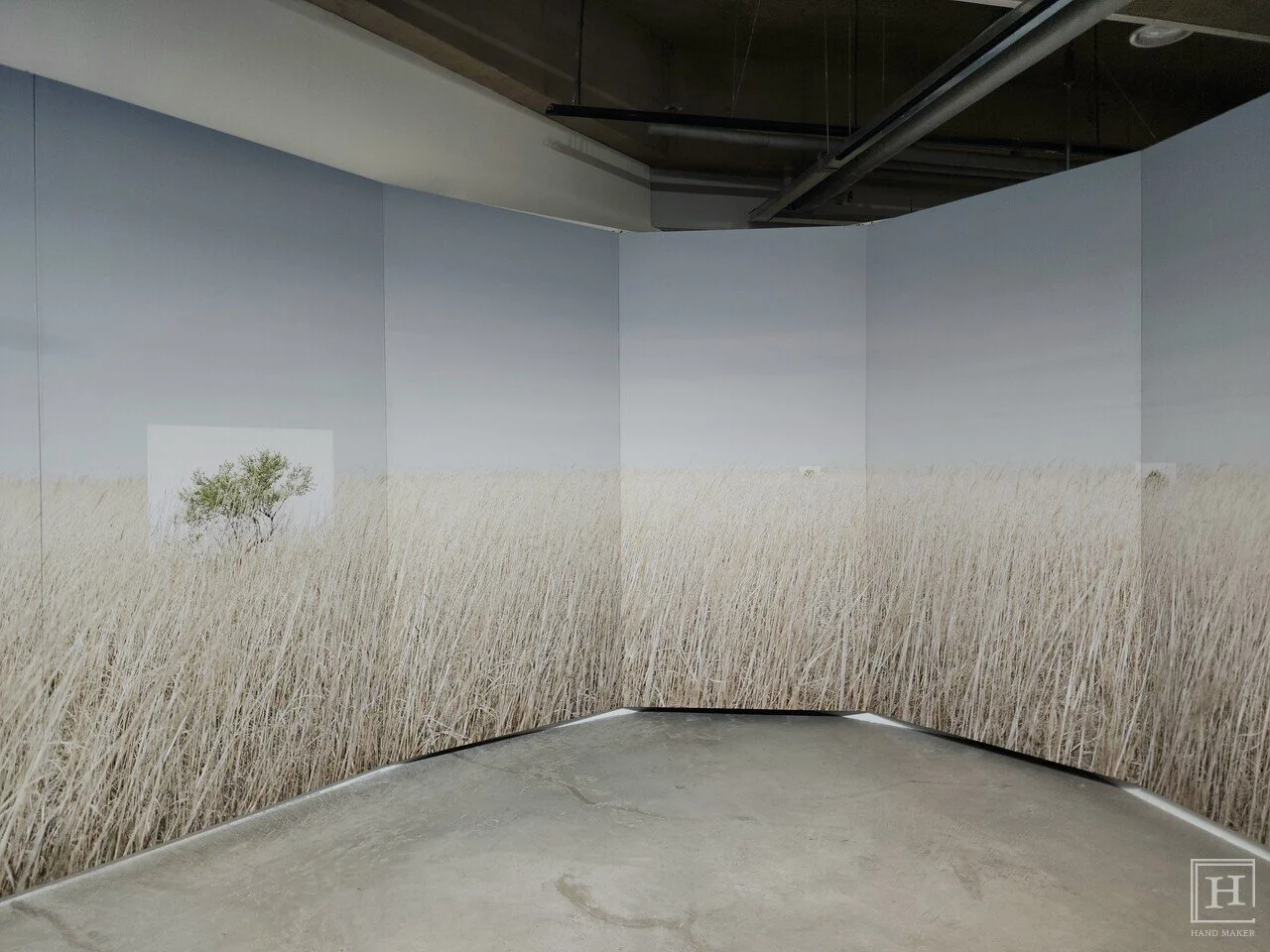
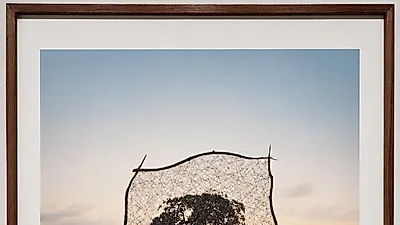
The work that most easily allows one to understand "representation" is the method of placing a canvas behind an object to highlight an entity that was once part of the surrounding landscape. Representative works include 〈Heritage #3〉 and 〈Tree,,, #8〉, where canvases are placed behind buildings or trees.
Artist Lee Myung-ho, who has also served as a spokesperson for the Korea Heritage Service, has focused on various traditional buildings, including the scholar tree at Deoksugung Palace, in his 〈Heritage〉 series. By separating cultural heritage that has occupied the same spot for a long time from its surrounding landscape to reveal it, he makes people view familiar subjects through a new lens.
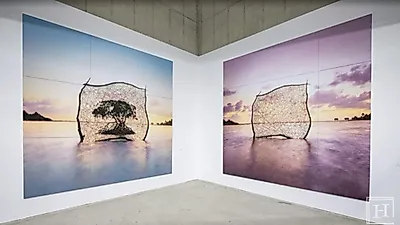
The 〈Tree〉 series is also a project that highlights trees existing in nature as independent subjects. In particular, 〈Tree,,, #8〉 is a work that photographed trees situated among tall grasses on Jeju Island. While the fact that such a landscape exists on Jeju Island is unfamiliar, it is interesting that he highlighted individual trees, which are easy to pass by unintentionally, using a canvas. As they are installed as large-scale works along the exhibition walls, they give the feeling of standing directly within that landscape.
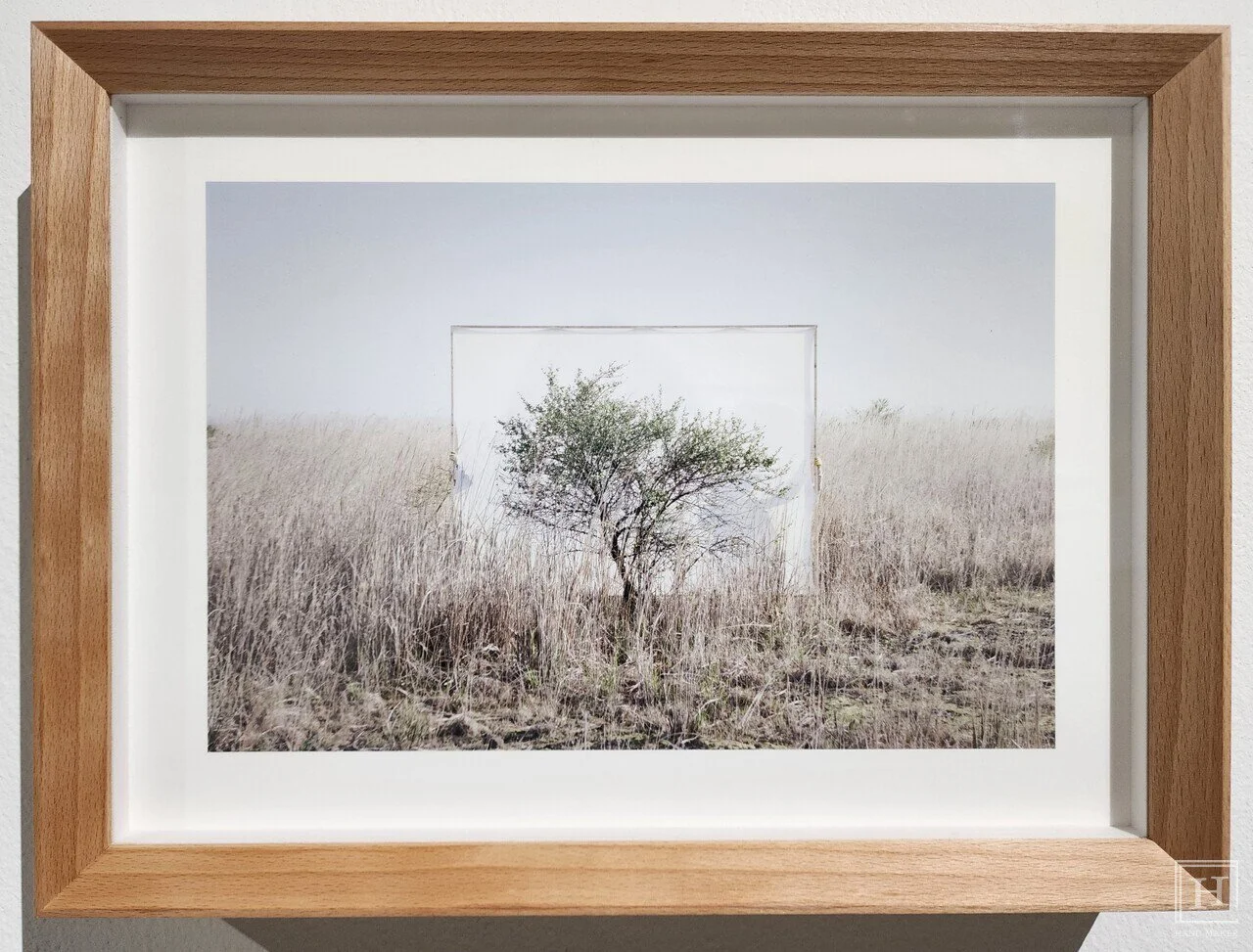
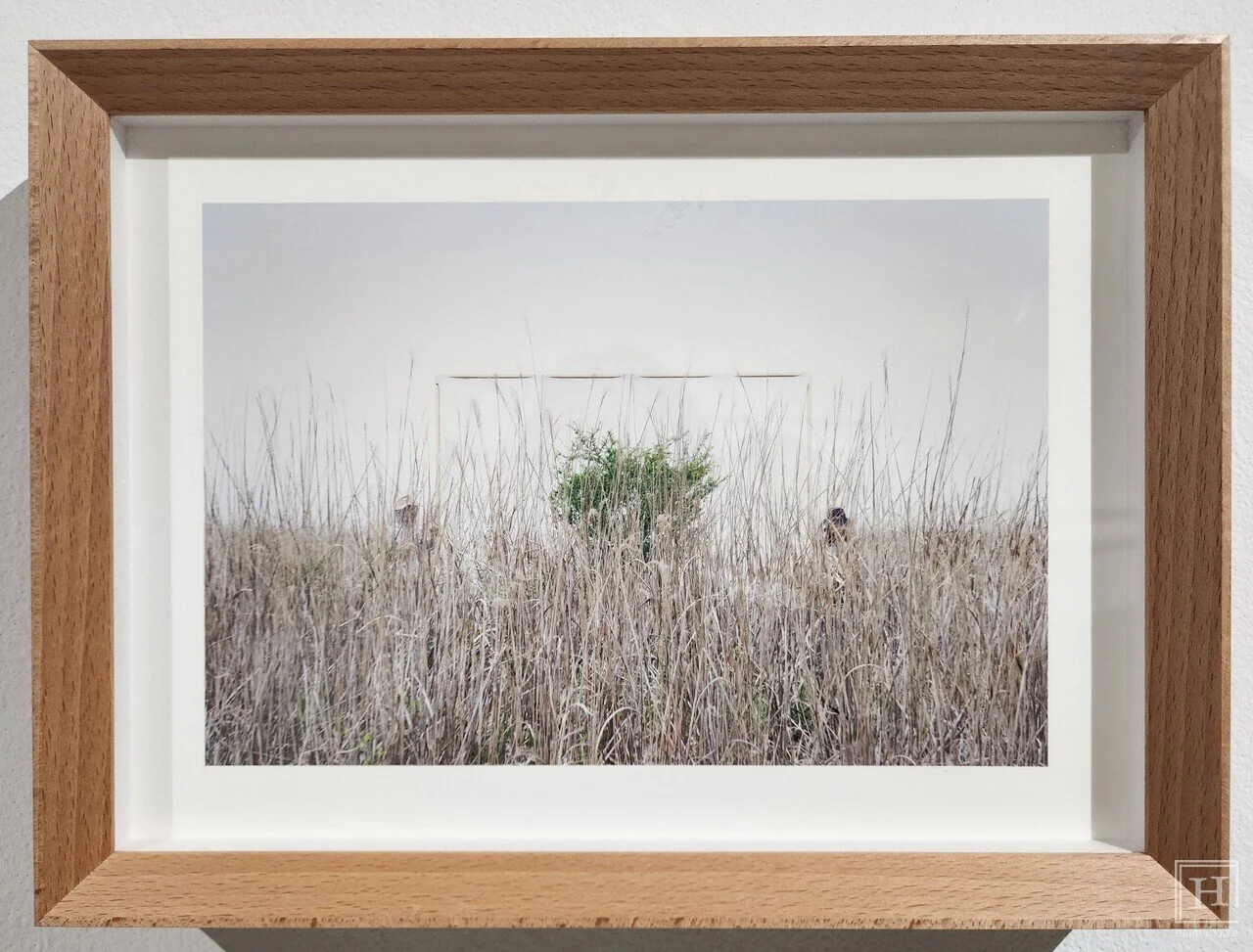
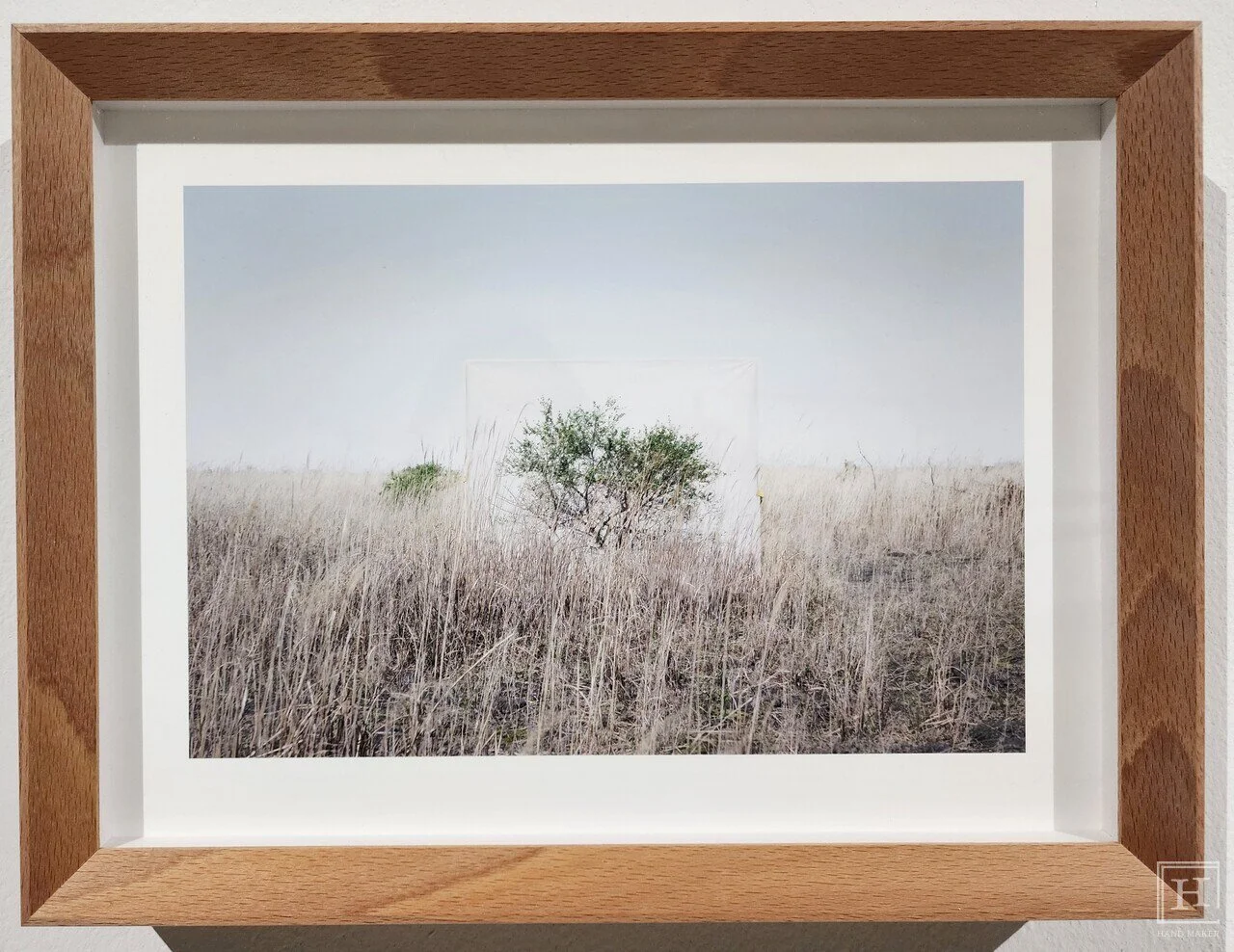
In three works belonging to the same series, differences in the perspective of looking at the trees are revealed. In some works, the overall shape of the tree is clearly visible, while in others, only part of it is revealed, hidden by lush grass. The impression given by the tree also changes depending on the size and position of the canvas and the photographic composition.
In particular, the photos where the worker's appearance is revealed on both sides of the canvas allow one to guess the process of completing a single scene. Through the artist's gaze, a single tree situated in an ordinary patch of grass becomes the protagonist of the photograph.
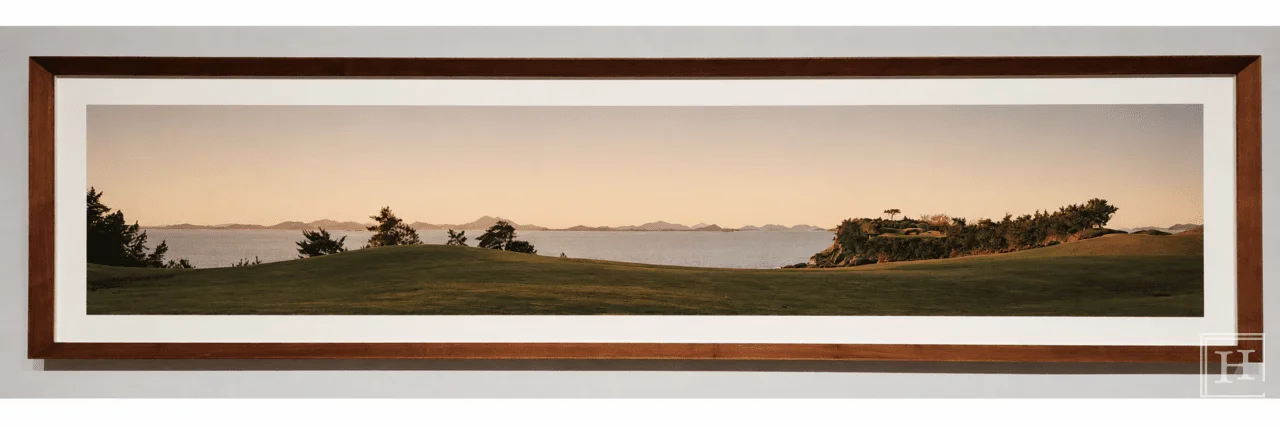
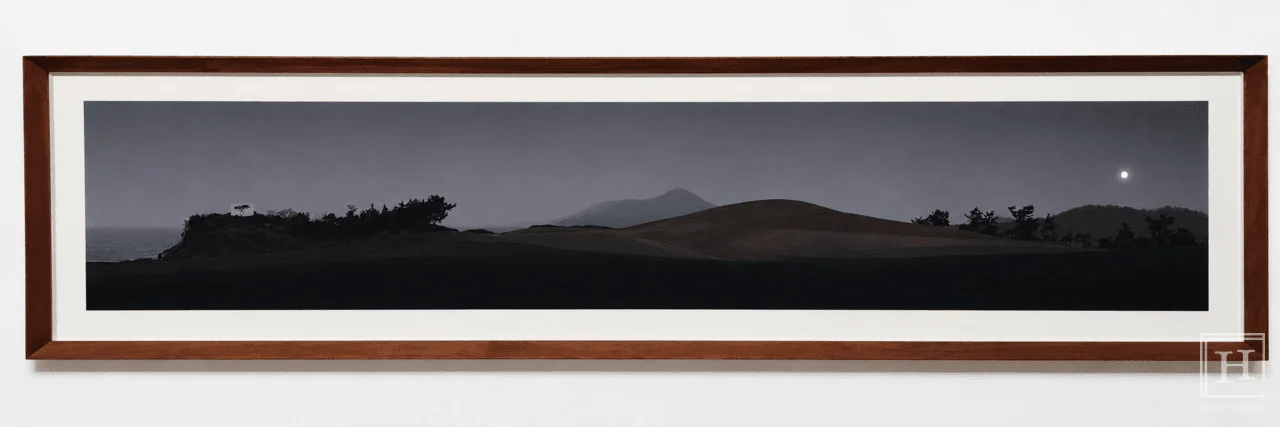
The same landscape reveals different appearances depending on the time. A single tree stands against a background of a wide field and the sea. The artist placed a white canvas behind the tree and captured the daytime and nighttime landscapes respectively in photographs.
During the day, the appearance of the tree harmonizing with the surrounding nature catches the eye, but at night, the silhouette of the white canvas and the tree stands out more prominently in the darkness. Although it is the same tree existing in the same place, it leaves a completely different impression depending on the light and time.
This shows the characteristic of "representation" that the artist speaks of. By newly revealing the object that originally existed, he makes people view the familiar landscape through a different perspective.
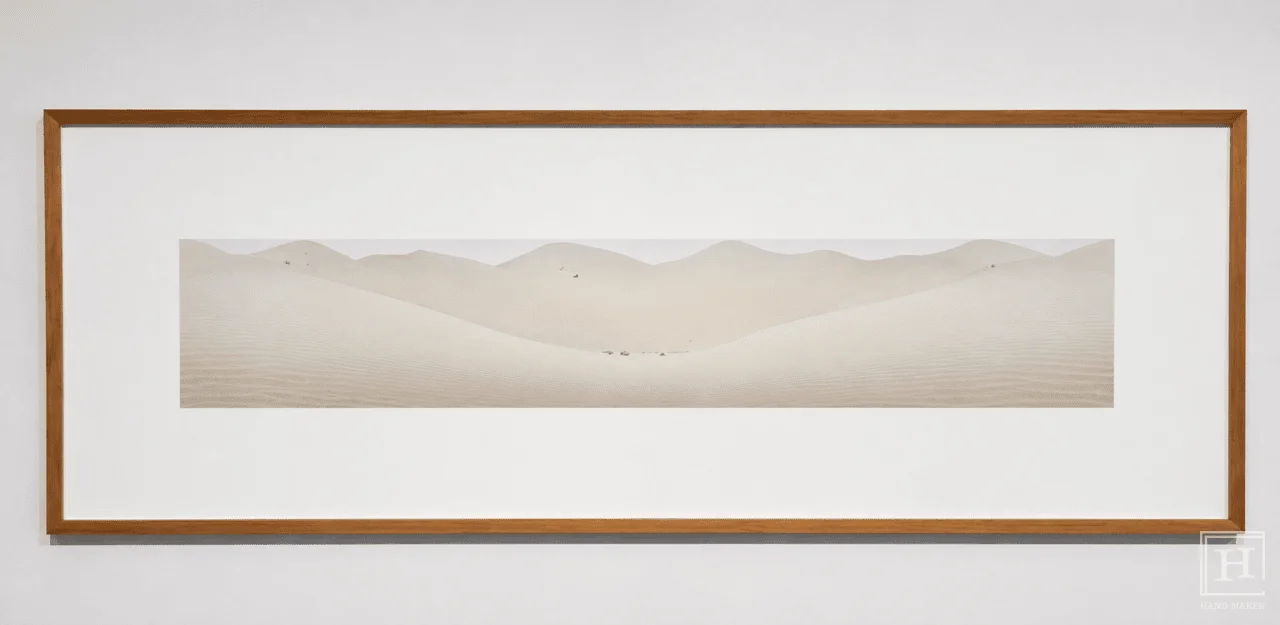
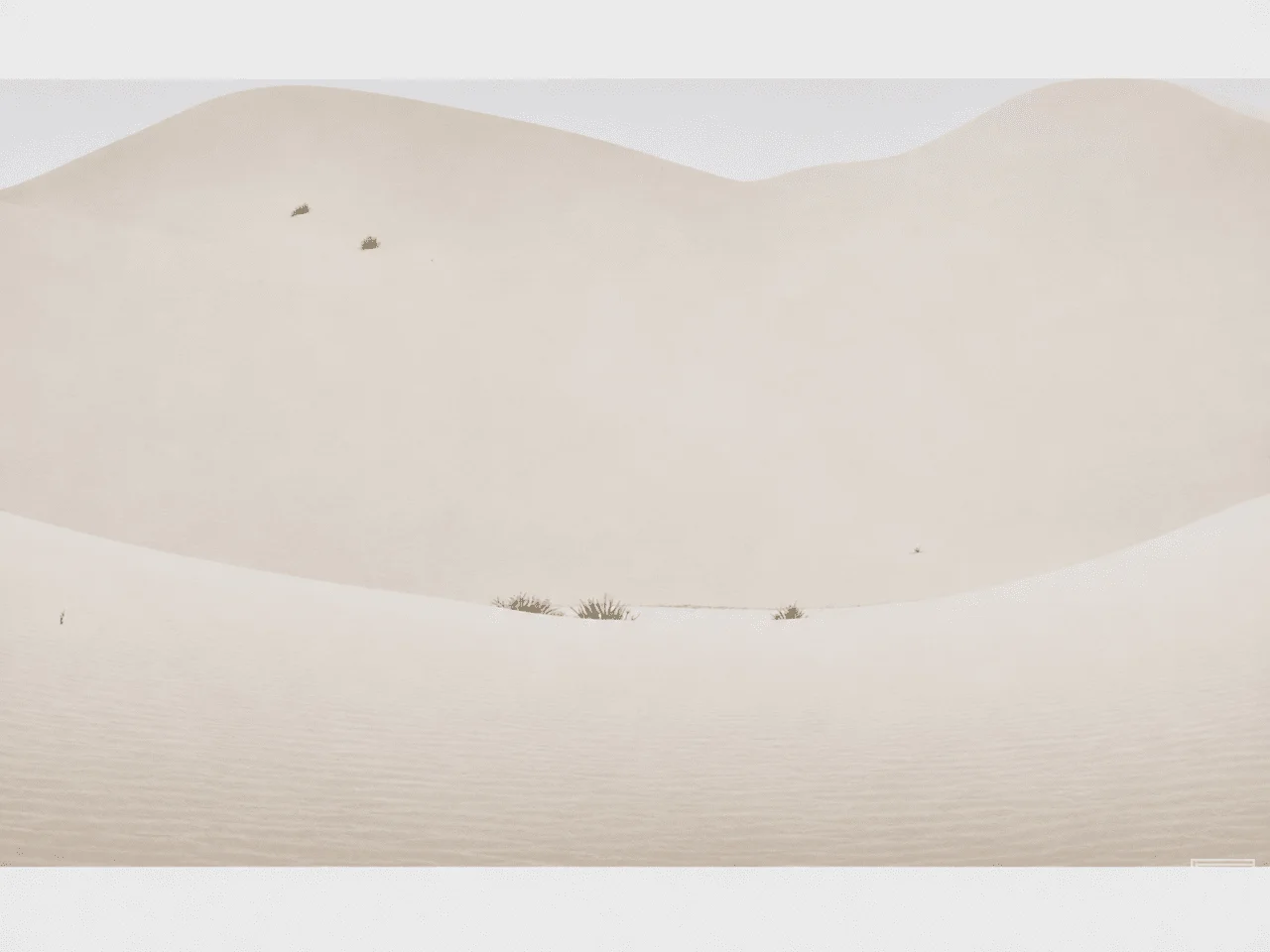
A representative case of "re-enactment" is the 〈Mirage〉 series. The artist spread a massive canvas along the sand dunes of the Gobi Desert, creating a landscape that looks as if an oasis has appeared in the middle of the desert.
When looking at the work from a distance, it simply looks like a desolate desert where sand dunes continue endlessly. However, when approaching closely to look in detail, a landscape different from the surroundings catches the eye between the sand dunes. Although it is actually a scene created by the canvas, at some moment, it evokes the illusion that water is pooled there. Perhaps the artist intends to make us reflect on our gaze, which believes what is visible to be reality.
An 'oasis in the desert' is often compared to 'hope in despair.' The scene of creating a non-existent oasis in the middle of a barren desert also brings to mind the human mind, which expects something even in seemingly impossible situations. However, that landscape, which appears to be hope, is an illusion created by a canvas rather than real water. Ultimately, the work seems to pose a question of whether what we see and believe with our eyes is indeed reality.
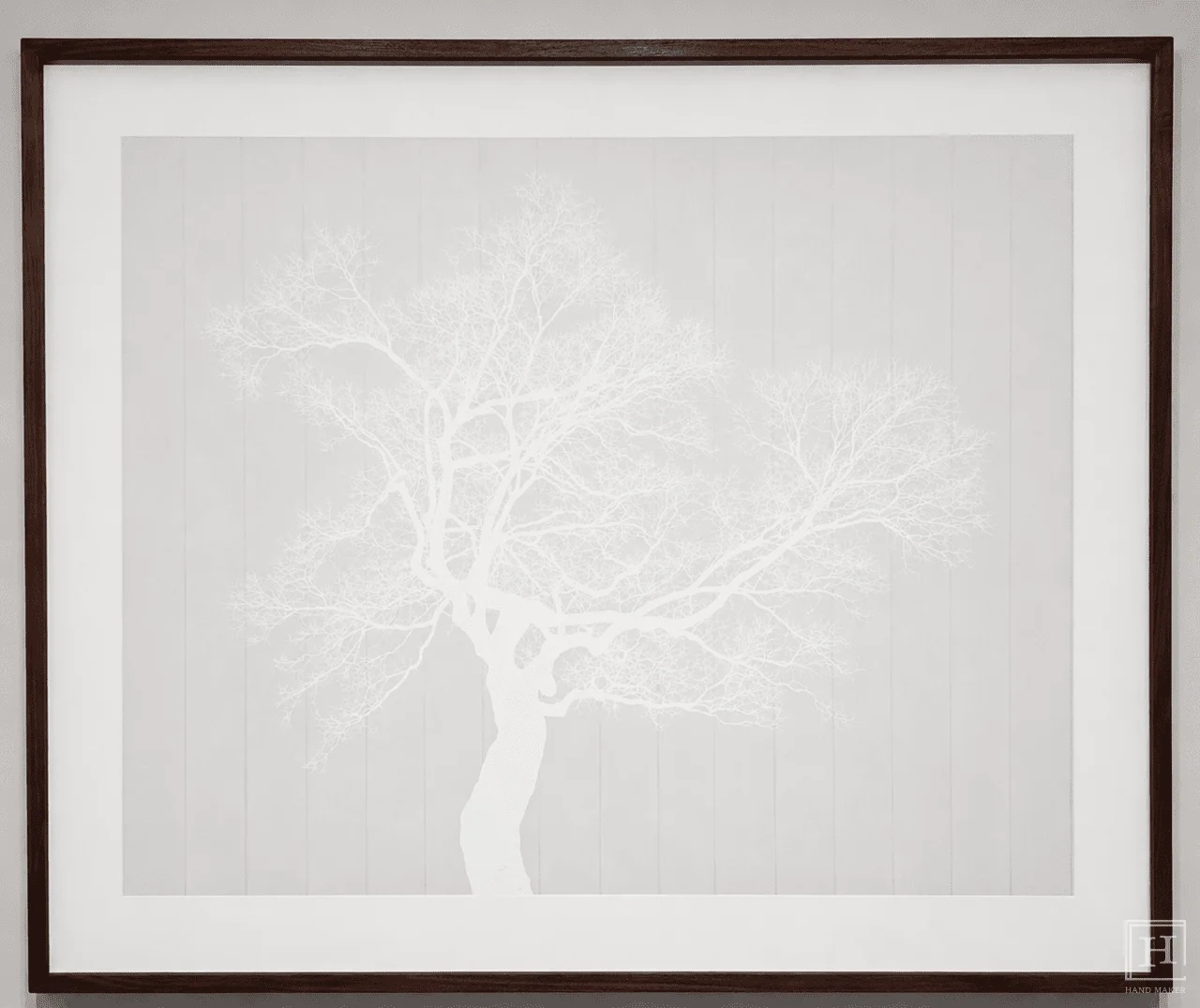
The method of reenactment does not stop at merely creating new landscapes. In the series, one can also see works where only the shape of a tree remains. Instead of showing an actual tree along with the surrounding landscape, he reveals everything from the trunk to the slender branches in white, creating an image different from reality. The shape of the tree left in the place where the surrounding landscape has disappeared reveals its presence even more vividly.
If reenactment is a way of revealing existing objects in a new way, then reenactment is a method of creating images that did not exist in reality by transforming objects or staging new scenes.
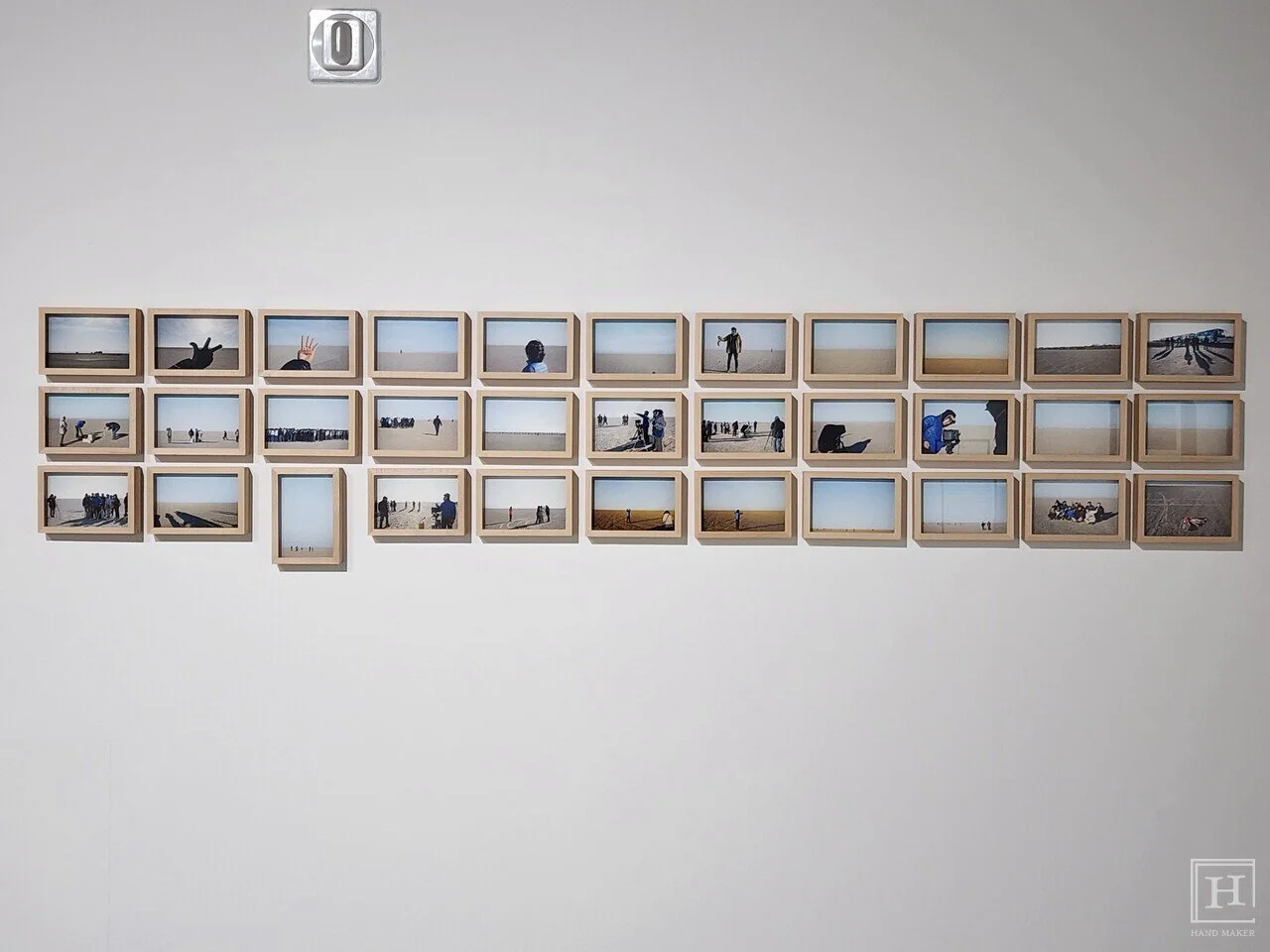
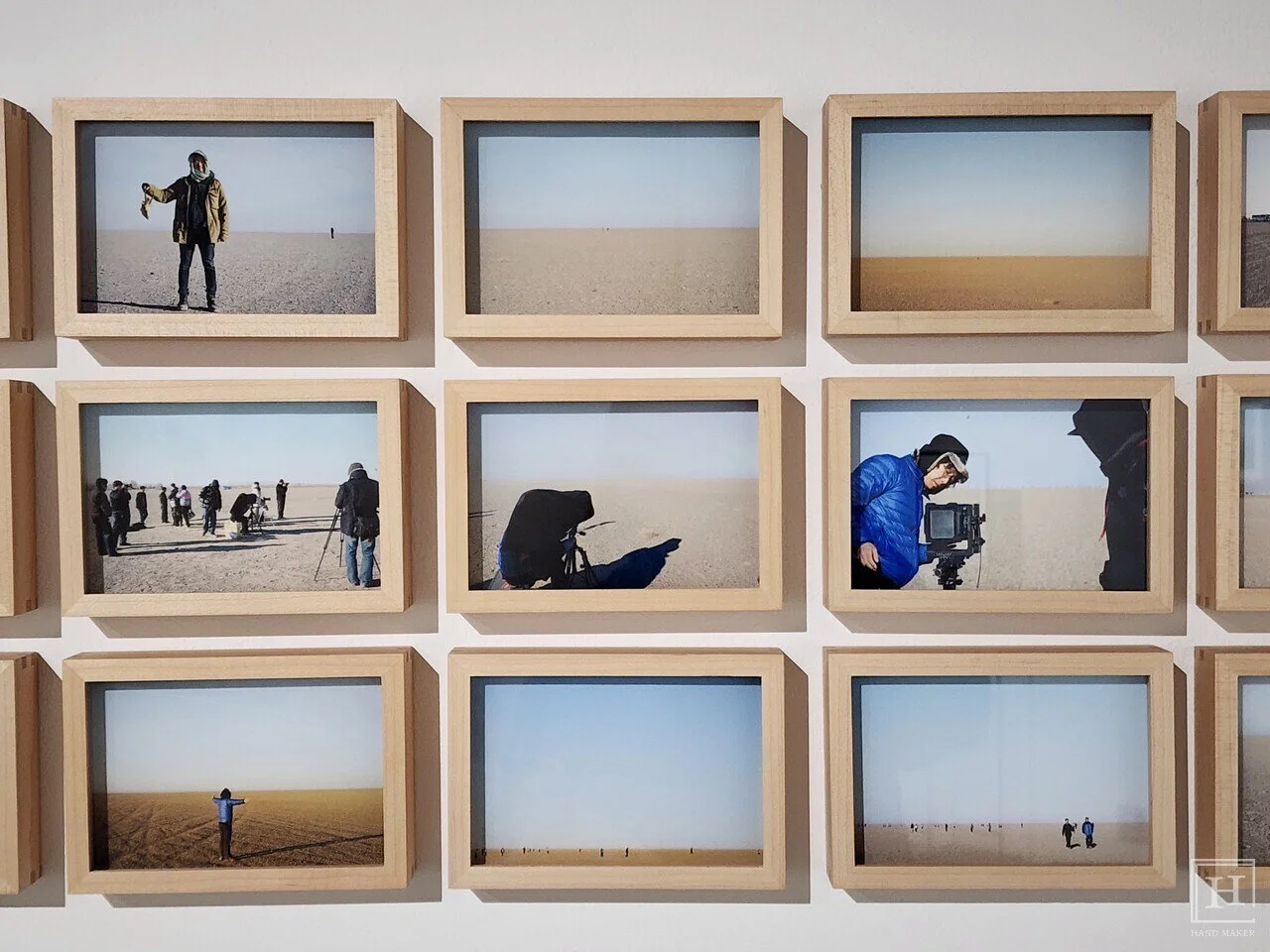
To create unrealistic landscapes, the efforts of many people besides the artist were required. In the view photos taken during the work, one can see various staff members gathered in the desert, installing equipment and preparing for the shoot. It makes one realize the paradoxical fact that creating a scene that does not exist in reality requires the realistic labor and collaboration of numerous people.
An existence revealed by covering and erasing
- Beyond (Hyper-reality) and Between (Inter-reality)
Artist Lee Myung-ho's experiments go one step further. This time, he covers or erases the subject. Just because something has disappeared from sight does not mean its existence has vanished. The artist explores the paradox of revealing existence through the invisible, using the concepts of 'Between (Inter-reality)' and 'Beyond (Hyper-reality)'.
These two concepts start from the boundary between reality and unreality. The moment a canvas is placed in an actual existing landscape, part of it is revealed and part of it is covered. However, just because it was not captured in the photograph does not mean that landscape does not exist.
According to the explanation, because a photograph captures an object from a specific point of view, it is difficult to show its complete form through that alone. Through the act of revealing or conversely removing the object, the artist makes us think about the aspects we could not see and what lies behind them.
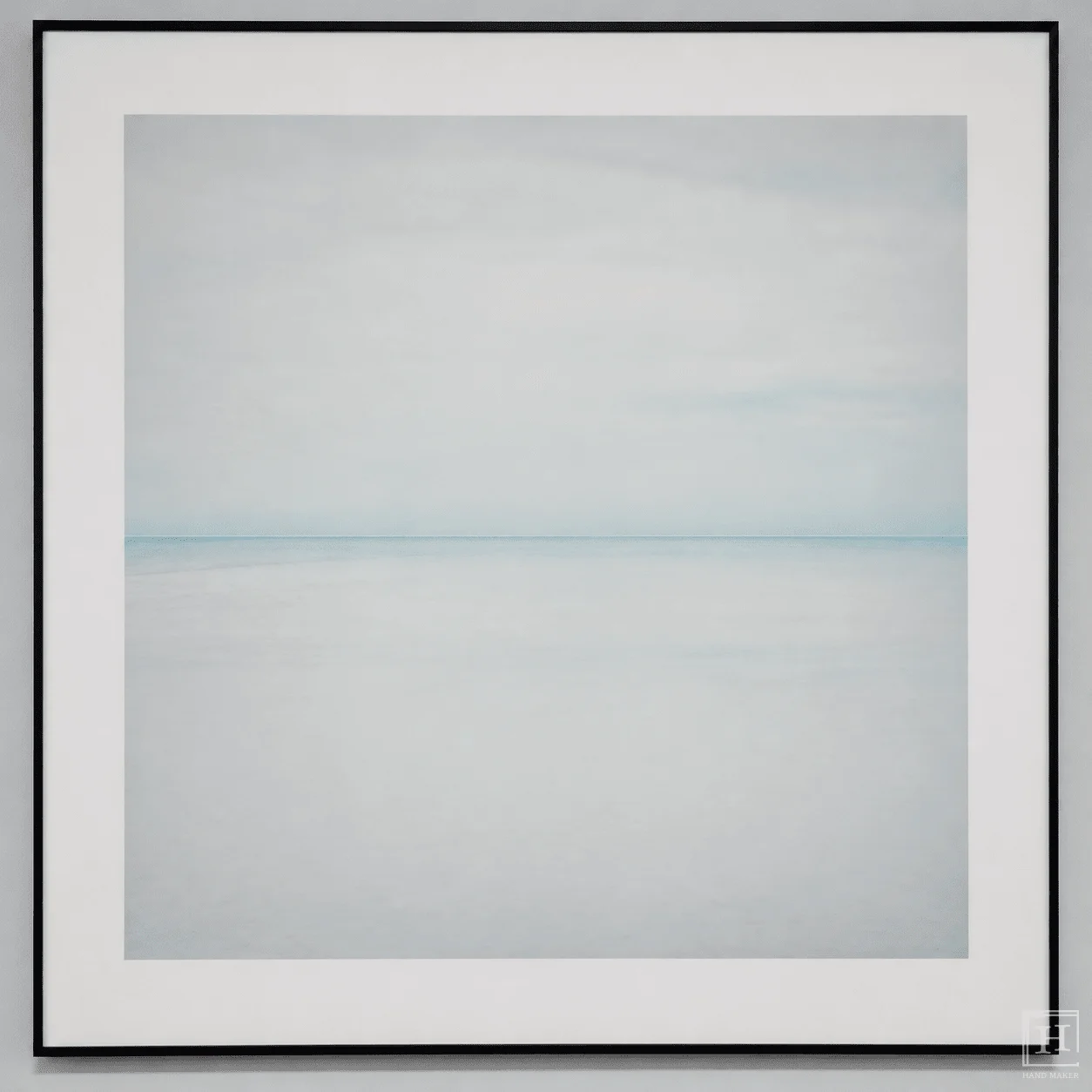
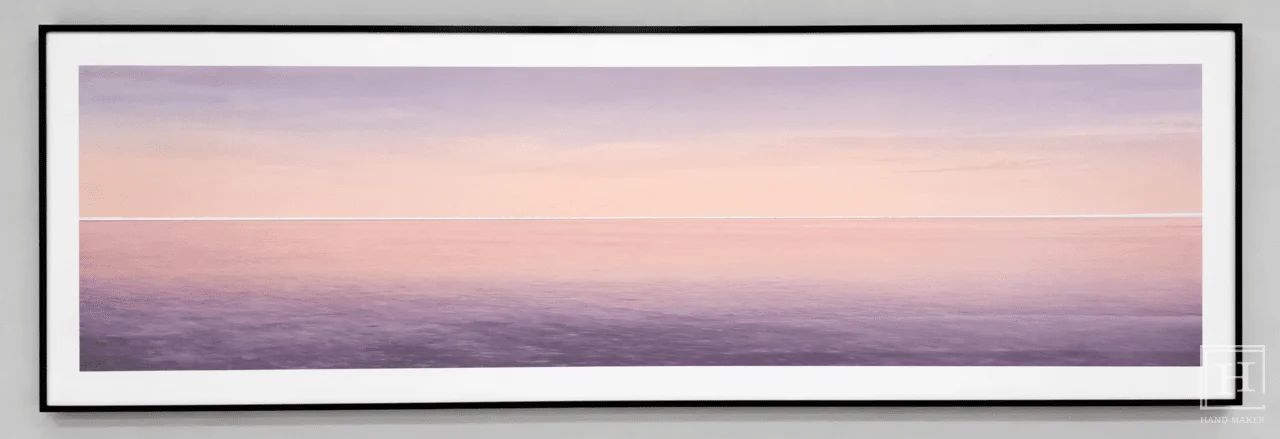
These experiments continue in the method of erasing the landscape within the photograph. In the series, one can see works where part of the horizon, where the sea and sky meet, has been scraped away, making the original landscape faint. It was clearly a landscape that existed there, but through the artist's action, part of it has disappeared.
The interesting point is the fact that the erased area actually catches the eye. What was there that only that part disappeared? Viewers naturally come to recall the landscape that is not visible before their eyes. In this way, the artist makes us think of that existence through the paradoxical act of removing the object.
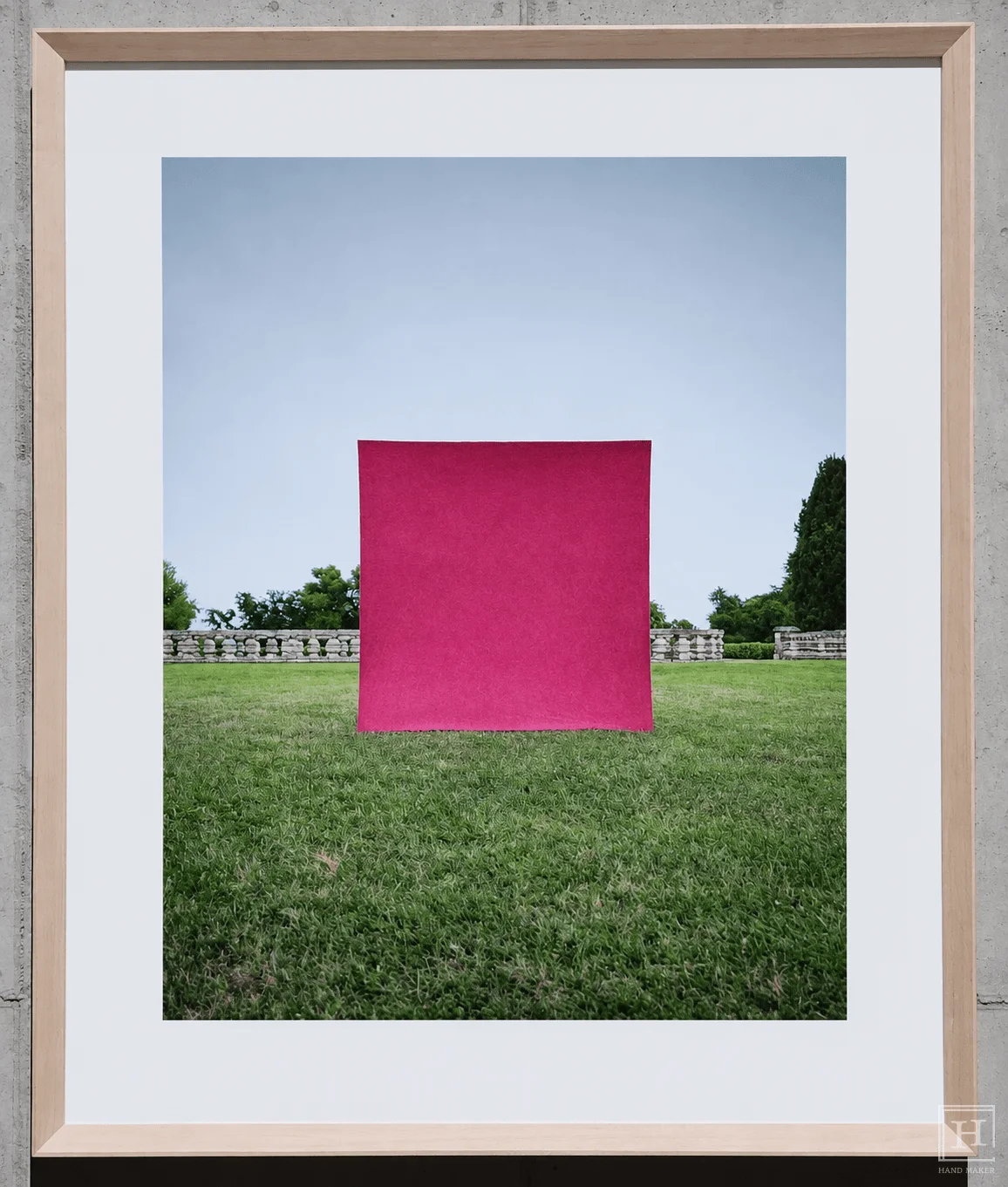
In a work conducted at a winery in France, cloth dyed with actual grape juice was erected to hide part of the landscape. The intense red cloth, reminiscent of red wine, draws more attention than the surrounding scenery, yet one cannot know what lies behind it. Through this act of obscuring subjects, the artist instead evokes curiosity and imagination regarding the unseen space.
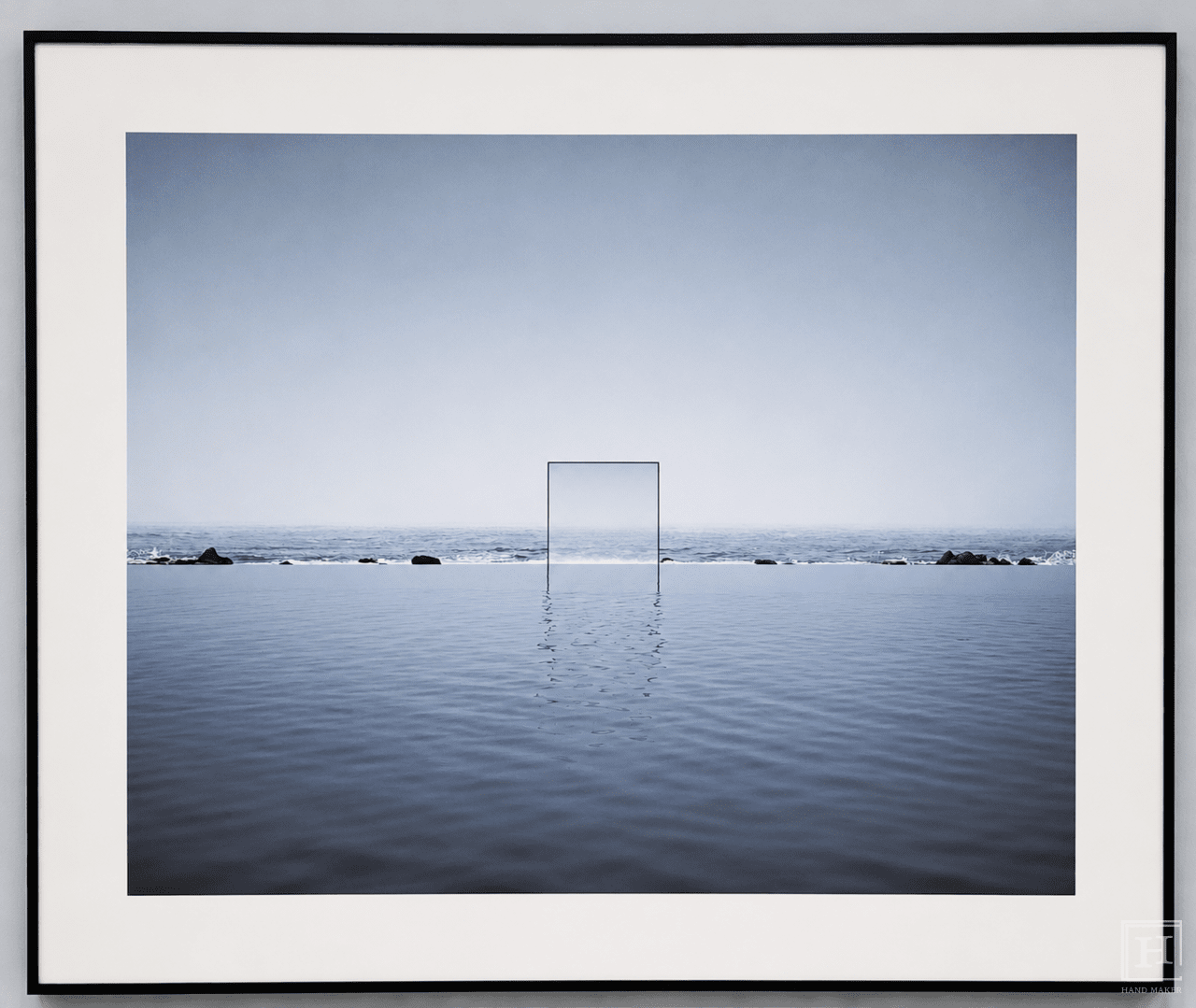
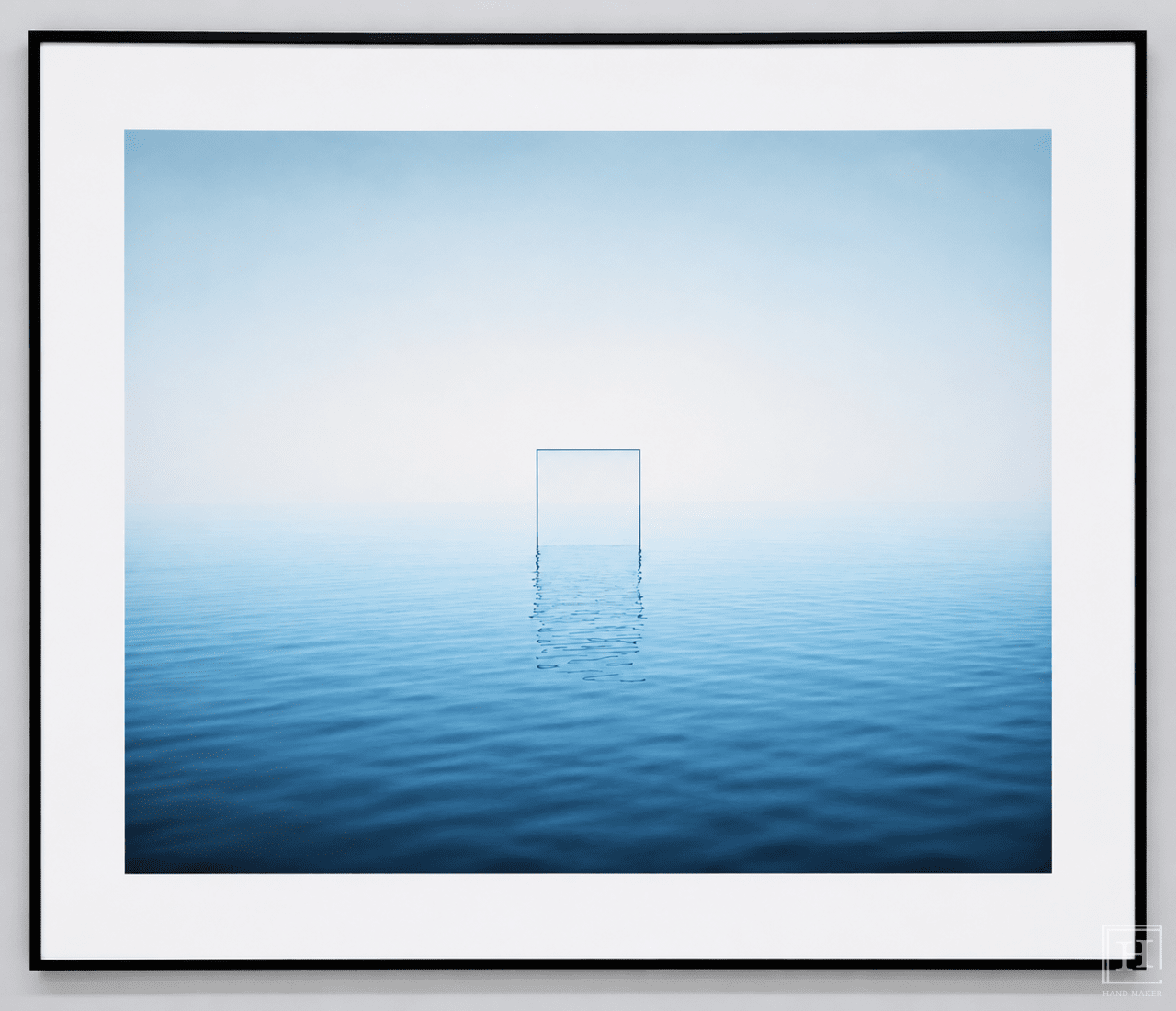
In the 〈Nothing, But〉 series, rectangular canvases are placed within landscapes where the sea and sky meet. While the canvas played the role of making the subject stand out in the previous 〈Tree〉 series, here it instead hides parts of the landscape or creates empty spaces.
An interesting point is the way the canvas harmonizes with the landscape. In some works, the canvas obscures the surrounding scenery, while in others, only the frame remains, allowing the sea and sky to flow naturally within it. It is as if the canvas itself has become part of the landscape.
Long-exposure techniques, where the camera shutter is left open for a long time, were also utilized during shooting. While the fixed landscape and canvas remain sharp, moving objects become blurred or disappear. Through these acts of hiding and emptying, the artist directs the gaze toward the unseen. In that the landscape appears to have nothing, yet leaves room for the feeling that something must exist within it, the word "But" in the title of the work feels even more meaningful.
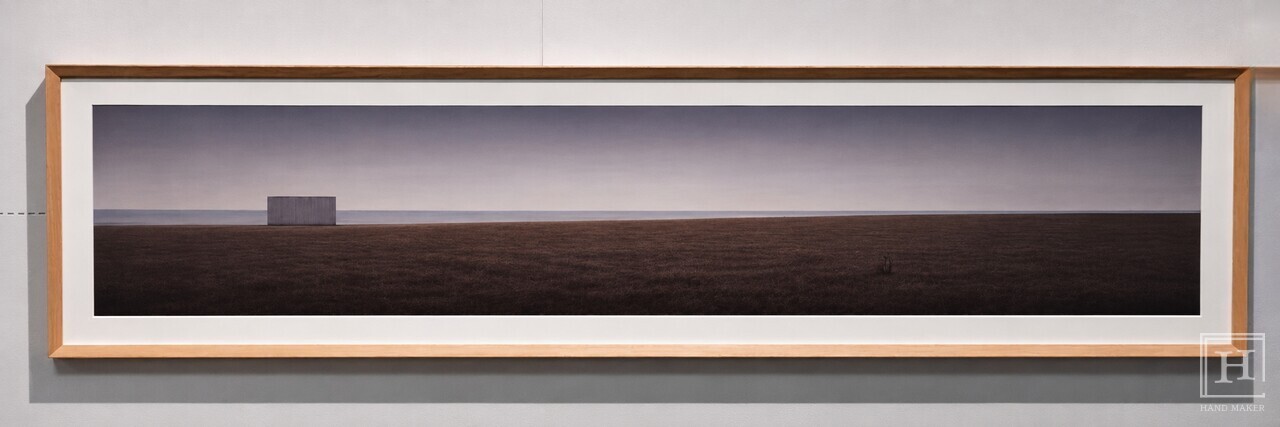
In 〈Nothing, But #1〉, a single canvas is placed within a dim landscape that seems to be settled in twilight. Positioned between the wide-stretching fields and the horizon, the canvas reveals a strange presence while harmonizing with its surroundings.
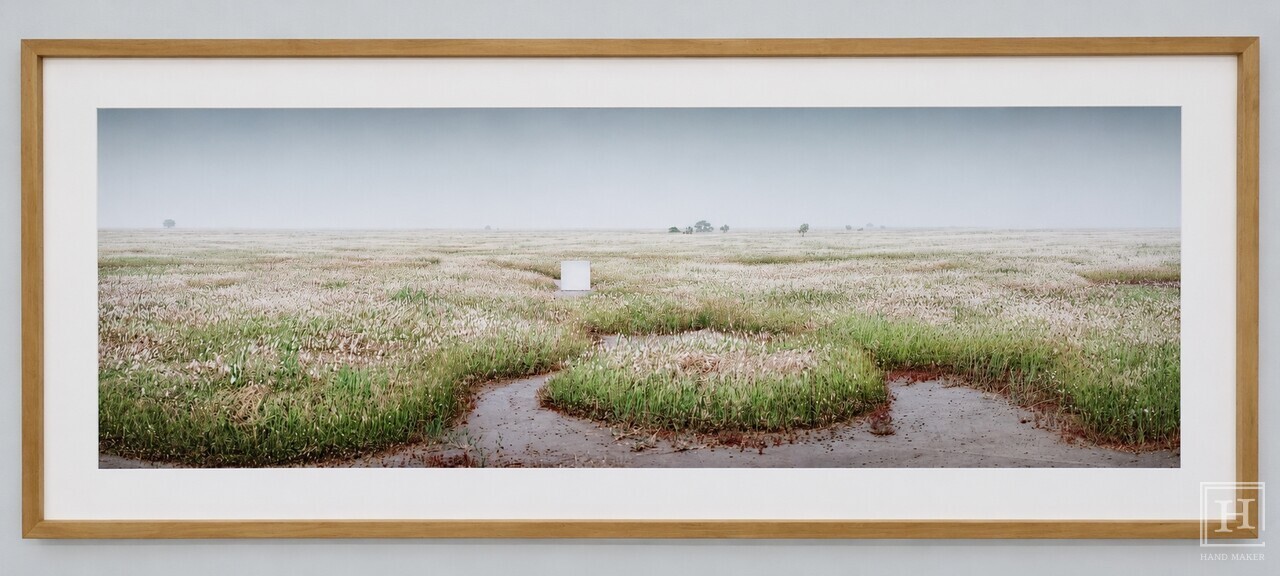
In 〈Nothing, But #6〉, a small white canvas is placed in the middle of a landscape where vast grasslands and waterways blend. Compared to the vast nature, its size is insignificantly small, but its presence captures the eye instead.
Neither work highlights a special subject or creates a new landscape. While the canvas hides part of the landscape, it harmonizes with the surroundings, appearing as if it has become a landscape in itself. The "Nothing" canvas becomes part of a scene that "But" clearly exists there. This appearance brings to mind the concept of "Inter-reality (between)" mentioned by the artist.
What does photography show, and what does it tell?
- Untitled and Titled
Artist Lee Myung-ho's 'Photography-Act Project' goes beyond an exploration of the photographic medium itself and expands into social realms such as history, environment, and community. The artist categorizes this into the concepts of 'Untitled' and 'Titled'.
This interest did not arise suddenly at some point. According to the museum's explanation, the artist has continued various experiments based on a conceptual framework conceived since the early stages of his career. The work that once newly revealed subjects in nature has gradually expanded to work that illuminates the history and memories preserved in cultural heritage, as well as the lives of regions and communities facing the climate crisis.
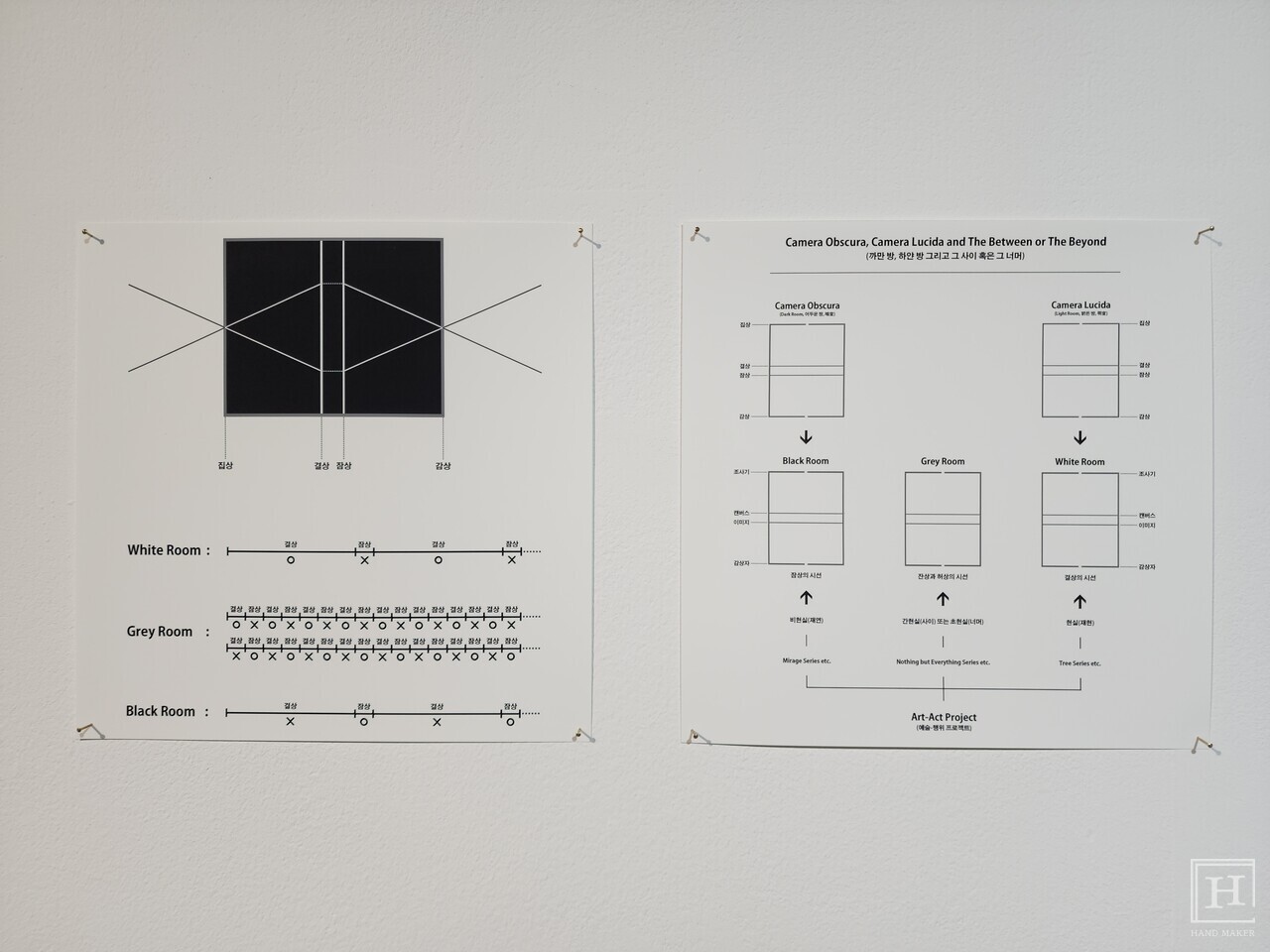
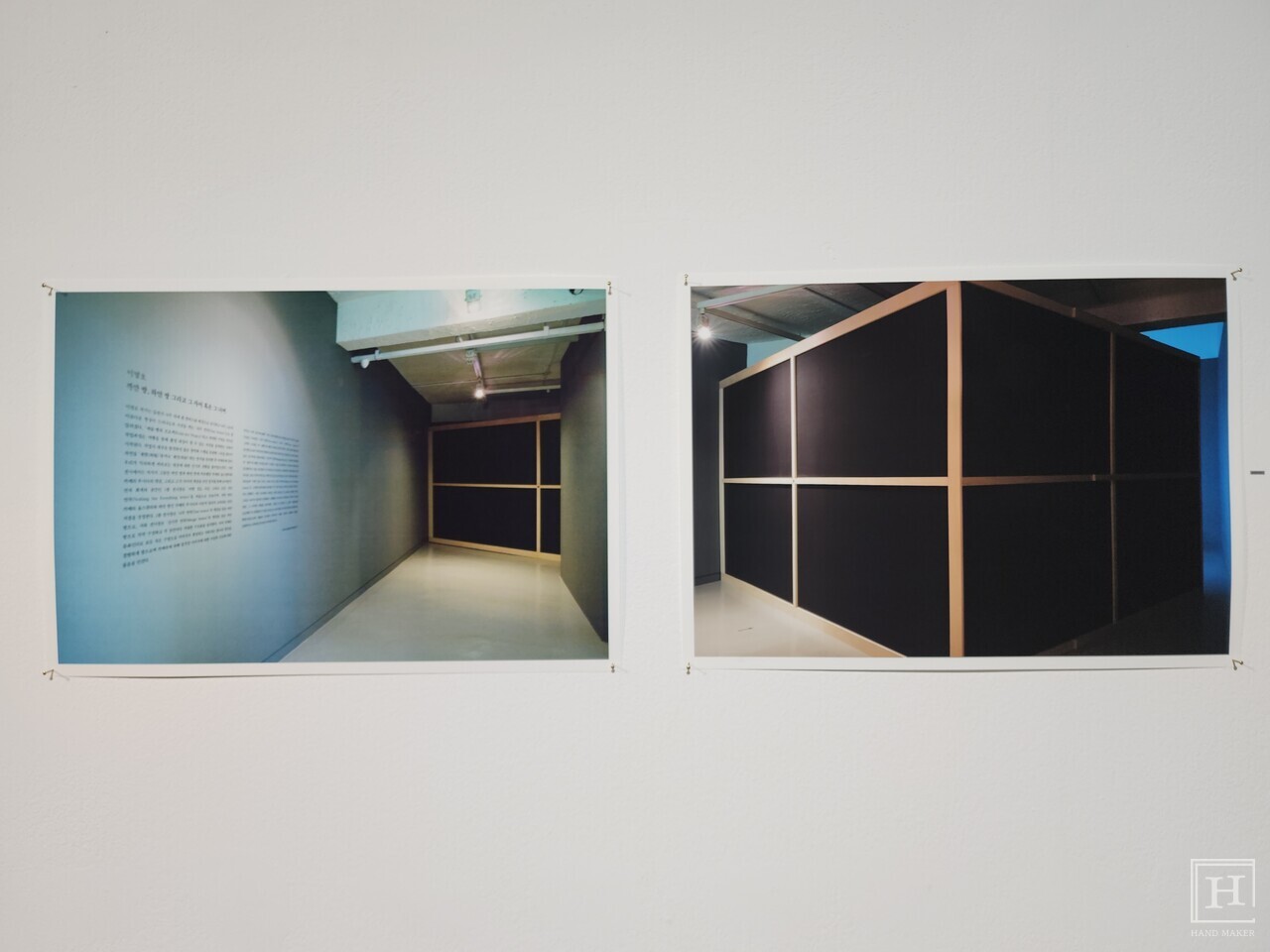
In the conceptual diagram, ‘UN-TITLE’ is the realm that explores the possibilities of the medium of photography itself. It experiments with how much photography can capture reality as it is, and what changes the act of revealing or concealing subjects brings to a photograph.
Such experiments can also be found in the 2017 solo exhibition 《Black Room, White Room, and Between or Beyond》 held at the Savina Museum of Contemporary Art. At that time, the artist posed questions regarding the principles of photography and ways of viewing images through installation works utilizing the principles of the camera obscura. In this exhibition, traces of these long-standing experiments can be observed through the conceptual diagrams and work materials from that period.
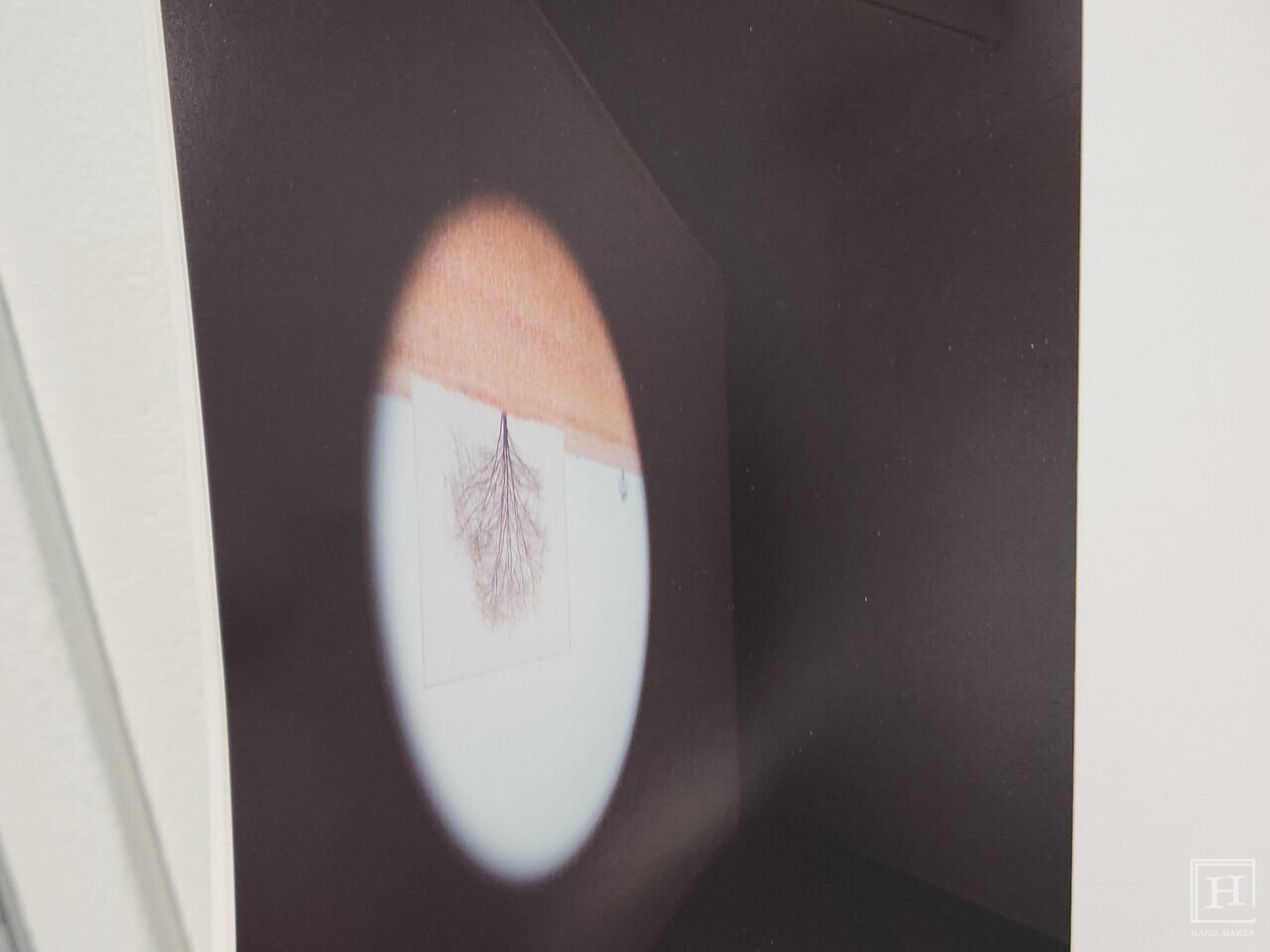
According to the explanation from the curator, the exhibition at that time was divided into sections such as a black room and a white room, and visitors had to view the works through small holes pierced in the walls. Because the principles of the camera obscura were utilized, it is said that images sometimes appeared upside down. While it might have been a somewhat unfamiliar experience for visitors, it is meaningful in that it expanded the act of directly experiencing the principles of photography and viewing the works into an artistic experience.
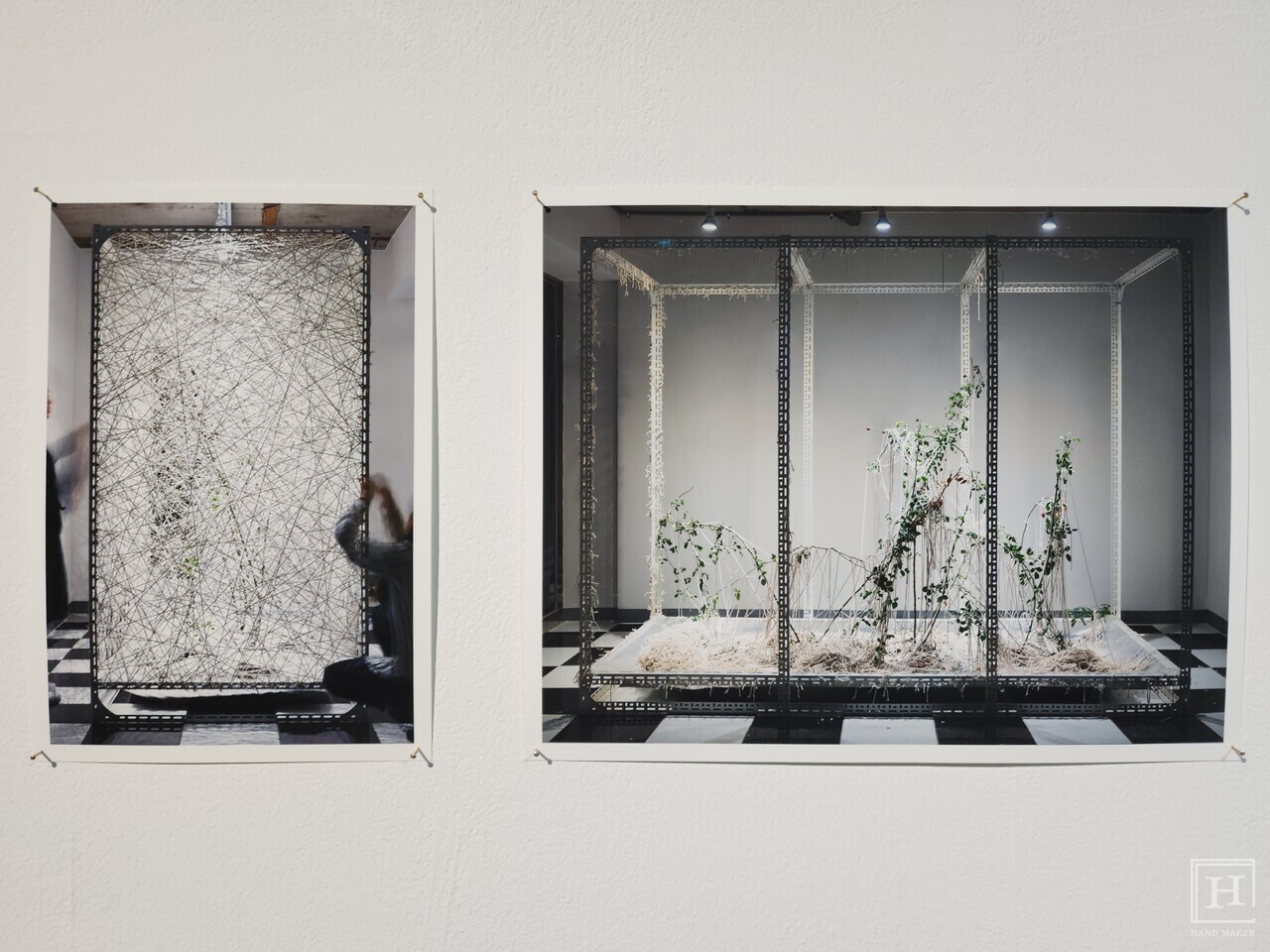
〈Un(not) Named_Jagalmadang #1〉 shows work conducted in Jagalmadang, Daegu, which has transformed from a former prostitution district into a cultural space. The artist densely intertwined white threads like a spiderweb within a rectangular structure and planted thorny climbing roses inside.
The roses reveal themselves through the threads, but they are not fully visible. As time passes, the flowers wither, but the stems continue to grow by finding gaps between the threads. This appearance evokes the lives of the women who lived here in the past. At the same time, by exploring the relationship between the visible and the invisible through the act of concealing and revealing subjects with thread, it shows that experiments with the photographic medium can also be connected to social meaning.
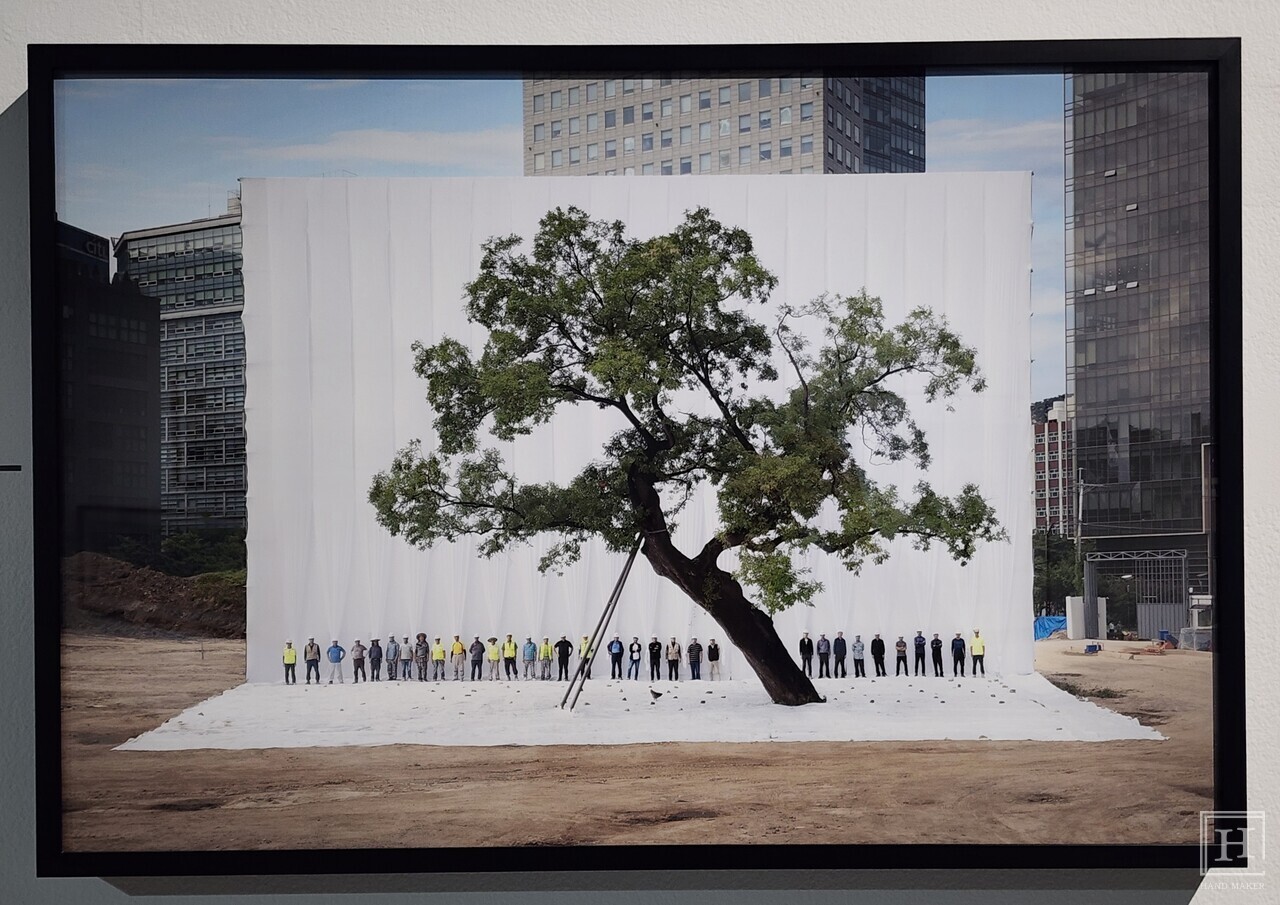
‘TITLE’ is the realm that applies these modes of expression to social discourse. Moving beyond simply whether a work has a title or not, it uses photography to tell specific histories and social issues.
The 〈Heritage〉 series, which illustrates this well, is work connected to the restoration project of Seonwonjeon Hall at Deoksugung Palace. Seonwonjeon is a space that housed the Eojin, the portraits of successive kings, and since its demolition during the Japanese colonial period, its restoration is currently being pursued. While participating in the art fence work at the restoration site, artist Lee Myung-ho focused on a pagoda tree that has guarded this place for a long time. Through the tree, which was once judged to be dead but came back to life, he retraces the history of the vanished palace and the memories of the city.
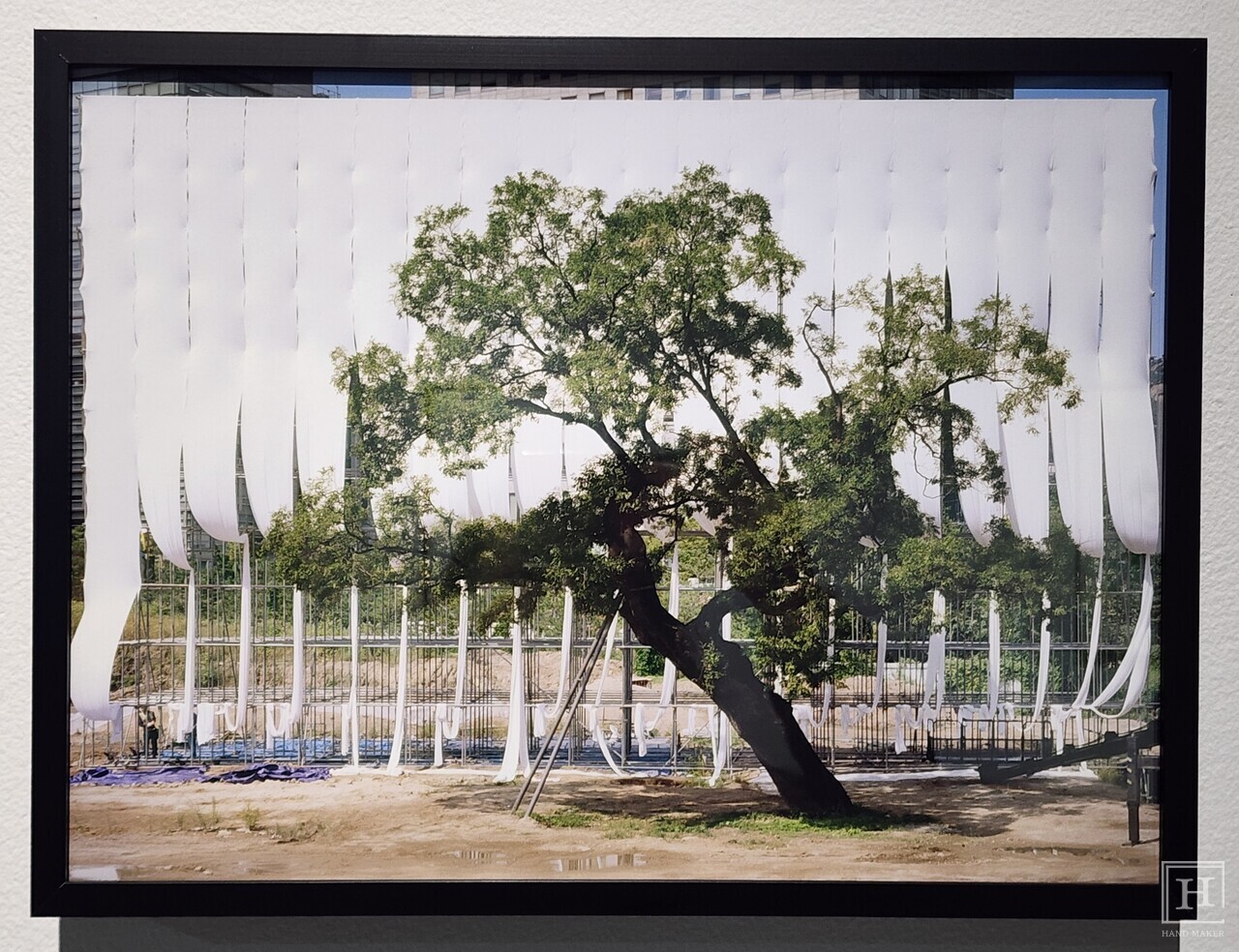
In 〈Work Scene; Heritage #7_Workers〉, one can see the appearance of workers standing side by side, and in 〈Work Scene; Heritage #7_Goers〉, one can see a scene where the installed canvas is stretched out long as if being removed.
The two photographs focus on the production process, which is not easily revealed in the finished works. They present as the protagonists of the photograph the people who helped set up and remove the massive canvases, as well as the traces of work they left behind. This is meaningful in that it prompts one to look back not only at cultural heritage but also at the efforts of the people who worked together to newly reveal its existence.
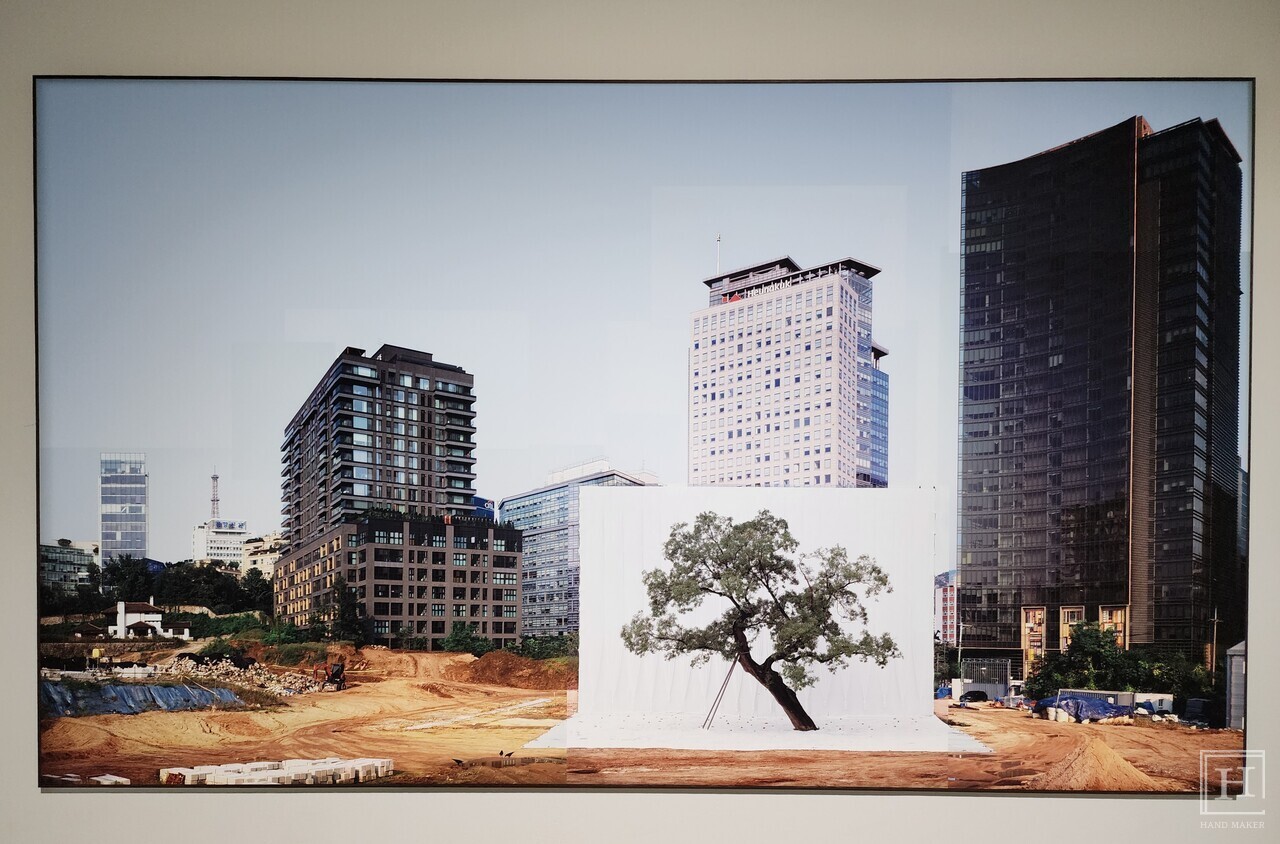
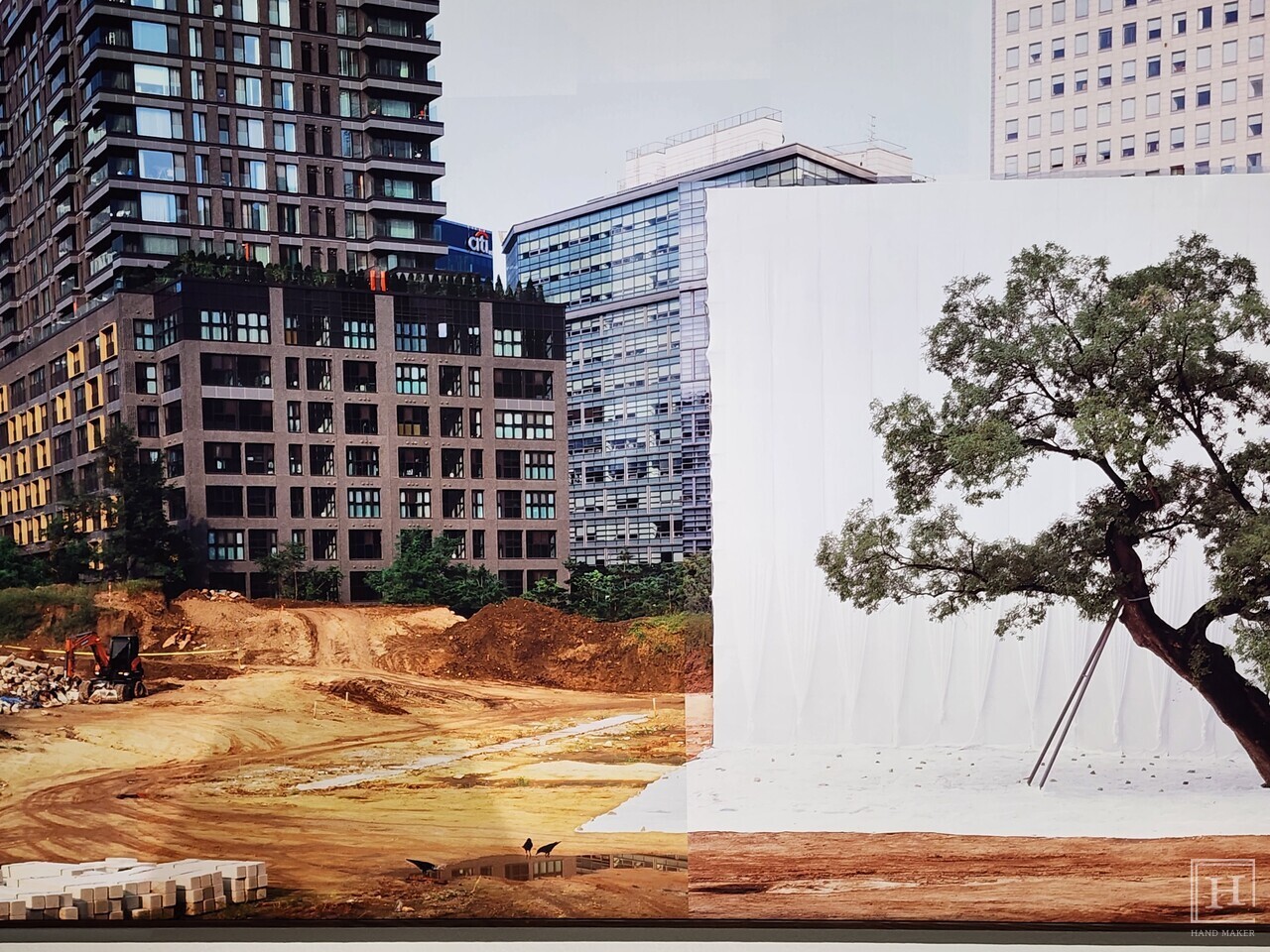
This work is reconstructed into a single scene by layering photographs taken from various angles over several days after the installation of a screen. Because of this, the perspective or tilting of buildings that appears when looking up from below is reduced, and landscapes from different viewpoints appear to unfold on a single plane.
From the restoration site of Seonwonjeon Hall at Deoksugung Palace, situated between tall buildings, to the Chinese scholar tree that asserts its presence in the middle of it all. Traces of the past, the current cityscape, and the space to be revived through restoration coexist in one frame. As different aspects of time and space overlap, it seems to show the various layers of history held within the city.
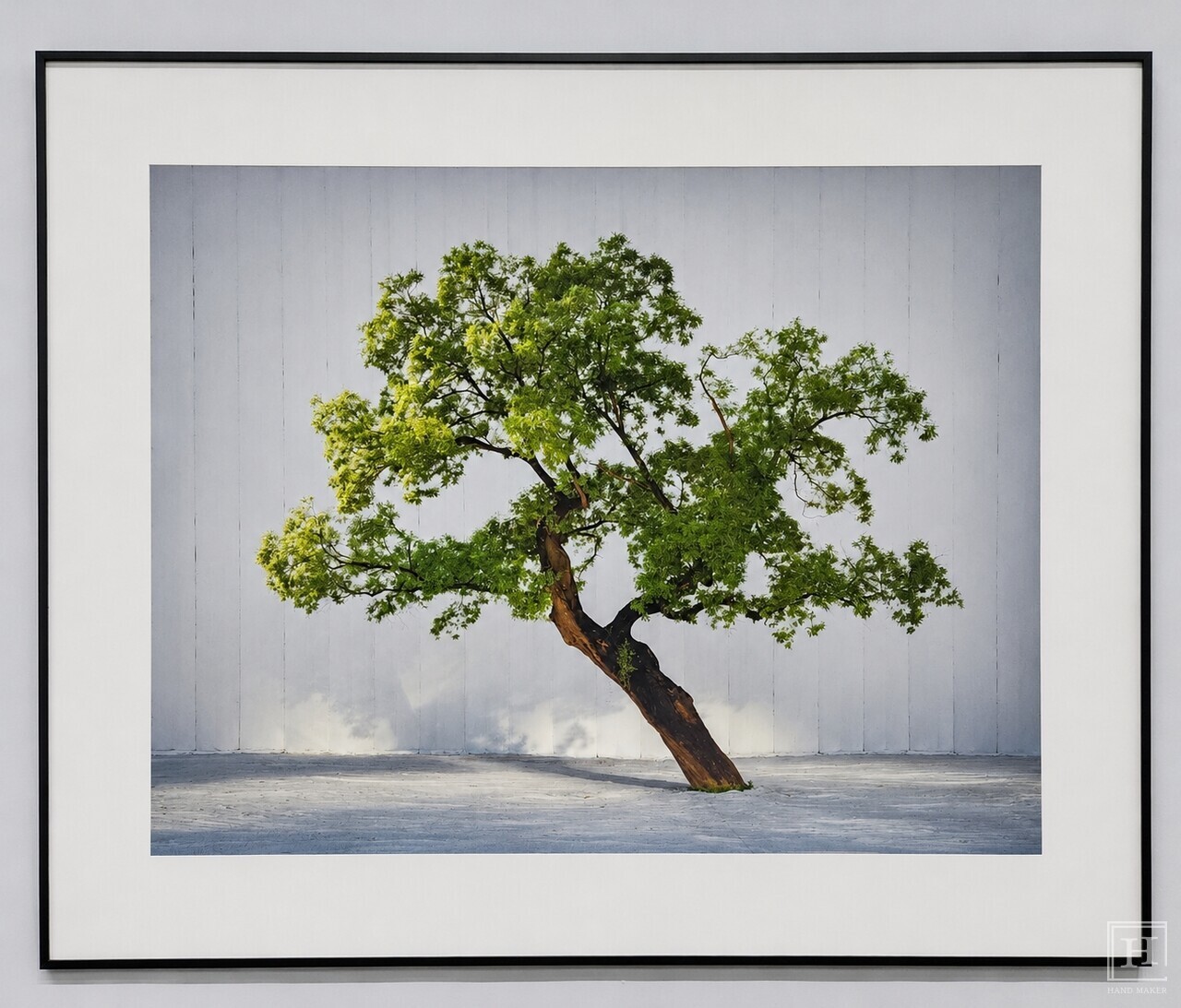
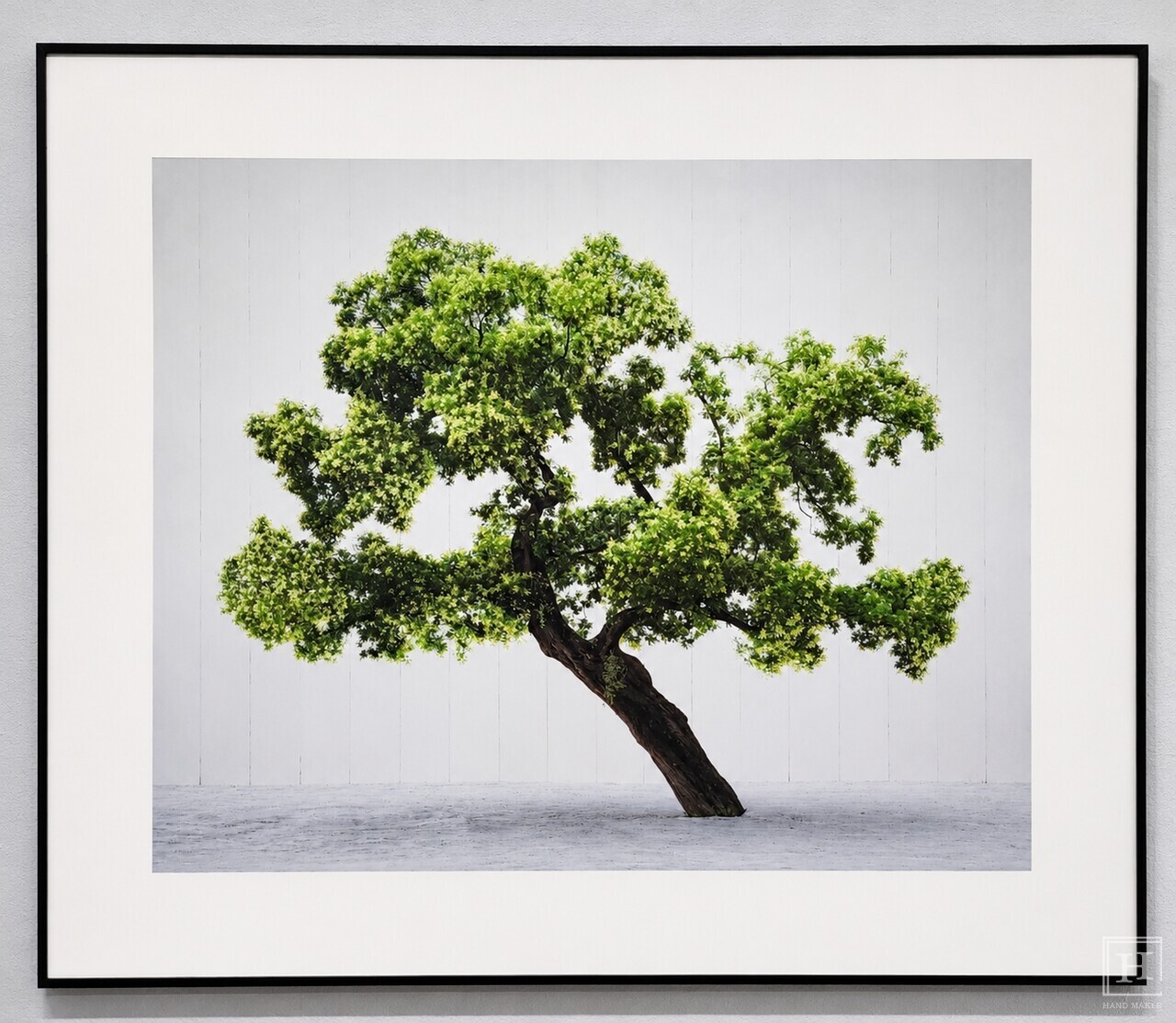
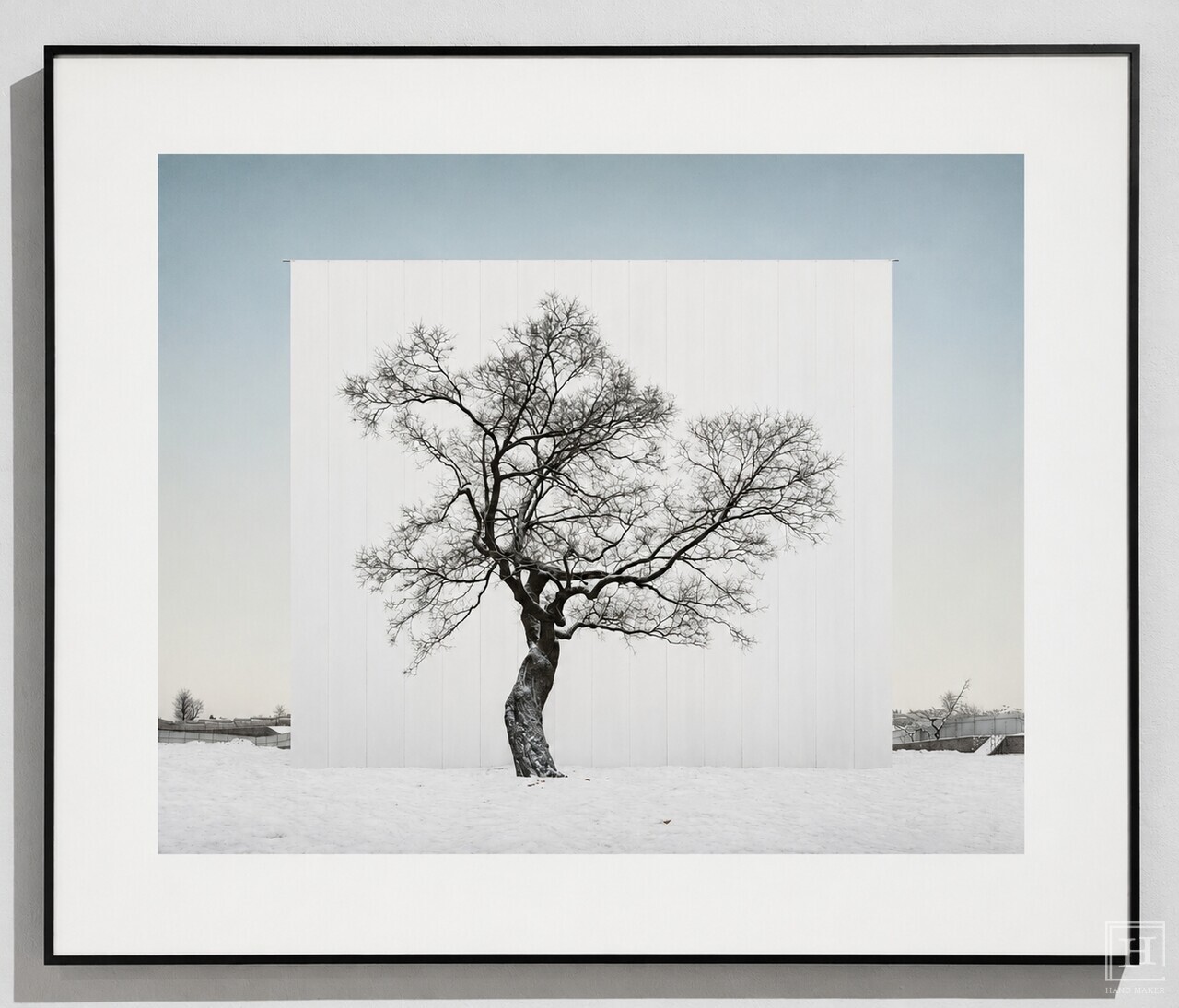
In the 〈Heritage〉 series, one can also observe the changing appearance of the Chinese scholar tree in the Seonwonjeon Hall area of Deoksugung Palace according to the seasons. In winter, it reveals bare branches, but as the seasons change, light green leaves sprout and are soon covered in lush greenery.
While using a method of 'representation' by placing a canvas behind the same tree to highlight its existence, it does not stop at simply showing the external appearance of the tree. The sight of the Chinese scholar tree, which was once judged to be dead but has come back to life, brings to mind the vitality and the passage of time that has guarded that spot for a long time. In that it reveals even the meaning held by the tree in a space that preserves the history of a vanished palace, it also connects to the concept of 'relics'.
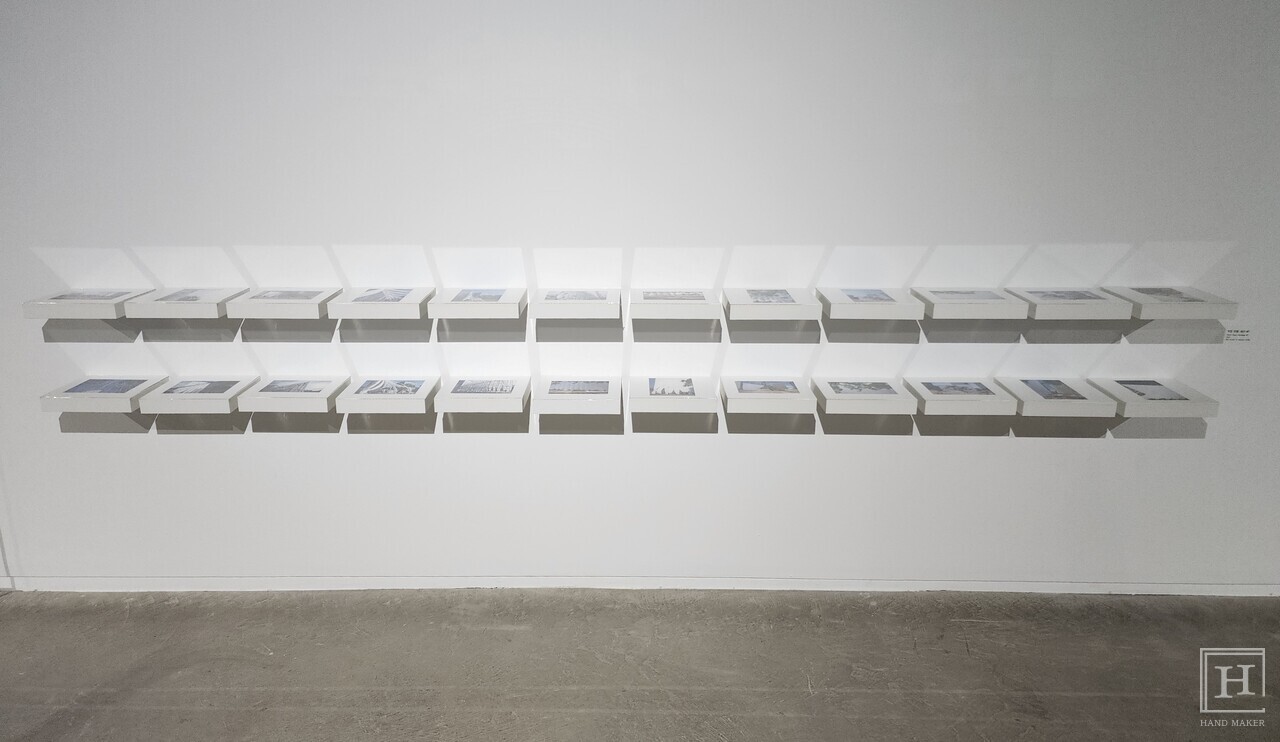
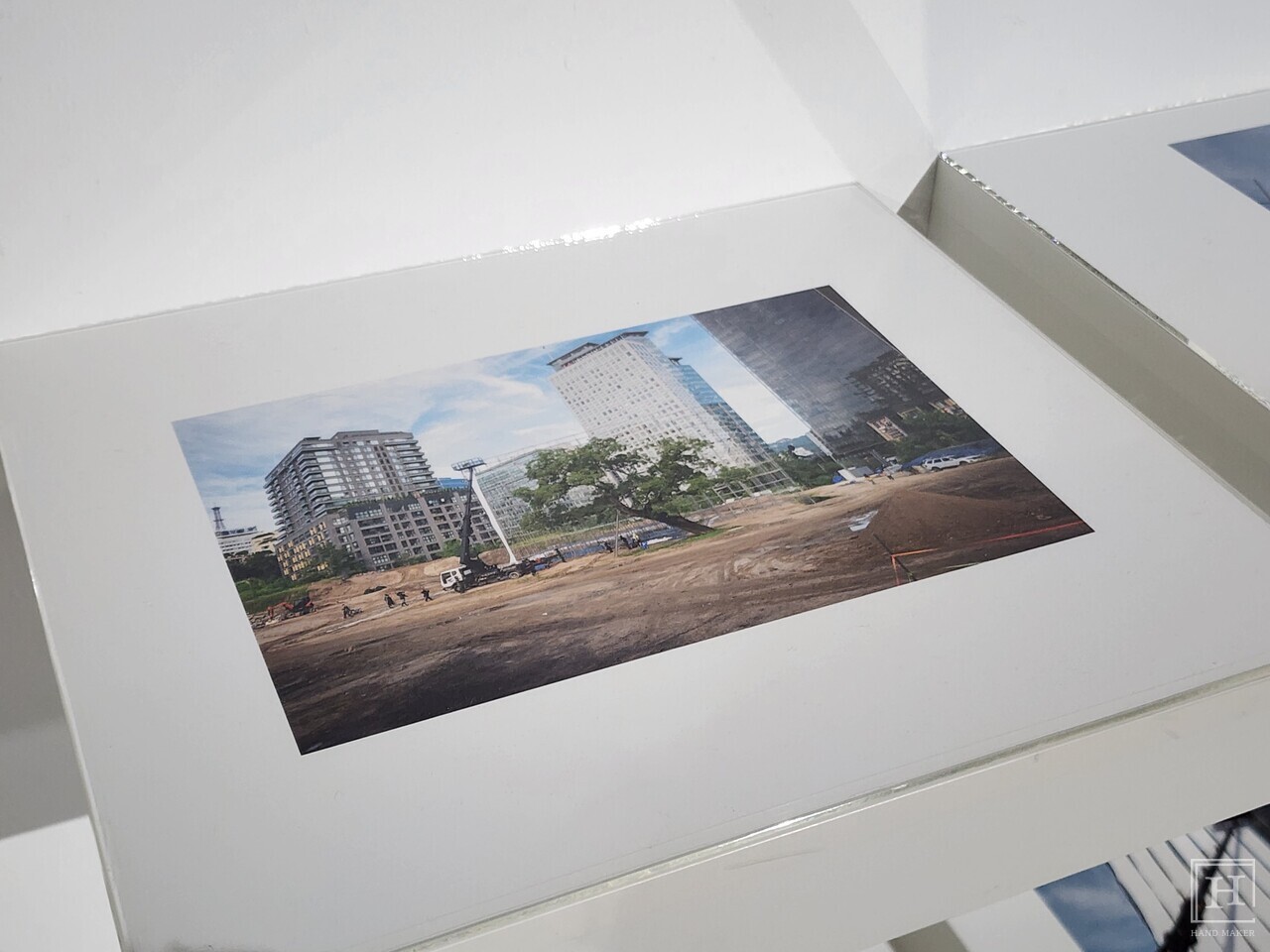
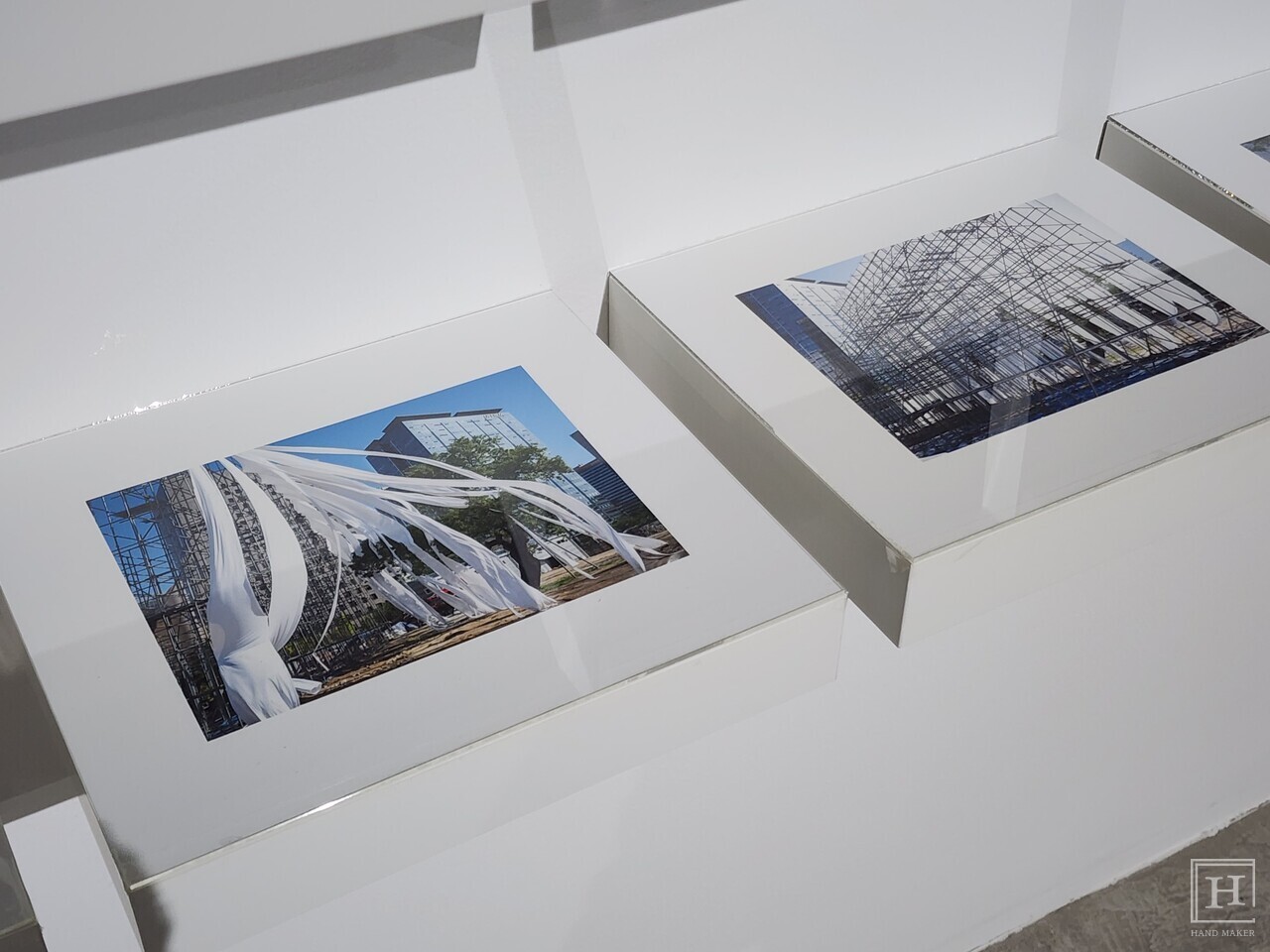
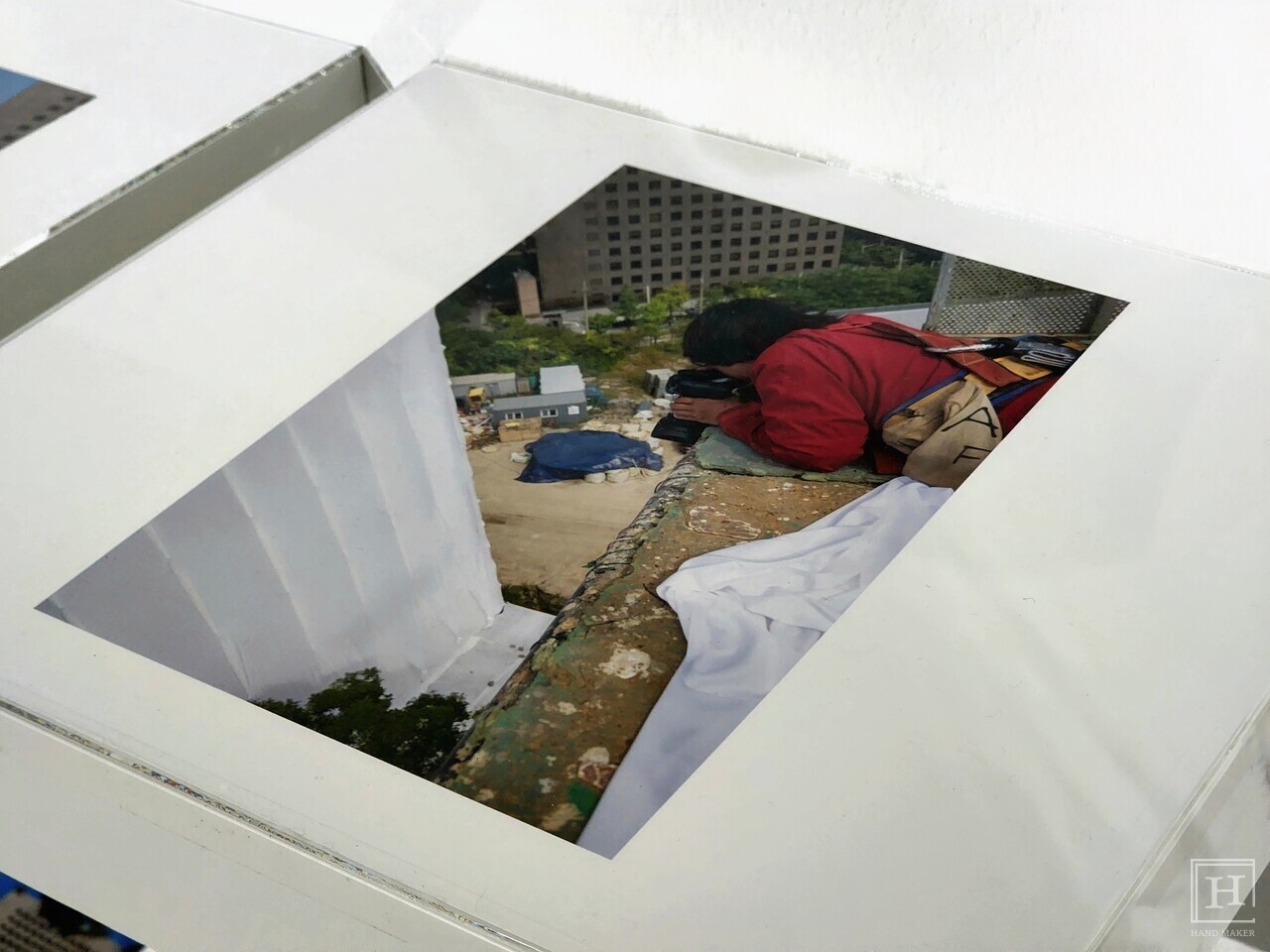
The 〈Heritage〉 series may not be easily understood at first. Curiosity arises from questions such as how an art fence could be installed behind a massive tree. 〈Work View; Heritage #7〉 shows that this project is not merely a task of taking photographs, but a process in which the artist directly intervenes on-site to create a single scene.
It vividly captures everything from the process of erecting massive steel structures and installing white cloth to the sight of filming while climbing to high places. One can glimpse the immense effort and collaboration of many people that were not easily revealed in the finished photographs. This part demonstrates that the entire process of completing a single photograph is part of what the artist calls the ‘Photography-Act Project.’
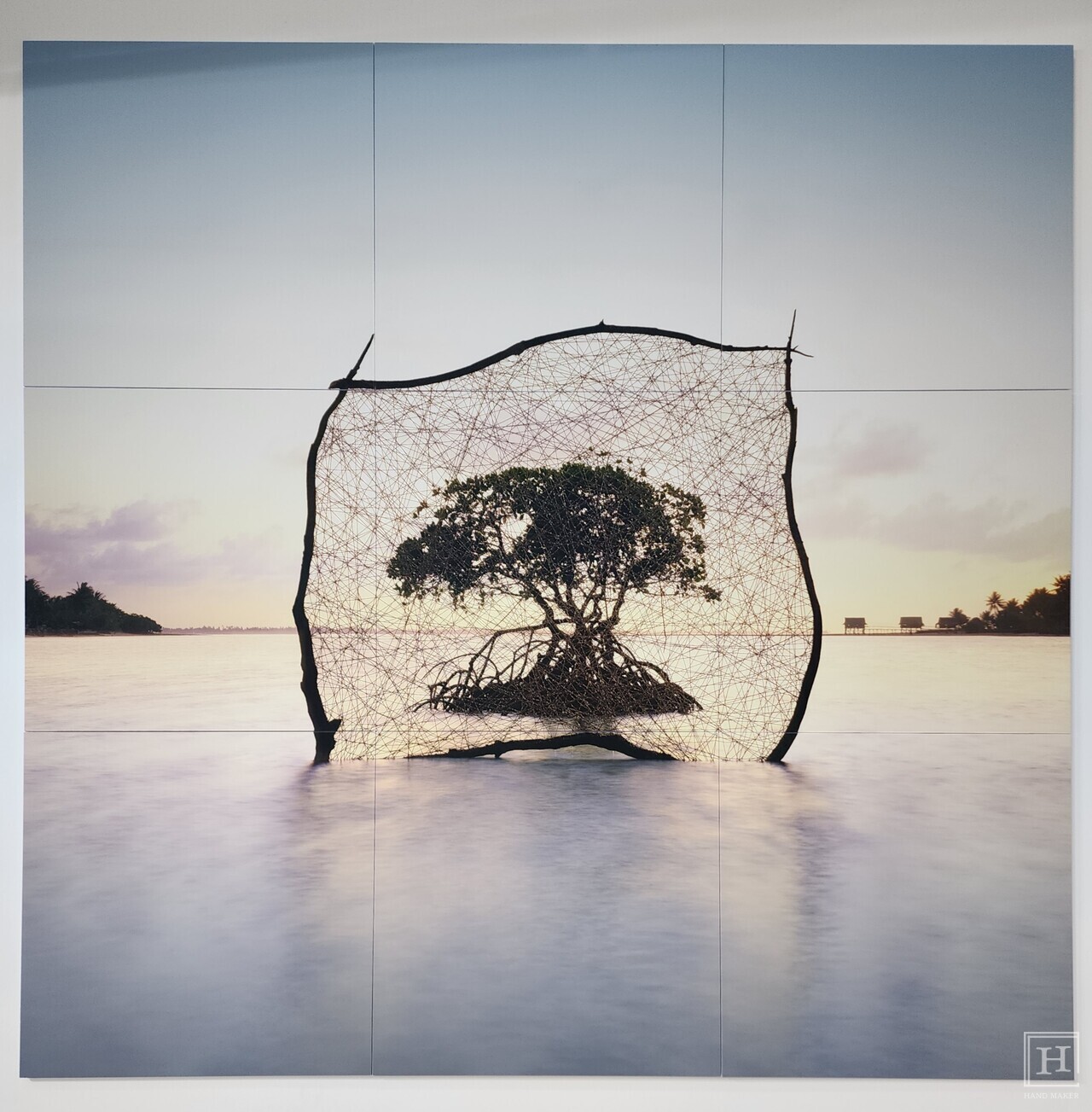
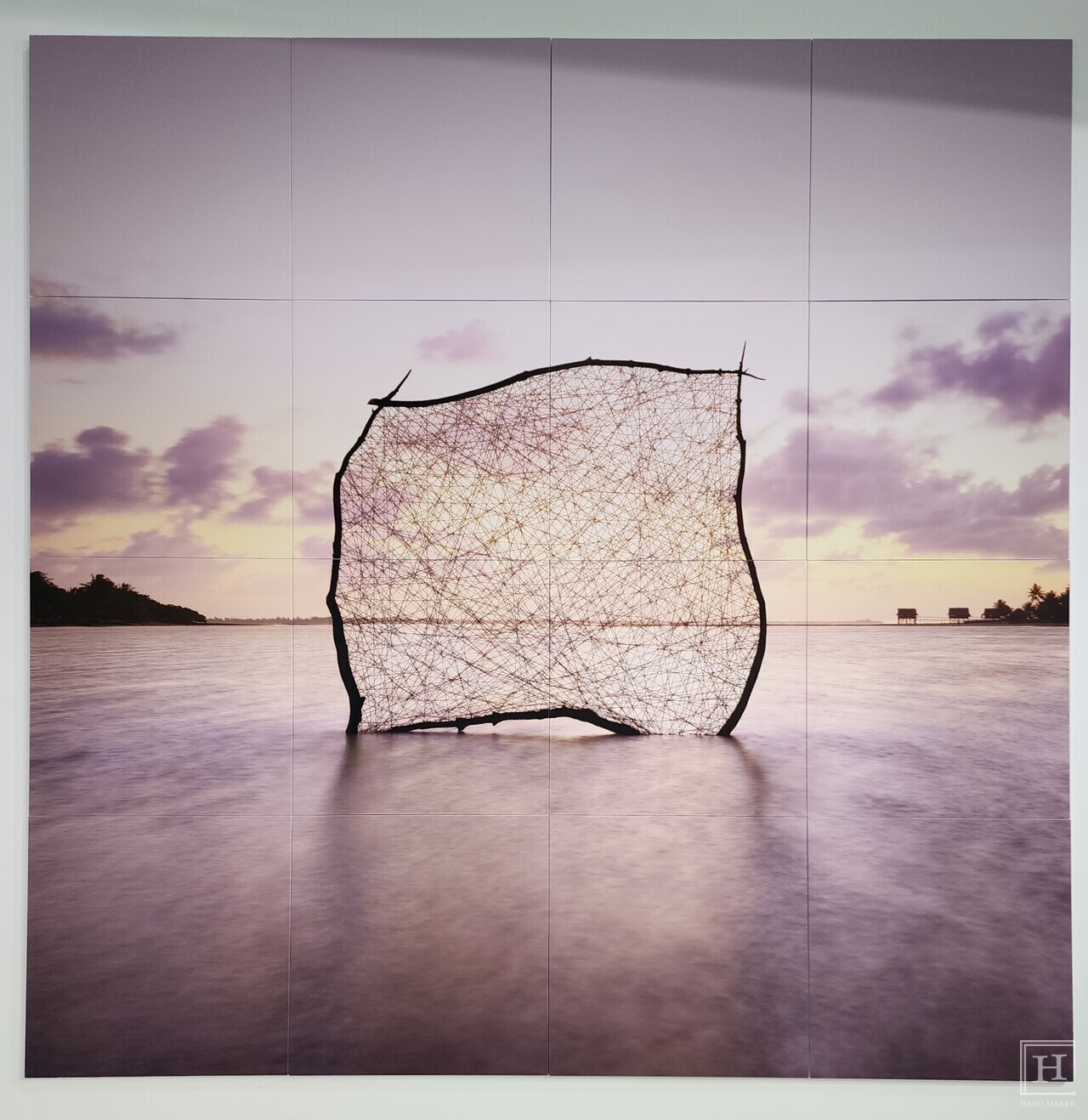
The most recent work, the 〈Kiribati〉 series, is a project that captures the reality of a Pacific island nation whose habitat is being threatened by the climate crisis. The artist collaborated with local residents to install a curtain woven from thread and photographed the mangrove trees situated in front of it.
The interesting point is that the same landscape was expressed differently. In 〈Kiribati #1_1_1〉, the mangrove tree is clearly revealed in front of the curtain, but in 〈Kiribati #1_1_2〉, a scene unfolds where the tree seems to have disappeared.
The space where the tree that once existed before one's eyes has disappeared brings to mind the nature and habitat that might one day be lost due to the climate crisis. Beyond simply recording nature, it connects to the concept of 'relic' in that it speaks to environmental issues through the contrast between presence and absence.
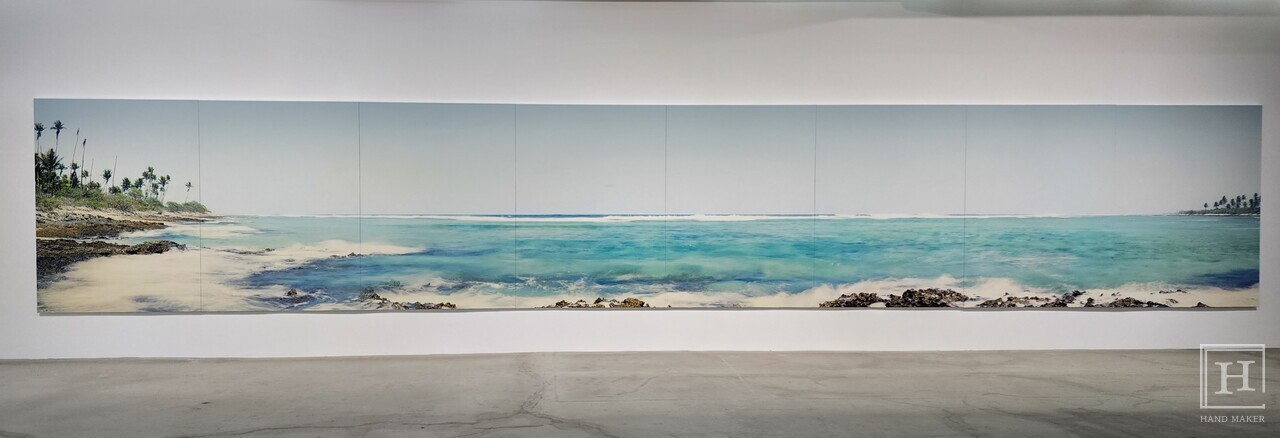
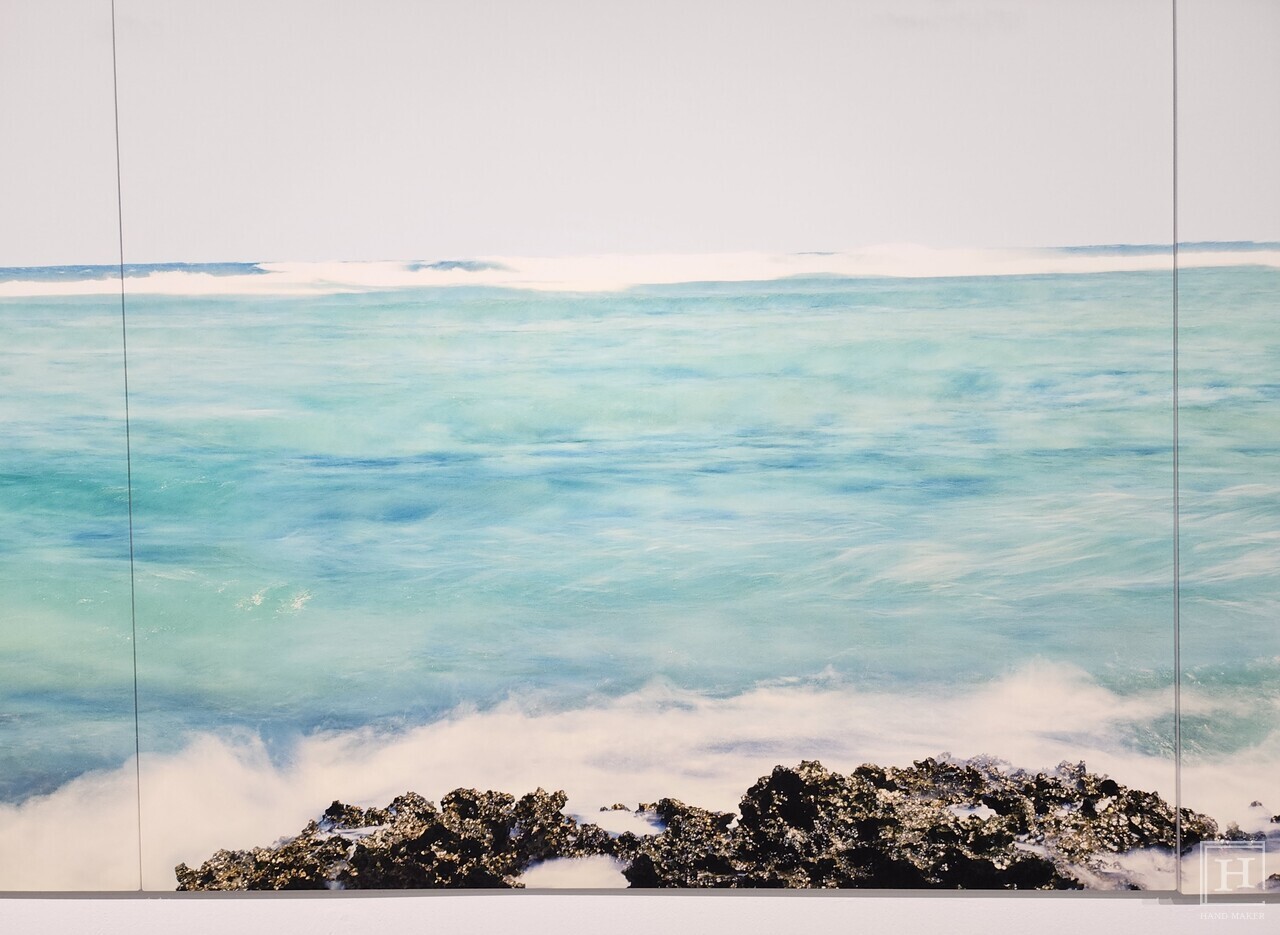
Although it is a view of the work, this particular piece captured the landscape of Kiribati using the camera's long exposure technique without any intervention such as installing separate structures or erasing the subject. As a large-scale installation that fills the museum walls, it creates the illusion of actually being at a Kiribati beach.
Printed on canvas to emphasize the painterly texture of the photograph, this work, with its emerald sea and softly spreading waves, is reminiscent of a landscape painting. However, one cannot simply gaze at that beautiful scenery with admiration. In that it captures the appearance of Kiribati, whose habitat is threatened by climate change, exactly as it is, it makes the beauty of the landscape—which might change or disappear one day—be remembered even longer.
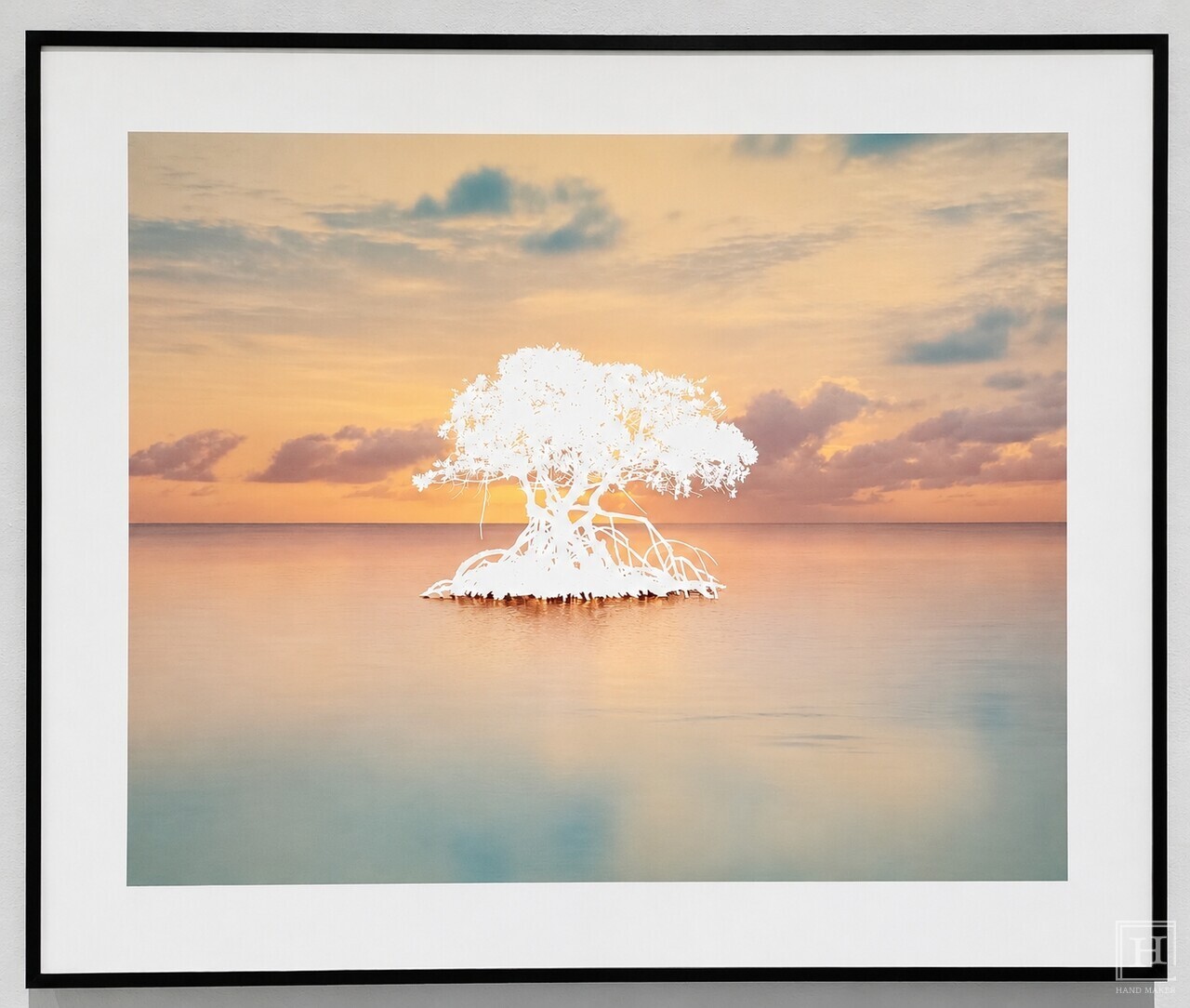
This is a work where, after photographing the mangrove trees of Kiribati, only the shape of the trees in the photograph was scraped away with a knife. After printing using the pigment method which applies ink to paper, the artist delicately erased even the branches and roots using surgical scalpels and utility knives. It is a demanding process where a mistake during work requires reprinting from the beginning, but by making the trees disappear, the artist instead makes their presence even more vivid.
The 〈Kiribati〉 series shows social awareness regarding the beautiful island nation whose habitat is threatened by rising sea levels, and at the same time, it connects to the concept of 'Beyond' where the presence is revealed by lifting the subject. It evokes a strange paradox in that the shape of the trees, which might disappear one day, remains even more clearly in the place where they were erased.
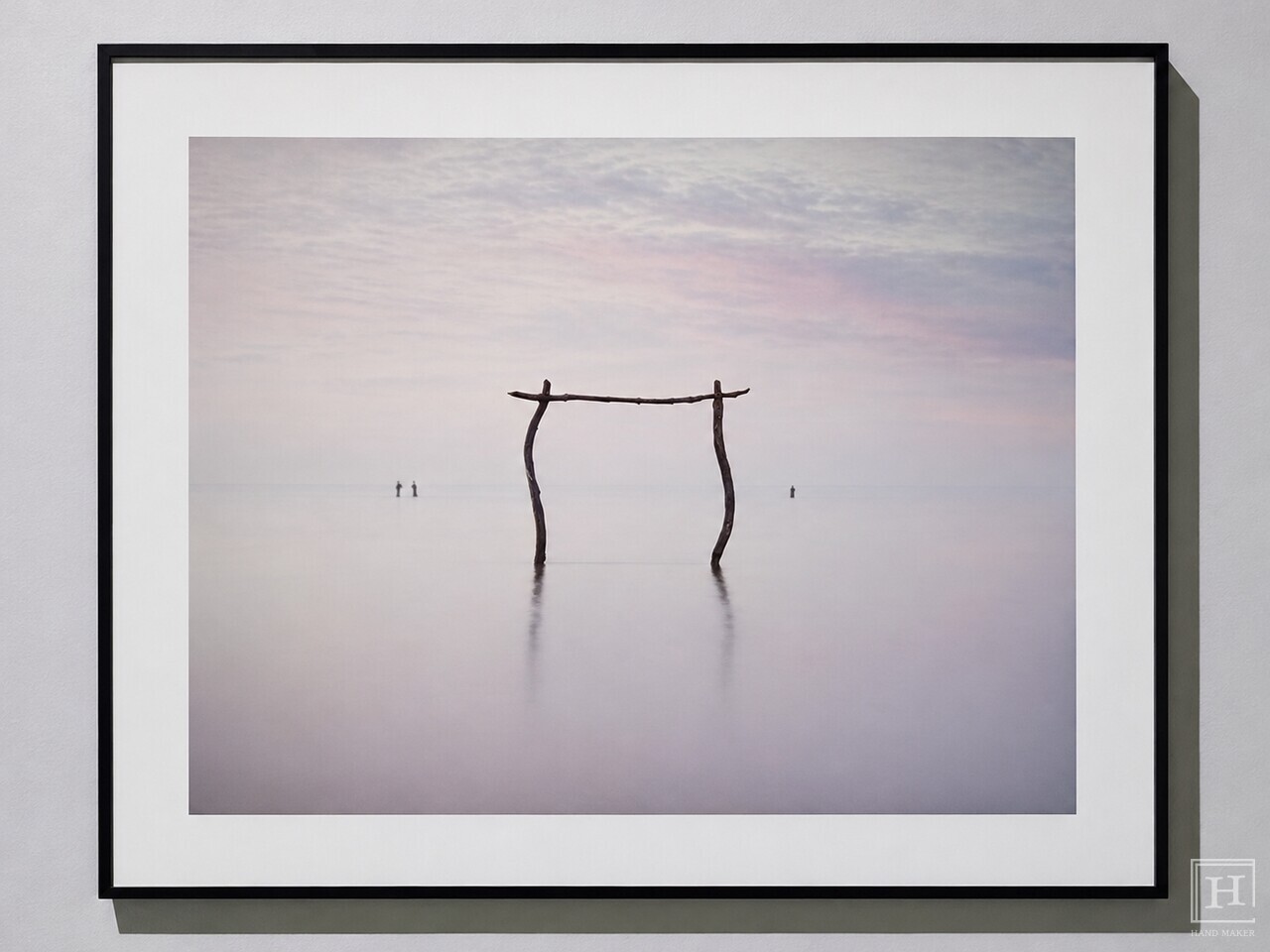
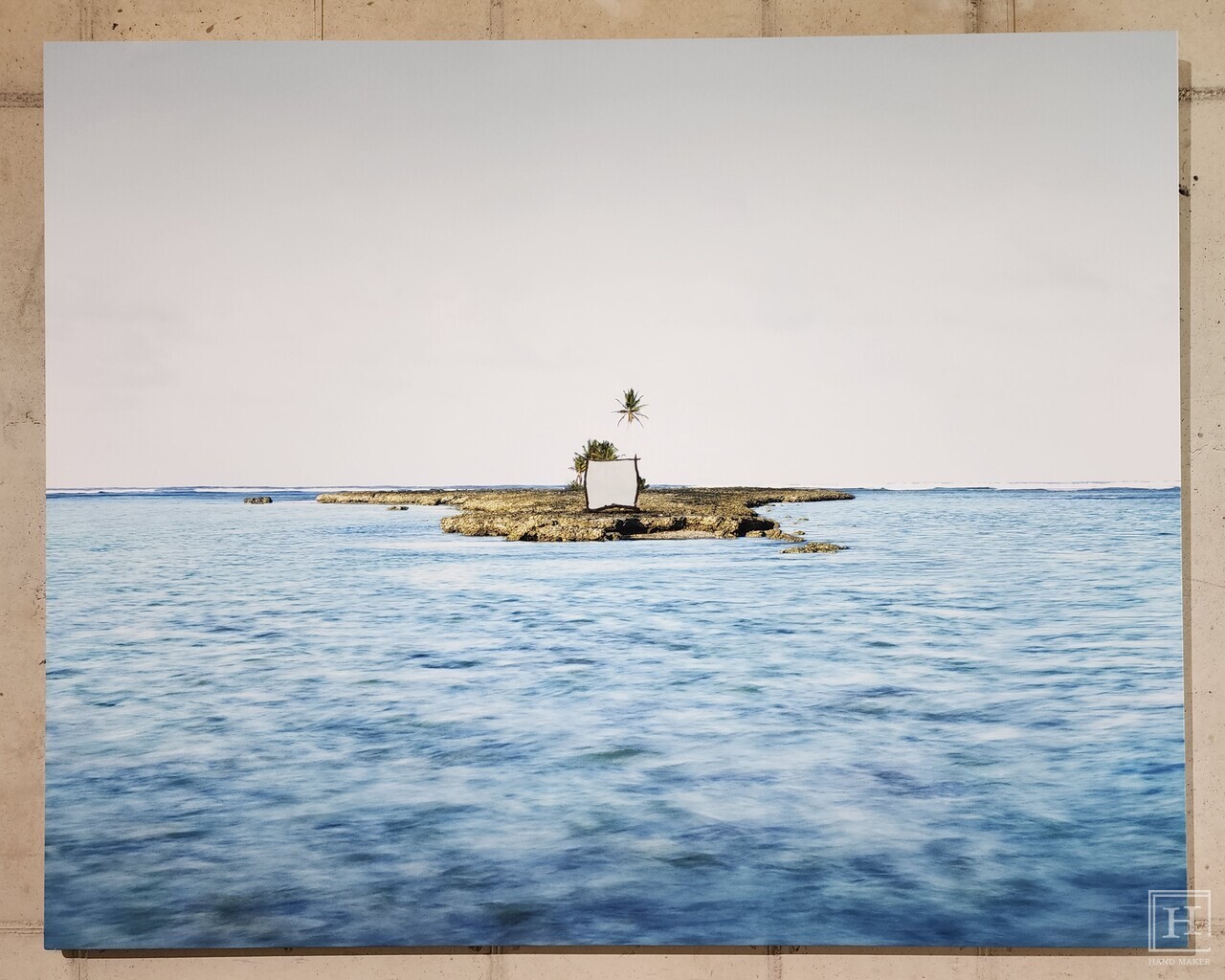
〈Kiribati #3_1〉 and 〈Kiribati #2_1〉 are works that simultaneously evoke the concepts of 'between (interreality)' and 'beyond (surreality)'. In 〈Kiribati #3_1〉, where only a frame made of local wood has been erected, the sea and sky connect naturally within it. Although nothing is actually obscuring anything, it gives the feeling as if an invisible curtain has been placed there.
On the other hand, in 〈Kiribati #2_1〉, a white canvas obscures part of the landscape. While both works create artificial boundaries within a real landscape, one shows what is beyond and the other makes it invisible. It is interesting in that it makes one think about what is there and what is not, and where the real landscape ends and the scene created by the artist begins.
In this way, representation and reenactment, between and beyond, and untitled and titled are not completely separate concepts in Lee Myung-ho's work. Even within a single work, multiple modes of expression and meanings overlap to create new questions.
This exhibition is meaningful in that one can examine not only the completed photographs but also the thoughts and actions hidden behind them, as well as the process of experiments that have continued for a long time. If you appreciate the works while thinking about what the artist intended to show, and what they covered or erased to reveal, even familiar photographs will feel somewhat different.
The exhibition can be viewed until December 13. Viewing can be done by making a reservation in advance via Naver or by purchasing tickets on-site. Savina Museum of Contemporary Art is closed every Monday and operates from 10:00 AM to 6:00 PM.
Reporter at HANDMAKER (핸드메이커), a Korean magazine devoted to crafts and handmade culture. Covers exhibitions, design and the people who make things by hand.
Comments 0
Comments are currently disabled.