
Amorepacific Museum of Art hosts first large-scale Sol LeWitt exhibition in Korea
The Amorepacific Museum of Art is hosting a large-scale solo exhibition of conceptual art pioneer Sol LeWitt, titled 《Sol LeWitt: Open Structure》, running until February 28, 2027. The exhibition explores the artist's world through 45 works, including wall drawings, structures, paintings, photographs, prints, and archives.
The Amorepacific Museum of Art is presenting 《Sol LeWitt: Open Structure》, a solo exhibition featuring 45 works including wall drawings and structures. Running until February 28, 2027, the showcase marks the artist's first large-scale planned exhibition in Korea.
The Amorepacific Museum of Art is holding 《Sol LeWitt: Open Structure》, a solo exhibition by the representative conceptual artist Sol LeWitt, which will run until February 28, 2027. As the artist's first large-scale planned exhibition in Korea, this showcase provides a broad view of Sol LeWitt's artistic universe through a total of 45 works, including wall drawings, structures, paintings, photographs, prints, and archives.
Sol LeWitt studied art at Syracuse University and moved to New York after participating in the Korean War, where he worked at MoMA and interacted with contemporary artists. In 1960s New York—a time when war, social movements, mass production, and consumer culture were shaking the relationship between the existing order and the individual—he sought new methods that departed from the convention of centering on the artist's subjective expression and direct act of production.
In his 1967 publication "Paragraphs on Conceptual Art," he declared that "the idea becomes a machine that makes the art," believing the core of art lies in the idea and its process of operation rather than the material result. While lines, shapes, and colors unfold according to a set order, they produce different results depending on the location and the executor.
His wall drawings are erased after an exhibition, but much like a musical score being repeatedly performed by musicians, they continue to be newly implemented based on his instructions even after his death in 2007. His work, which draws infinite variations from finite rules, forms the foundation of conceptual art.
The first exhibition hall serves as the starting point for entering Sol LeWitt's world of work, centered on "systems and structures." To LeWitt, a system was not a rule that predetermines the form of a work, but a method of creating the conditions for an idea to become a work. By assigning clear rules to minimal elements such as lines, grids, cubes, and modules, he demonstrated that a work is not merely an object directly produced by the artist, but a process of gaining concrete form through the execution of rules.
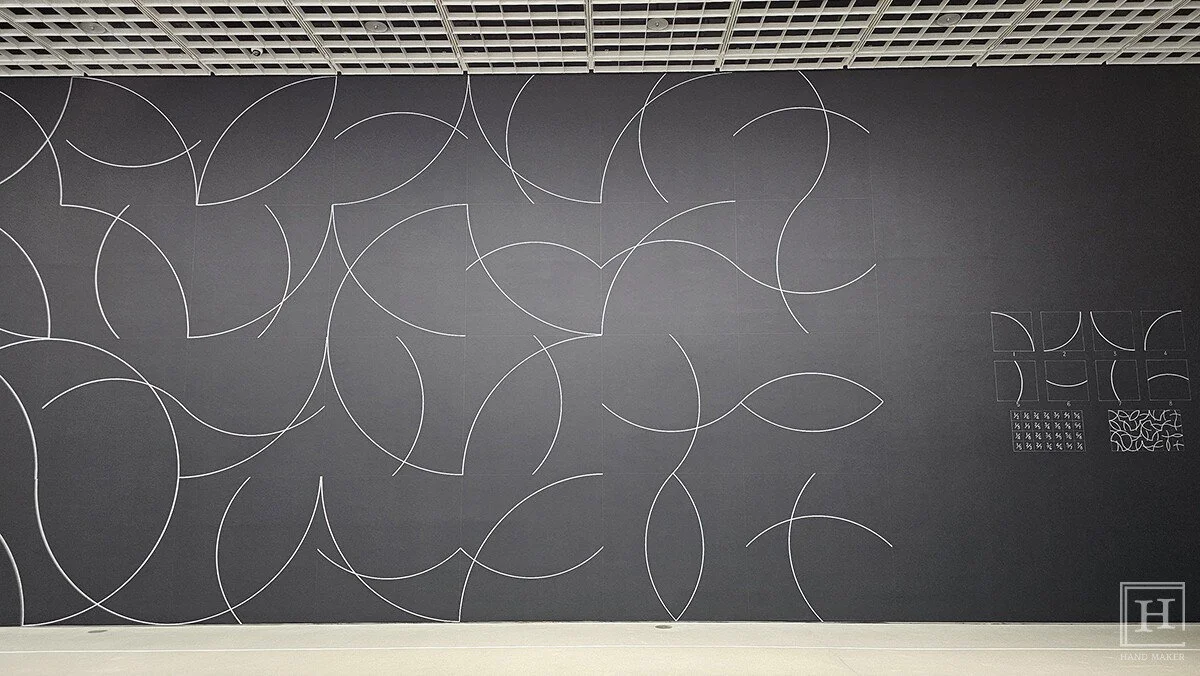
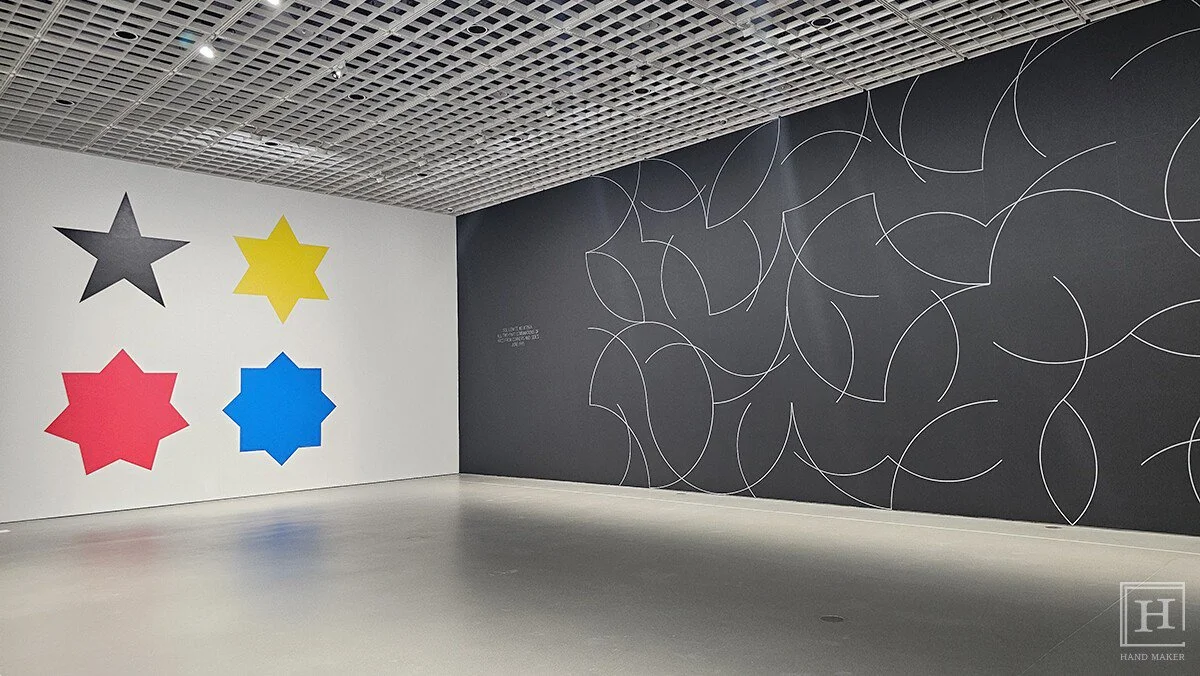
The wall drawing greeting visitors at the entrance most directly reveals this principle. The instructions left by the artist are being re-executed for this exhibition, allowing the idea to be newly implemented on the walls.
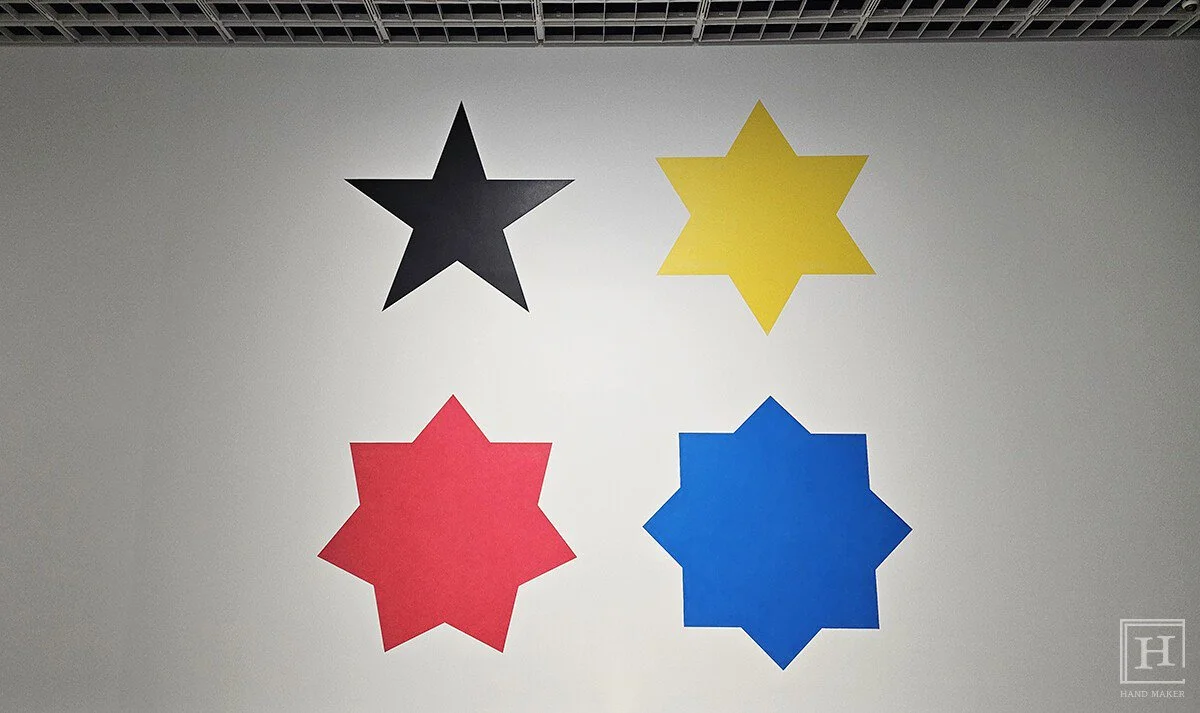
〈Wall Drawing #396A-D〉 is a work drawn with India ink and color ink washes, featuring a black five-pointed star, a yellow six-pointed star, a red seven-pointed star, and a blue eight-pointed star. This work is drawn to sit upon a single circumference, continuing the principles of continuity and permutation by sequentially changing the number of vertices and colors of each star. The method of repeatedly applying layers with ink-soaked cloth expands the contour-centered shapes into dense planes of color.
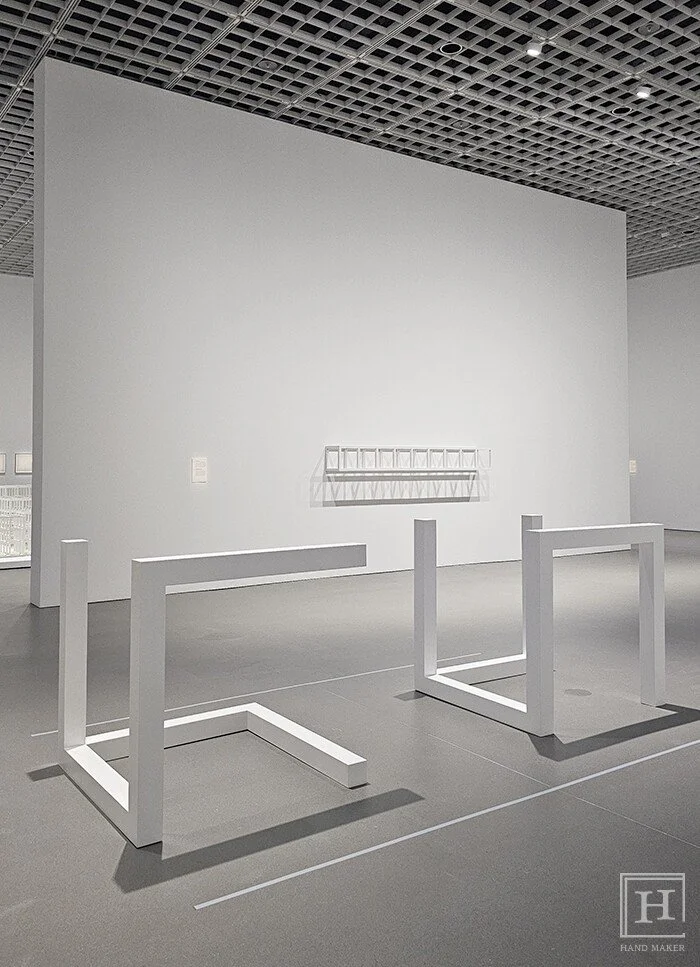
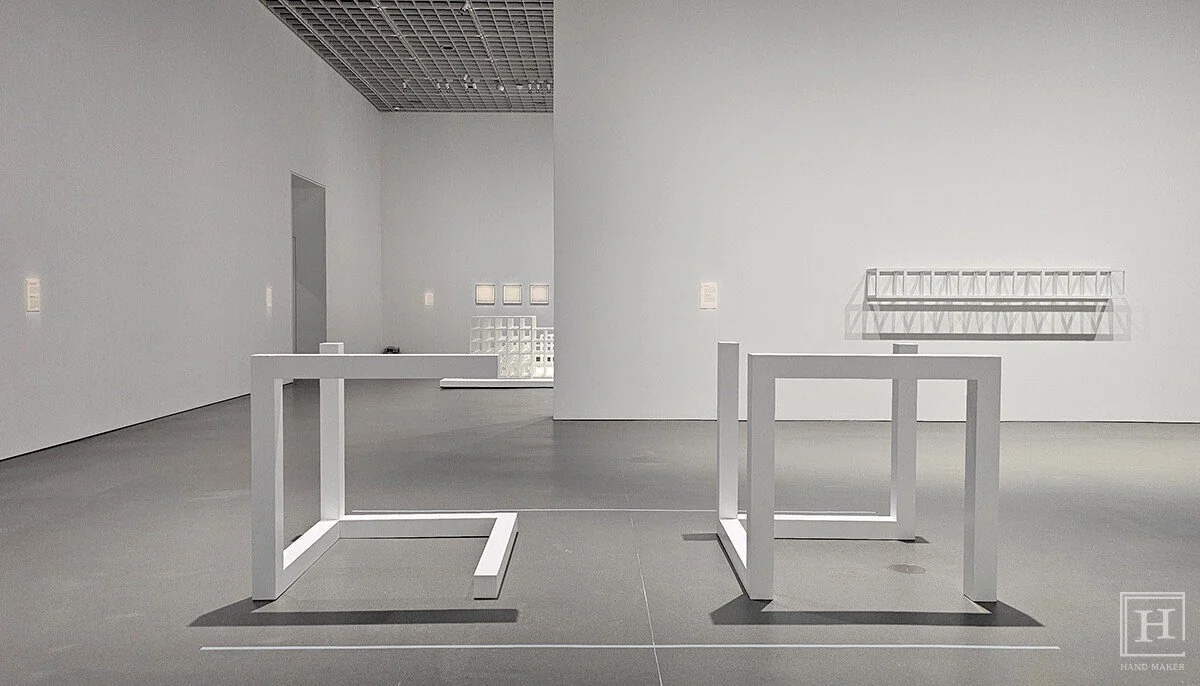
In the 〈Unfinished Open Cubes〉 series, the cube becomes a starting point rather than a finished product. By systematically removing some of the twelve edges that make up a cube to show a total of 122 forms, this work demonstrates how much variety a single idea can produce by following logical rules. Even within the empty structures, viewers naturally perceive a single cube, and the work prompts one to think about the relationships and structures that establish the form rather than the form itself.
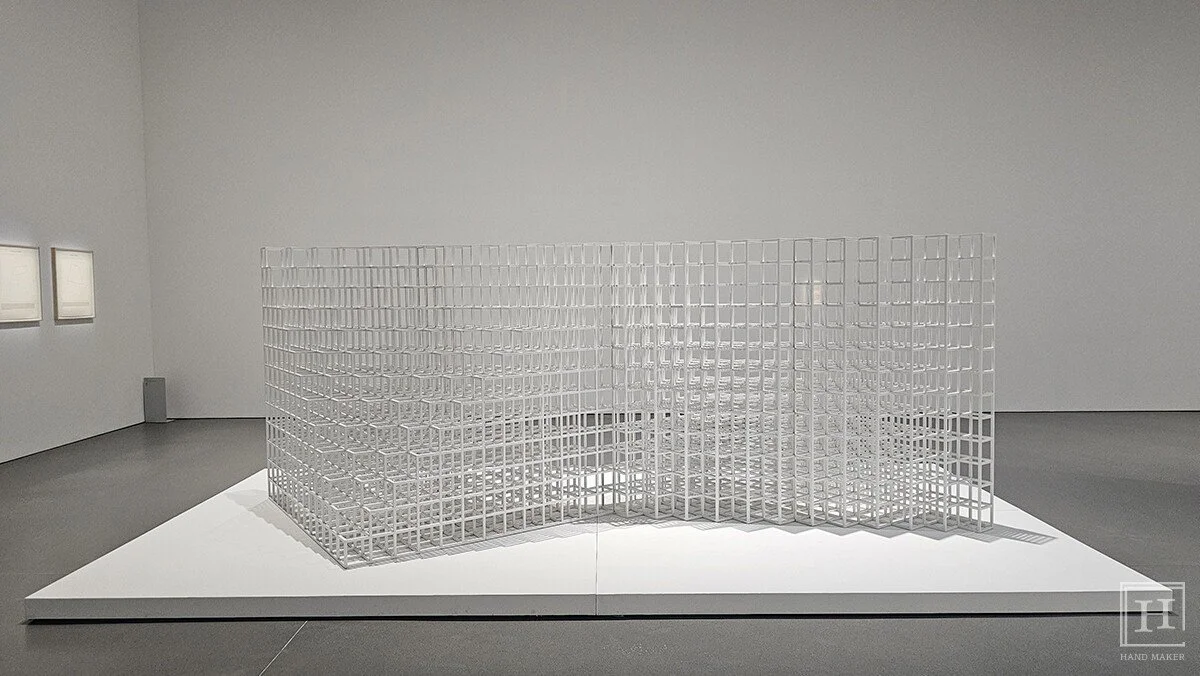
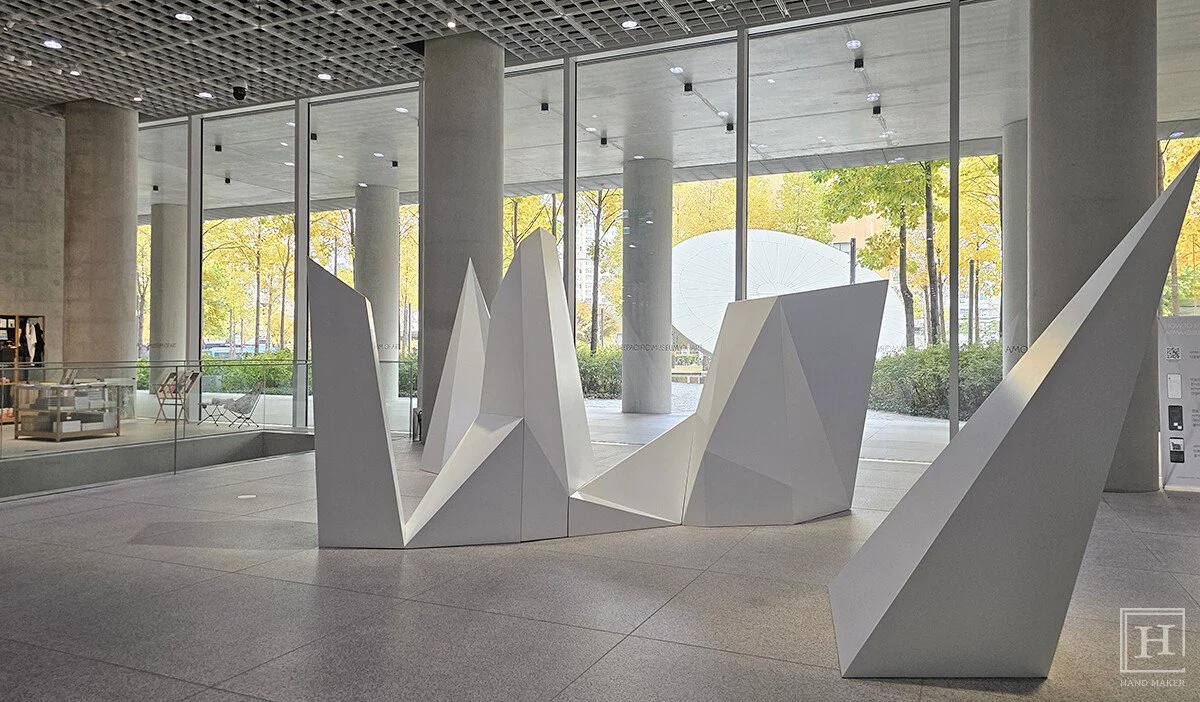
〈Cube Structure〉 is a work that takes the cube as a basic unit and expands it horizontally and vertically to unfold it within a space. It shows the process in which identical modules are connected and separated, and a single simple unit develops into complex structures and visual rhythms. For LeWitt, the cube was not a closed solid, but a visual grammar that enabled repetition, arrangement, and transformation. The work has no single fixed front, and as the audience moves around, the opening and closing, overlapping and separation constantly change positions.
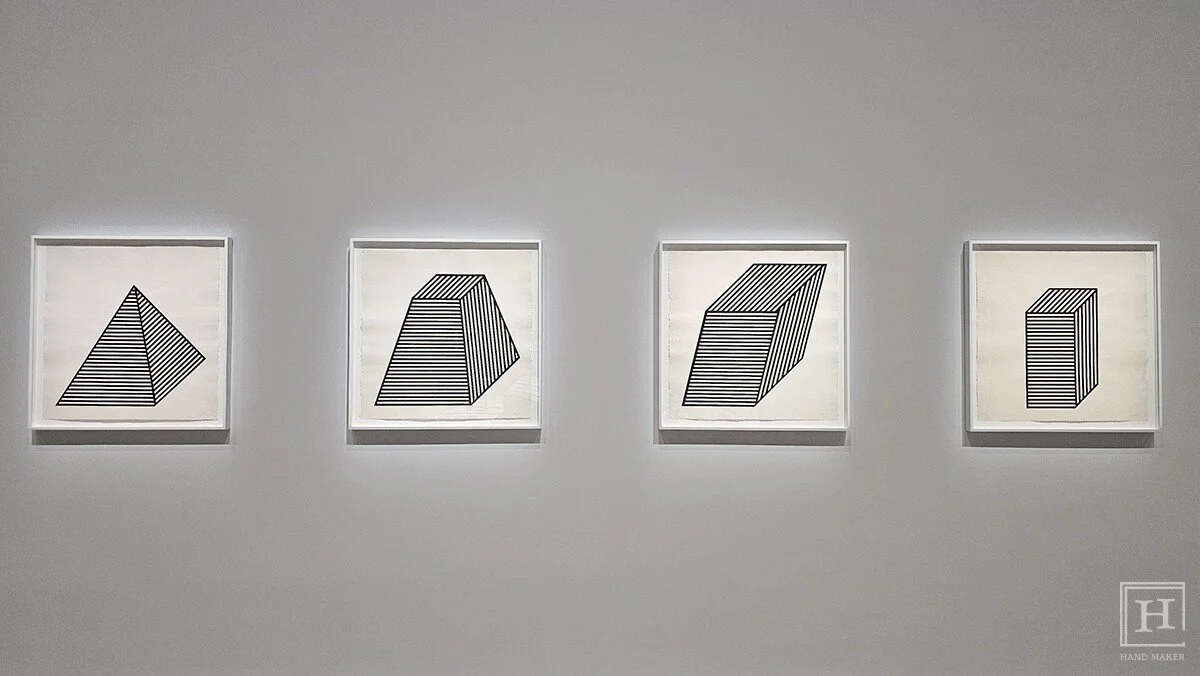
Exhibition Hall 2 introduces the concept of continuity in LeWitt's work. In the early 1960s, LeWitt considered series based on the logic of continuity to be the most direct way to give physical form to his ideas. If a single work presents a premise, a series carries out that premise to its conclusion. Basic units such as lines, directions, cubes, and modules are combined, reordered, and expanded according to predetermined rules, and all cases permitted by those rules are recorded in sequence.
What LeWitt aimed for was not to reach a single completed form, but the process of following the order and logic of how forms occur and their possible combinations. Refusing to prioritize any single result, he sought to carry out the rules he established to the end to reveal the latent differences within them. He recorded that an artist is merely a "clerk" who simply "records" the results of the premises they have set.
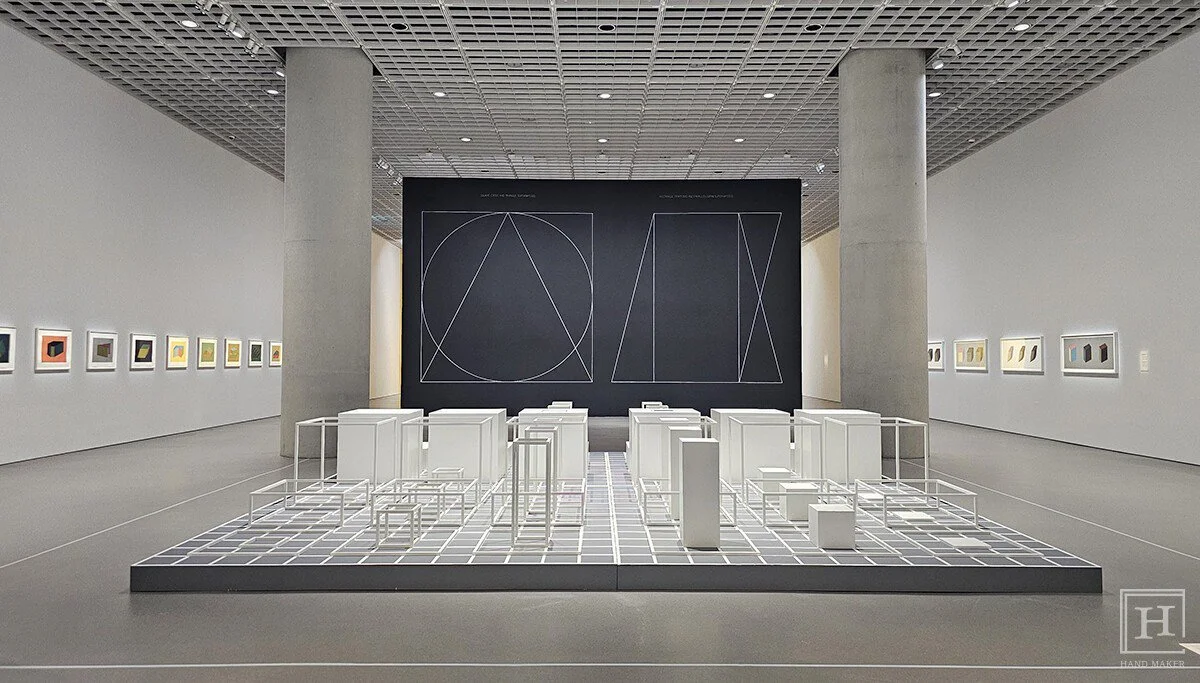
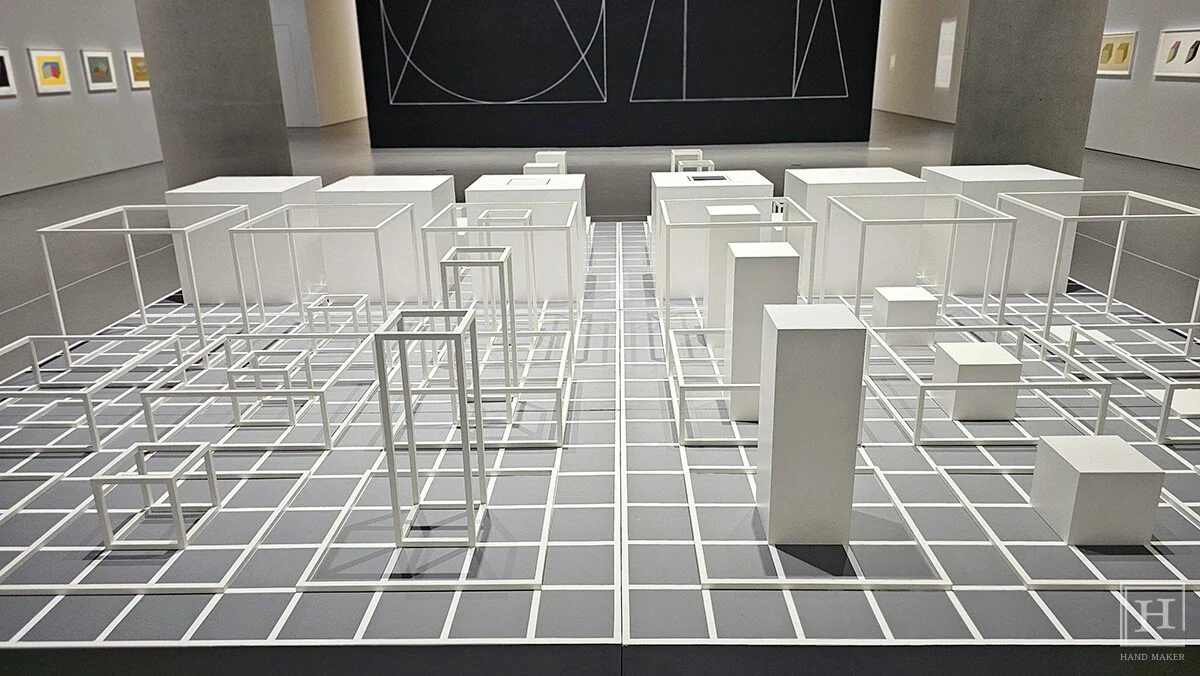
〈Serial Project #1 (ABCD)〉, located in the center of the exhibition hall, three-dimensionally demonstrates how vast combinations and variations are possible using the most basic geometric elements of the cube and the square. The surrounding wall drawings and prints present how the logic of such continuous developments appears in different forms under different conditions of walls, paper, and space.
The same system creates new visual experiences by varying in size, density, and rhythm depending on the medium. Therefore, for LeWitt, a series is a logic that transcends a collection of objects. What visitors encounter in this exhibition room is a single state in which that continuous logic is realized in this specific time and space.
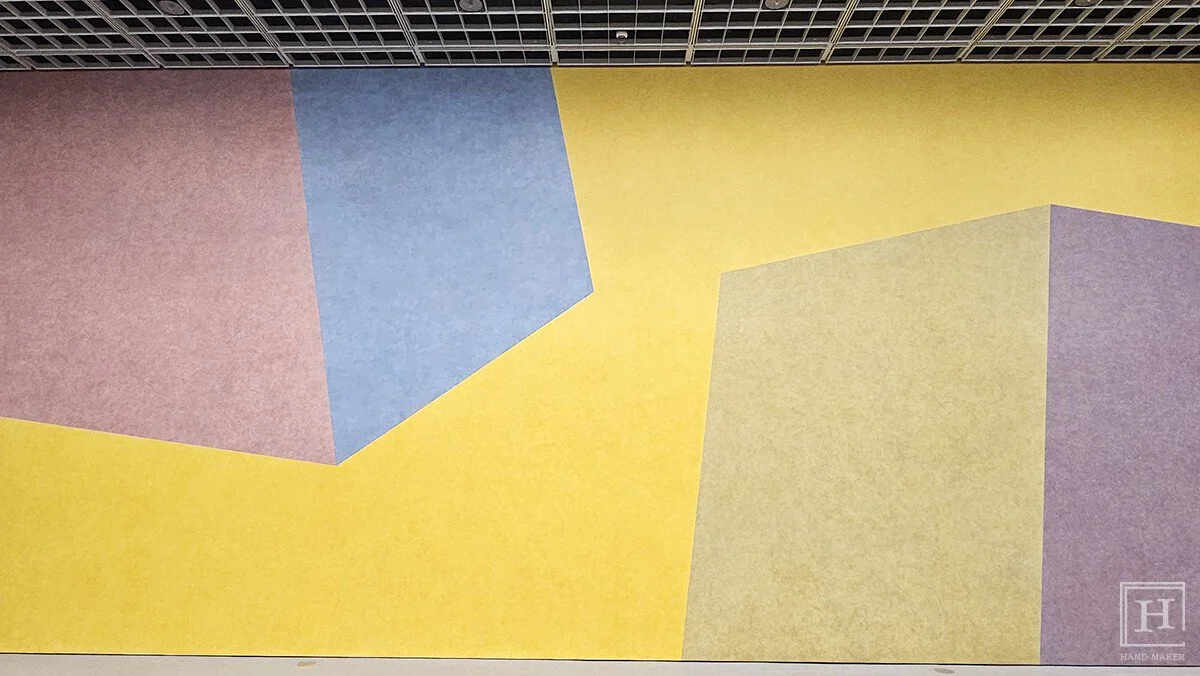
The color ink wash wall drawings that emerged in the 1980s show the process of LeWitt's work expanding into color and space. After settling in Spoleto, Italy, at the end of the 1970s, he discovered the possibility of walls and colors combining into a single surface in Medieval and Renaissance frescoes, and expanded his early work into layers and depths of color.
Color ink wash is a technique of building up color by repeatedly rubbing and tapping the wall with a cloth soaked in paint; as the work is repeated, depth and subtle differences emerge on the surface. The wall becomes a place where color permeates and accumulates beyond being a mere background for the drawing. While the instructions and rules still function, they appear as painterly and sensory surfaces through the texture of the wall, light, the concentration of pigment, and the hands of the executor.
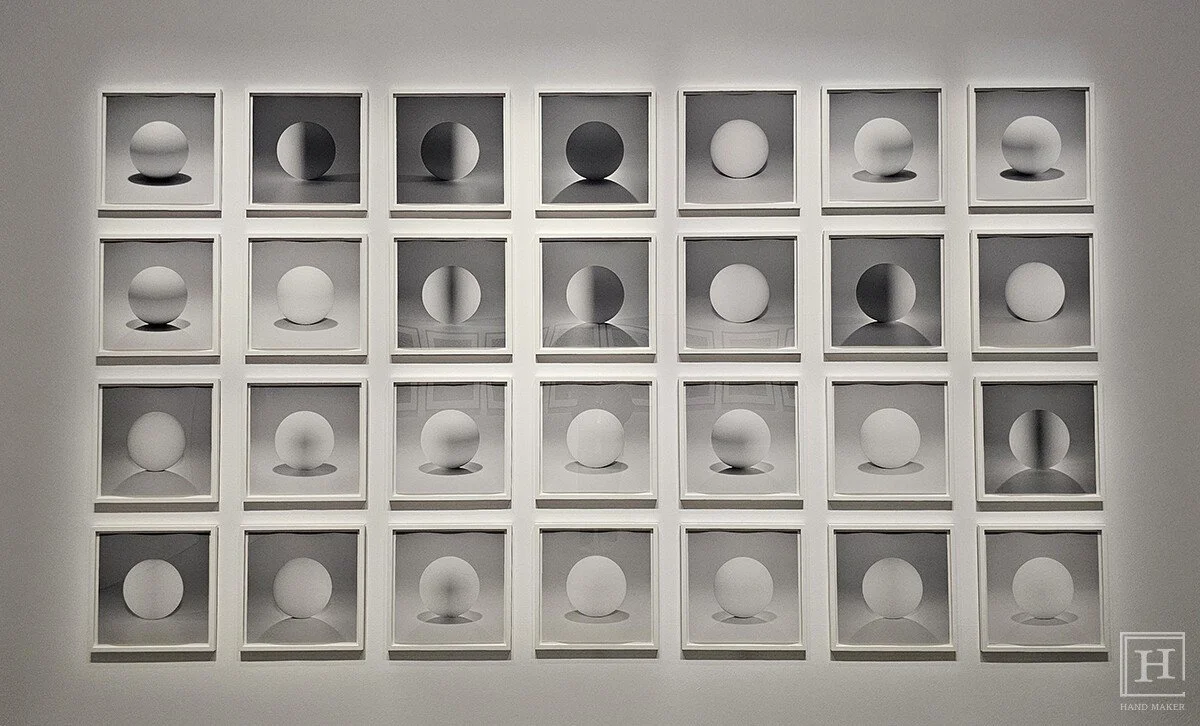
〈Sphere illuminated from above and four sides, and all its combinations〉 is a photographic series that records 28 states that change according to the combination of light by illuminating a single plaster sphere from above and four directions. Although the form is identical, the light and volume change according to the variations in light, showing how the same object can be perceived differently depending on the conditions. This work was produced by a third party according to the plan presented in the title, and photography also functions as a medium realized by ideas and instructions.
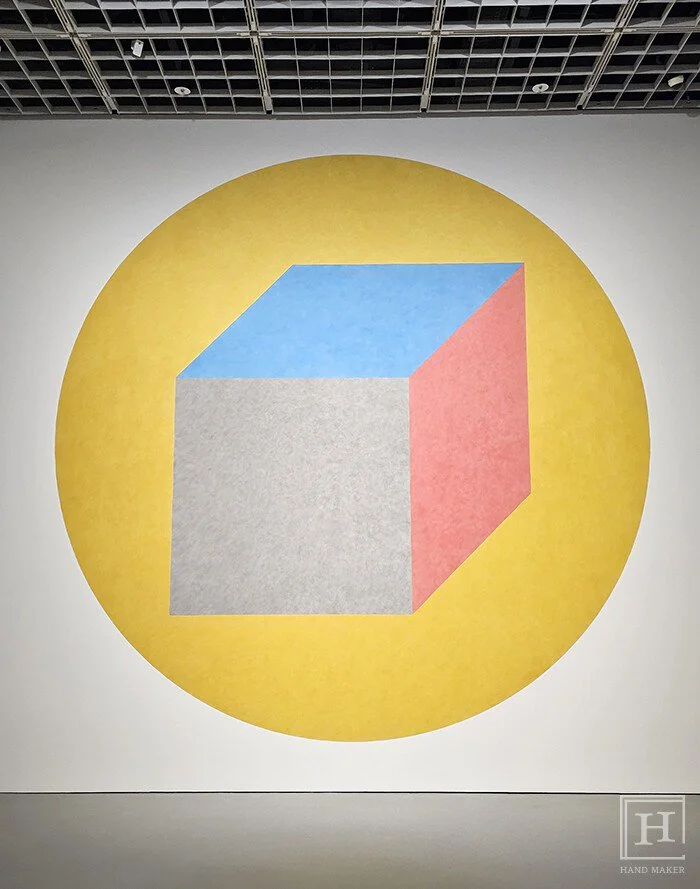
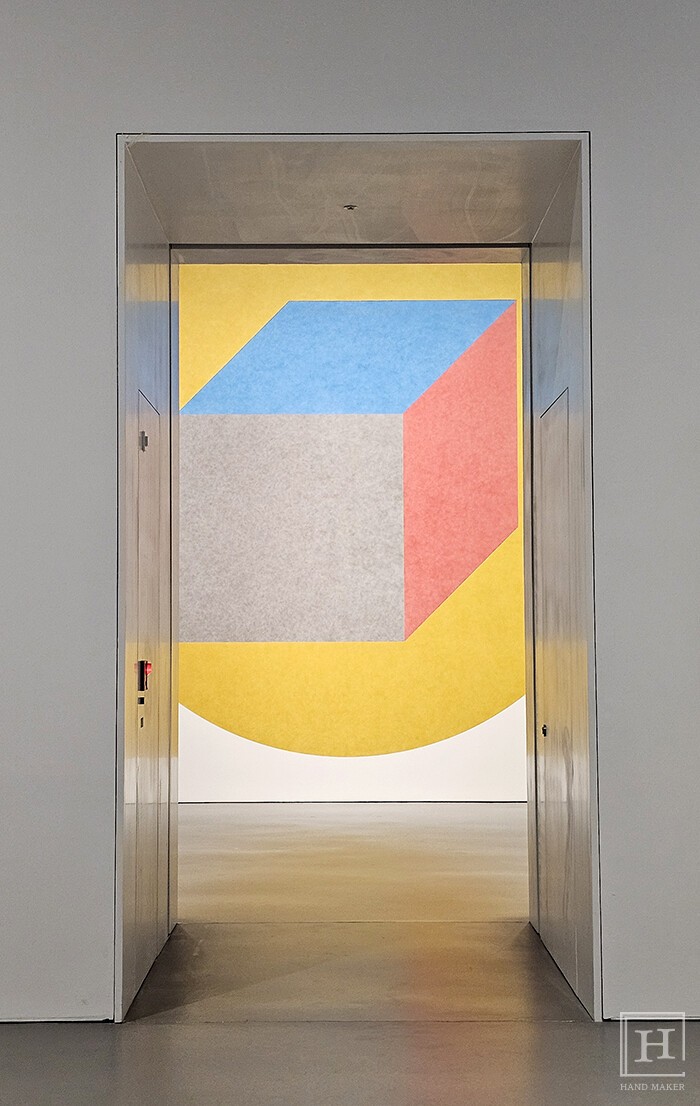
In 〈Wall Drawing #596〉, the cube, which LeWitt continuously explored, is combined with the color ink wash used since the 1980s. By expressing a three-dimensional cube on the two-dimensional plane of a wall, it implies formal volume. Gray, yellow, red, and blue inks are applied in multiple layers with a cloth, creating various tones and depths through the overlapping of colors. This work, where structure and color meet, shows the process by which LeWitt's geometric system gradually expands into rich and sensory screens.
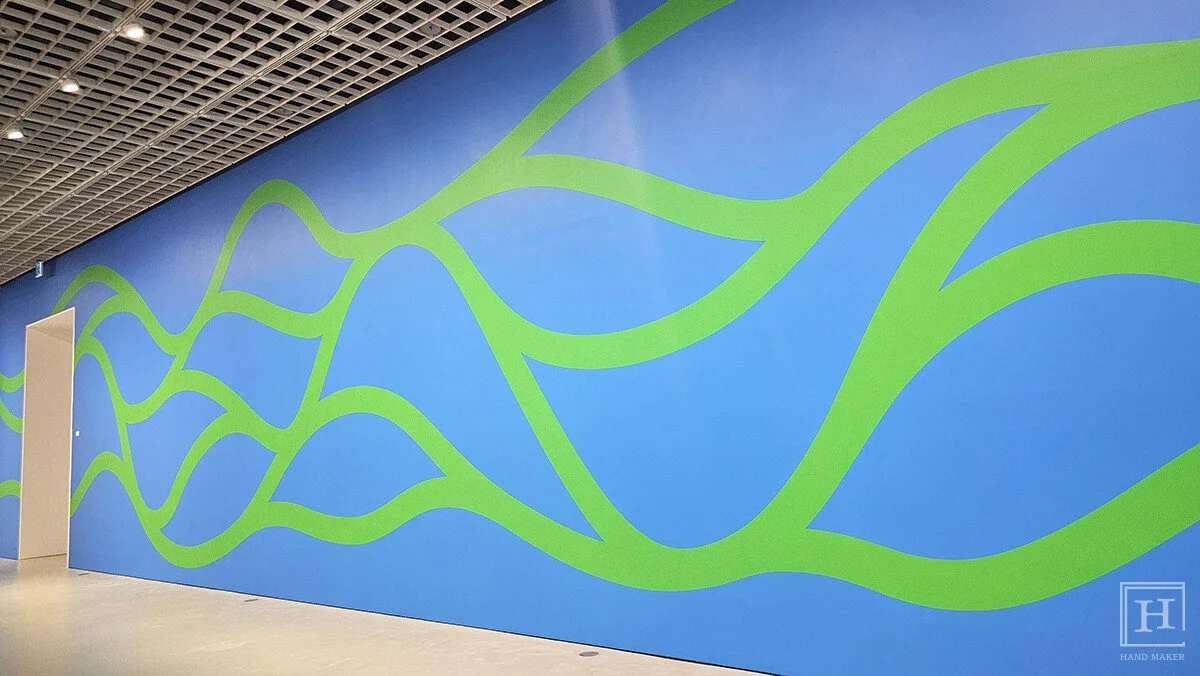
In Sol LeWitt's later works, the system expands into a more sensory and physical dimension. During this period, LeWitt actively utilized the materiality of acrylic paint, which allowed him to implement complex curves, irregular forms, and intense colors. However, this was not a departure from the principles and visual rigor of early conceptual art, but rather another possibility that emerged when the rules were pushed to their limit. Rather, it is the result of the possibilities inherent within the early principles unfolding into freer forms over time.
While instructions and rules still exist, the results manifest as rhythm, movement, and an abundance of color. Curves capture the movement of the body, colors bleed across the entire surface, and repetition transforms into a rich visual experience. The system does not suppress the senses, but rather becomes the condition through which sensation arises.
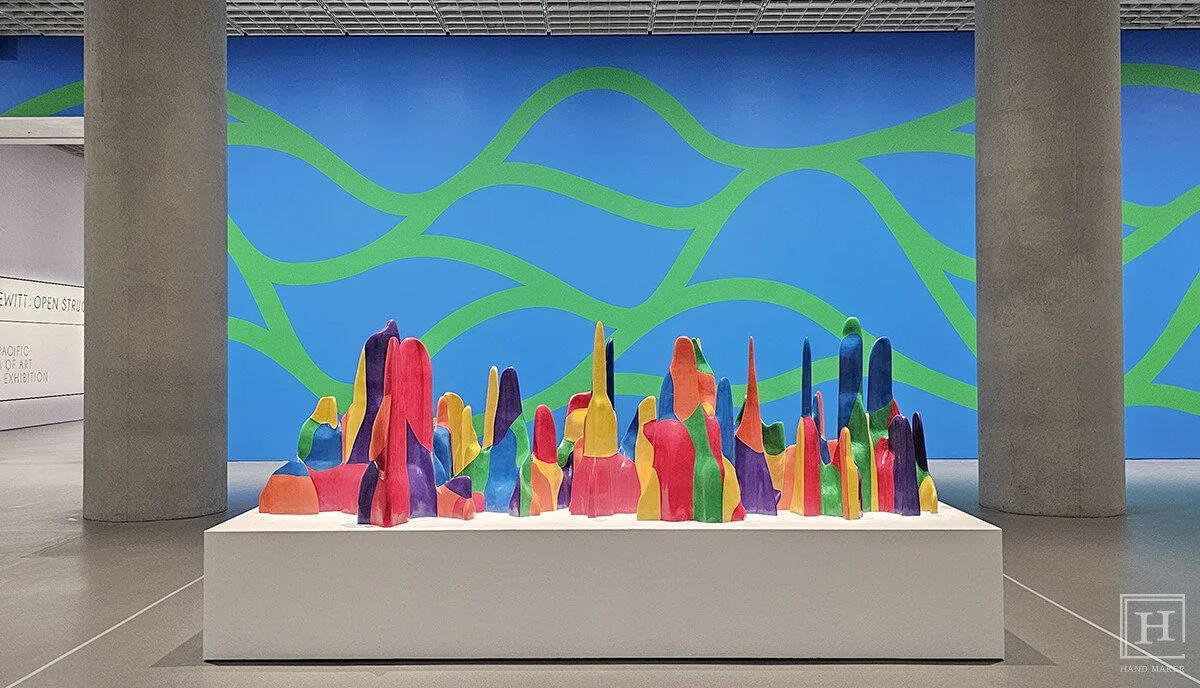
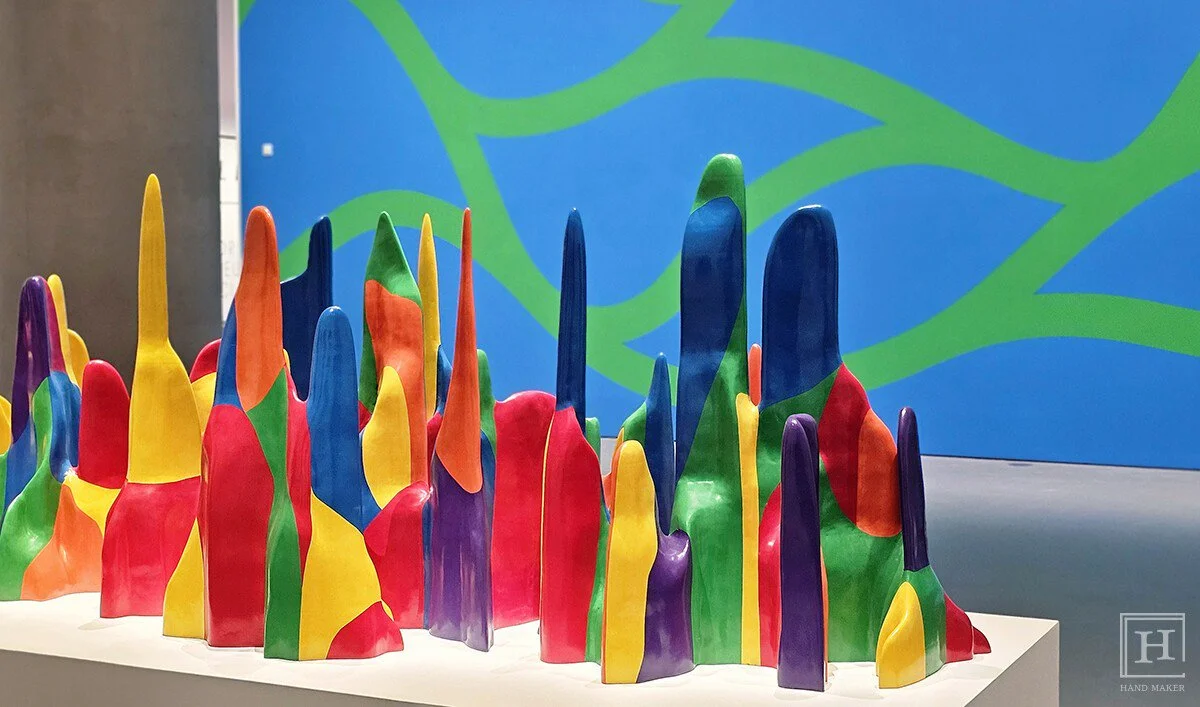
〈Spot #3〉 is a series of non-geometric structures that LeWitt has developed since the late 1990s. He refers to drawings of irregular outlines viewed from above as "footprints," and based on these drawings—which indicate color divisions and the height of each part—he three-dimensionalized the forms. The long, continuous outlines, rising peaks, and intense colors may appear improvised, but they are the result of a planar plan being converted into volume. LeWitt's system, which centered on cubes and grids, expands here into an open structure that encompasses organic forms and colors.
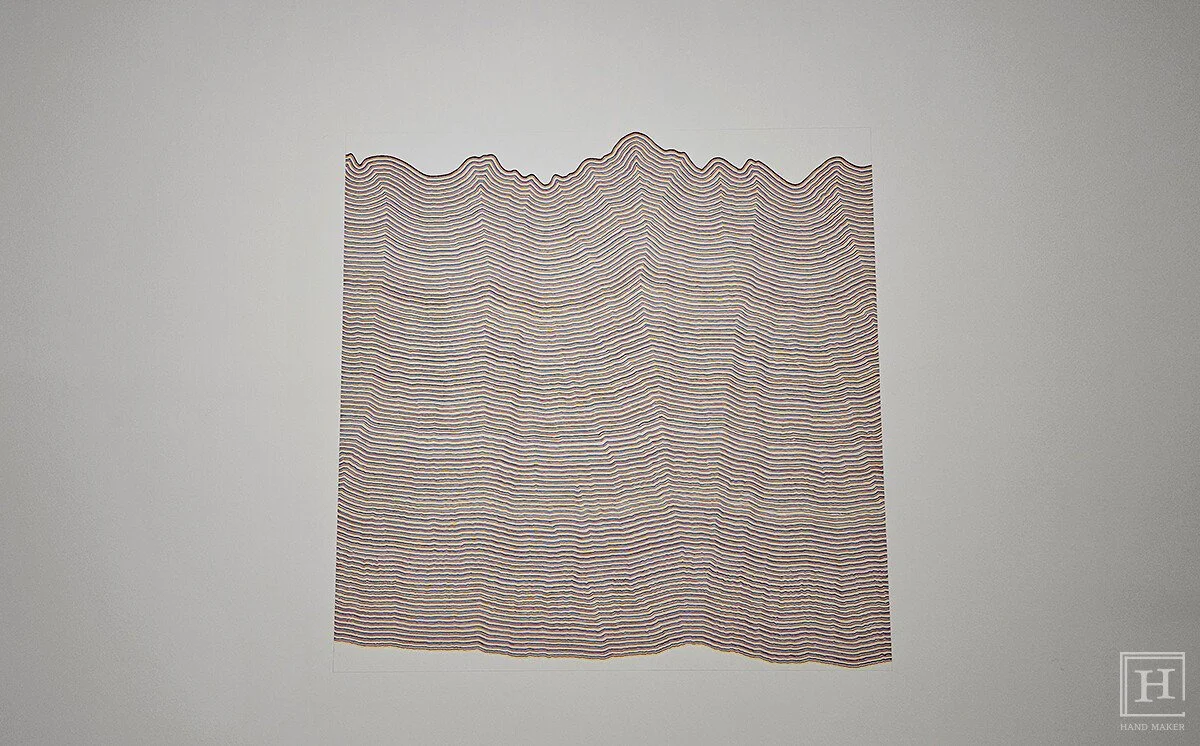
The final exhibition room examines the ways in which Sol LeWitt's ideas move and are re-executed through artist books, editions, photographs, and records. For LeWitt, an archive was not a record added to a finished work, but a format that allowed ideas to cross over to different times and places to be newly implemented. At the same time, this space questions the circulation and ownership of ideas.
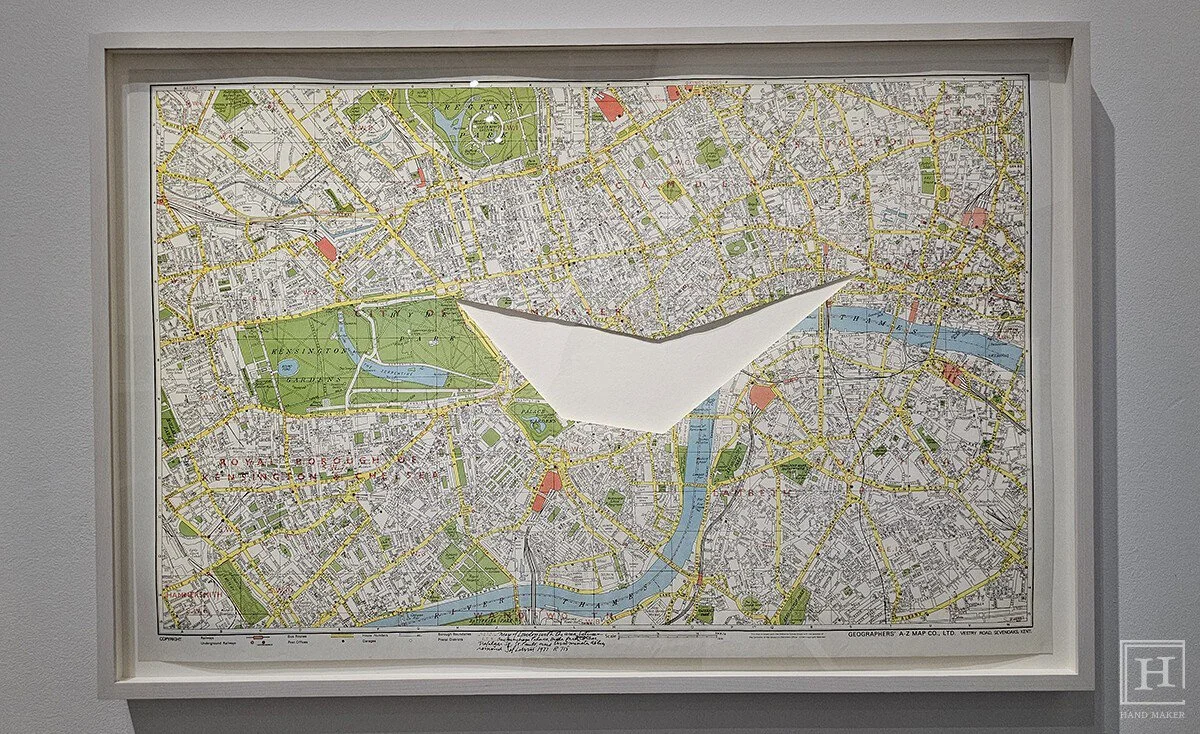
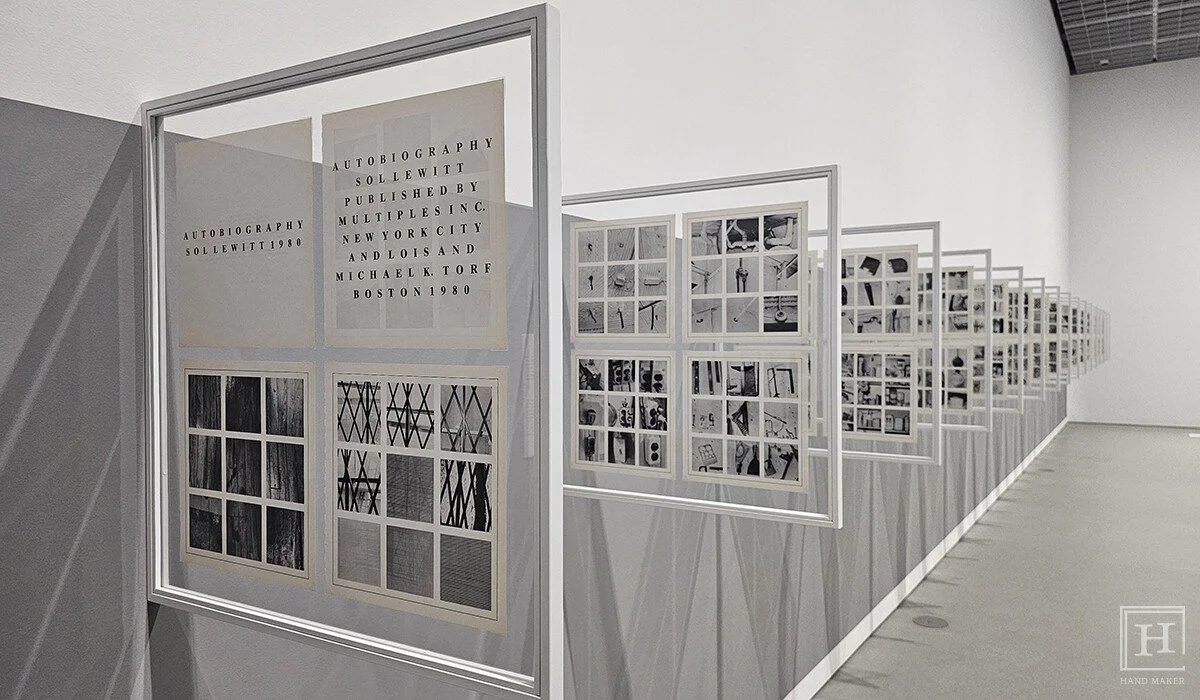
〈London Map〉 set its sale price at 100 dollars to open the possibility of ownership to more people, and 〈Autobiography〉 transforms traces of a personal life into impersonal grids and lists. Rather than completely breaking away from the art market or existing formats, LeWitt newly established rules within them. LeWitt's archive is not a repository for preserving the past, but a structure of a new system where ideas are read, transmitted, executed, and re-owned.
This exhibition presents the multifaceted world of Sol LeWitt's work through a total of 45 pieces, including 13 wall drawings, structures, paintings, prints, photographs, engravings, and archives. From the early structural works that represent the artist to his later color works, one can observe the process of how a single idea is implemented through various media and forms.
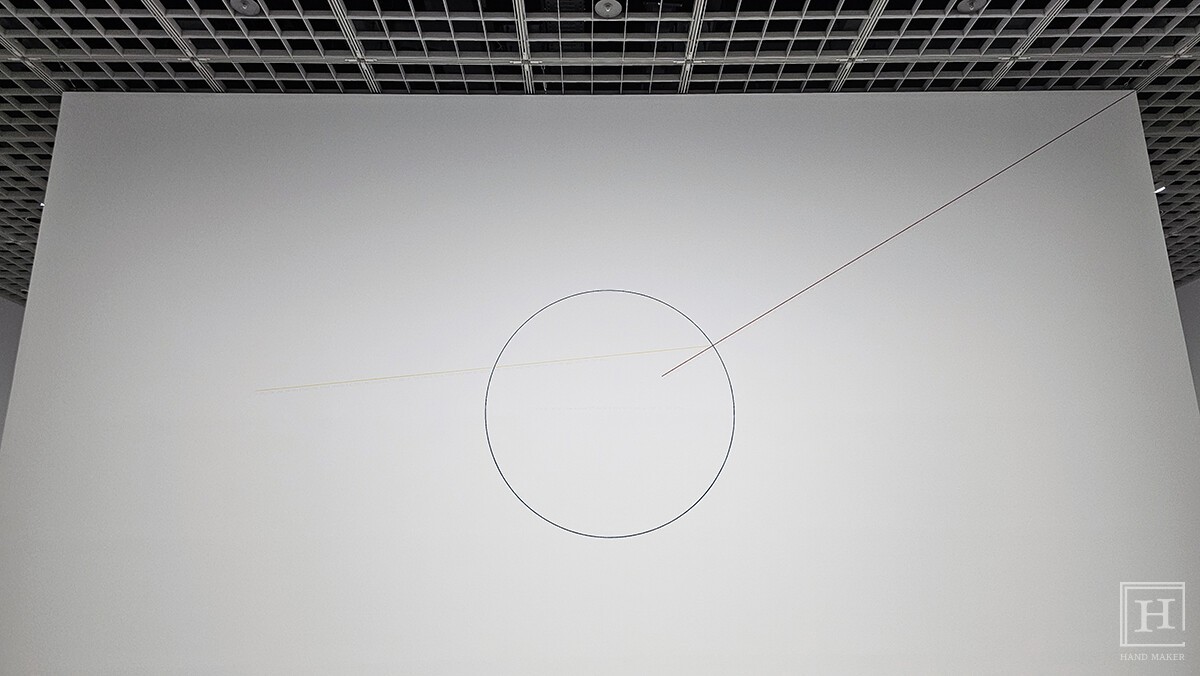
For the production of the wall drawings, 23 'APMA MAKERS', consisting of domestic university (graduate) fine arts majors, participated alongside officials from The LeWitt Estate. The participants experienced the method of creating works firsthand by interpreting the artist's instructions and layering lines and colors.
Following the opening of the exhibition, the Amorepacific Museum of Art operates various related programs so that visitors can gain a deeper understanding of the artist's world. Through diverse content including lectures, one can examine the artist's ideas, working methods, and the meaning of conceptual art.
Meanwhile, this exhibition is held based on a touring exhibition that began at the Museum of Contemporary Art Tokyo in Japan, in cooperation with The LeWitt Estate, and is presented at the Amorepacific Museum of Art with an expanded scale and content based on the existing exhibition configuration.
Reporter at HANDMAKER (핸드메이커), a Korean magazine devoted to crafts and handmade culture. Covers exhibitions, traditional crafts and the makers behind them.
Related Articles
Lee Myung-ho solo exhibition explores 20 years of photographic experimentation
[Field Sketch] Unexpected Encounters and Records of 26 Teams Touching Summer: 《To Our Summer》 Exhibition
Comments 0
Comments are currently disabled.